
How Should Large Hotel Chandeliers Be Shipped and Assembled?
Quick answer
Plan chandelier modules, protective crates, delivery access and site assembly for hotel interiors, with practical procurement and compliance checks.
Introduction
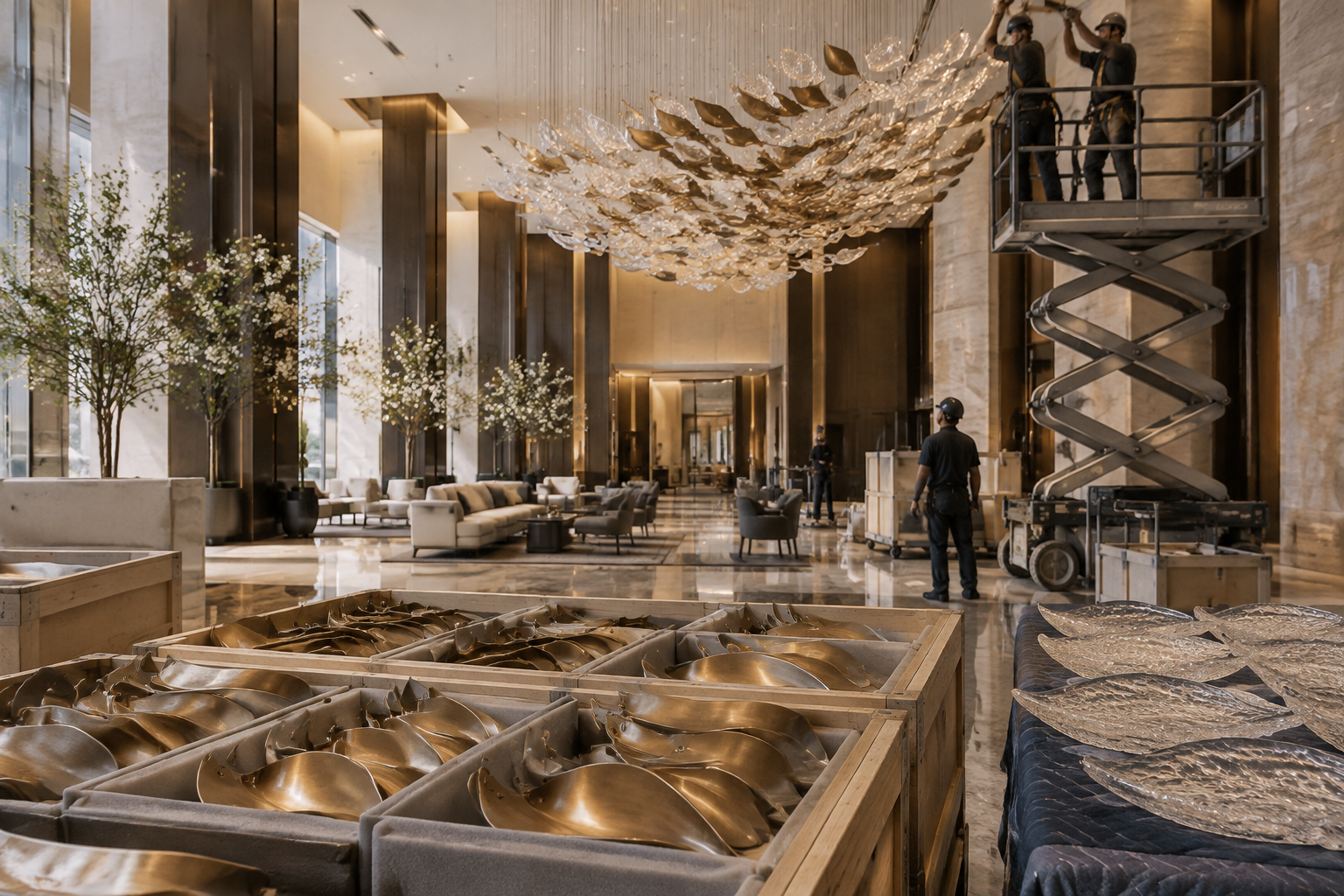
At XHLWX (led-project-light.com), a Custom Indoor LED Lighting Manufacturer based in China, we recommend shipping large hotel chandeliers as crated modules. Use a recommended specification of 3 protective packing layers and 2 documented fit checks, then assemble against approved drawings using qualified site teams and verified structural supports.
For a hotel lobby chandelier, packaging and installation should be designed together. A luminaire that fits a freight container may still fail to pass through the hotel's receiving corridor, goods lift or ballroom entrance. Conversely, excessive subdivision can create unnecessary electrical connections, alignment work and handling of delicate decorative parts.
The practical objective is the largest safely transportable module that the building and installation team can accommodate. Owners, interior designers and FF&E buyers should approve the delivery route, module boundaries, crate design and assembly responsibilities before production release—not after the chandelier is finished.
Design Criteria and Standards
A shipment-ready chandelier specification must connect lighting performance, module dimensions, structural interfaces and destination-market requirements.
Start with a route survey covering receiving doors, turning spaces, goods-lift openings, lift capacity, temporary storage and access beneath the ceiling position. Evaluate the packed module, not just the bare frame. Record ceiling structure, maintenance access and the intended lifting arrangement separately from the decorative reflected-ceiling plan.
The following values are recommended specifications or design targets, not verified product performance or certification claims.
| Parameter | Spec | Standard | Notes |
|---|---|---|---|
| CCT | Recommended specification: 2700–3000 K for warm hotel lobby ambience | Project lighting schedule; WELL v2 where applicable | Approve the assembled light effect and replacement-module consistency |
| CRI | Recommended specification: Ra ≥90 | Project colour-quality requirements | Evaluate skin tones, timber and decorative finishes with a sample |
| UGR | Design target: UGR ≤19 only where an applicable task assessment supports it | EN 12464-1 | Room geometry and viewing position matter; this is not a universal chandelier rating |
| Beam | Recommended specification: 20–60° for directional elements, subject to calculation | IES photometric practice; project distribution requirements | Decorative diffuse elements need separate glare evaluation |
| Control | Specify DALI-2, Casambi, KNX integration or 0-10V as a coordinated architecture | DALI Alliance requirements; applicable control-system documentation | Interfaces are not interchangeable; identify gateways and commissioning responsibility |
| Housing/material/IP | Aluminium or steel structural frame; decorative brass or glass; recommended specification: IP20 for dry interiors | EN 60598 series; applicable IP classification requirements | Verify final construction and local environmental conditions |
| LED/driver brands | Candidate specification: Bridgelux LED modules with Tridonic drivers, or an approved compatible alternative | Component datasheets and applicable luminaire assessment | Named components do not certify the complete chandelier |
| Certification/documentation | Request applicable CE/RoHS documentation, UL listing evidence where required, and relevant quality records | EU legislation; applicable US requirements; ISO9001 where claimed | SAA is relevant to applicable Australian approval routes, not a substitute for destination approval |
| Transport interfaces | Document module mass, lifting points, crate dimensions and assembly references | Approved packing and installation drawings | Final values must come from the approved design and verified packing records |
EN 12464-1 informs applicable indoor workplace lighting assessments; it does not define crate strength. EN 60598 addresses luminaire safety, while transport packaging needs its own engineering review. WELL v2 considerations are project-specific and do not establish chandelier shipping compliance.
Customisation Options and Materials
Module boundaries should follow structural logic, protected finish interfaces and the hotel's actual delivery route.
Compare options using packing volume, installation exposure and service access—not freight price alone. More crates can reduce individual handling difficulty while increasing inventory control and site connection work.
| Shipping configuration | Packaging implications | Site implications | Verdict |
|---|---|---|---|
| Fully assembled chandelier | Large crate; extensive restraint around a bulky object | Fewer assembly joints, but difficult manoeuvring and lifting | Suitable only when verified access and handling arrangements allow |
| Main frame with removable arms | Frame cradle plus separately protected arms | Repeatable mechanical and electrical connections | Often a balanced starting point for modular designs |
| Segmented structural rings | Joint protection and indexed segment storage | Requires accurate geometry checks and engineered connections | Useful where route restrictions prevent intact-frame delivery |
| Separate glass or crystal decoration | Compartmented trays with individual identification | More fragile-part handling after frame installation | Preferable when transport loads could damage installed decoration |
| Knock-down decorative framework | Compact component packs and strong inventory discipline | Greater assembly labour and alignment dependence | Select only when site capability supports the complexity |
How Should Chandelier Modules Be Sized for Restricted Hotel Delivery Routes?
Module size should be determined by the tightest verified handling constraint, with packaging and lifting equipment included.
Check turns and approach angles as well as clear opening dimensions. A long curved section can pass through a doorway yet fail at the next corridor junction. Compare each proposed module with the full route, including any temporary protection on finished floors and walls.
Assign a unique module identifier that appears on the shop drawing, crate label, packing list and assembly instruction. Keep orientation markings consistent. Where mixed modules look similar, use keyed interfaces or unmistakable labels rather than relying on appearance.
Which Crate Materials Best Protect Brass, Glass and Finished Chandelier Frames?
Crates should transfer transport loads through approved structural interfaces without pressing on decorative surfaces or fragile components.
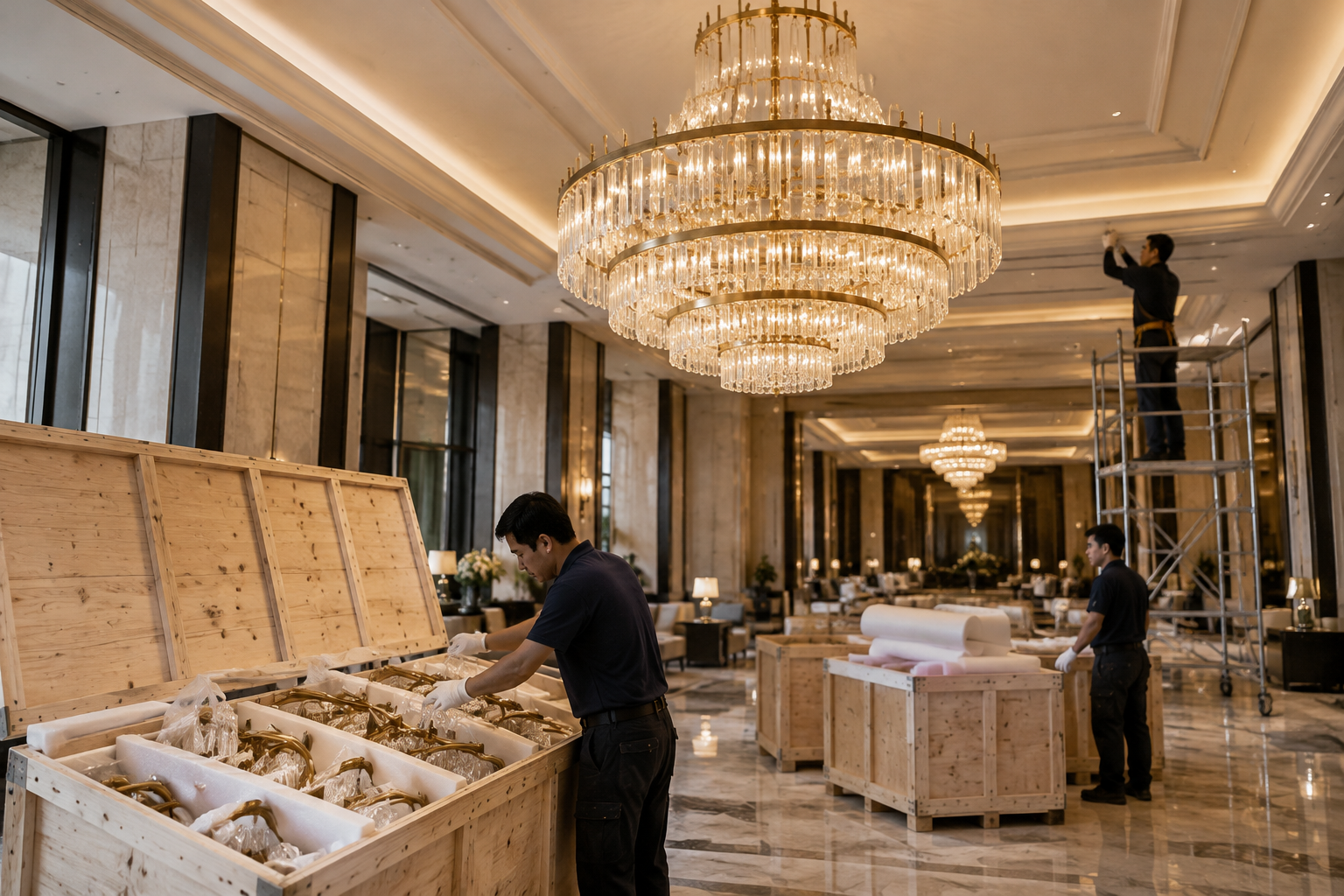
A recommended specification is a layered system: a compatible non-abrasive surface barrier, shaped cushioning and a rigid restrained crate. Cushion selection must reflect component mass, fragility and expected transport conditions; a thicker foam layer is not automatically safer.
Separate glass and crystal into supported compartments that prevent contact between pieces. Test protective materials against lacquer, plating and polished finishes before prolonged contact. Plan moisture protection for the actual route, including condensation risk and warehouse storage.
Where regulated solid-wood packaging is used, confirm applicable ISPM 15 treatment and marking requirements. Processed-wood exemptions depend on the material and destination rules; a plywood crate may still contain regulated solid-wood skids.
How Can Modular Joints Remain Discreet and Safe After Site Assembly?
Concealed modular joints need engineered load paths, repeatable alignment and serviceable electrical connections.
Place separations at natural visual breaks where possible. Drawings should distinguish load-bearing fasteners from decorative retainers and identify any required tightening values established by the responsible engineer or component supplier.
Provide suitable protective-earth continuity where required, connector retention and strain relief. Do not use cables as mechanical supports. Supply labelled, compatible connection systems rather than expecting installers to improvise terminations inside finished decorative sections.
 How Should Large Hotel Chandeliers Be Shipped and Assembled?: Which crate materials best protect brass, glass and finished chandelier frames?
Controls and Commissioning
Control architecture should be approved before module wiring and connector layouts are frozen.
For DALI-2, identify compatible control gear, addressing responsibilities and the intended hotel scenes. For Casambi, confirm device placement, access and expected communication conditions within metal housings. KNX integration may require a specified gateway; 0-10V arrangements need compatible drivers, wiring and a coordinated switching strategy.
Keep drivers accessible without dismantling large areas of decoration. The packing documents should show whether drivers travel installed, in separate trays or within designated service modules. Record component substitutions for approval because they can affect dimming behaviour, thermal performance and compliance evidence.
Qualified electrical personnel should complete installation and testing under applicable local rules. Commission scenes after assembly, checking dimming stability, control grouping and unexpected differences between modules. Store the approved configuration and component schedule with the hotel's maintenance information.
Sampling, MOQ, Lead Time and Quality Control
A representative joint-and-finish sample is more informative than a decorative finish swatch alone.
Request a sample that demonstrates a structural connection, an electrical interface, the visible finish and the proposed protective contact materials. For complex geometry, agree whether a full factory preassembly or a documented partial fit check is necessary before shipment.
Do not assume a standard MOQ or delivery period for bespoke chandeliers. Request a project-specific quotation separating engineering, tooling, sample approval, production, factory assembly verification, packing and transport. Identify which approvals start each programme stage and which changes restart it.
A useful release checklist includes:
- Approved drawings with module references, connection details and installation sequence.
- Verified module and crate dimensions, net mass, gross mass and handling information.
- Photographs showing the completed finish, joint fit and packed condition.
- An agreed electrical inspection record appropriate to the final product and market.
- A packing list identifying hardware, decorative pieces, drivers and agreed spares.
- A crate-opening plan that avoids cutting into protected components.
At the hotel, inspect crate condition on arrival and record visible damage before moving goods into storage. Follow the carrier and insurer's notification requirements. Retain packaging until the shipment inventory and condition checks are complete.
Site assembly should follow the approved method statement: prepare the work area, verify structural support readiness, reconcile modules and proceed through the documented lifting and assembly sequence. Structural attachment and rigging require competent specialists; suspended-ceiling grids must not be assumed to provide suitable support.
Photometric Files & Compliance
Shipping documentation and lighting compliance documentation serve different purposes, and both must match the delivered chandelier configuration.
Request IES and LDT photometric files representing the specified light engine, optics and geometry. Where relevant, use DIALux to assess the assembled chandelier within the hotel lobby or ballroom. A file for an individual module should not be presented as measured whole-chandelier performance without a justified modelling method.
For EU procurement, request the applicable declaration of conformity and supporting documentation rather than a generic claim of a “CE certificate.” For US projects, verify listing or other acceptance requirements with the authority having jurisdiction and the project electrical team. UL-recognized components do not automatically make the assembled luminaire UL Listed.
Middle East and Southeast Asia requirements vary by country. Confirm destination voltage, frequency, import documentation and local product requirements before manufacture.
ISO9001 concerns quality management, not product safety approval. Packaging changes do not remove the need to assess the final assembled luminaire.
 How Should Large Hotel Chandeliers Be Shipped and Assembled?: Photometric files & compliance
Frequently Asked Questions
Q: Should a Large Hotel Chandelier Ship Fully Assembled or in Modules?
Modular shipment is preferable when an assembled chandelier cannot safely navigate the verified delivery route. As a recommended specification, compare at least 2 packing concepts: an intact main frame with removable decoration and a segmented frame. Select the option that balances crate size, joint complexity, installation capability and future maintenance rather than choosing the smallest freight volume automatically.
Q: What Should a Chandelier Crate Contain Besides the Lighting Components?
Each crate should contain an identifiable component set and the documents needed to unpack it safely. A recommended specification is 1 accessible document pouch containing the crate-specific packing list, module references, handling information and assembly-document location. Hardware should be labelled by connection, while fragile decorative elements and approved spares should be separately identified to prevent accidental disposal or incorrect installation.
Q: How Much Time Should Buyers Allow for Chandelier Site Assembly?
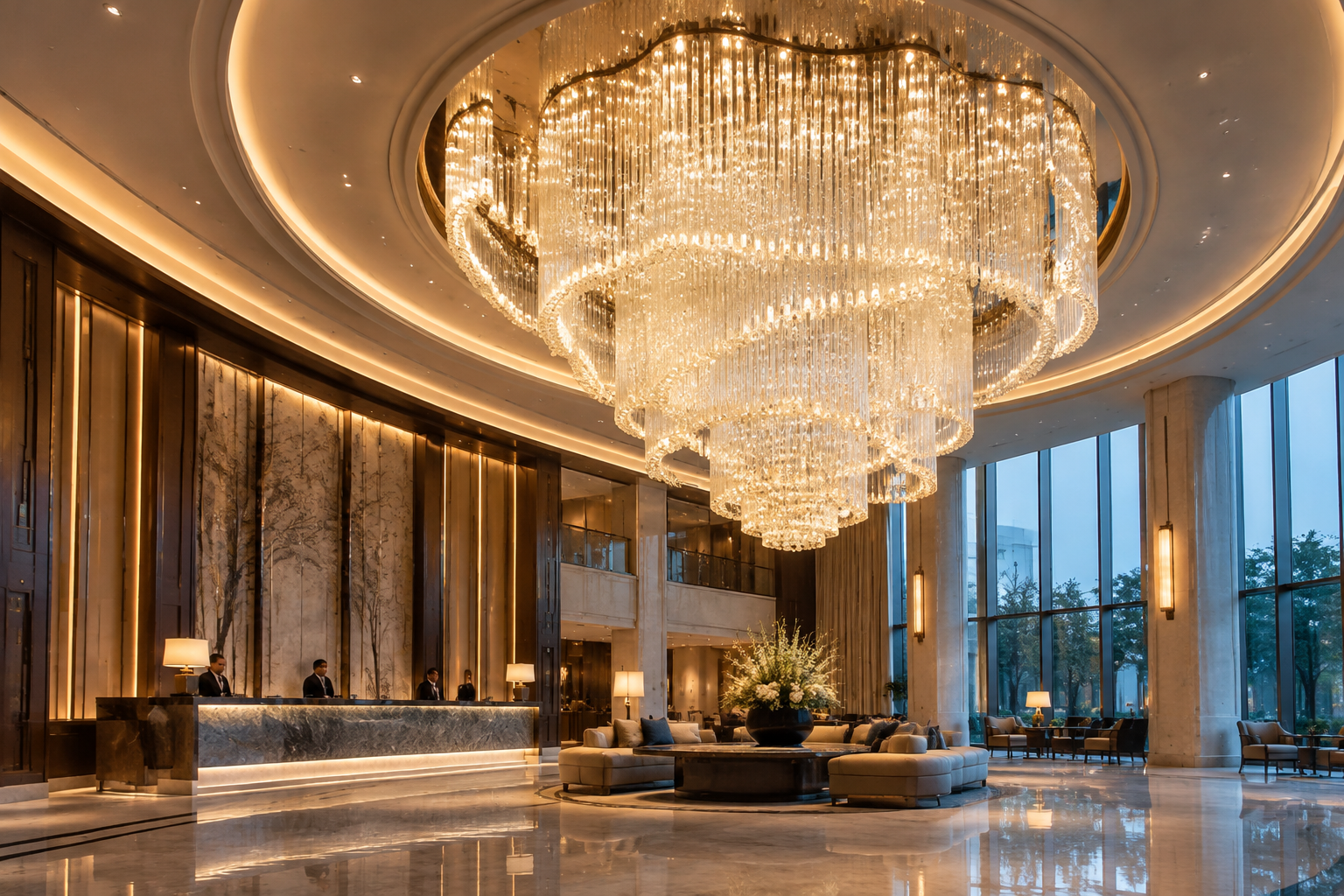
Site assembly duration should be quoted against the approved design and installation conditions, not a generic chandelier size category. As a recommended specification, request 2 programme allowances: mechanical installation and electrical testing with scene commissioning. The installer should account for access equipment, structural readiness, module connections, decoration placement, protection of hotel finishes and any restrictions on working hours.
Q: How Can Buyers Reduce Damage Disputes After Delivery?
Damage disputes are easier to resolve when shipment condition and responsibilities are documented before dispatch. A recommended specification is 3 photographic checkpoints: finished components, restrained components inside open crates and sealed labelled crates. Agree inspection, notification and claims procedures with the seller, carrier and insurer, then preserve packaging and arrival photographs whenever damage is suspected or discovered during unpacking.
Sources and Technical References
Use official references to confirm applicable requirements, and obtain current editions through the project compliance team.
- CEN-CENELEC: European standardisation information for locating EN 12464-1 and the applicable EN 60598 standards through national standards bodies.
- IES: Illuminating Engineering Society for lighting guidance and photometric data practices; IES is not a chandelier product certification.
- IWBI: WELL v2 for applicable project-level light requirements.
- IPPC: International Standards for Phytosanitary Measures for ISPM 15 and regulated wood-packaging requirements.
- European Commission: CE marking guidance for manufacturer obligations and conformity context.
- DALI Alliance: Official technical and certification resources for checking DALI-2 product claims and system requirements.
 How Should Large Hotel Chandeliers Be Shipped and Assembled?: Q: How much time should buyers allow for chandelier site assembly?
Request a Custom Quote
A useful chandelier quotation starts with the delivery route and assembly constraints as well as the visual design.
Send the hotel interior drawings, chandelier concept, ceiling and structural information, destination country, control requirements and intended installation date. Include receiving-route measurements, storage conditions, preferred finish samples and the installer’s scope. Request separate descriptions of modules, crates, documentation, sampling and commissioning support so competing offers can be compared consistently.
At XHLWX (led-project-light.com), a Custom Indoor LED Lighting Manufacturer based in China, we recommend approving packaging and assembly together. Request a project-specific proposal that identifies engineering assumptions, required compliance evidence and responsibilities from factory release through indoor hotel installation.
Need a tailored lighting plan for your project?
Our senior lighting designers reply within 48 hours with a free design proposal & quotation.