
LED Downlight Guide 2026: Anti-Glare, CRI90 & Cut-Outs
Quick answer
Discover the 2026 commercial led downlight design guide. Explore anti-glare UGR<19 targets, CRI90 optics, cut-out parameters, and EN 12464-1 compliance.
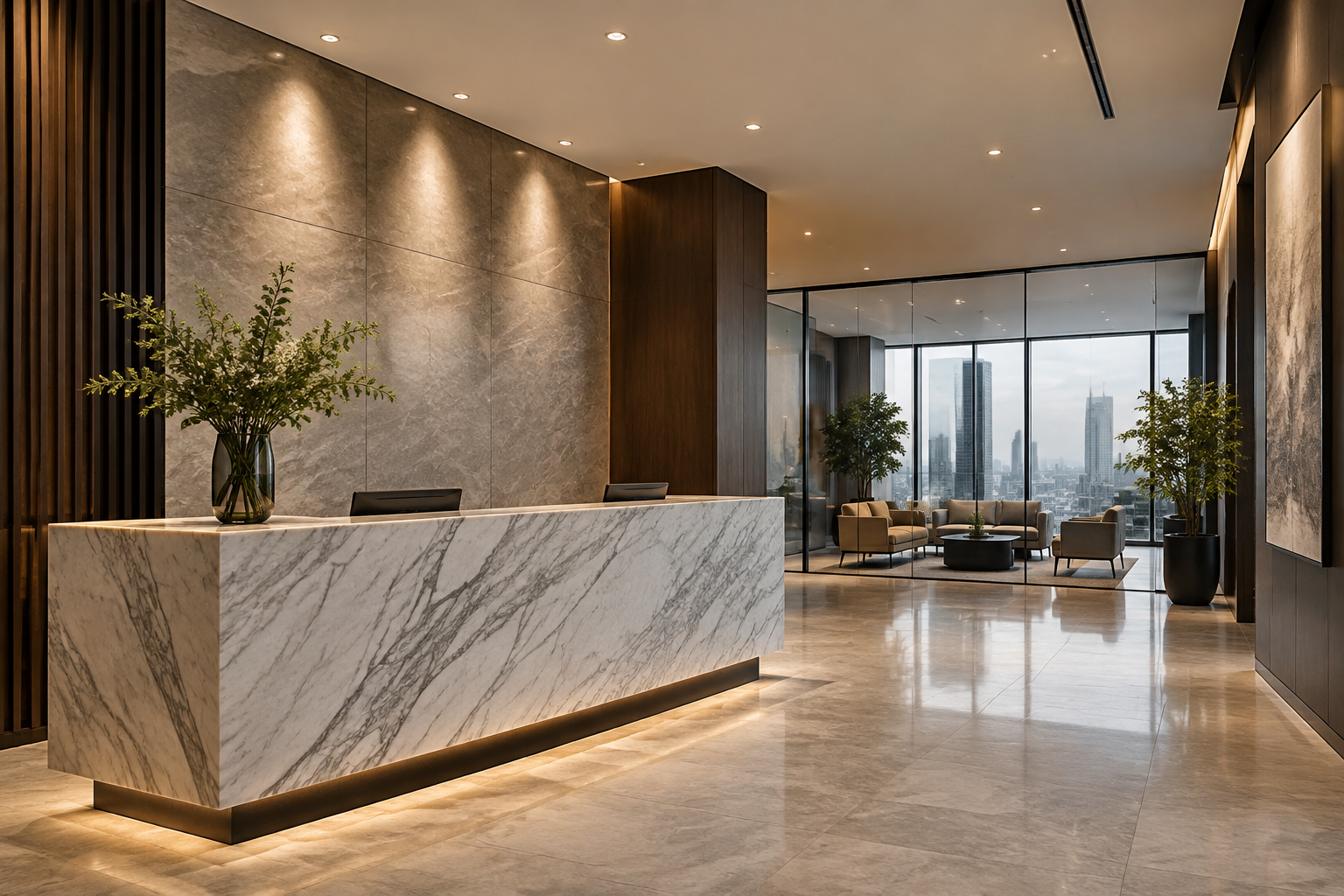
Introduction — the Design Problem in This Space
Balancing visual comfort, ceiling aesthetics, and adequate illumination remains the primary challenge in commercial and hotel recessed led downlight installations. At XHLWX (led-project-light.com), a Custom Indoor LED Lighting Manufacturer based in China, we collaborate with European and Middle Eastern lighting designers who face the daily challenge of integrating discrete <a href="/products">commercial luminaires</a> into complex architectural ceilings without compromising optical performance.
Modern interior architecture increasingly demands clean ceiling planes, meaning lighting fixtures must be virtually invisible while still delivering precise lux levels to the work plane or floor. When an inappropriate led downlight is specified, the result is often severe ceiling glare, poor color rendering of finishes, or compromised acoustic integrity due to mismatched cut-out sizes.
Furthermore, global energy regulations are pushing the boundaries of luminous efficacy, forcing engineers to find fixtures that offer both high output and advanced dimming capabilities. This 2026 guide explores the comprehensive technical criteria required to solve these challenges, bridging the gap between architectural intent and rigorous photometric reality.
Lighting Criteria and Standards for This Application
Strict adherence to EN 12464-1 and WELL v2 standards ensures recessed fixtures deliver optimal visual acuity and circadian support for commercial occupants. Specifying professional luminaires is no longer just about raw lumen output; it requires a holistic approach to spectral quality, glare mitigation, and rigorous testing compliances.
For commercial offices and premium hospitality spaces, the DIN EN 12464-1 standard mandates specific illuminance targets and strict Unified Glare Rating (UGR) limits based on the visual tasks performed in the space. Concurrently, the WELL v2 building standard emphasizes Equivalent Melanopic Lux (EML) and advanced color rendering metrics, shifting the focus toward human-centric lighting models. To meet these overlapping requirements, specifiers must rely on comprehensive technical parameters verified by accredited laboratories.
Below is the recommended specification framework for commercial and hospitality recessed luminaires:
| Parameter Category | Recommended Specification | Reference Standard | Notes & Premium Components |
|---|---|---|---|
| Optics & Glare | UGR < 19, CRI90+, TM-30 Rf>90, CCT 3000K-4000K, Beam 15°-60° | EN 12464-1, WELL v2 | Bridgelux or Osram COB chips provide superior center-beam punch and thermal stability. |
| Control Protocols | DALI-2, Casambi (Bluetooth Mesh), or standard 0-10V | IEC 62386 | Tridonic and Mean Well drivers ensure flicker-free dimming (simulation target: 1-100%). |
| Housing & Durability | IP44/IP54 (Front face), IK04 impact rating | IEC 60529, IEC 62262 | Die-cast aluminum heat sinks for thermal dissipation to reach L80B10 lifespan targets. |
| Certifications | CE, RoHS, ErP (Ecodesign), ISO9001 factory origin | EU Directives | Mandatory for legal import and commercial deployment across EU and ME regions. |
| Photometric Data | Verified IES / LDT files available for simulation | IES RP | Essential for generating precise DIALux calculation reports. |
Luminaire Selection and Optics
Selecting the proper led downlight requires matching reflector design, beam angles, and thermal management to the specific ceiling height and task requirements. A standard 90-degree wide beam might be suitable for general ambient circulation corridors, but high-end retail and hotel lobbies often require tighter, punchier beam distributions (e.g., 24° or 36°) to create visual hierarchy and highlight specific architectural features.
The optical chamber of a professional downlight typically consists of a high-density COB (Chip-on-Board) light source, a precisely faceted or smooth TIR (Total Internal Reflection) lens, and a secondary anti-glare baffle. The baffle color—often matte black, white, or specular silver—plays a crucial role in managing high-angle light spill and lowering the UGR.
| Downlight Type | Primary Application | Optic Characteristic | Verdict |
|---|---|---|---|
| Fixed Deep Recessed | Open-plan offices, luxury hotel lobbies | Deep baffle cuts off high-angle light, achieving UGR < 19. | Ideal for General Task Lighting: Best balance of low glare and high efficiency. |
| Adjustable / Gimbal | Retail displays, museum exhibits, accent walls | 360° rotation and 30° tilt allow directional aiming. | Essential for Accent Lighting: Provides flexibility for changing merchandise layouts. |
| Asymmetric Wall Washer | Vertical architectural surfaces, perimeter walls | Asymmetric reflector kicks light uniformly down a vertical plane. | Best for Spatial Perception: Eliminates the "cave effect" by brightening walls. |
| Trimless (Plaster-in) | High-end residential, minimalist commercial | Frame is plastered over, leaving only the optical aperture visible. | Ultimate Architectural Integration: Highest aesthetic appeal but complex installation. |
How Do Cut-out Dimensions Impact Commercial Led Downlight Retrofits?
Standardizing cut-out dimensions ensures seamless retrofits, reducing ceiling repair costs and accelerating installation times during commercial renovation projects. When upgrading legacy halogen or compact fluorescent (CFL) fixtures to modern LED systems, the existing hole in the plasterboard or grid ceiling dictates the mechanical constraints of the new luminaire.
If the new led downlight has a smaller cut-out requirement than the existing hole, contractors must use unsightly adapter rings or undergo expensive drywall patching and repainting. Conversely, selecting a fixture with an oversized heat sink or standard commercial cut-outs (commonly 150mm, 200mm, or 8 inches) allows the new luminaire to snap directly into place using heavy-duty torsion springs. Maintaining the exact cut-out specification (design target: matching within a 5mm tolerance) guarantees structural safety and preserves the ceiling's acoustic and fire-rated integrity.
What Is the Role of Deep-recessed Anti-glare Designs in Hospitality Spaces?
Deep-recessed architectures hide the light source from direct sightlines, significantly lowering UGR and establishing a luxurious, low-glare atmosphere in hotels. In hospitality environments, the lighting must feel inviting and ambient without drawing attention to the fixtures themselves. A "quiet ceiling" is achieved by utilizing a deep baffle that pushes the COB LED further back into the ceiling plenum.
This physical geometry restricts the cut-off angle—the angle at which the light source becomes visible to an observer. By engineering a cut-off angle of 30 to 40 degrees, lighting manufacturers ensure that guests walking through a corridor or relaxing in a lounge only experience the effect of the light on the floor and walls, rather than the piercing brightness of the diode. This technique is critical for meeting strict IES RP guidelines for visual comfort in high-end design.
Why Are High CRI90 and TM-30 Metrics Critical for Retail and Hotel Lobbies?
Exceptional CRI90 and TM-30 fidelity accurately render architectural finishes and merchandise, enhancing brand perception and spatial depth in premium environments. While standard CRI80 lighting might suffice for basic utility areas, it lacks the spectral depth required to accurately portray warm tones, wood grains, fabrics, and human skin.
The TM-30 standard provides a much more comprehensive evaluation using Fidelity (Rf) and Gamut (Rg) scores. A recommended specification of TM-30 Rf>90 and Rg>100 ensures that reds (measured traditionally as R9) are vibrant and saturated, which flatters skin tones and makes food in hotel restaurants look appetizing. Investing in premium optics equipped with Samsung or Bridgelux chips featuring specialized phosphors guarantees this high level of color rendering without drastically sacrificing lumen-per-watt efficiency.
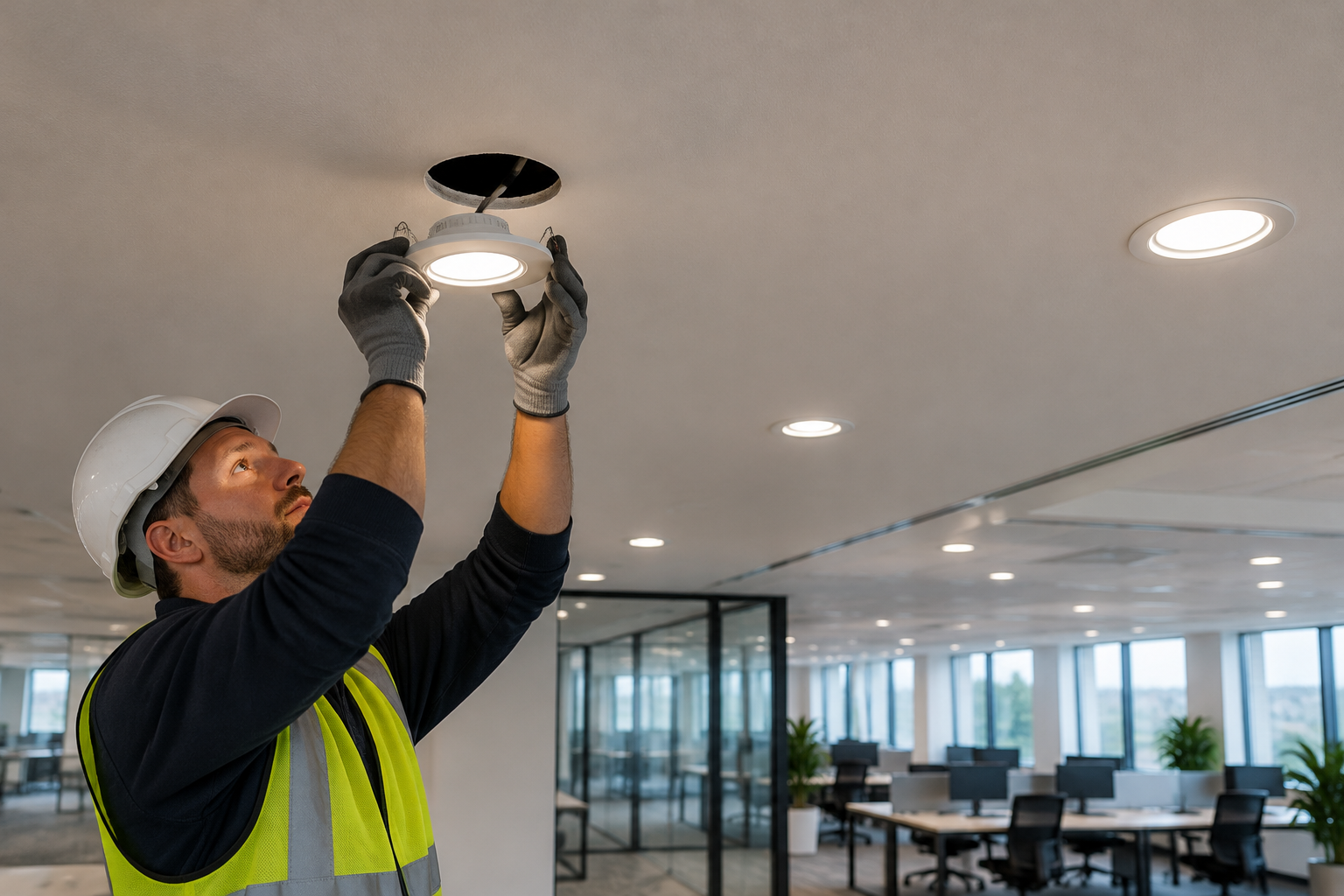 LED Downlight Guide 2026: Anti-Glare, CRI90 & Cut-Outs: How do cut-out dimensions impact commercial led downlight retrofits?
Controls, Energy and Commissioning (DALI-2 / Casambi / Sensors)
Integrating advanced DALI-2 or Casambi networks with passive infrared sensors maximizes energy savings and simplifies post-installation lighting commissioning. Commercial buildings are rapidly moving away from simple phase-cut dimming toward intelligent, networked digital control systems. These systems allow facilities managers to harvest daylight, set occupancy schedules, and monitor energy consumption in real-time.
DALI-2 (Digital Addressable Lighting Interface) is the gold standard for wired commercial installations, allowing each led downlight to be individually addressed and grouped via software rather than hardwiring. For retrofit scenarios where pulling new DALI control wires is prohibitively expensive, Casambi Bluetooth Mesh technology offers a robust wireless alternative.
By pairing these control systems with high-quality Tridonic or Mean Well drivers, engineers can achieve a design target of smooth, flicker-free dimming down to 1%, while extending the lifespan of the LED components. Standard 0-10V systems remain viable for simpler projects, though they lack the two-way data communication required for advanced energy reporting and predictive maintenance.
Photometric Files & Compliance (IES / LDT / DIALux / CE / RoHS / ErP)
Verified IES and LDT photometric files imported into DIALux provide accurate lux and uniformity simulations required for strict CE and ErP compliance. Professional lighting design relies entirely on predictable data. Without accurate photometric distributions mapping the luminous intensity of a fixture at every angle, electrical engineers cannot guarantee that their layouts will meet the required DIN EN 12464-1 lux targets on the work plane.
Manufacturers must supply tested IES and LDT photometric files generated by goniophotometer laboratories. These files are loaded into calculation software like DIALux evo to create 3D simulations of the space, mapping false-color renders of light distribution and calculating average illuminance (E_m) and uniformity (U_o).
Furthermore, strict adherence to European standards such as CE marking, RoHS (Restriction of Hazardous Substances), and the latest ErP (Energy-related Products) directive ensures the led downlight meets all legal safety, environmental, and efficacy thresholds required for market entry.
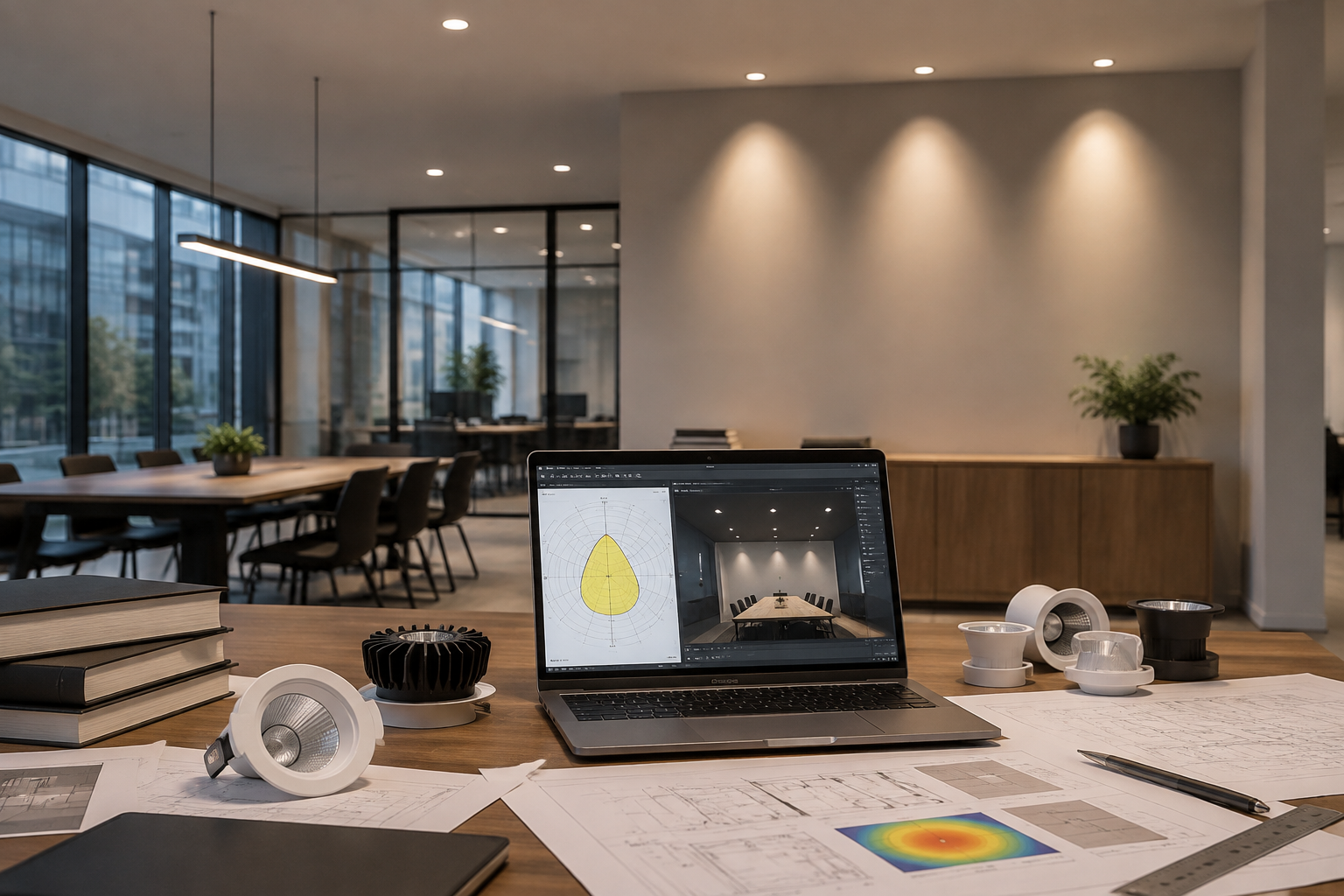 LED Downlight Guide 2026: Anti-Glare, CRI90 & Cut-Outs: Photometric files & compliance (IES / LDT / DIALux / CE / RoHS / ErP)
Frequently Asked Questions
This section addresses the most common technical inquiries electrical engineers and lighting designers face when specifying commercial recessed luminaires.
Q: What Is the Recommended Specification for Led Downlight Cut-out Sizes in Office Retrofits?
The recommended specification typically spans 150mm to 200mm for high-output commercial retrofits. Matching the existing hole diameter prevents costly drywall modifications, while a spring-clip mechanism ensures a tight acoustic seal against the ceiling plane.
Q: How Does a Deep Baffle Affect the Beam Angle and UGR Rating?
A deep baffle physically blocks high-angle light, reducing the UGR below 19 to meet EN 12464-1 standards. This design naturally narrows the beam angle by 10 to 15 degrees, focusing the lux target directly onto the work plane.
Q: Are DALI-2 Drivers Compatible with Standard 0-10V Dimming Systems?
No, DALI-2 is a digital protocol requiring distinct wiring and controllers, whereas 0-10V is strictly analog. However, bridging devices can translate between the two, achieving a simulation target of 1% smooth dimming across mixed-protocol commercial installations.
Q: What IP Rating Is Required for Hotel Bathroom Downlights?
Hotel bathrooms require a recommended specification of at least IP44 above the vanity and IP65 directly inside shower enclosures. This protects the Bridgelux or Osram LED chips from moisture, ensuring the fixture achieves its 50,000-hour L80B10 lifespan target.
Sources and Technical References
The design targets and standards referenced in this guide are derived from globally recognized illumination and building health authorities.
- EN 12464-1 & DIN EN 12464-1: European standards governing indoor workplace lighting, defining required lux levels and maximum UGR limits.
- WELL Building Standard (v2): Administered by the IWBI, focusing on circadian lighting design, EML targets, and occupant wellbeing.
- IES RP (Illuminating Engineering Society Recommended Practices): North American guidelines providing standardized photometric testing and application recommendations.
- ErP Directive: The EU's Ecodesign mandate ensuring luminaires meet minimum energy efficiency and standby power requirements.
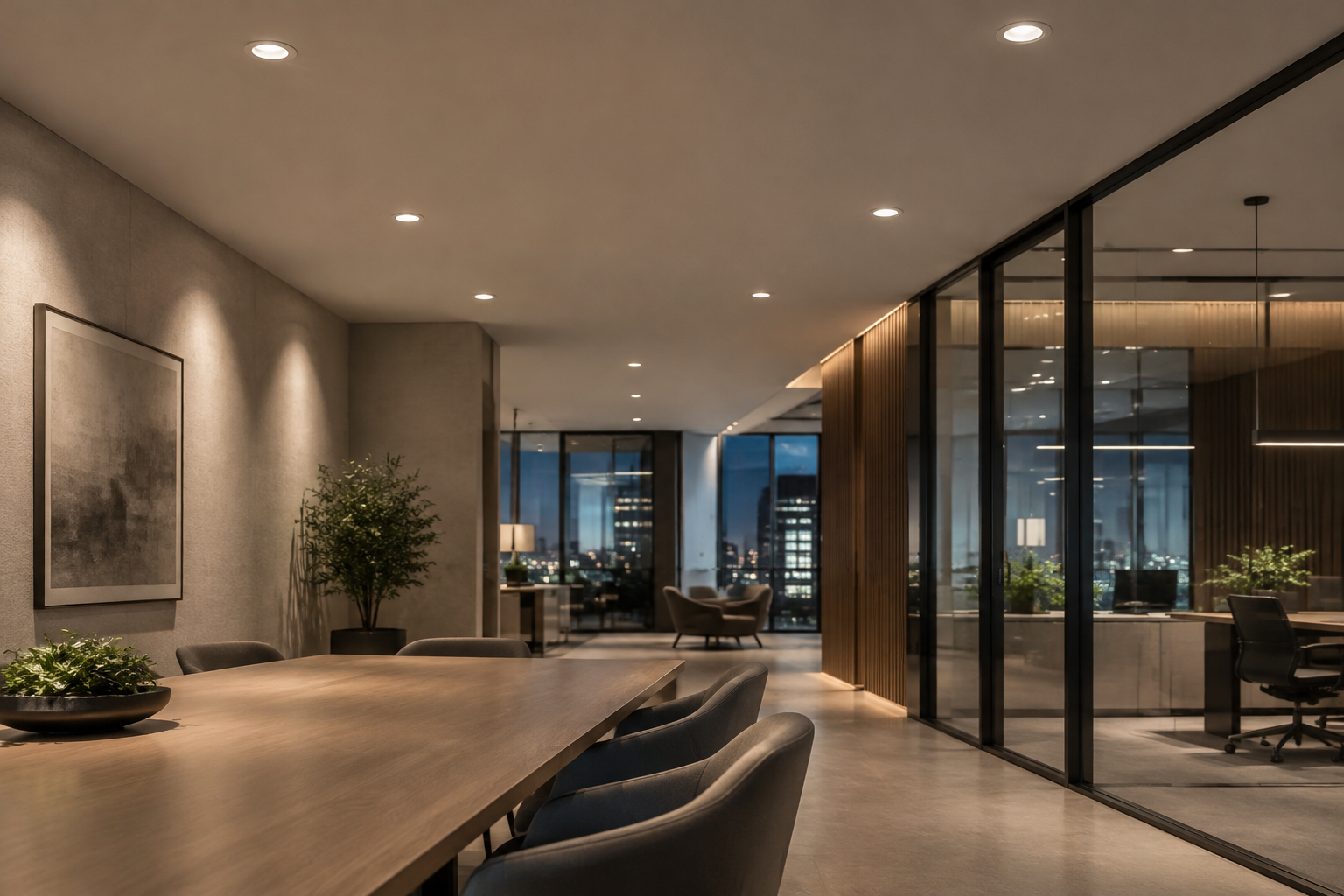 LED Downlight Guide 2026: Anti-Glare, CRI90 & Cut-Outs: Q: Are DALI-2 drivers compatible with standard 0-10V dimming systems?
Request a Custom Quote
Partner with our engineering team to design, simulate, and manufacture high-performance lighting systems tailored to your exact project requirements. Whether you require highly specific cut-out dimensions for a heritage retrofit, or advanced DALI-2 integrated anti-glare downlights for a new commercial tower, precision engineering is paramount.
At XHLWX (led-project-light.com), a Custom Indoor LED Lighting Manufacturer based in China, our goal is to deliver world-class luminaires that satisfy the strictest EU, US, and Middle Eastern regulations. Contact our technical sales team today to request <a href="/guides/led-downlight-installation">led downlight installation</a> guides, IES files for DIALux simulations, or a bespoke manufacturing quote for your next major architectural development.
Need a tailored lighting plan for your project?
Our senior lighting designers reply within 48 hours with a free design proposal & quotation.