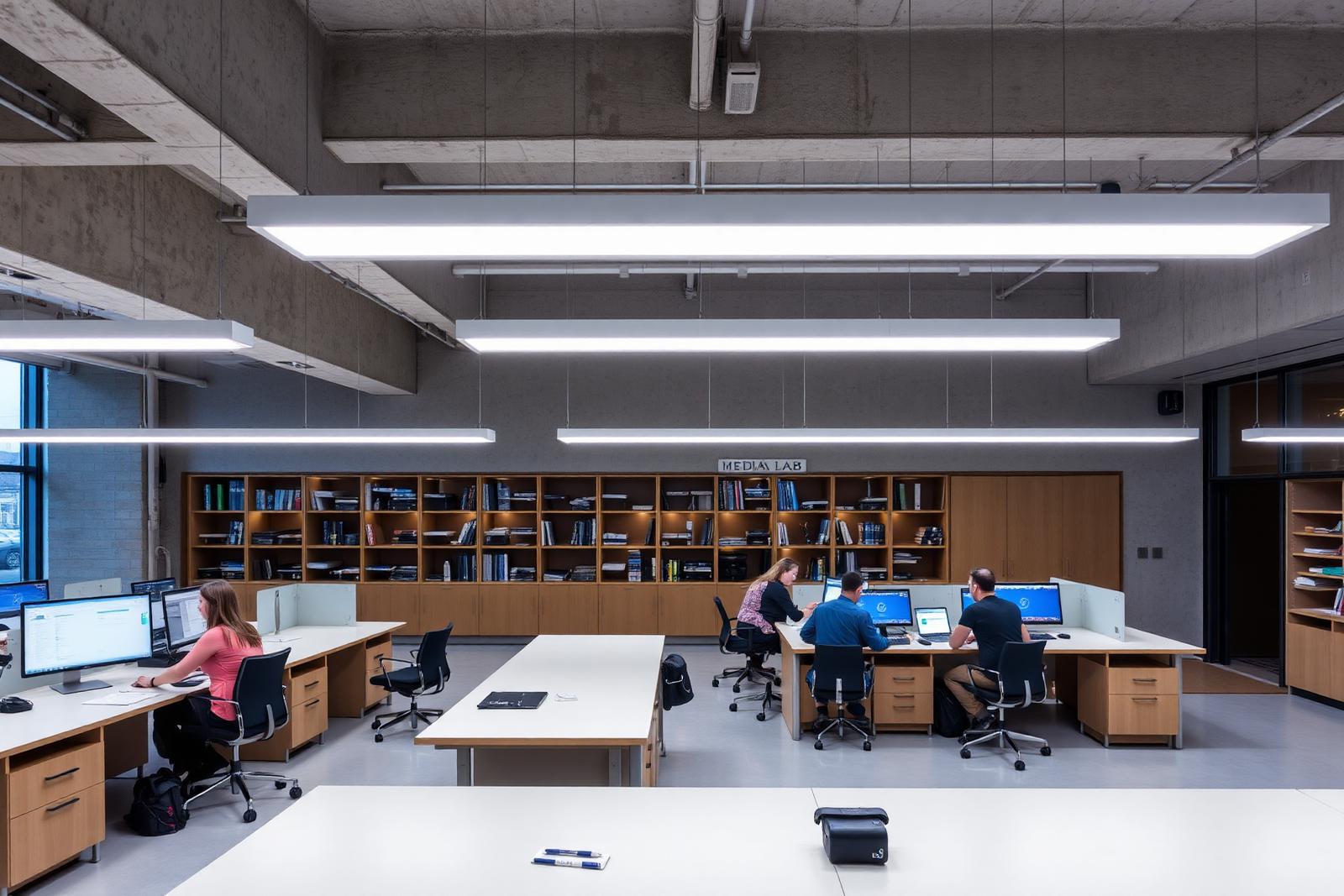
Boston MIT Media Lab: Řešení studiového osvětlení s laditelnou bílou barvou a UGR<16
Úvod – problém na místě
Ve společnosti XHLWX (led-project-light.com), výrobci zakázkového vnitřního LED osvětlení se sídlem v Číně, se specializujeme na řešení složitých problémů s osvětlením pro instituce světové úrovně. MIT Media Lab v Bostonu, USA, centrum kreativního výzkumu a technologických inovací, představila jedinečný problém. Jejich stávající osvětlovací systém byl nedostatečný pro rozmanité a vizuálně náročné úkoly prováděné v jejich studiích. Výzkumníci se potýkali s problémy s vizuální únavou kvůli vysokému oslnění (UGR>22), špatné přesnosti barev a statické teplotě barev, která nedokázala podpořit různorodé potřeby prototypování, práce s počítačem a společných sezení. Požadavek byl jasný: nejmodernější systém osvětlení zaměřený na člověka, který nabízí bezchybný vizuální komfort (UGR<16), dokonalé podání barev (CRI>95) a úplnou kontrolu nad teplotou barev (laditelná bílá).
Co znamenalo „zakázkové“ na tomto projektu – matice schopností
Pro MIT Media Lab „zakázkové“ znamenalo mnohem víc než jen jednoduchý výběr svítidel. Zahrnovalo to od základu inženýrství optických, mechanických a elektrických systémů svítidla, aby splňovaly přísné výkonnostní cíle. Úzce jsme spolupracovali s designovým týmem klienta na vývoji řešení, které se bezproblémově integrovalo do stávající architektonické estetiky a zároveň poskytovalo nekompromisní výkon. Níže uvedené specifikace nastiňují zakázkové schopnosti, které jsme nasadili.
| Parametr | Specifikace | Soulad se standardy | Poznámky |
|---|---|---|---|
| Optický systém | Laditelná bílá CCT: 2700K – 6500K | ANSI C78.377 | Dosažena výjimečná konzistence CCT napříč všemi svítidly. |
| Oslnění a barva | UGR < 16, CRI Ra > 95 (R9 > 80) | EN 12464-1 | Zakázková mikro-prizmatická čočka s hlubokým lamelovým designem. |
| Řídicí protokol | DALI-2 DT8 (řízení barev) | IEC 62386-209 | Umožněno plynulé stmívání bez blikání a ladění CCT prostřednictvím centrálního BMS. |
| LED čip a ovladač | Bridgelux Thrive Vesta Series LED, prémiový ovladač Tridonic DALI-2 DT8 | LM-80, TM-30 | Vybráno pro vynikající podání barev, které napodobuje přirozené spektrum. |
| Kryt a mechanika | 6063-T5 eloxovaný hliník, zakázkové délky: 1180mm až 3450mm | IP40 | Extrudované profily byly řezány na přesné délky podle architektonických plánů. |
| Certifikace | CE, RoHS, UL Listed Driver | ISO9001:2015 | Všechny komponenty a výrobní procesy jsou plně certifikovány pro americký trh. |
Inženýrská řešení
Úspěch projektu závisel na vyřešení tří základních inženýrských výzev, z nichž každá vyžadovala přizpůsobený přístup, který kombinoval optickou fyziku, elektrotechniku a přesnou výrobu.
Jak jsme dosáhli ultra nízkého oslnění (UGR<16) ve víceúčelovém prostoru?
Primární výzvou bylo potlačení oslnění na úroveň vhodnou pro intenzivní práci s počítačem a nahrávání videa. Dosažení jednotného hodnocení oslnění (UGR) pod 16 je náročné. Naše řešení bylo vícevrstvý optický systém. Začali jsme použitím vysoce výkonných LED diod Bridgelux, které byly hluboko zasazeny do zakázkového hliníkového profilu. Toto počáteční stínění bylo doplněno na zakázku vyrobeným dvouvrstvým difuzorem. Vnitřní vrstva byla opálový polykarbonát pro počáteční homogenizaci, ale klíčovým prvkem byla vnější mikro-prizmatická čočka. Tato čočka obsahuje tisíce přesně úhlových hranolů, které odřezávají světlo s vysokým úhlem – primární příčinu oslnění – a zároveň směřují funkční světlo dolů na pracovní plochy. Tato optická kontrola zajistila, že světlo bylo umístěno přesně tam, kde bylo potřeba, udržovala vysokou osvětlenost na stolech, aniž by vytvářela vizuální nepohodlí pro uživatele.
Jaká byla strategie pro implementaci bezproblémového řízení laditelné bílé?
Flexibilita v teplotě barev byla nezbytná. Specifikovali jsme ovladače DALI-2 Device Type 8 (DT8) od společnosti Tridonic. Na rozdíl od starších metod, které vyžadují dvě samostatné DALI adresy pro stmívání a barvu, DT8 používá jednu adresu pro správu intenzity i CCT. To snížilo počet požadovaných adres na polovinu, což zjednodušilo uvedení do provozu a snížilo náklady. Tato implementace poskytla výzkumníkům MIT podrobnou kontrolu nad osvětlením. Mohli nastavit ostré, chladné 6000K pro soustředěnou analytickou práci nebo teplé, příjemné 3000K pro kreativní brainstormingové sezení. Systém byl integrován do systému řízení budovy laboratoře, což umožnilo předprogramované scény a automatizované cirkadiánní rytmy pro zlepšení pohody a produktivity.
Jak byly zakázkové délky svítidel integrovány do stávající architektury?
Architektura Media Lab se vyznačuje dlouhými, souvislými liniemi pohledu a jedinečnými konstrukčními prvky. Standardní svítidla by narušila estetiku. Náš tým pracoval přímo s CAD soubory architekta, aby vyvinul plán pro zavěšená lineární svítidla v souvislých řadách. Vyrobili jsme zakázkové délky našich hliníkových extrudovaných profilů 6063, některé dosahující až 3,45 metru, aby dokonale odpovídaly rozměrům místnosti a montážním bodům. To eliminovalo potřebu nepříjemných spojů nebo výplní, čímž se vytvořil čistý, monolitický vzhled. Naše schopnost upravit kryt a montážní hardware přímo v naší továrně zajistila dokonalé přizpůsobení, což usnadnilo proces instalace a přineslo výsledek, který vypadá skutečně integrovaně a záměrně.
Výsledky projektu – měřeno
Audity po instalaci potvrdily dramatické zlepšení osvětlení, splňující nebo překračující všechny cíle projektu. Data potvrzují úspěch našeho zakázkového inženýrského přístupu.
- Úrovně osvětlení: Dosaženo konzistentního průměru 750 luxů na primárních pracovních plochách, což poskytuje dostatek světla pro detailní úkoly, s vynikající rovnoměrností.
- Kontrola oslnění: Měření UGR na místě potvrdila průměrnou hodnotu UGR < 15,2 napříč všemi kritickými pozicemi pro sledování, což je výrazně lepší než cíl UGR<16 a UGR>22 předchozí instalace.
- Kvalita barev: CRI bylo ověřeno na Ra > 96 při všech teplotách barev mezi 2700K a 6500K, což zajišťuje, že barvy prototypů a materiálů byly viděny s téměř dokonalou přesností.
- Úspora energie: Nový LED systém spotřeboval o 68 % méně energie než zastaralý zářivkový systém T5, který nahradil. To se promítá do předpokládané úspory provozních nákladů přes 15 000 $ ročně.
- Návratnost projektu: Na základě úspor energie a údržby je předpokládaná doba návratnosti investice rychlých 32 měsíců.
Fotometrické soubory a shoda (IES / LDT / DIALux / CE / RoHS)
Abychom zaručili výkon ještě předtím, než bylo vyrobeno jediné svítidlo, náš inženýrský tým vygeneroval specifické fotometrické soubory IES a LDT pro zakázkově navržené svítidlo. Tyto soubory jsou základními digitálními modely světelného výkonu svítidla. Poskytli jsme je projektovým návrhářům osvětlení, kteří je importovali do softwaru DIALux, aby provedli komplexní simulace celého studiového prostoru. Tento proces nám umožnil ověřit, že náš design splní přísné cíle UGR<16 a 750 luxů. Všechny komponenty a finální sestavené produkty jsou plně v souladu s CE a RoHS, a naše výrobní zařízení funguje pod přísným systémem řízení kvality certifikovaným podle ISO9001, což zajišťuje sledovatelnost a konzistentní kvalitu pro každý kus odeslaný do Bostonu.
Často kladené otázky
Otázka: Jaká je výhoda laditelného bílého osvětlení ve vzdělávacím prostředí?
Odpověď: Laditelné bílé osvětlení umožňuje pedagogům a výzkumníkům upravit teplotu barev tak, aby podporovala konkrétní činnosti. Například chladnější světlo (5000K-6500K) může zvýšit bdělost a soustředění pro analytické úkoly a zkoušky. Teplejší světlo (2700K-3500K) vytváří uvolněnější, kreativní atmosféru ideální pro spolupráci a brainstorming. Tato flexibilita přímo podporuje principy osvětlení zaměřeného na člověka a zlepšuje vzdělávací prostředí.
Otázka: Proč bylo hodnocení UGR<16 tak kritické pro MIT Media Lab?
Odpověď: UGR (Unified Glare Rating) pod 16 značí velmi nízké oslnění, což je nezbytné pro prostory s intenzivními vizuálními úkoly. V Media Lab tráví výzkumníci dlouhé hodiny prací na počítačových obrazovkách, s detailní elektronikou a při video produkci. Nízké oslnění zabraňuje namáhání očí, bolestem hlavy a vizuální únavě, čímž maximalizuje komfort a produktivitu. Daleko překračuje standardní doporučení UGR<19 pro běžné kanceláře.
Otázka: Jak dlouho trvá výroba takového zakázkového lineárního profilu?
Odpověď: Doba dodání pro plně zakázkový projekt, jako je tento, se liší, ale typický časový rámec je 6-8 týdnů od konečného schválení návrhu. To zahrnuje vytvoření vytlačovací formy pro jedinečný profil, výrobu a schválení fyzického vzorku a kompletní výrobní sérii. Naše detailní předvýrobní práce, včetně poskytování souborů pro simulace v DIALuxu, zajišťuje, že schválený návrh je správný hned napoprvé.
Otázka: Lze tato svítidla DALI-2 integrovat s jinými řídicími systémy, jako je Casambi?
Odpověď: Rozhodně. Zatímco tento projekt využíval kabelové DALI-2 pro robustní integraci s centrálním BMS budovy, naše svítidla jsou navržena tak, aby byla nezávislá na řízení. Můžeme navrhnout stejné svítidlo s různými ovladači a moduly pro práci s bezdrátovými systémy, jako je Casambi Bluetooth Mesh, nebo jednoduššími analogovými ovladači 0-10V. Řešení řízení přizpůsobujeme specifické infrastruktuře a provozním požadavkům klienta.
Vyžádejte si zakázkovou cenovou nabídku
Tento projekt je příkladem našeho závazku řešit sofistikované problémy s osvětlením pomocí precizně navržených řešení. Vyžaduje váš projekt více než jen standardní produkt? Kontaktujte náš inženýrský tým pro konzultaci a podrobnou cenovou nabídku. Ve společnosti XHLWX (led-project-light.com), výrobci zakázkového vnitřního LED osvětlení se sídlem v Číně, jsme připraveni vybudovat přesně takové řešení osvětlení, jaké váš prostor vyžaduje.