
How Should Custom Ballroom Chandeliers Use DMX and DALI?
Quick answer
Specify large hotel ballroom chandeliers with coordinated DMX and DALI controls, serviceable construction, validated photometry and market-specific compliance
Introduction
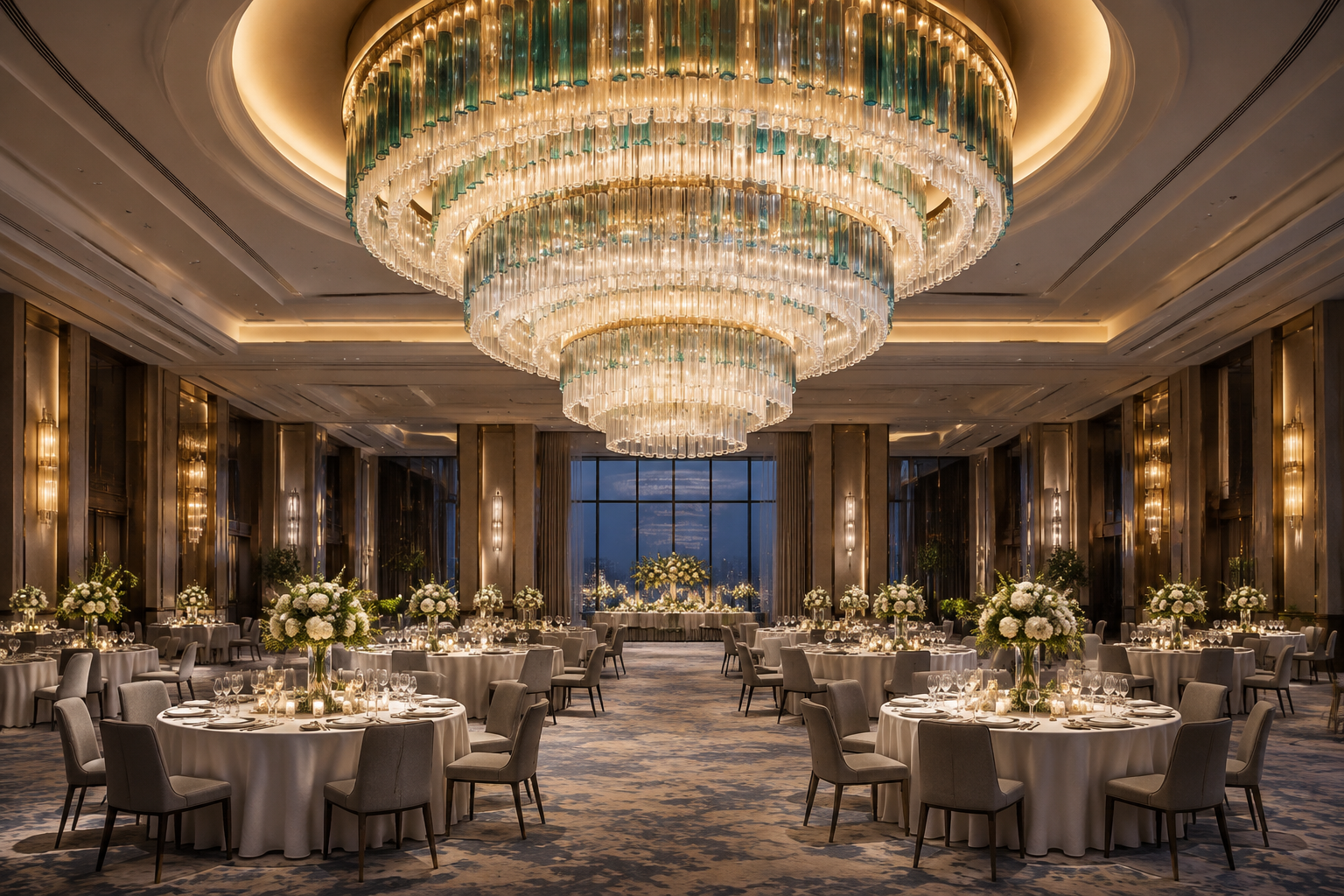
At XHLWX (led-project-light.com), a Custom Indoor LED Lighting Manufacturer based in China, ... we recommend DMX for effects and DALI-2 for architectural dimming. For large hotel ballroom chandeliers, use 4 independently addressed groups and 2 coordinated control domains as design targets; keep protocol wiring separate and validate scene arbitration before procurement.
The essential distinction is between electrical supply circuits, independently controlled lighting groups and protocol addresses. They are not interchangeable. A chandelier can contain several addressable groups on a shared supply, while maintenance isolation or connected load may require additional branch circuits.
For hotel owners, interior designers and FF&E buyers, the objective is a bespoke chandelier that supports banquets, conferences and celebrations without confusing operators. Purchase the decorative assembly, its control architecture and its maintenance strategy as one coordinated package.
Design Criteria and Standards
A ballroom chandelier specification should define visual performance, electrical segmentation and acceptance evidence before decorative details are frozen.
Treat the following values as recommended specifications or design targets, not claims about an existing XHLWX product. Final selections depend on ceiling height, room geometry, finishes, event layouts and the destination market.
| Parameter | Spec | Standard | Notes |
|---|---|---|---|
| CCT and colour rendering | Recommended specification: 2700–3500 K white light; CRI ≥90 | EN 12464-1; WELL v2 where applicable | Approve colour using the actual diffuser and decorative material; these values are not universal standard requirements. |
| Glare and beam distribution | Design target: UGR ≤19 for relevant conference viewing positions; recommended specification: 15–40° optics where directional light is needed | EN 12464-1; IES guidance | Calculate glare in the room; UGR is not an intrinsic chandelier rating. |
| Control interfaces | Recommended specification: DALI-2 architectural drivers and DMX effect drivers; evaluate Casambi, KNX or 0-10V only where the project requires them | IEC 62386; ANSI E1.11 DMX512-A | Specify interfaces individually; these systems are not interchangeable. |
| Housing, material and IP | Recommended specification: aluminium LED carriers, engineered steel suspension and IP20 for suitable dry indoor locations | EN 60598; IEC 60529 | Verify heat paths, cleaning conditions and structural loading. |
| LED and driver brands | Recommended specification: evaluate Osram, Bridgelux or Samsung LEDs; Tridonic or Mean Well drivers | Relevant component documentation; DALI Alliance database where applicable | Brand names are options, not promises of protocol support or assembled-product approval. |
| Market compliance | Recommended procurement requirement: applicable CE/RoHS documentation for EU supply; project-required UL evidence for US supply; SAA only if requested; verify any ISO9001 claim | Applicable EU legislation; UL 1598; UL 8750; ISO 9001 | CE is a conformity marking, RoHS concerns restricted substances, and ISO 9001 concerns management systems. |
| Dimming and scene behaviour | Design target: stable dimming to 1% for specified white-light groups | Relevant driver specifications and witnessed testing | Define whether the percentage means control command or measured light output. |
EN 12464-1 informs indoor workplace lighting assessment where applicable; it does not prescribe one universal ballroom chandelier solution. WELL v2 is a building certification framework, not a chandelier approval. Use IES guidance alongside the adopted local requirements and the consultant’s lighting calculations.
For conference use, a preliminary design target of 300–500 lx on relevant task planes can guide modelling. Confirm the actual requirement and the contribution from other indoor luminaires before fixing chandelier output.
Customisation Options and Materials
Large non-standard chandeliers work best when the decorative concept is divided into repeatable, replaceable lighting modules.
Material choice affects weight, glare, colour appearance, thermal performance and maintenance access. Evaluate a lit sample rather than approving finishes solely from photographs.
| Construction option | Main advantage | Main constraint | Control integration | Verdict |
|---|---|---|---|---|
| Aluminium rings with opal diffusers | Continuous luminous geometry and usable thermal paths | Visible joints and diffuser hotspots require attention | Separate ring, uplight and downlight groups | Strong option for restrained architectural ballrooms |
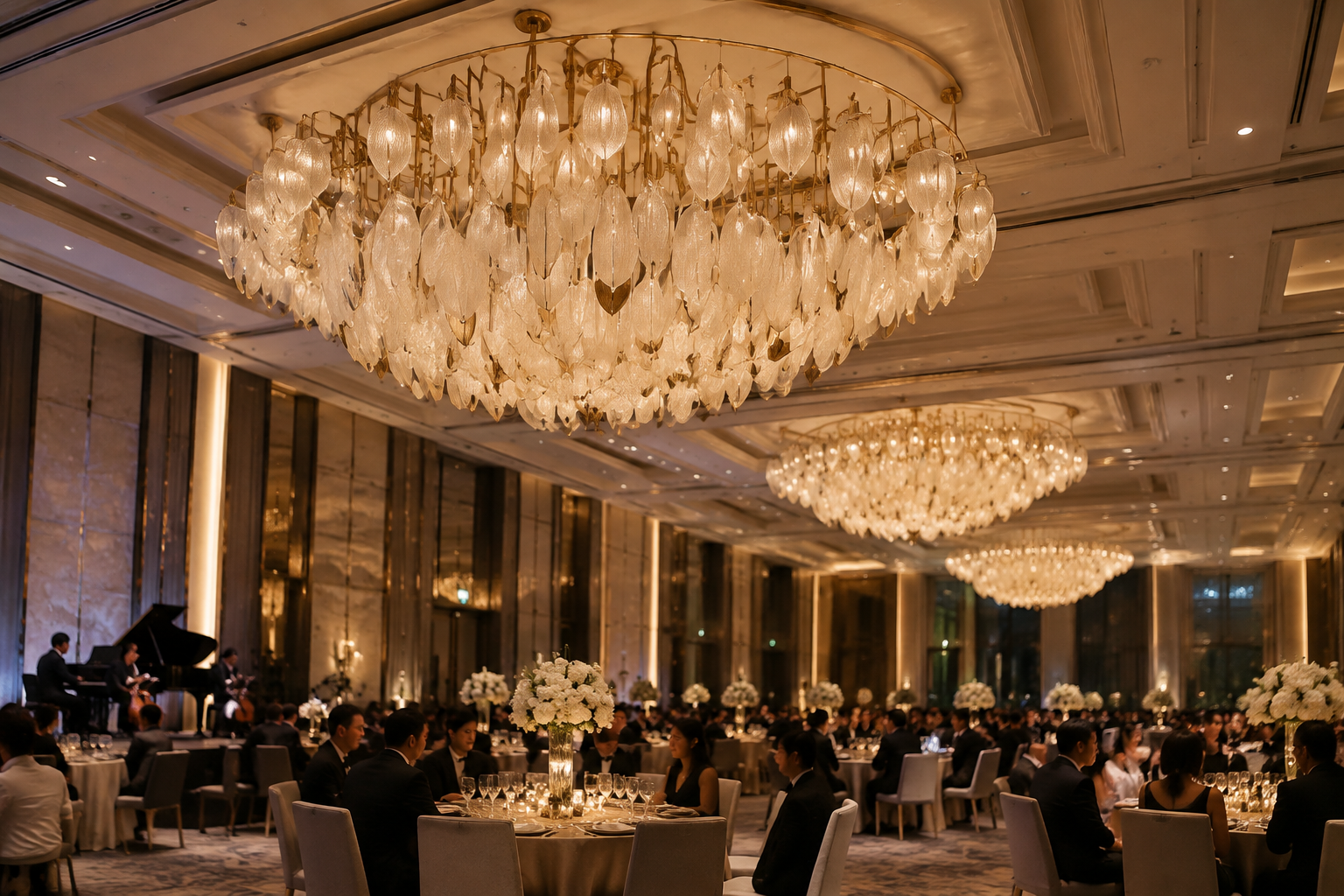
| Crystal or glass drops on a steel frame | Sparkle and a layered decorative appearance | Weight, breakage and cleaning access | Concealed white-light modules with separately controlled accents | Choose when ornament justifies the service burden |
| Metal arms with replaceable LED modules | Localised servicing and clear component separation | Source visibility can increase discomfort | Address groups of arms or optical functions | Suitable when serviceability is a procurement priority |
| Layered translucent panels | Broad luminous surfaces and custom silhouettes | Material ageing, fire behaviour and shadowing need review | Independently dimmed layers; optional effect group | Approve only after material and illuminated mock-ups |
How Should a Large Ballroom Chandelier Be Divided into Control Groups?
Divide the chandelier by lighting function before dividing it by decorative geometry.
A design target of 4 groups could comprise ambient uplight, task-supporting downlight, decorative white sparkle and colour effects. This allows a conference scene to retain useful white light while disabling effects. A banquet scene can reduce downlight without removing the chandelier’s visual presence.
Show each group on the shop drawings and identify its drivers, addresses and electrical supply. Control groups are not automatically separate branch circuits; the electrical designer must determine isolation, protection and load allocation.
Which Materials Suit a Heavy Chandelier Above Hotel Guests?
Materials should be selected against an engineered load path, thermal design and documented maintenance method.
Use structural engineering to verify suspension points, frames, fasteners and building interfaces. Coordinate any applicable seismic requirements and secondary retention with the responsible professionals. A decorative ceiling finish must not be assumed to provide structural support.
Keep LED heat paths separate from heat-sensitive ornament. For crystal and glass, approve retention details and replacement procedures. For translucent polymers, request documented material properties and the fire-performance evidence required by the project.
How Can Bespoke Finishes Remain Consistent Across Chandelier Modules?
Finish consistency requires approved reference samples and a controlled inspection method.
Evaluate metal finishes under the intended chandelier CCT and under typical room lighting. Check glass tint, diffuser opacity and visible fasteners together. Record sample identification and permissible variation in the purchase specification rather than relying on terms such as champagne gold or warm white.
Require replacement modules to reference the approved optical and finish samples, especially where adjacent modules are visually compared.
 How Should Custom Ballroom Chandeliers Use DMX and DALI?: Which materials suit a heavy chandelier above hotel guests?
Controls and Commissioning
DMX and DALI should have separate responsibilities, with coordinated scene commands and documented priority rules.
DALI-2 generally suits addressable architectural lighting, grouping, scenes and supported status reporting. DMX suits rapidly changing effects and detailed channel control. Neither protocol alone guarantees smooth dimming, camera compatibility or good colour mixing; those outcomes depend on the driver, LED engine and configuration.
A practical architecture assigns architectural white light to DALI-2 drivers and coloured accents to DMX drivers or decoders. Where tunable white is required, specify compatible DALI DT8 equipment and confirm controller support. Avoid exposing the same lighting channel to competing controllers unless arbitration is explicitly engineered.
Define the integration boundary. A scene controller, building platform or validated gateway can coordinate both domains. A gateway does not necessarily translate every feature or provide equivalent feedback. KNX may provide the supervisory interface; Casambi may suit particular wireless zones; 0-10V requires separate consideration of switching and addressing limitations.
Document the wiring architecture. Show DALI buses, DMX segments, driver locations, isolation boundaries and power distribution separately. DMX wiring requires suitable topology, termination and any necessary isolated splitters. Coordinate control-cable installation, insulation requirements and separation with the electrical designer and applicable codes.
Write a scene and priority matrix. A design target of 6 operating scenes could cover conference, banquet, presentation, celebration, cleaning and standby. Specify fade behaviour and which source has authority: event console, operator panel or scheduled system. For divisible ballrooms, align chandelier groups with partition states and prevent commands from crossing into an independently occupied room.
Test abnormal conditions. Commission power restoration, controller restart, communication loss and manual override. Define appropriate architectural-light fallback behaviour rather than assuming all drivers respond identically. Emergency lighting and life-safety functions require their own compliant design; normal chandelier controls must not substitute for them.
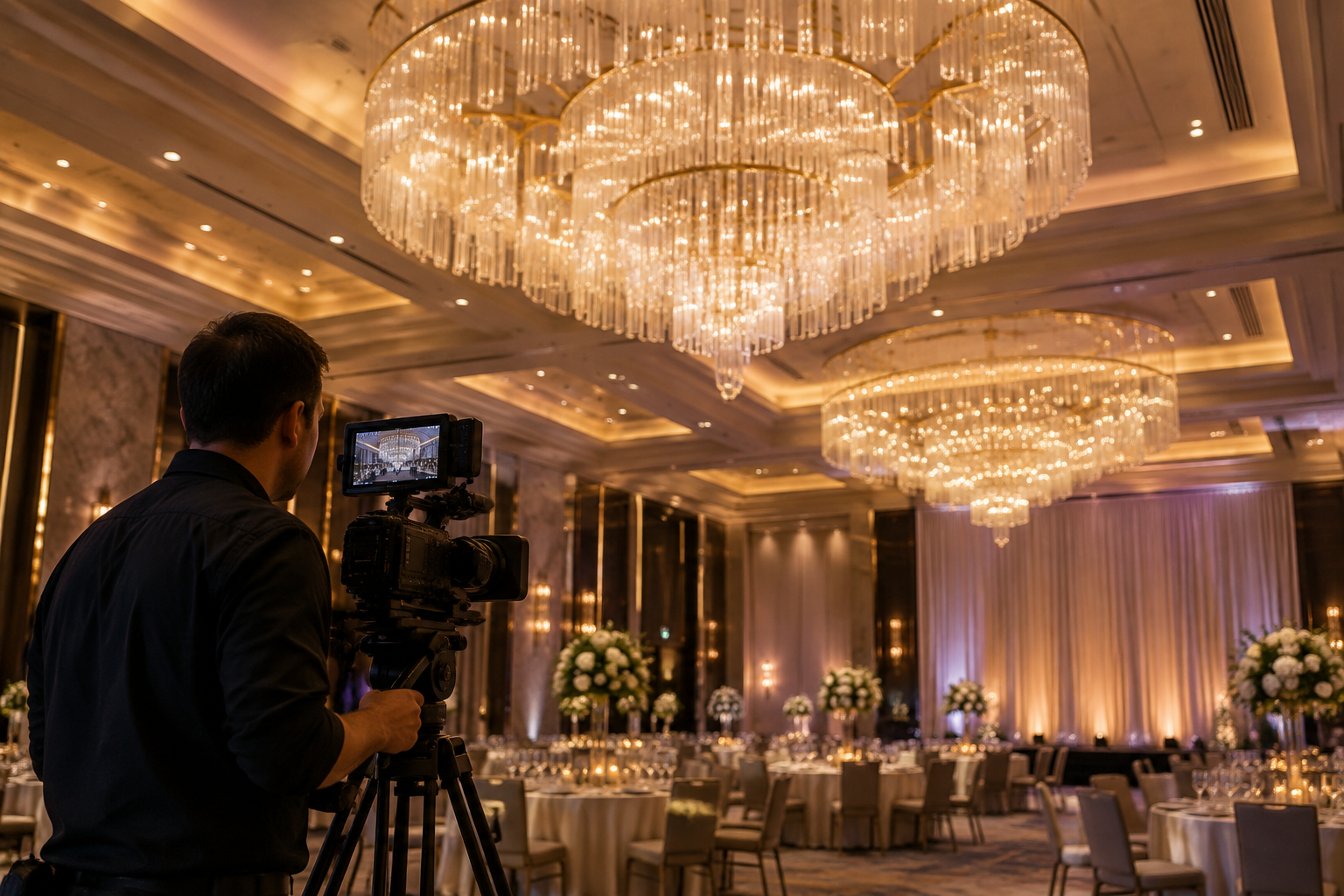
Witness low-level dimming, cross-protocol scene transitions and camera tests using representative event equipment. Record approved settings, address schedules and configuration backups for the hotel’s operations team.
Sampling, MOQ, Lead Time and Quality Control
Procurement should use approval milestones rather than an unsupported promise of minimum order quantity or delivery time.
For a large custom chandelier, request a priced feasibility review covering dimensions, estimated mass, lighting groups, controls and installation access. Confirm MOQ separately for complete assemblies, spare modules, custom glass and special finishes. Their commercial constraints may differ.
A design target of 3 approval gates is useful: finish and optical samples, an electrically representative illuminated module, and a factory assembly review. A small appearance sample cannot prove full-scale structural behaviour or complete-system commissioning.
Ask the manufacturer to separate engineering, material procurement, fabrication, testing, packing and shipping in the proposed programme. Lead time should begin from a defined approval milestone, with dependencies identified. No fixed delivery period should be assumed without a project-specific quotation.
The quality plan should cover:
- Drawing and component-list conformity, including agreed driver substitutions.
- Finish, glass, diffuser and cable identification against approved samples.
- Applicable electrical safety tests, performed and documented appropriately.
- Thermal assessment of representative worst-case operating conditions.
- Functional checks for every lighting group and commissioned scene.
- Trial assembly, module labelling and protective packing for delicate components.
Request accessible driver arrangements and labelled replacement instructions. The installation plan must explain how technicians reach components without dismantling unrelated decorative sections above an occupied room.
Photometric Files & Compliance
Photometry and compliance documents must match the proposed configuration, not merely a similar component or earlier chandelier concept.
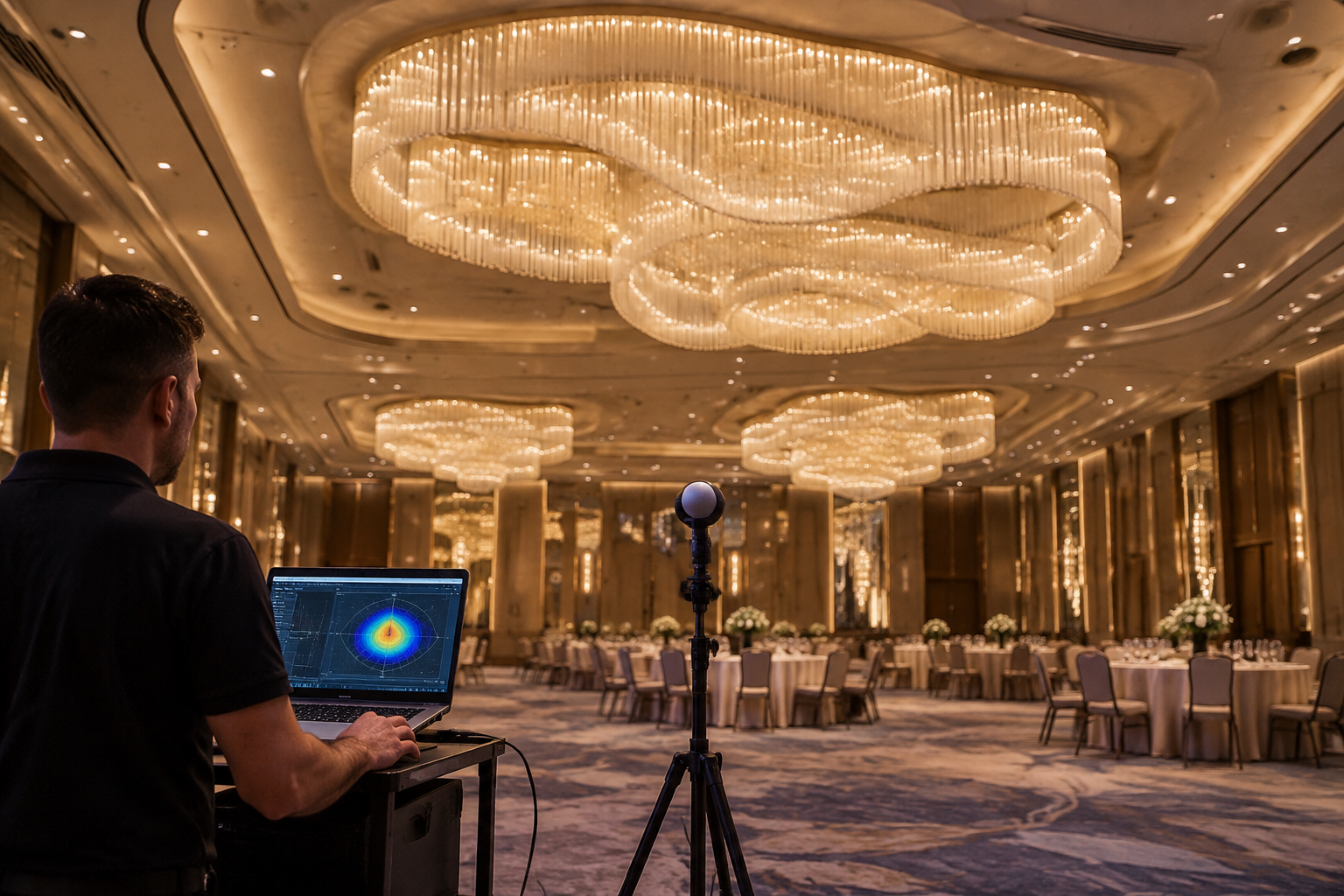
Request IES and LDT photometric files for the relevant optical modules or complete assembly, with clear identification of output, CCT, optics and test conditions. Where files represent modules, the designer must model their placement and account for obstruction by decorative elements.
Use DIALux to assess task-plane illuminance, distribution and relevant glare conditions. Treat sparkle, reflected source images and guest camera views as additional mock-up questions; a calculation alone does not settle them.
EN 60598 identifies the luminaire safety standards family; agree the applicable parts, editions and destination-specific requirements with the compliance specialist. For EU supply, request the applicable declaration of conformity and supporting documentation. For US projects, confirm the required listing or other accepted approval route with the authority having jurisdiction.
Middle Eastern and Southeast Asian destinations require country-specific review rather than a single regional certificate. Confirm local conformity procedures, supply characteristics and project requirements. Component approvals do not automatically establish compliance of the finished chandelier, and ISO 9001 certification would not replace product safety evidence.
 How Should Custom Ballroom Chandeliers Use DMX and DALI?: Photometric files & compliance
Frequently Asked Questions
These answers clarify common procurement and commissioning decisions for large indoor ballroom chandeliers.
Q: Can One Custom Ballroom Chandelier Use Both DMX and DALI?
Yes, provided each protocol has a defined role and compatible equipment. A design target of 2 control domains separates architectural white light from dynamic effects. Coordinate them through a validated supervisory system, and document command priorities, fallback states and addressing. Do not connect protocol buses together or assume a gateway translates every function.
Q: How Many Independent Lighting Groups Should a Ballroom Chandelier Have?
The appropriate number depends on room use, chandelier geometry and partition arrangements. A design target of 4 groups can separate uplight, downlight, decorative white light and effects. Larger assemblies may need additional zoning, but more addresses also increase documentation and commissioning work. Determine electrical branch circuits separately through the electrical design.
Q: Will DALI or DMX Guarantee Flicker-free Dimming for Ballroom Cameras?
Neither protocol guarantees camera-compatible dimming because the driver and LED engine determine the light-output waveform. Specify a design target of stable operation down to 1% measured output if required, then verify it. Test representative cameras, shutter settings, colours and scene fades; visual comfort checks alone cannot demonstrate freedom from camera banding.
Q: What Should Buyers Request Before Approving Chandelier Production?
Buyers should request approved drawings, a component schedule, control architecture, representative samples and a market-specific compliance plan. A design target of 3 approval gates separates appearance, illuminated performance and assembly review. Also agree photometric deliverables, replacement access, acceptance tests, packing responsibilities and the lead-time starting point before releasing the complete production order.
Sources and Technical References
Use official references to confirm scope, current editions and the evidence required for the destination market.
- EN 12464-1 — Light and lighting — Lighting of work places — Part 1: Indoor work places: available through national standards bodies.
- EN 60598 — Luminaires: consult applicable parts and national adoptions through the relevant standards body.
- IES: lighting guidance and photometric resources from the Illuminating Engineering Society.
- WELL v2: feature requirements and verification information from the International WELL Building Institute.
- DALI-2 and IEC 62386: certification explanations and product records from the DALI Alliance.
- ANSI E1.11 DMX512-A: protocol references through the ESTA Technical Standards Program.
 How Should Custom Ballroom Chandeliers Use DMX and DALI?: Q: Will DALI or DMX guarantee flicker-free dimming for ballroom cameras?
Request a Custom Quote
A useful quotation starts with room geometry, chandelier dimensions, functional lighting groups and destination-market requirements.
Send reflected ceiling plans, mounting details, finish references, partition layouts, intended scenes and the hotel’s preferred control platform. Include installation access, maintenance constraints, required approval route and the programme for samples and delivery.
At XHLWX (led-project-light.com), a Custom Indoor LED Lighting Manufacturer based in China, ... we welcome project-specific briefs for custom indoor ballroom chandeliers. Request a coordinated proposal covering materials, DMX and DALI responsibilities, photometric deliverables, sampling, compliance evidence and commercial milestones; confirm all performance commitments in the approved project specification.
Sobre XHLWX
XHLWX es la marca de Shenzhen Qihang Lighting Co., Ltd., fabricante de luminarias LED para proyectos con fábrica propia en Shenzhen (China) desde 2009. Suministramos perfiles lineales, downlights, carriles magnéticos, paneles, luminarias estancas, campanas industriales y luminarias a medida para oficinas, hoteles, museos, retail e industria.
Proyectos de iluminación según UNE-EN 12464-1 (Em, UGR, Uo, Ra) con archivos IES y LDT para DIALux; luminarias con conformidad CE y RoHS y gestión de calidad ISO 9001.
Preguntas frecuentes sobre XHLWX
¿XHLWX suministra a España?
Sí. Suministramos proyectos en España directamente desde fábrica; la oferta, el cálculo lumínico y la documentación técnica se entregan en español o inglés.
¿Las luminarias cumplen la UNE-EN 12464-1?
Dimensionamos iluminancia, límite UGR y uniformidad según la UNE-EN 12464-1 y lo justificamos con un cálculo DIALux hecho con nuestros archivos LDT.
¿Qué sistemas de control son compatibles?
DALI-2, 0-10 V y Casambi (Bluetooth), también en versión con emergencia o sensor según el proyecto.
¿XHLWX fabrica luminarias a medida u OEM?
Sí. Longitudes, temperaturas de color, ópticas, acabados y su propia marca (OEM/ODM) se producen en nuestra fábrica.
Need a tailored lighting plan for your project?
Our senior lighting designers reply within 48 hours with a free design proposal & quotation.