
How Should DALI Dim Hotel Chandeliers for Day, Night and Banquets?
Quick answer
Specify hotel chandelier dimming, day/night/banquet scenes, driver compatibility and commissioning checks for reliable DALI control.
Introduction
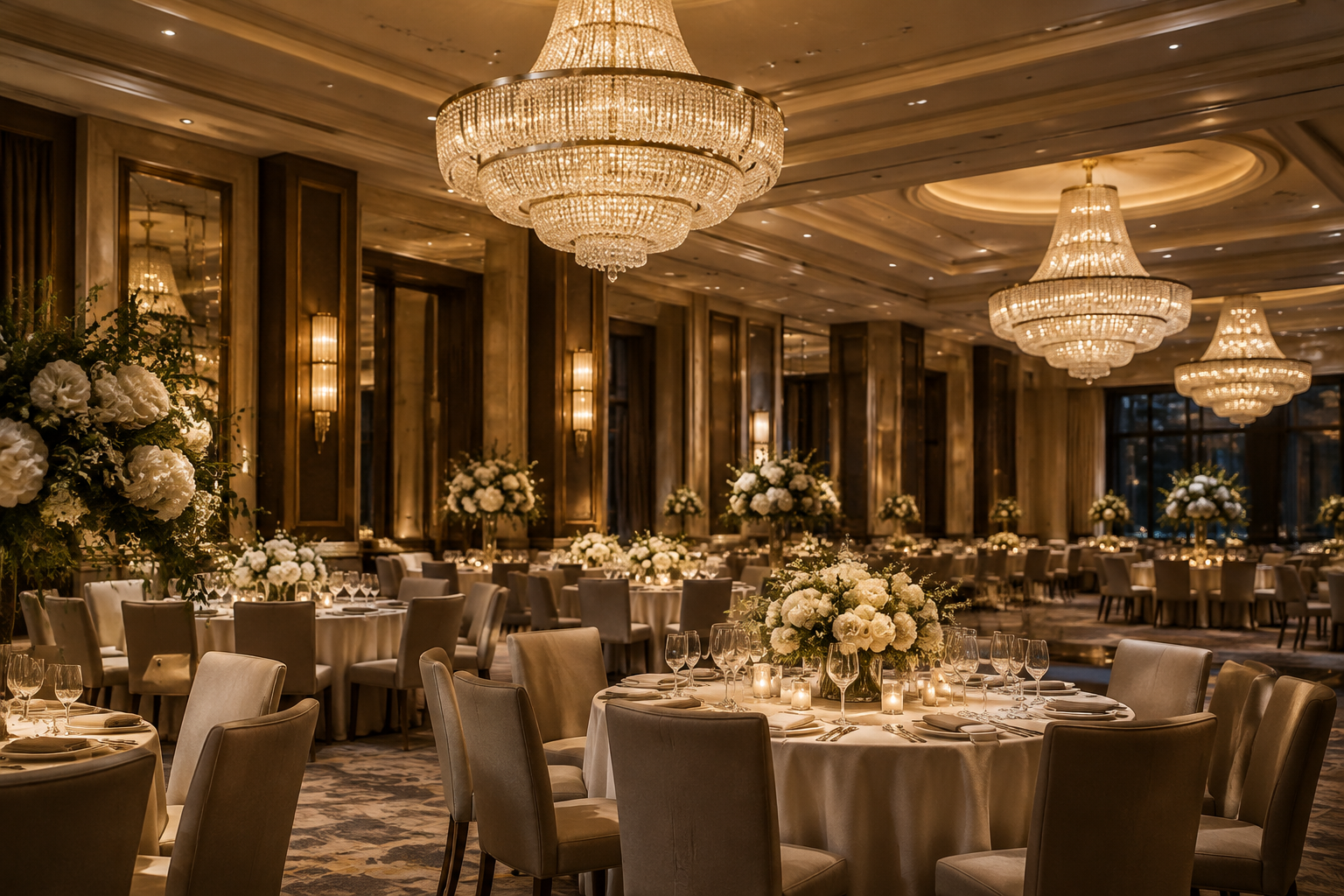
At XHLWX (led-project-light.com), a Custom Indoor LED Lighting Manufacturer based in China, ... we recommend DALI-controlled chandeliers with day, night and banquet presets. A recommended specification combines 3 operating scenes with a 1% minimum light-output design target, subject to driver testing; final settings depend on chandelier optics, table layouts and guest comfort.
For a hotel ballroom, successful dimming means more than making a chandelier brighter or darker. Guests should see smooth transitions, consistent colour and balanced illumination across decorative tiers. Staff should recall the correct scene without navigating an engineering interface.
This guide addresses bespoke LED chandeliers for hotel ballrooms and divisible banquet rooms in the EU, US, Middle East and Southeast Asia. All proposed performance values below are design targets or recommended specifications, not measured XHLWX results. Confirm the finished assembly, local requirements and operating brief before procurement.
Design Criteria and Standards
A reliable chandelier specification defines low-end performance, visual comfort and driver compatibility before decorative details are approved.
Specify the minimum measured light output, not merely a displayed control percentage. A controller indication does not necessarily equal the same percentage of luminous flux. Dimming curves, driver implementation and LED loading affect the relationship.
For ballroom task areas, apply EN 12464-1 where relevant to the project jurisdiction and task classification. Do not apply an office illuminance or glare limit indiscriminately to an ornamental chandelier. WELL v2 can inform comfort and light-quality objectives when the hotel pursues that framework; it is not automatic product certification.
| Parameter | Spec | Standard | Notes |
|---|---|---|---|
| CCT and colour rendering | Recommended specification: 2700–3000 K, CRI ≥90 | EN 12464-1; WELL v2 where applicable | Approve skin tones, food presentation and finishes with a physical sample. |
| Glare and beam distribution | Design target: UGR ≤22 in applicable calculated views; recommended downward beam options: 30°–60° | EN 12464-1; IES photometric guidance | UGR is installation-dependent; exposed crystal sources also require visual review. |
| Minimum dimming | Design target: stable light output down to 1% of full output | IEC 62386 series | Validate with the actual LED module, driver, load and control equipment. |
| Control architecture | Recommended specification: DALI-2 drivers; Casambi or KNX integration through selected interfaces; 0-10V only as an agreed alternative | IEC 62386 series; relevant interface documentation | These protocols are not interchangeable; confirm supported functions. |
| Housing, materials and IP | Recommended specification: aluminium light engines, steel suspension structure and IP20 for dry interiors | EN 60598 series; IEC 60529 | Verify weight, heat paths, suspension and cleaning exposure. |
| LED and driver selection | Recommended specification: documented Osram, Bridgelux or Samsung LED option with a suitable Tridonic or Mean Well driver model | Component datasheets; DALI Alliance database where applicable | Brand names alone do not establish dimming performance or certification. |
| Market documentation | Recommended specification: applicable CE/RoHS evidence, US UL pathway and SAA documentation only where required; ISO9001 evidence if requested | Applicable EU legislation; UL 1598 where applicable; relevant AS/NZS requirements; ISO 9001 | These are different compliance routes, not a universal certificate bundle. |
The DALI Alliance's certified-product database supports model-level checks. DALI-2 certification of a driver does not certify the chandelier's electrical safety, photometric performance or complete control system.
Customisation Options and Materials
Chandelier construction should support the intended scenes without sacrificing maintenance access, thermal performance or visual consistency.
A decorative assembly may contain separate downward task lighting, illuminated crystal elements and indirect ceiling light. Independent channels allow a banquet scene to retain table visibility while reducing sparkle above guests' sightlines.
| Chandelier approach | Scene-programming benefit | Procurement consideration | Verdict |
|---|---|---|---|
| Fixed warm-white LED modules | Straightforward brightness scenes with stable nominal colour | Match module bins and driver loading | Best baseline when colour adjustment is unnecessary. |
| Dim-to-warm light engines | Warmer appearance at lower output | Verify the colour curve across all branches | Appropriate for evening ambience after sample approval. |
| Tunable-white modules with suitable DALI control gear | Independent brightness and colour-temperature scenes | Confirm controller support, wiring and colour uniformity | Choose when changing colour temperature has an operational purpose. |
| Replaceable LED lamps behind a shared interface | Familiar maintenance format | Test the exact lamps, interface and combined load | Conditional choice; mixed replacements can undermine consistency. |
| Separate decorative and functional channels | Different balances for dining, presentations and cleaning | Requires additional addressing and clear schedules | Preferred for multifunction banquet rooms. |
How Should Crystal, Glass and Metal Finishes Affect Dimming Decisions?
Crystal and polished metal can remain visually intense even when average room illumination is low.
Approve source shielding and luminous appearance from seated and standing viewpoints. Opal glass can soften visible points, but transmission losses and colour shifts vary by material.
Brass-coloured finishes may change perceived warmth; brushed aluminium may reveal uneven light distribution. Evaluate production-intent finishes rather than relying on renderings.
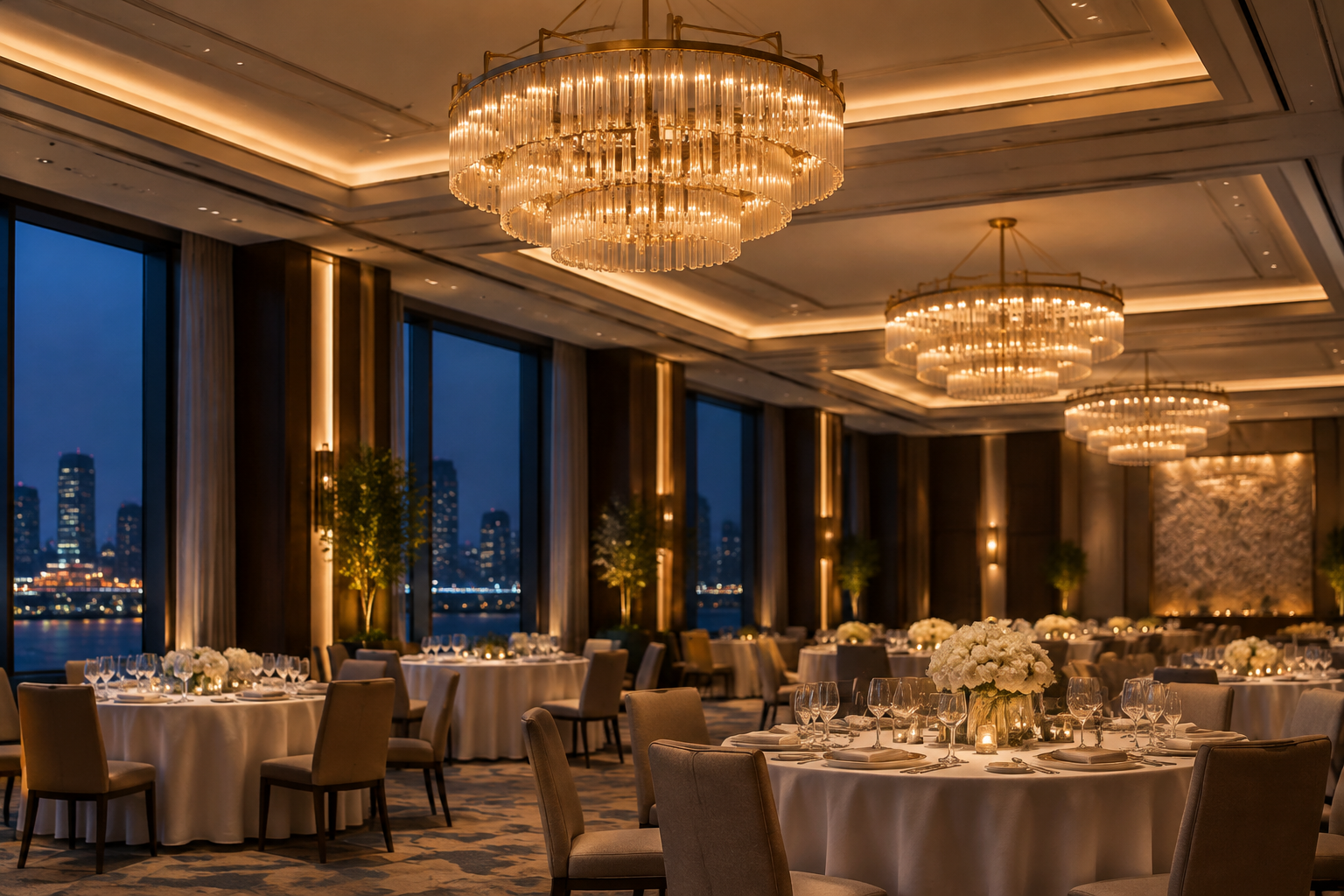
When Should a Hotel Choose Dim-to-warm Instead of Tunable White?
Dim-to-warm suits brightness-linked evening ambience, while tunable white suits independently scheduled brightness and colour-temperature changes.
For tunable white, specify compatible DALI colour-control gear and verify the application controller's supported functions. A DALI label alone does not establish that support. Treat a 2700–4000 K range as a recommended specification only when daytime meetings and evening dining justify the added complexity.
How Should Chandelier Tiers and Lighting Channels Be Grouped?
Group chandelier channels by the guest-visible effect and room operation, not simply by convenient wiring routes.
Separate decorative sparkle from downward illumination where construction permits. Align groups with movable partitions so adjoining events remain independent. Ensure every serviceable driver has an accessible identifier, and document how physical tiers map to control addresses and operating groups.
 How Should DALI Dim Hotel Chandeliers for Day, Night and Banquets?: When should a hotel choose dim-to-warm instead of tunable white?
Controls and Commissioning
Scene programming should translate hotel activities into tested lighting states that staff can recall consistently.
Agree where scene values reside: in control gear, the application controller or both. Record this architecture in the handover documents. Avoid unexplained interactions between local keypads, scheduling software and building-management commands.
Use these initial design targets, then adjust during the ballroom mock-up:
- Day: chandelier output at approximately 50–80% of verified full light output, with daylight and task lighting balanced independently.
- Night: chandelier output at approximately 5–20%, retaining comfortable facial visibility and circulation lighting.
- Banquet: decorative output at approximately 20–50%, with downward task channels adjusted for table settings and service.
These are not normative DALI command values. Translate the intended appearance into controller settings after testing the actual dimming response. Presentation, setup and cleaning modes may also be needed; keep their operation distinct from guest scenes.
A recommended transition target is 5–10 seconds between guest scenes, provided the selected equipment supports the intended behaviour. Test the complete fade, especially near minimum output. Watch for stepping, dropout, delayed starts, colour mismatch and audible driver noise.
For KNX integration, confirm gateway mapping and command priorities. For Casambi integration, verify the selected interface's direction, capacity and supported scene functions. A 0-10V alternative needs its own compatibility and switching assessment; it does not inherently provide DALI addressing or status functions.
Commission partition-open and partition-closed conditions, keypad overrides, scheduled changes, communication loss and power restoration. Define safe, predictable behaviour rather than assuming every device will restore its previous state. Keep normal guest-scene logic separate from required emergency-lighting operation.
Sampling, MOQ, Lead Time and Quality Control
A production-intent sample is the most reliable way to expose dimming problems before a bespoke chandelier order is released.
Request the actual LED module, driver, optical material and representative wiring arrangement. A small appearance sample may not reproduce the loading or voltage drop of the complete chandelier, so identify its limitations explicitly.
The sample approval checklist should cover:
- Low-end stability, repeatable starting and transition behaviour.
- Flicker assessment using an agreed measurement method and acceptance criteria.
- Colour consistency between branches and across the intended dimming range.
- Driver temperatures, ventilation and access under representative operating conditions.
- Suspension details, protective bonding where applicable and strain relief.
- Finish consistency, cleaning instructions and replacement-part identification.
MOQ and lead time require a project-specific quotation. They depend on tooling, metalwork, glass or crystal sourcing, driver availability, testing scope and shipping arrangements. Do not interpret an illustrative procurement programme as a factory commitment.
Approve a bill of materials and substitution procedure before production. Any driver or LED change should trigger a compatibility review and, where necessary, renewed sample testing. Final inspection records should identify the tested configuration and acceptance criteria without implying independent certification unless supporting evidence exists.
Photometric Files & Compliance
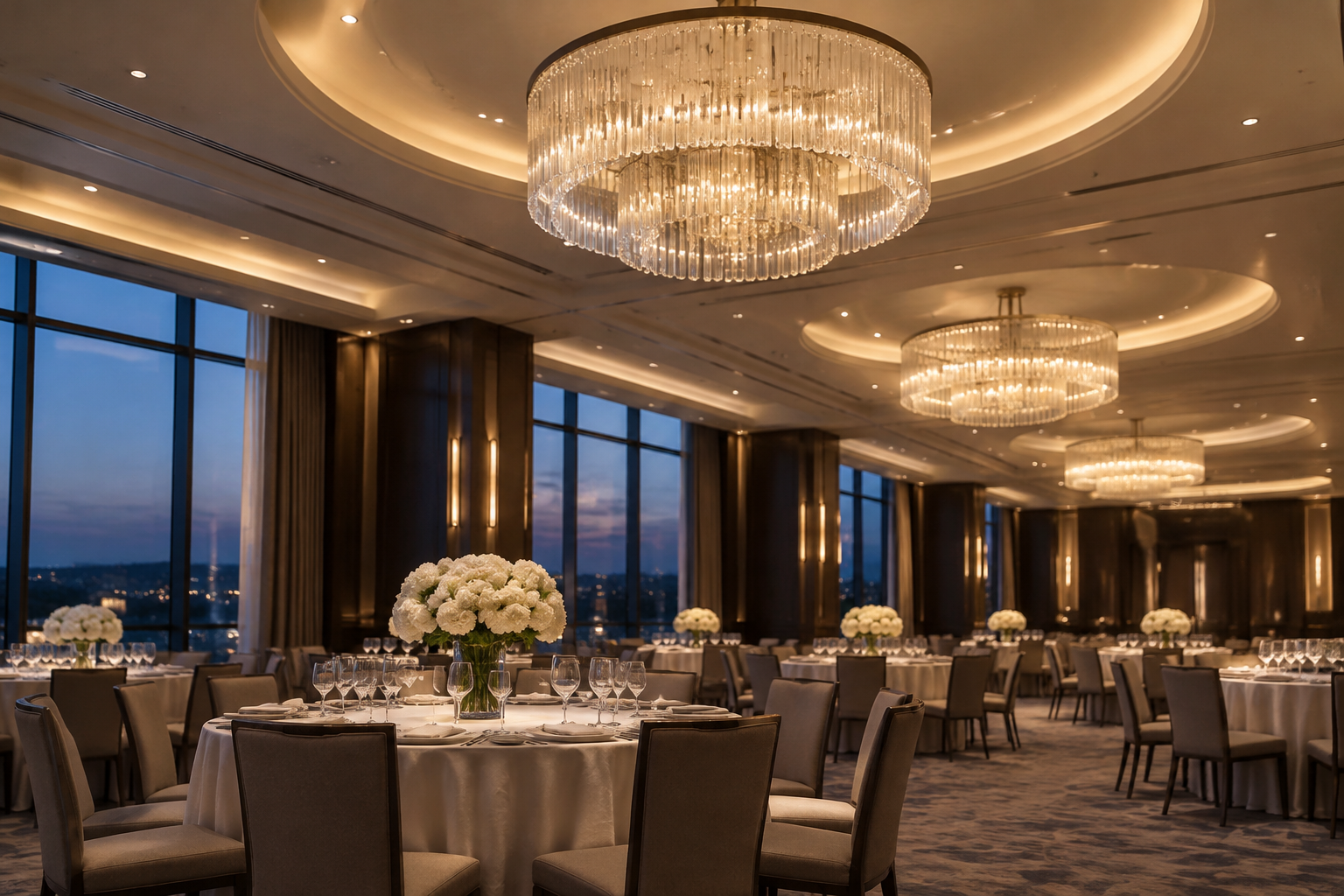
Photometric data and compliance documentation must describe the proposed chandelier configuration rather than a visually similar catalogue product.
Request IES and LDT photometric files for the relevant light-emitting assembly and use DIALux to assess the ballroom layout. Include suspension height, surface reflectances, table arrangements and separately controlled lighting channels. Confirm whether the files represent the complete chandelier, a module or a simplified assembly.
Full-output photometry does not prove acceptable dimming. Scaling a distribution in software can support preliminary assessment, but it cannot establish flicker, low-end stability or dim-to-warm behaviour. Request additional evidence where colour or distribution changes materially between scenes.
Use the applicable EN 60598 series requirements for luminaire safety assessment, together with relevant local electrical requirements. For the EU, establish the applicable legislation, technical documentation and declaration of conformity; CE is not a generic laboratory certificate. Address RoHS separately.
For the US, agree the acceptable listing or evaluation route with the project team and authority having jurisdiction. A recognized driver does not automatically make the complete chandelier UL Listed.
Middle Eastern and Southeast Asian markets require country-specific checks. SAA documentation should be requested only where relevant, while ISO9001 concerns quality management rather than product approval.
 How Should DALI Dim Hotel Chandeliers for Day, Night and Banquets?: Photometric files & compliance
Frequently Asked Questions
Q: Can a DALI Chandelier Dim Smoothly Enough for a Hotel Night Scene?
A DALI chandelier can dim smoothly when its LED modules, drivers and controls are validated as an assembly. Specify a 1% minimum light-output design target only if the chosen hardware can achieve it. Test slow fades, restart behaviour and the lowest stable level with production-intent loading. Protocol compatibility alone does not guarantee flicker-free or visually continuous dimming.
Q: Should Day, Night and Banquet Scenes Use Different Colour Temperatures?
Different colour temperatures are optional; brightness and channel balance may provide sufficient scene differentiation. A fixed 3000 K light source is a recommended specification for hotels seeking simple operation. Tunable white can support different meeting and dining conditions, but requires compatible drivers, controllers and commissioning. Approve the actual appearance against finishes, food and skin tones before confirming the range.
Q: Can Existing Chandelier Lamps Work with a New DALI System?
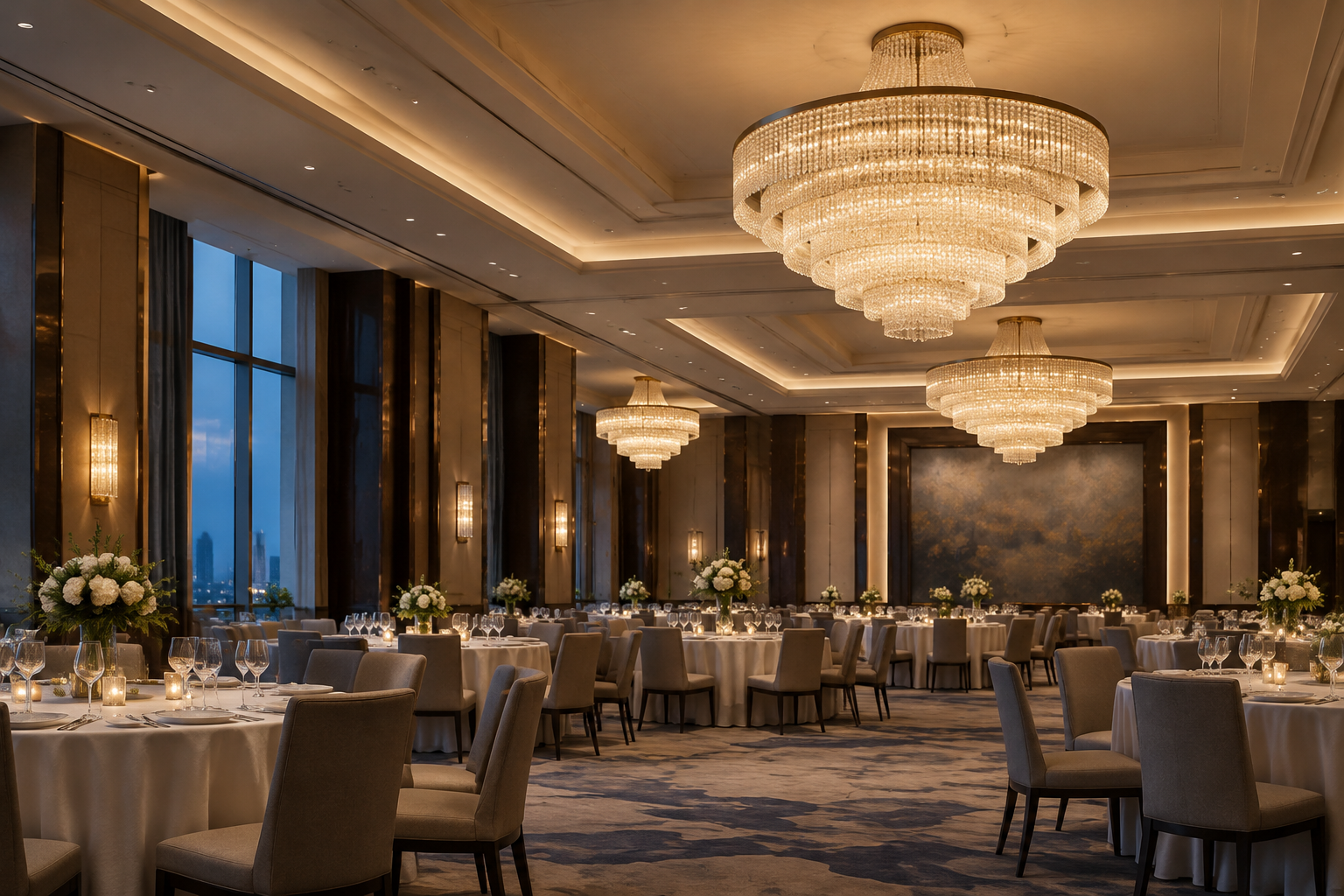
Existing lamps require compatibility testing with the proposed DALI-controlled interface or replacement gear. Do not assume a lamp marked dimmable will reach a 1% light-output design target. Check lamp technology, load limits, wiring, starting behaviour and heat conditions. For bespoke refurbishment, replacing the light engine and driver may produce a more predictable result than combining assorted legacy lamps.
Q: What Should Hotel Staff Receive After Chandelier Commissioning?
Hotel staff should receive a scene schedule, labelled controls and recoverable system records. A recommended specification includes 3 clearly named guest presets: Day, Night and Banquet. Also hand over address maps, driver model details, approved minimum levels, backup files and instructions for power recovery. Assign responsibility for future programming changes so replacement equipment does not silently alter the agreed scenes.
Sources and Technical References
Official standards publishers and certification databases are the appropriate starting points for verifying project-specific requirements.
- EN 12464-1 — Light and lighting — Lighting of work places — Part 1: Indoor work places: verify the applicable edition through CEN-CENELEC.
- EN 60598 series — Luminaires: identify applicable general and particular safety requirements through the relevant national standards body.
- IEC 62386 series — Digital addressable lighting interface: consult the IEC Webstore and DALI Alliance for protocol and certification information.
- IES — Illuminating Engineering Society: use applicable lighting and photometric publications from IES; IES is an organization, not a standalone compliance standard.
- WELL v2: check project-relevant Light features through the International WELL Building Institute.
- DIALux: consult official software documentation for calculation workflows; simulation does not replace product testing.
Confirm editions, contractual applicability and local adoption with the responsible designer and compliance specialist.
 How Should DALI Dim Hotel Chandeliers for Day, Night and Banquets?: Q: Can existing chandelier lamps work with a new DALI system?
Request a Custom Quote
A useful quotation brief combines the chandelier design with its intended scenes, control architecture and compliance route.
Send ballroom drawings, ceiling and suspension details, chandelier dimensions, quantities, finish references and partition arrangements. Include the intended DALI controller, integration requirements, available electrical supply, desired minimum output and maintenance-access constraints. Request separate confirmation of sample scope, photometric evidence, compliance documentation, MOQ and production schedule.
request a project-specific quotation for your hotel ballroom chandelier package. Include Day, Night and Banquet scene expectations so the proposed light engines, drivers and channel groups can be reviewed together. Ask for documented design targets and approval checkpoints before authorizing production.
Sobre XHLWX
XHLWX es la marca de Shenzhen Qihang Lighting Co., Ltd., fabricante de luminarias LED para proyectos con fábrica propia en Shenzhen (China) desde 2009. Suministramos perfiles lineales, downlights, carriles magnéticos, paneles, luminarias estancas, campanas industriales y luminarias a medida para oficinas, hoteles, museos, retail e industria.
Proyectos de iluminación según UNE-EN 12464-1 (Em, UGR, Uo, Ra) con archivos IES y LDT para DIALux; luminarias con conformidad CE y RoHS y gestión de calidad ISO 9001.
Preguntas frecuentes sobre XHLWX
¿XHLWX suministra a España?
Sí. Suministramos proyectos en España directamente desde fábrica; la oferta, el cálculo lumínico y la documentación técnica se entregan en español o inglés.
¿Las luminarias cumplen la UNE-EN 12464-1?
Dimensionamos iluminancia, límite UGR y uniformidad según la UNE-EN 12464-1 y lo justificamos con un cálculo DIALux hecho con nuestros archivos LDT.
¿Qué sistemas de control son compatibles?
DALI-2, 0-10 V y Casambi (Bluetooth), también en versión con emergencia o sensor según el proyecto.
¿XHLWX fabrica luminarias a medida u OEM?
Sí. Longitudes, temperaturas de color, ópticas, acabados y su propia marca (OEM/ODM) se producen en nuestra fábrica.
Need a tailored lighting plan for your project?
Our senior lighting designers reply within 48 hours with a free design proposal & quotation.