
How Do Tunable White Downlights Support Circadian Hotel Rooms?
Quick answer
Specify circadian guestroom downlights with practical guidance on tunable white, glare, controls, photometry, compliance and mock-up approval.
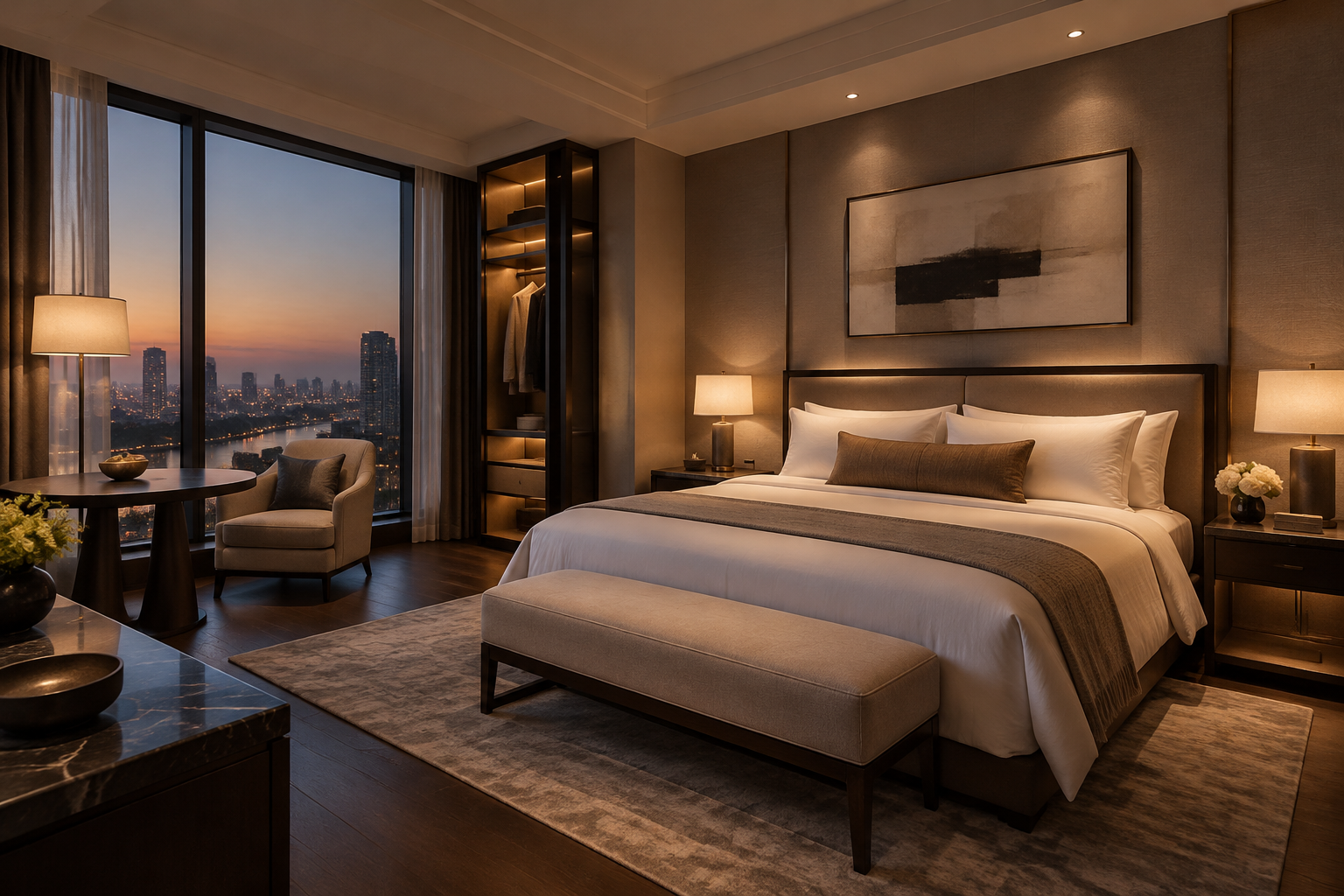
Introduction: How Tunable White Downlights Support Circadian Hotel Rooms
At XHLWX (led-project-light.com), a Custom Indoor LED Lighting Manufacturer based in China, we recommend tunable white downlights that pair timed light scenes with guest overrides to support circadian-aware hotel rooms. Use 2700–6500 K and CRI ≥90 as recommended specifications; assess eye-level exposure and evening dimming rather than promising sleep benefits from colour temperature alone.
Circadian guestroom downlights should support an appropriate daily pattern: useful daytime illumination, comfortable evening light and minimal unwanted exposure during intended sleep. Correlated colour temperature, or CCT, describes appearance—not the biological effect of a complete lighting installation. Spectrum, intensity at the eyes, timing, duration and guest behaviour all matter.
Downlights alone may provide limited vertical illumination. Coordinate them with indoor wall lighting, bedside luminaires and available daylight rather than forcing excessive ceiling output. This article provides a specification framework, not evidence that a product improves sleep or satisfies a wellness programme.
Design Criteria and Standards: Specifying Circadian Guestroom Downlights
Specify visual comfort, spectral performance and controllability together; a wide CCT range alone does not establish circadian suitability.
Start with guest activities: arrival, dressing, reading, screen use, relaxation and overnight bathroom access. Define where each activity happens and which luminaires serve it. A bedside reading task needs local visibility without brightening the entire room or disturbing another occupant.
The numerical performance values below are recommended specifications or design targets, not verified XHLWX product ratings. Final selections require product documentation and an approved room mock-up.
| Parameter | Spec | Standard | Notes |
|---|---|---|---|
| CCT range | Recommended specification: 2700–6500 K tunable white | CIE S 026/E:2018 for separate non-visual spectral assessment | Select operating scenes within the range; CCT does not establish melanopic output |
| Colour rendering | Recommended specification: CRI ≥90; R9 ≥50 | CIE colour-rendering methods; IES measurement documentation | Request data at warm, intermediate and cool settings |
| Glare and optics | Design target: UGR ≤19 where an applicable task and calculation method justify it | EN 12464-1 | UGR is installation-dependent; also inspect the source from the bed |
| Beam distribution | Recommended specification: 36° general beam or 60° broad beam, subject to modelling | IES photometric conventions | Check spacing, vertical illumination and bright patches |
| Controls | DALI-2 DT8, Casambi, KNX integration or matched 0-10V channels | IEC 62386-209 for applicable DT8 control | Verify the complete driver, gateway and user-interface combination |
| Housing, materials and IP | Recommended specification: aluminium housing; IP20 for suitable dry locations; bathroom rating by zone | EN 60598; IEC 60529 | Confirm whether any higher IP rating covers the front only or the complete fitting |
| LED and driver options | Requested options: Osram, Bridgelux or Samsung LEDs; Tridonic or Mean Well drivers | Relevant component documentation | Brand names are sourcing options, not confirmed installed components |
| Certification and documentation | Market-dependent CE/RoHS evidence; UL documentation where specified; SAA only where relevant; ISO9001 supplier evidence if requested | Applicable legislation, product standards and certification schemes | These are document requests, not claims of current certification |
| Low-end dimming | Design target: stable output down to 1% of rated light output | Declared driver test method and project acceptance protocol | Verify both colour channels, transitions and actual minimum room brightness |
EN 12464-1 addresses indoor workplaces; it is not a universal prescription for bedside illumination or sleep conditions. EN 60598 concerns luminaire safety requirements. WELL v2 offers a building-level wellness framework, but compliance cannot be inferred from a downlight's CCT range.
For circadian assessment, use spectral data and an appropriate eye-level metric, such as melanopic equivalent daylight illuminance under CIE S 026/E:2018. The consultant should establish project-specific targets and evaluation positions before procurement.
Customisation Options and Materials: Choosing Optics for a Guestroom Mock-up
Optical shielding and room geometry usually influence guest comfort more than decorative trim changes.
Customisation should begin with the reflected ceiling plan, bed position, ceiling void and maintenance access. Then resolve aperture, trim style, finish, thermal design and driver placement. A visually discreet fitting can still be uncomfortable if its emitting surface is visible from the pillow.
| Downlight configuration | Best-fit guestroom scenario | Main limitation | Verdict |
|---|---|---|---|
| Deep-recessed fixed optic | General illumination near circulation and dressing areas | May provide insufficient vertical illumination alone | Preferred starting point where source shielding is important |
| Adjustable recessed optic | Wardrobe fronts, artwork or a defined reading area | Poor aiming can expose a bright source to the bed | Use only with documented aiming limits |
| Broad diffused aperture | Soft ambient distribution in compact rooms | A large luminous surface remains visible overhead | Assess from lying and seated positions before approval |
| Compact trimless fitting | Minimalist ceilings with coordinated construction details | Installation tolerances and future access need careful planning | Select when ceiling workmanship and service access are controlled |
How Should Downlight Placement Change Around Beds and Wardrobes?
Position downlights around guest sightlines and useful surfaces, rather than distributing them uniformly across the ceiling.
Avoid making the bed centreline the default lighting axis. Review direct views from the pillow and reflections in televisions, mirrors and glossy joinery.
Wardrobe lighting should reach clothing fronts without being blocked by open doors. Reading illumination should remain independently controllable so one guest can read while another rests.
Which Housing and Finish Choices Suit Bespoke Hotel Interiors?
Choose finishes for visual integration, cleaning resistance and repeatable appearance, while protecting the luminaire's thermal performance.
Painted, anodised or plated appearances should be approved against physical samples under the intended light scenes. Request finish references and an agreed inspection method.
Decorative brass-coloured trims need not imply a solid-brass heat sink. Thermal verification must cover the selected LED load, driver location and actual ceiling enclosure, including insulation restrictions.
When Is a Wider Tunable White Range Worth Specifying?
A wider range is useful only when the operating scenes, spectral quality and control system justify it.
As a recommended specification, compare a 2700–6500 K option with a narrower range suited to the interior palette. Evaluate warm-end appearance, colour consistency during dimming and output variation across the range. If very warm evening light is essential, ask whether an alternative LED engine is needed; software cannot create wavelengths the hardware cannot produce.
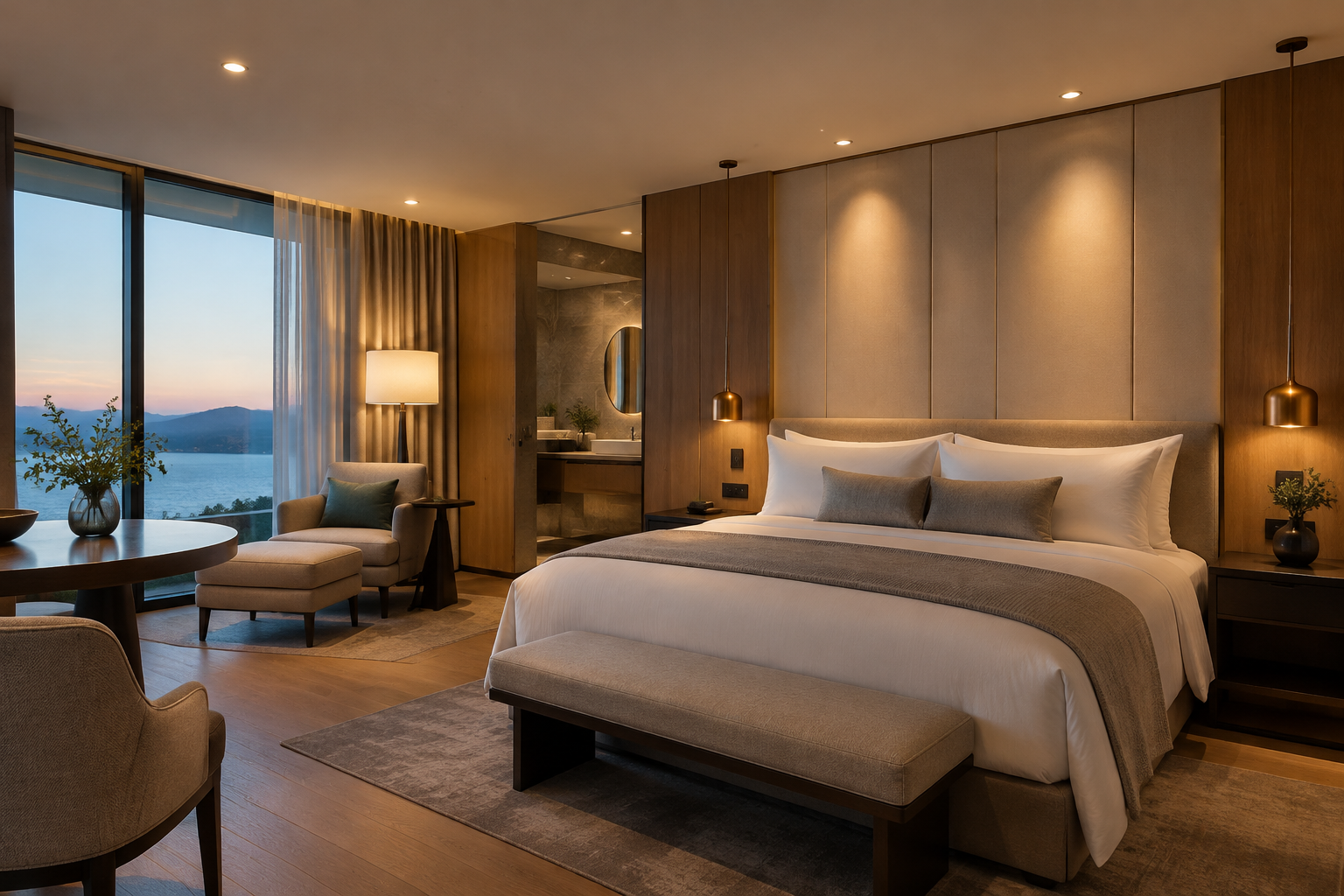 How Do Tunable White Downlights Support Circadian Hotel Rooms?: Which housing and finish choices suit bespoke hotel interiors?
Controls and Commissioning: Balancing Automated Scenes with Guest Choice
Automatic schedules should support a guest's routine without overriding deliberate choices or causing unexpected changes during sleep.
DALI-2 systems using compatible DT8 tunable-white drivers can simplify coordinated brightness and colour-temperature control. Confirm the exact device support and certification status rather than assuming every DALI-labelled component handles tunable white correctly.
Casambi can suit wireless room-level control where device compatibility, radio conditions and maintenance ownership are resolved. KNX commonly coordinates room functions through suitable interfaces or gateways. Conventional 0-10V dimming alone does not define tunable-white behaviour: document whether separate channels control intensity and colour, or whether an interface provides a manufacturer-specific mapping.
Use the following numerical ranges as recommended scene specifications, not universal circadian thresholds:
- Daytime or housekeeping: 4000–5000 K, with output determined by tasks, daylight and room use.
- Arrival and relaxation: 2700–3000 K, with comfortable surface brightness and visible controls.
- Reading: a guest-selected setting with local task illumination, independent of the ambient scene.
- Overnight movement: the lowest useful output from a shielded pathway luminaire; ceiling downlights may remain off.
Do not assume warm light is biologically inactive when bright. Conversely, a cool setting at negligible eye-level intensity does not establish meaningful daytime exposure.
Commission gradual transitions, manual override, occupancy behaviour, vacancy settings and power-restoration states. Test sensor operation with a motionless occupant and preserve the chosen sleep scene. Travel schedules and personal preferences make an accessible bedside override essential.
Sampling, MOQ, Lead Time and Quality Control: Approving a Production-ready Room
Approve a representative room installation before fixing production quantities, delivery dates or final acceptance criteria.
MOQ and lead time depend on tooling, finish processes, LED availability, driver selection and compliance scope. No universal commercial quantity or delivery period is assumed here. Ask the manufacturer to distinguish catalogue modifications from new mechanical development, then quote sampling, engineering, production and transport separately.
The recommended approval sequence is:
- Engineering review: confirm cut-out, ceiling thickness, void depth, thermal conditions and service access.
- Functional sample: evaluate output, colour range, dimming, audible noise and controller behaviour.
- Room mock-up: review bed sightlines, mirrors, wardrobe visibility, bedside controls and overnight operation.
- Approved reference sample: record finish, optics, LED engine, driver model, firmware and wiring.
- Production inspection: apply agreed sampling and acceptance procedures to the approved configuration.
Quality-control records should address earth continuity where applicable, insulation and electrical safety testing, assembly checks, driver identification and traceability. Request spectral and photometric reports tied to the configuration being supplied.
For replacement planning, specify how future LED engines or drivers will preserve compatible output, appearance and control behaviour. An unapproved component substitution can change dimming performance even when nominal wattage remains unchanged.
Photometric Files & Compliance: Checking the Complete Hotel-room System
Photometric modelling and compliance review must match the proposed luminaire configuration, not merely a similar catalogue model.
Request IES and LDT photometric files for the selected optics and meaningful operating points across the tunable range. Import the relevant files into DIALux with realistic ceiling heights, furniture, surface reflectances and maintenance assumptions. Review horizontal task illumination, vertical illumination and luminance relationships—not just an average value across the floor.
Conventional photometric files do not establish melanopic performance by themselves. Obtain corresponding spectral power distributions and use an appropriate spectral assessment method. Ask how output, spectrum and beam shape vary with colour setting and dimming.
For EU procurement, request the applicable EU Declaration of Conformity, supporting safety and EMC evidence, and RoHS documentation. CE marking is not interchangeable with an independent product certification. Review the relevant EN 60598 parts and other applicable requirements with the compliance specialist.
For US projects, verify the listing or certification required by the authority having jurisdiction, owner and specification. Where UL documentation is requested, check the exact model and configuration.
Middle East and Southeast Asia requirements vary by country; confirm local registration, supply characteristics, labelling and acceptance before purchase. SAA documentation does not replace these destination-specific checks, and ISO9001 concerns quality management rather than luminaire approval.
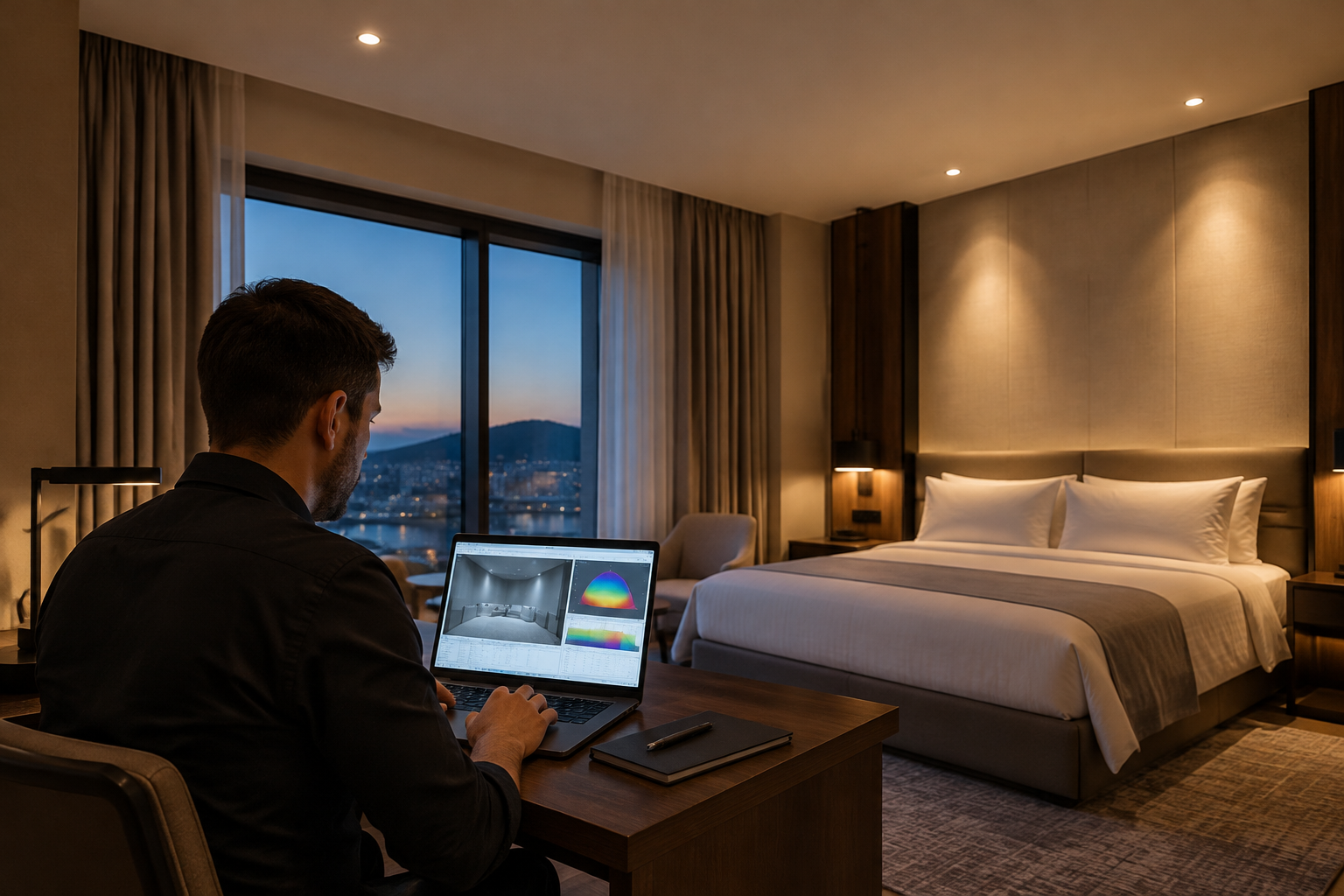 How Do Tunable White Downlights Support Circadian Hotel Rooms?: Photometric files & compliance: checking the complete hotel-room system
Frequently Asked Questions
Q: Do Tunable White Downlights Guarantee Better Sleep for Hotel Guests?
Tunable white downlights do not guarantee improved sleep. Their contribution depends on intensity at the eyes, spectrum, timing, duration and individual behaviour. A recommended specification of 2700–6500 K offers scene flexibility, but the room still needs appropriate daytime exposure, controlled evening brightness and a genuinely dark sleep condition. Avoid health claims without suitable independent evidence.
Q: Is DALI-2 Better Than Casambi for Circadian Guestrooms?
DALI-2 and Casambi suit different installation and maintenance strategies; neither is automatically better for circadian outcomes. DALI-2 with compatible DT8 devices supports structured tunable-white control, while Casambi can suit wireless coordination. Specify a design target of stable 1% dimming if required, then test overrides, transitions, connectivity and power recovery in the complete room system.
Q: What Colour Temperature Should Hotel Rooms Use at Night?
Night-time operation should prioritise low eye-level exposure and comfortable navigation rather than a colour-temperature number alone. As a recommended specification, use 2700–3000 K for evening relaxation and evaluate a warmer option if the design requires it. During intended sleep, keep general downlights off where practical and use shielded, minimally bright navigation lighting when needed.
Q: Which Documents Should Buyers Request Before Approving Samples?
Buyers should request configuration-specific optical, electrical, control and compliance evidence before approving production. Include photometric files, spectral data, wiring diagrams, driver details and destination-market documentation. For a recommended specification of CRI ≥90, request supporting results across relevant colour settings. Link the approved sample to its component list so later substitutions trigger a documented review.
Sources and Technical References: Documents for Hotel-room Lighting Reviews
Use authoritative publications and current applicable editions to confirm requirements before converting design targets into contractual acceptance criteria.
- EN 12464-1 — Light and lighting — Lighting of work places — Part 1: Indoor work places: consult the CEN-CENELEC standards catalogue for scope and editions.
- EN 60598 — Luminaires: consult the same catalogue for the applicable general and particular safety requirements.
- IES and ANSI/IES LM-79: use the Illuminating Engineering Society for lighting guidance and electrical/photometric measurement references.
- WELL v2: consult the International WELL Building Institute for project-level light requirements and verification guidance.
- CIE S 026/E:2018: consult the International Commission on Illumination for metrology of optical radiation relevant to ipRGC-influenced responses.
- DALI-2 and DT8: consult the DALI Alliance for technical guidance and certified-product checks.
- DIALux: consult DIALux for calculation software and modelling guidance.
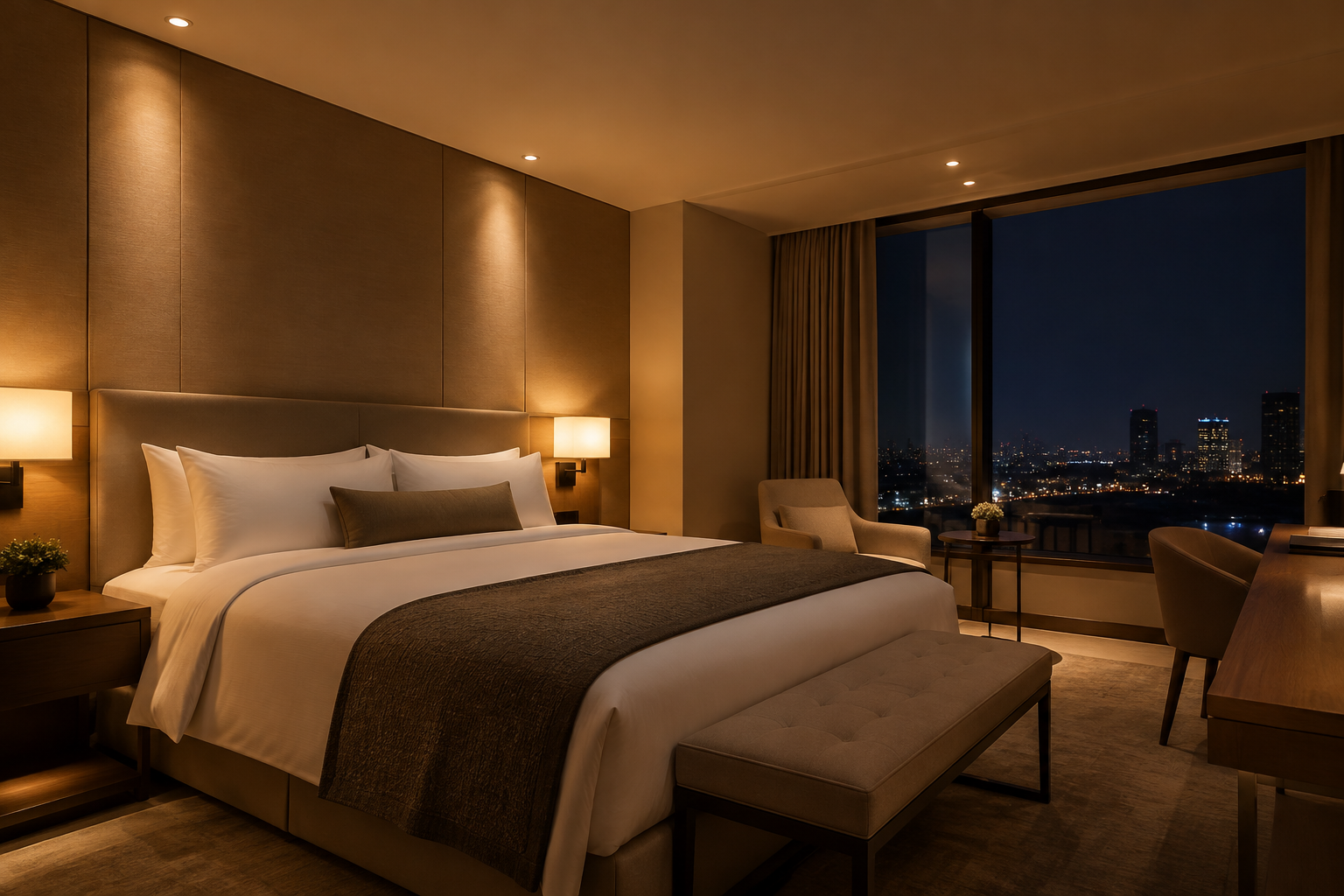 How Do Tunable White Downlights Support Circadian Hotel Rooms?: Q: What colour temperature should hotel rooms use at night?
Request a Custom Quote: Preparing a Circadian Guestroom Downlight Brief
A useful quotation brief connects the room layout, guest experience, control architecture and destination-market documentation.
Send the reflected ceiling plan, room sections, bed and wardrobe positions, finish references, quantities and destination country. Include preferred CCT range, glare concerns, control protocol, mock-up requirements and required compliance evidence. Identify which values are provisional design targets and which are contractually required acceptance criteria.
At XHLWX (led-project-light.com), a Custom Indoor LED Lighting Manufacturer based in China, we recommend using this brief to define bespoke circadian guestroom downlights around an approved room mock-up. Request configuration-specific pricing, sampling terms, MOQ, lead time and documentation before ordering; confirm performance and compliance through evidence rather than product labels or wellness promises.
À propos de XHLWX
XHLWX est la marque de Shenzhen Qihang Lighting Co., Ltd., fabricant de luminaires LED pour projets, avec sa propre usine à Shenzhen (Chine) depuis 2009. Nous fournissons profilés linéaires, downlights, rails magnétiques, dalles, luminaires étanches, high bays et luminaires sur mesure pour bureaux, hôtels, musées, commerces et sites industriels.
Études d'éclairage selon la NF EN 12464-1 (Em, UGR, Uo, Ra) avec fichiers IES et LDT pour DIALux ; luminaires conformes CE et RoHS, système qualité ISO 9001.
Questions fréquentes sur XHLWX
XHLWX livre-t-il en France et en Belgique ?
Oui. Nous livrons les projets en France et en Belgique directement depuis l'usine ; devis, étude d'éclairage et fiches techniques sont fournis en français ou en anglais.
Les luminaires respectent-ils la NF EN 12464-1 ?
Nous dimensionnons l'éclairement, la limite UGR et l'uniformité selon la NF EN 12464-1 et justifions les valeurs par un calcul DIALux réalisé avec nos fichiers LDT.
Quels systèmes de gestion d'éclairage sont compatibles ?
DALI-2, 0-10 V et Casambi (Bluetooth), avec versions éclairage de secours ou détecteur selon le projet.
XHLWX fabrique-t-il du sur-mesure ou de l'OEM ?
Oui. Longueurs, températures de couleur, angles de faisceau, finitions et votre propre marque (OEM/ODM) sont réalisés dans notre usine.
Need a tailored lighting plan for your project?
Our senior lighting designers reply within 48 hours with a free design proposal & quotation.