Desain Pencahayaan Gudang Pendingin 2026: Panduan -30C & IP69K
Panduan ahli pencahayaan gudang pendingin & freezer. Pelajari spesifikasi lampu LED suhu rendah IP69K untuk -30°C, sesuai EN 12464.
Pendahuluan — masalah desain di ruang ini
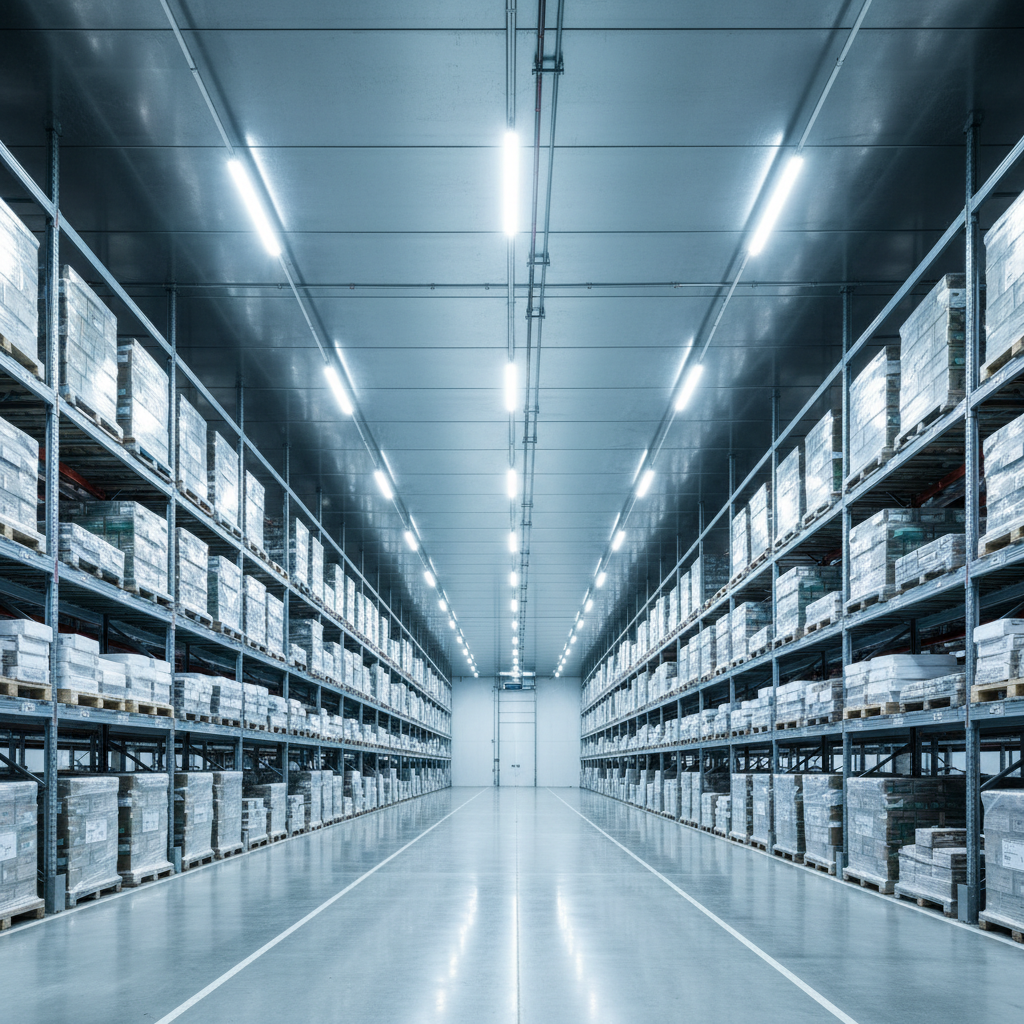
Di XHLWX (led-project-light.com), Produsen Lampu LED Dalam Ruangan Kustom yang berbasis di Tiongkok, kami memahami bahwa mendesain pencahayaan untuk gudang penyimpanan dingin dan freezer adalah tantangan rekayasa yang sangat penting. Lingkungan ekstrem, dengan suhu operasional yang turun hingga -30°C atau bahkan -40°C, menghadirkan hambatan signifikan yang tidak dapat diatasi oleh pencahayaan standar. Selain dingin, fasilitas ini juga menghadapi kondensasi, pembentukan es, protokol kebersihan yang ketat, dan pergerakan alat berat yang konstan. Pencahayaan lama yang tidak efisien seperti High-Pressure Sodium (HPS) atau Metal Halide (MH) mengalami kinerja buruk, biaya energi tinggi, dan sering gagal dalam kondisi ini. Solusi LED yang ditentukan dengan benar sangat penting untuk memastikan keamanan operasional, meminimalkan pengeluaran energi, dan memaksimalkan waktu operasional fasilitas.
Kriteria dan standar pencahayaan untuk aplikasi ini
Pencahayaan gudang penyimpanan dingin yang berhasil menyeimbangkan target keamanan, kepatuhan, dan efisiensi operasional. Meskipun efisiensi energi adalah pendorong utama adopsi LED, tujuan mendasar dari instalasi pencahayaan adalah untuk memastikan lingkungan kerja yang aman dan produktif. Untuk fasilitas penyimpanan dingin di seluruh UE dan AS, ini berarti mematuhi standar yang ditetapkan untuk iluminansi, keseragaman, dan kontrol silau.
Standar utama seperti EN 12464-1:2021 memberikan rekomendasi yang jelas. Untuk area penyimpanan umum atau gudang penyimpanan dingin dengan lalu lintas forklift, target 150 lux di lantai dengan keseragaman (U₀) 0,40 adalah target desain yang umum. Di area dengan pengambilan barang yang lebih intensif atau kehadiran staf, ini dapat meningkat menjadi 200 lux. Silau juga harus dikontrol, dengan Unified Glare Rating (UGR) yang biasanya dijaga di bawah 25. Yang terpenting, standar menekankan iluminansi pada permukaan vertikal, yang sangat penting untuk membaca label pada rak tinggi. Sistem yang dirancang dengan baik menargetkan 50-75 lux pada bidang vertikal.
Memenuhi target ini membutuhkan luminer yang dibuat dengan spesifikasi ketat yang dapat menahan lingkungan yang keras tanpa kompromi.
| Parameter | Spesifikasi yang Direkomendasikan | Standar / Arahan | Catatan |
|---|---|---|---|
| Suhu Operasional | -40°C hingga +40°C | Data Uji Produsen | Parameter paling kritis. Pastikan seluruh luminer, terutama driver, dinilai untuk suhu terendah. |
| Optik (CCT / CRI / TM-30) | 4000K–5000K / CRI >80 / R_f > 80 | EN 12464-1 / IES RP-7 | Cahaya putih yang jernih, netral-hingga-dingin meningkatkan visibilitas detail dan warna dibandingkan cahaya HPS kuning. |
| Antarmuka Kontrol | DALI-2 (Digital Addressable Lighting Interface) | IEC 62386 | Memungkinkan kontrol individual, penginderaan canggih, pemantauan energi, dan penghematan energi maksimum. |
| Casing (Ingress/Impact) | IP66 / IP67 / IP69K & IK08 | EN 60529 / EN 62262 | IP69K wajib untuk fasilitas kelas makanan dengan pencucian air panas bertekanan tinggi. IK08 kokoh. |
| Driver / Chip | Tridonic Low-Temp Series / Samsung LM281B+ | ISO9001 (Quality Mgt.) | Hanya gunakan driver dan chip dari merek-merek terkemuka yang secara eksplisit disertifikasi untuk aplikasi suhu rendah. |
| Sertifikasi | CE / RoHS / ErP | EU Directives | Tidak dapat dinegosiasikan untuk akses pasar legal di Uni Eropa, memastikan keamanan dan kepatuhan lingkungan. |
Pemilihan luminer dan optik
Luminer yang tepat menggabungkan casing yang kokoh dengan optik khusus aplikasi untuk efisiensi maksimum. Meskipun spesifikasi pada lembar data penting, konstruksi fisik dan desain optik luminer menentukan kinerja dan umur panjangnya di dunia nyata. Untuk penyimpanan dingin, ini berarti memprioritaskan manajemen termal, stabilitas material, dan distribusi cahaya.
Casing harus dibuat dari bahan yang tetap stabil pada suhu rendah. Bodi aluminium die-cast sangat baik untuk menghilangkan panas dari driver LED, sementara gasket harus terbuat dari silikon berkualitas tinggi, yang tetap fleksibel hingga -50°C, tidak seperti karet EPDM yang dapat menjadi rapuh dan retak. Lensa atau diffuser harus terbuat dari polikarbonat (PC) atau PMMA tahan benturan yang tahan menguning.
Pilihan antara high bay linier dan high bay bulat (UFO) seringkali tergantung pada tata letak fasilitas. Fixture linier biasanya lebih unggul untuk menerangi lorong panjang dan sempit di antara rak tinggi, sedangkan high bay bulat efektif untuk area staging dan pemuatan open-plan.
| Fitur | Lampu Lorong Linier (misalnya, Seri XHL-FL) | Lampu High Bay Bulat Umum | Lampu HPS 400W Lama | Putusan |
|---|---|---|---|---|
| Distribusi Cahaya Lorong | Sangat Baik (balok asimetris/sempit) | Baik (membutuhkan lensa khusus) | Buruk (pemborosan tinggi, vertikal buruk) | Lampu linier dengan optik lorong khusus lebih unggul untuk memaksimalkan iluminasi vertikal. |
| Kinerja Dingin | Sangat Baik (dirancang untuk operasi -40°C) | Bervariasi luas; harus ditentukan | Buruk (waktu pemanasan/penyalaan ulang lama) | LED suhu rendah khusus adalah satu-satunya pilihan yang andal untuk operasi instan, kecerahan penuh. |
| Kesiapan Kontrol | Sangat Baik (DALI-2 terintegrasi sebagai standar) | Baik (seringkali merupakan tambahan opsional) | Tidak Ada (sakelar on/off sederhana) | DALI-2 terintegrasi membuka penghematan energi maksimum dan kecerdasan operasional. |
| Pemeliharaan & Masa Pakai | Sangat Rendah (L80B10 > 50.000 jam) | Sangat Rendah (L80B10 > 50.000 jam) | Tinggi (penggantian lampu sering) | Solusi LED menawarkan total biaya kepemilikan terendah dengan hampir menghilangkan pemeliharaan. |
Bagaimana suhu -30°C memengaruhi kinerja driver dan chip LED?
Suhu dingin ekstrem meningkatkan efisiensi chip LED tetapi sangat menekan komponen elektronik driver. Paradoksnya, chip LED (dioda itu sendiri) berfungsi lebih efisien dalam kondisi dingin, menghasilkan sedikit lebih banyak cahaya dan mengalami degradasi lebih lambat sepanjang masa pakainya. Titik kegagalan kritis bukanlah LED, melainkan driver—catu daya elektronik. Driver standar menggunakan komponen seperti kapasitor elektrolit, yang elektrolit cairnya dapat membeku atau menjadi sangat kental pada suhu di bawah nol. Hal ini secara drastis mengubah sifat kelistrikannya, menyebabkan kegagalan saat start-up, kedipan, atau kerusakan fatal. Oleh karena itu, menentukan luminer dengan driver suhu rendah khusus dari produsen seperti Tridonic atau Mean Well, yang menggunakan komponen khusus yang dinilai untuk -40°C, sangatlah penting.
Mengapa IP69K diperlukan daripada IP66 untuk penyimpanan dingin?
Sertifikasi IP69K memastikan luminer dapat bertahan dari siklus pembersihan bertekanan tinggi dan bersuhu tinggi yang umum di fasilitas kelas makanan. Meskipun peringkat IP66 melindungi dari semprotan air yang kuat, itu tidak dirancang untuk menahan kondisi protokol sanitasi yang ketat. Uji IP69K melibatkan penyemprotan perangkat dengan air 80°C pada tekanan tinggi (100 bar) dari jarak dekat. Ini mensimulasikan pencucian agresif yang diperlukan dalam penyimpanan makanan dan minuman untuk menghilangkan bakteri. Untuk luminer beku pada -30°C, ini menciptakan kejutan termal yang sangat besar lebih dari 100°C. Hanya luminer berperingkat IP69K dengan segel dan bahan yang kuat yang disertifikasi untuk bertahan dari tekanan termal dan fisik ini tanpa memungkinkan masuknya kelembaban, yang akan menyebabkan pembekuan internal dan kegagalan.
Berapa sudut pancaran terbaik untuk lorong rak tinggi?
Distribusi sempit atau asimetris "batwing" ideal untuk memaksimalkan iluminasi vertikal pada permukaan rak. Lampu high bay bulat standar dengan sudut pancaran 90° atau 120° tidak efisien untuk lorong, memancarkan sebagian besar cahayanya ke bagian atas rak dan lantai, sementara membiarkan permukaan vertikal kurang terang. Hal ini membuat sulit dan tidak aman bagi operator forklift untuk membaca label. Lampu lorong linier khusus menggunakan optik kustom—seperti pancaran elips 30° x 90° atau distribusi asimetris sejati—untuk membentuk cahaya secara tepat. Ini mengarahkan fluks cahaya sepanjang lorong dan mendorongnya ke samping ke rak dari atas ke bawah, mencapai keseragaman vertikal dan visibilitas tinggi di tempat yang paling dibutuhkan.
Kontrol, energi, dan komisioning (DALI-2 / Casambi / sensor)
Kontrol cerdas dapat mengurangi konsumsi energi pencahayaan di penyimpanan dingin hingga lebih dari 70%. Gudang penyimpanan dingin dicirikan oleh aktivitas yang terputus-putus dan terlokalisasi. Sangat tidak efisien untuk menjaga seluruh fasilitas tetap menyala 100% setiap saat. Di sinilah kontrol pencahayaan canggih memberikan nilai yang sangat besar.
DALI-2 adalah standar emas untuk kontrol kabel dalam konstruksi baru. Ini memungkinkan setiap luminer untuk dialamatkan dan dikontrol secara individual. Ketika dikombinasikan dengan sensor gerak microwave atau inframerah pasif (PIR), "fungsi koridor" dapat diterapkan. Lampu di lorong yang tidak ditempati tetap dalam keadaan 'siaga' tingkat rendah (misalnya, output 10-20%) untuk keamanan, kemudian langsung menyala hingga 100% ketika keberadaan terdeteksi. Sistem DALI-2 juga memberikan umpan balik yang tak ternilai tentang penggunaan energi dan kesehatan luminer untuk pemeliharaan proaktif.
Untuk retrofit di mana pemasangan kabel kontrol baru tidak praktis, sistem mesh nirkabel seperti Casambi menawarkan alternatif yang kuat. Luminer dilengkapi dengan node Casambi kecil, memungkinkan mereka berkomunikasi melalui Bluetooth untuk membentuk jaringan kontrol yang andal tanpa kabel tambahan.
Komisioning yang efektif adalah langkah terakhir, melibatkan pemrograman zona, pengaturan waktu tunda sensor, dan penyesuaian tingkat peredupan agar sesuai dengan alur kerja aktual fasilitas, sehingga memaksimalkan keamanan dan penghematan energi.
File fotometri & kepatuhan (IES / LDT / DIALux / CE / RoHS / ErP)
File fotometri terverifikasi dan sertifikat kepatuhan adalah hal yang tidak dapat ditawar untuk tender proyek dan akses pasar yang sah. Untuk menjamin bahwa desain pencahayaan akan memenuhi standar yang disyaratkan seperti EN 12464-1, simulasi pencahayaan profesional harus dilakukan. Di XHLWX, kami menyediakan file fotometri standar untuk semua luminer kami dalam format IES (Illuminating Engineering Society) untuk proyek-proyek di Amerika Utara dan format LDT (EULUMDAT) untuk proyek-proyek di Eropa.
File-file ini adalah sidik jari digital dari keluaran cahaya luminer, memungkinkan desainer dan insinyur pencahayaan untuk mengimpornya ke perangkat lunak simulasi seperti DIALux atau Relux. Simulasi DIALux menciptakan model 3D gudang pendingin, menghitung tingkat cahaya yang tepat pada semua permukaan, dan menghasilkan laporan kepatuhan dengan plot tingkat lux dan nilai UGR. Proses ini menghilangkan spekulasi dan memastikan solusi yang diusulkan berfungsi sesuai kebutuhan sebelum satu pun perlengkapan dibeli.
Selain itu, semua produk yang ditujukan untuk pasar UE harus memiliki tanda CE, yang menunjukkan kesesuaian dengan standar kesehatan, keselamatan, dan perlindungan lingkungan. Kepatuhan terhadap arahan RoHS (Restriction of Hazardous Substances) dan arahan ErP (Energy-related Products) juga wajib. XHLWX memastikan kepatuhan penuh dan menyediakan semua dokumentasi yang diperlukan untuk pengiriman proyek yang lancar di UE, AS, dan Timur Tengah.
Pertanyaan yang Sering Diajukan
T: Berapa Correlated Color Temperature (CCT) yang ideal untuk gudang pembeku?
J: CCT yang ideal adalah antara 4000K dan 5000K. Ini memberikan cahaya putih netral yang jernih yang meningkatkan ketajaman visual, meningkatkan visibilitas warna pada kemasan, dan meningkatkan kewaspadaan. Ini adalah peningkatan keselamatan dan produktivitas yang signifikan dibandingkan cahaya kuning-oranye monokromatik dari lampu HPS lama, yang memiliki CCT sekitar 2200K dan rendering warna yang sangat buruk.
T: Apakah LED suhu rendah memerlukan waktu pemanasan?
J: Tidak, keuntungan utama dari LED suhu rendah yang dispesifikasikan dengan benar adalah kemampuan menyala instan, bahkan pada -40°C. Tidak seperti lampu MH atau HPS lama yang dapat memakan waktu 5 hingga 15 menit untuk mencapai kecerahan penuh, LED memberikan keluaran cahaya 100% secara instan. Ini adalah fitur keselamatan yang krusial dalam lingkungan yang dinamis dengan lalu lintas forklift, menghilangkan bahaya beroperasi di ruang yang sebagian terang.
T: Berapa banyak energi yang dapat dihemat dengan beralih ke LED dengan kontrol DALI?
J: Peningkatan yang dirancang dengan baik dapat mencapai target simulasi penghematan energi 70-90%. Efisiensi dasar luminer LED (sekitar 160 lm/W) sudah memberikan penghematan 50-60% dibandingkan perlengkapan HPS lama. Menambahkan kontrol DALI-2 dengan sensor hunian dan pemanenan cahaya alami (jika berlaku) dapat memberikan penghematan tambahan 50-70% di atas itu, menghasilkan pengurangan total hingga 90%.
T: Apakah rating IK10 diperlukan untuk pencahayaan gudang pendingin?
J: Rating IK10 umumnya tidak diperlukan dan bisa berlebihan; rating IK08 sudah cukup untuk sebagian besar aplikasi gudang pendingin. IK08 melindungi luminer dari benturan 5 joule, setara dengan massa 1,7 kg yang dijatuhkan dari ketinggian 300mm. Ini cukup kuat untuk area dengan rak tinggi. IK10 (20 joule) mungkin dipertimbangkan untuk perlengkapan yang dipasang pada ketinggian sangat rendah atau di area dengan risiko ekstrem benturan langsung dari mesin.
Sumber dan referensi teknis
- EN 12464-1:2021: Light and lighting — Lighting of work places — Part 1: Indoor work places.
- IES The Lighting Handbook, 10th Edition: The Standard in Lighting, Chapter 25: Lighting for Industrial Facilities.
- WELL Building Standard v2: Feature L03, Circadian Lighting Design.
- IEC 62386: Digital addressable lighting interface.
- EN 60529: Degrees of protection provided by enclosures (IP Code).
- EN 62262: Degrees of protection provided by electrical enclosures against external mechanical impacts (IK code).
Minta penawaran khusus
Di XHLWX (led-project-light.com), Produsen Lampu LED Indoor Kustom yang berbasis di Tiongkok, kami berspesialisasi dalam mengembangkan dan memproduksi solusi pencahayaan yang kuat untuk lingkungan industri yang menantang seperti gudang pendingin dan gudang pembeku. Tim teknik kami dapat menyediakan desain pencahayaan DIALux gratis untuk menjamin proyek Anda memenuhi semua standar EN 12464-1 dan IES. Kami menawarkan kustomisasi lengkap, mulai dari optik balok spesifik hingga driver suhu rendah dan sistem kontrol terintegrasi. Hubungi kami hari ini untuk mendiskusikan persyaratan proyek Anda dan menerima proposal terperinci serta penawaran khusus untuk fasilitas Anda di UE, AS, atau Timur Tengah.
Need a tailored lighting plan for your project?
Our senior lighting designers reply within 48 hours with a free design proposal & quotation.