
Christmas Retail Lighting 2026: Window Display CRI95 Guide
Quick answer
Optimize holiday retail sales with CRI95 LED lighting. Discover 2026 design standards for shop windows and festive displays to attract shoppers effectively.
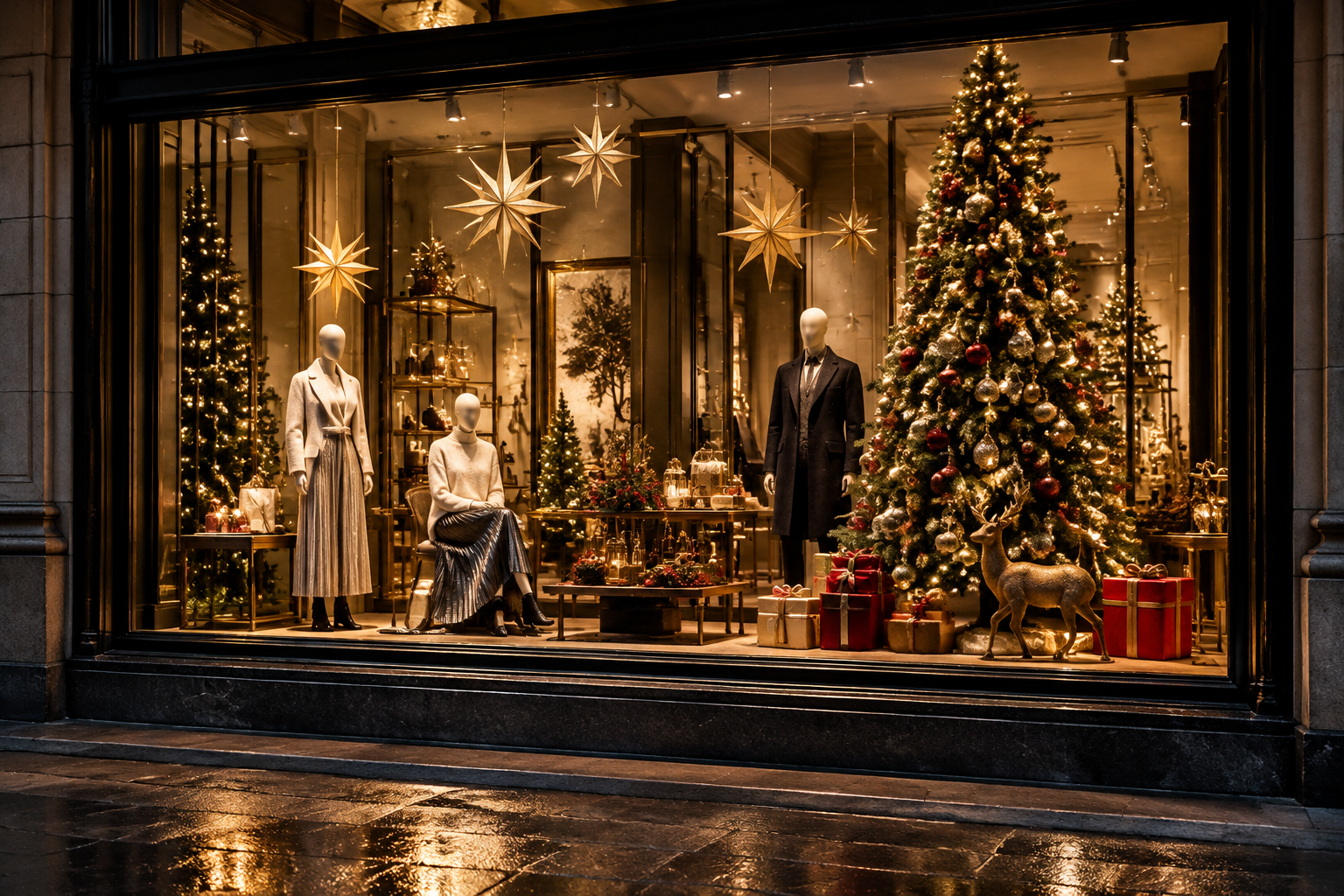
Introduction — the Design Problem in This Space
Festive retail environments demand high-contrast, color-accurate illumination to capture shopper attention while balancing energy efficiency during extended holiday opening hours.com), a Custom Indoor LED Lighting Manufacturer based in China, we see retailers struggle to highlight seasonal displays effectively without overwhelming visual comfort.
The fourth quarter represents the most critical revenue period for the global retail sector, spanning markets across the EU, US, and the Middle East. During this season, store layouts are radically transformed, introducing dense merchandise displays, intricate window storytelling, and vibrant seasonal color palettes that challenge baseline architectural lighting designs.
The primary design problem lies in the transient yet high-stakes nature of holiday merchandising. Standard ambient retail lighting, typically engineered for broad uniformity, fails to deliver the dramatic contrast necessary to make festive centerpieces pop.
Furthermore, the introduction of reflective ornaments, metallic gift wraps, and complex physical structures—like Christmas trees or suspended overhead décor—creates a highly complex visual landscape prone to chaotic shadowing and severe glare. If not properly addressed, poor lighting can render premium merchandise flat, visually confusing, or uncomfortable to browse, directly impacting dwell time and sales conversions.
Addressing these challenges for the 2026 retail landscape requires a strategic shift toward highly adjustable, high-fidelity LED solutions. Retailers are increasingly demanding luminaires that offer uncompromising color rendering to accurately render festive reds, lush greens, and warm golds.
Simultaneously, these systems must integrate seamlessly with advanced control protocols to manage the significantly longer operating hours—often 12 to 15 hours daily—without incurring exorbitant energy costs or premature thermal degradation of the LED components. Comprehensive lighting design must bridge the gap between theatrical display aesthetics and rigorous commercial performance metrics.
Lighting Criteria and Standards for This Application
Compliance with strict illuminance and glare standards ensures festive displays remain visually striking yet comfortable for shoppers navigating crowded retail aisles. To achieve a successful lighting deployment, designers must align their localized design targets with established international guidelines while adapting to the unique requirements of temporary holiday installations.
Standard ambient retail illumination must be carefully augmented with high-intensity focal lighting, creating a visual hierarchy that guides the customer journey from the exterior window deep into the store's gift zones.
The regulatory landscape for retail lighting focuses on safety, visual comfort, and energy efficiency. EN 12464-1 provides the foundational framework for indoor workplaces, including retail sales areas, setting baseline lux and UGR limits.
However, seasonal displays require a nuanced approach; while general circulation paths might only require a design target of 300 lux, prominent holiday displays and point-of-sale promotional tables often demand localized illumination exceeding 1000 lux to establish a compelling 3:1 or 5:1 contrast ratio against the ambient background. Furthermore, the integration of specialized control systems ensures that these intense focal points can be dynamically adjusted to account for daytime sunlight infiltration and nighttime dramatic effects.
| Parameter | Recommended Spec | Standard | Notes |
|---|---|---|---|
| Optics (CCT/CRI/TM-30/UGR/beam) | 2700K-3000K, CRI>95, TM-30 Rf>90, UGR<19, 15°-36° | EN 12464-1 | High fidelity for reds (R9>80) and deep greens. |
| Control Protocol | DALI-2 / Casambi / 0-10V | IEC 62386 | Enables dynamic fading and daytime/nighttime scene setting. |
| Housing & Durability | IP20, IK05, Extruded Aluminum | IEC 60529 | Superior thermal dissipation for 14+ hour holiday shifts. |
| Certification | CE / RoHS / ErP / ISO9001 | EU Directives | Ensures rigorous safety and sustainability compliance. |
| Named Components | Bridgelux COB / Tridonic / Mean Well / Osram | Industry Standard | Guarantees flicker-free output and zero color shift. |
Luminaire Selection and Optics
Selecting appropriate luminaires involves balancing beam angles, adjustability, and aesthetic integration to create dramatic, high-contrast focal points in seasonal retail zones. The dynamic nature of holiday merchandising—where displays may be rotated or completely redesigned week to week—necessitates lighting hardware that is inherently flexible. Fixed architectural downlights must be supplemented, or entirely bypassed, by modular track systems and adjustable gimbal fixtures that offer the retailer maximum control over the luminous environment.
Optical precision is paramount. Retailers must utilize fixtures with interchangeable lenses or zoomable optics to tailor the beam spread precisely to the dimensions of the merchandise.
A tight 15-degree spot is ideal for highlighting a premium luxury gift item, whereas a 36-degree flood is better suited for evenly washing a large festive backdrop or a heavily decorated mannequin cluster. Moreover, the physical form factor of the luminaires should be unobtrusive, allowing the merchandise to remain the undisputed focal point of the shopper's visual field.
| Luminaire Type | Optics & Beam Control | Best Holiday Application | Verdict |
|---|---|---|---|
| Track Spotlights (Zoomable) | 15°-60° adjustable, deep reflector | Dynamic window displays and changing mannequins | Essential for flexible, dramatic highlighting. |
| Recessed Gimbal Downlights | 24°/36° beam, 30° adjustable tilt | Gift tables and central merchandise islands | Recommended for directional focus from clean ceilings. |
| Linear Wall Washers | Asymmetric distribution, uniform lux | Illuminating large festive backdrops and branding | Situational for perimeter wall displays. |
| Miniature Showcase LEDs | 10°-20° micro-optics, low heat output | High-ticket jewelry and premium small gifts | Niche for localized luxury item focus. |
How Does High CRI and TM-30 Impact Holiday Merchandise?
Exceptional color rendering guarantees that festive merchandise, particularly deep reds and metallic finishes, appears vibrant, authentic, and immediately appealing to passing shoppers.
Standard lighting with a CRI of 80 often falls short when illuminating the rich, saturated colors synonymous with the holiday season. The red spectrum (measured as R9 in traditional CRI metrics) is particularly vulnerable; under poor lighting, vibrant Santa reds, luxury ribbons, and premium packaging can appear dull, brownish, or washed out. Transitioning to a recommended specification of CRI95+, utilizing premium chips like Bridgelux or Osram, ensures an R9 value exceeding 80, bringing profound depth to red and warm-toned merchandise.
Furthermore, the TM-30-15 standard provides a more comprehensive evaluation of color fidelity (Rf) and color gamut (Rg). For Christmas retail lighting, a design target of an Rg value slightly above 100 is highly desirable, as it provides a subtle saturation boost that makes festive greens and reds pop without appearing artificial. This high-fidelity illumination triggers an emotional response in shoppers, enhancing perceived product value and directly stimulating holiday purchasing behavior.
What Are the Optimal Lux Levels for Retail Window Displays?
Striking window displays require a recommended design target of 1500 to 2000 lux to overcome daytime reflections and create compelling nighttime contrast.
Shop windows serve as a critical boundary between the exterior streetscape and the interior retail environment. During daylight hours, natural sunlight creates intense reflections on window glass, essentially rendering the interior display invisible if not properly illuminated. To combat this, lighting designers must push vertical illuminance levels significantly higher than standard interior ambient metrics, utilizing focused track lights to punch through the glare and draw the eye inward.
As daylight fades into evening, these high lux levels must be managed carefully. Maintaining a flat 2000 lux at night can result in visual fatigue and excessive energy consumption.
Implementing a dual-scene control strategy—where daytime settings operate at 100% output and nighttime settings dim to a 40-50% design target—maintains a dramatic contrast ratio while preserving the theatrical magic of the festive display. This careful orchestration of lux levels dictates the overall success of the store's seasonal visual merchandising.
How to Minimize Glare (UGR) in Heavily Decorated Zones?
Utilizing deep-recessed optics, honeycomb louvers, and barn doors effectively minimizes direct glare, maintaining a UGR below 19 in heavily merchandised areas.
The introduction of tall Christmas trees, hanging ornaments, and elevated gift displays often forces retailers to angle their track lights aggressively, increasing the risk of directing high-intensity LED sources straight into the eyes of shoppers. This severe glare causes instant visual discomfort, prompting customers to look away from the merchandise or leave the zone entirely. Managing the Unified Glare Rating (UGR) is therefore a non-negotiable aspect of professional holiday lighting design.
To achieve the recommended specification of UGR < 19, optical accessories are indispensable. Honeycomb louvers trap stray peripheral light without significantly degrading the central beam's intensity, ensuring the focus remains exclusively on the product.
Similarly, snoots and barn doors provide physical cut-offs that shield the light source from typical viewing angles. When combined with deep-set COB architectures, these tools allow designers to deploy powerful 3000-lumen fixtures in dense retail environments while preserving absolute visual comfort.
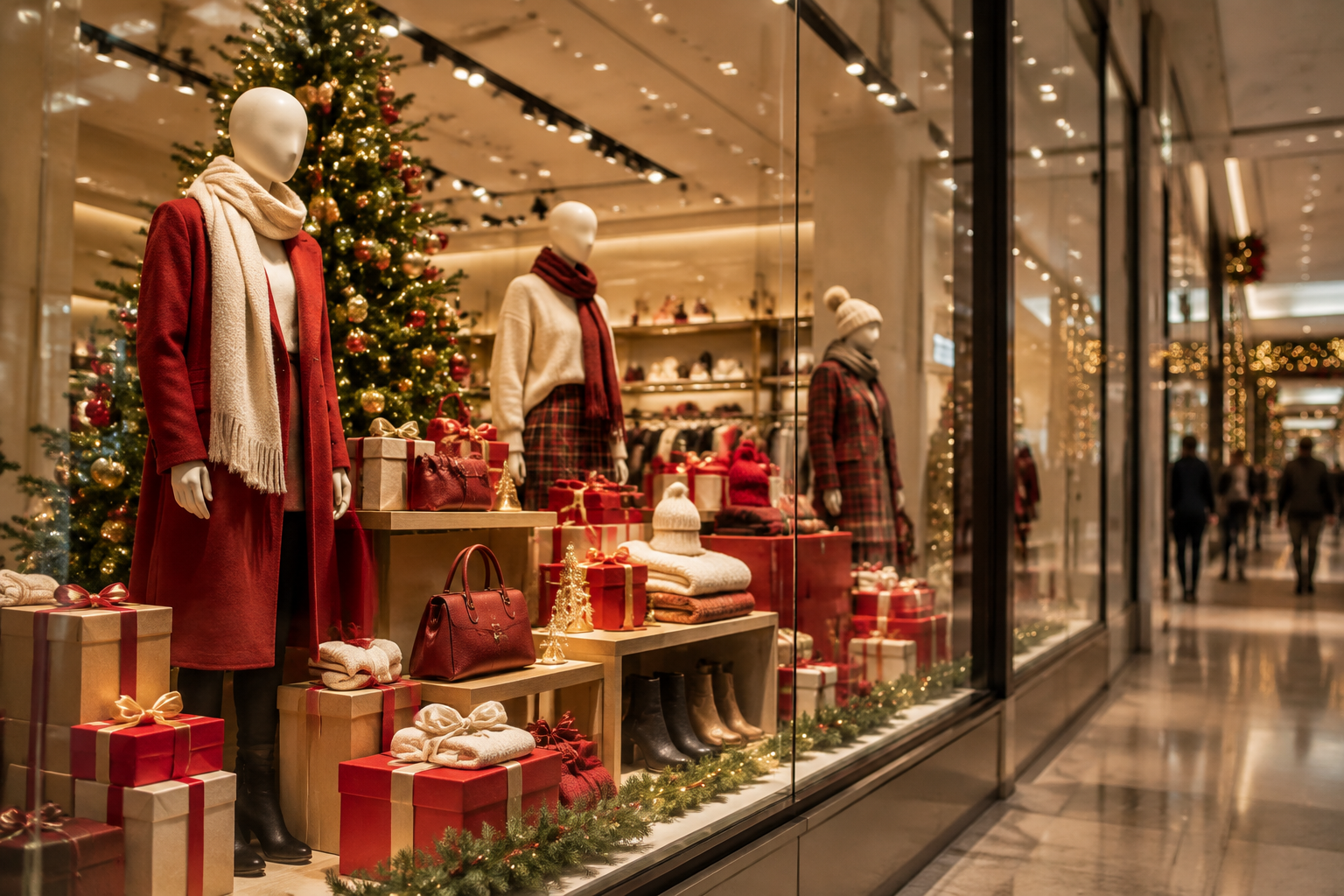 Christmas Retail Lighting 2026: Window Display CRI95 Guide: How does high CRI and TM-30 impact holiday merchandise?
Controls, Energy and Commissioning (DALI-2 / Casambi / Sensors)
Implementing advanced DALI-2 and Casambi controls allows retailers to automate dynamic lighting scenes, reducing energy consumption during extended holiday operating hours.
The modern retail environment demands lighting infrastructure that is both intelligent and adaptable. Traditional phase-cut dimming lacks the granularity required to execute complex seasonal visual strategies.
By adopting DALI-2 (Digital Addressable Lighting Interface), large retail spaces can achieve individual fixture control, enabling precise tuning of specific merchandising zones without altering the broader ambient lighting. This protocol allows for the seamless integration of Tridonic or Mean Well drivers, ensuring smooth, flicker-free dimming down to 1%, which is essential for evening atmospheric displays.
For retrofits or environments requiring maximum flexibility, Casambi wireless Bluetooth mesh networks represent the ideal solution. Store managers can easily adjust lighting scenes via smartphone applications, shifting from high-energy daytime settings to warm, moody evening profiles.
This dynamic capability not only enhances the visual storytelling of the holiday displays but also contributes to significant energy conservation. By aligning light output with actual foot traffic and ambient daylight via integrated sensors, retailers can achieve a simulation target of 30% reduction in lighting-related energy costs, mitigating the financial impact of operating 14-hour days throughout December.
Photometric Files & Compliance (IES / LDT / DIALux / CE / RoHS / ErP)
Accurate lighting simulation using IES and LDT photometric files in DIALux ensures proposed designs meet required illuminance targets and strict European regulatory compliance.
The transition from conceptual visual merchandising to a physical lighting deployment relies entirely on rigorous photometric analysis. Lighting designers utilize highly detailed IES and LDT photometric files to model the exact light distribution, beam angles, and intensity of selected luminaires within specialized software like DIALux.
This simulation process is critical for seasonal retail; it allows teams to map out shadows cast by large props, verify that gift wrapping stations meet task lighting requirements, and confirm that the critical 3:1 contrast ratios are achieved before a single fixture is installed.
Beyond visual performance, these technical validations are deeply tied to regulatory compliance. Navigating the European market necessitates strict adherence to standards governing safety, electromagnetic compatibility, and sustainability.
Premium retail luminaires must carry valid CE marking and demonstrate full compliance with RoHS directives, ensuring they are free from hazardous materials. Furthermore, energy consumption metrics mapped out in DIALux provide the necessary data to verify compliance with the stringent ErP (Energy-related Products) directive, guaranteeing that the high-impact holiday lighting remains environmentally responsible and economically viable.
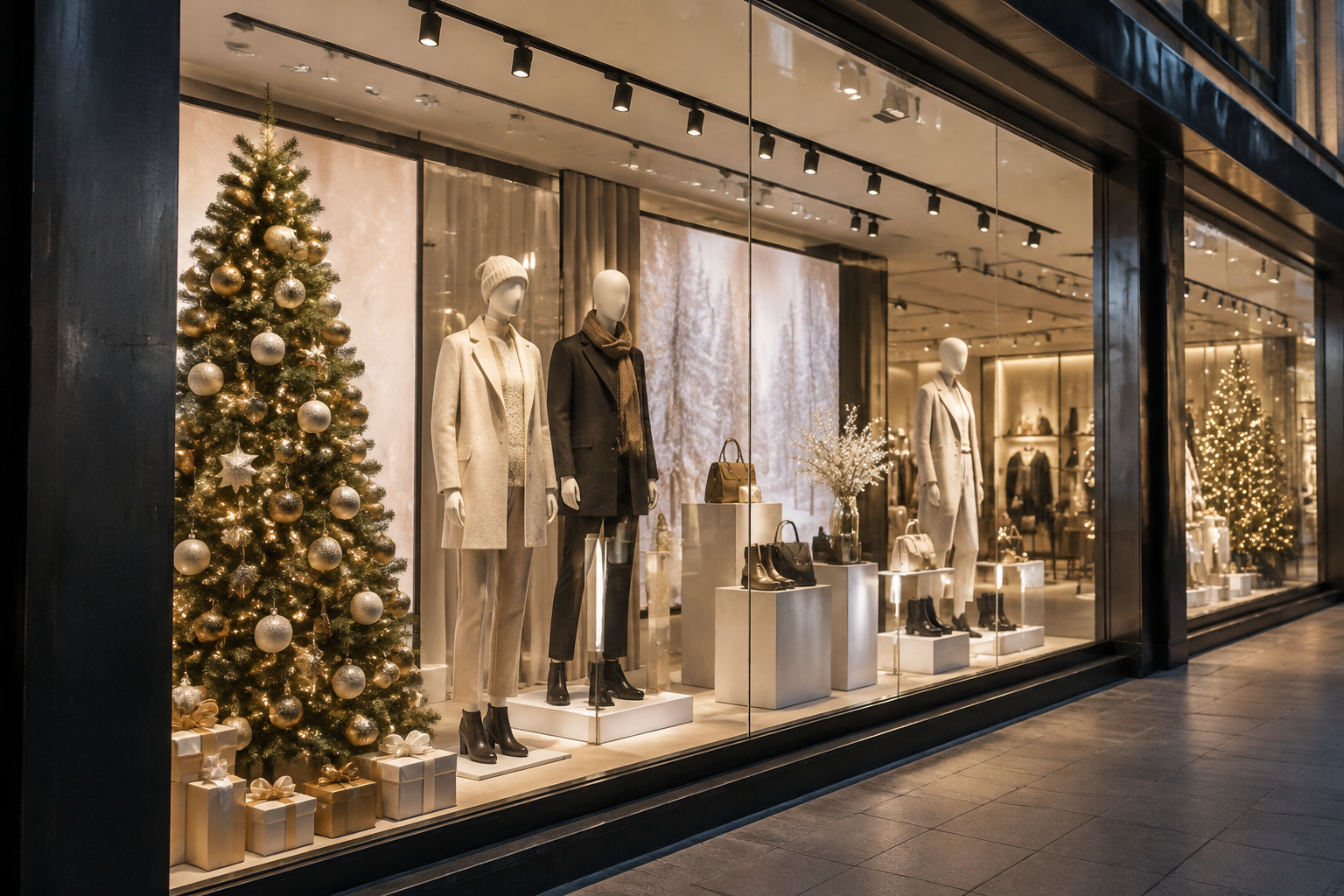 Christmas Retail Lighting 2026: Window Display CRI95 Guide: Photometric files & compliance (IES / LDT / DIALux / CE / RoHS / ErP)
Frequently Asked Questions
These frequently asked questions address the most critical technical and operational considerations for designing high-performance seasonal retail lighting setups.
Q: What Is the Recommended Color Temperature for Christmas Retail Displays?
A warm 2700K to 3000K color temperature is highly recommended for festive displays. This range enhances gold, red, and warm metallic tones, creating a cozy and inviting atmosphere while maintaining a design target of CRI > 95 for optimal color accuracy across merchandise.
Q: How Much Energy Can Casambi Controls Save During Extended Holiday Hours?
Implementing a Casambi wireless control system can yield a simulation target of 25% to 40% in energy savings. By utilizing automated scheduling and dimming profiles, stores prevent energy waste during the 12 to 14 hours of daily operation common during the holiday season.
Q: Why Are Honeycomb Louvers Necessary for Seasonal Retail Track Lighting?
Honeycomb louvers are essential for glare reduction, achieving a UGR < 19 target. When track lights are angled aggressively to illuminate tall decorations or low gift tables, louvers intercept stray light, ensuring the intense 2000-lumen output focuses solely on the product without blinding shoppers.
Q: Can Standard Retail Lighting Meet EN 12464-1 Requirements for Gift Wrapping Stations?
Standard ambient lighting often falls short. According to EN 12464-1, tasks like gift wrapping require a maintained illuminance of at least 500 lux with high uniformity. Dedicated task downlights or adjustable spotlights are required to meet this specific standard and reduce staff eye strain.
Sources and Technical References
Rigorous lighting design relies on established international standards, ensuring that all seasonal retail environments achieve optimal visual comfort, safety, and operational efficiency.
To ensure the highest level of accuracy and compliance, this technical scenario incorporates parameters from the most respected authorities in commercial illumination. The primary benchmark for indoor work and retail spaces remains EN 12464-1 (and its regional equivalent DIN EN 12464-1), which dictates the foundational lux and UGR limits necessary for both customer comfort and staff wellbeing.
Additionally, specialized retail application guidelines are drawn from the IES RP (Illuminating Engineering Society Recommended Practices), which offer deeper insights into contrast ratios and vertical illuminance specifically tailored for window displays and high-end merchandising. For environments where retail staff endure extended holiday shifts, incorporating principles from the WELL v2 standard ensures that the lighting design supports circadian health and mitigates the biological impact of long-term exposure to artificial light.
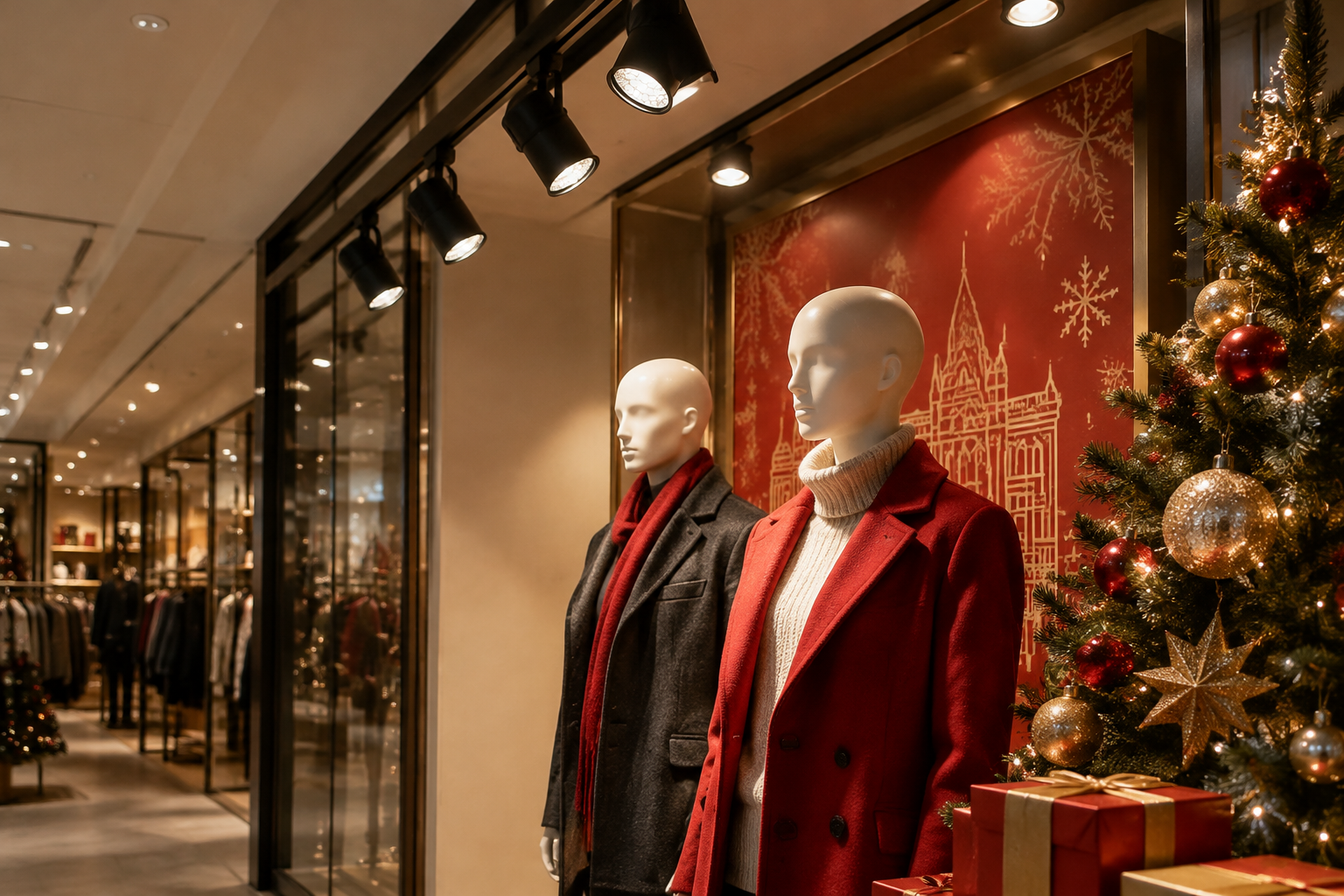 Christmas Retail Lighting 2026: Window Display CRI95 Guide: Q: Why are honeycomb louvers necessary for seasonal retail track lighting?
Request a Custom Quote
Transform your seasonal retail spaces with expertly engineered, high-fidelity LED luminaires designed to captivate shoppers and elevate your brand presentation.
com), a Custom Indoor LED Lighting Manufacturer based in China, we specialize in partnering with European, American, and Middle Eastern retailers to deliver uncompromising lighting solutions. From bespoke zoomable track fixtures to advanced DALI-2 compliant downlights, our engineering team ensures that your 2026 holiday displays achieve flawless CRI95+ color rendering and rigorous regulatory compliance.
Contact us today to access our comprehensive DIALux design support, request specialized IES files, and receive a tailored quotation that aligns with your specific festive merchandising strategy.
Chi è XHLWX
XHLWX è il marchio di Shenzhen Qihang Lighting Co., Ltd., produttore di apparecchi LED per progetti con stabilimento proprio a Shenzhen (Cina) dal 2009. Forniamo profili lineari, downlight, binari magnetici, pannelli, plafoniere stagne, campane industriali e apparecchi su misura per uffici, hotel, musei, retail e industria.
Progettazione illuminotecnica secondo UNI EN 12464-1 (Em, UGR, Uo, Ra) con file IES e LDT per DIALux; apparecchi conformi CE e RoHS, sistema qualità ISO 9001.
Domande frequenti su XHLWX
XHLWX fornisce progetti in Italia?
Sì. Forniamo progetti in Italia direttamente dallo stabilimento; offerta, calcolo illuminotecnico e documentazione tecnica sono disponibili in italiano o inglese.
Gli apparecchi rispettano la UNI EN 12464-1?
Dimensioniamo illuminamento, limite UGR e uniformità secondo la UNI EN 12464-1 e li verifichiamo con un calcolo DIALux basato sui nostri file LDT.
Quali sistemi di controllo sono supportati?
DALI-2, 0-10 V e Casambi (Bluetooth), anche in versione emergenza o con sensore secondo il progetto.
XHLWX realizza apparecchi su misura o OEM?
Sì. Lunghezze, temperature di colore, ottiche, finiture e il vostro marchio (OEM/ODM) vengono realizzati nel nostro stabilimento.
Need a tailored lighting plan for your project?
Our senior lighting designers reply within 48 hours with a free design proposal & quotation.