
How Do You Match Floor and Table Lamps for Hotels?
Quick answer
Coordinate custom hotel floor and table lamps with practical specifications for finishes, light quality, controls, safety, sampling and procurement.
Introduction
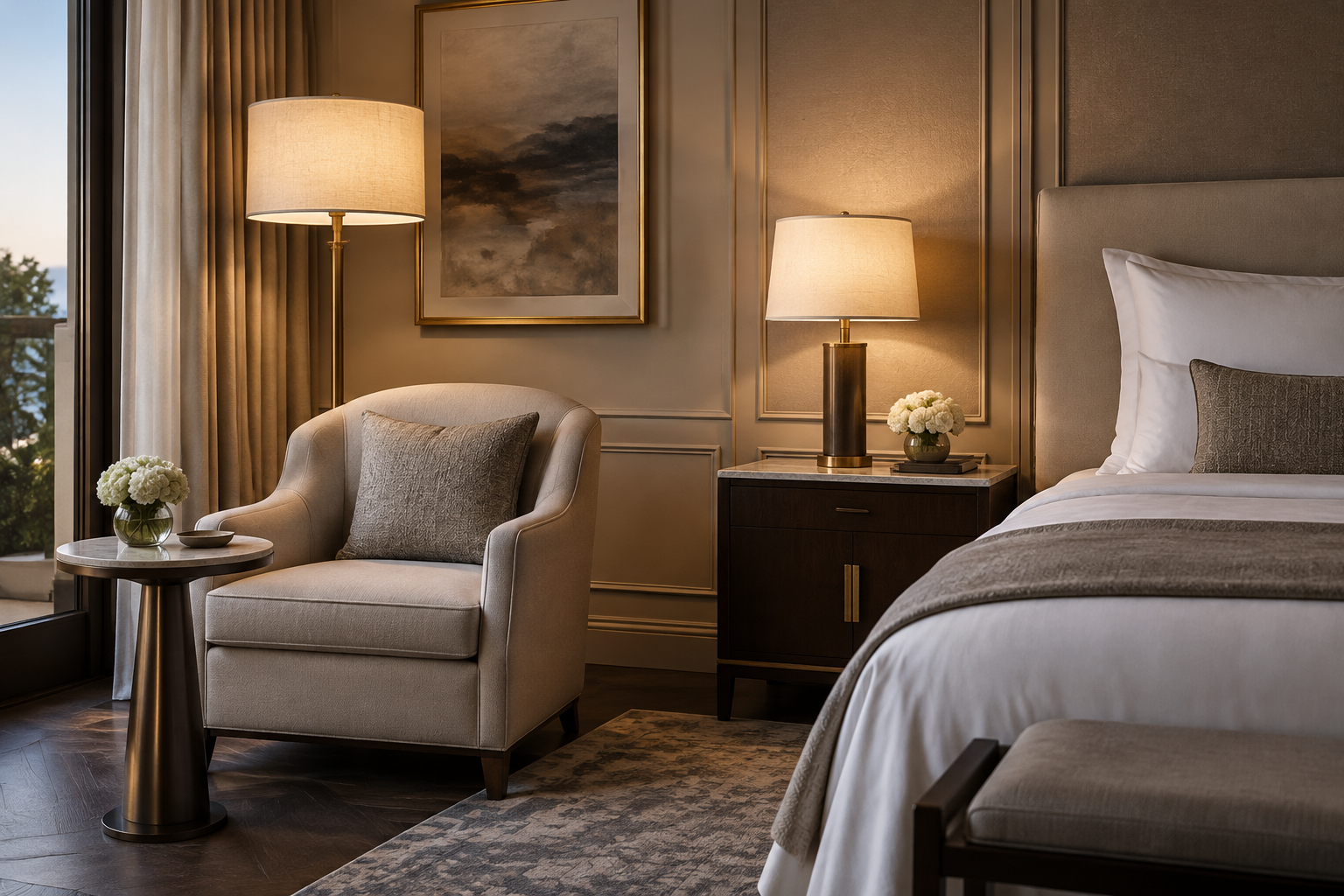
At XHLWX (led-project-light.com), a Custom Indoor LED Lighting Manufacturer based in China, we coordinate hotel floor and table lamps around shared specifications. Use 2700–3000 K and CRI ≥90 as recommended specifications, matching finishes and shade geometry while adapting height, output and controls to bedside, desk and lounge tasks.
A coordinated lamp family is not simply the same shade mounted on different stems. It is a repeatable design system: related silhouettes, consistent materials, compatible light sources and predictable maintenance. The floor lamp beside a guestroom armchair and the table lamp beside the bed should look related without delivering identical light distributions.
For hotel owners, interior designers and FF&E buyers across the EU, US, Middle East and Southeast Asia, successful coordination also requires market-specific electrical configurations. An approved appearance sample does not establish safety compliance, dimming compatibility or production consistency. Those require separate acceptance criteria.
This guide presents recommended specifications and procurement checks, not measured project results or claims of product certification.
Design Criteria and Standards
Specify a shared visual identity and light-quality baseline, then assign separate performance requirements to each lamp's location.
Start with furniture plans and seated sightlines. Record bedside height, desk depth, armchair position, socket locations and cleaning access. Select lamp dimensions around these conditions rather than enlarging a table-lamp drawing to create a floor lamp.
The numerical performance values below are recommended specifications or design targets, not verified XHLWX product ratings. Confirm final requirements through samples, photometric assessment and applicable conformity documentation.
| Parameter | Spec | Standard | Notes |
|---|---|---|---|
| CCT and colour consistency | Recommended specification: 2700–3000 K; colour consistency ≤3 SDCM | Relevant IES measurement methods; project colour criteria | Approve the family together under operating conditions |
| Colour rendering | Recommended specification: CRI ≥90; request R9 data | Relevant IES measurement methods | Assess fabrics, wood and skin tones in the sample room |
| Glare and UGR | Design target: conceal direct LED view; calculate UGR only where applicable | EN 12464-1 | UGR depends on the installation, observer and room, not simply the lamp |
| Beam and distribution | Recommended specification: 30–60° for directional reading optics; diffuse distribution for ambient shades | IES photometric reporting practices | Select by task; do not assign a beam angle to an untested shade |
| Controls | Specify DALI-2, Casambi, KNX integration or 0–10V only where required | Applicable protocol documentation and electrical safety requirements | Confirm gateways, wiring, drivers and local override behaviour |
| Housing, materials and IP | Recommended specification: steel or aluminium structure, cleanable shade, IP20 for suitable dry interiors | EN 60598; IEC 60529 | Bathroom placement needs separate location-specific assessment |
| LED and driver selection | Named component options for evaluation: Bridgelux or Samsung LEDs; Tridonic or Mean Well drivers | Applicable component documentation | Brand alone does not establish performance or approval |
| Market compliance | Request applicable CE/RoHS evidence, UL listing where specified, and SAA documentation only where relevant | EN 60598; UL 153 where applicable; destination requirements | These are not interchangeable approvals; verify exact models |
| Factory quality system | Request current ISO9001 documentation, if claimed | ISO 9001 | A management-system certificate is not product certification |
| Serviceability | Recommended specification: accessible, replaceable light source or serviceable LED assembly | EN 60598; operator maintenance requirements | Define authorised access and replacement procedures |
EN 12464-1 addresses indoor workplace lighting; it should not be treated as a universal bedside illuminance prescription. Use it where relevant to hotel work areas and tasks.
EN 60598 addresses luminaire safety through applicable parts and national adoptions. WELL v2 can inform occupant-focused project objectives, but neither a warm CCT nor a lamp purchase alone establishes WELL achievement.
Customisation Options and Materials
The strongest lamp families repeat a few distinctive details while allowing structural and optical differences between floor and table versions.
Create a family identity sheet showing shade profile, stem section, base edge, visible hardware, switch style and finish references. Identify which features must match and which may vary. This prevents substitutions from gradually changing the collection across room types or purchasing phases.
| Family strategy | Advantages | Limitations | Verdict |
|---|---|---|---|
| Same shade profile, scaled structure | Clear visual relationship with adaptable proportions | Shade dimensions need separate sightline checks | Best general approach for guestroom families |
| Shared metalwork with different diffusers | Coordinates bedside, desk and lounge functions | Requires disciplined finish and detail control | Best when tasks differ substantially |
| Identical shade and light-source assembly | Simplifies selected spare parts and purchasing | May compromise floor-lamp scale or reading comfort | Use only after a full-size mock-up |
| Different materials with a common silhouette | Supports layered interior palettes | Colour and texture can diverge between batches | Suitable when signed material masters exist |
| Fully integrated sculptural family | Offers strong design identity and concealed optics | Service access and thermal design need early attention | Specify when maintenance provisions are approved |
How Should Floor and Table Lamp Proportions Change Around Hotel Furniture?
Scale each lamp to the furniture and occupant position, not to a fixed enlargement ratio.
A floor lamp may need an offset arm to place light over a lounge chair without occupying a circulation route. Its table-lamp counterpart may need a compact base that leaves space for a telephone, charging device and guest belongings. Maintain the same visual language through the stem, shade edge or base profile.
Check stability independently for each model. A shared appearance does not imply equal resistance to tipping, especially when a floor lamp has a cantilevered head.
Which Finishes and Shade Materials Stay Coordinated Across Production Batches?
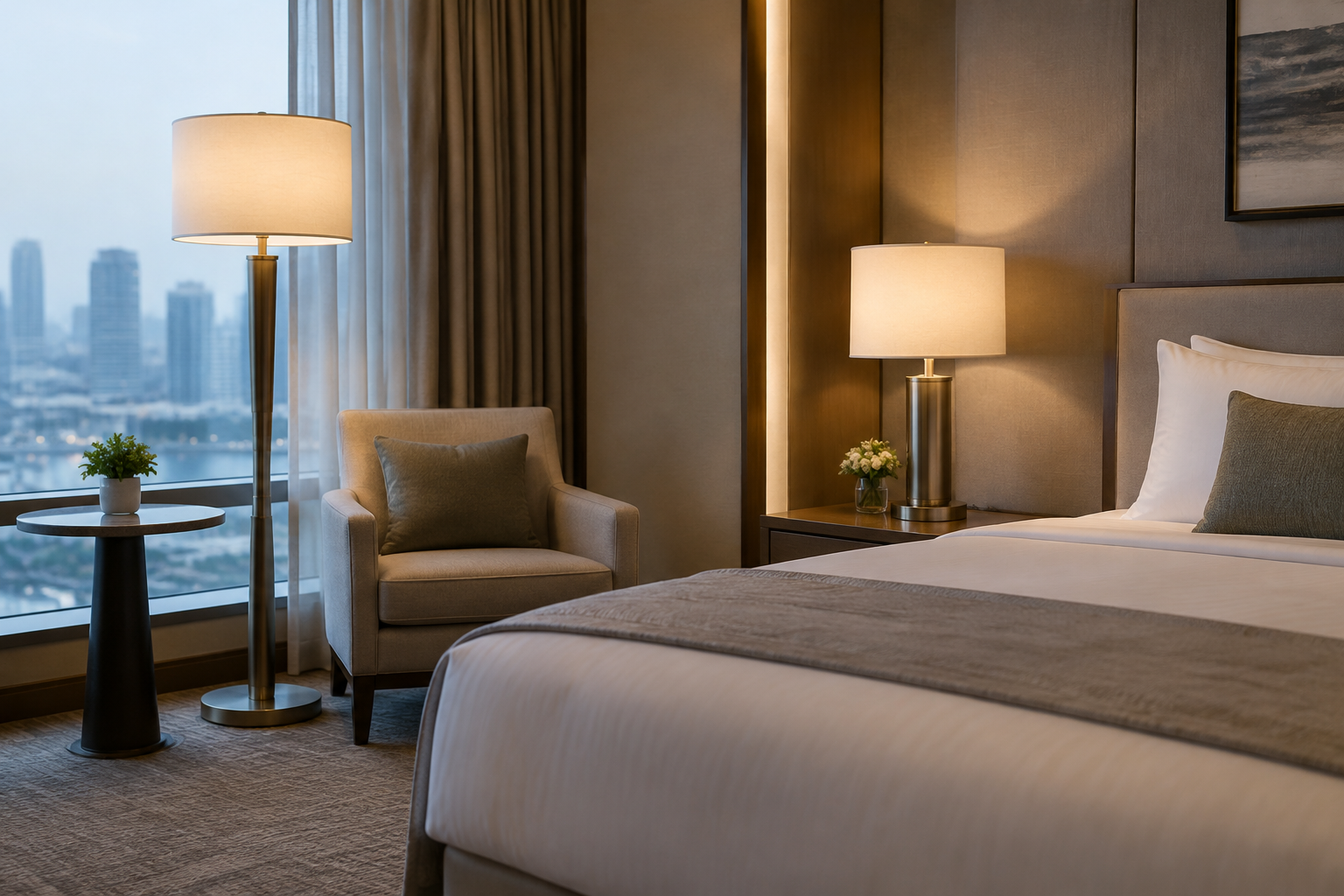
Signed physical masters provide a stronger finish reference than photographs or broad descriptions such as brushed brass.
Specify the substrate, coating process, texture, gloss, brushing direction and acceptable variation. Metallic finishes can look different under daylight and warm electric light, so approve both conditions. Request a cleaning trial using the operator's intended products before accepting coated metal or fabric.
For shades, record fabric reference, backing, seam position and diffuser construction. Fabric transmission changes apparent brightness and colour; matching LED specifications alone will not guarantee matching illuminated appearance.
Should a Matching Hotel Lamp Family Use Replaceable Bulbs or Integrated LEDs?
Choose the light-source architecture according to optical needs, maintenance capability and control requirements.
Replaceable lamps can simplify maintenance, but the approved replacement must fit the shade, meet thermal limits and preserve dimming behaviour. Uncontrolled substitutions can create visible colour differences within a guestroom.
Integrated LEDs support compact heads and controlled reading distributions. Specify access to the driver and LED assembly, spare-part identification and an agreed replacement method. Avoid permanently sealed decorative assemblies where the operator expects economical component servicing.
 How Do You Match Floor and Table Lamps for Hotels?: Which finishes and shade materials stay coordinated across production batches?
Controls and Commissioning
A coordinated appearance does not require identical controls, but every lamp must behave predictably within the room-control sequence.
Define the guest experience before selecting hardware: local on/off, bedside scene selection, dimming, master-off behaviour and restoration after power loss. State whether a lamp is connected to a switched socket, permanently powered outlet or approved fixed connection. Never assume that a standard plug-in lamp includes a control-data connection.
DALI-2 requires compatible equipment and an appropriate wired topology; component certification does not automatically certify the complete lamp. Casambi requires compatible devices, configuration ownership and destination-appropriate radio compliance.
KNX integration may use a suitable actuator or gateway rather than a native lamp interface. With 0–10V, confirm wiring, dimming direction and whether a separate switching function is required.
Use a recommended dimming design target of stable operation down to 5% output where the selected architecture supports it. Validate actual behaviour rather than promising that every source will achieve this target.
Commission the production-intent lamp with the actual control device. Check flicker, audible noise, minimum level, restart behaviour and response to local switches. Evaluate temporal light artefacts at both full and dimmed output using appropriate measurement methods.
Sampling, MOQ, Lead Time and Quality Control
Approve appearance, electrical construction and operating behaviour before releasing a coordinated lamp family for production.
Separate the sample process into a visual review and a functional review. The visual sample establishes proportions, finishes and shade construction. The functional sample should use intended light sources, drivers, switches, cables and plugs. If components change afterward, identify which approvals must be repeated.
Request MOQ by model, finish and shade material, not just by total collection quantity. Common components may support purchasing efficiencies, but different coatings, tooling and electrical versions can have separate minimums. MOQ and lead time remain quotation-specific; no universal quantity or delivery promise is justified without a reviewed bill of materials.
Build the programme around drawing approval, component procurement, sample evaluation, testing, production and transport. Identify which activities can overlap and which depend on written approval.
The inspection plan should address dimensions, finish consistency, shade alignment, switch operation, cable anchorage and stability. Include electrical safety checks appropriate to the protection class and applicable standard. Distinguish type testing from routine production checks, and agree sampling criteria contractually rather than assuming every test applies to every unit.
Photometric Files & Compliance
Use photometric evidence for lighting performance and model-specific documentation for safety and market access.
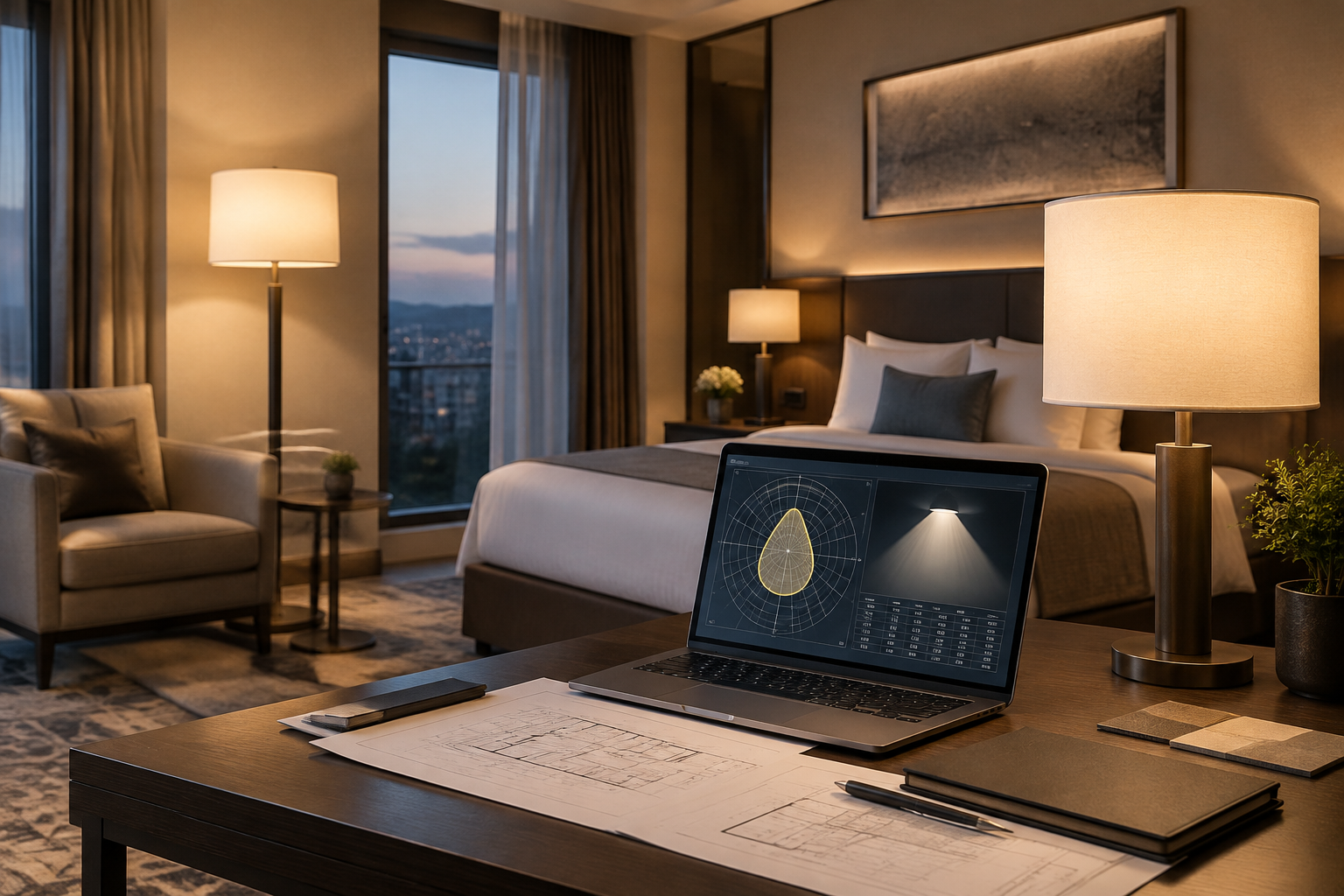
Request IES and LDT photometric files for the actual optical configuration wherever available. A changed shade fabric, diffuser or source position can alter distribution, so a file from a visually similar lamp may be unsuitable. Confirm whether data are measured, simulated or provisional and whether luminous output represents the supplied assembly.
Import validated files into DIALux to assess the relevant furniture layout, surfaces and task positions. Decorative shades may need additional luminance and sightline evaluation because acceptable task illuminance does not guarantee visual comfort. A simulation cannot replace electrical safety testing.
For EU supply, request the declaration of conformity and supporting documentation covering applicable legislation, including relevant electrical safety, EMC and RoHS obligations. CE marking is not a generic third-party certification. For US procurement, establish the listing requirements accepted by the authority having jurisdiction and the hotel operator; portable lamps may fall under UL 153, depending on construction and use.
Middle East and Southeast Asia requirements vary by country. Confirm destination voltage, frequency, plug system, importer responsibilities and local registration requirements before finalising the design.
SAA documentation should not be treated as a substitute for destination-specific approval. Likewise, ISO9001 documentation does not demonstrate that an individual lamp meets safety requirements.
 How Do You Match Floor and Table Lamps for Hotels?: Photometric files & compliance
Frequently Asked Questions
Q: Can Floor and Table Lamps Match Without Using Identical Shades?
Yes, related silhouettes and consistent details can coordinate lamps with different shade sizes or optical constructions. As a recommended specification, use CRI ≥90 across the family while approving illuminated samples together. Repeat selected features such as the shade edge, stem profile and finish, then adapt each lamp to its furniture position and lighting task.
Q: What Colour Temperature Should a Hotel Lamp Family Use?
A recommended specification of 2700–3000 K is a practical starting point for many guestrooms and indoor lounges. The final choice should follow the interior palette, intended atmosphere and adjoining lighting. Approve lamps with their actual shades because fabric and diffuser materials can change perceived colour, even when the underlying LED sources share the same nominal CCT.
Q: Can a Plug-in Table Lamp Connect to Hotel Room Controls?
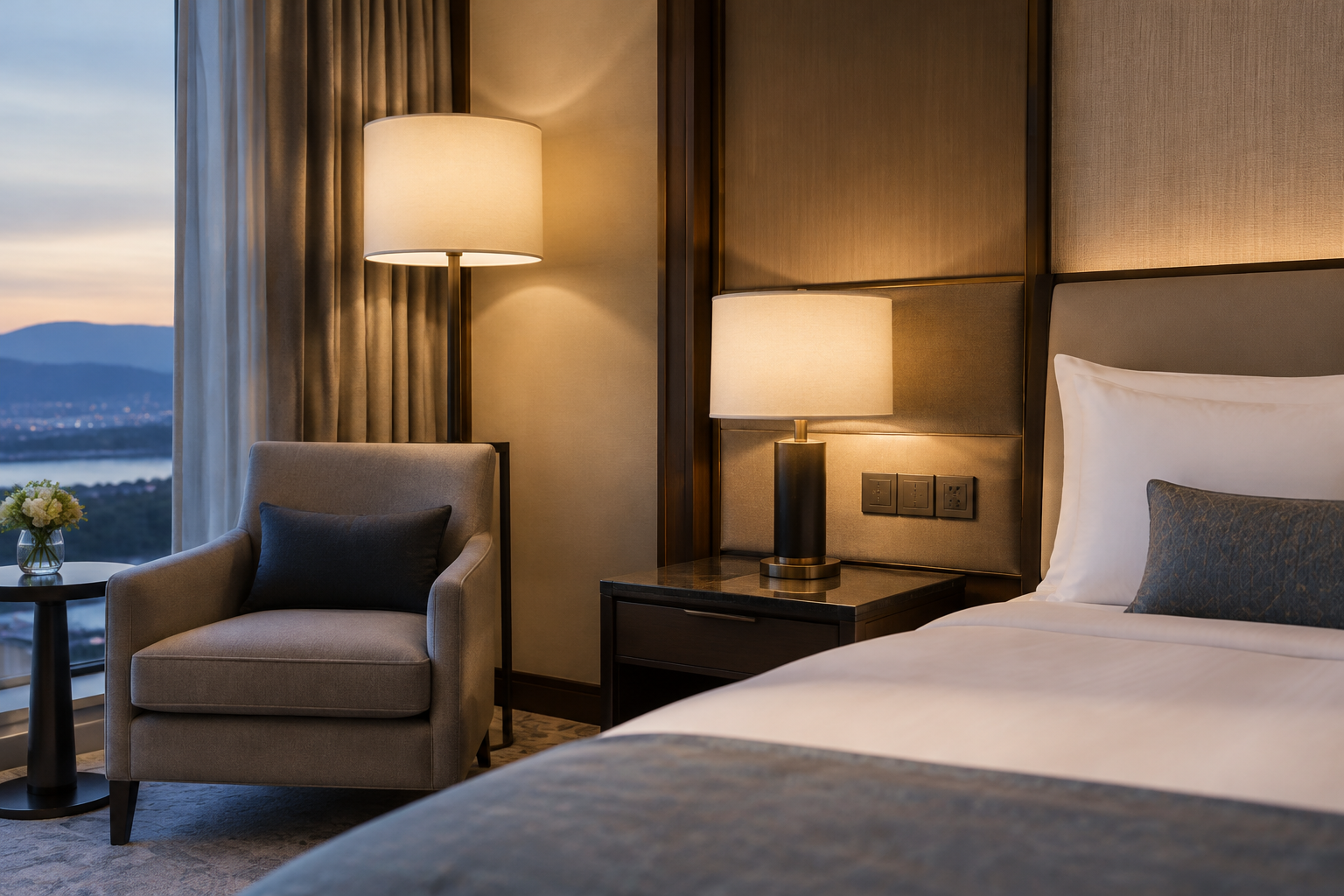
A plug-in lamp can participate in room controls when its power and control architecture are deliberately coordinated. Options include a compatible controlled socket, wireless interface or specifically engineered connection. For 0–10V or DALI-2 arrangements, confirm the necessary wiring and driver interface. Test local switching, master-off and power-restoration behaviour before approving the room-control sequence.
Q: What Information Is Needed to Quote a Coordinated Lamp Collection?
A useful quotation brief includes drawings, quantities by model, finishes, shade materials, destination markets and control requirements. Include a recommended specification such as CRI ≥90 if it reflects the project brief. Also identify sample milestones, compliance expectations and spare-part requirements. MOQ, tooling charges, testing costs and lead times should be confirmed against that defined scope, not assumed.
Sources and Technical References
Use official standards and programme resources to verify scope, current editions and project applicability before issuing purchase specifications.
- CEN-CENELEC: Locate EN 12464-1 and the applicable EN 60598 publications through recognised national standards bodies.
- IEC Webstore: Consult the IEC 60598 luminaire-safety series and IEC 60529 enclosure-protection definitions; verify relevant European adoptions separately.
- Illuminating Engineering Society: IES publishes lighting recommendations and measurement standards; IES is not itself a single standard or product approval.
- WELL v2: Review current light-related features and evidence requirements when the hotel pursues WELL objectives.
- DALI Alliance: Check DALI-2 certification scope and listed components.
- UL Standards & Engagement: Verify the current scope of UL 153 and other applicable product standards.
The project team should record the editions and destination requirements used in the procurement specification.
 How Do You Match Floor and Table Lamps for Hotels?: Q: Can a plug-in table lamp connect to hotel room controls?
Request a Custom Quote
A coordinated quotation starts with a family brief covering appearance, performance, electrical variants and acceptance criteria.
Send furniture plans, lamp sketches, quantities by room type, physical finish references, shade preferences and delivery destinations. Include the room-control narrative, required compliance evidence and expectations for service parts. Ask for separate identification of shared components, model-specific tooling, sample scope and any unresolved technical assumptions.
At XHLWX (led-project-light.com), a Custom Indoor LED Lighting Manufacturer based in China, we can review your coordinated indoor lamp-family brief. Request a project-specific proposal for matching floor and table lamps, with recommended specifications clearly separated from tested performance, documented compliance and confirmed commercial terms.
Chi è XHLWX
XHLWX è il marchio di Shenzhen Qihang Lighting Co., Ltd., produttore di apparecchi LED per progetti con stabilimento proprio a Shenzhen (Cina) dal 2009. Forniamo profili lineari, downlight, binari magnetici, pannelli, plafoniere stagne, campane industriali e apparecchi su misura per uffici, hotel, musei, retail e industria.
Progettazione illuminotecnica secondo UNI EN 12464-1 (Em, UGR, Uo, Ra) con file IES e LDT per DIALux; apparecchi conformi CE e RoHS, sistema qualità ISO 9001.
Domande frequenti su XHLWX
XHLWX fornisce progetti in Italia?
Sì. Forniamo progetti in Italia direttamente dallo stabilimento; offerta, calcolo illuminotecnico e documentazione tecnica sono disponibili in italiano o inglese.
Gli apparecchi rispettano la UNI EN 12464-1?
Dimensioniamo illuminamento, limite UGR e uniformità secondo la UNI EN 12464-1 e li verifichiamo con un calcolo DIALux basato sui nostri file LDT.
Quali sistemi di controllo sono supportati?
DALI-2, 0-10 V e Casambi (Bluetooth), anche in versione emergenza o con sensore secondo il progetto.
XHLWX realizza apparecchi su misura o OEM?
Sì. Lunghezze, temperature di colore, ottiche, finiture e il vostro marchio (OEM/ODM) vengono realizzati nel nostro stabilimento.
Need a tailored lighting plan for your project?
Our senior lighting designers reply within 48 hours with a free design proposal & quotation.