
How Are Hotel Ring Chandeliers Customised in 6 Steps?
Quick answer
A six-step hotel ring chandelier workflow covering renders, engineering drawings, samples, controls, production checks and compliance documentation.
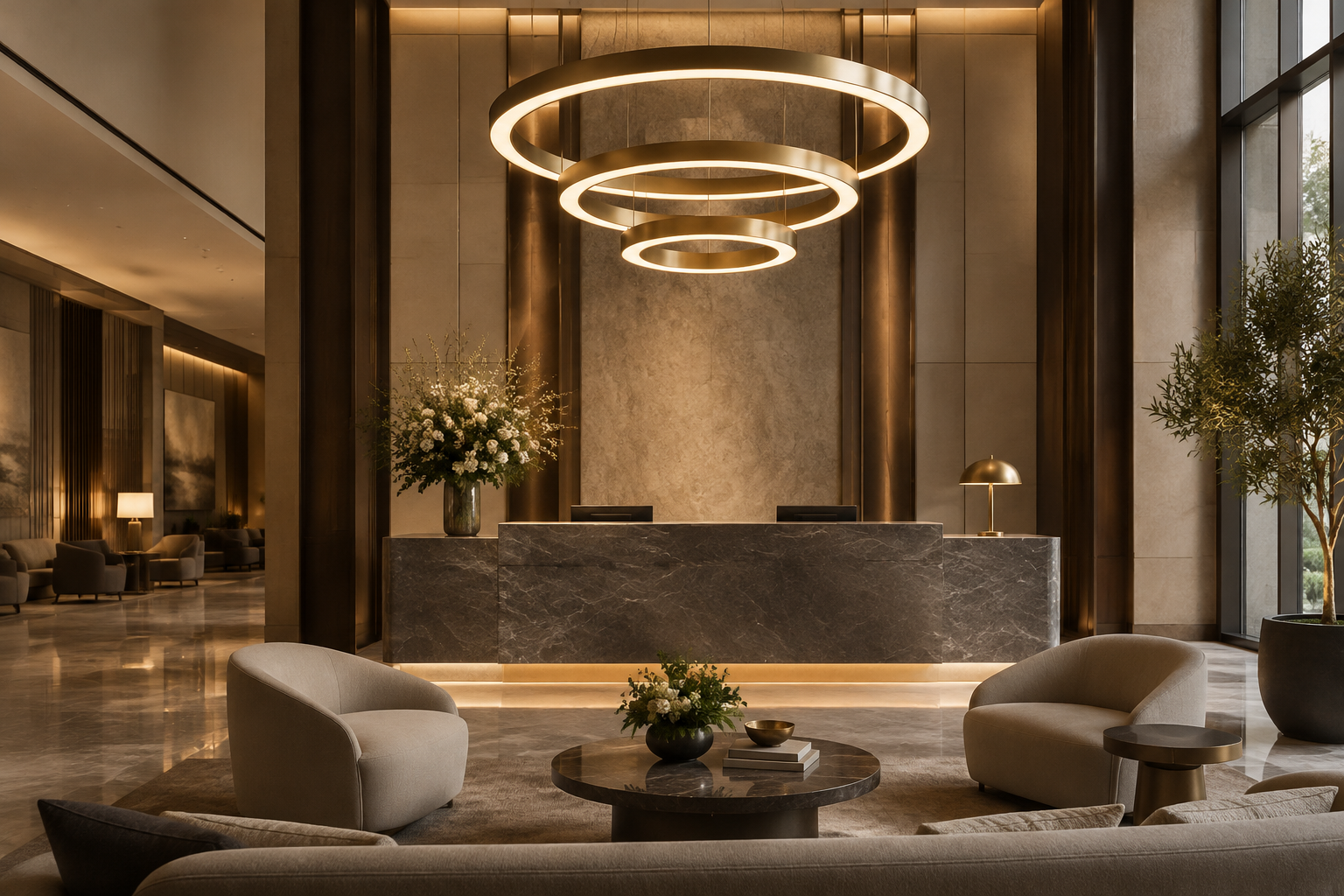
Introduction
At XHLWX (led-project-light.com), a Custom Indoor LED Lighting Manufacturer based in China, ... the recommended workflow has 6 approval steps. Brief, render, drawing, sample, production, and release turn a 3-tier design target into a controlled order, with appearance, loading, optics, and controls approved before manufacture.
A multi-tier ring chandelier in a hotel lobby is both a visual centrepiece and a coordinated building component. Its apparent simplicity hides decisions about ring stiffness, diffuser joints, suspension geometry, driver access, dimming behaviour, and transport. A convincing render settles none of those issues by itself.
For hotel owners, interior designers, and FF&E buyers across the EU, US, Middle East, and Southeast Asia, the most useful workflow assigns an approval record to every stage:
- Brief: approve the application, constraints, budget basis, and responsibilities.
- Render: approve the visual concept and proportions.
- Drawing: approve the buildable assembly and interfaces.
- Sample: approve physical appearance and operating behaviour.
- Production: manufacture against the frozen specification and inspection plan.
- Release: approve shipment documentation and site commissioning requirements.
These are approval gates, not a promised delivery duration. Changes after an approved gate require documented review of cost, programme, and technical consequences.
Design Criteria and Standards
A hotel ring chandelier specification must separate decorative appearance from verified lighting, electrical, mechanical, and maintenance requirements.
Step 1: freeze the brief. Record the lobby dimensions, ceiling construction, viewing positions, reception tasks, daylight conditions, supply characteristics, and available maintenance access. Identify whether the chandelier provides useful ambient illumination or primarily establishes visual hierarchy. Task lighting at reception should not depend on a decorative chandelier unless calculations support that arrangement.
The following values are recommended specifications or design targets, not claims about an existing XHLWX product or completed installation.
| Parameter | Spec | Standard | Notes |
|---|---|---|---|
| CCT and colour consistency | Recommended specification: 2700–3000 K; colour consistency design target: SDCM ≤3 | EN 12464-1; WELL v2 where relevant | Approve the selected CCT with interior finishes; these targets are not universal requirements of either reference. |
| Colour rendering | Recommended specification: CRI Ra ≥90 | EN 12464-1; WELL v2 where relevant | Request spectral data and review skin tones, timber, stone, and fabrics. |
| Glare | Design target: UGR ≤19 where appropriate to the task and calculation method | EN 12464-1 | UGR is installation-dependent; assess exposed luminous rings from actual viewing positions. |
| Beam and distribution | Recommended specification: diffuse distribution; optional 60° downward optic as a design target | IES photometric methods | Select through calculation and mock-up rather than render appearance. |
| Control | Recommended specification: select DALI-2, Casambi, KNX integration, or 0-10V | Applicable protocol documentation and local electrical requirements | Confirm drivers, gateways, addressing, wiring, and minimum dimming behaviour. |
| Housing, materials, and IP | Recommended specification: formed aluminium housing; IP20 design target for dry interiors | EN 60598; IEC 60529 | Verify assembly construction and the actual location; IP20 is not a wet-area specification. |
| LED and driver options | Recommended specification: Osram, Bridgelux, or Samsung LEDs; Tridonic or Mean Well drivers | Selected component datasheets | Brand examples are options, not evidence of availability or approval for a particular assembly. |
| Market conformity | Recommended requirement: assess CE/RoHS, applicable UL certification, and SAA only where relevant | Applicable destination legislation and product standards | Obtain model-specific evidence; these routes are not interchangeable. |
| Factory quality system | Recommended requirement: request current ISO9001 documentation if claimed | ISO 9001 | A factory management-system certificate does not certify chandelier safety or performance. |
EN 12464-1 addresses lighting of indoor workplaces, including applicable hotel work areas; it does not prescribe a universal chandelier design. WELL v2 is a building certification framework, not a luminaire safety certificate. Neither replaces local electrical, fire, structural, or accessibility requirements.
Customisation Options and Materials
Customisation succeeds when visible choices are linked to manufacturing tolerances, optical behaviour, and future servicing.
How Should a Lobby Render Define a Multi-tier Ring Chandelier?
An approved render should establish proportions and visual intent without being treated as proof of performance or structural feasibility.
Step 2: approve the render. Show the chandelier in the actual hotel lobby model, with agreed ceiling height, furniture scale, and principal sightlines. Include both illuminated and unilluminated views: a dark metal ring can look much heavier when switched off.
Record ring diameters, tier spacing, suspension arrangement, finish direction, diffuser appearance, and canopy position. Mark these as concept dimensions until engineering approval. Render brightness and glow are artistic settings, not lumen measurements or evidence of glare control.
What Must the Engineering Drawing Resolve Before Sample Approval?
The engineering drawing must define every interface that affects fit, suspension, electrical safety, assembly, and maintenance.
Step 3: approve the drawing. Require dimensioned elevations, sections, ring profiles, cable exits, canopy details, diffuser joints, driver locations, and assembly references. State tolerances for roundness, tier alignment, joint visibility, and finish acceptance rather than relying on “match render.”
Provide assembly weight and suspension-point loads for review by the appointed structural professional. The ceiling contractor must confirm the actual supporting structure and anchor arrangement; decorative ceiling panels are not assumed load-bearing. Drivers and electrical connections need accessible service positions without dismantling unrelated lobby finishes.
Which Ring Materials Best Balance Finish, Diffusion, and Maintenance?
Material selection should follow the approved visual standard and service conditions rather than a generic premium-material hierarchy.
| Option | Main advantage | Main limitation | Verdict |
|---|---|---|---|
| Formed aluminium ring with powder coating | Supports lightweight profiles and coordinated colours | Joints and coating texture need approval | Strong starting point for painted lobby chandeliers. |
| Stainless-steel ring with decorative finish | Offers crisp metallic character | Weight, forming, welds, and finish consistency require scrutiny | Select when the metallic appearance justifies engineering complexity. |
| Brass construction or brass-faced detailing | Provides a distinctive warm appearance | Solid brass and brass-coloured coatings behave differently | Specify the substrate and finish explicitly, not simply “brass.” |
| Opal PMMA diffuser | Can provide consistent diffusion and a clean surface | Thermal behaviour, brittleness, and joint treatment require review | Suitable when testing supports the selected geometry and application. |
| Polycarbonate diffuser | Can offer impact resistance | Optical ageing and flame performance depend on the grade | Choose a documented grade after optical and material review. |
Approve finish coupons alongside a representative curved section. Flat samples alone may conceal brushing direction, reflection changes, and coating build-up around diffuser channels. No material name establishes fire suitability without grade-specific evidence and applicable testing.
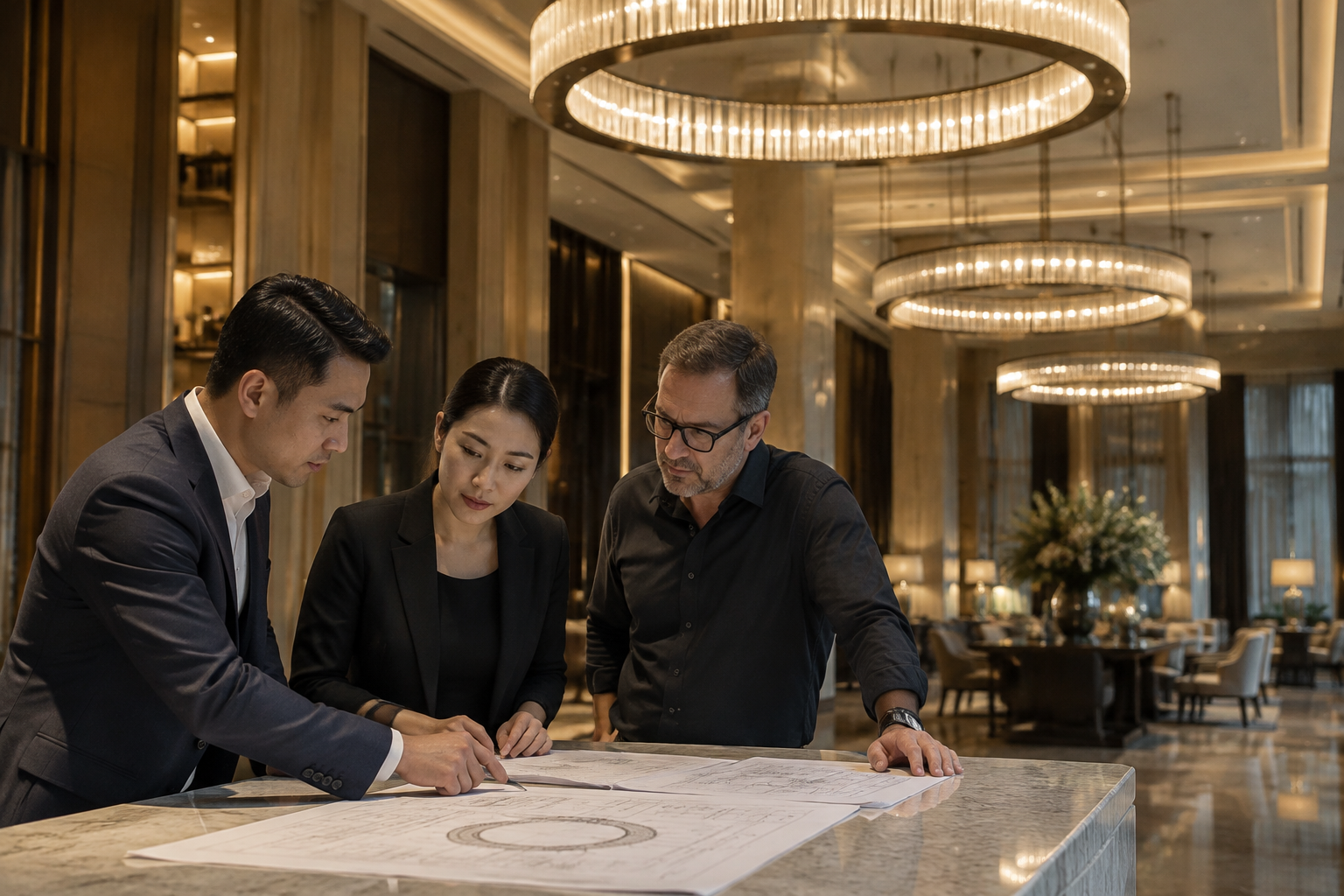 How Are Hotel Ring Chandeliers Customised in 6 Steps?: What must the engineering drawing resolve before sample approval?
Controls and Commissioning
Control compatibility must be established before sample construction because drivers, wiring, and access arrangements depend on the selected system.
DALI-2 is appropriate when the project requires structured digital control and suitable device interoperability. Casambi may support wireless control where the architecture and radio conditions are suitable.
KNX generally requires compatible drivers or a coordinated gateway. For 0-10V, confirm the electrical interface, switching arrangement, and dim-to-off behaviour rather than assuming every driver behaves identically.
Ask whether tiers operate together or independently. Separate channels can support arrival, evening, cleaning, and event scenes, but increase addressing and coordination work. Define the expected behaviour after power interruption and network loss.
Use a minimum dimming level of 1% only as a design target, subject to verification with the selected LED load and control equipment. Test for visible flicker, stepping, audible noise, colour shift, and unequal brightness between rings. A driver datasheet alone does not establish the behaviour of the assembled chandelier.
Record scene settings during commissioning and retain the configuration file where the platform supports one. Assign responsibility for addressing, gateway programming, scene approval, and operator training before delivery.
Sampling, MOQ, Lead Time and Quality Control
Sampling and production should use the same approved configuration, with exceptions documented before the order proceeds.
Step 4: approve the sample. Select a full chandelier or representative ring assembly according to project risk. A partial sample can validate finish, diffuser appearance, and electronics, but cannot demonstrate the complete suspension balance or all interactions between tiers.
Review the illuminated sample from realistic guest viewing positions. Inspect diffuser seams, LED imaging, colour consistency, ring alignment, canopy access, and fastener visibility.
Run thermal and electrical evaluations appropriate to the construction, and check dimming with the proposed controls. Sign and retain a reference sample or documented approval package.
Step 5: release controlled production. Freeze the bill of materials, drawing revision, finish reference, LED selection, driver model, wiring diagram, and inspection criteria. Substituting an apparently equivalent driver or diffuser requires review because it can change dimming, temperature, optical output, or compliance evidence.
Incoming inspection should verify component identity and finish consistency. In-process checks should cover ring geometry, joint quality, wiring protection, and suspension assembly.
Final inspection should include applicable electrical safety checks, functional operation, appearance, labelling, and packing verification. Define test methods and acceptance criteria in the purchase specification.
MOQ and lead time are quotation-specific. A custom profile, special finish, certification route, or low-volume driver may set a practical purchasing minimum.
Request separate schedules for drawings, procurement, sample review, manufacturing, testing, packing, and transport. Do not treat an indicative schedule as confirmed until approvals and component availability are resolved.
Photometric Files & Compliance
Photometric and compliance records must match the approved chandelier configuration rather than a visually similar catalogue product.
Step 6: approve release and the handover package. Request IES and LDT photometric files for the relevant configuration and identify whether the data represents the complete assembly or an individual ring. Record the LED, diffuser, output setting, and test conditions behind the file.
Use DIALux to assess distribution, reception-task illumination, and interaction with other indoor luminaires. Calculations should include actual mounting heights, surface reflectances, and maintenance assumptions. A photometric file is not a safety certificate, and a rendered image is not a photometric file.
For EU supply, determine applicable legislation and obtain the EU Declaration of Conformity and supporting documentation. For US projects, confirm the required listing or other acceptance route with the authority having jurisdiction before production.
In Middle Eastern and Southeast Asian markets, establish country-specific conformity and import requirements rather than assuming CE alone is sufficient. SAA evidence is relevant only where the destination or specification calls for that route.
Review safety testing against the applicable EN 60598 requirements and any destination-specific standards. Component approvals do not automatically certify the assembled chandelier. The handover package should include installation instructions, suspension information, wiring diagrams, service guidance, control records, spare-part identification, and agreed warranty terms.
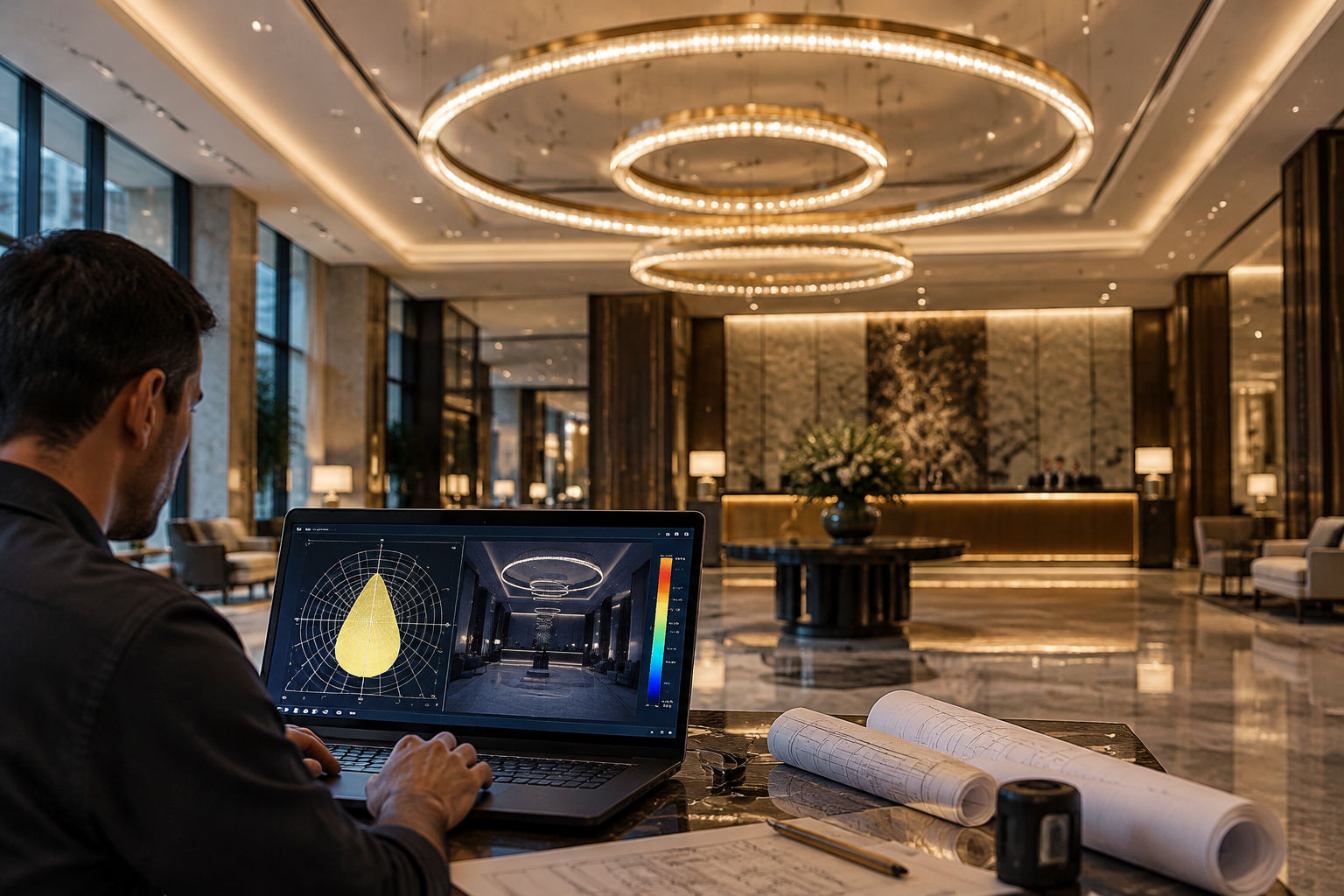 How Are Hotel Ring Chandeliers Customised in 6 Steps?: Photometric files & compliance
Frequently Asked Questions
Approval records are the most reliable way to resolve common purchasing questions about bespoke hotel ring chandeliers.
Q: Can a Hotel Ring Chandelier Be Manufactured Directly from a Render?
A render is insufficient for manufacturing because it does not establish construction, electrical details, suspension loads, or tolerances. The recommended workflow uses 6 approval steps, with engineering drawings and sample approval between the visual concept and production. Treat the render as an appearance reference, then resolve every critical interface in controlled documents.
Q: Does Every Custom Ring Chandelier Need a Full-size Sample?
A full-size sample is not automatically necessary, but the sample scope must match the unresolved risks. For a 3-tier design target, a representative ring can validate finish, diffusion, and controls, while a complete assembly better demonstrates balance and alignment. Record what the selected sample proves and what still requires calculation or testing.
Q: Can DALI-2, Casambi, KNX, and 0-10V Be Interchanged Later?
These systems are not automatically interchangeable because their drivers, wiring, gateways, and commissioning requirements differ. If a 1% minimum dimming level is a design target, verify it with the actual control architecture and LED load. Freeze the interface before sample approval, and review later substitutions for electrical, operational, and documentation consequences.
Q: What Should Buyers Confirm Before Accepting a Production Quotation?
Buyers should confirm dimensions, materials, finish references, lighting intent, controls, mounting responsibilities, compliance route, and the scope of testing and documentation. Request pricing against all 6 recommended approval gates, including sample and revision costs. MOQ, lead time, spare parts, packing, freight responsibilities, and installation exclusions should be stated rather than inferred from the render.
Sources and Technical References
Primary standards and programme documentation should guide project requirements, with applicable editions confirmed by the responsible designer or compliance specialist.
- EN 12464-1, Light and lighting — Lighting of work places — Part 1: Indoor work places: consult the applicable edition through a national standards body.
- EN 60598, Luminaires: consult the applicable general and particular safety requirements; identify the parts relevant to the assembly.
- IES: technical resources for lighting practice, photometry, and luminaire data interpretation.
- WELL v2: review relevant Light features when the hotel pursues WELL certification.
- DALI Alliance: check DALI-2 certification scope and listed devices.
- DIALux: documentation for lighting calculation workflows and photometric-data use.
These references support specification decisions; they do not establish XHLWX product certifications or project results.
 How Are Hotel Ring Chandeliers Customised in 6 Steps?: Q: Can DALI-2, Casambi, KNX, and 0-10V be interchanged later?
Request a Custom Quote
A useful quotation request includes the lobby model, chandelier dimensions, quantity, destination, controls, finish references, and required approval schedule.
Attach ceiling and suspension information, electrical supply details, maintenance constraints, and any project-specific compliance requirements. Ask for an itemised proposal separating engineering, samples, production, testing, packing, and optional spares.
At XHLWX (led-project-light.com), a Custom Indoor LED Lighting Manufacturer based in China, ... a custom quotation should begin with a coordinated technical brief. Use the recommended 6-step workflow to define approvals and responsibilities, and request confirmation of capability, documentation scope, MOQ, and timing for the exact hotel lobby chandelier.
XHLWXについて
XHLWXは、2009年から中国・深圳に自社工場を持つLEDプロジェクト照明メーカー、Shenzhen Qihang Lighting Co., Ltd.のブランドです。ライン照明、ダウンライト、マグネットレール、パネル、防湿・防塵灯、高天井用照明、特注照明器具を、オフィス、ホテル、美術館・博物館、店舗、工場向けに供給しています。
照度設計はJIS Z 9110およびEN 12464-1の推奨値(維持照度、UGR、均斉度、Ra)を基準とし、DIALux用のIES・LDT配光データを提供します。製品はCE・RoHS適合、品質管理はISO 9001に基づいています。
XHLWXに関するよくある質問
日本のプロジェクトにも納品できますか?
はい。工場から海外プロジェクトへ直接出荷しています。輸送条件や国内の電気用品安全法(PSE)への対応可否は、案件ごとに事前にご相談ください。
JIS Z 9110の照度基準に合わせた設計は可能ですか?
可能です。必要照度、UGR、均斉度を基準に照明計画を行い、当社の配光データを使ったDIALux計算で数値を確認します。
どの調光・制御方式に対応していますか?
DALI-2、0-10V、Casambi(Bluetooth)に対応しています。案件により非常灯やセンサー付き仕様も検討できます。
特注品やOEMにも対応していますか?
はい。長さ、色温度、配光角、本体色、お客様ブランドでのOEM/ODMを自社工場で製作します。
Need a tailored lighting plan for your project?
Our senior lighting designers reply within 48 hours with a free design proposal & quotation.