
LED Grille Light Guide 2026: UGR<19 Office 600x600 Criteria
Quick answer
Discover the essential 2026 specifications for a UGR<19 LED grille light in modern offices. Learn about EN 12464-1 standards, DALI-2 controls, and optics.
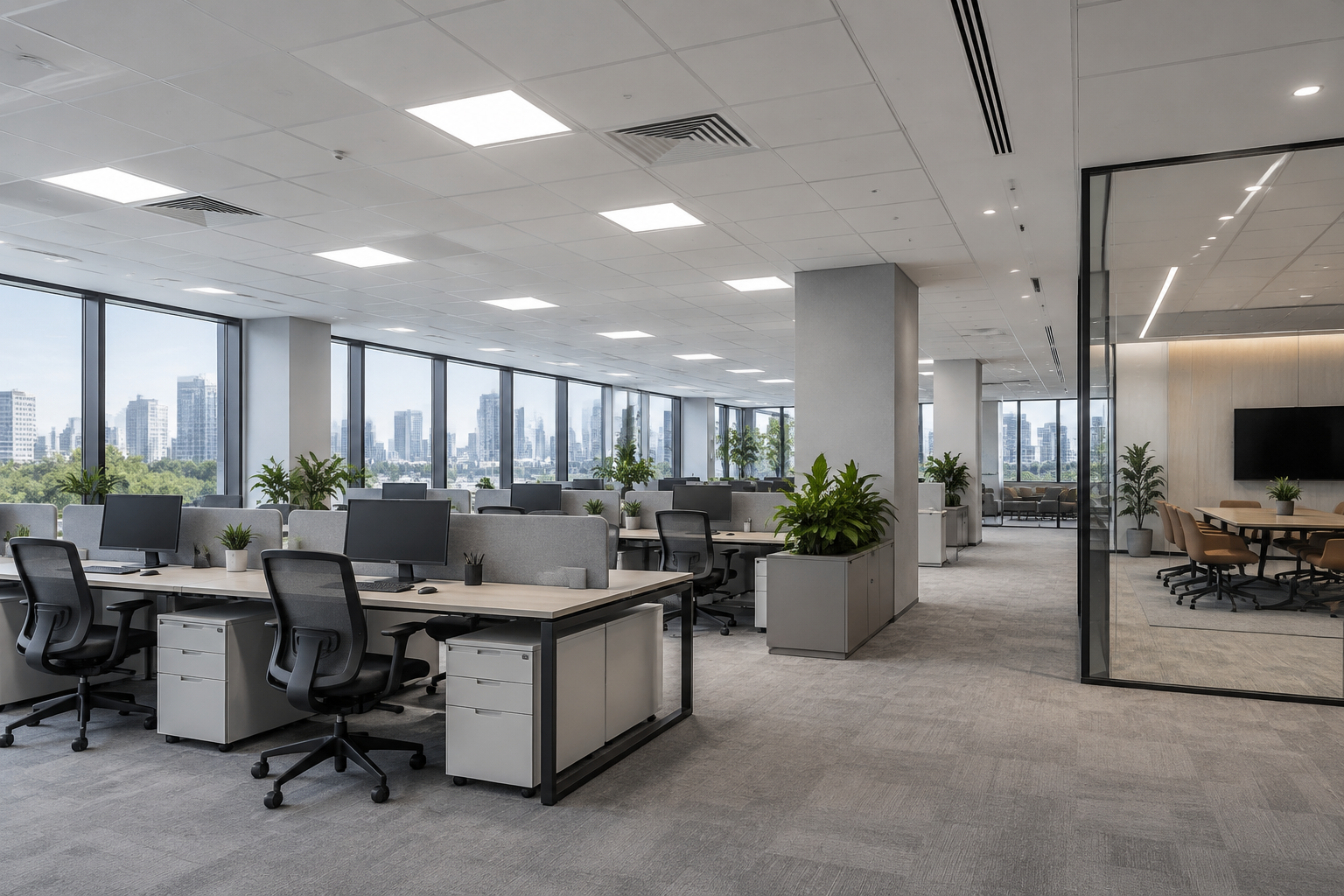
Introduction — the Design Problem in This Space
Modern office spaces demand high visual comfort, making the integration of low-glare luminaires an essential priority for architectural ceiling designs.
com), a Custom Indoor LED Lighting Manufacturer based in China, we understand that selecting the right led grille light is critical for modern workspaces. Open-plan offices frequently suffer from excessive screen reflections, inadequate illuminance uniformity, and induced visual fatigue when artificial lighting is not appropriately managed.
Standard flat panel diffusers often function as large luminous surfaces that scatter light at wide angles, inadvertently causing direct glare for employees scanning the room or glancing up from their monitors. The integration of 600x600 louvered or grille fixtures offers a highly effective mechanical solution.
By employing precisely engineered parabolic reflectors or micro-baffles, a premium grille fixture restricts beam angles and strictly shields the light source from peripheral sightlines. This advanced optical approach directs high-quality illumination downwards to horizontal task areas while maintaining a visually quiet, dark-light aesthetic on the ceiling plane.
For a broader overview of how our workplace fixtures integrate into commercial grids, designers are encouraged to explore our full range in the indoor lighting catalog or review our advanced low-glare lighting design guide for further architectural planning insights.
Lighting Criteria and Standards for This Application
Proper office illumination must adhere to stringent visual comfort regulations, balancing task visibility with strict glare limitation metrics.
Navigating the complexities of commercial workplace illumination requires strict adherence to international building codes. The foremost criteria for these environments revolve around maintaining adequate illuminance levels on the work plane—typically targeted at 500 lux for standard reading, writing, and data processing tasks.
To prevent eye strain over long periods, the Unified Glare Rating (UGR) must be meticulously managed. Leading European guidelines, specifically EN 12464-1 and DIN EN 12464-1, dictate that the UGR for continuous computer-based task areas must not exceed 19.
Furthermore, modern wellness frameworks, including the WELL v2 building standard, emphasize not only the reduction of discomfort glare but also the necessity of exceptional color rendering and circadian-supportive spectral distributions. Meanwhile, in North American contexts, lighting professionals rely on the IES RP (Recommended Practice) documents to establish baseline targets for uniformity, illuminance, and visual comfort probability in commercial real estate.
When drafting procurement documents, lighting consultants and electrical engineers rely on robust component specifications to guarantee the longevity, efficiency, and safety of the installation. The table below outlines the recommended specification targets for a high-performance 600x600 office ceiling luminaire.
| Parameter | Recommended Specification Target | Reference Standard | Notes & Key Components |
|---|---|---|---|
| Optics & Glare | UGR < 19, Beam Angle 60°, CCT 4000K, CRI>90 | EN 12464-1, WELL v2 | Optic engine utilizes premium Bridgelux or Osram LED chips. |
| Control System | DALI-2, Casambi, or 0-10V Dimming | IEC 62386 | Driven by certified Tridonic or Mean Well drivers for flicker-free output. |
| Housing & Build | IP20 (Room side) / IP40 (Plenum), IK04 | IEC 60529, IEC 62262 | Constructed with cold-rolled steel and aluminum parabolic louvers. |
| Compliance | CE, RoHS, ErP Compliant, ISO9001 Factory | EU Directives | Validated for European, US, and Middle Eastern market deployment. |
| Efficacy Target | Minimum 110 lm/W System Efficacy | ErP (EU) 2019/2020 | Simulation target for optimizing green building energy scores. |
Luminaire Selection: Finding the Optimal Led Grille Light
Selecting the optimal led grille light requires evaluating reflector geometries against traditional diffusers to ensure maximum glare control and efficiency.
While flat panels have dominated the budget-friendly retrofit market for years, their inherent optical limitations make them unsuitable for high-end corporate environments where employee well-being is a priority. Diffuse panels rely on a frosted or micro-prismatic polystyrene/acrylic layer to scatter light evenly.
While this creates a uniform glow, it does little to prevent high-angle light from entering the eyes of occupants seated several desks away. In contrast, an LED grille luminaire utilizes structured three-dimensional baffles.
These baffles physically intercept and reflect sideways light downward. The difference in visual comfort is profound, especially in large open-plan spaces where the cumulative glare from dozens of flush-mounted panels can cause severe headaches and screen washout.
Evaluating the visual aesthetic and photometric performance of different form factors is an essential step in the schematic design phase.
| Luminaire Type | Glare Control (UGR Target) | System Efficacy Target | Visual Aesthetic | Verdict |
|---|---|---|---|---|
| Standard Edge-Lit Flat Panel | UGR < 22 | 90 - 100 lm/W | Flat, glowing uniform surface | Basic. Insufficient for intensive VDT (Visual Display Terminal) tasks. |
| Micro-Prismatic LED Panel | UGR < 19 | 100 - 110 lm/W | Textured, evenly illuminated face | Good. Provides moderate glare control for general office applications. |
| V-Shape Standard Louver | UGR < 19 | 95 - 105 lm/W | Classic industrial linear blades | Acceptable. Highly budget-friendly but visually dated for modern spaces. |
| Parabolic LED Grille Light | UGR < 16 | 110 - 130 lm/W | "Dark light" effect, concealed source | Optimal. Delivers best-in-class visual comfort and architectural integration. |
How Do Parabolic Reflectors Achieve UGR<19 Performance?
Parabolic reflectors mechanically cut off high-angle light emissions, physically shielding the LED source from the occupant's typical field of view.
The mechanics of glare control in a high-end luminaire rely heavily on the geometry of the optical chamber. A parabolic louver consists of curved aluminum or metallized plastic blades shaped like a parabola.
When an LED chip sits at the focal point of this parabola, the emitted light rays are reflected perfectly downward in parallel lines. This creates a highly controlled beam spread, typically limited to a 60-degree or 70-degree cone.
Light attempting to exit at shallow, high angles (such as 75 to 90 degrees relative to the nadir) is blocked or redirected by the physical depth of the baffle. Because high-angle light is the primary contributor to direct glare in large rooms, cutting off these specific angles drastically lowers the Unified Glare Rating.
When an individual looks across an office equipped with parabolic grille lights, the ceiling appears softly lit or almost dark, even though the workstations below are bathed in bright, uniform illumination.
What Is the Role of TM-30 Metrics in Office Environments?
The TM-30 metric provides a highly accurate evaluation of color fidelity and gamut, ensuring natural rendering of skin tones and architectural finishes.
For decades, the Color Rendering Index (CRI) was the sole metric used to judge how well a light source revealed the true colors of objects. However, CRI only measures eight pastel color samples, which is often inadequate for modern LED technology.
The IES TM-30 standard introduces a much more comprehensive system evaluating 99 distinct color samples. It provides two main values: Rf (Fidelity), which measures how closely the colors match a natural reference source, and Rg (Gamut), which measures the increase or decrease in color saturation.
In high-performance office environments, a recommended specification target is an Rf > 90 and an Rg between 98 and 102. Achieving this level of color quality prevents human skin tones from appearing pallid or greenish under artificial light, which subtly improves morale and enhances the visual presentation of interior materials, fabrics, and branding elements.
Why Transition from 3000K to 4000K in Corporate Workplaces?
A 4000K color temperature stimulates daytime alertness and aligns with circadian rhythms, making it the globally recommended specification for productivity.
Color temperature profoundly impacts human biology and psychological perception. A 3000K warm-white light emits higher proportions of red and yellow wavelengths, which biological systems associate with dusk and relaxation.
While ideal for hospitality or residential spaces, 3000K in an office can suppress alertness. Transitioning to a 4000K neutral white provides a crisp, clean aesthetic that contains a higher percentage of blue-cyan wavelengths.
These specific wavelengths are highly effective at suppressing melatonin production during daytime hours, a concept formally recognized as equivalent melanopic lux in the WELL v2 standard. By specifying 4000K LED chips from top-tier manufacturers like Samsung or Bridgelux, designers can create a bright, energizing atmosphere that combats the mid-afternoon slump while still feeling comfortable and inviting.
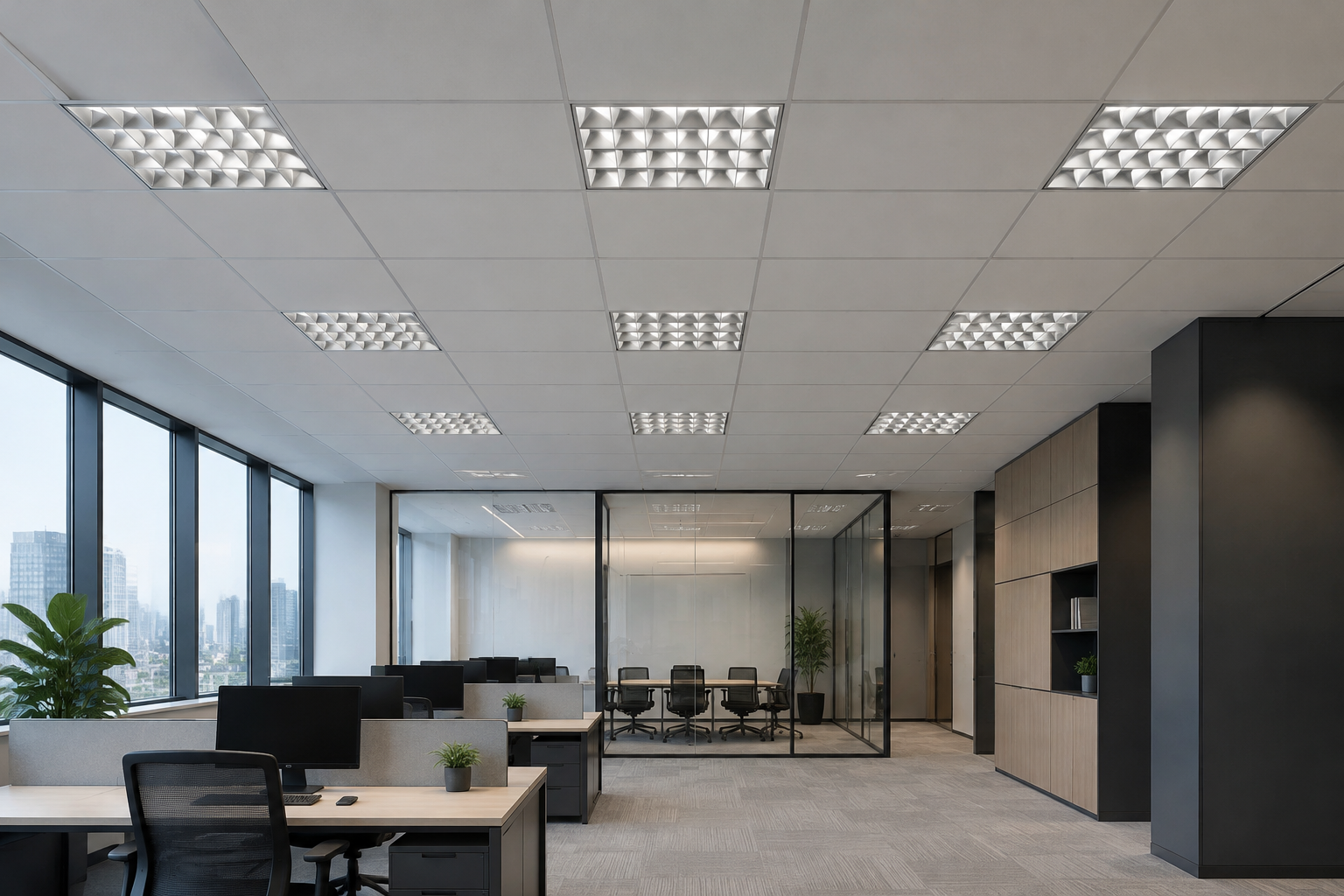 LED Grille Light Guide 2026: UGR<19 Office 600x600 Criteria: How do parabolic reflectors achieve UGR<19 performance?
Controls, Energy and Commissioning (DALI-2 / Casambi / Sensors)
Intelligent lighting controls dynamically adjust illumination levels based on occupancy and daylight availability, yielding substantial simulated energy reductions.
The true efficiency of a modern lighting installation is not just in the luminous efficacy of the LED diode itself, but in the intelligent application of control systems. DALI-2 (Digital Addressable Lighting Interface) remains the gold standard for wired, enterprise-grade lighting management.
A DALI-2 network allows every single grille light to be individually addressed, grouped, and monitored for faults. By pairing DALI-2 drivers—such as those from Tridonic or Mean Well—with ceiling-mounted PIR (Passive Infrared) occupancy sensors and ambient light sensors, the system can seamlessly execute daylight harvesting.
In this scenario, fixtures nearest the windows automatically dim down when natural sunlight is sufficient, maintaining a steady 500 lux target on the desks while drastically reducing electrical load.
For retrofit applications where pulling new control cables is cost-prohibitive or physically impossible, wireless mesh networks like Casambi offer an exceptional alternative. Casambi utilizes Bluetooth Low Energy (BLE) to allow fixtures to communicate with one another without centralized control wiring.
Facility managers can configure lighting scenes, adjust fade times, and establish automated scheduling directly from a smartphone or tablet interface. Whether deploying a robust wired DALI-2 backbone for a newly constructed corporate headquarters or utilizing a Casambi wireless setup for a rapid office renovation, modern control integration is a mandatory specification target to meet tightening global energy codes.
Photometric Files & Compliance (IES / LDT / DIALux / CE / RoHS / ErP)
Accurate digital simulation requires precise photometric data to validate compliance with international lighting norms prior to physical installation.
Before a single luminaire is ordered or installed, electrical engineers and lighting designers must mathematically prove that the proposed layout will meet the required standards. This validation is entirely dependent on the availability of accurate IES and LDT photometric files.
These digital files, generated from laboratory goniophotometer testing, map the exact three-dimensional light distribution of the specific led grille light. By importing these IES and LDT photometric files into industry-standard simulation software like DIALux or Relux, designers can generate a virtual model of the office environment.
Within DIALux, the software calculates complex room reflections, computes task plane illuminance, maps isolux contours, and precisely predicts the UGR values at various seating positions. Beyond optical performance, regional compliance is legally mandatory.
Luminaires destined for the European market must strictly adhere to CE marking requirements, which ensure electrical safety and electromagnetic compatibility (EMC). Additionally, the components must comply with the RoHS directive to restrict hazardous substances, and the overall fixture must meet the stringent energy efficiency and standby power requirements established by the latest ErP (Energy-related Products) directive.
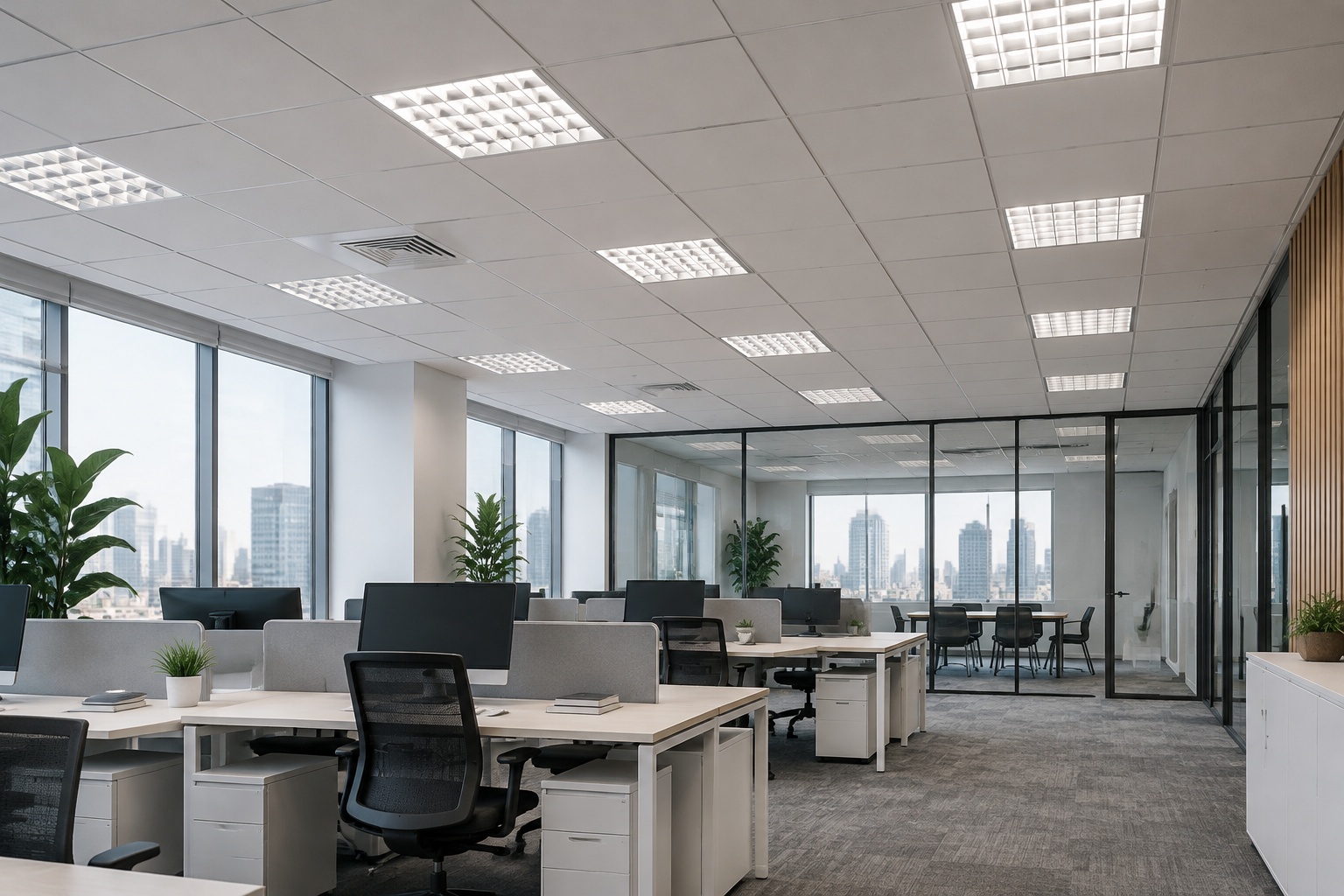 LED Grille Light Guide 2026: UGR<19 Office 600x600 Criteria: Photometric files & compliance (IES / LDT / DIALux / CE / RoHS / ErP)
Frequently Asked Questions
This section addresses common technical inquiries regarding the specification, installation, and performance of office grille luminaires.
Q: What Is the Recommended Spacing for a 600x600 Led Grille Light?
The design target for a standard 600x600 led grille light in a 2.8-meter high ceiling is typically a 2.4m by 2.4m grid. This spacing, simulated in DIALux, ensures an even distribution of 500 lux on the work plane while maintaining a uniform UGR<19 rating across the entire office floor.
Q: Can Existing T8 Louver Fixtures Be Retrofitted with Modern Led Grids?
Yes, existing T8 installations can be seamlessly upgraded. A modern 600x600 LED grille luminaire is designed to fit standard T-bar exposed grid ceilings perfectly. A 32W LED fixture replacing an old 4x18W fluorescent unit targets a power reduction of over 50%, significantly lowering the overall building energy consumption footprint.
Q: How Does Casambi Wireless Control Compare to a Wired DALI-2 System?
Casambi operates on a Bluetooth Low Energy mesh network, eliminating the need for additional control wiring, which saves up to 30% on installation labor costs. Conversely, a DALI-2 system requires a 2-core control cable but offers highly robust, centralized building management integration for large-scale enterprise office deployments exceeding 500 fixtures.
Q: What Is the Lifespan Expectation for These Commercial Ceiling Lighting Fixtures?
When utilizing premium components like Tridonic or Mean Well drivers alongside Osram chips, the recommended specification targets an L80B10 operational lifespan of 50,000 hours. This means that after 50,000 hours of continuous office use, 90% of the luminaires will still maintain at least 80% of their initial luminous flux.
Sources and Technical References
The design principles and specification targets outlined in this guide are grounded in established international architectural lighting standards.
To ensure rigorous compliance and optimal visual environments, lighting professionals should refer to the following authoritative frameworks:
-
EN 12464-1 & DIN EN 12464-1: Light and lighting – Lighting of workplaces – Part 1: Indoor workplaces. The primary regulatory standard for European task illuminance, uniformity, and glare limitation (UGR).
-
IES RP (Recommended Practice): The Illuminating Engineering Society's comprehensive guidelines for office lighting design, layout methodologies, and visual comfort probability.
-
WELL v2: The International WELL Building Institute's standard focusing on human health, emphasizing circadian lighting (melanopic lux), glare minimization, and superior color rendering (TM-30).
-
EU ErP Directive 2019/2020: Ecodesign requirements specifying strict luminous efficacy, flicker thresholds, and standby power limits for lighting products placed on the EU market.
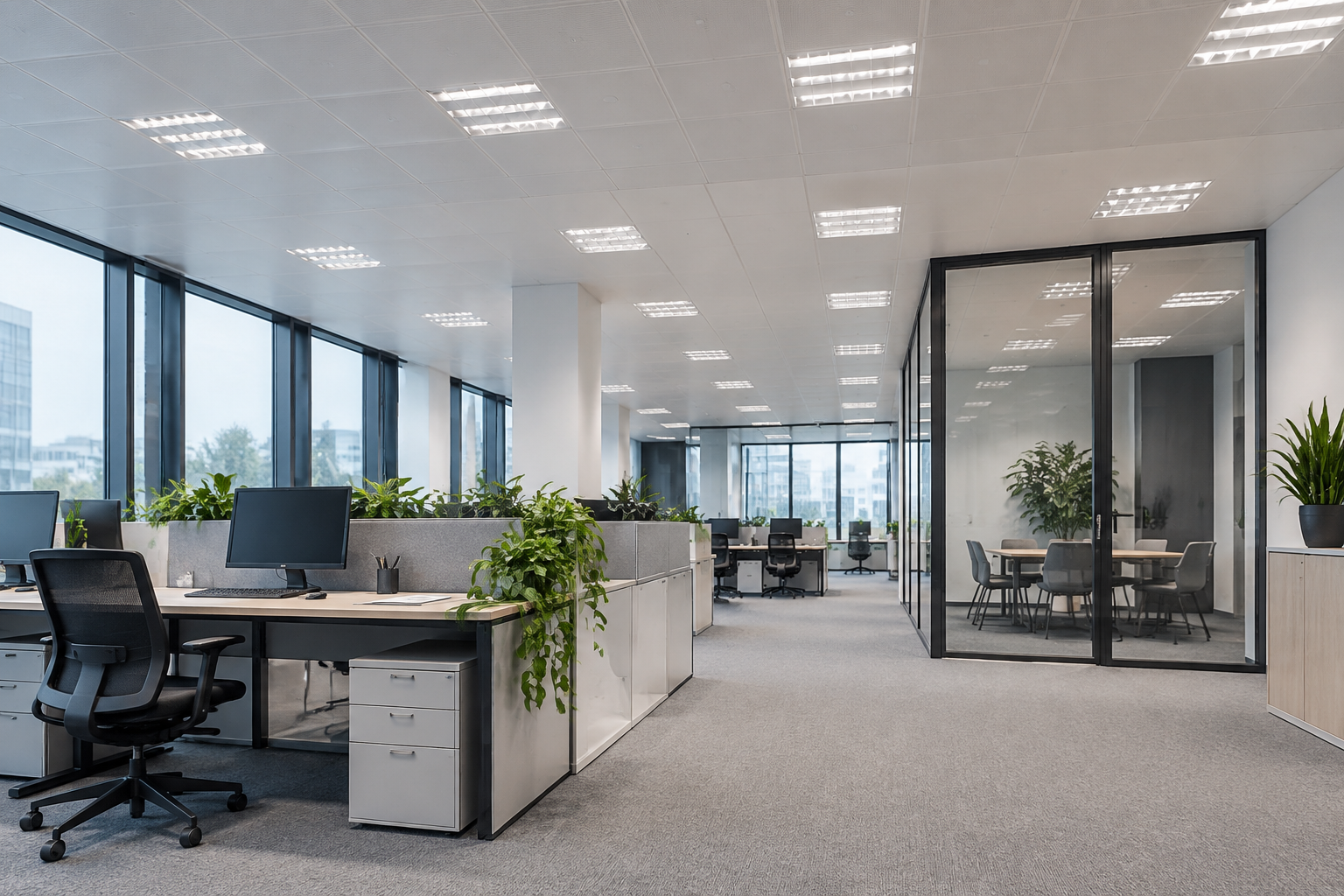 LED Grille Light Guide 2026: UGR<19 Office 600x600 Criteria: Q: How does Casambi wireless control compare to a wired DALI-2 system?
Request a Custom Quote
Partnering with an experienced manufacturing team ensures your project receives precise, compliant, and aesthetically superior lighting systems.
Translating stringent architectural lighting requirements into a tangible, cost-effective reality requires profound engineering expertise and rigorous supply chain management. Whether your project demands standard recessed office grids or highly customized dimensions with integrated intelligent controls, our production facility is equipped to deliver.
At XHLWX (led-project-light.com), a Custom Indoor LED Lighting Manufacturer based in China, we are dedicated to engineering bespoke workplace lighting solutions that perfectly balance architectural design, visual comfort, and strict international compliance for your next commercial endeavor. Contact our technical sales team today for precise photometric data, control architecture planning, and competitive bulk project quotations.
XHLWX 소개
XHLWX는 2009년부터 중국 선전에 자체 공장을 운영해 온 LED 프로젝트 조명 제조사 Shenzhen Qihang Lighting Co., Ltd.의 브랜드입니다. 라인 조명, 다운라이트, 마그네틱 레일, 평판 조명, 방수·방진 등기구, 고천장 조명과 맞춤형 조명을 사무실, 호텔, 박물관·미술관, 리테일, 공장 프로젝트에 공급합니다.
조도 설계는 KS A 3011과 EN 12464-1 기준값(유지 조도, UGR, 균제도, Ra)을 바탕으로 하며 DIALux용 IES·LDT 배광 파일을 제공합니다. 제품은 CE·RoHS에 적합하며 품질 관리는 ISO 9001을 따릅니다.
XHLWX 자주 묻는 질문
한국 프로젝트에도 납품할 수 있나요?
네. 공장에서 해외 프로젝트로 직접 출고합니다. 운송 조건과 국내 KC 인증 대응 여부는 프로젝트별로 사전에 협의해 주세요.
KS A 3011 조도 기준에 맞춘 설계가 가능한가요?
가능합니다. 필요 조도, UGR, 균제도를 기준으로 조명 계획을 세우고 당사 배광 파일로 DIALux 계산을 해 수치를 확인합니다.
어떤 조광·제어 방식을 지원하나요?
DALI-2, 0-10V, Casambi(블루투스)를 지원하며, 프로젝트에 따라 비상등이나 센서 사양도 검토할 수 있습니다.
맞춤 제작이나 OEM도 가능한가요?
네. 길이, 색온도, 배광각, 본체 색상, 고객 브랜드 OEM/ODM을 자체 공장에서 제작합니다.
Need a tailored lighting plan for your project?
Our senior lighting designers reply within 48 hours with a free design proposal & quotation.