Government & Administrative Office Lighting
EN 12464-1 compliant lighting specification for government and administrative offices — 500 lx UGR<19, CRI 90 council chambers, DALI-2 scenes, motion-senso...
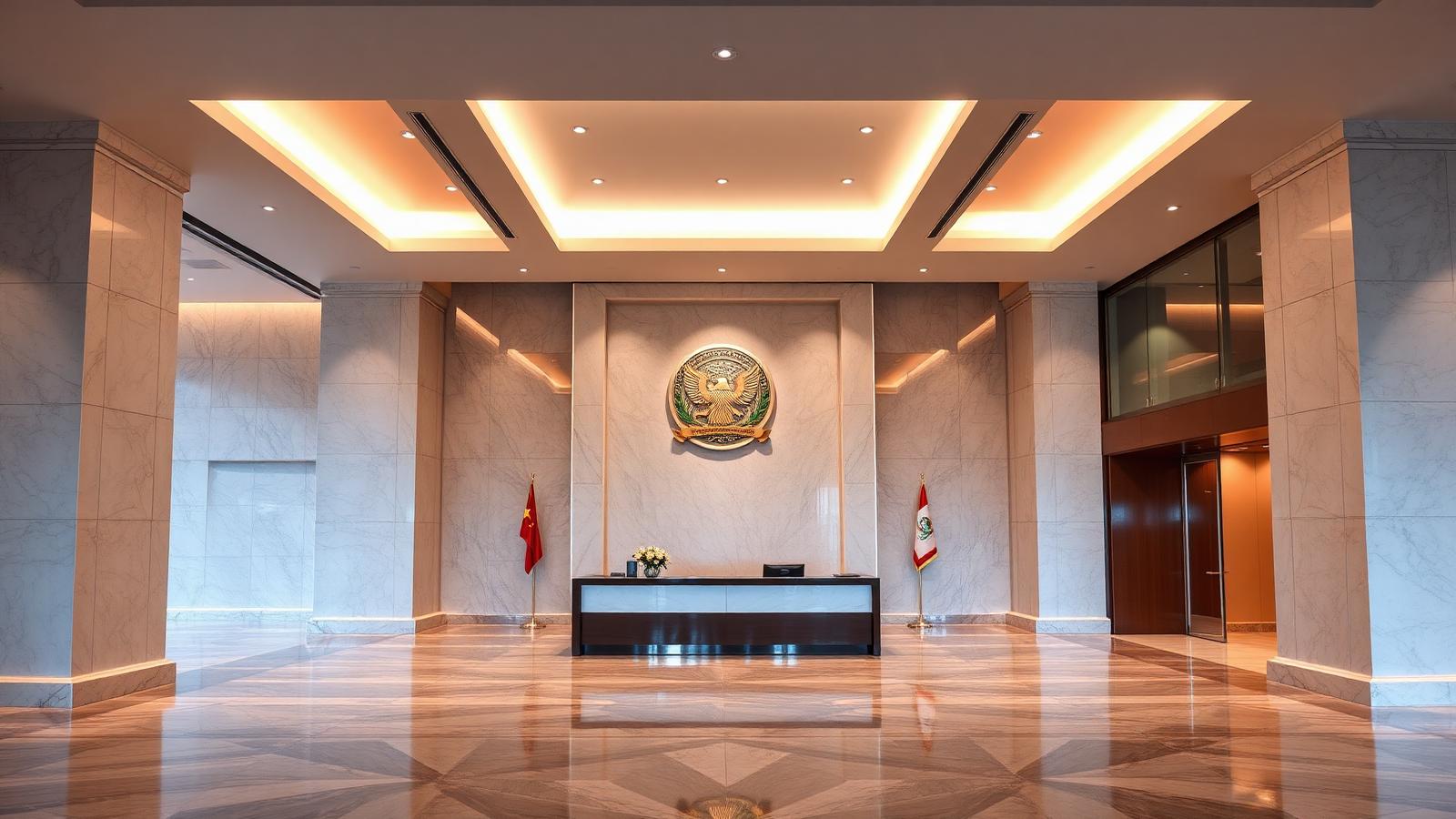
Delivering public services requires environments that support focus, well-being, and efficiency. This guide details the 2026-ready lighting specifications for government and administrative offices, ensuring compliance with EN 12464-1, achieving UGR<19 visual comfort, and leveraging DALI-2 for maximum energy savings and control.
1. The Optical Baseline: Decoding European Lighting Standards for Public Sector Buildings
Designing and specifying lighting for a government facility is a complex task governed by stringent European standards. These regulations are not arbitrary; they are meticulously crafted to ensure visual comfort, safety, productivity, and energy efficiency for public servants and citizens alike. In an era of heightened focus on employee well-being and sustainability (key tenets of public sector LEED & BREEAM certifications), understanding these core metrics is non-negotiable for facility managers, architects, and procurement officers. A failure to comply can lead to uncomfortable work environments, reduced productivity, and non-compliance with EU-wide energy directives.
Let's dissect the essential metrics that form the technical foundation of any modern, compliant administrative lighting project.
EN 12464-1: The European Mandate for Indoor Workplaces
EN 12464-1, "Light and lighting - Lighting of work places - Part 1: Indoor work places," is the cornerstone standard. It is not merely a suggestion but a harmonised European norm that provides a detailed framework for lighting quality. It specifies quantitative and qualitative requirements for most indoor work areas, including offices. The standard is performance-based, meaning it focuses on the outcome—the visual environment—rather than prescribing specific technologies.
For a government office, this standard dictates the minimum maintained illuminance (lux) on the task area, glare limits (UGR), uniformity requirements, and minimum colour rendering properties. Adherence to EN 12464-1 is the first step towards creating a space that is both legally compliant and genuinely user-centric.
Illuminance (lx) & Uniformity (U₀)
- Illuminance (Expressed in Lux, lx): This is the measure of luminous flux falling on a surface, per unit area. In simple terms, it's the amount of light reaching a desk, floor, or wall. EN 12464-1 specifies different lux levels for different tasks. For example, general office work (typing, reading) requires a maintained illuminance of 500 lx on the task area (the desk). Corridors may only require 100-200 lx, while areas for technical drawing could demand 750 lx. It's crucial to note this is "maintained illuminance," meaning the level must not fall below this value over the luminaire's lifetime, accounting for lumen depreciation and dirt accumulation (Light Loss Factor).
- Uniformity (U₀): This metric describes how evenly light is distributed across a surface. It is calculated as the ratio of the minimum illuminance to the average illuminance (E_min / E_avg). A higher uniformity value (closer to 1.0) means more even light, with fewer distracting bright spots and dark patches. For the primary task area in an office, EN 12464-1 mandates a uniformity of U₀ ≥ 0.60. For the immediate surrounding area, it's U₀ ≥ 0.40. High uniformity is critical in large open-plan government offices and citizen service halls to ensure every workspace receives adequate and consistent light, preventing eye strain as employees look up from their desks or move around the space.
Unified Glare Rating (UGR): The Critical Metric for Visual Comfort
Perhaps the most important, and often misunderstood, metric for modern office lighting is UGR. It is a unified, international method for quantifying the sensation of discomfort glare from luminaires in an indoor environment. The value is calculated based on a formula that considers the luminance of the fixtures, their size and position relative to the observer, and the background luminance of the room.
The UGR scale typically ranges from 10 (imperceptible glare) to 28 (unbearable glare). For computer-based office work (DSE - Display Screen Equipment), EN 12464-1 mandates a UGR limit of <19. This is non-negotiable. Why? Because excessive glare causes eye fatigue, headaches, and decreased concentration. It creates distracting reflections on computer screens, forcing employees to adopt poor posture to see properly. For public servants spending 8 hours a day at their desks, anti-glare for screens is a paramount health and safety concern. Achieving UGR<19 requires specialised luminaires with micro-prismatic or nano-optic diffusers that precisely control the light distribution, shielding the high-angle light that causes glare.
Colour Quality: CRI (Ra, R9) & TM-30
- Colour Rendering Index (CRI): CRI measures how accurately a light source reveals the true colours of objects compared to a natural light source (like daylight). The general CRI value, Ra, is an average of 8 specific test colours (R1-R8). For general office lighting, EN 12464-1 requires a minimum CRI Ra ≥ 80. However, for spaces where accurate colour judgement is vital, such as meeting rooms used for CRI 90 video conferencing or a minister's office, a CRI ≥ 90 is strongly recommended.
- R9 Value: The R9 value, which measures the rendering of saturated red, is a crucial supplementary metric. It is not included in the general Ra calculation. A high R9 value is essential for rendering human skin tones naturally and for making materials and presentations look rich and vibrant. A luminaire with CRI Ra > 80 can still have a poor (or even negative) R9 value. For quality lighting, specifying an R9 value > 50 is best practice, especially in public-facing areas and council chambers.
- IES TM-30-18: While CRI is the regulatory standard, TM-30 is a more comprehensive and accurate method for evaluating colour rendition. It uses 99 colour samples instead of CRI's 8 and provides two key metrics: Fidelity (Rf), which is similar to CRI Ra, and Gamut (Rg), which describes the saturation of colours. For projects demanding the highest level of colour accuracy, referencing TM-30 data provides a much more nuanced understanding of a luminaire's performance.
CCT, Efficacy (lm/W) & IP/IK Ratings
- Correlated Colour Temperature (CCT): CCT describes the perceived colour of the light, measured in Kelvin (K).
- Warm White (2700K-3000K): Creates a relaxing, cozy atmosphere. Often used in break rooms or canteens.
- Neutral White (4000K): The most common choice for office environments. It promotes alertness and concentration without feeling cold or clinical. This is the default recommendation for most government workspaces.
- Cool White (5000K-6500K): Resembles daylight. Can be used to enhance concentration but may feel harsh to some. Tunable white systems allow CCT to be adjusted throughout the day.
- Luminous Efficacy (lm/W): This is the "fuel efficiency" of a light source, measuring how much visible light (lumens) it produces for each watt of electrical power it consumes. Higher efficacy means lower energy bills and a smaller carbon footprint—critical considerations for public sector budgets and sustainability goals like LEED and BREEAM. Modern LED luminaires should offer a system efficacy well above 100 lm/W. Upcoming Ecodesign 2026 regulations will likely push this requirement even higher, towards 130-160 lm/W.
- IP/IK Ratings:
- IP (Ingress Protection) Rating: This two-digit code classifies the level of protection against solids (first digit) and liquids (second digit). For a standard office, IP20 is usually sufficient. In areas like kitchens, washrooms, or covered entrances, a higher rating like IP44 or IP65 is necessary.
- IK (Impact Protection) Rating: This rates the protection against mechanical impact, from IK00 (no protection) to IK10 (protected against 20 joules of impact). In high-traffic public areas like corridors and service halls, a robust IK rating (e.g., IK08) is advisable to protect against accidental damage.
2. Lighting Recipes for 5 Key Government Spaces
Applying the technical baseline, we can now design compliant, effective lighting schemes for the distinct zones within a government or administrative building. Each space has unique functions, user needs, and architectural characteristics that demand a tailored approach.
H3: Open Workspace
"The fluorescent lights in our department flicker constantly, and by 3 PM everyone has a headache from the screen glare. It's impossible to concentrate. We've had more complaints about the lighting than anything else in the last five years."
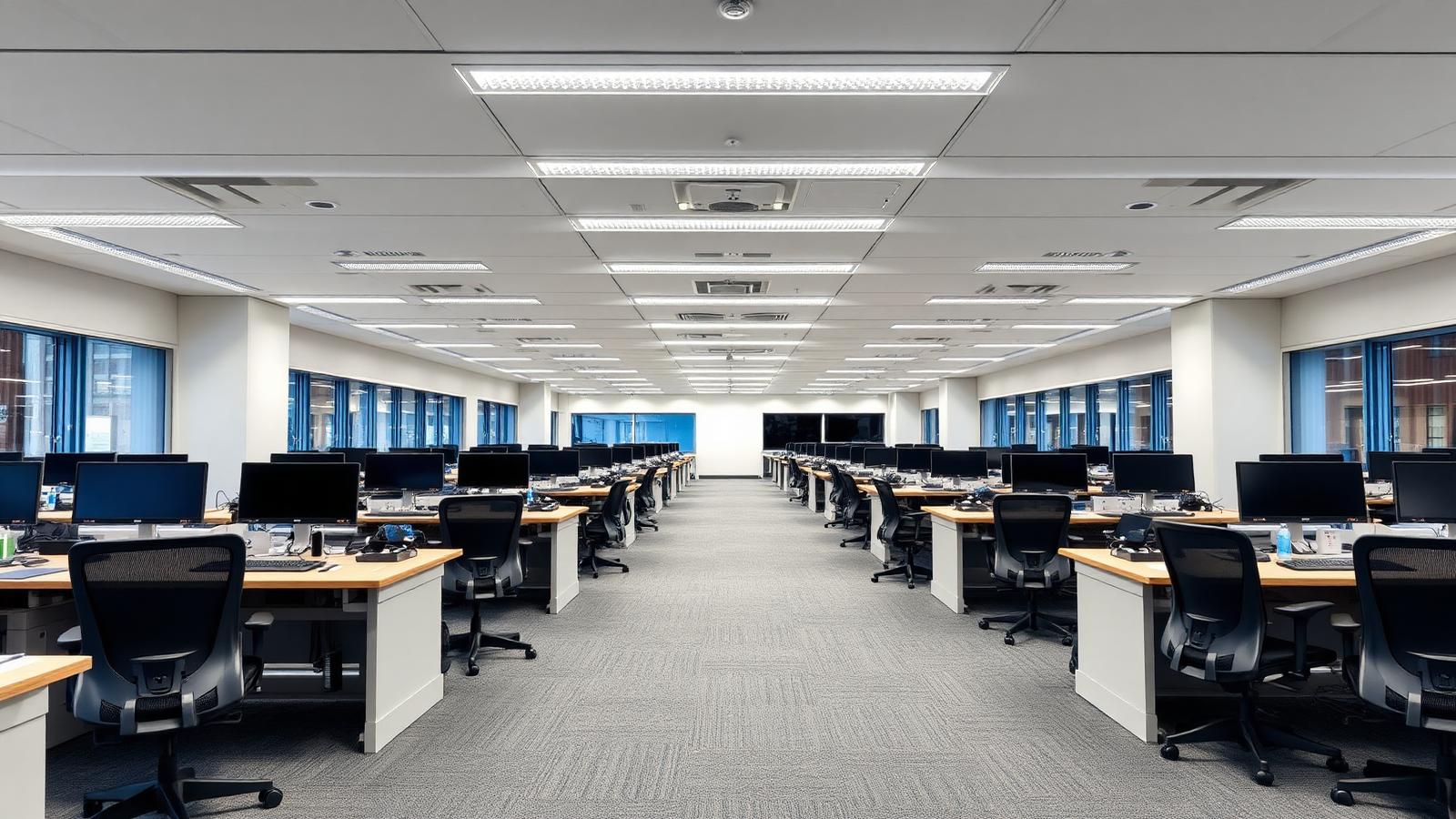
This is the engine room of any administrative body. Long hours are spent on screen-based tasks, collaboration, and focused work. The lighting must be flawless to support productivity and well-being.
- Objective: Visually comfortable, glare-free, and stimulating environment compliant with EN 12464-1 for DSE work.
- Key Parameters:
- Illuminance: Maintained 500 lx on the desk plane (
task area). - Glare: UGR < 19 is mandatory and the single most critical factor.
- CRI: Ra ≥ 80.
- CCT: 4000K (Neutral White) is the standard for promoting alertness.
- IP/IK Rating: IP20 / IK03.
- Illuminance: Maintained 500 lx on the desk plane (
- Recommended Fixture Type: Recessed or suspended linear luminaires or panels with micro-prismatic diffusers are the gold standard. These optics are specifically engineered to cut off high-angle light, directing it downward onto the task area while shielding it from the observer's typical line of sight.
- Beam Angle & Mounting: A wide beam angle (80°-90°) ensures broad, uniform coverage. For a standard 2.8m ceiling, recessed mounting creates a clean, unobtrusive look. In spaces with higher or exposed ceilings, suspending the luminaires brings the light source closer to the task plane and can incorporate an indirect lighting component (light bounced off the ceiling) to soften shadows and reduce the "cave effect."
- Smart Controls Hook: Implementing a DALI-2 dimmable LED panel system allows for daylight harvesting. Sensors near windows dim the fixtures automatically when sufficient natural light is present, delivering significant energy savings of up to 60%. It also allows for scene-setting and personal control, a key factor in modern office design.
- Recommended XHLWX Product: The L1200/L1500/L3000 Optix Linear Light is engineered for this exact application. Its advanced optical design guarantees UGR<19 compliance, while its high efficacy (up to 160 lm/W) and DALI-2 compatibility make it a future-proof solution for achieving public sector energy targets.
H3: Meeting & Council Room
"We spent a fortune on a new video conferencing system for our main council chamber, but everyone looks washed out and ghoulish on camera. The lighting is harsh and you can't see people's expressions clearly, which completely undermines remote participation."
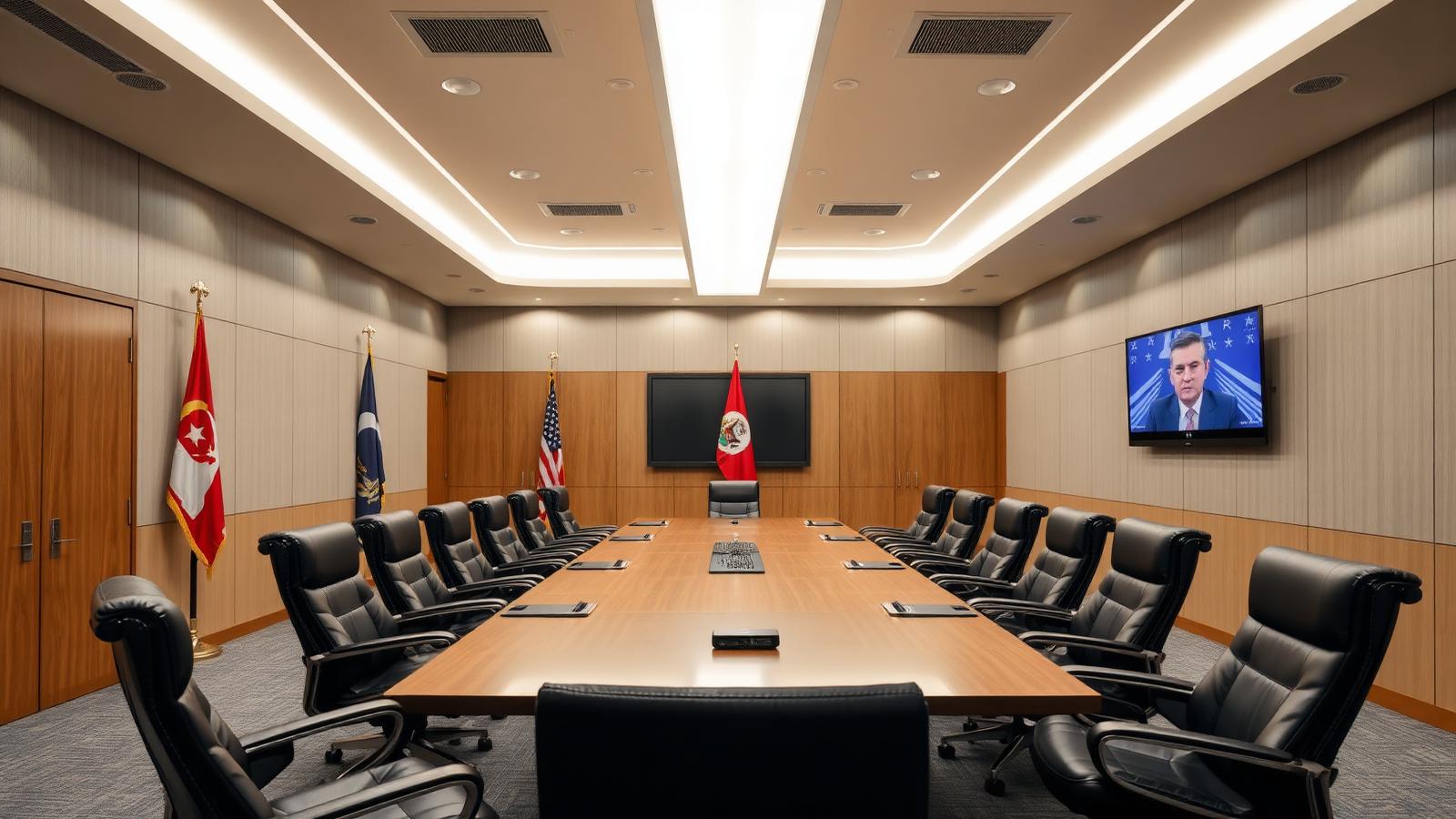
These are multi-functional spaces used for presentations, high-stakes negotiations, video conferencing, and decision-making. The lighting must be flexible, of exceptionally high quality, and create an appropriate atmosphere.
- Objective: A flexible, high-quality lighting environment that supports various activities from presentations to high-definition video calls.
- Key Parameters:
- Illuminance: Flexible, from 300 lx (for presentations, with screen focus) to 500 lx (for general meetings) and even 750 lx on vertical surfaces for clear video. EN 12464-1 specifies 500 lx.
- Glare: UGR < 19 to ensure comfort for long meetings.
- CRI: Ra ≥ 90 with R9 > 50 is essential for CRI 90 video conferencing. This ensures natural skin tones and accurate colour representation of materials and flags.
- CCT: 4000K for standard meetings. Tunable white (2700K-6500K) offers the ultimate flexibility, allowing adjustment for a more formal, cooler feel or a more relaxed, warmer atmosphere.
- IP/IK Rating: IP20 / IK02.
- Recommended Fixture Type: A combination is often best. A decorative or architectural linear pendant, like the council chamber lighting shown above, suspended over the main table provides excellent task light. This should be supplemented with adjustable, high-CRI downlights or track lights to wash walls, highlight architectural features, or provide vertical illuminance on speakers' faces for video.
- Beam Angle & Mounting: The central pendant should have a direct/indirect distribution to illuminate the table and ceiling. Wall-washers need an asymmetric beam. Accent downlights should have a narrower beam (24°-36°).
- Smart Controls Hook: DALI-2 is non-negotiable here. It enables pre-programmed scenes at the touch of a button: "Presentation Mode" (dims lights over the table, focuses on screen), "Video Conference Mode" (optimises vertical light), "General Meeting Mode" (full 500 lx), and "Off."
- Recommended XHLWX Product: The direct/indirect version of the L1200/L1500/L3000 Optix Linear Light is an excellent choice for the main pendant. For supplementary accent lighting, the high-CRI C-D90 Museum / High-CRI Track provides the necessary quality and adjustability for perfect video conferencing results.
H3: Corridor & Circulation Space
"Our corridors are lit 24/7, even on weekends and at night when no one is here. The energy bill is astronomical. It feels like we're just burning money to light up empty hallways."
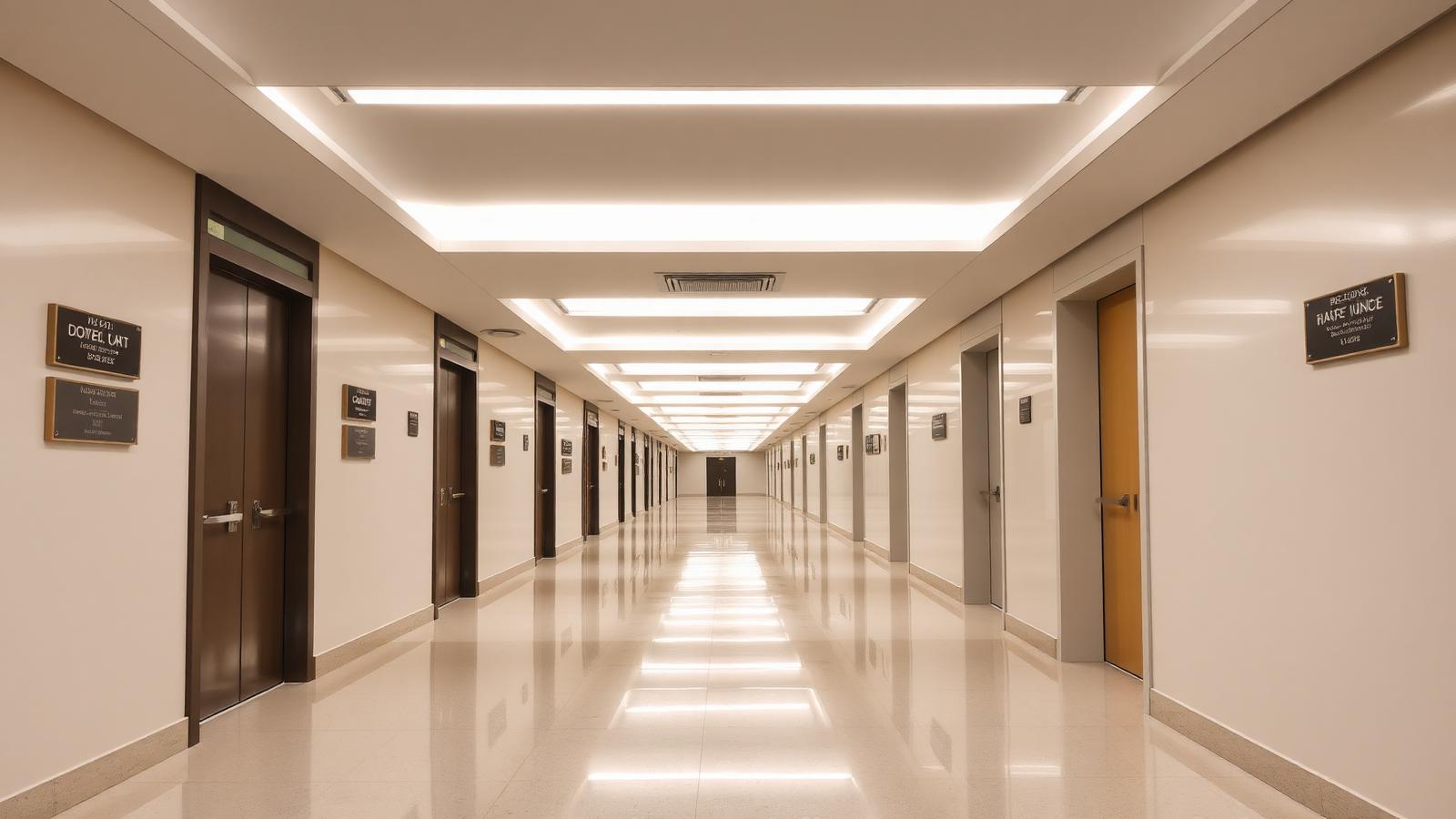
Corridors are the arteries of the building, guiding people safely and efficiently. Lighting here is primarily about safety, navigation, and energy management.
- Objective: Safe passage, clear orientation, and maximum energy efficiency.
- Key Parameters:
- Illuminance: Maintained 100 lx on the floor level is the EN 12464-1 minimum. An average of 150-200 lx provides a greater sense of security and better visibility. The illuminance on walls (vertical illuminance) is also important for orientation.
- Glare: UGR < 25 (less strict than offices, but still important to avoid disabling glare).
- CRI: Ra ≥ 80.
- CCT: 3000K or 4000K, consistent with adjacent spaces.
- IP/IK Rating: IP20 / IK08 in high-traffic areas to withstand impact from carts or equipment.
- Recommended Fixture Type: Recessed linear lights, panels, or robust downlights are all suitable. Longevity and low maintenance are key.
- Beam Angle & Mounting: A wide beam angle is essential to create uniform floor and wall illumination, eliminating dark spots between fixtures and ensuring door nameplates are legible.
- Smart Controls Hook: This is where sensors deliver the biggest ROI. Integral PIR (Passive Infrared) or microwave motion sensors are a must. They can be programmed for "corridor function": lights remain at a low safety level (e.g., 10-20%) when unoccupied, then ramp up to 100% when motion is detected. When linked via DALI-2, they can activate adjacent fixtures in the direction of travel, creating a safe and intuitive path of light. This strategy alone can cut lighting energy consumption in corridors by over 80%.
- Recommended XHLWX Product: A shorter module of the L1200 Optix Linear series or the versatile COB-D101 Anti-Glare Downlight with integrated microwave sensors provides a durable, efficient, and intelligent solution for circulation spaces.
H3: Citizen Service Hall
"The front desk area is always chaotic. The lighting is uneven, with harsh shadows over the counters. It makes it hard for staff to read documents and for older citizens to navigate the space and fill out forms. It doesn't feel welcoming or accessible."
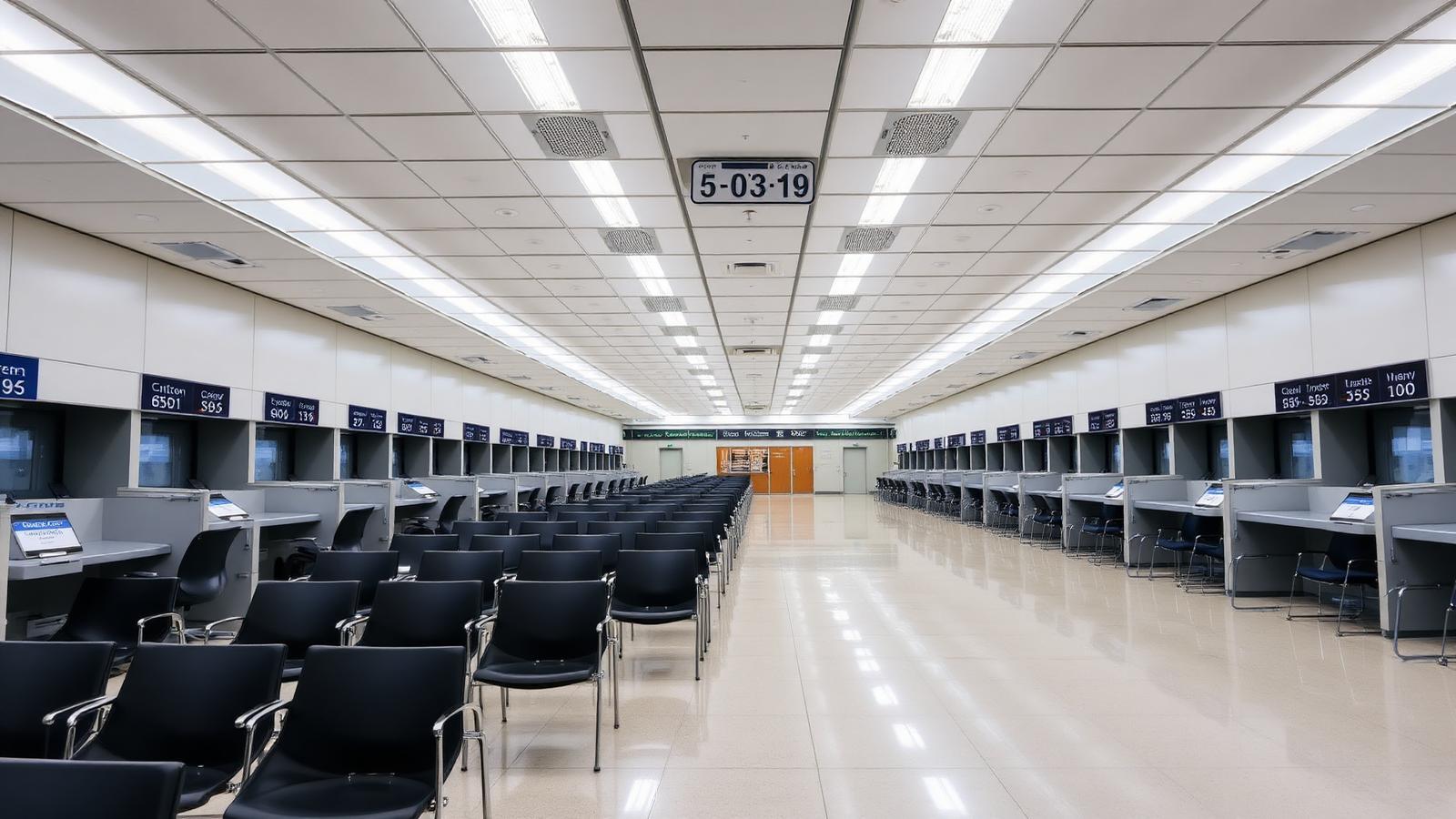
This is the public face of the government body. The space must be welcoming, accessible, easy to navigate, and highly functional for both staff and visitors. The lighting plays a huge role in shaping this first impression and ensuring operational efficiency.
- Objective: Create a bright, welcoming, and uniform environment that supports clear communication and accessibility for all citizens.
- Key Parameters:
- Illuminance: 500 lx on the counters (
task area) for staff and citizens to read documents clearly. 300 lx in general circulation areas. High uniformity (U₀ ≥ 0.60) is vital across the entire hall. - Glare: UGR < 19 is crucial. Citizens and staff are looking up and around, and glare can be disorienting and uncomfortable, particularly for the elderly or visually impaired.
- CRI: Ra ≥ 80.
- CCT: 4000K for a clean, professional, and active atmosphere.
- IP/IK Rating: IP40 / IK07. Higher ratings for durability in a high-traffic public space.
- Illuminance: 500 lx on the counters (
- Recommended Fixture Type: A grid of large-format, high-performance UGR<19 LED panels or linear luminaires is the best solution for achieving the required uniformity over a large area.
- Beam Angle & Mounting: Wide, diffuse distribution from recessed fixtures creates a shadow-free, spacious feeling. In atriums or halls with very high ceilings, high-bay pendants with specialised optics may be required to deliver the necessary lux levels to the floor and counters efficiently.
- Smart Controls Hook: A DALI-2 system enables zoned control. For example, during off-peak hours, lighting in certain sections can be dimmed to 50% while the active counters remain at 100%. Daylight harvesting near large windows or skylights is also highly effective in these large spaces.
- Recommended XHLWX Product: Creating a ceiling grid with the L1200/L1500/L3000 Optix Linear Light ensures specification-grade UGR<19 performance and outstanding uniformity, making the citizen service hall both compliant and comfortable.
H3: Archive & Record Room
"We are digitising our historical archives, but many physical documents must be preserved for decades. Our old lights run hot, and I've read that the UV they emit can fade the ink and yellow the paper over time. We need a modern solution that protects these irreplaceable records."
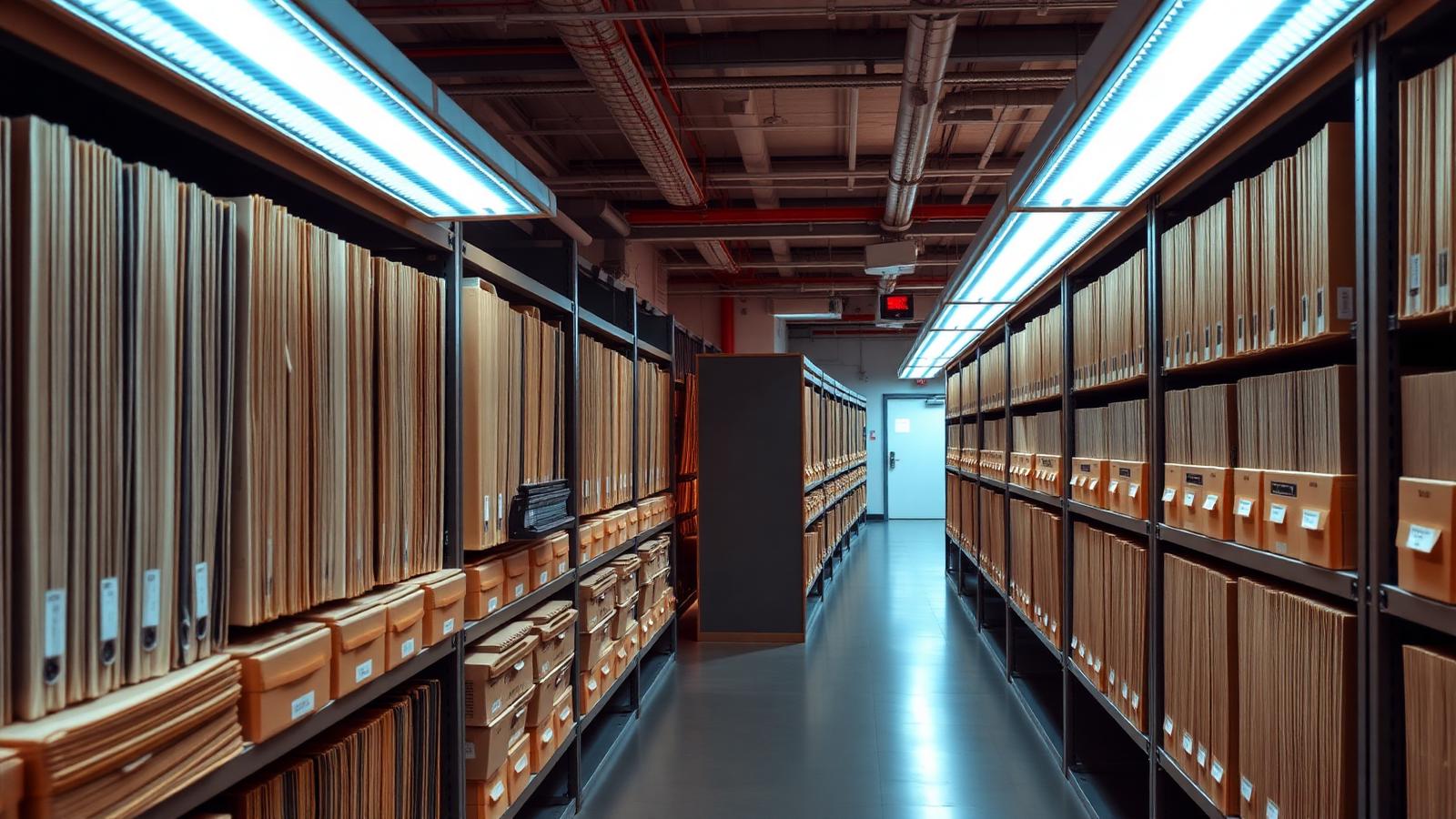
These spaces are the memory of the institution. The primary lighting mission here is preservation, combined with safety and on-demand visibility for retrieving documents.
- Objective: Provide clear visibility for document retrieval while protecting sensitive materials from light-induced degradation and maximising energy efficiency.
- Key Parameters:
- Illuminance: 200 lx on the vertical face of shelving is sufficient for reading file labels.
- Glare: Less critical, but UGR < 25 is still good practice.
- CRI: Ra ≥ 80.
- CCT: 4000K.
- Light Damage: This is the key. LED sources are inherently low in Ultraviolet (UV) and Infrared (IR) radiation compared to fluorescent or halogen, making them ideal for archives. Specify luminaires with a stated low-UV output.
- IP/IK Rating: IP40 / IK05.
- Recommended Fixture Type: Linear battens or strips mounted centrally in the aisles between shelving units. In mobile shelving systems, fixtures must be mounted on the moving stacks themselves.
- Beam Angle & Mounting: A batwing or wide asymmetric distribution is ideal for illuminating the vertical stacks evenly from top to bottom from a central aisle position.
- Smart Controls Hook: Occupancy sensors are mandatory for energy efficiency and preservation. Light is damaging, so it should only be on when someone is physically present in an aisle. A DALI-2 system with individual aisle sensors ensures that only the occupied aisle is lit, offering maximum energy savings and minimal light exposure for the documents. This is a simple but incredibly effective strategy.
- Recommended XHLWX Product: The modular F1M D85 Modular Track Light system can be configured as a linear run with wide-beam optics, perfect for directing light onto shelves. Its inherent low-UV LED properties and seamless integration with DALI controls make it ideal for archival applications.
3. The 2026 Specification: Future-Proofing Public Sector Lighting
The lighting landscape is evolving rapidly, driven by EU legislation, technological advancement, and a deeper understanding of light's impact on human health. Specifying a lighting system for a government building today means anticipating the requirements of tomorrow. Here are the key trends that define the "2026 Specification," ensuring your investment remains compliant, efficient, and effective for a decade or more.
Trend 1: The Ubiquity of UGR<19 Anti-Glare (★★★)
While UGR<19 has been the standard for screen-based work for years, its importance has reached a critical peak. The universal adoption of digital workflows in the public sector means virtually every employee is a "DSE user." What was once a recommendation for specific office zones is now a building-wide imperative.
- Why it's critical now:
- Employee Well-being: There is overwhelming evidence linking glare to digital eye strain, headaches, and musculoskeletal issues from poor posture. Public employers have a duty of care, and providing a low-glare environment is a fundamental aspect of this.
- Productivity: Visual discomfort is a constant, low-level distraction that fragments attention and reduces concentration. A UGR<19 environment is a productive environment.
- Future-Proofing: Future revisions of EN 12464-1 and related health and safety directives will almost certainly tighten, not loosen, glare requirements. Specifying UGR<19 everywhere—in open offices, meeting rooms, and even public-facing service halls—is the safest and most responsible long-term strategy. The era of cheap, glary LED panels is over. Procurement must prioritize luminaires with advanced optics (micro-prisms, specialised lenses) designed specifically for UGR<19 government office applications.
Trend 2: Hyper-Efficiency & Ecodesign 2026 (★★★)
The EU's commitment to the green transition puts energy efficiency at the forefront of public procurement. Lighting is a significant and easily addressable portion of a building's energy consumption.
- The Push for >130 lm/W: Luminous efficacy (lumens per watt) is the key metric. While 100 lm/W was once considered good, the new benchmark for high-quality luminaires is rising towards 130-160 lm/W. This leap in efficiency is driven by advancements in LED chip and driver technology. For a large government building, upgrading from an old fluorescent system (typically 60-70 lm/W) or an early-generation LED system (90-100 lm/W) to a modern >130 lm/W solution can cut lighting energy costs by 50-70%.
- Ecodesign 2026: The upcoming Ecodesign 2026 regulations (building on the current SLR/ELR) will further accelerate this trend. They are expected to introduce:
- Higher Minimum Efficacy Requirements: Making less efficient products illegal to place on the EU market.
- The "Circular Economy" Mandate: Promoting repairability and recyclability. Luminaires must be designed so that light sources and control gear can be replaced by qualified persons using common tools. This ends the era of "sealed-for-life" disposable fixtures, a crucial factor for long-term public asset management.
- Stricter Standby Power Limits: For luminaires with integrated sensors or network capabilities, the power consumed when "off" will be further limited.
Procuring luminaires that already meet these forward-looking principles—high efficacy, replaceable components—is essential for any public sector project starting today.
Trend 3: DALI-2 as the Default Control Protocol (★★)
If high-efficacy, low-glare LEDs are the engine, then a smart lighting control system is the brain that unlocks their full potential. DALI (Digital Addressable Lighting Interface) has been the European standard for years, but its latest iteration, DALI-2, adds a new layer of interoperability and functionality.
- Why DALI-2 is the new baseline:
- Certified Interoperability: The "2" in DALI-2 signifies a stricter certification process. For the first time, it includes control devices like sensors and switches. This means a DALI-2 certified sensor from one manufacturer is guaranteed to work with a DALI-2 certified driver from another. This eliminates the vendor lock-in and integration headaches common with older or proprietary systems—a critical benefit for public tenders that require open standards.
- Data & Diagnostics: DALI-2 is bidirectional. Not only can you command the luminaire (on, off, dim), but the luminaire and driver can report back data: energy consumption, operating hours, and fault conditions. For a facility manager overseeing hundreds or thousands of light points, this is a revolutionary maintenance tool. Instead of waiting for a light to fail, the system can preemptively flag a driver that is nearing its end of life, allowing for planned, efficient maintenance rather than disruptive, reactive repairs.
- The Foundation for IoT: DALI-2 provides the robust, standardized digital backbone needed to connect lighting to other building systems (HVAC, security) and the Internet of Things (IoT). A DALI-2 dimmable LED panel is not just a light; it's a data node on the building's network.
For any new build or major renovation in the public sector, specifying a DALI-2 system is the only logical choice to maximize energy savings, streamline maintenance, and future-proof the building's infrastructure.
4. Why XHLWX? Your Partner for Compliant Public Sector Lighting
Choosing a lighting supplier for a government project goes beyond simply meeting a technical specification. It's about selecting a partner with a proven track record, a deep understanding of European standards, and a commitment to long-term quality and support.
XHLWX is uniquely positioned to deliver specification-grade lighting solutions for government and administrative offices across Europe. Here’s why:
- Engineering Excellence: Our luminaires, like the L1200/L1500/L3000 Optix Linear Light, are not just assembled; they are engineered from the ground up to exceed European standards. We design our own optics to guarantee UGR<19 performance and develop our thermal management systems to ensure long life and high efficacy.
- Compliance as Standard: We live and breathe EN 12464-1, Ecodesign, and DALI-2. Every product data sheet provides the detailed photometric data (IES files, TM-30 reports) and compliance certifications you need to specify with confidence.
- Future-Proof by Design: We embrace the principles of the circular economy. Our products are designed for longevity and serviceability, with replaceable drivers and light modules that align with the coming wave of Ecodesign regulations.
- Pan-European Project Support: From initial lighting design and DIALux simulations to on-site commissioning support, our team of lighting experts works alongside your architects, engineers, and contractors to ensure a seamless project from tender to handover.
The 10-Point Procurement Checklist for Government Lighting
When issuing a tender or evaluating suppliers for your next lighting project, use this checklist to ensure you are procuring a robust, compliant, and future-proof solution.
- ✓ UGR<19 Certification: Is UGR<19 performance for all office areas confirmed by photometric reports for the proposed luminaire in a typical room layout?
- ✓ EN 12464-1 Compliance: Does the supplier provide a detailed lighting design (e.g., a DIALux report) demonstrating full compliance with lux, uniformity, and CRI requirements for every space?
- ✓ High System Efficacy: Is the system efficacy (including driver losses) of the proposed luminaires >130 lm/W?
- ✓ DALI-2 Certified Components: Are the drivers and any proposed sensors/controls DALI-2 certified to guarantee interoperability?
- ✓ CRI ≥ 90 for Key Areas: For meeting rooms and video conferencing suites, are CRI Ra ≥ 90 and R9 > 50 specified and guaranteed?
- ✓ Ecodesign & Repairability: Can the light source and control gear be replaced by a professional, as per circular economy principles?
- ✓ Extended Warranty & L90 Lifetime: Does the supplier offer a minimum 5-year warranty? Is the luminaire's lifetime quoted as L90B10 at >50,000 hours (meaning 90% of luminaires will retain at least 90% of their initial lumen output after 50,000 hours)?
- ✓ Complete Technical Documentation: Can the supplier provide IES files, TM-30 data, installation manuals, and declaration of conformity for all items?
- ✓ Proven Project References: Can the supplier provide references for similar public sector projects completed successfully in the EU?
- ✓ Local Support & Logistics: Does the supplier have a robust supply chain and technical support presence within the European Union?
Ticking every box on this list ensures your lighting investment serves the public effectively, efficiently, and reliably for many years to come.
5. Real-World Pains & Frequently Asked Questions
Theory and standards are one thing; implementation is another. Facility managers and specifiers face practical challenges daily. Here we address some of the most common pain points and questions about upgrading government office lighting.
"I manage a portfolio of five municipal buildings, all built between 1980 and 2005. The lighting is a total mess—a mix of old T8s, compact fluorescents, and cheap first-gen LEDs. My maintenance team is just running around changing bulbs and ballasts. We have no standardisation, no control, and our energy costs are out of control. Where do I even begin a project of this scale?"
This situation is incredibly common. The "patch and pray" approach to lighting maintenance is inefficient and costly. The solution is a strategic, phased upgrade plan.
- Audit & Prioritise: Begin with a full audit of all five buildings. Identify the areas with the worst-performing lighting (highest energy use, most complaints, oldest technology). These are your "Phase 1" targets.
- Standardise Your Specification: Work with a lighting expert to create a standardised specification for your entire portfolio. Define a "good, better, best" set of fixtures for common spaces (e.g., a standard UGR<19 panel for offices, a high-CRI downlight for reception areas). This simplifies procurement, ensures consistency, and streamlines maintenance. The COB-D101 Anti-Glare Downlight is a perfect example of a versatile fixture that could be standardised for ancillary areas.
- Focus on Controls: From day one, build your plan around a unified control system like DALI-2. Even if you only upgrade one floor initially, ensuring it's on the new DALI-2 network means the next phase will integrate seamlessly.
- Develop a Business Case: Use the audit data to calculate the energy savings, maintenance reduction, and productivity benefits of the proposed upgrade. A strong business case with a clear payback period (often under 3 years) is essential for securing public funds.
The key is to move from a reactive maintenance model to a proactive asset management strategy. A standardised, centrally controlled LED system turns a chaotic liability into a predictable, high-performing asset.
FAQ: Your Government Lighting Questions Answered
Q1: We have a historic, listed government building with ornate ceilings. We can't just cut holes for recessed panels. What are our options?
A: This is a classic challenge. The solution lies in creative application of different luminaire types.
- Suspended Luminaires: Architectural linear pendants or elegant direct/indirect fixtures can be suspended from the main structure. This keeps the original ceiling intact while delivering high-quality, compliant light onto the work plane.
- Surface Mounting: Modern, slimline surface-mounted fixtures can look very clean and intentional.
- Uplighting: Floor-standing or wall-mounted uplighters can be used to bounce light off the ornate ceiling, creating beautiful, soft ambient light. This must be supplemented with discreet task lighting.
- Track Lighting: A well-placed track system, like the versatile C1-D90 Business Track Light, can be used to aim light precisely where needed without disturbing the ceiling fabric.
Q2: What is "Tunable White" lighting, and is it worth the extra cost for a public office?
A: Tunable White (or Human-Centric Lighting) allows the CCT of the light to be adjusted, typically from warm white (e.g., 2700K) to cool white (e.g., 6500K). The theory is to mimic the natural daily rhythm of sunlight, providing cooler, more activating light in the morning and midday, and warmer, more relaxing light in the afternoon. While the productivity benefits are still being quantified in large-scale studies, it can be valuable in specific applications:
- High-Stress Environments: In control rooms or emergency service offices that operate 24/7, dynamic lighting can help regulate shift workers' circadian rhythms.
- Multi-Functional Spaces: In a council chamber, the ability to change the 'mood' from a cool, formal 5000K for a press conference to a warm, inviting 3000K for a civic reception is a powerful tool.
- For most standard office areas, a high-quality, fixed 4000K DALI-2 dimmable system offers 90% of the benefits (energy savings, control) at a lower cost.
Q3: Our IT department is concerned about network security with "smart" lighting. Is DALI-2 a risk?
A: This is a valid concern. The key distinction is that DALI-2 is a dedicated, wired control protocol for lighting. It is not an IP-based (Internet Protocol) system like Wi-Fi or Ethernet. The DALI bus is a simple, robust 2-wire network that runs separately from your main IT network. To connect it to a building management system or the internet for remote access, a secure gateway is used. These gateways act as a firewall, protecting the lighting network and ensuring that it cannot be used as a backdoor into your sensitive IT infrastructure. DALI-2 is widely considered the most secure and robust professional lighting control system.
Q4: We are pursuing BREEAM/LEED certification for our new administrative headquarters. How does lighting contribute to the credits?
A: Lighting is a major contributor to public sector LEED BREEAM scores. Key credit categories include:
- Energy Performance (Ene): Using high-efficacy luminaires (>130 lm/W) and effective controls (daylight harvesting, occupancy sensing) dramatically reduces your building's energy use, a primary goal of these schemes.
- Visual Comfort (Hea): This is a huge one. Providing glare control (UGR<19), adequate light levels, high uniformity, and user control (dimming) all earn significant points.
- Daylight (Hea): Using daylight harvesting sensors to dim artificial lights when natural light is available demonstrates an integrated design approach that is highly rewarded.
- Innovation (Inn): Implementing advanced systems like Tunable White or data-reporting DALI-2 systems can earn innovation credits.
Q5: What is the real difference between a cheap €50 LED panel and a specification-grade €150 UGR<19 panel? They look similar.
A: The difference is everything.
- Optics: The cheap panel uses a simple opal diffuser that scatters light in all directions, creating massive glare (UGR >25). The specification-grade panel uses a complex, engineered micro-prismatic lens that costs more to produce but is the only way to achieve UGR<19.
- LED Chips & Binning: The premium panel uses high-quality chips from top manufacturers, tightly "binned" for consistent colour and output. The cheap panel uses lower-grade chips with wide binning, leading to colour differences between panels and faster lumen depreciation.
- Driver: The premium panel uses a high-efficiency, DALI-2 certified driver with a low failure rate and long warranty. The cheap panel uses a basic driver with high flicker, low power factor, and a high likelihood of failing within 2-3 years.
- Thermal Management: The premium panel has a robust aluminium heatsink to draw heat away from the LEDs, ensuring a long L90 lifetime. The cheap panel has a flimsy backplate, causing the LEDs to overheat and fail prematurely. In short, the cheap panel is a false economy that leads to an uncomfortable, non-compliant environment and high replacement costs.
Q6: Can we just replace our old fluorescent tubes with LED tubes? It seems much cheaper and easier.
A: While LED retrofit tubes are a tempting quick fix, they are often a poor long-term solution for a professional environment for several reasons:
- Compromised Optics: The original luminaire was designed for a 360-degree fluorescent tube. An LED tube only emits light in one direction. This mismatch results in poor light distribution, unevenness, and often fails to solve the original glare problem.
- Legacy Components: You are still relying on the old, aging ballast and wiring of the existing fixture, which remains a point of failure.
- No Smart Control: Most retrofit tubes are simple on/off devices. You lose the opportunity to add dimming, sensors, or DALI-2 control, which is where the largest energy savings are found.
- For a full building upgrade, a "new for new" replacement with dedicated LED luminaires is always the superior professional choice, delivering better performance, longer life, and a much higher return on investment.
Q7: How much energy can we realistically save by upgrading our 15-year-old fluorescent office lighting?
A: The savings are typically dramatic. A typical T8 fluorescent troffer from 2005 consumes around 70-80W (including ballast losses). A modern UGR<19 LED luminaire providing the same or better light output can consume as little as 25-30W. That’s a 60-70% saving on direct energy consumption. When you add DALI-2 controls with daylight harvesting and occupancy sensing, which can provide an additional 30-60% saving on top of that, the total reduction in lighting energy can often exceed 80%.
Q8: Our maintenance budget is separate from our capital projects budget. How can I justify the upfront cost of a full LED upgrade?
A: This is a common institutional hurdle. The key is to frame the project in terms of Total Cost of Ownership (TCO). Work with your supplier to build a financial model that includes:
- Upfront Capital Cost (CAPEX): The price of the new luminaires and installation.
- Annual Energy Savings (OPEX Reduction): Calculate the kWh reduction and multiply by your electricity rate.
- Annual Maintenance Savings (OPEX Reduction): Calculate the cost of replacement tubes/ballasts and the man-hours spent on lighting maintenance per year. This is often a surprisingly large number.
- Payback Period: Calculate how many years it will take for the accumulated OPEX savings to equal the initial CAPEX. For lighting projects, this is often 2-4 years.
- Lifecycle Cost: Project the TCO over 10 years. A new LED system will have a much lower TCO than continuing to maintain the old system. Presenting this comprehensive financial picture can bridge the gap between CAPEX and OPEX budgets.
Upgrading the lighting in a government or administrative building is a significant investment, but it is one that pays dividends in energy savings, employee well-being, public perception, and long-term operational efficiency. By adhering to European standards, specifying future-proof technology, and choosing the right manufacturing partner, you can deliver a lighting system that serves the public for years to come.
Ready to start your public sector lighting project?
Explore our range of compliant, specification-grade LED luminaires on our products page or contact our team of technical experts for a complimentary consultation and lighting design for your facility.
Need a tailored lighting plan for your project?
Our senior lighting designers reply within 48 hours with a free design proposal & quotation.