
Museum Lighting in 2026
European museums are quietly rewriting their lighting specs. If you design or supply fixtures for galleries, archives or heritage sites, here is what TM-30...
Why This Guide Exists
Walk into any European museum tender in 2026 and you will see three acronyms repeated on every spec sheet: TM-30, RG0 and EN 17037. Five years ago a CRI ≥ 90 line was enough to win the job. Today it will get your submission rejected before the conservator even opens the photometric file.
This guide is written for the people who actually have to deliver these projects — independent lighting designers, M&E consultants and architectural contractors selling into galleries, archives, heritage interiors and corporate art collections. No marketing fluff. Just the parameters, the math and the mistakes.
1. TM-30: Why CRI Alone Is Finally Dead
CRI (Ra) only averages 8 pastel test colours. It tells you almost nothing about how a fixture renders deep reds, saturated blues, or skin tones on a portrait.
IES TM-30-20 evaluates 99 colour evaluation samples (CES) and reports two numbers you should read on every datasheet:
- Rf (Fidelity) — how accurately colours are rendered vs. the reference. Target Rf ≥ 90 for galleries, ≥ 95 for paintings and textiles.
- Rg (Gamut) — how saturated colours appear. Target Rg between 98 and 105. Below 95 colours look washed out; above 110 the fixture is artificially boosting saturation (bad for conservation, sometimes wanted in retail).
A "CRI 95" fixture with Rf 82 / Rg 92 is a worse museum fixture than a "CRI 92" one with Rf 93 / Rg 100. We see this on bid sheets every week.
Field tip: ask suppliers for the TM-30 colour vector graphic (the circular plot). If they cannot send it within 24 hours, they are reselling someone else's chips and have not measured the finished fixture.
2. RG0: the Photobiological Safety Line Conservators Care About
IEC/EN 62471 classifies every light source into a Risk Group based on blue-light hazard:
| Risk Group | Allowed in museum showcases? |
|---|---|
| RG0 (Exempt) | Yes — the only acceptable class for sensitive artwork |
| RG1 (Low) | Architectural ambient only, never on artwork |
| RG2 / RG3 | Forbidden in occupied gallery space |
For paper, textiles, photographs and natural-history specimens, conservators will also ask for UV ≤ 75 µW/lm and IR filtered — most quality museum-grade LEDs already exceed this, but you must put the number on the submittal.
Lux + hours = damage. ICOM and CIE 157 recommend:
- Highly sensitive (textiles, watercolours, manuscripts): ≤ 50 lux, max 50,000 lux·h/year
- Sensitive (oil paintings, leather, bone): ≤ 150 lux, max 480,000 lux·h/year
- Insensitive (stone, metal, ceramic, glass): ≤ 300 lux, no annual cap
Pair RG0 fixtures with DALI-2 dimming and occupancy sensors so the gallery only hits target lux when visitors are present. This single design move can extend artwork life by decades.
3. EN 17037: Daylight Is Part of the Spec Now
EN 17037 (Daylight in buildings) became the harmonised European standard and is being written into national building codes from Germany to Poland. For a museum, the implications are:
- Daylight provision D ≥ 1.8% on 50% of the reference plane for circulation and lobbies.
- View out, sunlight exposure and glare protection (DGP < 0.35) are now mandatory in occupied spaces.
- Artificial lighting must complement, not replace daylight. CCT-tunable fixtures (2700K–5000K) are now standard in any new-build cultural project.
If your fixture cannot tune CCT smoothly across the day to track daylight, you will lose the LEED v4.1 / BREEAM credits the architect is chasing. That is what kills bids in 2026 — not price.
4. the Five Mistakes We See Contractors Make Every Month
- Quoting CRI 90 because the chip datasheet says so. The chip is not the fixture. Optics, driver and thermal design all shift Rf/Rg by 3–8 points. Demand a finished-fixture LM-79 report.
- Mixing batches with ≥ 3 SDCM. Two fixtures next to each other on the same painting and one looks pink, one looks green. Specify SDCM ≤ 2 on the PO and reject the shipment if the supplier cannot prove it.
- Ignoring driver flicker. PstLM ≤ 1.0 and SVM ≤ 0.4 are mandatory for 4K video documentation of the collection. Cheap PWM dimming destroys both.
- Forgetting beam angle layering. Galleries need at least three beam families: 10–15° for accent on individual works, 24–36° for wall-wash, 60°+ for ambient. One beam angle for everything is the fastest way to get a redesign request from the conservator.
- No DALI-2 certification. Older DALI gear works "most of the time". DALI-2 (DiiA-certified) is the only spec accepted by major EU museum integrators in 2026. Check the certificate number on the DiiA website before quoting.
5. a 60-second Specification Checklist
Copy this into your next museum submittal. If a supplier cannot tick every line, walk away.
- Rf ≥ 90, Rg 98–105 — TM-30 vector graphic attached
- CRI Ra ≥ 95, R9 ≥ 90, R12 ≥ 85
- Photobiological safety: RG0 per IEC 62471
- UV ≤ 75 µW/lm, IR filtered
- SDCM ≤ 2 across the entire batch
- PstLM ≤ 1.0, SVM ≤ 0.4 (flicker)
- DALI-2 certified driver, smooth dim 1–100%
- CCT options 2700 / 3000 / 3500 / 4000 K minimum, ΔCCT ≤ 100 K
- Beam angle family: 10° / 24° / 36° / 60°
- LM-79 + LM-80 + TM-21 reports on finished fixture, not the chip
- Minimum 5-year warranty, L90/B10 ≥ 50,000 h
How XHLWX Builds for This Spec
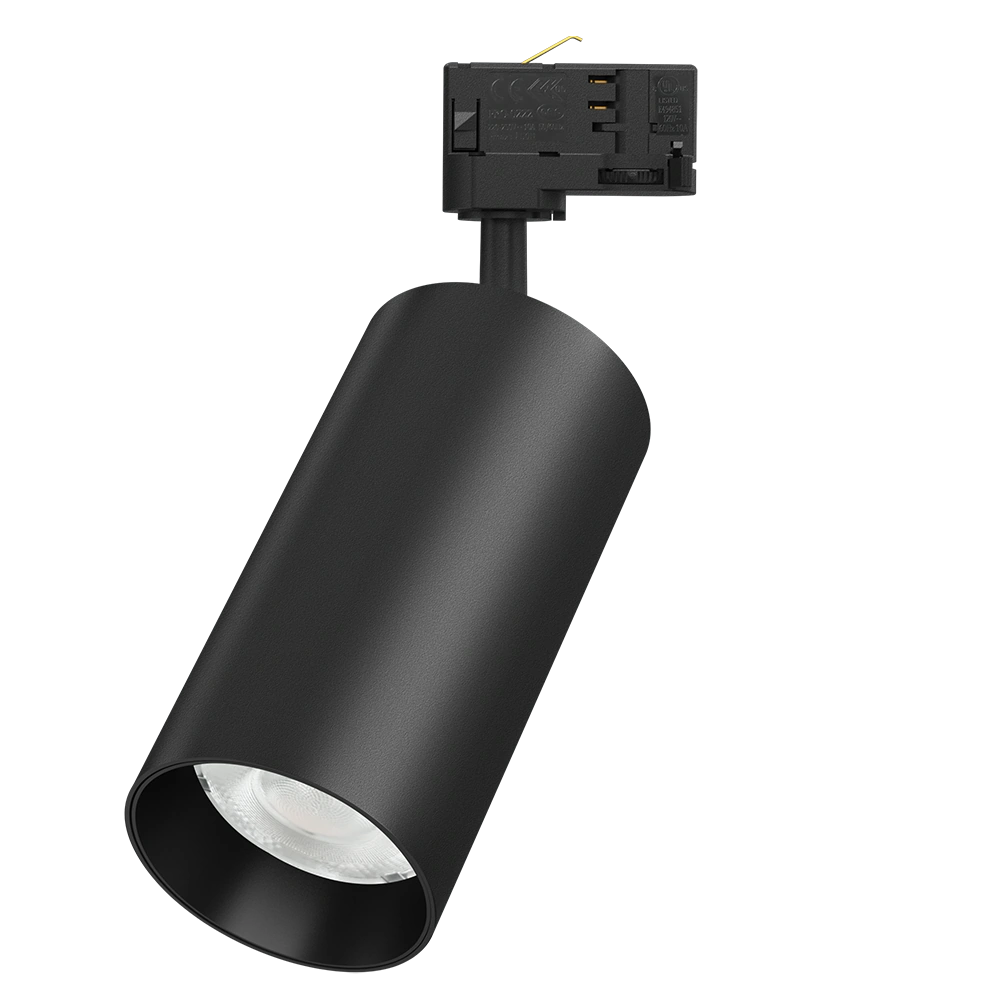
We manufacture museum-grade track spots, recessed downlights and showcase linear LEDs in our Shenzhen facility, all measured per LM-79 and certified RG0. Every project ships with the full TM-30 + LM-79 + LM-80 + DALI-2 documentation pack — no chasing supplier emails the week before site handover.
If you are scoping a museum, gallery or heritage project anywhere in Europe and want a free photometric study and mock-up sample, email me directly at len@led-project-light.com or use the contact form. We respond within 48 hours with a sealed-bid-ready proposal.
Frequently asked questions
Q1.What is the minimum CRI/Rf for a museum project in Europe in 2026?
Most EU museum tenders now require CRI Ra ≥ 95 with R9 ≥ 90, plus TM-30 Rf ≥ 90 and Rg between 98–105. CRI alone is no longer sufficient — you must submit the TM-30 vector graphic measured on the finished fixture (not the LED chip).
Q2.Is RG0 mandatory for all museum lighting?
For any fixture that illuminates artwork, paper, textiles or natural-history specimens — yes. Conservators reject anything above RG0 (Exempt) per IEC/EN 62471. Architectural ambient fixtures away from the artwork can sometimes be RG1, but never above.
Q3.How does EN 17037 affect artificial lighting selection?
EN 17037 forces the artificial system to complement daylight, not replace it. In practice this means CCT-tunable fixtures (2700K–5000K) with smooth dimming, and DGP < 0.35 glare control across all visitor positions. Fixed-CCT spots are increasingly being rejected on new-build cultural projects.
Q4.What flicker spec should I demand from my LED supplier?
PstLM ≤ 1.0 and SVM ≤ 0.4. This is essential for filming, photography and 4K documentation of the collection. Cheap PWM dimmers easily fail both — ask for the measurement report at the dim level you will actually operate at, not just at 100%.
Q5.How do I know if a supplier really has DALI-2?
DALI-2 is certified by DiiA (digitalilluminationinterface.org). Every certified product has a serial number you can look up in the public DiiA product database. If the supplier cannot give you that number, the driver is not DALI-2.
References & sources
- IES TM-30-20 Method for Evaluating Light Source Color Rendition— Illuminating Engineering Society
- IEC 62471: Photobiological safety of lamps and lamp systems— International Electrotechnical Commission
- EN 17037:2018+A1:2021 Daylight in buildings— CEN
- CIE 157:2004 Control of damage to museum objects by optical radiation— International Commission on Illumination
- DiiA — Digital Illumination Interface Alliance (DALI-2 certified products)— DiiA
15 years specifying architectural and museum-grade LED fixtures across EU, MENA and SEA markets. Reach me at len@led-project-light.com.
Need a tailored lighting plan for your project?
Our senior lighting designers reply within 48 hours with a free design proposal & quotation.