
Shenzhen Qihang at Light + Building 2025: Magnetic Track Analysis
Industry analysis of Shenzhen Qihang Lighting's planned exhibit at Light + Building 2025. We break down their new magnetic track and anti-glare spotlight seri
What Changed — and Why It Matters Now
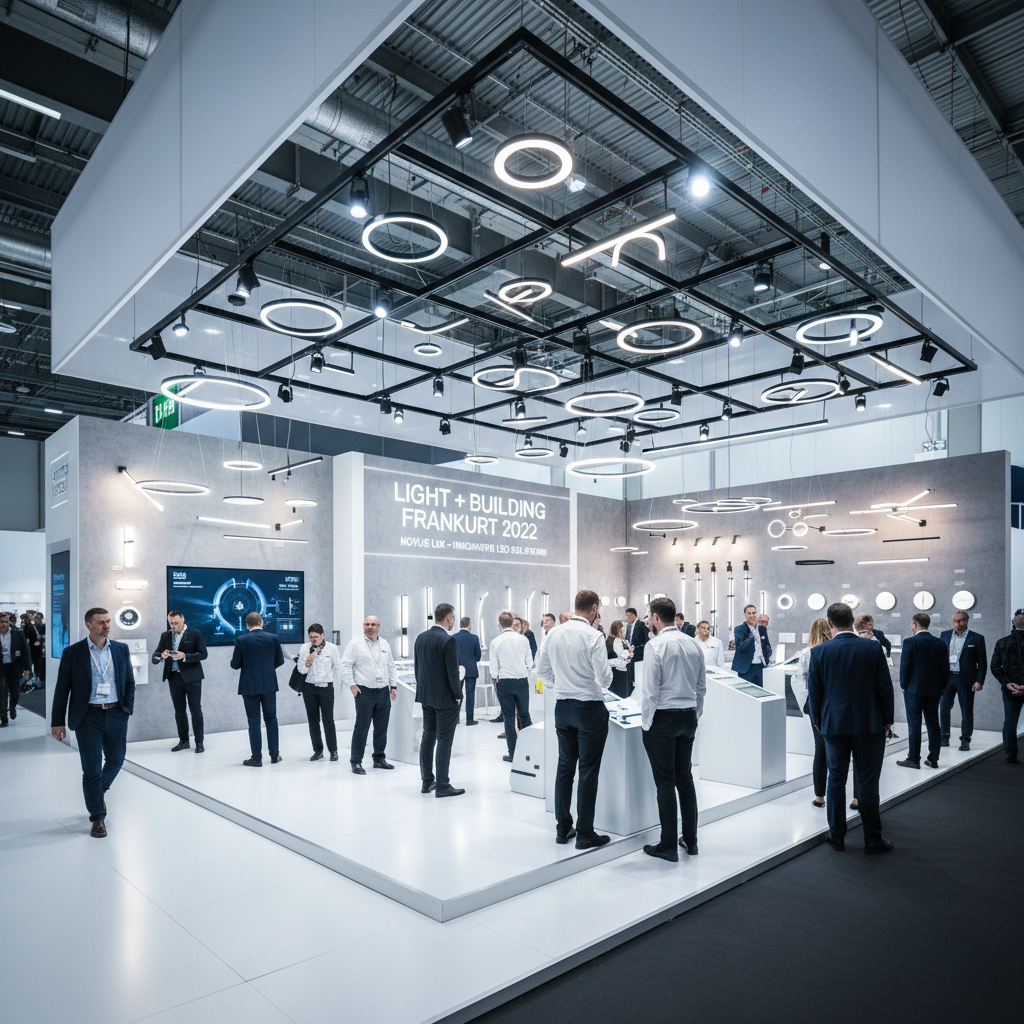
At XHLWX (led-project-light.com), a Custom Indoor LED Lighting Manufacturer based in China, we see every major industry announcement as a barometer for market trajectory. The recent declaration by Shenzhen Qihang Lighting to exhibit its latest magnetic track and anti-glare spotlight series at Light + Building 2025 in Frankfurt is more than a simple trade show booking; it's a clear signal of the intensifying competition and evolving technological priorities for manufacturers targeting sophisticated EU and US markets.
While the event is slated for March 2025, such early announcements are strategic plays designed to capture the attention of specifiers and distributors well in advance. The focus on modularity (magnetic track systems) and human-centric lighting (low-glare optics) underscores a significant shift away from commodity products towards high-performance, customizable solutions.
This move matters because it forces the entire supply chain, from component suppliers to contractors, to adapt to higher expectations for flexibility, visual comfort, and verified performance data.
This isn't merely about one company's product debut. It reflects a broader trend where leading Chinese manufacturers are no longer competing solely on price but are heavily investing in R&D to meet and exceed stringent European and American standards.
The choice of Light + Building, the world's leading trade fair for lighting and building services technology, as the launch platform is deliberate. It’s the premier arena to demonstrate technical prowess to a discerning global audience of architects, lighting designers, and engineers.
The announcement pressures competitors to showcase equally compelling innovations, particularly in optical design that achieves very low Unified Glare Ratings (UGR) and in control systems that offer seamless integration with building management systems via protocols like DALI-2.
The Technical Detail Behind the Headline
The true significance of Qihang's announcement lies in the technical specifications that will be expected of their new product lines. For a specifier in Germany, the UK, or the United States, a product's success hinges on verifiable performance data that goes far beyond a simple lumen package.
The new anti-glare spotlights, presumably designed for their magnetic track system, will be scrutinized against established benchmarks for quality of light, controllability, and compliance. Below is a table outlining the likely target specifications that a premium product in this category must meet to be considered competitive in 2025.
| Parameter | Specification / Value | Relevant Standard / Protocol | Notes for Specifiers |
|---|---|---|---|
| Color Temperature (CCT) | 2700K / 3000K / 4000K | ANSI C78.377 | 3000K is the standard for hospitality/residential; 4000K for commercial/office. |
| Color Rend. Index (CRI) | Ra > 95, R9 > 80 | CIE 13.3-1995 | CRI > 90 is essential for retail/galleries. High R9 value ensures vivid reds. |
| TM-30-18 Fidelity/Gamut | Rf ≥ 92 / Rg ≈ 100 | IES TM-30-18 | A more complete color metric than CRI. Rf ≥ 90 and Rg near 100 indicates accurate and vibrant color rendering. |
| Unified Glare Rating (UGR) | < 16 | EN 12464-1 | UGR < 19 is mandatory for office work. A value < 16 signifies high visual comfort, suitable for demanding tasks. |
| Control Protocol | DALI-2 / Casambi / 0-10V | IEC 62386 (DALI-2) | DALI-2 is preferred in the EU for interoperability. Casambi offers wireless mesh control. |
| Housing & Form Factor | Die-cast Aluminum, IP20 | IEC 60529 | IP20 is standard for dry indoor locations. Material affects thermal management and longevity. |
| Certifications | CE / RoHS / ErP / ISO9001 | EU Directives | Essential for EU market access. ErP (EU 2019/2020) dictates energy efficiency. |
| Driver Brand | Tridonic / Mean Well | Manufacturer Spec | Using recognized brands like Tridonic, Osram, or Mean Well provides assurance of reliability and performance. |
These parameters are not just marketing points; they are contractual obligations. A specifier will expect comprehensive documentation, including third-party lab reports, to validate each claim. The choice of a premium driver like one from Tridonic, for example, signals a commitment to quality, affecting everything from flicker performance to dimming smoothness and overall system lifespan, which is often expected to exceed 50,000 hours (L80B10).
What This Means for Specifiers and Buyers
The rise of sophisticated, modular systems from manufacturers like Qihang and others presents both opportunities and challenges for lighting professionals. It moves the conversation beyond fixture-for-fixture replacement and towards holistic lighting design where flexibility and user well-being are paramount.
How Will This Trend Impact Project Timelines and Budgets?
On the surface, magnetic track lighting systems can carry a higher initial material cost compared to traditional fixed downlights or track spots. The track, power supplies, and individual light modules are all separate components.
However, this modularity introduces significant long-term value and can positively impact lifecycle costs. For commercial spaces like retail stores, galleries, or pop-up venues, the ability to reconfigure lighting layouts without an electrician saves thousands in labor costs over the building's life.
Layout changes that once took days can be done in minutes by on-site staff, reducing downtime. This flexibility allows a space to adapt to new tenants or changing merchandising displays, potentially reducing total lifecycle lighting costs by up to 40% when factoring in renovations and adjustments.
What Are the Key Specification Differences Between US and EU Markets for These Products?
Specifying these systems for international projects requires careful attention to regional differences. For the European Union, the standard is 230V AC input and a strong preference for DALI-2 for digital, addressable control, especially in commercial projects.
CE, RoHS, and now the stringent ErP (Ecodesign) directive are non-negotiable for market access. Conversely, the US market operates on 120V or 277V AC, with 0-10V analog dimming still holding significant market share, though DALI is gaining ground.
Certification is paramount, with UL or ETL listing being a legal requirement for installation in most jurisdictions. Flicker is another key differentiator; while the EU has guidelines, standards like California's Title 24 and recommendations like IEEE 1789 are more influential in the US market.
How Can You Verify the Anti-glare Performance Claims Before Purchase?
Never take a UGR value on a datasheet at face value. A claimed UGR<16 is only meaningful if it's backed by verifiable data relevant to your project.
The first step is to demand third-party photometric reports. The second, and more crucial step, is to request the product's IES and LDT photometric files.
These data files are the digital DNA of the luminaire. A lighting designer or engineer must import these files into simulation software like DIALux or AGi32.
This allows for the creation of a 3D model of the actual project space—be it an office, a classroom, or a gallery—and to calculate the actual UGR based on the specific room dimensions, surface reflectances, and luminaire layout. This simulation is the only way to reliably predict and ensure compliance with glare requirements like EN 12464-1 before a single fixture is ordered.
Compliance Checklist (IES / LDT / DIALux / CE / RoHS / ErP)
For any specifier or contractor evaluating a new lighting system from any manufacturer for a European or American project, a rigorous compliance check is mandatory. Use this list as a minimum requirement for your due diligence process:
-
Photometric Data: Request a complete set of IES and LDT photometric files. Ensure files are available for every CCT, beam angle, and lumen package variant you intend to specify. Without these, accurate lighting simulations are impossible.
-
DIALux Integration: Ask if the manufacturer provides a dedicated DIALux plugin. While not essential, plugins streamline the design process, ensuring that product data is current and accurate, and they often include 3D models and accessory information.
-
CE Declaration of Conformity (DoC): For EU projects, this is non-negotiable. The DoC must show compliance with the Low Voltage Directive (LVD), Electromagnetic Compatibility (EMC) Directive, and RoHS. Scrutinize the document to ensure it specifically covers the models you are purchasing.
-
RoHS Test Reports: Do not rely solely on the CE mark for RoHS compliance. Request the underlying material test reports to verify the restriction of hazardous substances like lead and mercury, particularly for projects with strong sustainability goals.
-
ErP Regulation Compliance: As of September 1, 2021, the Ecodesign Regulation (EU) 2019/2020 has been in full effect. Request documentation proving the product meets the minimum energy efficiency (lm/W) and standby power (<0.5W) requirements. The product must be registered in the EPREL database, and its energy label should be available.
-
UL/ETL Certification (for US): For North American projects, confirm that the entire system (driver, track, and luminaire) is listed by a Nationally Recognized Testing Laboratory (NRTL) like UL or ETL.
Frequently Asked Questions
Q: What CCT and CRI Levels Are Considered Premium for Architectural Spotlights?
For high-end architectural applications, a Color Rendering Index (CRI) of 95 or higher is the benchmark, with a high R9 value (>80) for saturated reds. While fixed CCTs of 3000K (warm) or 4000K (neutral) are most common, premium projects increasingly demand tunable white capabilities from 2700K to 5000K. The quality is further verified by TM-30-18 metrics, where a fidelity index (Rf) above 90 is desired for accurate color rendition in galleries and retail.
Q: Is a Magnetic Track System Safe for Public or Commercial Spaces?
Yes, when specified and installed correctly. Most reputable magnetic systems operate on a low-voltage DC circuit, typically 48V, which is classified as Safety Extra-Low Voltage (SELV). This makes the track itself safe to touch. For market compliance in the EU or US, the entire system—including the track, power supply, and light modules—must carry the appropriate certifications, such as CE for Europe or a UL/ETL listing for North America, ensuring electrical and mechanical safety.
Q: How Much Energy Can an Anti-glare LED Spotlight Save Compared to Old Halogen Fixtures?
The energy savings are typically between 80% and 90%. A common 50W MR16 halogen spotlight can be effectively replaced by a high-performance 7W to 9W LED module, often delivering superior light quality and directional control. Over a 50,000-hour rated lifespan, this replacement can save more than 2,000 kWh of electricity per fixture, leading to a significant reduction in operational costs and carbon emissions for any commercial operator.
Q: Why Is DALI-2 Control Superior to Standard DALI or 0-10V?
DALI-2 is a major upgrade because it mandates stringent interoperability testing and certification for all device types, including sensors and switches, not just the drivers (ballasts). This is governed by the Digital Illumination Interface Alliance (DiiA). This guarantees that components from different manufacturers will work together reliably, unlike first-gen DALI. Compared to the one-way analog communication of 0-10V, DALI-2 offers two-way digital communication, enabling individual luminaire addressing, scene-setting, and crucial diagnostic feedback.
Talk to Our Engineering Team
The trends signaled by events like Light + Building 2025 confirm a clear direction for the lighting industry: a move towards integrated, intelligent, and human-centric systems. Understanding the technical nuances of these systems is no longer optional for specifiers who want to deliver future-proof projects.
The ability to verify claims through data and simulation is the most critical skill in today's market. At XHLWX (led-project-light.com), a Custom Indoor LED Lighting Manufacturer based in China, our engineers are ready to discuss how these trends apply to your specific project needs and provide the transparent data required to make informed decisions for your clients in the EU, US, and Middle East.
Need a tailored lighting plan for your project?
Our senior lighting designers reply within 48 hours with a free design proposal & quotation.