
Human Centric Lighting Goes Mainstream at Light + Building 2025
Analysis from Light + Building 2025 shows Human Centric Lighting (HCL) is now a mass-market reality. Over 60% of brands showcased mature tunable white solutio
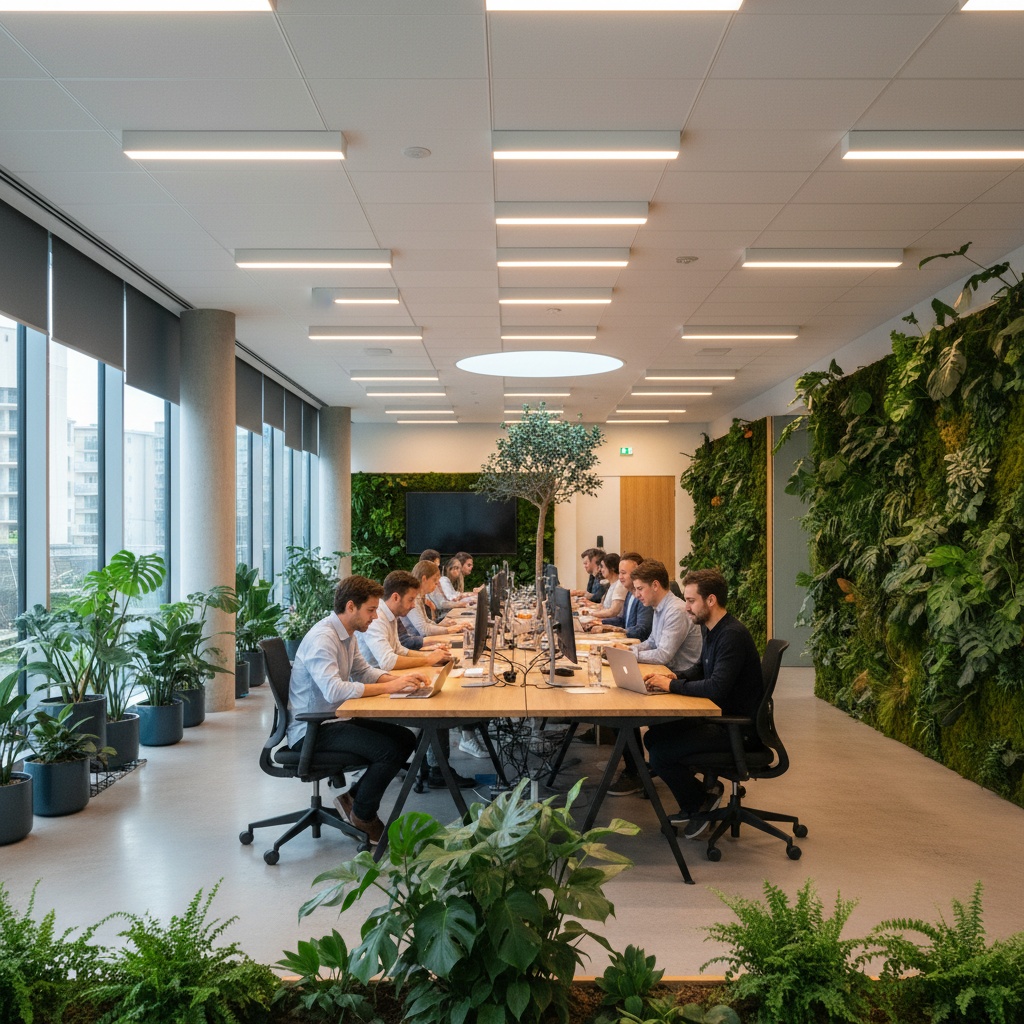
At XHLWX (led-project-light.com), a Custom Indoor LED Lighting Manufacturer based in China, our engineers attend global trade events to analyze the trends shaping the future for our EU, US, and Middle Eastern clients. The overwhelming takeaway from Light + Building 2025 in Frankfurt is unequivocal: Human Centric Lighting (HCL) has officially graduated from a high-concept niche to a scalable, mass-market solution.
Where previous exhibitions featured HCL as a forward-looking technology demonstration, this year saw over 60% of major luminaire manufacturers presenting commercially-ready, competitively-priced HCL product lines. This shift signals a critical turning point for specifiers, architects, and facility managers, moving the conversation from "what if" to "how to."
What Changed — and Why It Matters Now
The transition of HCL from concept to commodity is driven by a confluence of three key factors: technological maturity, cost reduction, and market demand. For years, the primary barrier to widespread HCL adoption was the complexity and cost of reliable tunable white systems. The technology, which allows for the independent adjustment of a luminaire's Correlated Color Temperature (CCT) and intensity, required expensive, often proprietary, control gear and sophisticated commissioning.
Today, the landscape is different. The mass production of high-efficacy dual-channel LED modules and the standardization of control protocols, most notably DALI-2 DT8 (Colour Control), have slashed both component cost and installation complexity.
This technological democratization coincided with a powerful market pull. The global emphasis on wellness and productivity in corporate and healthcare environments, amplified by standards like the WELL Building Standard, has created a tangible demand for lighting that supports human circadian rhythms.
Businesses are no longer just buying lumens; they are investing in environments that can demonstrably improve employee well-being, reduce absenteeism, and boost concentration. The promise of energy savings of up to 70% compared to legacy fluorescent systems, coupled with productivity gains estimated between 3-7%, presents a compelling ROI that moves HCL from a luxury to a strategic investment.
The Technical Detail Behind the Headline
To understand what a mainstream HCL-ready luminaire looks like in 2025, it's essential to examine the specifications that have become the new baseline. The focus is on high-quality light, seamless control, and compliance with stringent European and US standards. A typical specification for a commercial-grade, HCL-enabled linear LED luminaire, suitable for an office or educational setting, now includes the following parameters:
| Parameter | Specification | Standard / Protocol | Notes for Specifiers |
|---|---|---|---|
| CCT Range | 2700K – 6500K | Tunable White | Must provide a smooth transition across the black-body locus. |
| Light Quality | CRI 90+, R9 >50; TM-30 Rf >90, Rg 100±2 | IES TM-30-18 | High fidelity (Rf) and saturation (Rg) are crucial for accurate color rendering. |
| Glare Control | UGR < 19 | EN 12464-1 | Essential for office/task environments to prevent user discomfort. |
| Control Protocol | DALI-2 DT8 (Colour Control) | IEC 62386-209 | Single DALI address for both intensity and color control, simplifying wiring. |
| Driver Brand | Tridonic / Osram / Mean Well | DALI-2 Certified | Guarantees interoperability with compliant control systems. |
| LED Chip Brand | Samsung / Bridgelux / Cree | LM-80 Certified | Ensures long-term color stability and lumen maintenance. |
| Housing/IP Rating | Extruded Aluminium / IP20 | - | Standard for indoor dry locations; custom lengths available. |
| Core Certifications | CE, RoHS, ErP | (EU) 2019/2020 | Ensures market access and compliance with EU safety and eco-design rules. |
What This Means for Specifiers and Buyers
The widespread availability of HCL solutions requires a shift in the specification process. It's no longer just about selecting a fixture with the right lumen package. The focus must expand to include the entire ecosystem of luminaire, driver, and control system to deliver the desired biological and psychological outcomes.
How Does Tunable White Technology Enable Practical Human Centric Lighting?
Practical HCL hinges on the ability to mimic the natural progression of daylight, which changes in both intensity and color temperature throughout the day—cooler, high-intensity light in the morning and midday to promote alertness, and warmer, lower-intensity light in the afternoon and evening to help wind down. Modern tunable white luminaires achieve this using LED modules with two sets of chips (e.g., 2700K and 6500K). A DALI-2 DT8 driver precisely mixes the output of these two channels to produce any CCT between the two endpoints, all while allowing for independent dimming. This creates a smooth, dynamic lighting environment that can be programmed to follow a 24-hour circadian curve, providing the right light at the right time.
What Are the Control System Implications for Integrating HCL on a Large Scale?
For specifiers and electrical contractors, the control system is paramount. The DALI-2 standard, specifically Device Type 8 (DT8), has been a game-changer. Previously, controlling a tunable white fixture required two separate DALI addresses and drivers (one for intensity, one for color), doubling the cost and complexity. DT8 integrates both functions into a single DALI address, making large-scale deployments far more manageable and cost-effective. For retrofit projects where running new control wiring is impractical, wireless mesh systems like Casambi have become a robust and popular alternative, offering luminaire-level control via Bluetooth. The key decision for any project is to define the control strategy early—whether it's a pre-programmed 24-hour cycle, user-adjustable scenes, or a combination of both.
Beyond Wellness, What Is the ROI for Implementing HCL in Commercial Spaces?
The business case for HCL now extends far beyond the intangible benefits of 'well-being'. The most significant ROI comes from energy savings and productivity. By integrating HCL with daylight harvesting sensors, a facility can reduce its lighting energy consumption by 40-60% annually. The system automatically dims artificial light when sufficient natural light is available. On the human side, studies from organizations like the Fraunhofer Institute have pointed to measurable increases in productivity and concentration. A conservative estimate of a 3% productivity gain in an office of 100 employees can translate into thousands of dollars in value annually, far outweighing the modest premium for HCL-enabled systems. When combined with reduced sick days and improved employee retention, the ROI becomes compelling within 24-36 months for many projects.
Compliance Checklist (IES / LDT / DIALux / CE / RoHS / ErP)
For European and US specifiers, ensuring a product is fully compliant and supported is non-negotiable. With HCL, the documentation requirements are more extensive.
-
Photometric Files: Simply asking for an IES or LDT file is no longer enough. To properly simulate an HCL scheme in planning software like DIALux Evo, you need separate photometric files for at least three key CCTs (e.g., 2700K, 4000K, 6500K). This allows lighting designers to accurately model different scenes and calculate metrics like illuminance and UGR under various conditions.
-
Control System Compatibility: The luminaire's datasheet must clearly state its control protocol (e.g., DALI-2 DT8). Demand proof of certification from the Digital Illumination Interface Alliance (DiiA) to guarantee interoperability and avoid being locked into a proprietary ecosystem.
-
EU Market Compliance (CE, RoHS, ErP): All products must bear the CE mark. RoHS compliance, restricting hazardous substances, is mandatory. Critically, with the EcoDesign Regulation (EU) 2019/2020 (also known as the Single Lighting Regulation or SLR), HCL luminaires must still meet strict energy efficiency (lm/W) and standby power (<0.5W) requirements. A reliable manufacturer must provide a full Declaration of Conformity covering these directives.
-
Quality and Lifetime Data: Look for LM-80 data on the LED chips and TM-21 projections for the luminaire's lifetime (e.g., L80B10 @ 50,000 hours). This ensures the product's performance and color stability will last.
Frequently Asked Questions
Q: What Is the Difference Between Tunable White and Dim-to-warm?
Tunable white allows for independent control over a luminaire's brightness (intensity) and its color temperature (CCT), typically from 2700K to 6500K. Dim-to-warm, however, follows a fixed curve: as you dim the light, its CCT automatically gets warmer, mimicking an incandescent bulb. It does not allow for high CCT at low intensity.
Q: Can I Retrofit My Existing Office with Human Centric Lighting?
Yes, retrofitting is a popular application. For spaces with existing DALI wiring, you can often replace fixtures and update the control system. For spaces without control wiring, wireless systems using Bluetooth Mesh, like Casambi, are ideal. These allow for luminaire-level control without needing to run new wires, delivering HCL benefits and energy savings over 50%.
Q: What Is a DALI-2 DT8 Driver and Why Is It Important for HCL?
DALI-2 DT8 is the IEC 62386 standard for color control gear. Its importance lies in its efficiency: it allows a single DALI address to control both the color temperature and intensity of a tunable white luminaire. This halves the number of required addresses and simplifies commissioning compared to the old method of using two separate DT6 drivers.
Q: Does HCL Require a Specific UGR Rating?
HCL is a lighting control strategy, not a glare standard. The luminaire itself must still comply with the glare requirements for the application space. For an office, the luminaires used in an HCL system must achieve a UGR (Unified Glare Rating) of <19 to comply with the European standard EN 12464-1, regardless of the active CCT.
Talk to Our Engineering Team
At XHLWX (led-project-light.com), a Custom Indoor LED Lighting Manufacturer based in China, we specialize in building specification-grade luminaires that meet the complex demands of today's market. Our engineering team has deep expertise in integrating tunable white technology with DALI-2 DT8 and wireless control systems for our partners in the EU, US, and Middle East. If you are a specifier, contractor, or buyer looking to implement a robust and compliant Human Centric Lighting solution, contact us to discuss your project's technical requirements.
Need a tailored lighting plan for your project?
Our senior lighting designers reply within 48 hours with a free design proposal & quotation.