
Qihang QH-MG Series: What Its UGR<13 Spec Means for EU Retail
An in-depth analysis of the new Qihang Lighting QH-MG series. We dissect the DC48V modular system, its UGR<13 glare control, and what it means for EU specifie
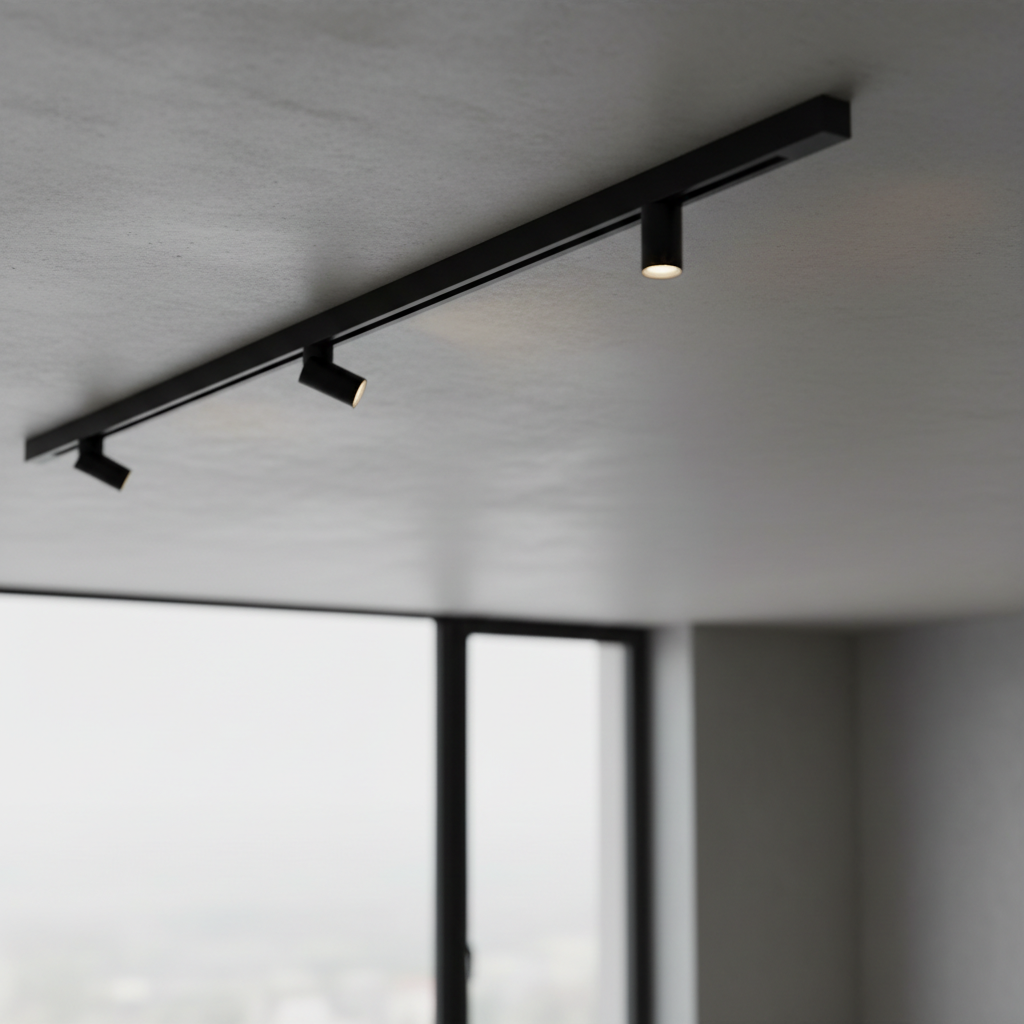
What Changed — and Why It Matters Now
At XHLWX (led-project-light.com), a Custom Indoor LED Lighting Manufacturer based in China, we closely monitor market shifts and product innovations that signal broader industry trends. The recent launch of the QH-MG Series Magnetic Track Lighting by Qihang Lighting is one such development. While new product announcements are frequent, this particular series encapsulates a convergence of key demands shaping the commercial and high-end residential lighting sectors in 2024 and beyond: extreme modularity, superior visual comfort, and deep system integration.
The system is built on a DC48V low-voltage platform, which immediately addresses safety and ease of use. The core innovation, however, lies in its combination of modular, tool-free interchangeable light heads with a highly engineered optical system promising a Unified Glare Rating (UGR) of less than 13. This isn't just an incremental improvement; it's a significant leap beyond the baseline requirements of European lighting standard EN 12464-1, pushing into the realm of premium visual comfort previously reserved for niche architectural products.
Why does this matter now? Three key drivers are at play.
First, the retail and hospitality sectors are demanding hyper-adaptable spaces. The ability to change lighting schemes without electricians to reflect new merchandising or seasonal displays is a massive operational advantage.
Second, a growing body of research and standards like the WELL Building Standard are putting human-centric lighting at the forefront, linking low-glare, high-quality light directly to well-being, productivity, and customer experience. A UGR<13 rating is a direct answer to this demand.
Finally, regulations like the EU's Ecodesign (ErP) directive are forcing manufacturers to prioritize not just efficiency, but also the quality and longevity of light sources, making well-engineered systems with quality components more valuable than ever.
The Technical Detail Behind the Headline
Dissecting the specifications of the QH-MG Series reveals a system designed to meet the stringent demands of European and North American specifiers. It’s not just about a single headline feature, but the combination of parameters that deliver a complete, professional-grade solution.
The DC48V architecture is the foundation, enabling the magnetic, hot-swappable connection of various light modules, from general floodlights to focused spotlights. The claimed UGR<13 is achieved through deep-set LEDs combined with precision-cut anti-glare louvers and lenses.
Below is a breakdown of the typical specifications an architect or engineer would require for evaluation.
| Parameter | QH-MG Series Specification | Industry Standard (Premium) | Notes for Specifiers |
|---|---|---|---|
| Color Temperature (CCT) | 2700K, 3000K, 3500K, 4000K (2-step MacAdam) | 3000K / 4000K (3-step MacAdam) | A wider CCT range with tight binning (2-step) ensures excellent fixture-to-fixture color consistency. |
| Color Rendering Index (CRI) | Ra > 95, R9 > 50 | Ra > 90 | Exceeds commercial requirements; the high R9 value is critical for rendering reds accurately in retail. |
| TM-30-18 (Rf / Rg) | Rf 92 / Rg 101 @3000K | Rf ~90 / Rg ~100 | Excellent color fidelity (Rf) and saturation (Rg) provide a more complete picture of color quality than CRI alone. |
| Unified Glare Rating (UGR) | <13 (with specific louvers) | <19 (Office) / <22 (Retail) | Substantially surpasses EN 12464-1 standards, enabling use in visually demanding, high-end applications. |
| Control Protocol | DALI-2, 0-10V, Casambi (via gateway) | On/Off, Phase-cut, DALI | Offers full digital addressability (DALI-2) and premier wireless control (Casambi) for smart building integration. |
| LED Chip / Driver Brand | Osram Duris S5 / Tridonic or Mean Well | Tier-1 Brands (e.g., Bridgelux) | Use of named, Tier-1 components ensures reliability, performance consistency, and verifiable L80/B10 lifespans. |
| Housing / Track System | Aluminium Alloy; Recessed, Surface, Pendant | Aluminium, IP20 | Versatile mounting options allow seamless integration into various architectural ceiling types. IP20 is standard for dry indoor locations. |
| Certifications | CE, RoHS, ErP | CE, RoHS | Full compliance with EU directives is non-negotiable for market access. ErP is particularly important. |
What This Means for Specifiers and Buyers
The launch of a system like the QH-MG Series shifts the conversation from "is it bright enough?" to "is it the right quality of light, delivered in the most flexible way?". For lighting designers, architects, and electrical contractors, this presents both opportunities and new specification criteria to consider.
How Does a Modular DC48V System Simplify Future Retail and Office Layouts?
The primary advantage is the decoupling of the electrical infrastructure from the light point's location and function. Once the 48V track is installed, the configuration of the lighting is entirely fluid.
For a pop-up shop within a larger department store, this means staff can physically move, add, or replace spotlights with floodlights in minutes without tools or an electrician. This agility reduces the total cost of ownership significantly.
A retail refresh that might have previously cost thousands in electrical labor and caused days of downtime can now be executed overnight by in-house visual merchandising teams. For offices adopting hybrid or agile workspace models, a department can reconfigure from individual workstations to collaborative zones, and the lighting can be instantly adapted to match, ensuring optimal light levels and minimal energy waste.
Why Is UGR<13 a Game-changer for Visual Comfort Beyond Office Standards?
The EN 12464-1 standard mandates UGR<19 for general office work, which is considered 'acceptable' discomfort glare. A UGR<13 rating is designated for tasks requiring high visual precision and is practically imperceptible glare.
In a boutique retail setting, this is transformative. When glare is eliminated, the customer's eye is drawn to the product, not the ceiling.
Textures on fabrics appear richer, the sparkle of jewelry is enhanced without distracting flashes, and the overall ambiance feels more luxurious and comfortable, encouraging longer dwell times. In a high-end residential or hospitality context, it creates a serene, calm environment.
The light is present and effective, but the source is subtle and unobtrusive—the hallmark of sophisticated lighting design. This metric moves lighting from a utility to a core element of the user experience, reducing visual fatigue by an estimated 30-40% compared to a standard UGR 19 installation.
What Are the Integration Challenges When Specifying a System with DALI-2 and Casambi Options?
Flexibility in control is a double-edged sword; it requires careful planning. Specifiers must decide the control strategy early in the design process.
DALI-2 (Digital Addressable Lighting Interface) is a robust, wired IEC 62386 standard ideal for new builds or major renovations. It offers individual addressability, monitoring, and feedback for every luminaire, making it perfect for large, integrated building management systems (BMS).
The challenge is the cost and complexity of the initial wiring and commissioning.
Conversely, Casambi offers a wireless Bluetooth Mesh solution. It's exceptionally flexible, perfect for retrofits where running new control wires is impractical, or for smaller, standalone spaces.
Commissioning is done via a smartphone app. The challenge here is ensuring robust network coverage in large or complex buildings and integrating it with other building systems, which often requires a specific gateway.
A specifier must work with the manufacturer to get clear guidance on which solution—or hybrid—is best for the project's scale, budget, and long-term operational goals.
Compliance Checklist (IES / LDT / DIALux / CE / RoHS / ErP)
Specifying a product from an overseas manufacturer for a European or US project requires rigorous documentation checks. A glossy brochure is insufficient. For a system like the QH-MG series to be seriously considered, the manufacturer must provide a complete technical dossier.
-
Photometric Files: The absolute first request should be for IES and LDT photometric files for each module and optic combination. These files are the digital DNA of a luminaire, containing its precise light distribution data. Without them, it is impossible for a lighting designer to perform accurate simulations in professional software like DIALux, Relux, or AGi32. These simulations are essential for verifying illuminance levels, uniformity, and, crucially, the UGR calculations for the specific room geometry.
-
CE Marking: This is mandatory for the EU market and indicates conformity with health, safety, and environmental protection standards. For lighting, this primarily involves the Low Voltage Directive (LVD) and the Electromagnetic Compatibility (EMC) Directive. Specifiers should request the Declaration of Conformity and associated test reports.
-
RoHS Compliance: The Restriction of Hazardous Substances directive limits the use of specific hazardous materials in electrical and electronic products. A RoHS compliance certificate is a standard requirement and demonstrates the manufacturer's commitment to environmental responsibility.
-
ErP Directive (Ecodesign): This is increasingly critical. The latest Single Lighting Regulation (SLR - (EU) 2019/2020) sets stringent minimums for energy efficiency (lm/W), but also for quality metrics like flicker (PstLM ≤ 1.0) and stroboscopic effect (SVM ≤ 0.4). It also introduces requirements for reparability and the availability of spare parts. A specifier must verify that the product and its separate control gear meet these new, tougher standards to ensure the installation is future-proof and legally compliant.
Frequently Asked Questions
Q: What Is the Primary Advantage of a 48V DC System Over a 230V AC Track?
The primary advantage is safety and flexibility. The 48V DC low voltage allows for tool-free installation and repositioning of modules by hand without electrical risk. This modularity means a retail space can be reconfigured in minutes, a task that would require a certified electrician for 230V systems, saving significant operational costs and downtime.
Q: How Much Energy Can Be Saved by Switching to a Modern LED System Like This?
Compared to older 50W halogen or 35W metal halide track systems, a modern LED solution like the QH-MG series can achieve energy savings of 70-85%. For an installation running 12 hours a day, this can translate to thousands of kWh saved annually per 100 square meters, with a typical project ROI period of 18-36 months.
Q: Is a CRI of >95 Really Necessary for an Office Environment?
While a CRI >80 is standard for offices, a CRI >95 with a high R9 value (>50) is a key component of human-centric lighting. It improves alertness and provides more natural, vibrant colors, which is beneficial in creative agencies, executive offices, and rooms used for video conferencing. It’s about moving from minimum compliance to optimal environmental quality for occupants.
Q: What Does UGR<13 Mean in Practical Terms for a Customer in a Store?
A Unified Glare Rating (UGR) below 13 means the lighting is exceptionally comfortable, with virtually no distracting glare from the light source itself. For a retail customer, this means their attention is drawn directly to the merchandise. Colors appear true and textures are well-defined, enhancing the perceived value of products and improving the overall shopping experience significantly.
Talk to Our Engineering Team
The introduction of highly-specified, modular systems like the Qihang QH-MG series is a clear indicator of the market's direction. The focus is shifting from simple illumination to creating adaptable, comfortable, and efficient environments.
For specifiers, this means the technical due diligence process is more important than ever. Verifying claims, understanding the nuances of control systems, and ensuring full regulatory compliance are the keys to a successful project.
These systems offer incredible potential, but only when specified and deployed with expertise. At XHLWX (led-project-light.com), a Custom Indoor LED Lighting Manufacturer based in China, our engineering team is ready to help you navigate these specifications and ensure the lighting solution you choose is perfectly aligned with your project's aesthetic, functional, and budgetary goals for the EU, US, and Middle East markets.
Need a tailored lighting plan for your project?
Our senior lighting designers reply within 48 hours with a free design proposal & quotation.