
5 Retail Lighting Mistakes & How to Fix Them with Pro Specs
Misused beam angles, poor color rendering, and glare are costing retailers. Learn the 5 critical mistakes and see the technical specs needed to boost sales an
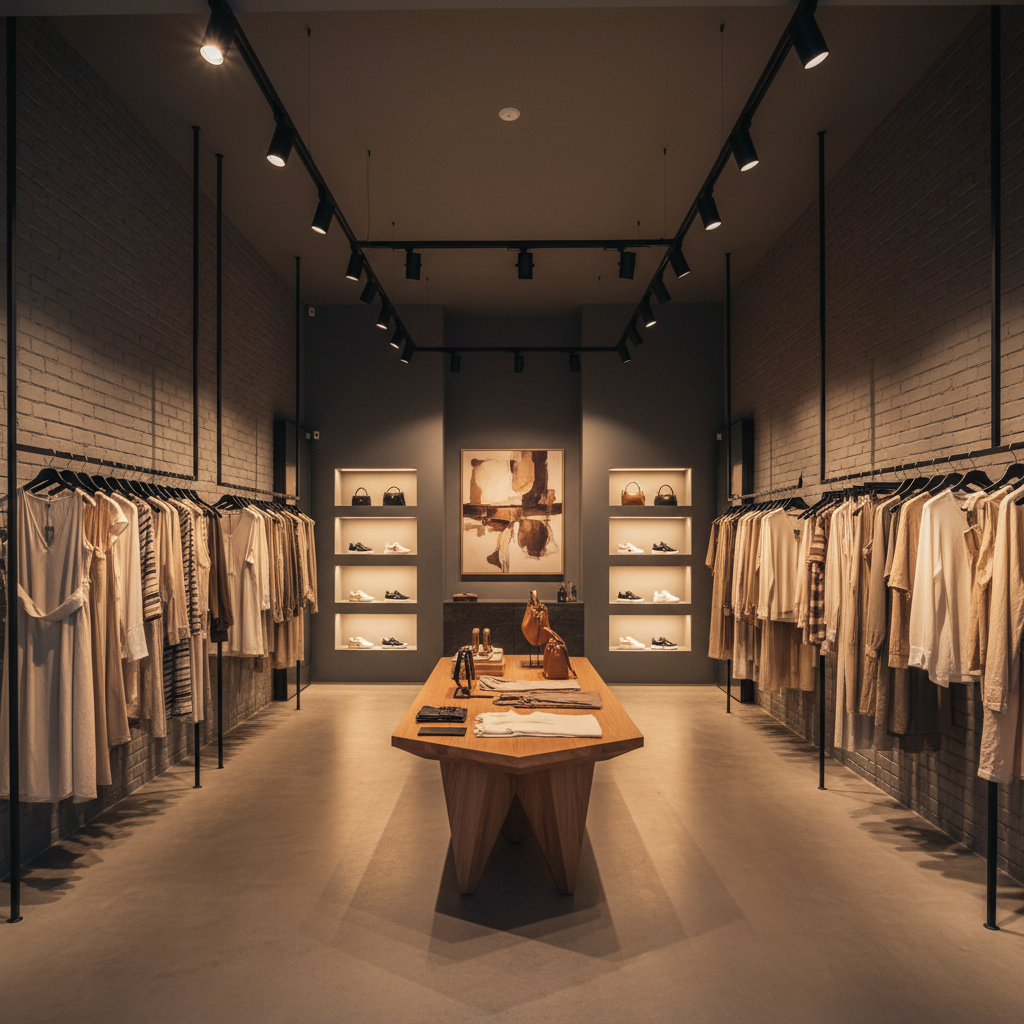
At XHLWX (led-project-light.com), a Custom Indoor LED Lighting Manufacturer based in China, our engineers frequently consult on retail projects where the initial lighting design has inadvertently undermined the store's commercial goals. The difference between a space that invites customers and one that repels them often comes down to five common yet critical lighting mistakes.
These errors—ranging from incorrect beam angles and inconsistent color temperatures to excessive glare, poor color rendering, and a lack of dynamic control—can significantly diminish product appeal, shorten customer dwell time, and ultimately depress sales revenue. This analysis unpacks these technical missteps and provides a clear roadmap for specifiers and buyers in the EU and US markets to avoid them, ensuring every watt of light contributes positively to the bottom line.
What Changed — and Why It Matters Now
The stakes in physical retail have never been higher. In an era dominated by e-commerce, brick-and-mortar stores must deliver exceptional in-person experiences to thrive. Lighting is no longer a simple utility; it is a primary tool for creating brand identity, guiding customer journeys, and enhancing product value. The shift is driven by two main forces: heightened customer expectations and stringent energy regulations.
Today's consumer is more discerning. They expect environments that are not only visually comfortable but also emotionally engaging.
A poorly lit store with harsh glare or colors that look 'off' can create a subconscious sense of unease, encouraging shoppers to leave sooner. Conversely, a well-executed lighting scheme can increase perceived product quality, improve mood, and boost sales by over 12% according to some studies.
Simultaneously, regulatory pressure, particularly from the European Union's ErP (Eco-design for Energy-related Products) directive, has intensified. Regulations like (EU) 2019/2020, which fully replaced older standards on September 1, 2021, have effectively outlawed many inefficient legacy lighting technologies and raised the performance bar for LEDs.
This means that new installations and retrofits must not only be effective but also highly efficient. Choosing the right LED technology isn't just about aesthetics; it's about future-proofing an investment against rising energy costs and regulatory obsolescence.
Ignoring the nuances of modern LED specification is a costly oversight that impacts both customer experience and operational expenditure.
The Technical Detail Behind the Headline
Understanding the five common mistakes requires a look at the specific photometric and electrical parameters that define a high-quality retail luminaire. What seems like a minor detail on a spec sheet can have a major impact on the sales floor. The following breakdown connects each mistake to its technical cause, while the table illustrates an ideal specification for a modern retail track spot designed to avoid these pitfalls.
-
Misused Beam Angles: A frequent error is using a single, wide beam angle (e.g., >45°) for all applications. While excellent for general ambient light, this approach fails to create contrast or highlight key merchandise. Effective retail lighting uses layers. A general layer of soft, ambient light is overlaid with accent lighting using narrow beams (e.g., 15° or 24°) to create focal points, with an accent factor of 5-10 times the ambient lux level on featured products. This contrast guides the eye and makes products pop.
-
Inconsistent Color Temperatures (CCT): Mixing CCTs like a warm white 2700K next to a neutral white 4000K creates a chaotic and unprofessional look. Brand identity demands consistency. Luxury brands often use warmer CCTs (2700K-3000K) to create an exclusive, intimate feel. General merchandise, electronics, or sporting goods stores may opt for a more neutral and energizing CCT like 4000K. The key is choosing one primary CCT that aligns with the brand and products, and using it consistently throughout the space.
-
Ignoring Glare (High UGR): The Unified Glare Rating (UGR) is a metric for quantifying visual discomfort. Many off-the-shelf, low-cost downlights or track spots have poor optical design, resulting in a UGR > 22. In a retail environment, a UGR of 19 or lower (UGR<19) is the professional standard. Anything higher causes shoppers to squint, feel uncomfortable, and subconsciously avoid looking up or at brightly lit displays. This is achieved through luminaire design with deep-set LED sources, high-quality reflectors, and anti-glare accessories like honey-comb louvers.
-
Insufficient Color Rendering (Low CRI/Rf): For years, a Color Rendering Index (CRI) of 80 was considered acceptable. Today, it is a liability. Low CRI lighting makes colors appear dull and inaccurate. For fashion, cosmetics, or fresh food, this is disastrous. The current standard is a minimum of CRI 90 (R9 > 50 for vibrant reds). For discerning applications, specifiers should also request TM-30-18 data. A high fidelity index (Rf > 90) and a gamut index (Rg) between 95-105 ensures that colors are rendered both accurately and vibrantly, making products look their absolute best.
-
Absence of Dynamic Control: A 'set-and-forget' lighting system is a massive missed opportunity. Without a control system like DALI-2 (Digital Addressable Lighting Interface) or a flexible wireless solution like Casambi, a store cannot adapt its ambiance. Dynamic control allows for pre-programmed scenes: brighter, higher-CCT settings for daytime; warmer, dimmer scenes for evening shopping or special events; and specific product spotlights that can be changed remotely for new promotions. This adaptability not only enhances the customer experience but also delivers significant energy savings, often reducing lighting energy consumption by 30-60% through dimming and scheduling.
Here is a technical specification table for a high-performance track luminaire designed to avoid these common errors:
| Parameter | Specification | Standard / Target | Notes for Specifiers |
|---|---|---|---|
| Optics: CCT | 3000K | 2700K-4000K | Select CCT based on brand identity. 3000K is a versatile choice for fashion/décor. |
| Optics: Color Rend. | CRI >95, R9 >90, TM-30 Rf 94, Rg 102 | CRI >90, Rf >90 | Essential for accurately rendering colors in fashion, art, and fresh produce. |
| Optics: Glare | UGR < 16 | UGR < 19 | Achieved via deep-recessed optics and honeycomb louver accessory. |
| Optics: Beam Angle | 24° (Interchangeable 15°, 36°, 55°) | Varies by application | Use narrow beams for accenting, wider beams for fill light. Modularity is key. |
| Control System | DALI-2 DT8 Addressable | DALI-2 or Casambi | Enables individual control, scene setting, and energy monitoring. DT8 for tunable white. |
| Chip & Driver Brand | Bridgelux Vesta Series LED, Tridonic Driver | Reputable Tier-1 Brands | Ensures reliability, long lifetime (L80B10 @ 50,000h), and consistent performance. |
| Housing & Mechanical | IP20, 180mm Length, Aluminum Die-Cast | IP20 for indoor dry | Durability and thermal management are critical for LED longevity. |
| Certifications | CE, RoHS, ErP, ISO9001 | Region-specific mandatory | Ensures compliance for EU markets and quality assurance in manufacturing. |
What This Means for Specifiers and Buyers
Navigating the complexities of modern lighting specification requires a strategic approach. For architects, lighting designers, and contractors, moving beyond a simple 'lumens per watt' evaluation is essential to delivering real value to retail clients.
How Do I Conduct a Quick Audit of My Existing Retail Lighting for These Common Mistakes?
Start with a visual walk-through. Are there areas of harsh shadow or, conversely, flat, uninteresting light? This points to beam angle issues. Use your smartphone camera to check for flicker and inconsistent color; if fixtures of the same type look different in color, you have a CCT problem. Stand under a light and look slightly ahead; if you feel an immediate urge to squint or look away, you're experiencing high glare (poor UGR). Most importantly, take a product with vibrant colors (like a red sweater or green apple) and view it under the store's lights, then take it near a window to see it in natural daylight. If the color looks dramatically duller inside, you have a low CRI issue. Finally, check your electrical panel and light switches. If it's an all-or-nothing system with no dimmers or scene selectors, you lack dynamic control.
When Specifying a New Retail Project, What Is the Correct Sequence of Design Questions to Ask?
Don't start by choosing a luminaire. Start with the experience. First, ask the client: What is the brand story? Who is the target customer? What feeling should the space evoke (e.g., energetic, serene, luxurious)? Second, analyze the store layout to define zones: entrances, circulation paths, cash wraps, fitting rooms, and key merchandise displays. Third, develop a lighting strategy with layers: the ambient layer (general illumination), the accent layer (focal points), and the decorative layer (chandeliers, pendants). Fourth, define the control requirements. Does the store need scenes for day/night, sales events, or window displays? Only after these strategic questions are answered should you begin selecting hardware, using detailed technical specifications like the table above to find luminaires that can execute your vision.
What Are the Real Budget Implications of Specifying High-performance Lighting?
While a high-CRI, low-UGR, DALI-2 controlled luminaire might have a 20-40% higher upfront cost than a basic, low-spec alternative, the Total Cost of Ownership (TCO) is significantly lower. The financial benefits come from three areas. Firstly, improved sales and customer experience, which is the primary goal. Secondly, massive energy savings. A fully controlled LED system can reduce lighting energy costs by up to 75% compared to old halogen systems, and by 30-50% compared to non-dimmable LEDs. For a 500 square meter store, this can translate to thousands of kWh saved annually. Thirdly, reduced maintenance. High-quality fixtures with brand-name components are rated for 50,000 hours or more, meaning maintenance cycles are extended from 2-3 years to 10-12 years, drastically cutting labor and replacement costs.
Compliance Checklist (IES / LDT / DIALux / CE / RoHS / ErP)
For professional specifiers in Europe and the United States, ensuring technical performance and legal compliance is non-negotiable. The first step is to demand comprehensive data from your manufacturer. Always request IES and LDT photometric files for every luminaire you are considering. These data files are the digital DNA of a light fixture.
These files are then imported into lighting design software like DIALux or AGi32. This allows you to build a 3D model of the retail space and accurately simulate the lighting performance before a single fixture is purchased.
You can verify lux levels, uniformity, and critically, predict UGR values for specific viewpoints within the store. This simulation process is the single best way to prevent costly installation errors and guarantee the final result matches the design intent.
On the compliance front, EU-bound projects must use products bearing the CE mark, indicating conformity with health, safety, and environmental protection standards. The RoHS (Restriction of Hazardous Substances) directive is also mandatory, restricting the use of materials like lead and mercury.
Finally, be acutely aware of the ErP directive (Regulation (EU) 2019/2020), which sets minimum energy efficiency and performance standards. Working with a manufacturer who can provide all relevant declarations of conformity and test reports is essential for a smooth and legally compliant project.
Frequently Asked Questions
Q: What CCT Should I Choose for a High-end Jewelry Store Versus a Supermarket?
For a high-end jewelry store, a CCT of 3000K to 3500K combined with a very high CRI (>95) creates a luxurious, sparkling effect. For a supermarket, 4000K is a common choice for general aisles as it feels clean and bright. However, specialized CCTs are used for fresh food counters: around 2700K for bread to enhance golden crusts, and specific meat-enhancing spectra for butcher displays.
Q: Is There a Quantifiable Return on Investment for Using CRI 95+ Lighting?
Yes. While direct ROI can be hard to isolate to a single factor, industry studies and retailer feedback consistently show a positive impact. In fashion retail, accurate color representation can reduce returns by 5-10% as customers are more confident in their purchase. For produce, studies have shown that high-quality lighting can reduce spoilage and increase sales by making the items appear fresher and more appealing for longer.
Q: What Is an Acceptable UGR Value for Different Zones Within a Retail Store?
The general rule for sales areas is to keep the Unified Glare Rating below 19 (UGR<19). For circulation areas like corridors, a UGR up to 22 might be acceptable. However, for areas where customers and staff spend extended periods, such as checkout counters or fitting rooms, striving for an even lower value, such as UGR<16, is best practice for ensuring maximum visual comfort.
Q: How Does a DALI-2 Control System Help a Multi-brand Department Store?
DALI-2 is ideal for such an environment because it is addressable. Each individual fixture can be controlled independently or grouped. This allows a department store to give each brand its own unique lighting scene—a warmer, more intimate setting for a luxury brand's concession, and a brighter, cooler scene for a sportswear section right next to it. This level of granular control, managed from a central system, would be impossible with simple on/off or phase-dimming systems.
Talk to Our Engineering Team
Ultimately, avoiding these five critical mistakes comes down to a partnership between the specifier and a knowledgeable manufacturing partner. A good supplier doesn't just sell fixtures; they provide comprehensive technical support to ensure the success of the project. At XHLWX (led-project-light.com), a Custom Indoor LED Lighting Manufacturer based in China, our engineering team is equipped to guide you through every stage, from conceptual design and DIALux simulation using our complete library of IES and LDT photometric files to the final selection of fully compliant, high-performance luminaires tailored to your project's unique needs in the EU, US, and Middle East markets. Contact us to discuss how to elevate your next retail lighting project.
Need a tailored lighting plan for your project?
Our senior lighting designers reply within 48 hours with a free design proposal & quotation.