
New LED Track Light with R9>50 Spectrum Transforms Retail Displays
A breakthrough in retail lighting as new LED track technology achieves R9>50 color rendering. This innovation dramatically enhances red fabrics and skin tones
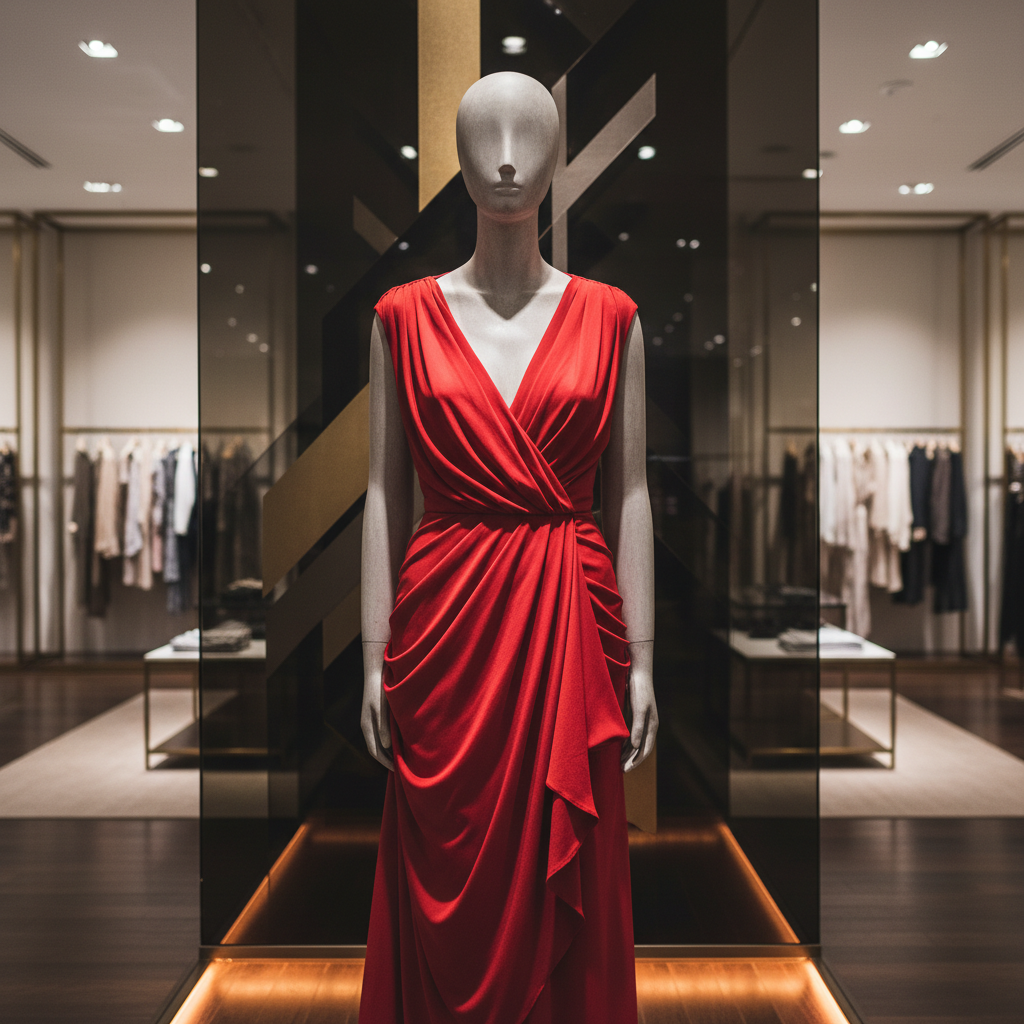
At XHLWX (led-project-light.com), a Custom Indoor LED Lighting Manufacturer based in China, our engineering team has closely monitored the development of specialized retail lighting. A recent breakthrough with our QH-TS07 track light series achieving an R9 value exceeding 50 marks a significant milestone for the garment and fashion sector.
This technical achievement directly addresses a long-standing challenge in LED lighting: the accurate and vibrant rendering of red tones, which are critical not only for merchandise but also for creating a flattering and positive customer experience in fitting rooms. The advancement moves beyond general high Color Rendering Index (CRI) to focus on the specific metric that governs reds, unlocking new potential for visual merchandisers and store designers.
What Changed — and Why It Matters Now
The headline news is the commercial viability of an LED spectrum that delivers an R9 value greater than 50. For years, the lighting industry has pursued high general CRI (Ra) values, often achieving 90 or 95. However, the Ra metric is an average of eight pastel color samples (R1-R8) and notably excludes strong, saturated colors like red (R9). Consequently, a luminaire could have an excellent Ra score but still render reds poorly, making them appear dull, flat, or even brownish. This is a critical failure in environments like fashion retail, high-end grocery stores displaying fresh meat and produce, or art galleries.
In a fashion context, the brand identity of a company like Ferrari or Coca-Cola is intrinsically linked to a specific shade of red. If a licensed apparel item looks muted under store lighting, it devalues the product and the brand.
More subtly, the fitting room experience is a crucial decision point for customers. Standard high-CRI LEDs with low R9 can make skin tones appear pale or unhealthy, undermining a customer's confidence and reducing the likelihood of a purchase.
The QH-TS07's spectrum, with its R9 > 50 performance, ensures that both the apparel's intended color and the customer's reflection are rendered faithfully and vibrantly.
This matters now more than ever for two primary reasons. First, LED chip and phosphor technology has matured to a point where this high-fidelity spectrum can be produced without a crippling penalty to luminous efficacy.
It's no longer a niche, energy-intensive solution. This development aligns perfectly with regulations like the EU's Single Lighting Regulation (SLR), ErP (EU) 2019/2020, which, while focused on energy efficiency, implicitly encourages higher quality of light by setting standards that newer, better technologies can meet more easily.
Second, as brick-and-mortar retail competes with the perfect color representation of online stores, creating a superior, true-to-life in-person experience is a key survival strategy. Accurate, appealing light is no longer a luxury—it's a competitive necessity.
The Technical Detail Behind the Headline
To understand the significance of this development, it's essential to examine the specific performance metrics of a luminaire designed for this purpose. The QH-TS07 series was engineered from the chip up to balance color quality, efficiency, and project flexibility. The table below outlines the key specifications that lighting specifiers in the EU and US markets need to evaluate.
| Parameter | Specification | Standard / Regulation | Notes |
|---|---|---|---|
| Optical System | Total Internal Reflection (TIR) Lens | N/A | Provides clean, well-defined beams with minimal light spill for precise accenting. |
| Color Metrics | Ra > 95, R9 > 50 | CIE 13.3 | Exceeds typical high-CRI, with specific enhancement for saturated red rendering. |
| Color Fidelity/Gamut | TM-30-20: Rf 92, Rg 102 | IES TM-30-20 | Excellent fidelity (Rf) combined with slight gamut expansion (Rg) for enhanced color vibrancy. |
| Color Temperature | 2700K / 3000K / 3500K / 4000K | ANSI C78.377 | Full range of options to match brand ambiance, from warm boutique to neutral modern. |
| Glare Control | UGR < 16 | EN 12464-1 | Achieved via deep-recessed LED source and optical design, ensuring high visual comfort. |
| Beam Options | 15°, 24°, 36°, 60° | N/A | Flexible options for spot, accent, and flood applications within a single project. |
| Control Protocol | DALI-2 (DT6/DT8), 0-10V, Casambi BLE | DALI-2 (IEC 62386) | Full integration with modern building management systems and wireless controls. |
| Housing | Die-cast Aluminum, IP20 | EN 60598 | Robust thermal management for long L80B10 lifespan; suitable for indoor dry locations. |
| Certifications | CE, RoHS, ErP | EU Directives | Fully compliant for the European market, meeting safety, substance, and ecodesign rules. |
| LED Chip Brand | Samsung LM-series High-CRI | N/A | Utilizes leading-edge chip technology known for its reliability and color stability. |
| Driver Brand | Tridonic / Mean Well (optional) | N/A | Premium, flicker-free drivers ensure stable performance and long-term reliability. |
What This Means for Specifiers and Buyers
The availability of cost-effective, high-R9 lighting fundamentally changes the toolkit for anyone designing or managing a retail space. It moves the conversation from simply illuminating a space to curating a visual experience. For specifiers, architects, and contractors, this presents new opportunities and considerations.
How Does a High R9 Value Directly Influence Customer Perception and Sales?
Color psychology is a powerful force in retail. Vibrant, accurately rendered colors are perceived as higher quality and more desirable. When a customer sees a deep red sweater that looks rich and luxurious, their perceived value of that item increases. A high R9 value is the technical catalyst for this perception. In fitting rooms, the effect is even more direct. Lighting that accurately renders the warm, red undertones in human skin creates a healthy, attractive reflection. Studies in retail design suggest that improving the quality of fitting room lighting can boost sales conversion rates by as much as 10-15%, as customers feel more confident in their appearance and, by extension, in the clothes they are trying on.
What Are the Project Integration Steps for Upgrading to This Type of Lighting?
For a US or European contractor or specifier, the process is straightforward but requires careful planning. First, an audit of the existing installation is necessary to log current energy consumption, light levels (lux), and color characteristics (CCT/CRI). Second, using the provided photometric data, the new layout should be modelled in software. This allows the designer to validate the new scheme and ensure it meets client expectations for brightness, uniformity, and accenting. Third, the correct product variant must be specified—choosing the right CCT to match the brand's atmosphere and the right beam angle for each location is critical. Fourth, confirm system compatibility. The QH-TS07's use of a standard 3-circuit adapter simplifies retrofits, but control system compatibility (DALI, 0-10V, etc.) must be verified. Finally, a clear ROI calculation should be presented to the client, outlining not just the energy savings over older halogen or CDM sources (often over 60%), but also the qualitative benefits and potential sales uplift.
Is There a Trade-off Between High R9 and Luminous Efficacy?
Historically, achieving a high R9 value required specific phosphor combinations that were inherently less efficient at converting electricity to light, leading to a significant drop in luminous efficacy (lumens per watt). However, the technology embedded in the latest generation of LEDs, such as those used in the QH-TS07, has drastically narrowed this gap. While a standard 80 CRI LED might reach 140 lm/W, a modern 95 CRI / R9>50 variant can now deliver a highly competitive 110-120 lm/W. This represents an efficacy penalty of only 15-20% for a dramatic, business-altering improvement in the quality of light. This level of performance comfortably meets the stringent requirements of the EU's ErP ecodesign directive, making it a compliant and sustainable choice.
Compliance Checklist (IES / LDT / DIALux / CE / RoHS / ErP)
For a seamless specification and installation process in demanding markets like the EU and USA, comprehensive documentation and certified compliance are non-negotiable. The QH-TS07 product family is supported by a full suite of technical resources:
-
IES and LDT Photometric Files: To empower lighting designers, full IES and LDT photometric files for every variant (CCT and beam angle) of the QH-TS07 are available on request. These files are laboratory-verified and provide the raw data needed for professional lighting calculations.
-
DIALux Integration: Our photometric files are fully compatible with industry-standard planning software, including DIALux Evo. This enables designers to create accurate 3D simulations of their projects, predicting illuminance levels, uniformity, and, crucially, generating UGR reports to ensure visual comfort.
-
CE & RoHS Certification: The product carries the CE mark, declaring conformity with the EU's health, safety, and environmental protection standards. It is also fully RoHS compliant, restricting the use of specific hazardous materials in its construction.
-
ErP (Ecodesign) Compliance: The QH-TS07 meets the energy efficiency and quality requirements stipulated by the Single Lighting Regulation (EU) 2019/2020. Declarations of performance, including energy class and efficacy data, are available to ensure the product can be legally placed on the EU market.
Frequently Asked Questions
Q: What Is R9 and Why Is It More Important Than the General CRI (Ra) for Fashion Retail?
R9 specifically measures how accurately a light source renders strong red colors. The general CRI (Ra) is an average of 8 pastel colors and excludes red. For fashion, where red fabrics, brand logos, and healthy skin tones are vital, a high R9 value of over 50 is crucial for fidelity. In contrast, a light with a high Ra of 90 can still have a poor R9 of 20, making reds appear disappointingly dull.
Q: Can the QH-TS07 Track Light Be Installed on Existing Track Systems?
Yes, the QH-TS07 is designed with a universal 3-circuit track adapter, making it compatible with the majority of standard European track systems. This allows for a straightforward retrofit without replacing the entire track infrastructure, significantly reducing installation time and project costs. We can also provide custom adapters for other major track systems upon request.
Q: How Does a UGR < 16 Benefit a Retail Environment?
UGR (Unified Glare Rating) measures visual discomfort from lighting. A UGR value below 16 is considered very low glare, creating a comfortable, premium shopping experience. It prevents shoppers from being distracted or annoyed by harsh light sources, allowing them to focus their attention on the merchandise for longer periods. This is achieved through deep-recessed optics and high-quality lenses.
Q: What Energy Savings Can Be Expected When Replacing 70W CDM Lamps with This LED Solution?
A typical 35W QH-TS07 LED track light can replace a 70W Ceramic Metal Halide (CDM) lamp while providing far superior light quality and control. This represents an immediate energy saving of 50%. Over a year of 12-hour daily operation, a single fixture can save approximately 153 kWh, offering a rapid return on investment through reduced electricity costs alone.
Talk to Our Engineering Team
To discuss how to leverage high R9 lighting in your next retail project or to request photometric data and samples for the QH-TS07, we invite you to consult with our experts. At XHLWX (led-project-light.com), a Custom Indoor LED Lighting Manufacturer based in China, we specialize in tailoring solutions for the demanding European and US markets, ensuring your project achieves both aesthetic excellence and complete technical compliance.
Need a tailored lighting plan for your project?
Our senior lighting designers reply within 48 hours with a free design proposal & quotation.