
Dubai Index 2025: High-Temp LED Specifiers Seek IP67+ Solutions
Insights from Dubai Index 2025 show a surge in demand for high-temp, IP67+ outdoor lighting in the Middle East. Specifiers now require robust LEDs capable of
What Changed — and Why It Matters Now
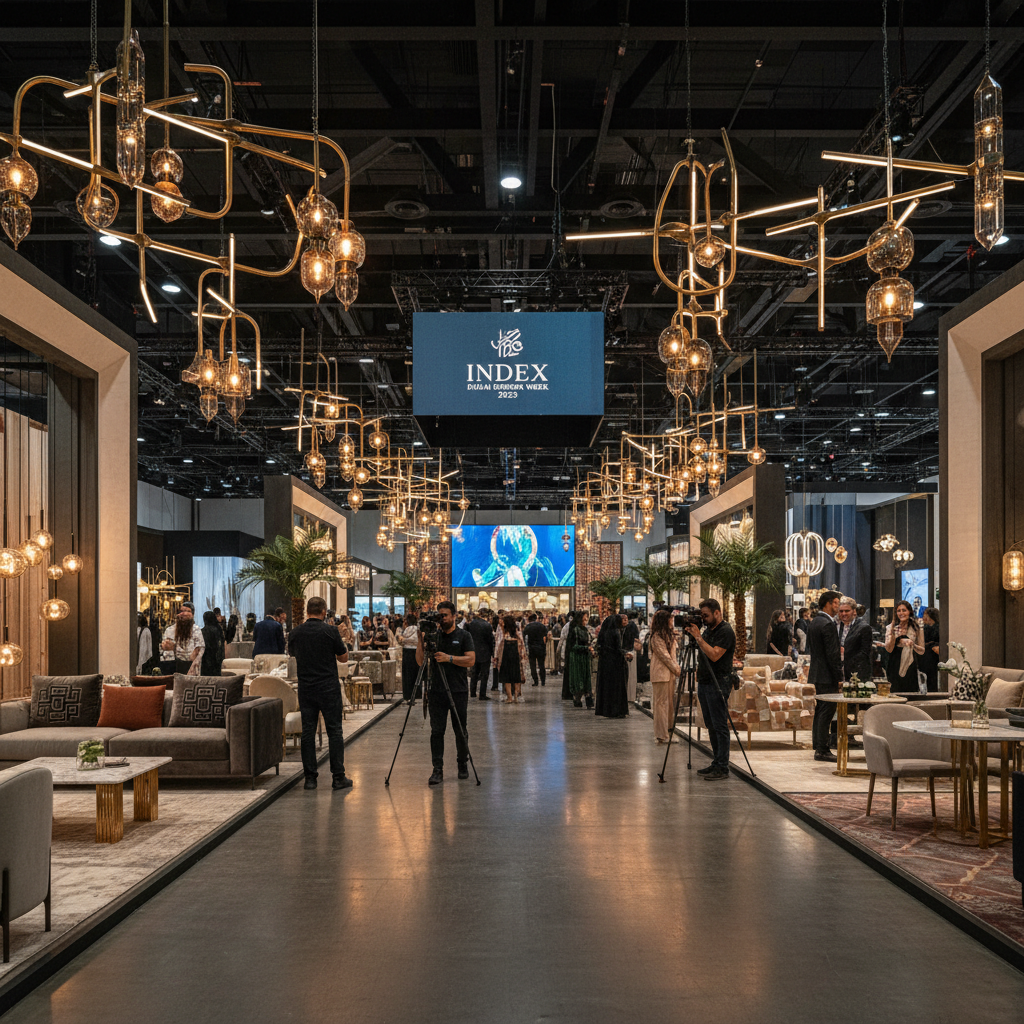
At XHLWX (led-project-light.com), a Custom Indoor LED Lighting Manufacturer based in China, our market intelligence team observed a defining trend at the recent Dubai Index Design Week 2025: a significant pivot towards highly resilient outdoor and transitional space lighting. The Middle East's construction and hospitality boom, coupled with record-breaking summer temperatures, is driving specifier demand away from standard fixtures towards solutions engineered for extreme environmental stress.
This isn't a gradual shift; it's an urgent market correction. Reports from the show floor, including a noted 37% year-on-year increase in specific inquiries for high-temperature capable luminaires at prominent component booths, underscore the urgency for robust, certified lighting that can perform flawlessly at ambient temperatures exceeding 50°C (122°F).
This demand surge is a direct consequence of high-profile project failures where inadequately specified luminaires suffered from premature failure, significant color shift, or drastic lumen depreciation within the first 12-24 months of operation. For developers and operators of giga-projects like Saudi Arabia's NEOM or the UAE's expansive hospitality resorts, the cost of replacement and associated reputational damage far outweighs the initial investment in properly engineered lighting.
The market is maturing, moving from a price-first approach to a total cost of ownership (TCO) model. Specifiers are now mandated to demand—and manufacturers are expected to provide—verifiable performance data for luminaires operating under these punishing conditions, making high-temperature testing and transparent reporting a new competitive battleground.
The Technical Detail Behind the Headline
The conversation on the floor of Dubai Index wasn't just about whether a light could survive; it was about the quality and stability of its performance under duress. A luminaire's ability to maintain its specified photometric characteristics (color quality, output, distribution) at a high ambient temperature (Ta) is the new benchmark for quality.
This requires a holistic engineering approach, encompassing chip selection, driver technology, thermal management, and material science. Below is a typical specification table for a high-performance linear LED wall grazer now being requested for facade projects in the GCC region.
| Parameter | Specification | Standard / Target | Notes |
|---|---|---|---|
| Optics - CCT | 3000K | MacAdam 2-step | Strict binning for project consistency, tested for stability at Ta 50°C. |
| Optics - CRI / TM-30 | Ra >92 | Rf >90, Rg 95-105 | High fidelity (Rf) with controlled gamut (Rg) for vibrant material rendering. |
| Optics - Glare | UGR <19 (in applicable contexts) | EN 12464-1 | Although for interiors, the principle of visual comfort is applied to exterior amenity spaces. |
| Optics - Beam Angle | 10° x 40° | Asymmetric | Precision optics for facade grazing, minimizing light spill (upward light pollution). |
| Control | DALI-2 Device Type 8 (DT8) | IEC 62386-209 | Tunable white and color control from a single DALI address, essential for dynamic facades. |
| Housing - Ingress | IP67 | IEC 60529 | Dust-tight and protected against temporary immersion up to 1m. Crucial for cleaning and rain. |
| Housing - Dimensions | Custom lengths from 300mm to 2000mm | Project Specific | Enables seamless integration with architectural features without dark spots. |
| Components | Samsung LH351H Series LEDs; Tridonic LCI Outdoor Driver | High Ta rated | Components selected for proven performance and longevity in high-heat environments. |
| Certification | CE, RoHS, ISO9001, ErP-compliant | EU/International | Ensures product safety, material compliance, quality manufacturing, and energy efficiency. |
What This Means for Specifiers and Buyers
For European, US, or other international lighting designers, architects, and contractors specifying for Middle Eastern projects, the rules of engagement have changed. Relying on standard datasheet values based on a 25°C ambient temperature is no longer viable. A proactive and forensic approach to product selection and specification is now required to mitigate risk and deliver on client expectations.
How Does Extreme Ambient Temperature Affect LED Lifetime and Color Stability?
LED performance is intrinsically linked to its operating junction temperature (Tj). As the ambient temperature (Ta) rises from a standard 25°C to 50°C, the Tj of the LED chip increases dramatically unless dissipated by an effective thermal management system.
An elevated Tj leads to accelerated lumen depreciation; a luminaire's L70 lifetime (the point at which it delivers 70% of its initial lumens) can be halved for every 10°C increase in operating temperature. For example, a 100,000-hour rated luminaire at 25°C may only last 25,000 hours at 50°C if not properly engineered.
Furthermore, this thermal stress accelerates phosphor degradation, causing a noticeable color shift (change in CCT) over a much shorter period, ruining the aesthetic uniformity of a project.
What Specification Clauses Should Be Updated for Middle East Projects post-2025?
Specifiers must embed resilience into their tender documents. Vague requirements should be replaced with precise, verifiable metrics. Consider adding clauses like the following:
- High Ambient Performance: "All exterior-rated luminaires must be supplied with supporting LM-80/TM-21 data projecting lifetime to at least L80/B10 60,000 hours at a declared ambient operating temperature of Ta = 50°C. The manufacturer must provide third-party test reports confirming stable CCT within a 3-step MacAdam ellipse over the first 6,000 hours of testing under these conditions."
- Material Durability: "All luminaire housings shall be constructed from marine-grade aluminum (6063-T6) with a minimum 100-micron powder coat finish, tested for 3,000 hours of salt spray resistance per ASTM B117. All external gaskets and seals must be silicone-based and UV-stabilized."
- Driver & Power Supply: "All LED drivers must be from a reputable manufacturer (e.g., Tridonic, Mean Well, Osram) and carry a specific warranty for operation at Ta = 50°C. Inrush current must be declared to ensure compatibility with circuit protection."
Beyond IP Rating, What Other Environmental Protections Are Crucial?
An IP67 rating is a critical starting point, but the Middle Eastern environment presents challenges beyond just water and dust. Intense, prolonged exposure to ultraviolet (UV) radiation can cause polycarbonate lenses and diffusers to yellow and become brittle, reducing light output and compromising the IP seal.
Specifiers must demand high-quality, UV-stabilized polycarbonate or glass optics. Furthermore, coastal projects in Dubai, Doha, or Jeddah are exposed to saline air, which is highly corrosive.
This necessitates the use of materials like 316L stainless steel for fasteners and mountings, and advanced pre-treatment and coating processes for aluminum housings to prevent catastrophic corrosion. Finally, fine, airborne sand can be more abrasive and intrusive than the dust used in standard IP tests, requiring robust gasket design and potentially potted internal electronics for an extra layer of protection.
Compliance Checklist (IES / LDT / DIALux / CE / RoHS / ErP)
Navigating the compliance landscape is key for international specifiers. A manufacturer's ability to provide a complete package of documentation is a strong indicator of their quality and suitability for high-stakes projects.
- IES and LDT photometric files: These are the foundational data files for any professional lighting design. For ME projects, you must now ask: "Were these files generated from tests conducted at a higher ambient temperature?" Standard files may overstate lumen output by 15-20% compared to real-world performance at 50°C. Insist on receiving dedicated high-temperature .ies or .ldt files for accurate simulations.
- DIALux: All reputable manufacturers must provide DIALux plugins or compatible photometric files. Use DIALux Evo to model your project using the high-Ta data files to accurately predict illuminance levels (e.g., ensuring an average of 250 lux on a hotel entrance driveway) and uniformity. This simulation is your best tool to verify the design and prevent costly under-lighting before a single fixture is ordered.
- CE / RoHS: The CE mark is a declaration of compliance with EU health, safety, and environmental protection standards. While not a legal requirement in the GCC, it is the de facto standard for quality and safety, and most high-end projects mandate it. RoHS (Restriction of Hazardous Substances) compliance is part of the CE marking process and ensures products are free from lead, mercury, and other harmful materials.
- ErP (Ecodesign Regulation (EU) 2019/2020): This EU regulation is increasingly relevant globally as a benchmark for energy efficiency. The ErP's focus on high luminaire efficacy (lm/W) and low standby power directly supports the sustainability goals of large-scale Middle Eastern developments. Specifying ErP-compliant products can result in energy savings of up to 60% compared to older technology, translating to millions of kWh saved over a project's lifetime and significantly lower operational expenditure.
Frequently Asked Questions
Q: What Is the Typical Lifetime Reduction for a Standard LED Driver When Operated at 50°C Instead of 25°C?
A standard LED driver's lifetime can be reduced by 50% or more for every 10°C increase above its nominal operating temperature of 25°C. For a driver rated at 50,000 hours, operating at 50°C could slash its expected life to under 12,500 hours if it's not specifically designed and heat-sinked for high ambient temperatures. This makes high-Ta rated drivers, like those from Tridonic's EXC series, essential.
Q: Is a Standard IP65 Rating Sufficient for a Recessed Ground Light in a Dubai Landscape?
No, IP65 is generally insufficient. While it protects against low-pressure water jets, it doesn't guarantee protection against temporary immersion from flash floods or high-pressure cleaning systems. For ground-recessed applications in the Middle East, a rating of IP67 is the minimum recommendation, ensuring protection against immersion up to 1 meter for 30 minutes and providing a much higher degree of reliability against water and dust ingress.
Q: How Does a High CRI Value, Like 95+, Impact a Luxury Retail or Hospitality Space?
A high CRI of 95+ ensures that colors appear natural and vibrant, as they would under sunlight. For luxury retail, this means merchandise like textiles, jewelry, and cosmetics are rendered accurately, boosting sales appeal. In hospitality, it enhances the richness of interior design materials, food presentation, and creates a more welcoming atmosphere for guests. It elevates the perception of a space from merely lit to professionally designed.
Q: Why Are TM-30 Metrics (Rf/Rg) Now Requested Alongside CRI?
While CRI measures color fidelity against 8 standard pastel colors, TM-30 uses 99 color samples and provides two key metrics: Rf (Fidelity Index, similar to CRI) and Rg (Gamut Index). Rg indicates color saturation. A specifier might request an Rf of 92 and an Rg of 105 to achieve both high fidelity and a slight boost in color vibrancy, which is impossible to specify using CRI alone. This level of control is crucial for high-end branding.
Talk to Our Engineering Team
The challenges highlighted at Dubai Index 2025 are not just regional issues; they represent the frontier of lighting engineering. Ensuring performance, compliance, and longevity in extreme environments requires a deep collaboration between specifiers and manufacturers.
At XHLWX (led-project-light.com), a Custom Indoor LED Lighting Manufacturer based in China, our engineers are equipped to navigate these complex requirements, from custom thermal management solutions to region-specific certifications. We provide the design support, transparent data, and manufacturing precision needed to deliver projects that endure the test of time and climate.
Need a tailored lighting plan for your project?
Our senior lighting designers reply within 48 hours with a free design proposal & quotation.