
Hotel Lighting Design: Mastering the CCT Gradient Strategy
Explore the CCT gradient strategy for hotels, moving from a vibrant 3000K lobby to intimate 2200K guest room accents. A guide for specifiers on enhancing gues
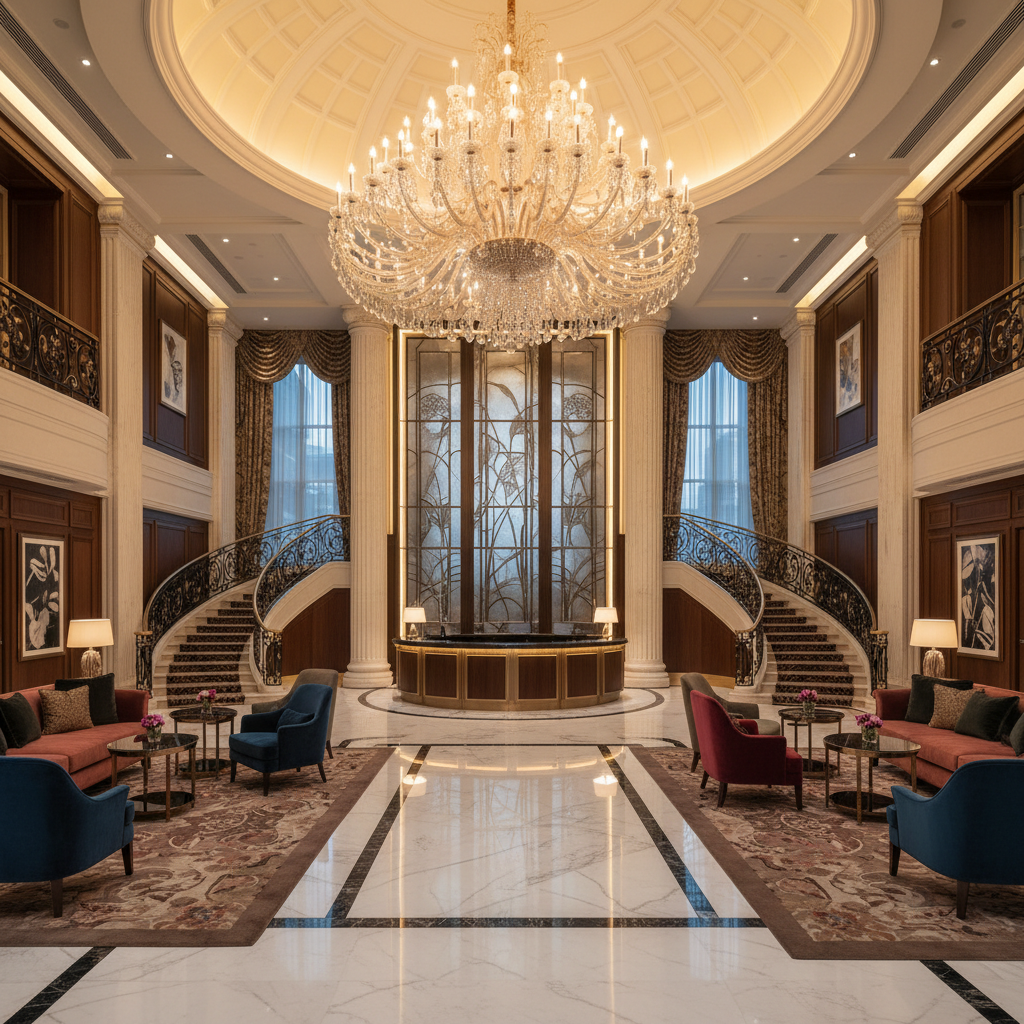
At XHLWX (led-project-light.com), a Custom Indoor LED Lighting Manufacturer based in China, we've observed a significant shift in how leading hospitality brands approach interior ambiance. The most sophisticated strategy emerging is the deliberate use of a Correlated Color Temperature (CCT) gradient to guide a guest's emotional journey.
This technique moves beyond simple illumination, using light to transition guests from the public, social energy of a lobby to the private, restful sanctuary of a guest room. A proven approach involves a welcoming 3000K in the lobby, softening to 2700K in corridors, and culminating in a restful 2700K ambient with intimate 2200K accent lighting in guest rooms.
What Changed — and Why It Matters Now
The fundamental purpose of hotel design has evolved. It's no longer merely about providing a bed for the night; it's about curating a memorable experience, promoting wellness, and reinforcing a distinct brand identity.
In this context, lighting has transformed from a utility into a primary, highly effective tool for architectural storytelling. The advent of advanced, accessible LED technology—particularly warm-dim and tunable white systems—has made the CCT gradient strategy not just possible, but practical and cost-effective.
This marks a stark departure from the static, inefficient lighting of the past. Legacy systems using halogen or compact fluorescent (CFL) bulbs offered little to no flexibility in color temperature and consumed significantly more energy.
A hotel lobby might have been locked into a single CCT, creating a monotonous experience throughout the property. Today, a single downlight can be programmed to shift its color temperature based on time of day or occupancy, adapting the environment in real-time.
Post-pandemic, traveler expectations have also pivoted towards environments that offer comfort, safety, and a sense of sanctuary. A warm, personally-scaled lighting scheme in a guest room directly addresses this need, leveraging the well-documented psychological effects of warm light on relaxation and perceived comfort.
The Technical Detail Behind the Headline
To successfully implement a CCT gradient, specifiers must demand high-performance fixtures with consistent and reliable specifications. A slight variance in CCT or poor color rendering can break the immersive effect. Below is a typical technical specification for a high-grade architectural LED downlight suitable for a luxury hotel project, designed for use across lobbies, corridors, and rooms to ensure visual consistency.
| Parameter | Specification | Standard / Target | Notes |
|---|---|---|---|
| Correlated Color Temp (CCT) | 2200K-3000K Warm-Dim | 2-Step MacAdam Ellipse | Ensures color consistency between fixtures. |
| Color Rendering Index (CRI) | Ra > 95, R9 > 80 | EN 12464-1 | Critical for rendering rich textures, food, and skin tones accurately. |
| TM-30-18 Fidelity/Gamut | Rf > 92, Rg > 100 | IES TM-30-18 | Provides a more complete picture of color rendition than CRI alone. |
| Unified Glare Rating (UGR) | < 19 | Low Glare Design | Essential for visual comfort, especially in lounges and guest rooms. |
| Beam Angles | 15° / 24° / 38° / 60° | Interchangeable Optics | Allows for a mix of accent (narrow) and ambient (wide) lighting from one fixture family. |
| Control Protocol | DALI-2 (DT6/DT8) / Casambi | IEC 62386 | DT8 for tunable white/warm-dim; Casambi for flexible wireless control. |
| Housing / Ingress Protection | Die-cast Aluminum / IP44 | UL / CE Certified | IP44 is suitable for general indoor areas and damp locations like bathrooms. |
| Chip / Driver | Bridgelux Thrive LED | Tridonic / Mean Well | Using premium components ensures longevity, performance, and reliability. |
| Certification | CE, RoHS, ErP | EU Market Access | Confirms safety, material, and energy efficiency compliance. |
What This Means for Specifiers and Buyers
The CCT gradient strategy is more than an aesthetic choice; it's a technical discipline that requires careful planning and sourcing. For specifiers and contractors in Europe and the United States, this means engaging with manufacturers who can provide not only the hardware but also the technical support and documentation to execute the vision flawlessly.
How Does a CCT Gradient Influence Guest Perception and Behavior?
The psychological impact of light's color temperature is profound. A strategic CCT gradient acts as an unspoken guide, influencing how guests feel and interact with a space.
- The Lobby (3000K): This neutral-warm temperature, often at higher illuminance levels of 300-500 lux, creates a vibrant, welcoming, and luxurious first impression. It's energizing enough for social interaction and check-in activities while remaining comfortable and upscale. The light feels clean and modern, highlighting architectural details and high-quality finishes.
- Corridors (2700K): As guests move away from public areas, the CCT drops to a warmer 2700K and illuminance is reduced to around 100-150 lux. This change signals a transition to a more private, calm zone. The slightly warmer light begins to induce a sense of relaxation, building anticipation for the personal space of the guest room.
- The Guest Room (2700K / 2200K): The room itself employs a layered approach. The general ambient light might be 2700K, providing clear, comfortable illumination for unpacking or general tasks. However, accent lighting—bedside lamps, reading lights, cove lighting—should utilize warm-dim technology to go as low as 2200K or 1800K. This ultra-warm light mimics the familiar glow of candlelight or a fireplace, promoting deep relaxation and aligning with the body's natural circadian rhythm to prepare for sleep.
What Are the Key Challenges When Implementing a Variable CCT Design?
Executing a CCT gradient requires precision. The primary challenge is color consistency.
If fixtures in the same area show even minor CCT variations, the high-end effect is immediately compromised. This is why specifying LEDs with a tight color binning, such as a 2-step MacAdam ellipse, is non-negotiable.
Sourcing all fixtures from a single, reliable manufacturer like XHLWX minimizes the risk of inconsistency.
A second challenge is the control system. While simple 0-10V dimming can reduce intensity, it cannot change CCT.
A robust digital system like DALI-2 is essential. Specifically, DALI Device Type 8 (DT8) is designed for color control, allowing for precise and smooth changes in both CCT and intensity with a single DALI address.
For retrofits or projects where new control wiring is difficult, wireless mesh systems like Casambi offer a powerful and flexible alternative. Specifiers must plan the control infrastructure early in the design phase.
Finally, budgeting must account for the higher initial cost of high-CRI, tightly-binned, and controllable LED fixtures. However, this should be framed as an investment that pays dividends in guest satisfaction, brand prestige, and significant long-term energy savings of 60-80% compared to legacy lighting, reducing operational expenditure.
How Can We Future-proof a Hotel's Lighting System?
Future-proofing is about building in flexibility. The hospitality market is dynamic, and design trends evolve.
A lighting system installed today must be adaptable for tomorrow. The most effective way to achieve this is by choosing digitally controllable lighting systems.
A DALI-2 or Casambi infrastructure allows hotel management to completely re-configure lighting scenes, adjust CCT ranges, and change dimming curves through software, without any expensive rewiring. If a restaurant space is repurposed into a quiet lounge, the lighting can be reprogrammed in hours.
Furthermore, specifying fixtures with a wide range of capabilities, such as tunable white (e.g., 2700K-6500K) or deep warm-dim (e.g., 3000K-1800K), provides the maximum possible canvas for future redesigns. This approach, combined with the inherent longevity of high-quality LEDs (L80B10 at 50,000+ hours), ensures the lighting installation remains a valuable asset for a decade or more.
Compliance Checklist (IES / LDT / DIALux / CE / RoHS / ErP)
For European and US specifiers, ensuring a project's success and compliance requires a rigorous documentation and certification process. When sourcing from a manufacturing partner, the following checklist is critical:
- Photometric Data: Insist on receiving comprehensive IES and LDT photometric files for every specified fixture. This data is the digital twin of the luminaire.
- Lighting Simulation: Use these photometric files in lighting design software like DIALux Evo or AGi32. This is essential for simulating the CCT gradient, verifying illuminance levels (lux), checking uniformity, and calculating UGR values to prevent glare and ensure visual comfort before a single fixture is ordered.
- EU Market Compliance: All products destined for the European Union must be fully compliant and clearly marked. This includes:
- CE Marking: Declares conformity with EU health, safety, and environmental protection standards.
- RoHS Directive (2011/65/EU): Confirms the restriction of specific hazardous substances like lead and mercury in the product.
- ErP Directive (EU 2019/2020): Also known as the Single Lighting Regulation, this sets strict minimum energy efficiency requirements (lm/W) and other performance criteria. Ensure your supplier provides a full declaration of conformity.
- Quality Management: Look for manufacturers with ISO 9001:2015 certification, which demonstrates a commitment to consistent quality control throughout the production process.
Frequently Asked Questions
Q: Why Is a CRI of Ra > 90 so Important in Hotel Lighting?
A high Color Rendering Index (CRI), specifically above 90 with a strong R9 value (for reds) over 50, is crucial for rendering interior finishes, artwork, and even food as the designer intended. In a guest room, it ensures skin tones look natural and healthy, not sallow. It is a key indicator of light quality that directly impacts the perception of luxury and attention to detail throughout the property.
Q: What Is the Functional Difference Between Warm-Dim and Tunable White?
Warm-Dim (or Dim-to-Warm) technology mimics incandescent bulbs by automatically warming the CCT as the fixture is dimmed. For example, a fixture might be 3000K at 100% brightness and smoothly transition to 1800K at 5% brightness. Tunable White offers independent control over brightness and CCT. A fixture could be set to 4000K at 10% brightness, or 2700K at 100% brightness, offering far greater flexibility but requiring a more complex control signal (like DALI DT8).
Q: What Are Recommended Average Lux Levels for Different Hotel Zones?
While it varies by design, typical targets are: 300-500 lux for lobbies and reception desks to ensure functionality and vibrancy. Corridors and elevator lobbies are lower, around 100-150 lux, to create a transition. Guest rooms should have layered light, with an ambient level of 150-200 lux available, but with task lighting (desks, bathrooms) reaching 300-400 lux and low-level accent lighting at 50 lux or less.
Q: How Much Energy Can a Hotel Save by Upgrading to a Controlled LED System?
The energy savings are substantial. A direct replacement of halogen or incandescent bulbs with non-dimmable LEDs can save 75-90% on lighting energy. By adding a digital control system like DALI or Casambi for daylight harvesting, occupancy sensing, and scheduled dimming, a hotel can achieve an additional 20-40% savings on top of that. Total savings often exceed 80% of the previous lighting electricity consumption.
Talk to Our Engineering Team
Implementing a sophisticated CCT gradient lighting strategy requires a partnership with a manufacturer who understands both the aesthetic vision and the technical requirements for flawless execution. The nuances of color binning, driver performance, and control system integration are critical for success. To ensure your project meets the highest standards of guest experience and technical performance, it is essential to collaborate with experts who can guide you from specification to delivery. At XHLWX (led-project-light.com), a Custom Indoor LED Lighting Manufacturer based in China, our engineers are ready to help you specify the precise luminaires and control solutions needed for your next landmark hospitality project.
Need a tailored lighting plan for your project?
Our senior lighting designers reply within 48 hours with a free design proposal & quotation.