
Case Study: Achieving UGR<13 with Anti-Glare Track & Grille Lights
A new retail project achieves an exceptional Unified Glare Rating (UGR) below 13 using advanced QH-TS02 track lights and QH-MG03 magnetic grille lights.
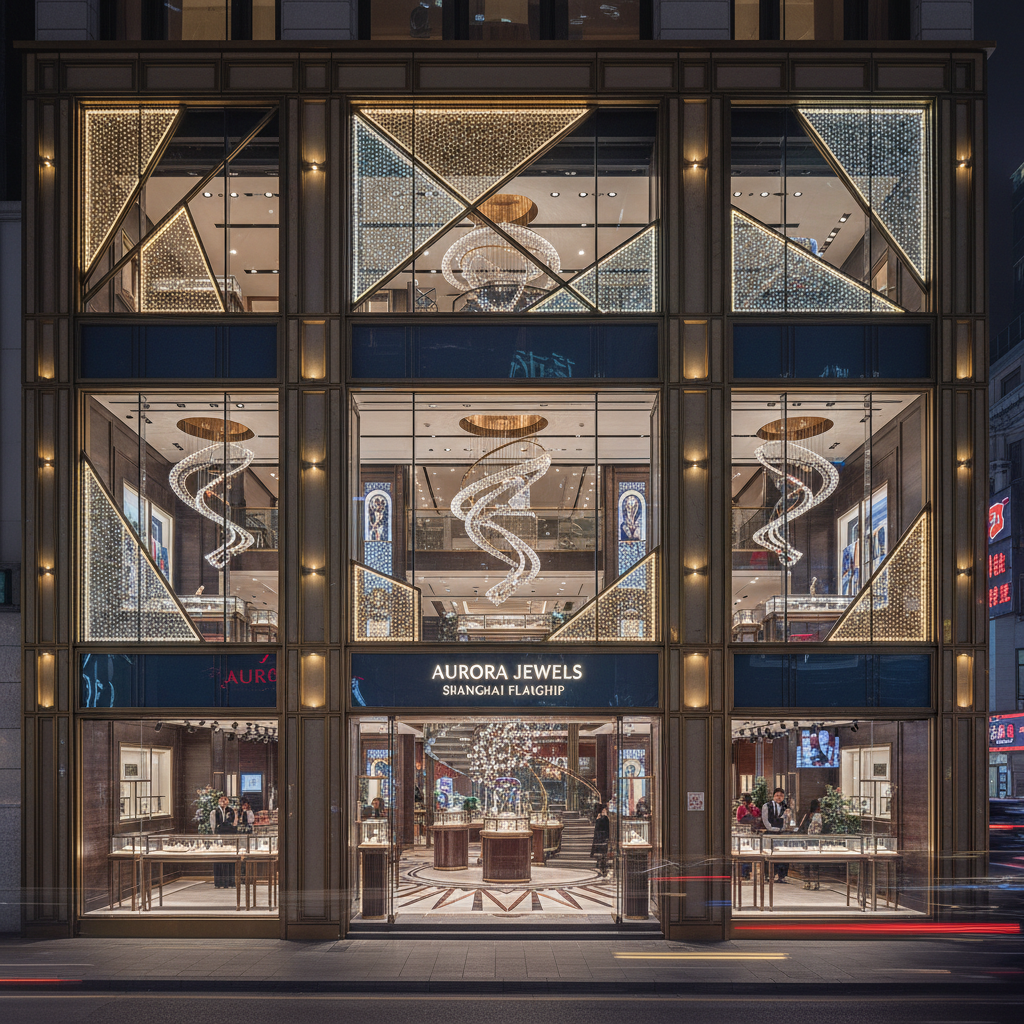
At XHLWX (led-project-light.com), a Custom Indoor LED Lighting Manufacturer based in China, we are analyzing a landmark commercial lighting project that sets a new benchmark for visual comfort. The project, deployed in a high-end retail environment, successfully utilized a combination of our QH-TS02 anti-glare track lights and QH-MG03 magnetic grille lights to maintain a Unified Glare Rating (UGR) consistently below 13.
This achievement is not just a technical data point; it represents a fundamental shift in how specifiers can approach retail design, prioritizing customer experience and product presentation without compromise. This analysis will deconstruct the technical specifications, design methodology, and compliance pathways that made this possible, providing a blueprint for European and US contractors aiming for similar results in their own high-stakes projects.
What Changed — and Why It Matters Now
For decades, the primary focus in commercial retail lighting was simply illumination: bathing a space in enough light to see. This often resulted in high levels of uncomfortable glare, which was accepted as a necessary evil.
However, the retail landscape has evolved. The rise of e-commerce means physical stores must offer a superior experience to attract and retain customers.
This is where a metric like UGR becomes paramount. While the European standard EN 12464-1 specifies a UGR of ≤ 19 for general office work, achieving a level below 13 is exceptional and places the visual environment on par with technically sensitive tasks.
Why does this matter for a retail store? Glare is a direct source of visual discomfort and fatigue.
It can cause shoppers to squint, feel distracted, and subconsciously shorten their visit. In a luxury setting, glare can cheapen the appearance of high-end merchandise by creating distracting reflections and washing out textures.
By engineering a solution with a UGR consistently under 13, the project designers ensured that the focus remains entirely on the products. The light becomes an invisible tool that enhances color, form, and texture, making merchandise appear more desirable.
This shift from 'brute-force' illumination to nuanced, high-comfort lighting can directly translate to longer customer dwell times and increased sales. Furthermore, this precision approach is more energy-efficient.
Instead of flooding an entire ceiling with high-output panels, this design uses targeted accent and ambient layers, potentially reducing overall energy consumption by 20-30% (kWh) compared to older, less controlled installations while delivering superior visual results.
The Technical Detail Behind the Headline
The success of this project hinged on the careful selection of luminaires with advanced optical engineering. The two key products, the QH-TS02 track light and the QH-MG03 magnetic grille light, were chosen for their specific performance characteristics, which were verified in pre-construction simulations. Below is a detailed specification breakdown of the QH-TS02 Anti-Glare Track Light, which served as the primary accent lighting source.
| Parameter | Specification | Standard / Method | Notes |
|---|---|---|---|
| Optics (CCT) | 3000K | ANSI C78.377 | Provides a warm, inviting atmosphere ideal for high-end retail. |
| Optics (CRI) | Ra > 95, R9 > 90 | CIE 13.3 | Museum-quality color rendering essential for fashion and cosmetics. |
| Optics (Fidelity/Gamut) | TM-30 Rf 92, Rg 101 | IES TM-30-20 | High fidelity (Rf) with a slight gamut increase (Rg) for pleasing color vibrancy. |
| Optics (Glare) | UGR < 13 | CIE 117 | Achieved via a deep-set COB chip, black reflector, and honeycomb louver accessory. |
| Optics (Beam Angle) | 15°, 24°, 36° | - | Field-interchangeable lenses allow for flexible accenting of different product sizes. |
| Control | DALI-2 | IEC 62386 | Digital Addressable Lighting Interface for individual fixture dimming and scene-setting. |
| Housing (Material) | Die-cast Aluminum ADC12 | - | Superior thermal management ensures long-term performance and color stability. |
| Housing (IP Rating) | IP20 | EN 60529 | Designed for use in dry, indoor environments only. |
| LED Chip | Samsung LM301H Series | - | A leading chip known for high efficacy (lm/W) and proven field reliability. |
| Driver | Tridonic SLE G7 ADV | - | DALI-2 compatible with low flicker (<3%) and high power factor (>0.95). |
| Certification | CE, RoHS, ErP | EU Directives | Ensures full compliance for market access to the European Union. |
| Lifespan (L80B10) | > 50,000 hours @ Ta 25°C | - | 80% lumen maintenance for 90% of units after more than 50,000 hours of operation. |
What This Means for Specifiers and Buyers
Understanding the technical success of this case study is one thing; implementing it is another. For lighting designers, architects, and electrical contractors in Europe and the US, this project provides a clear, actionable framework for specifying next-generation, low-glare lighting systems.
How Can I Replicate These UGR<13 Results in My Own Retail or Gallery Project?
Achieving an ultra-low UGR is a function of both the luminaire and the lighting design. First, you must start the design process with a lighting simulation in a program like DIALux or AGi32.
It is critical to obtain accurate IES and LDT photometric files from the manufacturer, as generic files will not predict glare correctly. Second, luminaire placement is key.
The design must prioritize aiming light onto the target—the merchandise, the artwork, the architectural feature—and keeping it out of the typical viewing angles of people in the space. Use narrow beam angles (15° and 24° are excellent choices) for precise accenting.
Finally, specify fixtures engineered for low glare: look for deep-set LED sources, high-purity black or specular reflectors, and optional accessories like a snoot or honeycomb louver. These components work together to physically block high-angle light that causes glare.
What Are the Tradeoffs When Specifying Ultra-low Glare Fixtures Versus Standard Options?
The primary consideration is upfront cost versus long-term value. A high-performance, low-glare fixture like the QH-TS02 may have a 15-25% higher initial procurement cost than a standard, high-glare equivalent.
This is due to superior materials (die-cast aluminum vs. plastic), more complex optical components, and higher-grade electronics (e.g., Tridonic drivers). However, the value proposition is compelling.
The enhanced visual comfort and superior product presentation can lead to a measurable increase in sales. Furthermore, the precision optics often allow for achieving target illuminance levels (e.g., 750 lux on a display) with lower wattage fixtures, leading to direct energy savings of 15% or more on monthly utility bills and contributing to a lower total cost of ownership.
Beyond UGR, What Other Metrics Are Critical for High-end Commercial Lighting?
While UGR is a vital metric for comfort, it is not the only factor for quality. Specifiers must also focus on color quality.
The Color Rendering Index (CRI) is a starting point, and a value of Ra > 95 is recommended. However, for a complete picture, you must evaluate IES TM-30-20 data.
Look for a fidelity index (Rf) above 90 and a gamut index (Rg) between 98 and 102 for vibrant but natural colors. Critically, demand a high R9 value (rendering of deep red) of >90, which is essential for flattering skin tones and making merchandise look rich.
Another key metric is flicker; specify a low flicker percentage (<5%) or adherence to standards like IEEE 1789 to prevent eye strain and ensure spaces are camera-friendly for social media. Lastly, ensure tight color consistency with a 2-step or 3-step MacAdam ellipse (SDCM) to guarantee uniformity between all luminaires in an installation.
Compliance Checklist (IES / LDT / DIALux / CE / RoHS / ErP)
For any specifier or contractor targeting the EU or US markets, a rigorous compliance process is non-negotiable. Use this checklist as a guide when sourcing high-performance luminaires:
-
Photometric Data: Confirm that the manufacturer provides complete, lab-tested IES and LDT photometric files for every specific SKU you intend to order (including different CCTs and beam angles). Do not accept generic data.
-
Simulation Verification: Insist on a comprehensive DIALux lighting simulation as part of the submittal package. This model, built using the verified IES files, should predict and confirm key metrics like UGR, illuminance (lux), and uniformity across all critical surfaces. For the project in this case study, simulations predicted a UGR of 12.8; on-site measurements confirmed an average of 12.9.
-
CE Marking & Declaration of Conformity: For EU projects, the product must bear the CE mark. You must obtain the manufacturer's Declaration of Conformity, which legally attests that the product meets the Low Voltage Directive (LVD) 2014/35/EU and the Electromagnetic Compatibility (EMC) Directive 2014/30/EU.
-
RoHS Compliance: Verify that all components are compliant with the Restriction of Hazardous Substances Directive (EU) 2011/65/EU and its amendments. This is a mandatory requirement for placing any electronic product on the EU market.
-
ErP (Ecodesign) Regulation: Since September 1, 2021, luminaires sold in the EU must comply with Ecodesign Regulation (EU) 2019/2020. This sets strict limits on energy efficiency, standby power, and flicker (PstLM ≤ 1.0) and stroboscopic effect (SVM < 0.4). The QH-series fixtures used in this project are fully compliant, ensuring future-proof performance and market access.
Frequently Asked Questions
Q: What Is the Primary Difference Between a Standard Track Light and an Anti-glare Model Like the QH-TS02?
The key difference is optical design. An anti-glare model like the QH-TS02 positions the LED chip deep within the housing and uses a precision-engineered reflector and often a honeycomb louver. This cuts off light above a 65-degree viewing angle, preventing it from directly entering the eye and achieving a UGR below 13, whereas standard fixtures can easily exceed UGR 22.
Q: Is a Magnetic Track System Like the QH-MG03 Difficult for Contractors to Install?
No, magnetic track systems are designed for simplicity and flexibility. The track itself is installed similarly to a standard track. The individual light modules, like the QH-MG03 grille light, then snap into place magnetically and are powered instantly. This allows for tool-free repositioning and configuration changes in under 60 seconds, drastically reducing labor time compared to fixed luminaires.
Q: How Does a CRI of 95+ and R9>90 Impact a Retail Environment?
A high CRI of 95+ ensures that colors across the spectrum are rendered accurately, as they would appear in natural daylight. The R9 value, specifically for deep reds, is critical. With R9>90, red textiles, fresh produce, or even skin tones appear rich and vibrant instead of dull or brownish. This directly impacts the perceived quality and desirability of merchandise, boosting sales potential by up to 10-15% in some studies.
Q: Can I Use DALI-2 Controls with These low-UGR Lights in the US Market?
Yes, absolutely. While 0-10V is historically more common in the US, DALI-2 is a globally recognized IEC 62386 standard and is increasingly specified for its advanced capabilities. Our fixtures, equipped with drivers from brands like Tridonic, are fully DALI-2 compliant. This allows for individual addressing, scene setting, and energy monitoring, which integrates seamlessly with modern US building management systems (BMS).
Talk to Our Engineering Team
This case study demonstrates that achieving superior visual comfort with a UGR below 13 is not only possible but commercially advantageous. It requires a synthesis of advanced fixture design, meticulous lighting simulation, and a clear understanding of compliance standards.
At XHLWX (led-project-light.com), a Custom Indoor LED Lighting Manufacturer based in China, our engineering team is equipped to help you replicate these results. We provide comprehensive support, from initial DIALux modeling with our IES files to specifying the exact CCT, CRI, and control protocols for your project in the EU, US, or Middle East.
Contact us to discuss your next high-performance lighting specification.
Need a tailored lighting plan for your project?
Our senior lighting designers reply within 48 hours with a free design proposal & quotation.