
IEC 62471 and Blue Light Hazard: A Guide to Specifying RG0/RG1
Understanding IEC 62471 is crucial. For sensitive spaces like children's areas and hotels, specifying RG0 and RG1 rated LEDs minimizes blue light hazard risks
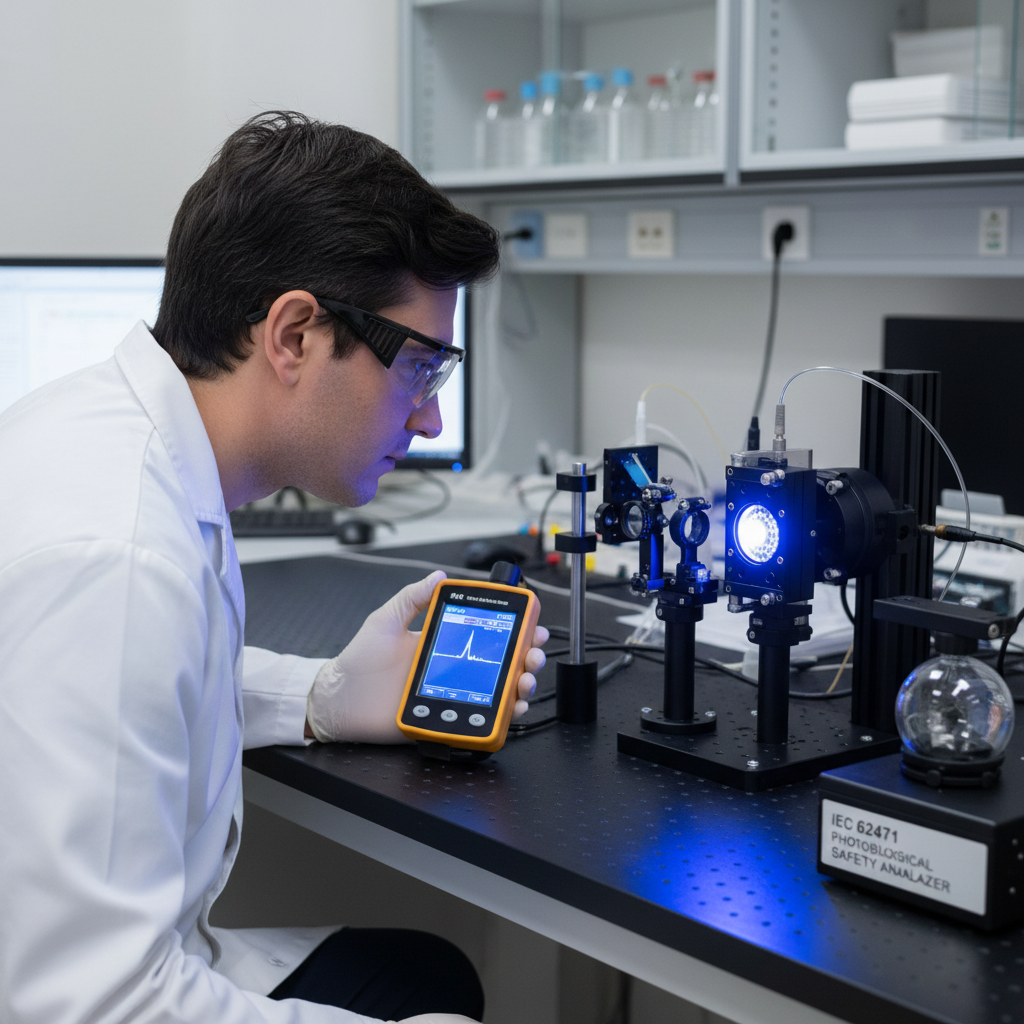
At XHLWX (led-project-light.com), a Custom Indoor LED Lighting Manufacturer based in China, we are observing a significant shift in specification priorities towards human-centric lighting, with a core focus on photobiological safety. The international standard IEC 62471, which addresses the potential hazards of light sources including LEDs, is no longer a niche concern.
For specifiers in Europe, the US, and the Middle East, understanding its classifications—particularly the Risk Groups (RG) for blue light hazard—is now critical for ensuring both compliance and occupant well-being, especially in sensitive environments like schools, healthcare facilities, and hospitality spaces.
What Changed — and Why It Matters Now
The widespread adoption of LED technology has delivered remarkable energy savings, often exceeding 70% compared to legacy lighting. However, the conversation has matured beyond simple kWh reduction.
The spectral power distribution (SPD) of early-generation, cool-white LEDs often contained a significant energy spike in the blue wavelength range (around 450 nm). This has led to increased scrutiny from health organizations and regulatory bodies regarding potential non-visual effects on humans.
IEC 62471, "Photobiological safety of lamps and lamp systems," provides the framework for assessing these risks. The standard's primary concern for general lighting is the Blue Light Hazard (BLH), which assesses the potential for photochemical damage to the retina from prolonged or intense exposure. The standard categorizes light sources into four Risk Groups:
- RG0 (Exempt Group): No photobiological hazard under any reasonably foreseeable conditions.
- RG1 (Low-Risk Group): No hazard due to normal behavioral limitations on exposure (e.g., natural aversion to bright light).
- RG2 (Moderate-Risk Group): Does not pose a hazard due to aversion responses, but may be a risk for prolonged, direct staring.
- RG3 (High-Risk Group): Hazardous even for momentary exposure.
For years, many general lighting products fell into RG1 or even RG2 without much comment. Today, that is changing.
Driven by a deeper understanding of circadian rhythm disruption and a focus on wellness in building design (e.g., WELL Building Standard), specifiers are now actively demanding products with lower risk profiles. The initial draft's recommendation is now market best practice: for children's activity areas, hotel guest rooms, healthcare settings, and residential spaces, light sources with RG0 or, at a minimum, RG1 ratings should be prioritized.
This proactive specification minimizes potential liability and demonstrably improves the quality of the lit environment.
The Technical Detail Behind the Headline
Achieving a low blue light hazard classification is a deliberate engineering choice, involving careful selection of LED chips, phosphors, and optical design. It is not an accident.
A manufacturer must be able to provide verifiable test data to support their claims. When specifying a luminaire for a sensitive application, the technical datasheet should be comprehensive.
Below is an example specification for a high-quality, low-risk linear LED luminaire suitable for such projects.
| Parameter | Specification | Standard / Protocol | Notes for Specifiers |
|---|---|---|---|
| Photobiological Safety | RG0 (Exempt Group) | IEC 62471:2006 | Crucial for sensitive areas. Always request the full test report. |
| Correlated Color Temp (CCT) | 2700K / 3000K / 3500K | ANSI C78.377 | Warmer CCTs generally have lower blue light content. |
| Color Rendering Index (CRI) | Ra > 95, R9 > 80 | CIE 13.3 | High CRI and R9 are essential for accurate color perception. |
| Fidelity/Gamut (TM-30) | Rf > 92, Rg ≈ 100 | IES TM-30-18 | A more complete color metric than CRI; vital for retail/galleries. |
| Unified Glare Rating (UGR) | <16 with microprismatic diffuser | EN 12464-1 | UGR<19 for office work; <16 indicates very low discomfort glare. |
| Beam Angle | 110° | - | Wide distribution for uniform ambient lighting. |
| Control Interface | DALI-2, 0-10V, Casambi | DALI Part 207 (DT6) | Ensures interoperability and enables advanced control strategies. |
| LED Chip / Driver | Bridgelux Thrive™ Series / Tridonic ADVANCED | - | Named components ensure reliability and performance consistency. |
| Housing IP Rating | IP44 | EN 60529 | Protected against splashes, suitable for bathrooms and kitchens. |
| Housing Length | Custom lengths from 500mm to 3000mm | - | Allows for seamless integration into architectural details. |
| Certifications | CE, RoHS, ErP, ISO9001 | EU Directives | Mandatory for EU market access; ISO9001 indicates quality management. |
What This Means for Specifiers and Buyers
Navigating the technical landscape of photobiological safety requires a shift in the procurement process. It's no longer enough to look at lumens and watts. Specifiers and contractors must become more discerning and demand better data from manufacturers to protect their projects and clients.
How Do I Verify a Product's RG Rating for a Project in Germany or the USA?
Simply accepting a manufacturer's claim on a datasheet is insufficient. You must request the full, unedited IEC 62471 test report for the exact luminaire you intend to specify.
This report should be from a reputable, accredited third-party laboratory. Check that the report's model number, CCT, and optical configuration match your specification.
For projects in the EU (like Germany) or the US, this documentation is a key part of your due diligence and can be crucial in demonstrating compliance with building codes and health and safety standards.
What Are the Design Trade-offs When Specifying Low Blue Light (RG0) Luminaires?
Specifying for photobiological safety involves balancing several factors. Typically, achieving an RG0 rating, especially with high color quality (CRI >95), may lead to a slight reduction in luminous efficacy (lumens per watt) compared to a standard CRI 80, 5000K RG2 product.
For example, an efficacy of 110 lm/W for an RG0 luminaire might be excellent, whereas a standard luminaire could reach 150 lm/W. However, the energy penalty is often minimal (5-15%) and is a small price to pay for the significant enhancement in occupant well-being and safety.
Beyond Hotels and Schools, Where Else Should RG0/RG1 Be a Priority?
The principles of low-risk lighting extend to any environment where people spend significant time, or where vulnerable populations are present. This includes:
- Healthcare & Aged Care: To protect sensitive eyes and support stable sleep-wake cycles for patients and residents.
- Residential Lighting: Particularly in bedrooms and living areas, to minimize circadian disruption in the evening.
- Museums & Galleries: To protect light-sensitive artifacts from degradation, as high-energy blue light can accelerate fading.
- 24/7 Workplaces: In control rooms or operations centers, using tunable white systems that shift to warmer, RG0/RG1 light during night shifts can improve alertness and long-term health.
Compliance Checklist (IES / LDT / DIALux / CE / RoHS / ErP)
For a European or US specifier sourcing from a Chinese manufacturer, a complete compliance package is non-negotiable. This goes beyond the IEC 62471 report. You must ensure your manufacturing partner can provide a full suite of technical files to support your design and verification process.
First, for the design phase, request the product's IES and LDT photometric files. These data files are the digital fingerprint of the luminaire's light distribution.
They are essential for importing into lighting design software like DIALux, Relux, or AGi32. This allows you to accurately simulate illuminance levels (lux), uniformity, and glare (UGR) within your architectural model, ensuring the design meets client and regulatory requirements before a single fixture is ordered.
Second, for market access and legal compliance, verify the following certifications:
- CE Mark: A mandatory declaration that the product conforms with the health, safety, and environmental protection standards for products sold within the European Economic Area (EEA).
- RoHS Directive: (Restriction of Hazardous Substances) Confirms that the product is free from specific hazardous materials like lead, mercury, and cadmium.
- ErP Directive: (Energy-related Products) The latest iteration, (EU) 2019/2020, effective since September 1, 2021, sets strict minimums for energy efficiency and certain quality metrics. A compliant product will have a new-style energy label.
This complete package—photometric data for design and certification for compliance—is the hallmark of a professional and reliable manufacturing partner.
Frequently Asked Questions
Q: What Is the Difference Between Risk Group 0 (RG0) and Risk Group 1 (RG1)?
RG0 (Exempt) means the light source poses no photobiological hazard under any normal operating conditions. RG1 (Low Risk) poses no hazard under normal behavioral limitations on exposure, like aversion responses. For a typical office luminaire, the exposure time limit for RG1 might be 10,000 seconds, while RG0 has no limit. Specifying RG0 is the safest option for sensitive applications.
Q: Does a Warmer CCT Like 2700K Automatically Guarantee an RG0 Rating?
Not necessarily. While warmer CCTs (2700K-3000K) generally have less blue light content than cooler CCTs (5000K+), the RG rating depends on the specific spectral power distribution and intensity. A poorly designed 3000K luminaire could still be RG1. Always demand the official IEC 62471 test report from your manufacturer to verify the rating for the exact product configuration.
Q: How Does the UGR Value Relate to Blue Light Hazard?
They are different metrics. UGR (Unified Glare Rating) measures visual discomfort from glare, with UGR<19 being a common standard for offices. Blue light hazard (IEC 62471) measures the potential for photochemical retinal damage. A low-glare (UGR<16) luminaire can still have a high blue light content (RG2). Both parameters must be considered independently for optimal visual comfort and safety.
Q: Can Using a Dimmer Reduce the Blue Light Risk Group of a Luminaire?
Dimming a luminaire reduces its overall intensity, which can lower the measured hazard level. A luminaire rated RG1 at 100% output might measure as RG0 when dimmed to 50% or lower. However, the official classification is based on the maximum output. Therefore, you must specify a product that is rated RG0 or RG1 at its full, 100% brightness for guaranteed compliance and safety.
Talk to Our Engineering Team
Choosing the right lighting involves balancing performance, compliance, and human well-being. The complexities of IEC 62471 and blue light hazard require careful consideration and expert guidance. At XHLWX (led-project-light.com), a Custom Indoor LED Lighting Manufacturer based in China, our engineering team is equipped to provide full technical documentation, including IEC 62471 reports, IES files for DIALux simulations, and guidance on achieving the perfect balance for your project. Contact us to discuss your specific requirements for safe, compliant, and high-quality indoor LED lighting.
Need a tailored lighting plan for your project?
Our senior lighting designers reply within 48 hours with a free design proposal & quotation.