
Hong Kong Lighting Fair: What $8M in Deals Means for 2025 EU Specs
A deep dive into the Hong Kong International Autumn Lighting Fair, where $8M deals signal key 2025 trends in custom LED lighting for EU and US markets.
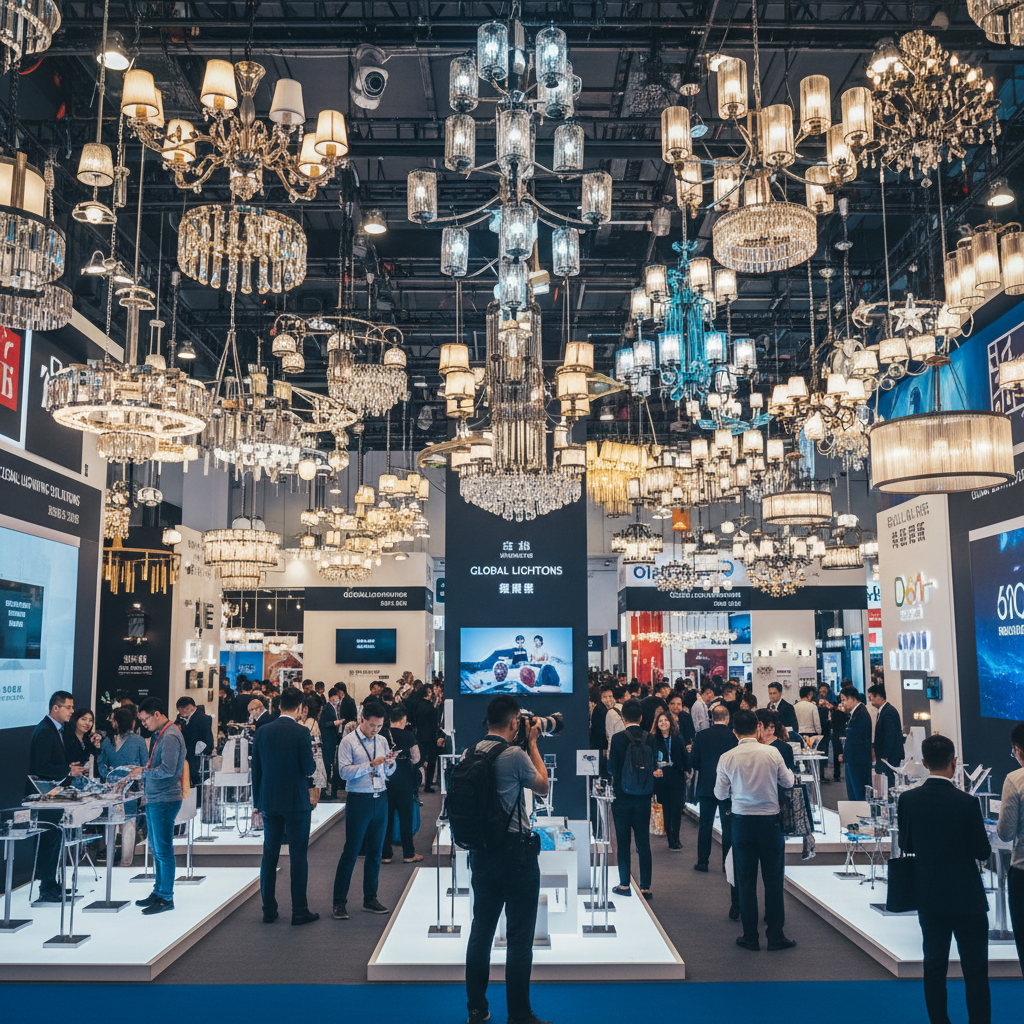
At XHLWX (led-project-light.com), a Custom Indoor LED Lighting Manufacturer based in China, we've been closely analyzing the outcomes of the recent Hong Kong International Autumn Lighting Fair. The event, a crucial barometer for the global lighting industry, has provided clear signals about the trajectory of technology, sourcing, and design for the year ahead.
One particularly telling data point emerged from a leading manufacturer, Qihang Lighting, which connected with over 120 buyers from 38 countries on-site, securing letters of intent exceeding USD 8 million. This figure is not just a testament to one company's success; it is a powerful indicator of where the market's money is flowing and what international specifiers are prioritizing for their 2025 projects.
What Changed — and Why It Matters Now
The post-pandemic landscape of international trade fairs has evolved. No longer just a meet-and-greet, events like the Hong Kong Fair (held October 27-30) have become highly transactional.
The reported $8 million in letters of intent signifies a decisive shift from tentative inquiries to committed project planning. Buyers, particularly from the EU and US, are no longer just browsing; they are sourcing specific, high-performance solutions for immediate and near-future needs.
The key takeaway is the nature of the products attracting this investment. The conversations on the exhibition floor were not about cheap, commoditized LEDs.
Instead, they centered on sophisticated systems that solve complex design and regulatory challenges.
This level of investment is being driven by several key factors:
- Regulatory Pressure: The EU's Single Lighting Regulation (SLR), Commission Regulation (EU) 2019/2020, and its updated ErP (Energy-related Products) directive are now fully in force.
This has rendered vast inventories of older lighting technology obsolete and created urgent demand for compliant, high-efficacy luminaires. Specifiers cannot afford to procure products that will not meet market access requirements. 2.
Demand for Human-Centric Lighting (HCL): The market has matured beyond simple illumination. There is a rapidly growing demand for lighting that enhances well-being and productivity.
This translates to specifications for tunable white technology, high color fidelity (CRI >95, high R9), and sophisticated color science metrics like IES TM-30-20. These features are now expected in premium office, retail, and hospitality projects. 3.
Advanced Control Integration: The Internet of Things (IoT) has firmly arrived in the lighting world. The $8 million in deals reflects a preference for luminaires with native support for open-protocol digital control systems like DALI-2 and wireless solutions like Casambi.
These systems offer granular control, energy monitoring, and integration with Building Management Systems (BMS), delivering long-term operational savings that justify higher upfront costs. Energy savings of 40-60% are now a realistic expectation from a well-commissioned DALI-2 system compared to simple on/off switching.
The Technical Detail Behind the Headline
The products underpinning these multi-million dollar agreements are not simple downlights. They are configurable, high-performance systems designed for demanding commercial and architectural applications.
The focus is on customization, performance, and compliance. Below is a representative technical specification for a flagship linear LED profile system that exemplifies the products currently in high demand by European and North American buyers.
This is the level of detail that specifiers must now engage with.
| Parameter | Specification | Standard / Regulation | Notes |
|---|---|---|---|
| Optics - CCT | 2700K - 6500K Tunable White | ANSI C78.377 | MacAdam 3-step ellipse for consistent color across entire installation. |
| Optics - CRI | Ra > 95, R9 > 80 | CIE 13.3-1995 | Essential for accurate color rendering in retail, gallery, and high-end residential. |
| Optics - TM-30 | Rf > 92, Rg ~100 | IES TM-30-20 | Provides a fuller picture of color rendition beyond CRI; vital for design-led projects. |
| Optics - UGR | UGR < 16 (with appropriate optic/louvre) | EN 12464-1 | Compliant for intensive computer-based work, exceeding standard office requirements. |
| Control System | DALI-2 DT8, Casambi BLE, 0-10V | IEC 62386 | Offers options from simple dimming to full IoT-ready color tuning and diagnostics. |
| LED Chip | Samsung LM-Series High Efficacy | - | Delivers up to 160 lm/W at the luminaire level, ensuring ErP compliance. |
| Driver | Tridonic / Mean Well DALI-2 Certified | - | Guarantees interoperability and comes with a standard 5-year manufacturer warranty. |
| Housing - IP Rating | IP44 | EN 60529 | Protected against dust ingress and water splashes from any direction. |
| Housing - Customization | Custom lengths up to 5800mm per section | - | Allows for seamless, architectural-grade installations with minimal joints. |
| Certification | CE (LVD/EMC/RoHS), ErP, ISO9001 | EU Directives | Full suite of documentation required for frictionless import and sale in the EU. |
What This Means for Specifiers and Buyers
The shift towards these highly specified systems places new responsibilities on specifiers, lighting designers, and procurement managers. Simply selecting a product from a catalogue is no longer sufficient. Engaging with manufacturers on a deeper technical level is now mandatory to ensure project success and avoid costly compliance failures.
How Do I Verify a Manufacturer's Claims of High CRI and TM-30 Performance?
This is a critical question as color quality is paramount in modern design. First, always request the full LM-79 or EN13032-4 test report from an accredited third-party laboratory for the specific luminaire configuration you are specifying. Don't accept a generic report for the LED chip alone. Second, ask for the IES TM-30-20 full graphical report, not just the Rf and Rg values. This visual plot shows how the light source renders all 99 color evaluation samples, giving you a much richer understanding of its performance. Finally, for critical projects, there is no substitute for a physical sample. Evaluate it with your own eyes and, if possible, a handheld spectrometer to confirm the CCT, CRI, and spectral power distribution on-site.
What Are the Real-world Implications of Choosing DALI-2 Over Simpler Control Systems?
While 0-10V offers basic dimming, DALI-2 (Digital Addressable Lighting Interface) is a two-way communication protocol that transforms a lighting system into an intelligent network. The key implication is Total Cost of Ownership (TCO). While DALI-2 drivers and controllers may add 15-20% to the initial luminaire cost, the operational savings are substantial. Individual luminaire addressing allows for easy scene setting and reconfiguration without rewiring. More importantly, DALI-2 devices (under the D4i certification) can monitor and report their own energy usage, operating hours, and failure status. When integrated with daylight and occupancy sensors, this can reduce lighting energy consumption by up to 60% and streamline maintenance, drastically lowering the building's operational expenditure over its lifecycle.
When Specifying Custom-length Linear Lighting, What Pitfalls Should I Avoid?
Customization is a major advantage of working with manufacturers like XHLWX, but it requires careful planning. The primary pitfall is voltage drop. For 24V DC systems, runs exceeding 5 meters can experience a visible dimming at the far end if not engineered correctly. Always confirm the maximum single-feed run length with the manufacturer. For longer continuous runs, you must plan for multiple power injection points. Another issue is cutting increments; confirm the manufacturer's module length (e.g., 50mm or 100mm) to ensure your specified lengths are achievable without awkward gaps. The best practice is to provide the manufacturer with architectural drawings early in the process and use their photometric data in a DIALux simulation to model not just the light output, but the physical placement of drivers and power feeds.
Compliance Checklist (IES / LDT / DIALux / CE / RoHS / ErP)
For any European or US contractor sourcing directly from China, a robust due diligence process is non-negotiable. Use this checklist when vetting a potential manufacturing partner:
-
Photometric Data: Ask for IES and LDT photometric files for the exact luminaire configuration being ordered. These files are the digital blueprint of the luminaire's light distribution and are absolutely essential for professional lighting design and verification in software like DIALux. Confirm that the files are based on real-world measurements from a goniophotometer, not just theoretical simulations.
-
CE Declaration of Conformity (DoC): Do not accept a simple CE logo as proof of compliance. Request the full DoC, which must be accompanied by test reports for the Low Voltage Directive (LVD - typically EN 60598-1) and the Electromagnetic Compatibility (EMC) Directive (typically EN 55015). A legitimate manufacturer will have these readily available.
-
RoHS Compliance: The Restriction of Hazardous Substances directive is part of the CE marking process. Ask for the RoHS 3 (Directive (EU) 2015/863) compliance documentation, which may involve material declarations or testing reports.
-
ErP Regulation: This is a crucial point for EU market access. Ask the manufacturer if the product complies with (EU) 2019/2020. They must be able to provide the product's energy efficiency class (A to G), its on-mode power consumption (Pon), and its standby power (Psb). Ideally, they should have registered the product in the EU's EPREL database and be able to provide you with the registration ID.
-
Quality Management: Request a copy of their ISO9001:2015 certificate. This demonstrates that a formal quality management system is in place for design, development, and production. Inquire about their factory audit policies for international clients.
Frequently Asked Questions
Q: What Is the Primary Benefit of Specifying Tunable White Lighting?
The main benefit is the ability to dynamically control the Correlated Color Temperature (CCT) of the light, typically from a warm 2700K to a cool 6500K. This supports human-centric lighting principles by allowing the light to mimic the natural progression of daylight, which studies have shown can support circadian rhythms, improve alertness during the day, and promote relaxation in the evening. This feature adds significant value in office, healthcare, and educational environments.
Q: Why Is a UGR Rating of <19 so Important for Office Lighting?
A Unified Glare Rating (UGR) of less than 19 is a specific requirement outlined in the European standard EN 12464-1 for spaces where tasks involving display screen equipment are performed. This low glare rating is crucial for visual comfort, preventing eye strain and headaches for office workers. A comfortable visual environment has been directly linked to higher productivity and employee well-being, making UGR < 19 a non-negotiable specification for modern workplaces.
Q: What Is a Realistic Lead Time for a Custom LED Lighting Order from China to Europe?
A realistic timeline involves two main phases. For a custom order, production typically takes 4 to 6 weeks, depending on complexity and material availability. Following production, sea freight from a major Chinese port to a European hub like Rotterdam or Hamburg generally takes an additional 30 to 45 days, plus another 5-7 days for customs clearance and inland delivery. Therefore, a specifier should budget for a total lead time of approximately 10 to 13 weeks.
Q: How Do I Use the IES or LDT Files You Provide?
These files are essential tools for lighting designers and engineers. You import them into lighting simulation software, with DIALux Evo being the industry standard in Europe. Inside the software, you can place the virtual luminaires in a 3D model of your architectural space. The program then uses the IES/LDT data to accurately calculate and visualize illuminance levels (lux), uniformity, and glare ratings (UGR), ensuring your design meets all required standards before a single physical fixture is ordered.
Talk to Our Engineering Team
The insights from the Hong Kong fair are clear: the future of lighting is smart, efficient, and human-centric. Navigating the technical and regulatory complexities requires a manufacturing partner with deep engineering expertise. The $8 million in intent-to-buy agreements wasn't won on price alone; it was won on technical capability, documented compliance, and the ability to deliver sophisticated, customized solutions. At XHLWX (led-project-light.com), a Custom Indoor LED Lighting Manufacturer based in China, our team lives these details every day. We invite you to bring us your most demanding specifications and see how we can turn market trends into project success. Contact our engineering team today to discuss your next project's lighting requirements.
Need a tailored lighting plan for your project?
Our senior lighting designers reply within 48 hours with a free design proposal & quotation.