
Qihang's 2025 CE Push: What It Means for Magnetic Track Lighting
Qihang Lighting is targeting Q3 2025 for full CE compliance on new track and magnetic lighting, signaling a major shift for EU specifiers. This analysis break
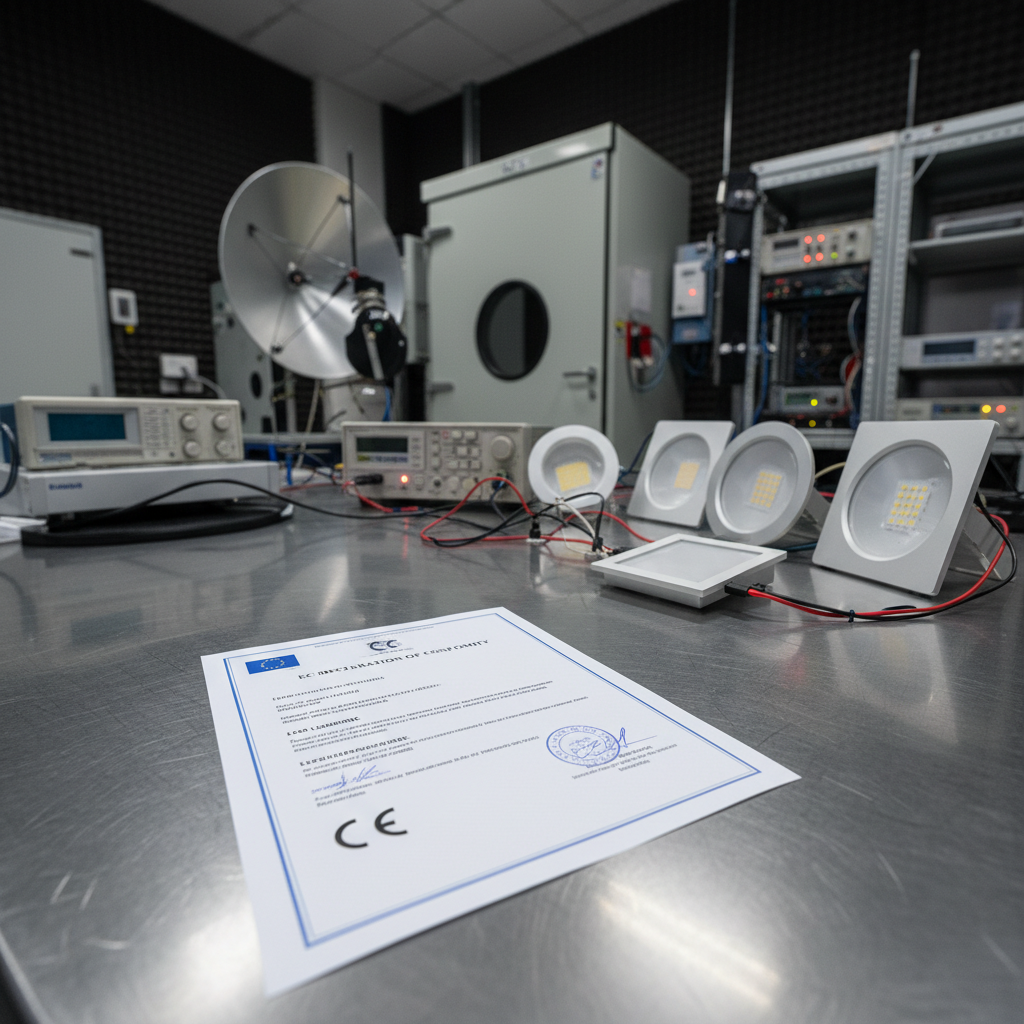
At XHLWX (led-project-light.com), a Custom Indoor LED Lighting Manufacturer based in China, we closely monitor industry shifts that impact our European, US, and Middle Eastern partners. A recent announcement from Qihang Lighting, a notable volume manufacturer, has caught the attention of the specification community.
Their stated goal to have a new batch of track and magnetic lighting products achieve full European standard compliance by Q3 2025 is more than a simple product update; it’s a bellwether for the entire supply chain. This move highlights the increasing non-negotiable importance of comprehensive compliance, encompassing not just safety but the stringent performance metrics of the latest Ecodesign regulations.
What Changed — and Why It Matters Now
The headline announcement—Qihang targeting Q3 2025 for full compliance—is significant because it puts a concrete timeline on a transition many manufacturers have been navigating with varying degrees of success. For a high-volume producer to publicly commit to this schedule for complex products like modular magnetic systems indicates a market-wide acceptance that the era of ambiguous or partial compliance is over.
The term "Dual CE" is likely industry shorthand for passing both the Low Voltage Directive (LVD) and Electromagnetic Compatibility (EMC) tests. However, the real story for the EU market lies in the additional, and far more challenging, layer of the Ecodesign for Energy-related Products (ErP) Directive and the associated Single Lighting Regulation (SLR), specifically (EU) 2019/2020.
These regulations, fully in effect since September 1, 2021, moved the goalposts from basic safety to mandated performance. They introduced strict minimums for luminous efficacy (lumens per watt), limits on standby power consumption, and, crucially, quantifiable metrics for light quality, including flicker (PstLM) and stroboscopic effect (SVM).
A 2025 timeline for new products suggests a ground-up re-engineering effort. Manufacturers cannot simply test and certify old designs; they must integrate higher-efficacy LED chips, more sophisticated drivers, and improved thermal management to meet the new baseline.
This matters for specifiers because it will bifurcate the market: fully compliant, higher-performing products on one side, and obsolete, legally risky stock on the other.
The Technical Detail Behind the Headline
To understand the engineering challenge involved, it’s helpful to look at the typical specifications required for a high-end, compliant magnetic track light module intended for a commercial or retail project in Europe. The product must deliver on performance, control, and longevity while being fully documented and certified. A manufacturer's ability to provide a detailed data sheet is the first sign of a professional, compliant product.
Here is an example specification table for a representative luminaire that would meet these advanced requirements:
| Parameter | Specification | Standard / Goal | Notes |
|---|---|---|---|
| Optics (Color) | CCT: 3000K, CRI: Ra >95, R9 >90 | EN 12464-1 | High color rendering is crucial for retail and hospitality. |
| Optics (Quality) | TM-30-18: Rf 92, Rg 101 | IES TM-30 | Provides a more complete picture of color fidelity than CRI alone. |
| Optics (Glare) | UGR < 16 | EN 12464-1 | Critical for task areas; achieved via deep-recessed source and optical lens. |
| Optics (Beam) | 15° / 24° / 36° / 55° | Application Dependent | Interchangeable optics offer design flexibility. |
| Control | DALI-2 Addressable Driver | IEC 62386 | Enables individual control, energy monitoring, and diagnostics. |
| Component | Tridonic / Mean Well Driver, Samsung LM281B+ Chips | Brand Recognition | Using recognized component brands ensures reliability and performance. |
| Housing | IP20, Aluminum 6063, L=150mm | Durability | Standard for indoor dry locations; quality aluminum for heat dissipation. |
| Certification | CE-LVD, CE-EMC, RoHS, ErP | EU Market Access | Declaration of Conformity must list all relevant directives. |
| Efficiency | >110 lm/W (luminaire efficacy) | (EU) 2019/2020 | Meets strict ErP requirements for energy savings. |
| Flicker | PstLM ≤ 0.7, SVM ≤ 0.3 | (EU) 2019/2020 | Well below the legal limits, ensuring high visual comfort. |
What This Means for Specifiers and Buyers
The industry's pivot towards enforced, comprehensive compliance has direct consequences for project planning, budgeting, and risk management. Specifiers and electrical contractors must adapt their procurement processes to navigate this new landscape effectively.
How Will This Certification Push Affect Product Availability and Cost?
In the short term, expect a contraction in the number of available low-cost options, as many will not meet the ErP criteria. This may lead to some supply chain turbulence as distributors clear old, non-compliant stock and manufacturers ramp up production of new designs.
The new, compliant products will likely have a 10-20% higher upfront cost. This increase is not arbitrary; it reflects the investment in higher-grade components like more efficient LED chips and advanced drivers that eliminate flicker and meet standby power rules.
However, the Total Cost of Ownership (TCO) will be significantly lower, driven by energy savings of up to 30% over previous-generation LEDs and much longer operational lifetimes, reducing maintenance cycles.
What Steps Should a Specifier Take When Sourcing Track Lighting for a 2025 Project?
Due diligence is paramount. The CE mark on a product is no longer sufficient proof of compliance.
For any EU project, specifiers must demand the full, signed Declaration of Conformity (DoC) and ensure it explicitly references the key directives: LVD (2014/35/EU), EMC (2014/30/EU), RoHS (2011/65/EU), and ErP (EU) 2019/2020. Ask for the underlying technical file, including test reports from accredited labs.
Crucially, for products subject to energy labelling, verify their registration in the European Product Registry for Energy Labelling (EPREL) database. This public-facing database is the ultimate proof that a product is legally placed on the EU market.
Beyond CE, What Other Performance Metrics Define a High-quality Magnetic Track System?
Compliance is the floor, not the ceiling. True quality is found in the details that compliance testing doesn't cover.
Evaluate the mechanical integrity of the system: are the magnetic connections strong and secure? Is the track itself robust?
Consider the modularity and breadth of the ecosystem. A superior system offers a wide range of easily swappable modules, including adjustable spotlights, wall washers, general linear lights, and decorative pendants.
Advanced control options like Casambi (Bluetooth Mesh) offer wireless flexibility that DALI-2 cannot, which can be a deciding factor in retrofit projects. Finally, look for excellence in optical design—options for different beam angles, accessories like honeycomb louvers for glare control, and data-backed color fidelity metrics like TM-30 Rf and Rg values.
Compliance Checklist (IES / LDT / DIALux / CE / RoHS / ErP)
To ensure your lighting specification is robust, auditable, and future-proof, use this checklist when engaging with any manufacturer:
- Declaration of Conformity (DoC): Request the signed DoC. Verify it is current and lists all relevant regulations, including LVD, EMC, RoHS, and ErP (SLR).
- ErP/SLR Technical Data: Demand the test report verifying compliance with (EU) 2019/2020. Key values to check are luminous efficacy (lm/W), standby power (<0.5W), flicker (PstLM ≤ 1.0), and stroboscopic effect (SVM ≤ 0.4).
- Photometric Files: Insist on receiving full IES and LDT photometric files for every luminaire in the project. Without these, accurate lighting calculations are impossible.
- Lighting Design Support: Confirm that the manufacturer can provide support for professional lighting design software. The ability to simulate performance in DIALux is the industry standard for verifying illuminance levels, uniformity, and UGR before a single fixture is ordered.
- Quality Management: Check if the manufacturer holds an ISO 9001:2015 certification. This doesn't guarantee a good product, but it demonstrates a commitment to controlled, repeatable manufacturing processes and quality control.
- EPREL Database Registration: For any luminaire that requires an energy label, ask for its EPREL registration number and verify it online. This is a simple, definitive check for legal compliance in the EU.
Frequently Asked Questions
Q: What Is the Difference Between the Old CE and the New ErP-compliant CE?
The traditional CE mark covers safety (LVD) and electromagnetic interference (EMC). The new Ecodesign regulation (ErP/SLR), mandatory since late 2021, adds strict performance requirements. This includes a minimum luminous efficacy (lm/W), limits on standby power consumption to below 0.5W, and strict metrics for flicker (PstLM) and stroboscopic effect (SVM). A product must meet all these to be legally sold in the EU.
Q: Why Is a UGR of <19 so Important for Track Lighting in Offices?
A Unified Glare Rating (UGR) below 19 is the standard for comfortable office environments per EN 12464-1. For track lighting, which often uses directional spotlights, achieving low glare is critical to prevent eye strain and improve worker productivity. This requires sophisticated optical design, including deep-set LEDs and high-quality reflectors or lenses, not just a basic lamp.
Q: Can I Use a 0-10V Track System with DALI-2 Controls?
Not directly. 0-10V and DALI-2 are different control protocols. While 0-10V offers simple analog dimming, DALI-2 provides digital, addressable control for individual luminaires, plus diagnostics and energy monitoring. To integrate them, you'd need a protocol converter gateway. For new projects, it is far more efficient to specify a consistent DALI-2 system from the track to the drivers for maximum functionality.
Q: How Much Energy Can an ErP-compliant LED Track Light Save?
Compared to an older halogen track light system, a modern ErP-compliant LED equivalent can reduce energy consumption by 80-90%. Even compared to an early-generation, non-compliant LED product from 5 years ago, the new efficacy standards (often >120 lm/W) can yield energy savings of 20-30%, leading to a rapid return on investment and significantly lower lifetime kWh usage.
Talk to Our Engineering Team
The evolving regulatory landscape in Europe underscores the need for deep technical expertise and transparent manufacturing partners. Announcements like Qihang's confirm that compliance is now the primary ticket to market entry.
For specifiers, this is a positive development, promising a future of higher-quality, more efficient, and safer lighting products. Navigating this transition requires a partner who is ahead of the curve, not just reacting to it.
At XHLWX (led-project-light.com), a Custom Indoor LED Lighting Manufacturer based in China, our engineering team has been designing products to meet and exceed these standards for years. If you have an upcoming project with complex compliance or performance requirements, contact us to discuss how we can ensure your specification is delivered, certified, and commissioned without compromise.
Need a tailored lighting plan for your project?
Our senior lighting designers reply within 48 hours with a free design proposal & quotation.