
Museum Lighting Specification: UV/IR and Artifact Protection Guide
Specialized museum lighting now demands UV radiation below 75µW/lm and strict illuminance control (50-150lx) to prevent irreversible damage to cultural artifa
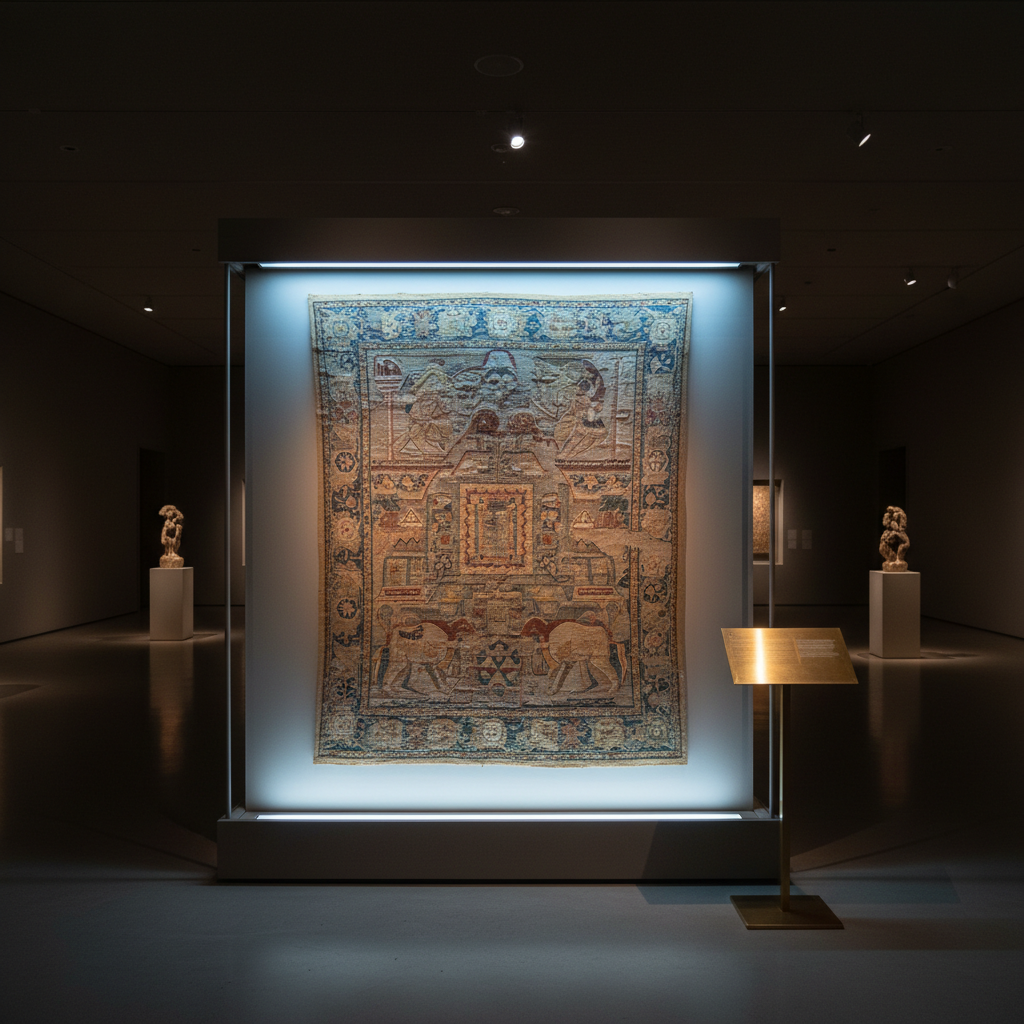
What Changed — and Why It Matters Now
At XHLWX (led-project-light.com), a Custom Indoor LED Lighting Manufacturer based in China, we are closely monitoring the evolving standards for museum and gallery illumination. The latest guidance tightens requirements for protecting priceless cultural relics from light-induced damage, moving beyond simple brightness control to focus on the invisible spectrum: ultraviolet (UV) and infrared (IR) radiation.
This shift codifies best practices, demanding that professional fixtures deliver UV radiation below 75 microwatts per lumen (µW/lm) and maintain carefully controlled illuminance levels, often between a delicate 50 to 150 lux.
For decades, the primary concern was visible light causing fading. However, conservation science has proven that the high-energy photons of UV light and the thermal stress from IR radiation are far more destructive, causing irreversible photochemical and physical damage.
This includes pigment fading, yellowing of varnishes and paper, and making textiles brittle. While the transition from UV-heavy fluorescent and IR-heavy halogen lamps to LED technology has been a major step forward, not all LEDs are created equal.
The quality of the LED chip and its phosphor coating determines the residual UV output, making expert specification more critical than ever.
This renewed focus matters because the stakes are incredibly high. A poorly specified lighting system can cause more damage to a 17th-century oil painting in a few years than it experienced in the previous 300.
The guidelines, heavily influenced by documents like the International Commission on Illumination's CIE 157:2004, are no longer recommendations but firm requirements in grant applications, loan agreements, and insurance policies for major collections. For specifiers, contractors, and museum directors, adherence is now a matter of professional diligence and cultural stewardship.
The Technical Detail Behind the Headline
The move towards tighter conservation standards is directly reflected in the technical specifications required for modern museum-grade luminaires. A generic commercial LED fixture is insufficient for these applications. Below is a typical specification table for a high-end, custom track spotlight designed for gallery use, demonstrating the necessary parameters that specifiers in Europe and the US should demand.
| Parameter | Specification | Standard / Directive | Notes |
|---|---|---|---|
| Optics: Color Temperature (CCT) | 2700K / 3000K / 3500K | User-defined | Selectable CCT allows tailoring light to the specific era and material of the artwork. |
| Optics: Color Rendition (CRI / R9) | Ra > 97, R9 > 90 | IES TM-30-20 | An R9 value above 90 is critical for rendering deep reds accurately, essential for classical paintings. |
| Optics: Color Fidelity (TM-30) | Rf > 95, Rg ≈ 100 | IES TM-30-20 | Ensures colors are rendered faithfully (Rf) without being artificially oversaturated (Rg). |
| Optics: Glare Control (UGR) | UGR < 13 | EN 12464-1 | Achieved via deep-set optics and accessories like honeycomb louvers to ensure visitor comfort. |
| Optics: Beam Angle | 10° – 60° Motorized Zoom | N/A | Allows precise framing of artifacts of different sizes without light spill, adjustable remotely. |
| Hazardous Radiation: UV Output | < 70 µW/lm | CIE 157:2004 | Below the 75 µW/lm threshold, protecting sensitive organic materials from photochemical decay. |
| Control Protocol | DALI-2 DT8 (Tunable White) | IEC 62386 | Enables precise dimming and CCT tuning for individual fixtures or groups, crucial for scene-setting. |
| Housing & Mechanics | Extruded Aluminum, IP20 | N/A | Provides superior thermal management and durability. IP20 is standard for dry indoor locations. |
| Certification (EU) | CE, RoHS, ErP | EU 2019/2020 | Mandatory for the European market, ensuring safety, material compliance, and energy efficiency. |
| LED Chip / Driver | Bridgelux Vesta® Series / Tridonic Premium | Manufacturer Specific | Using named, high-quality components ensures performance consistency, longevity, and flicker-free operation. |
What This Means for Specifiers and Buyers
Navigating these tightened specifications requires a more collaborative and data-driven approach between the lighting manufacturer, the specifier, and the end-client curator. Simply choosing a fixture based on its look or wattage is no longer viable. The conversation must now center on spectral data, precise optical control, and long-term conservation impact.
How Do I Ensure My Lighting Plan Meets Both Conservation and Aesthetic Goals?
This is the central challenge: balancing the need to see the art with the need to protect it. The process begins with classifying the artifacts by light sensitivity.
For highly sensitive items like manuscripts, textiles, and watercolors, illuminance must be kept at or below 50 lux. For more robust objects like oil paintings, levels can rise to 150-200 lux.
For stone or metal sculptures, 300 lux may be acceptable. A key strategy is managing the total annual light exposure (measured in lux-hours).
Using a robust control system like DALI-2 allows for automated scenes where light levels are reduced when galleries are empty, significantly lowering the annual exposure and saving up to 40% in energy (kWh) costs.
What Are the Main Differences Between Specifying for a US vs. a European Museum Project?
While the science of conservation is universal, the regulatory landscapes differ. For European projects, CE marking is mandatory, confirming compliance with health, safety, and environmental protection standards.
The RoHS directive restricts hazardous substances, and the ErP (EcoDesign) Directive 2019/2020 sets stringent minimum energy efficiency and performance requirements. In the United States, safety certification from a Nationally Recognized Testing Laboratory (NRTL), such as UL or ETL, is the primary requirement.
A manufacturer familiar with both domains can provide correctly certified products and documentation, avoiding costly customs delays and compliance failures.
Beyond the Luminaire, What Other System Components Should I Consider?
Modern museum lighting is a system, not just a collection of lights. The control network is paramount.
DALI-2 is the gold standard in Europe for wired, interoperable control, offering individual fixture addressability. For historic buildings or temporary exhibitions where new wiring is impossible, wireless mesh systems like Casambi offer incredible flexibility.
The choice of drivers is also crucial; a quality driver from a brand like Tridonic or Mean Well ensures smooth, deep dimming down to 0.1% and flicker-free performance, which is vital for visitor comfort and for digital recording or broadcast from the gallery.
Compliance Checklist (IES / LDT / DIALux / CE / RoHS / ErP)
To ensure a project meets modern museum standards, specifiers should follow this verification checklist when working with a lighting manufacturer:
-
Request Full Photometric Data: Do not proceed without comprehensive luminaire data. This must include IES and LDT photometric files for use in lighting design software. These files contain the exact light distribution pattern of the fixture.
-
Perform a DIALux Simulation: Use the IES/LDT files to build a 3D model of the gallery in a program like DIALux Evo. This simulation is non-negotiable for verifying that illuminance levels (lux) on the artwork surfaces meet the strict 50-150 lux targets. It also allows you to predict and mitigate glare (UGR) before a single fixture is ordered.
-
Demand a Spectral Power Distribution (SPD) Report: This report is the only way to definitively verify the color rendering claims (CRI, TM-30) and, most importantly, the UV output. The report should explicitly state the UV radiation value in µW/lm and show it is well below the 75 µW/lm limit.
-
Verify All Certifications: For EU projects, demand Declarations of Conformity for CE, RoHS, and ErP (Regulation (EU) 2019/2020). For US projects, ask for the UL or ETL file number. Reputable manufacturers will also hold an ISO9001:2015 certificate for their quality management system.
Frequently Asked Questions
Q: Is a High CRI Always Better for Museum Lighting?
Not necessarily in isolation. While a CRI of 95+ is a baseline, you must also consider the TM-30-20 metrics. An Rf (fidelity) value over 90 and an Rg (gamut) value between 98-102 ensure colors are rendered both accurately and without oversaturation. For certain artifacts, a slightly lower CCT of 2700K might be more historically appropriate than a technically "perfect" 4000K light.
Q: How Much Light Is Too Much for a Sensitive Watercolor Painting?
For highly sensitive materials like watercolors, textiles, and ancient manuscripts, conservation standards (like CIE 157:2004) mandate a strict illuminance level of no more than 50 lux. It's also critical to limit annual exposure. At 50 lux for 8 hours/day, the annual exposure is approximately 146,000 lux-hours, a common benchmark for conservation planning to prevent visible fading over a 50-year period.
Q: What Does UGR <13 Mean in a Gallery Setting?
UGR (Unified Glare Rating) measures viewer discomfort from glare. A UGR value below 13 is considered 'imperceptible glare' and is crucial for museums. This ensures that visitors can view the art for extended periods without eye strain or being distracted by the light source itself. Achieving this often requires deep-baffled downlights, honeycomb louvers, or barn door accessories on track spots, keeping the light source out of direct view.
Q: Does LED Lighting Really Have No UV or IR Radiation?
It's a common misconception. While LEDs produce significantly less IR than halogen, they are not entirely free of UV. Near-UV energy can be emitted by the blue pump LED chip. For museum-grade fixtures, specific phosphors and filters are used to ensure this UV radiation is suppressed to well below the 75 µW/lm (microwatts per lumen) threshold required for conservation. Always request specific test data for verification.
Talk to Our Engineering Team
Protecting the world's cultural heritage requires a deep understanding of both lighting science and conservation principles. The right specification is a non-negotiable first step.
At XHLWX (led-project-light.com), a Custom Indoor LED Lighting Manufacturer based in China, our engineering team specializes in developing luminaires that meet these exacting standards for our EU, US, and Middle East partners. We provide full photometric data, spectral analysis, and control system guidance to ensure your project succeeds from specification to installation.
Need a tailored lighting plan for your project?
Our senior lighting designers reply within 48 hours with a free design proposal & quotation.