
Retail Lighting Case Study: Brand Consistency with Custom LED
How a national retail chain achieved brand consistency using a standardized 3000K, 24° beam angle solution with QH-TS06 track and QH-LN04 linear lights from a
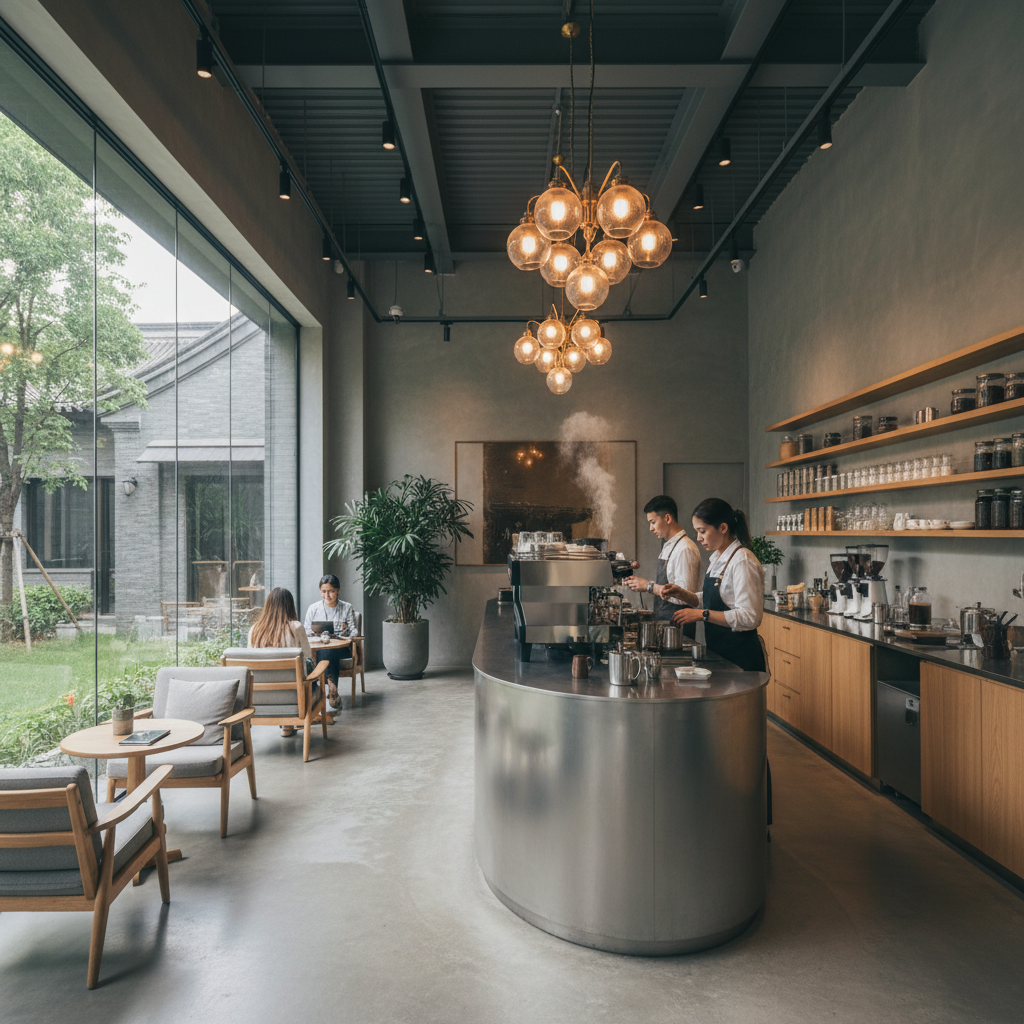
At XHLWX (led-project-light.com), a Custom Indoor LED Lighting Manufacturer based in China, our engineering team regularly consults with global brands facing a common, critical challenge: maintaining a consistent customer experience across dozens or even hundreds of physical locations. This analysis breaks down a recent large-scale retail rollout, demonstrating how a centralized specification using the QH-TS06 track light and QH-LN04 linear system achieved perfect brand consistency.
By standardizing the color temperature to a precise 3000K and the main accent beam angle to 24°, the client ensured their products and store atmosphere felt identical to customers from London to Los Angeles.
What Changed — and Why It Matters Now
For decades, lighting procurement for large retail chains was often a fragmented, localized process. Individual store managers or regional contractors would select readily available products, leading to a jarringly inconsistent brand presentation.
A flagship store might have brilliant, high-quality lighting, while a mall location 50 miles away could have dim, color-inaccurate fixtures. This inconsistency dilutes brand identity and directly impacts sales, as product appearance varies wildly.
The market has now shifted decisively towards centralized, standardized lighting specifications for any multi-site rollout. The primary driver is brand equity; a consistent lighting environment reinforces brand identity and ensures products are presented uniformly, building customer trust and recognition.
Beyond branding, this approach delivers significant operational advantages. Standardizing on a single family of high-efficacy LED products simplifies maintenance, reduces the number of spare parts needed, and dramatically lowers energy consumption across the entire portfolio, with savings often exceeding 50% compared to legacy systems.
This case study focuses on a European fashion group with over 150 stores that faced precisely this challenge. Their previous lighting was a mix of CFL, metal halide, and early-generation LED fixtures with CCTs ranging from 2700K to 4500K.
The result was a chaotic visual landscape where the same red dress could appear vibrant and luxurious in one store but dull and orange in another. The solution was to partner with a single manufacturing partner capable of guaranteeing tight CCT binning, consistent optical performance, and custom housing options across a massive production run.
The Technical Detail Behind the Headline
The success of this nationwide standardization project hinged on the precise technical specifications of the selected luminaires. The client required a combination of focused accent lighting to create drama and highlight merchandise (the QH-TS06 track spot) and high-quality ambient/general lighting for circulation areas (the QH-LN04 linear system).
The key was not just the individual performance of each fixture, but the guarantee that every single unit delivered from batch 1 to batch 100 would be perceptually identical. This was achieved by locking in specific high-performance components and maintaining rigorous quality control throughout the manufacturing process.
The 3000K CCT was chosen to create a warm, premium, and inviting atmosphere. The exceptionally high CRI of >95 with a strong R9 value ensures that fabric colors, textures, and skin tones are rendered with the utmost fidelity.
The 24° beam on the track spots provides the focused 'punch' needed to make merchandise pop, while the UGR<19 rating on all fixtures ensures a comfortable, glare-free shopping experience for customers. The selection of a DALI-2 control system provides the ultimate flexibility for scene-setting, daylight harvesting, and energy management, reducing operational costs by an estimated 40% annually.
| Parameter | Specification | Standard | Notes |
|---|---|---|---|
| Color Temperature (CCT) | 3000K | 3-Step MacAdam Ellipse | Guarantees color consistency across all fixtures. |
| Color Rendering (CRI / R9) | Ra > 95 / R9 > 80 | TM-30 Rf: 92, Rg: 101 | Essential for rendering fashion colors and skin tones accurately. |
| Unified Glare Rating (UGR) | <19 | EN 12464-1 | Provides high visual comfort, preventing shopper eyestrain. |
| Beam Angle (Primary) | 24° (15°/36° options) | N/A | Focused beam for creating high-contrast accent lighting on displays. |
| Control Protocol | DALI-2 Device Type 8 | IEC 62386 | Enables individual control, color tuning, and energy monitoring. |
| Housing Material / IP Rating | Die-cast Aluminum / IP20 | N/A | Durable housing for indoor use; custom RAL finish available. |
| Certification | CE, RoHS, ErP | (EU) 2019/2020 | Fully compliant for the European market, including new eco-design rules. |
| LED Chip Brand | Bridgelux Vesta Series | N/A | Specified to ensure consistent flux, CCT, and reliability. |
| Driver Brand | Tridonic advanced | N/A | High-efficiency, low-flicker performance with DALI-2 interface. |
What This Means for Specifiers and Buyers
For lighting specifiers, architects, and electrical contractors in Europe and the US, this case study underscores a critical lesson: successful large-scale rollouts depend on control over the supply chain. Relying on off-the-shelf products from multiple distributors introduces unacceptable risks in quality and consistency. The modern approach involves partnering directly with a manufacturer who can act as a single source of truth for the entire lighting package.
How Can a Specifier Ensure Lighting Consistency Across Dozens of International Locations?
The key is to move beyond a basic performance spec and develop a comprehensive manufacturing specification. This document should lock in not only the CCT and CRI but also the exact LED chip manufacturer and bin (e.g., Bridgelux Vesta 3000K 3-step), the driver model (e.g., Tridonic), and even the reflector material.
By working with a custom manufacturer, a specifier can demand and receive batch reports and photometric verification for each production run, ensuring the 1,000th fixture is identical to the first. This eliminates the 'spec drift' that often occurs when distributors substitute components based on availability.
What Are the Biggest Risks in a Large-scale Retail Lighting Rollout?
Beyond the obvious risk of aesthetic inconsistency, the biggest dangers are supply chain failures and regulatory non-compliance. A multi-location rollout requires a manufacturer with proven logistical capabilities and a robust, ISO9001-certified quality management system.
Delays in one shipment can halt construction on multiple sites, leading to massive cost overruns. Furthermore, a container of fixtures arriving in the EU without proper CE marking and ErP compliance documentation (per regulation (EU) 2019/2020) can be seized by customs, creating a project-killing disaster.
Vetting a manufacturer's compliance and logistics track record is as important as evaluating their product quality.
When Should Custom Modifications Be Considered Over Standard Off-the-shelf Products?
Customization becomes essential when a brand's unique identity or a building's architectural constraints cannot be met by standard products. For this retail project, the client required the fixture housings to be finished in a specific RAL color to match their branding, a service unavailable from most distributors.
Other common customizations include modifying the length of linear fixtures to perfectly fit ceiling coves, integrating specific wireless controls like Casambi, or developing a unique mounting solution for a heritage building. A vertically integrated manufacturer can engineer and produce these modifications cost-effectively at scale.
Compliance Checklist (IES / LDT / DIALux / CE / RoHS / ErP)
For any specifier or contractor working on a project for the European or North American market, obtaining a complete documentation package from the manufacturer is a non-negotiable step. This checklist is the minimum required for a professional project. Before placing a bulk order, demand the following:
- IES and LDT photometric files: These are the fundamental building blocks for professional lighting design. Without these data files for every single fixture and optic combination, it is impossible for a lighting designer to accurately predict performance in simulation software like DIALux or AGi32. Your designer needs these files to guarantee that the final installation will meet required lux levels (e.g., 500 lux average on vertical displays) and UGR targets.
- DIALux Project Support: A capable manufacturing partner should be able to provide not just the files, but also support in creating or verifying a DIALux model. This collaborative step ensures the manufacturer's products are being applied correctly to meet the design intent.
- CE Declaration of Conformity: For the EU market, this document is mandatory. It is the manufacturer's legal declaration that the product meets all applicable directives, such as the Low Voltage Directive (LVD) and the Electromagnetic Compatibility (EMC) Directive.
- RoHS Test Reports: This demonstrates compliance with the Restriction of Hazardous Substances directive. It certifies that the product is free from lead, mercury, and other restricted materials, a critical environmental and safety requirement in the EU and many other regions.
- ErP Compliance Data: Following the implementation of the Single Lighting Regulation (EU) 2019/2020 on September 1, 2021, products must meet stringent new requirements for energy efficiency (lm/W), standby power, flicker (PstLM), and color rendering. The manufacturer must provide a full technical data sheet proving the product is registered and compliant, as non-compliant goods cannot be legally placed on the EU market.
Verifying this full package of documentation before shipment is the ultimate risk mitigation strategy for any international lighting project.
Frequently Asked Questions
Q: What Is the Ideal CRI Value for a High-end Retail Environment?
For high-end retail, especially fashion or fresh food, a CRI of 95 or higher is strongly recommended. This ensures that colors are rendered with extreme accuracy, closely matching their appearance in natural daylight. For this project, a CRI of Ra >95 and a critical R9 value over 80 were specified to make reds and skin tones appear vibrant and true-to-life, directly influencing customer purchasing decisions.
Q: How Much Energy Can Be Saved by Switching to a DALI-2 Controlled LED System?
A DALI-2 controlled LED system can yield energy savings of 30-60% compared to older, non-dimmable lighting. This is achieved through strategies like daylight harvesting, occupancy sensing in back-of-house areas, and scheduled dimming during off-peak hours or for cleaning crews. For a typical 500-square-meter store, this can translate to saving over 15,000 kWh annually, significantly reducing operational expenditure.
Q: Why Was a 24-degree Beam Angle Chosen for the Track Lights?
A 24-degree beam angle is a classic choice for retail accent lighting as it provides a focused 'punch' of light from a typical ceiling height of 3 to 4 meters. This narrow beam creates high contrast between the highlighted product and the surrounding area, effectively drawing the customer's eye to key merchandise like mannequins or feature displays. Wider 36- or 60-degree beams are better for general illumination.
Q: What Does a UGR Rating of <19 Actually Mean for Shoppers?
A UGR (Unified Glare Rating) of <19 indicates a high level of visual comfort, meaning shoppers are very unlikely to experience discomfort glare from the light fixtures. This is a critical standard for quality interior spaces as defined by EN 12464-1. In a retail store, it allows customers to browse comfortably for extended periods and look up at high displays without eye strain or distraction, improving the overall shopping experience.
Talk to Our Engineering Team
This case study highlights the tangible benefits of a centralized, quality-controlled approach to retail lighting. Achieving true brand consistency across a global portfolio is a complex engineering and logistical challenge that requires a deeply capable manufacturing partner.
At XHLWX (led-project-light.com), a Custom Indoor LED Lighting Manufacturer based in China, we specialize in collaborating with specifiers and brand managers to deliver these large-scale, consistent rollouts. If you are developing a lighting scheme for a multi-site brand in the EU, US, or Middle East, contact our engineering team to discuss your custom requirements, request IES and LDT photometric files for your DIALux simulations, and receive a comprehensive project proposal.
Need a tailored lighting plan for your project?
Our senior lighting designers reply within 48 hours with a free design proposal & quotation.