
GILE 2025 Analysis: Magnetic Track Lighting Dominates Trends
Post-GILE 2025, key trends are clear: modular magnetic track lighting and Human Centric Lighting (HCL) are no longer niche. Our analysis covers the technical
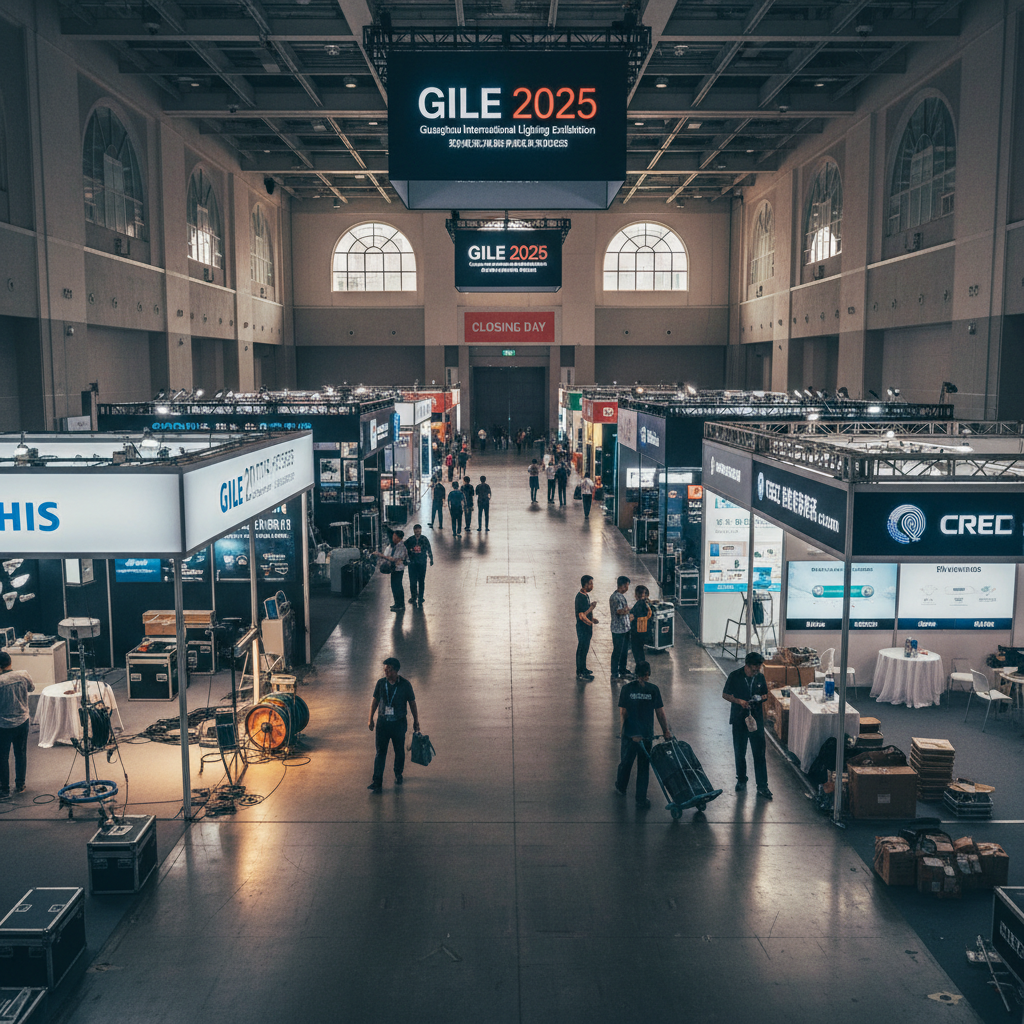
At XHLWX (led-project-light.com), a Custom Indoor LED Lighting Manufacturer based in China, our engineering team closely monitors global industry shifts to inform our product development and guide our clients. The recent conclusion of the 2025 Guangzhou International Lighting Exhibition (GILE) provided a definitive look into the technologies shaping the next 18-24 months of commercial and architectural lighting.
While the event showcased a vast array of innovations, two dominant trends emerged for indoor applications: the maturation of magnetic track lighting systems and the practical implementation of Human Centric Lighting (HCL). Exhibitors like Qihang Lighting, with their expanded 144 sqm booth, exemplified this focus, dedicating significant space to modular magnetic solutions and tunable white HCL systems.
This analysis unpacks these trends, providing the technical context and strategic advice that European, US, and Middle Eastern specifiers and contractors need to make informed procurement decisions.
What Changed — and Why It Matters Now
The key takeaway from GILE 2025 is not the invention of new technology, but its refinement, accessibility, and integration. Magnetic track lighting, once a premium, often complex solution, has now standardized. We observed a significant increase in manufacturers offering cross-compatible modules, simplified 48V DC power systems, and a wider array of luminaire heads—from adjustable spotlights to diffuse linear bars. This shift matters because it lowers the barrier to entry for specifiers, making highly flexible, future-proof lighting schemes achievable for mid-range commercial projects, not just high-end retail.
Simultaneously, Human Centric Lighting (HCL) has moved from a conceptual wellness trend to a deliverable, data-backed solution. The conversation on the exhibition floor was less about the 'why' (improved productivity, better alignment with circadian rhythms) and more about the 'how'.
We saw a proliferation of integrated control systems, from sophisticated DALI-2 DT8-enabled drivers to user-friendly wireless solutions like Casambi, which make dynamic CCT and intensity changes programmable and automated. For specifiers, this means HCL is no longer a bespoke, consultant-led effort but a scalable feature that can be specified using off-the-shelf components, provided they meet rigorous performance and control standards.
The Technical Detail Behind the Headline
To understand the practical implications, it's crucial to examine the specifications of a typical high-performance magnetic track lighting system showcased at GILE 2025. These are the parameters that EU and US buyers must scrutinize to ensure performance, safety, and longevity. The following table represents a common specification for a system suitable for a modern office or high-end retail environment, reflecting the quality standards we adhere to at XHLWX.
| Parameter | Specification | EU/US Standard/Target | Notes for Specifiers |
|---|---|---|---|
| System Voltage | 48V DC (SELV) | IEC 60598 / UL 2108 | Safety Extra-Low Voltage is critical for tool-free module adjustment and safety. |
| Color Temperature | 2700K - 5000K Tunable White (HCL) | ANSI C78.377 / ErP (EU) 2019/2020 | Allows for dynamic scenes from warm morning light to cool midday focus. |
| Color Rendition | CRI >95, R9 >80; TM-30 Rf >92, Rg ≈100 | TM-30-20 / CA Title 24 JA8 | High-fidelity rendering is non-negotiable for retail and people-centric spaces. |
| Optical Control | UGR <16 (with specific modules) | EN 12464-1 (UGR <19 for offices) | Low glare is achieved via deep-set LEDs, micro-prismatic lenses, and snoot accessories. |
| Beam Angles | 15°, 24°, 38°, 55°; Asymmetric Wallwash | IESNA RP-8 | A variety of optics is essential for creating layers of light (accent, task, ambient). |
| Control Protocol | DALI-2 (DT6 & DT8) / Casambi Bluetooth Mesh | IEC 62386 / Bluetooth SIG | DALI-2 ensures interoperability; Casambi offers simplified wireless control. |
| Key Components | Bridgelux Vesta® Series COB; Tridonic/Mean Well Driver | - | Named components provide reliability and predictable performance data. |
| Housing/IP Rating | Extruded Aluminum Track; IP20 Luminaires | - | IP20 is standard for dry indoor locations. Higher ratings available for custom needs. |
| Certifications | CE, RoHS, ErP (for EU); UL Listed (for US) | LVD, EMC, RED Directives; UL Standards | Third-party certification is mandatory for market access and insurance compliance. |
What This Means for Specifiers and Buyers
The convergence of modularity and advanced controls presents both opportunities and challenges for lighting professionals. Procurement is no longer about selecting a static fixture but about designing an adaptable ecosystem. The onus is on the specifier to demand comprehensive documentation and proof of interoperability, especially when mixing components from different suppliers—a practice that the new modularity seems to encourage but which can be fraught with risk.
How Should a Specifier Approach a Magnetic Lighting System Procurement?
First, define the application's needs rigorously. Don't be swayed by aesthetics alone. For an office project, prioritize low-glare (UGR <19) modules and HCL-ready tunable white capability with DALI-2 DT8 drivers. For retail, focus on high CRI (>95) and a wide range of beam angles for accenting merchandise. Secondly, demand a single source of responsibility. While mixing track and modules is possible, it's safer to procure the entire system—track, power feeds, drivers, and luminaires—from one manufacturer who guarantees compatibility and provides a single warranty. This simplifies troubleshooting and ensures all components work together seamlessly. At XHLWX, we provide end-to-end systems with guaranteed interoperability.
What Are the Real Energy and Wellness Benefits of Implementing HCL?
Beyond the abstract concept of 'wellness', HCL delivers quantifiable benefits. Studies have shown that lighting synchronized to the natural day-night cycle can improve employee alertness by up to 18% and reduce errors. In terms of energy, an HCL system paired with occupancy and daylight sensors can yield savings of 30-50% over a static, non-controlled LED installation. For example, a system could run at 4000K and 500 lux during peak work hours (10 am - 2 pm) but dim down to 30% intensity at 3000K in the late afternoon, significantly reducing power consumption. These benefits, however, rely entirely on proper commissioning of the control system.
How Can a US or European Contractor Ensure Compliance When Sourcing from China?
Direct sourcing offers cost benefits but requires extreme diligence. The key is to partner with a manufacturer that has a proven track record of exporting to Western markets. Request and verify all compliance documentation before placing an order. For the EU, this means a valid CE Declaration of Conformity referencing the Low Voltage Directive (LVD), EMC Directive, and RoHS. Since 2021, ErP (Ecodesign) Regulation (EU) 2019/2020 compliance, including data in the EPREL database, is also mandatory. For the US, look for UL or ETL listing marks on the product, driver, and power supply. A reliable partner will provide these documents readily and understand the nuances of your regional requirements.
Compliance Checklist (IES / LDT / DIALux / CE / RoHS / ErP)
Before finalizing any custom LED lighting order for an EU or US project, a specifier or buyer must obtain a complete technical and compliance package from the manufacturer. This is non-negotiable for professional projects.
- Photometric Data: Insist on receiving both IES and LDT photometric files for every luminaire. These files are essential for professional lighting design.
- Lighting Design Simulation: Request a simulation of your space in DIALux or a similar program, using the provided photometric files. This verifies that the proposed solution will meet required lux levels, uniformity, and UGR targets like the EN 12464-1 standard.
- EU Market Compliance (CE): Verify the CE mark is supported by a Declaration of Conformity. This declaration must cite harmonized standards for the LVD (e.g., EN 60598-1) and EMC (e.g., EN 55015) directives.
- EU Substance & Ecodesign (RoHS/ErP): Confirm RoHS compliance to restrict hazardous substances. For the ErP regulation, the manufacturer must provide energy efficiency data (lm/W, standby power) and prove the luminaire's light source is registered in the EPREL database if required.
- US Market Compliance (UL/ETL): For US projects, products must be certified by a Nationally Recognized Testing Laboratory (NRTL). The most common marks are UL and ETL. Ensure the certification applies to the entire fixture assembly, not just individual components.
- Quality Management: Ask for an ISO9001:2015 certificate to ensure the manufacturer has a robust quality control system in place for production.
Frequently Asked Questions
Q: What Is the Primary Advantage of a 48V Magnetic Track System Over a 24V One?
The primary advantage is power capacity and track length. A 48V system allows for longer single-run track lengths and can power more luminaires than a 24V system using the same gauge conductor. This is due to Ohm's law (P=V*I); higher voltage means lower current for the same power, reducing voltage drop over distance and enabling more robust, scalable installations with fewer power injection points.
Q: Is DALI-2 DT8 Really Necessary for Human Centric Lighting?
While not the only method, DALI-2 Device Type 8 (DT8) is the industry standard for color-tunable control. It allows both brightness and color temperature to be controlled via a single DALI address, simplifying wiring and programming significantly. Using older DT6 methods requires two separate addresses and drivers, increasing complexity and cost. For reliable, interoperable HCL, specifying DT8 is highly recommended.
Q: How Much Does a Typical Magnetic Track System Cost per Meter/foot?
Cost varies widely based on specifications, but for a professional-grade system including the track, a DALI power supply, and an average density of 3-4 luminaires, specifiers can budget approximately €150-€300 per meter ($50-$100 per foot). High-performance modules with CRI >95, advanced optics, and brand-name components will be at the higher end of this range. Customization can also affect the final price.
Q: Can I Achieve a UGR of Less Than 19 with Any Spotlight on a Magnetic Track?
No, achieving a low Unified Glare Rating (UGR) is highly dependent on the luminaire's optical design. To achieve UGR <19, required for workstations under EN 12464-1, you must use specific anti-glare modules. These typically feature deeply recessed LEDs, honeycomb louvers, or specialized micro-prismatic lenses that precisely control light distribution and shield the bright light source from normal viewing angles.
Talk to Our Engineering Team
At XHLWX (led-project-light.com), a Custom Indoor LED Lighting Manufacturer based in China, we specialize in translating these market trends into reliable, compliant, and cost-effective lighting solutions for our international partners. The insights from GILE 2025 confirm our focus on modular, controllable, and human-centric systems. If you are a specifier, contractor, or buyer in the EU, US, or Middle East looking to implement a custom magnetic track or HCL project, our team is ready to assist with everything from initial design support in DIALux to providing fully certified, project-ready hardware. Contact us to discuss your specific requirements and leverage our manufacturing expertise for your next project.
Need a tailored lighting plan for your project?
Our senior lighting designers reply within 48 hours with a free design proposal & quotation.