
Why High-CRI Mixed-CCT Lighting is Crucial for Video Production
Discover why mixing CCTs like 5600K and 3200K, combined with CRI>95 and R9>80, is now standard for professional video. A guide for specifiers on avoiding flic
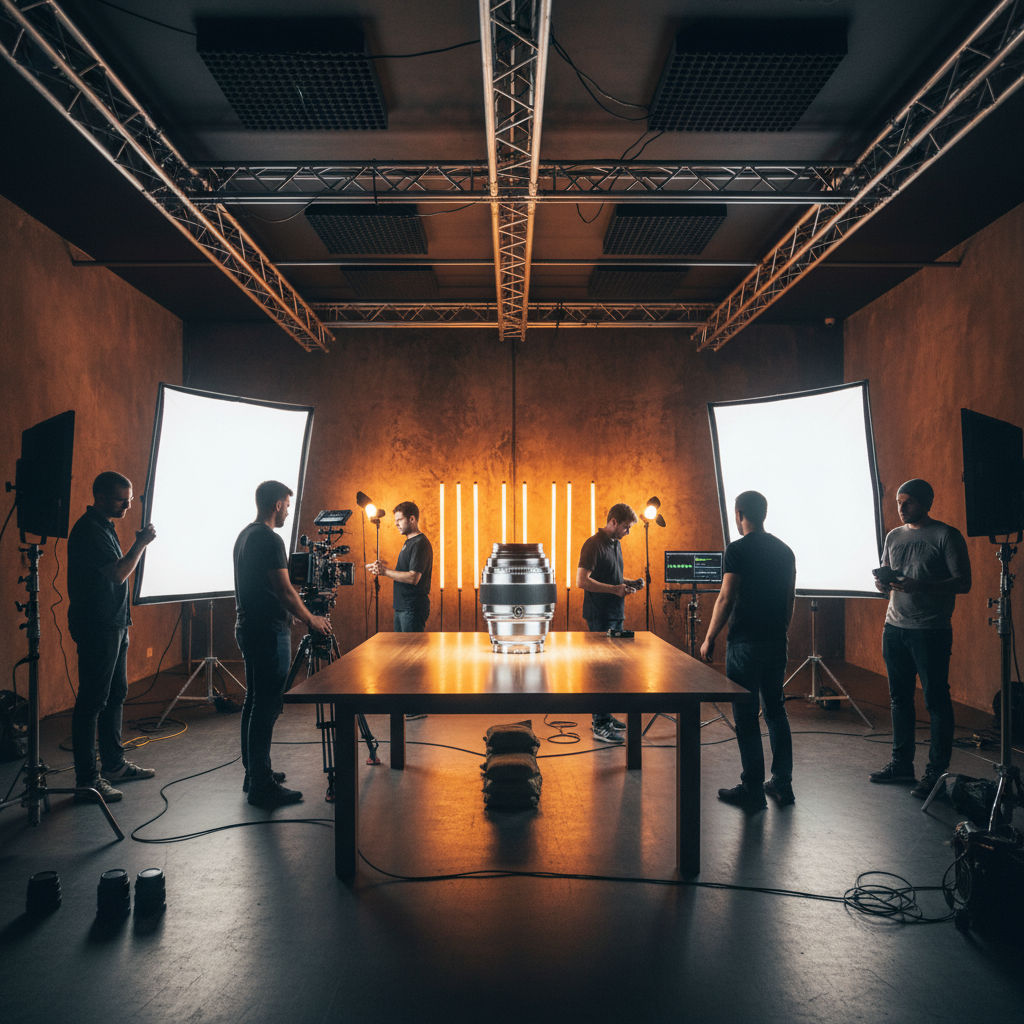
At XHLWX (led-project-light.com), a Custom Indoor LED Lighting Manufacturer based in China, we've observed a critical shift in lighting specification for digital media production. The long-held practice of using a 5600K (daylight) main light balanced with a 3200K (tungsten) fill light is no longer just an artistic choice; it's a technical necessity driven by the unforgiving nature of 4K and 8K sensors.
To achieve controllable, vibrant, and true-to-life colors that streamline post-production, professional standards now demand a Color Rendering Index (CRI) above 95 and, critically, an R9 value (for saturated reds) exceeding 80. This analysis explores the technical specifications and practical steps buyers in the EU and US must take to source lighting that meets these exacting requirements.
What Changed — and Why It Matters Now
The transition from power-hungry, hot-running HMI and Tungsten fixtures to energy-efficient LEDs has revolutionized video production. However, this shift brought new challenges. Early-generation or low-cost LEDs were plagued by issues that are unacceptable in a professional context: significant flicker visible to high-speed cameras, poor color fidelity that made skin tones appear sickly or unnatural, and inconsistent Correlated Color Temperature (CCT) that drifted as the fixtures heated up. These problems create massive, often insurmountable, challenges in the color grading suite, adding thousands of dollars and countless hours to project budgets.
Today's digital cinema cameras, streaming webcams, and even high-end smartphones capture footage with unprecedented detail and color depth. These sensors do not 'see' light like the human eye; they are ruthless in exposing spectral gaps and flicker.
A light source that looks acceptable in person can produce frustrating banding or color shifts on camera. This is why the conversation has moved beyond simple brightness (lux levels) to a deep focus on light quality.
The core principle of mixing a neutral 5600K key light with a warm 3200K fill light remains a cornerstone of cinematic lighting. The 5600K source acts as the primary illuminator, mimicking natural daylight to define the subject's shape and texture.
The 3200K source then adds depth, warmth, and separation, creating a visually pleasing contrast that feels both natural and professionally polished. Achieving this effect with LEDs requires fixtures that are not only accurate to their stated CCT but also render the entire color spectrum with exceptional fidelity.
The Technical Detail Behind the Headline
For a specifier, understanding the numbers behind a 'good' video light is paramount. A fixture is only as strong as its weakest component, from the LED chip to the driver and optics. Below is a specification table for a professional-grade linear LED fixture designed for studio use, highlighting the parameters that truly matter.
| Parameter | Specification | Industry Standard | Notes for Video Production |
|---|---|---|---|
| Chip Brand & Type | Bridgelux Vesta® Thrive (or similar) | Osram, Samsung, Nichia | Look for chips specifically designed for high-fidelity, human-centric, or studio applications. |
| Color Rendering | CRI: 97, R9: >90, TM-30 Rf: 95, Rg: 101 | CRI >90, R9 >50 | R9 > 80 is critical for skin tones. TM-30 is a more complete metric than CRI. |
| Flicker Performance | TLCI: >97, Flicker-Free (<1%) @ >3,000 Hz | TLCI >90 | Crucial for slow-motion (high frame rate) recording. Verified by driver PWM frequency. |
| Control Protocol | DALI-2 Device Type 8 (DT8) for Tunable White | Casambi, 0-10V, DMX | DALI-2 offers precise, repeatable, and individually addressable control ideal for complex scenes. |
| CCT Options | 2700K - 6500K Tunable White | 3000K, 4000K, 5600K | Tunable white offers maximum flexibility, allowing one fixture to act as key, fill, or effect light. |
| Driver Brand | Tridonic premium series | Mean Well, OSRAM | A high-quality driver is non-negotiable for flicker-free performance and long-term reliability. |
| Optics & Glare | UGR < 16 with micro-prismatic diffuser | UGR < 19 | Low UGR is essential for the comfort of on-screen talent and the production crew. |
| Housing & Certs | IP40, Extruded Aluminum, CE, RoHS, ErP | IP20, CE, RoHS | IP40 provides dust protection. CE/RoHS are mandatory for EU market access. |
What This Means for Specifiers and Buyers
Sourcing high-performance lighting requires moving beyond the marketing claims on a datasheet and asking targeted, technical questions. The goal is to ensure that the fixtures you procure will perform under pressure on set, saving time and protecting the creative vision.
How Do I Verify a Manufacturer's Claims of High CRI and Flicker-free Performance?
First, always request third-party, independent lab reports for the specific fixture you intend to purchase. An integrating sphere report will provide definitive data on CRI, R9, CCT accuracy, and the full spectral power distribution (SPD). Second, for flicker, ask the manufacturer for the driver's technical datasheet. Look for the Pulse-Width Modulation (PWM) output frequency; it should be well above 2,000 Hz to be safe for most camera frame rates. As a preliminary field test, you can record the light source using your smartphone's slow-motion video mode; visible banding or strobing is an immediate red flag.
What's the Artistic and Technical Impact of Mixing CCTs Like 5600K and 3200K on Set?
This technique, often called color contrast, is fundamental to creating cinematic depth. A typical three-point lighting setup might use a 5600K LED panel as the key light, creating a clean, neutral exposure on the subject. A 3200K fixture can then be used as a 'kicker' or rim light from behind and to the side. This warm edge of light helps to separate the subject from the background, adding a three-dimensional quality to the image. It can also be used as a fill light, bounced off a reflector to soften shadows with a warm, inviting tone. This only works if both the 5600K and 3200K sources are spectrally pure and consistent; otherwise, the intended warmth can become an unnatural orange or magenta tint in post-production.
Beyond the Fixture Itself, What Else Should a Contractor or Installer Consider for a Studio Lighting Project?
The lighting fixture is just one piece of the puzzle. The control system is equally important. For permanent studios, a wired DALI-2 system offers the most robust and scalable solution, allowing a lighting director to control hundreds of lights from a single console with perfect repeatability. For smaller or more mobile setups, a wireless mesh network like Casambi offers incredible flexibility. Furthermore, thermal management is paramount. Fixtures must have robust aluminum heat sinks to dissipate heat effectively. A poorly cooled fixture will suffer from CCT shift during a shoot and a drastically reduced lifespan, failing to meet its L80/B10 rating.
Compliance Checklist (IES / LDT / DIALux / CE / RoHS / ErP)
For any professional lighting project in Europe or North America, a clear documentation and compliance path is essential. Here is what specifiers must demand from their manufacturing partner:
-
IES and LDT Photometric Files: These are the digital DNA of a luminaire. Your manufacturer must provide these data files for every fixture and optic combination. They are non-negotiable for professional lighting design and simulation.
-
DIALux Simulation: Before committing to a large purchase, use the IES/LDT files to build a simulation of your space in DIALux, Relux, or a similar program. This allows you to verify light levels (e.g., achieving a target 800 lux on the subject), check for unwanted shadows, and plan fixture placement with precision, preventing costly on-site errors.
-
CE & RoHS Certification: For market access in the 27 EU member states and other conforming regions, the CE mark is a legal requirement, confirming the product meets safety, health, and environmental standards. The RoHS directive restricts the use of specific hazardous materials, including lead and mercury, in electrical and electronic products.
-
ErP (Ecodesign Regulation (EU) 2019/2020): While certain exemptions exist for studio lighting, adherence to the principles of the ErP directive demonstrates a commitment to energy efficiency and sustainability. A reputable manufacturer should be able to provide the energy efficiency class and technical product information as outlined in Article 6 of the regulation, ensuring your project aligns with modern environmental standards.
Frequently Asked Questions
Q: What Is TLCI and Why Is It More Important Than CRI for Video?
The Television Lighting Consistency Index (TLCI) is a metric specifically designed to predict how well a light source will render colors on a broadcast camera. While CRI measures color accuracy for the human eye, TLCI assesses the light's spectral output against a camera sensor's response. A score above 90 is considered acceptable, but for professional results, you should always specify fixtures with a TLCI rating of 95 or higher to minimize color correction in post-production.
Q: Can I Use Standard Office LED Panels for a Small Video Studio?
It is highly discouraged. Office LED panels are optimized for energy efficiency and visual comfort (UGR>19), not color fidelity. They typically have a low CRI (<85), a very poor R9 value, and use low-frequency drivers that cause invisible flicker to the eye but create prominent banding on camera. This results in inaccurate colors, especially skin tones, and requires extensive, often impossible, post-production correction.
Q: How Much Energy Can I Save by Switching from Tungsten to LED Studio Lights?
The energy savings are substantial, typically between 80-90%. For example, a classic 1000-watt Tungsten Fresnel light can be effectively replaced by a high-output 150-watt LED Fresnel. Over a full shooting day, this single fixture swap saves over 8 kWh of electricity. For an entire studio grid, this translates to massive reductions in energy costs and a much lower thermal load, reducing air conditioning requirements.
Q: What Does a High R9 Value Like R9>80 Actually Mean for My Video?
R9 is a specific score within the broader CRI measurement that evaluates how accurately a light source renders a saturated red color. This is one of the most difficult colors for LEDs to produce. A high R9 value (above 80, ideally >90) is critical because it ensures that red tones—found in skin, clothing, and brand logos—appear rich and accurate on camera, rather than desaturated, pinkish, or orange. It is a key indicator of a professional-grade light source.
Talk to Our Engineering Team
The demand for flawless video content requires a technical and uncompromising approach to lighting specification. Choosing fixtures based on comprehensive metrics like high CRI, R9, and TLCI, ensuring flicker-free driver performance, and planning with professional tools like DIALux are no longer optional—they are essential for a successful outcome. By understanding these details, specifiers can ensure their projects meet the highest standards of quality and efficiency. At XHLWX (led-project-light.com), a Custom Indoor LED Lighting Manufacturer based in China, our engineering team specializes in developing fixtures that meet these exacting demands for the European, US, and Middle Eastern markets, and we are ready to provide the technical documentation and support you need for your next project.
Need a tailored lighting plan for your project?
Our senior lighting designers reply within 48 hours with a free design proposal & quotation.