
Qihang Lighting Adopts Zhaga Book 18: What It Means for LED Specs
Qihang Lighting joins the Zhaga Consortium, embracing the Book 18 standard for future products. This signals a major industry shift toward interoperability, s
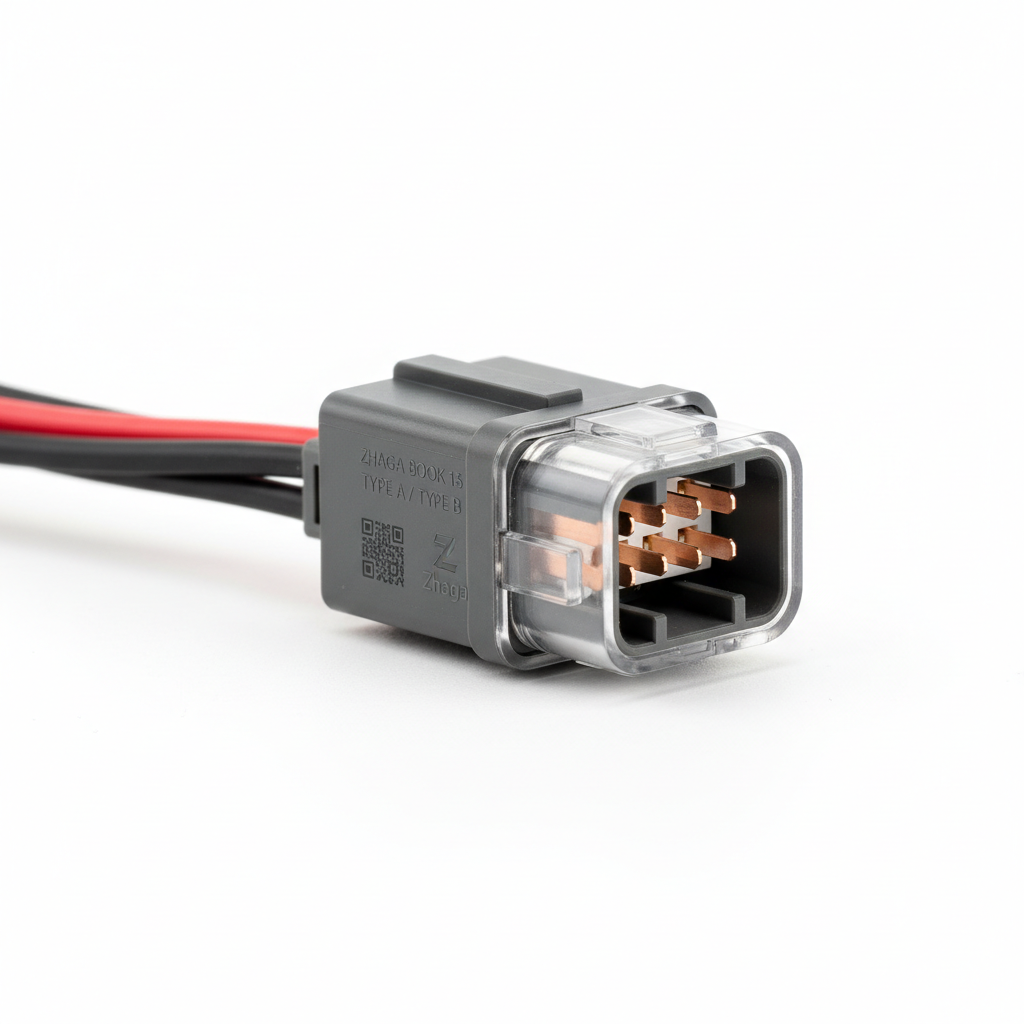
What Changed — and Why It Matters Now
At XHLWX (led-project-light.com), a Custom Indoor LED Lighting Manufacturer based in China, our engineering team closely monitors industry shifts that impact global specifications for our European, US, and Middle Eastern clients. The recent announcement that Qihang Lighting has joined the Zhaga Consortium is one such development.
While it may seem like a simple corporate membership update, its implications for the future of luminaire design, maintenance, and smart building integration are profound. By committing to the gradual adoption of the Zhaga Book 18 standard interface, the company is aligning with a powerful movement towards open standards and interoperability.
The Zhaga Consortium is a global lighting-industry organization that aims to standardize interfaces for components of LED luminaires. This includes everything from LED modules and drivers to optics and connectivity modules.
Their goal is to create a market of interchangeable parts, freeing specifiers and end-users from the costly and restrictive walled gardens of proprietary systems. Zhaga Book 18 specifically defines a standardized interface for outdoor luminaires, but its principles—and more importantly, its associated D4i digital protocol—are fundamentally changing how indoor commercial lighting is specified.
Why does this matter now? The decision matters because it addresses three critical pain points in the project lighting lifecycle: maintenance, upgrades, and vendor lock-in.
For decades, a failed driver or an obsolete sensor often meant replacing the entire luminaire, a wasteful and expensive process. A standardized interface means components can be swapped out in minutes.
Furthermore, as smart lighting technology evolves (from basic occupancy sensing to sophisticated IoT data collection), a Zhaga-compliant socket allows a building owner to easily upgrade a luminaire’s capabilities years after installation. This move by a major manufacturer validates the market's demand for future-proof, sustainable, and flexible lighting systems, a trend that specifiers cannot afford to ignore.
The Technical Detail Behind the Headline
The headline news is about joining a consortium, but the crucial technical story is the convergence of two standards: Zhaga and D4i. When a luminaire is marketed as “Zhaga-D4i certified,” it means it meets both the mechanical and electrical/communication requirements for true plug-and-play interoperability.
Zhaga defines the physical socket and dimensions, ensuring components fit. D4i, a DALI Alliance (DiiA) specification, defines the digital side: it’s an extension of the robust DALI-2 control protocol that enables power and data to flow through that Zhaga socket to and from sensors or communication nodes.
A D4i-certified driver can power the luminaire and the attached sensor, while also storing critical data about the luminaire (model number, power consumption, runtime hours) that can be accessed by a building management system. This transforms the luminaire from a simple light source into an intelligent, data-rich node on a network.
To illustrate what this means for a typical specification in a high-end commercial or institutional project, consider the parameters for a modern, Zhaga-D4i enabled linear trunking system:
| Parameter | Specification | Standard Compliance | Notes for Specifiers |
|---|---|---|---|
| Optics | CCT: 4000K; CRI: Ra >90; TM-30-18: Rf 92, Rg 101 | EN 12464-1 | Meets stringent requirements for office and educational spaces. High TM-30 values ensure accurate color rendering beyond CRI. |
| Light Control | UGR <19 (with micro-prismatic diffuser) | ISO 8995-1 / CIE 117 | Critical for visual comfort in workspaces. Must be verified with specific LDT files in DIALux. |
| System Integration | DALI-2 with D4i Certified Driver | IEC 62386 | Ensures interoperability with other DALI-2 devices. The D4i part enables powering of Zhaga socket sensors. |
| Chip & Driver Brand | Tridonic EXC3 D4i Driver; Samsung LM281B+ LEDs | Manufacturer Warranty | Naming trusted brands provides assurance of performance, reliability, and lifespan (L80B10 @ >50,000 hours). |
| Housing & Mounting | IP20; Extruded Aluminium; Length: 1135mm | IEC 60529 | Standard IP rating for dry indoor environments. Check for custom lengths and finishes. |
| Certifications | CE, RoHS, ENEC, ErP (Class C) | (EU) 2019/2020 (ErP) | Mandatory for EU market. ErP class indicates energy efficiency; aim for Class D or higher post-Sept 2021. |
| Connectivity | Zhaga Book 20 Socket for Indoor Applications | Zhaga Consortium Standard | Although Book 18 is for outdoor, Book 20 defines a similar standardized socket for indoor spotlights and downlights. |
What This Means for Specifiers and Buyers
The industry-wide shift toward standards like Zhaga-D4i, now accelerated by the participation of more large manufacturers, fundamentally alters the decision-making process for lighting professionals. It moves the conversation from “Which brand’s ecosystem should I buy into?” to “Which compliant components best solve my client’s problem?”
How Does This Affect My Project's Long-term Maintenance and Upgrade Path?
This is the most significant benefit. By specifying Zhaga-D4i luminaires, you are decoupling the luminaire's lifespan from the much shorter lifespan of its electronic control components.
Imagine a large office space with 500 luminaires installed in 2024. In 2029, a new wireless protocol becomes the norm.
Instead of replacing all 500 fixtures, the facility manager can simply purchase 500 new Zhaga-D4i compliant communication nodes and have a technician swap them out in a fraction of the time and cost. The same logic applies to failed sensors or drivers.
This drastically lowers the Total Cost of Ownership (TCO) and aligns projects with the EU’s Circular Economy Action Plan by minimizing e-waste and extending the useful life of the primary fixture. It transforms the luminaire from a disposable commodity into a long-term infrastructure asset.
What Should I Look for When Specifying a 'Zhaga-ready' Luminaire?
Buyer beware: the term “Zhaga-ready” can be used loosely. A specifier’s due diligence is critical.
First, demand proof of certification. Do not rely on a manufacturer's datasheet alone.
Check the official Zhaga Consortium and DALI Alliance (DiiA) websites for listings of certified products (both the luminaire and the driver). Second, clarify what is certified.
Is it just the luminaire housing with a socket, or is it a complete Zhaga-D4i system including the driver? A luminaire with a non-D4i driver and a Zhaga socket offers limited plug-and-play benefits.
The true value is unlocked when the entire chain—luminaire, driver, and sensor/node—is certified. Finally, for indoor applications, confirm which Zhaga Book is relevant (e.g., Book 20 for downlight connectivity) to ensure mechanical compatibility.
Will Adopting Zhaga Limit My Choice of Control Systems?
Quite the opposite. This is a common misconception.
Adopting proprietary, single-manufacturer smart lighting systems is what limits choice. The Zhaga-D4i standard is built upon the foundation of DALI-2, which is an open, IEC-regulated protocol.
This means you are free to select best-in-class components from a wide range of manufacturers. You can use a luminaire from Manufacturer A, a D4i-certified driver from Manufacturer B (like Tridonic or Mean Well), and a Zhaga-D4i motion sensor from Manufacturer C (like Casambi or Osram).
As long as they all adhere to the Zhaga-D4i certification standards, they are guaranteed to work together. This fosters competition, drives innovation, and gives the specifier maximum flexibility to design a system that perfectly meets the project's budget and performance requirements, rather than being forced into a one-size-fits-all solution.
Compliance Checklist (IES / LDT / DIALux / CE / RoHS / ErP)
For any specifier in Europe or the US looking to leverage these new standards, a rigorous compliance process is essential. Here is a checklist for your next project:
-
Request Photometric Data: Insist on receiving full IES and LDT photometric files for every luminaire. These are non-negotiable for performing accurate lighting calculations and visualizations in software like DIALux EVO. A simulation will confirm if the specified product meets illuminance (e.g., 500 lux) and uniformity requirements, and critically, if it achieves the claimed UGR <19 rating in your specific room geometry.
-
Verify EU Market Certifications: For projects within the European Union, confirm the luminaire carries the CE mark, indicating conformity with health, safety, and environmental protection standards. Also, verify RoHS (Restriction of Hazardous Substances) compliance under Directive 2011/65/EU to ensure the product is free from lead, mercury, and other restricted materials.
-
Check Energy Efficiency (ErP): Scrutinize the product's compliance with the EcoDesign Regulation ((EU) 2019/2020), also known as the Single Lighting Regulation (ErP). The regulation, effective since September 1, 2021, mandates a new energy labeling scale. A good quality commercial luminaire should achieve at least Class D or C on the new A-G scale.
-
Confirm Zhaga-D4i Certification Online: Do not take marketing claims at face value. Use the public databases on the Zhaga Consortium and DALI Alliance websites to verify that the specific luminaire model, driver, and any control devices you intend to use are officially certified. This is the only way to guarantee the interoperability you are paying for.
Frequently Asked Questions
Q: What Is the Main Difference Between Zhaga and D4i?
Think of it as hardware versus software. The Zhaga standard specifies the physical, mechanical interface—the size and pin configuration of the socket on the luminaire. D4i is the DALI-2 based digital standard that governs power and data communication through that socket. For true plug-and-play functionality, you need a luminaire that is certified for both, ensuring the sensor physically fits and can digitally communicate with the driver.
Q: Does Using a Zhaga-D4i System Automatically Save Energy?
Not directly. The standard itself enables connectivity. The energy savings, which can range from 30% to over 60%, come from the smart devices you plug into the Zhaga socket. By easily adding occupancy sensors for on/off control and daylight harvesting sensors to dim lights when natural light is present, you can dramatically reduce a building's energy consumption (kWh) and operational costs.
Q: Are Zhaga-D4i Luminaires More Expensive Than Standard Ones?
There can be a minor initial cost premium, typically around 5-15%, for a fully certified Zhaga-D4i luminaire compared to a basic, non-connectable equivalent. However, the total cost of ownership is significantly lower. This is due to vastly reduced labor costs for future maintenance and upgrades, the elimination of vendor lock-in for replacement parts, and the extended asset life of the luminaire housing.
Q: I Thought Zhaga Book 18 Was for Outdoor Streetlights. How Is It Relevant Indoors?
You are correct, Book 18 defined the standard for outdoor luminaires. However, its success created massive demand for a similar standardized solution for indoor applications. This led to specifications like Zhaga Book 20, which defines a compact interface for indoor spotlights, downlights and linear systems. The core principle of a standardized socket powered by a D4i driver is the key takeaway for all commercial lighting applications.
Talk to Our Engineering Team
The move toward open standards represents a significant opportunity for creating more sustainable, intelligent, and cost-effective buildings. Understanding the nuances of Zhaga, D4i, and the associated compliance landscape is now a critical skill for architects, engineers, and lighting specifiers.
At XHLWX (led-project-light.com), a Custom Indoor LED Lighting Manufacturer based in China, we are not just fabricating fixtures; we are providing integrated lighting solutions. Our engineering team can help you navigate these specifications, ensure your project is truly future-proof, and deliver custom luminaires that meet the most demanding performance and certification requirements.
Contact us to discuss how we can apply these principles to your next design.
Need a tailored lighting plan for your project?
Our senior lighting designers reply within 48 hours with a free design proposal & quotation.