
ENEC Certified 160 lm/W High Bay: What It Means for EU Logistics
A new 160 lm/W industrial high bay has gained EU ENEC certification, a key approval for German and Nordic markets. This analysis covers the technical specs, R
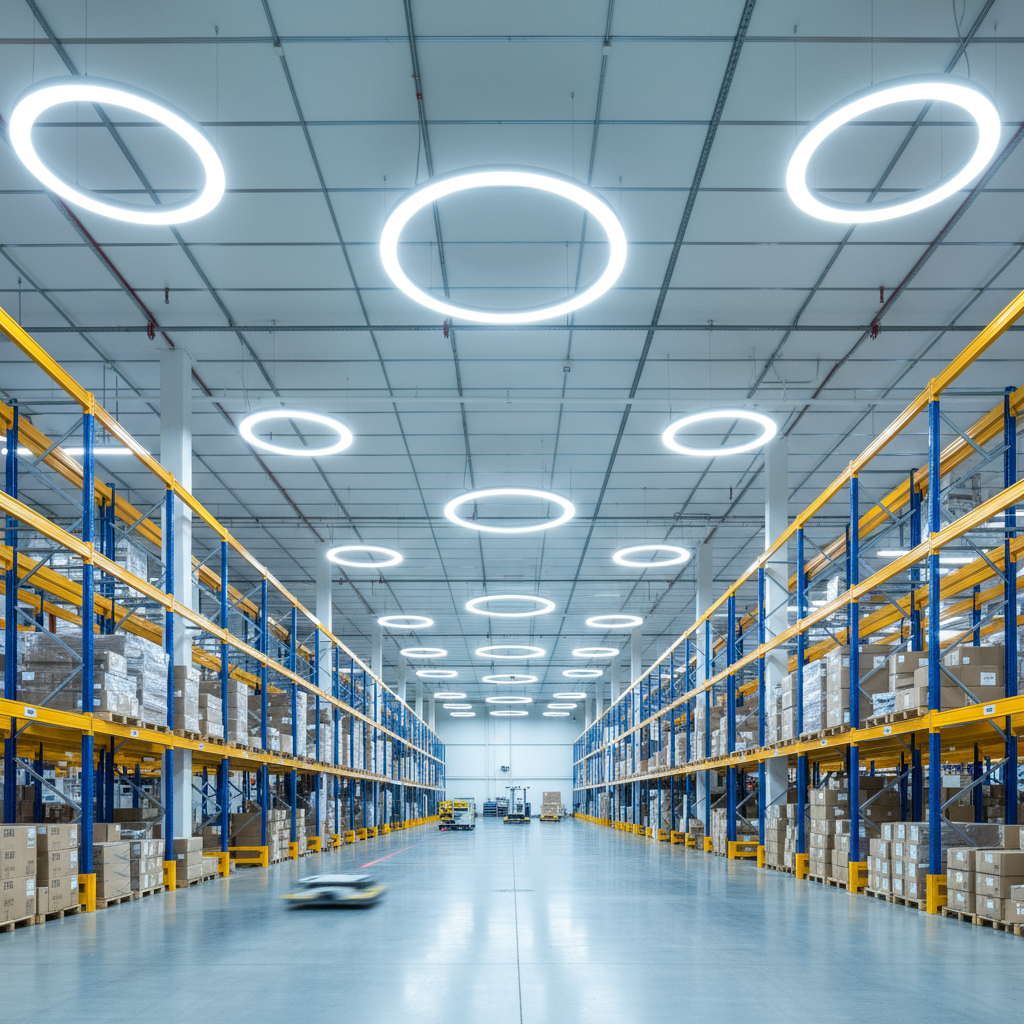
At XHLWX (led-project-light.com), a Custom Indoor LED Lighting Manufacturer based in China, we closely monitor key market shifts that impact lighting specifiers and contractors across the EU and US. A recent development from Shenzhen Qihang Lighting serves as a critical case study: their QH-HB12 series industrial high bay light has successfully secured ENEC certification.
While passing a test might seem routine, this achievement, coupled with a high luminous efficacy of 160 lm/W, signals a significant validation of performance and safety, effectively unlocking access to some of Europe's most demanding logistics and manufacturing markets, particularly Germany, the Netherlands, and the Nordic region.
What Changed — and Why It Matters Now
The core change is the elevation from a self-declared CE mark to a third-party verified ENEC (European Norms Electrical Certification) approval. For a high-demand product category like industrial high bays, this is a game-changer. The CE mark is a prerequisite for market entry, but it's fundamentally a manufacturer's declaration of conformity. ENEC, however, is a voluntary mark granted by an independent, accredited European Certification Body. It confirms that the product, in this case the QH-HB12 high bay, not only meets the stringent safety standards of EN 60598-1 but that the manufacturer's production lines are subject to ongoing surveillance to ensure consistent quality. This drastically de-risks the procurement process for European importers and specifiers.
The timing of this is crucial. With European wholesale energy prices remaining volatile and significantly higher than historical averages, operational efficiency is paramount.
A luminaire delivering 160 lumens per watt represents a massive leap forward from legacy High-Intensity Discharge (HID) systems (typically 60-90 lm/W) and even from earlier-generation LEDs (110-130 lm/W). For a 24/7 logistics hub, switching to this level of efficacy can slash lighting-related electricity costs by 60-75%.
Furthermore, compliance with EN 60598-2-22 indicates suitability for integration into emergency lighting systems, a common requirement in large-scale public or commercial buildings, adding another layer of versatility.
The Technical Detail Behind the Headline
To understand the full impact, it's essential to examine the specifications that earned this high bay its certification and make it a compelling choice for modern industrial applications. The QH-HB12 series is not just efficient; it's engineered for performance, longevity, and control in harsh environments. The integrated die-cast aluminum body acts as a robust passive heatsink, critical for maintaining performance and achieving a long service life in facilities that can have high ambient temperatures.
Here's a breakdown of the key performance indicators:
| Parameter | Specification | Standard / Protocol | Notes for Specifiers |
|---|---|---|---|
| Luminous Efficacy | 160 lm/W (typical) | ErP (EU) 2019/2020 | Easily exceeds current ecodesign requirements, ensuring future-proof compliance. |
| Correlated Color Temperature (CCT) | 4000K, 5000K | - | 4000K for comfort and color accuracy; 5000K for high-alertness tasks. |
| Color Rendering Index (CRI) | Ra > 80 | EN 12464-1 | Standard for most industrial tasks; ensures colors are rendered naturally. |
| TM-30-20 Gamut/Fidelity | Rf 84 / Rg 96 | IES TM-30-20 | Provides a more complete picture of color rendition than CRI alone. |
| Unified Glare Rating (UGR) | <25 | EN 12464-1 | Crucial for visual comfort and safety, especially for forklift operators. |
| Control Protocol | DALI-2, 0-10V | IEC 62386 | DALI-2 offers addressability, diagnostics, and seamless BMS integration. |
| Housing & IP Rating | ADC12 Die-cast Aluminum, IP65 | EN 60529 | IP65 rating ensures full protection against dust ingress and low-pressure water jets. |
| LED Chip Brand | Bridgelux 2835 SMD | - | A reputable brand known for high efficacy and stable performance. |
| Driver Brand | Mean Well HBG Series | - | A leading driver manufacturer, synonymous with reliability and long warranty periods. |
| Certifications | ENEC, CE (LVD/EMC), RoHS | EN 60598 | The ENEC mark is the key differentiator, signifying third-party European validation. |
What This Means for Specifiers and Buyers
The technical specifications and certifications directly translate into tangible benefits and new considerations for those designing, purchasing, and installing lighting systems in industrial settings across Europe and North America.
How Does ENEC Certification Change the Risk Profile for EU Importers?
For an EU-based contractor or distributor, specifying a product with only a CE mark from a non-EU manufacturer carries inherent risks. The responsibility for compliance ultimately rests on the importer. If market surveillance authorities find the product to be non-compliant, it can be subject to forced recalls, fines, and significant reputational damage. ENEC certification effectively transfers this verification burden to an accredited third party. It provides robust, undeniable proof that the product meets European safety standards, streamlining customs clearance and providing legal peace of mind. It's a clear signal that the manufacturer is serious about the European market and invests in quality beyond the bare minimum.
What Are the Operational ROI Implications of Switching to 160 lm/W Lighting?
The financial case is overwhelmingly positive. Consider a typical 10,000-square-meter warehouse operating 12 hours a day, 6 days a week (approx. 3,744 hours/year). Replacing 150 legacy 400W metal halide fixtures (total load: 60 kW) with 150 new 150W, 160 lm/W LED high bays (total load: 22.5 kW) yields an immediate power reduction of 37.5 kW. Annually, this translates to 140,400 kWh of saved electricity. At an average EU electricity price of €0.25/kWh, this represents an annual cost saving of over €35,100 from energy alone. Factoring in the near-zero maintenance of LEDs versus the frequent re-lamping of HID, the return on investment period is often less than 24 months.
How Do Advanced Controls Like DALI-2 Impact Modern Logistics Facilities?
While the 160 lm/W efficacy provides a baseline saving of over 60%, integrating DALI-2 controls can push total energy savings towards 85%. In a modern warehouse, this is no longer a luxury. Daylight harvesting sensors can automatically dim fixtures near skylights or windows, saving energy during daytime hours. Occupancy sensors in aisle-based storage areas can keep lights at a low level (e.g., 20%) and instantly ramp to 100% when a worker or forklift enters, rather than illuminating the entire facility at full power all day. DALI-2's digital, addressable nature also means each fixture can be controlled and monitored individually, providing invaluable data on energy consumption and operational status for predictive maintenance and energy audits, aligning perfectly with Industry 4.0 and smart building initiatives.
Compliance Checklist (IES / LDT / DIALux / CE / RoHS / ErP)
For a specifier, a certificate is only the beginning. A successful project requires a complete package of technical documentation to ensure the design intent is met in reality. When evaluating a product like the QH-HB12 or any other high-performance luminaire, your checklist should include:
-
Verified Certifications: Request the actual ENEC certificate number and the Declaration of Conformity for the CE mark. Also, ensure RoHS and ErP compliance documentation is available.
-
Photometric Files: Insist on receiving the full set of IES and LDT photometric files for the specific variants you intend to use (e.g., 150W, 5000K, 90° beam). These files are non-negotiable for professional lighting design.
-
Lighting Design Simulation: Use these IES/LDT files in a lighting design program like DIALux or Relux. This is the only way to accurately predict on-site performance. A simulation will confirm if your proposed layout achieves the target illuminance (e.g., 300 lux for general warehousing), uniformity (Uo > 0.6), and glare control (UGR < 25), preventing costly mistakes before installation.
-
Installation Manual & Warranty: Review the installation instructions for any specific requirements and confirm the warranty terms, including driver and LED module coverage, which should be at least 5 years for a quality industrial fixture.
Frequently Asked Questions
Q: What Is the Main Benefit of ENEC Over a Standard CE Mark?
The primary benefit is independent, third-party verification. While CE marking can be self-declared, ENEC certification involves rigorous testing by an accredited European body and ongoing factory inspections. This ensures consistent quality and compliance with standards like EN 60598, giving specifiers significantly higher confidence and reducing import risks for projects.
Q: How Much Energy Can a 160 lm/W High Bay Really Save in a Warehouse?
Compared to older 400W metal halide fixtures, a new 150W LED high bay with 160 lm/W efficacy can reduce lighting energy consumption by over 60%. When combined with DALI-2 controls for daylight harvesting and occupancy sensing, total energy savings can often exceed 80%, leading to a project payback period of under 2 years in many cases.
Q: Is a UGR of <25 Mandatory for Industrial High Bay Lighting?
While not always a strict legal mandate, a Unified Glare Rating (UGR) below 25 is a widely accepted best practice for industrial areas, as recommended by the European standard EN 12464-1. It is crucial for occupational health and safety, especially where forklift operators need clear, comfortable vision to avoid accidents and improve productivity.
Q: Why Are IES or LDT Files Necessary If the Product Is Already Certified?
Certification confirms safety and basic performance metrics, but IES/LDT files are essential for professional lighting design. These photometric data files allow designers to simulate light distribution in software like DIALux, guaranteeing that the final installation will meet specific client requirements for lux levels, uniformity, and glare before a single fixture is purchased.
Talk to Our Engineering Team
At XHLWX (led-project-light.com), a Custom Indoor LED Lighting Manufacturer based in China, our expertise extends beyond manufacturing to encompass the entire specification and compliance landscape you've just read about. The challenges and opportunities presented by high-efficacy, certified products are precisely where we provide value. Whether you are specifying for a new-build logistics center in Germany or retrofitting a distribution hub in the United States, our engineering team can help you navigate these complex requirements. We provide full project support, including detailed DIALux simulations using our comprehensive library of IES and LDT photometric files, to ensure your project is compliant, efficient, and perfectly illuminated. Contact us to discuss your next project's specific needs.
Need a tailored lighting plan for your project?
Our senior lighting designers reply within 48 hours with a free design proposal & quotation.