
Amsterdam Hotel Boosts Ratings with Casambi Human-Centric Lighting
A 28-room Amsterdam hotel renovation used 24V magnetic track lights and anti-glare downlights with Casambi control, leading to improved guest feedback.
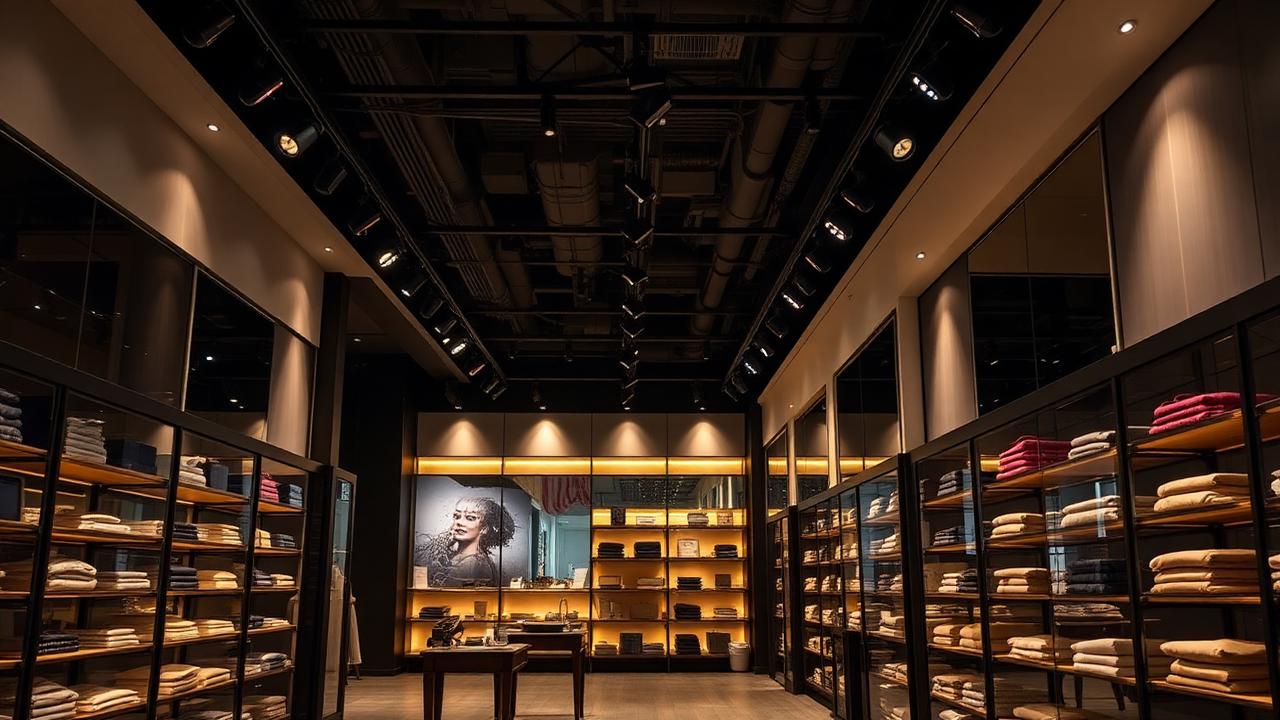
At XHLWX (led-project-light.com), a Custom Indoor LED Lighting Manufacturer based in China, we analyze industry trends to inform our partners. A recently completed renovation of a 28-room boutique hotel in Amsterdam's historic canal district serves as a powerful case study for the convergence of human-centric lighting, wireless control, and high-fidelity color rendering in the hospitality sector.
Completed in late April 2024, the project moved beyond simple illumination, using a sophisticated low-voltage LED system to demonstrably enhance the guest experience, streamline operations, and navigate the architectural constraints of a heritage building. By deploying 130 sets of QH-MG07 magnetic track lights and 60 sets of QH-DL05 anti-glare downlights, all governed by a Casambi wireless mesh network, the hotel has created a dynamic, responsive environment that has already garnered a significant increase in positive guest feedback on booking and review platforms.
What Changed — and Why It Matters Now
The core shift illustrated by this project is the move from static, task-oriented lighting to a dynamic, experience-centric approach. In the competitive hospitality market, particularly in destinations like Amsterdam, guest experience is the primary driver of value, ratings, and return visits. Lighting is evolving from a background utility to a frontline tool for crafting that experience. This project matters now because it proves that advanced lighting is no longer the exclusive domain of five-star, new-build hotels; it is an accessible and crucial upgrade for boutique and renovation projects seeking a competitive edge.
The 'why' is rooted in two key trends: wellness and operational efficiency. The use of a dual CCT (Correlated Color Temperature) combination of a warm, relaxing 2200K and a slightly crisper 2700K allows the lighting to support guests' natural circadian rhythms.
A bright, welcoming scene upon entry can transition to a very warm, 'sunset' dimming profile for bedtime, promoting better sleep. This is the practical application of human-centric lighting principles.
From an operational standpoint, pre-programmed scenes like 'Welcome', 'Reading', 'Bedtime', and 'Cleaning'—accessible via a single click on a wall switch or app—ensure lighting consistency, optimize energy use, and simplify staff duties. For instance, the 'Cleaning' mode can instantly bring lights to 100% brightness and a neutral CCT for maximum visibility, then revert to an energy-saving 'Vacant' mode, a level of control impossible with traditional systems.
The Technical Detail Behind the Headline
Achieving this level of performance required a careful selection of luminaires and control systems that meet stringent European standards for performance, safety, and efficiency. The specification for the primary fixtures, the QH-MG07 magnetic track lights and QH-DL05 downlights, highlights the parameters necessary for a high-end hospitality environment. Below is a breakdown of the key technical specifications.
| Parameter | QH-MG07 (Magnetic Module) | QH-DL05 (Downlight) | EU Standard / Best Practice | Notes |
|---|---|---|---|---|
| Optics (CCT) | 2200K - 2700K Tunable | 2700K Fixed | N/A | Tunable white for guest rooms; fixed warm white for corridors. |
| Optics (CRI) | Ra > 95, R9 > 90 | Ra > 95, R9 > 90 | EN 12464-1 (Ra > 80) | Exceeds standard; R9 > 90 is critical for rendering skin tones and rich textures. |
| Optics (Fidelity) | TM-30 Rf 92, Rg 101 | TM-30 Rf 93, Rg 102 | N/A | High fidelity (Rf) and gamut (Rg) ensure vibrant and natural color rendering. |
| Optics (Glare) | UGR < 19 (with deep reflector) | UGR < 16 | UGR < 19 (Offices/Reading) | Low UGR (Unified Glare Rating) is essential for visual comfort in hotel rooms. |
| Optics (Beam) | 24° / 36° interchangeable | 38° | N/A | Flexibility to create accent and general lighting from the same track system. |
| Control System | Casambi Bluetooth Mesh | Casambi Bluetooth Mesh | DALI-2 / 0-10V / Phase | Wireless mesh was chosen to avoid new control wiring in the historic building. |
| Power System | 24V DC (SELV) | 24V DC (SELV) | IEC 60598 | Safety Extra-Low Voltage is ideal for guest-accessible areas. |
| Key Components | Bridgelux Vesta® Series Chip | Osram SOLERIQ® S Chip | N/A | Tier-1 component selection ensures reliability and color consistency. |
| Driver | Mean Well 24V Driver | Tridonic Constant Current | EN 61347 | External drivers ensure better thermal management and serviceability. |
| Housing | 6063 Aluminum, 25mm width | Die-cast Aluminum | IP20 | Standard indoor rating; slim track profile for minimal architectural impact. |
| Certification | CE, RoHS, ErP | CE, RoHS, ErP | (EU) 2019/2020 | Full compliance for the EU market, including the latest Eco-design directive. |
This level of specification ensures that the lighting not only looks good on day one but also performs reliably and efficiently over its entire lifecycle, meeting all regulatory requirements for the European market.
What This Means for Specifiers and Buyers
For lighting specifiers, architects, and electrical contractors in Europe and the US, this Amsterdam project provides a clear template for modern hospitality lighting. It demonstrates how to balance aesthetic ambition with practical constraints like budget, installation complexity, and historical preservation.
How Can Specifiers Replicate This Success Without Disrupting Historic Architecture?
The key takeaway is the strategic use of a 24V low-voltage magnetic track system. In buildings where cutting into ceilings and walls is restricted, this surface-mounted or shallow-recessed track provides immense flexibility. It requires only a single power feed for an entire run. The magnetic-mount modules can be added, removed, or repositioned by hand without tools, allowing hotel staff to adapt the lighting for different room layouts or functions post-installation. This modularity is a significant advantage over traditional fixed downlights, which would require extensive and disruptive rewiring and plasterwork to modify.
What Are the Operational Savings from a System Like This?
The savings are multi-faceted. First, energy consumption is drastically reduced. A typical QH-DL05 downlight used in the project consumes around 8W to produce over 600 lumens. Its halogen predecessor would have consumed 50W for similar output. Across 60 downlights running an average of 10 hours a day, this translates to an energy saving of over 9,200 kWh per year. Second, maintenance costs plummet. With an L80B10 lifespan of >50,000 hours, the LEDs will operate for over a decade without replacement, eliminating the material and labor costs of frequent bulb changes. Finally, scene control adds operational efficiency. The ability to set all 28 rooms to a low-level 'welcome' scene automatically at check-in time saves staff hours and guarantees a perfect guest arrival experience every time.
Is Casambi Always the Right Choice Over DALI-2 for Hotel Projects?
Not necessarily, and the choice is project-dependent. For this 28-room retrofit, Casambi was ideal. Its wireless Bluetooth Mesh technology eliminated the need to run new control cables, which would have been costly and disruptive in the canal house. Commissioning is done via a smartphone app, simplifying setup. However, for a new-build 300-room hotel, a wired system like DALI-2 (Digital Addressable Lighting Interface) might be more appropriate. DALI-2 offers robust, centralized control and monitoring over thousands of fixtures, integrates natively with larger Building Management Systems (BMS), and provides detailed feedback from each driver. The decision hinges on scale, existing infrastructure, and the desired level of BMS integration. This project highlights that for boutique renovations, wireless control offers a powerful, cost-effective, and flexible solution.
Compliance Checklist (IES / LDT / DIALux / CE / RoHS / ErP)
For any specifier in Europe or the US looking to implement a similar scheme, a rigorous compliance and documentation process is non-negotiable. Your manufacturing partner must provide a full suite of supporting files and certifications.
First, request IES and LDT photometric files for every specified luminaire. These data files describe the exact light distribution pattern and intensity of the fixture. They are the fundamental building blocks for any professional lighting design.
Next, these files must be imported into lighting design software like DIALux or Relux. This allows you to create a 3D model of the space and accurately simulate the lighting performance before purchasing.
You can verify lux levels on surfaces (e.g., ensuring 150 lux on the bed for reading), check for glare issues (visualizing the UGR), and present a realistic rendering to the client. This simulation step is critical for avoiding costly mistakes and ensuring the final result meets design intent and local codes.
Finally, all products must be fully certified for the target market. For the EU, this means they must bear the CE mark, indicating conformity with health, safety, and environmental protection standards.
They must also be RoHS compliant, restricting the use of hazardous substances. Crucially, they must comply with the ErP Directive and the Single Lighting Regulation (SLR), (EU) 2019/2020, which sets strict minimum energy efficiency requirements and mandates a new energy label.
Working with a manufacturer who understands and provides full documentation for these regulations is essential for a smooth and legal project delivery.
Frequently Asked Questions
Q: Why Is an R9 Value of >90 so Important for a Hotel Room?
The R9 value specifically measures a light source's ability to accurately render deep red colors. In a hotel setting, this is critical for making skin tones look healthy and natural, and for bringing out the richness in wood furniture, fabrics, and artwork. A standard CRI of 80 can have a poor R9, making interiors look dull. An R9 >90, as used in this project, ensures a luxurious and visually appealing environment that photographs well for social media.
Q: What Are the Safety Benefits of Using a 24V System in Guest Rooms?
A 24V DC system is classified as Safety Extra-Low Voltage (SELV). This means the risk of serious electric shock is virtually eliminated, even if a guest were to come into contact with the wiring. This is a significant safety enhancement compared to standard 230V/120V mains voltage systems. It simplifies installation and increases guest safety, making it an ideal choice for areas within arm's reach, such as the adjustable modules on the magnetic tracks.
Q: How Complex Is It to Commission the Lighting Scenes with Casambi?
Commissioning Casambi is surprisingly straightforward and requires no specialized hardware, only a smartphone or tablet with the Casambi app. An installer pairs the fixtures to a wireless network, groups them by room, and then creates scenes by adjusting dimming levels and color temperatures. For a typical hotel room with 4-6 light groups, setting up four distinct scenes ('Welcome', 'Reading', 'Sleep', 'Clean') can be accomplished in under 2 hours by a trained technician.
Q: What Is the Typical Upfront Cost Increase for a Smart System Like This?
Compared to a basic non-dimmable LED installation, a fully addressable, human-centric system with Casambi control can have an initial fixture and control gear cost that is 20-35% higher. However, this premium must be weighed against the significant ROI from energy savings (up to 80% vs halogen), drastically reduced maintenance, and the commercial value of enhanced guest satisfaction, which can lead to better online ratings and higher occupancy rates.
Talk to Our Engineering Team
This Amsterdam hotel is a microcosm of the future of hospitality lighting, where technical performance and guest-centric design are intrinsically linked. Successfully navigating the complexities of product selection, control system integration, and international compliance requires a knowledgeable manufacturing partner. At XHLWX (led-project-light.com), a Custom Indoor LED Lighting Manufacturer based in China, our engineering team specializes in helping specifiers and contractors in the EU, US, and Middle East markets realize these advanced lighting concepts. We provide comprehensive support, from initial design consultation and DIALux modeling with our IES/LDT files to delivering fully certified, project-specific luminaires. Contact us to discuss how we can bring this level of performance and quality to your next project.
Need a tailored lighting plan for your project?
Our senior lighting designers reply within 48 hours with a free design proposal & quotation.