
TM-30-20 vs CRI: Navigating the New Color Rendition Standard
The lighting industry is shifting from CRI to IES TM-30-20. This new standard offers a more accurate measure of color rendition, impacting luxury retail and m
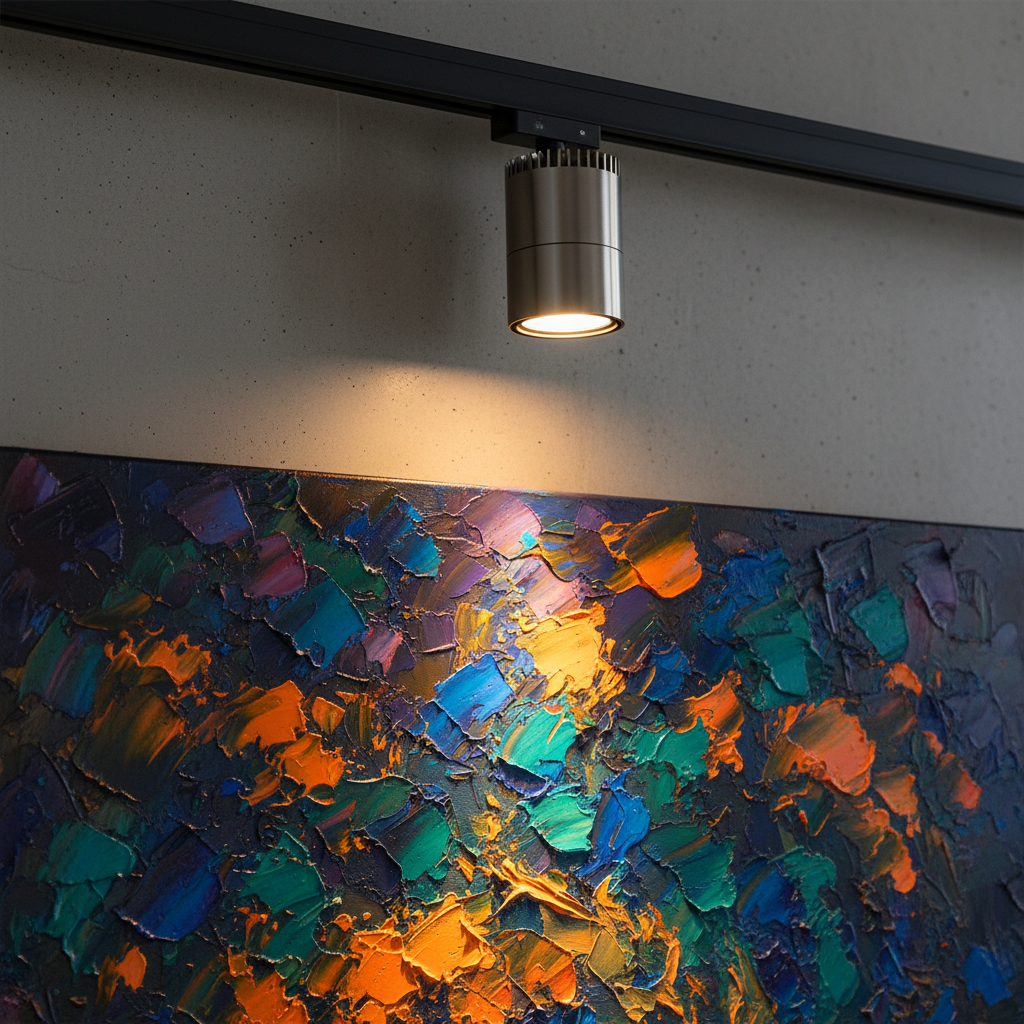
What Changed — and Why It Matters Now
At XHLWX (led-project-light.com), a Custom Indoor LED Lighting Manufacturer based in China, we are closely tracking the industry-wide transition from the long-standing Color Rendering Index (CRI) to the more comprehensive IES TM-30-20 standard. A recent joint statement from the Illuminating Engineering Society (IES) in North America and the International Commission on Illumination (CIE) in Europe signals a pivotal change: TM-30 will gradually become the mandatory color evaluation standard for demanding applications like luxury retail, museums, and high-end hospitality, with widespread adoption in tenders expected around 2027.
For decades, CRI (specifically the Ra value) has been the go-to metric for color quality. However, its limitations are now widely acknowledged.
CRI is based on the average performance across only eight pastel-colored test samples (TCS), largely ignoring saturated colors. A luminaire could achieve a high CRI of 90+ yet still render a vibrant red (the R9 value) or deep blue poorly, a critical failure in environments where product appeal or artwork integrity is paramount.
TM-30-20 rectifies this by using a much broader and more representative set of 99 Color Evaluation Samples (CES) that span the full hue and saturation spectrum. It moves beyond a single score to a multi-faceted evaluation system, providing three key metrics:
-
Rf (Fidelity Index): This is the modern analogue to CRI Ra. It measures the average similarity in color appearance between the test light source and a reference illuminant, calculated across all 99 CES. A score of 100 represents a perfect match. Unlike CRI, it gives a far more reliable measure of overall color faithfulness.
-
Rg (Gamut Index): This metric evaluates the average change in the saturation (chroma) of the 99 CES. An Rg value greater than 100 indicates that colors, on average, will appear more saturated or vivid. A value less than 100 indicates they will appear duller. This gives designers control over not just accuracy, but vibrancy.
-
Color Vector Graphics & Local Chroma Shift (Rcs,h[j]): TM-30 provides a graphical representation of how hues and saturation are shifted. This allows for a detailed diagnosis of color rendering performance. A key subset metric, Rcs,h1, specifically measures the rendering of skin tones. A positive value, often specified as Rcs,h1 ≥ -7% in WELL Building Standards or even pushed to +10% for vibrant hospitality settings, indicates healthier, more saturated skin tones, a crucial factor in fitting rooms and hotel lobbies.
This shift isn't just academic. It means that specifying "CRI > 90" is no longer sufficient for high-quality projects. Specifiers and buyers must now understand and demand TM-30 data to ensure the visual intent of a space is realized and future-proofed against evolving standards.
The Technical Detail Behind the Headline
The move to TM-30 requires a deeper look at luminaire datasheets. A product that performs well under this new standard combines advanced LED chip technology with precision optics and high-efficiency drivers. Below is a typical specification for a museum-grade track luminaire from our R&D pipeline, designed to exceed the upcoming requirements.
| Parameter | Specification | Applicable Standard | Notes for Specifiers |
|---|---|---|---|
| Color Temperature (CCT) | 3000K | ANSI C78.377 | For warm, inviting atmosphere in galleries or retail. |
| Fidelity Index (Rf) | ≥ 96 | IES TM-30-20 | Guarantees extremely high color accuracy across 99 color samples. |
| Gamut Index (Rg) | 100 (±2) | IES TM-30-20 | Provides true-to-life color saturation, without artificial boosting. |
| Skin Tone (Rcs,h1) | ≥ +5% | IES TM-30-20 | Delivers a healthy, natural appearance for skin tones. |
| CRI (for reference) | Ra ≥ 97, R9 ≥ 90 | CIE 13.3 | Included for legacy specs; high R9 shows strong saturated red rendering. |
| Unified Glare Rating (UGR) | < 13 | EN 12464-1 | Critical for visual comfort in museums and workspaces. Achieved with deep-set optics. |
| Beam Angle Options | 15° / 24° / 38° | IESNA LM-79 | Interchangeable optics to adapt from spotlighting to wall washing. |
| Control Protocol | DALI-2 Device Type 8 (DT8) | IEC 62386 | Allows for tunable white CCT control and precise dimming down to 0.1%. |
| Housing & Mounting | Die-cast aluminum, 3-Circuit Track | N/A | Available in standard lengths (e.g., 500mm, 1000mm) with IP20 rating. |
| LED Chip / Driver | Samsung LM281B+ PRO / Tridonic ADV | Manufacturer Specs | Ensures long lifetime (L80B10 > 50,000 hrs) and system efficiency. |
| Certifications | CE, RoHS, ErP | EU Directives | Confirms safety, material, and energy efficiency for the European market. |
What This Means for Specifiers and Buyers
The transition to TM-30 empowers designers and clients to make more informed decisions, but it also introduces new responsibilities. Understanding how to specify and verify these new metrics is key to leveraging their benefits and mitigating risks on projects planned for completion in the latter half of this decade.
How Should I Update My Lighting Specifications to Include TM-30?
Moving forward, your lighting specification documents should evolve beyond a single CRI number. Instead of just "Source must have CRI > 90", a more robust and future-proof specification would read: `"Luminaire CCT shall be 3000K.
Color rendering must meet IES TM-30-20 with a Fidelity Index (Rf) of 95 or greater and a Gamut Index (Rg) within the range of 98 to 103. The manufacturer must provide the full TM-30-20 report for verification."` Defining a tight range for Rg is crucial; it prevents manufacturers from delivering overly-saturated, cartoonish light (e.g., Rg > 110) while ensuring colors don't appear washed out (Rg < 95).
What Are the Risks of Ignoring TM-30 in Upcoming Projects?
Ignoring the shift to TM-30 poses several tangible risks for specifiers, contractors, and their clients. Firstly, for any project with a timeline extending into 2026-2027, particularly in the premium retail, hospitality, or museum sectors, there is a significant risk of non-compliance with tender requirements that will almost certainly mandate TM-30 data.
Secondly, you risk specifying a visually inferior product. A competitor's project might use a high-fidelity TM-30 source that makes merchandise look dramatically more appealing, putting your client at a commercial disadvantage.
Finally, it signals a lack of technical currency, potentially damaging your firm's reputation as an expert in the field.
Where Can I Find Products That Already Meet These New Standards?
Proactive manufacturers are already ahead of the curve. It is essential to partner with suppliers who not only understand TM-30 but have also invested in the R&D and testing to validate their products.
For example, at XHLWX, our high-fidelity 'R-Spec' series has already undergone complete retesting to the TM-30-20 standard, consistently achieving results like Rf ≥ 96 and Rg in the ideal 100±2 range. When sourcing products, demand the full TM-30 report, which includes the color vector graphic—this is the only way to truly see how a light source will behave with specific colors critical to a brand or collection.
Compliance Checklist (IES / LDT / DIALux / CE / RoHS / ErP)
For a European or US specifier, ensuring a product is truly fit for purpose goes beyond color science. Here is a practical checklist for your next custom indoor LED lighting project:
-
TM-30 Data Verification: Does the manufacturer provide a complete TM-30 report, including Rf, Rg, and the color vector graphic for the exact CCT you are specifying? A simple pair of Rf/Rg values is not enough for a rigorous evaluation.
-
Photometric Simulation Files: Has the manufacturer provided IES and LDT photometric files for the luminaire? These are non-negotiable for professional lighting design. They allow you to simulate the exact lighting performance in software like DIALux, verifying you will achieve the target illuminance (e.g., 500 lux on task areas), uniformity, and a UGR below the required threshold (e.g., UGR < 19 for offices).
-
European Market Compliance (CE & RoHS): Does the luminaire and its external driver carry the CE mark? This declares conformity with EU health, safety, and environmental standards. Is it also certified RoHS compliant, attesting that it is free from specific hazardous materials like lead and mercury, a requirement for most public and commercial projects?
-
Energy Efficiency & Sustainability (ErP): Does the product comply with the EU's EcoDesign for light sources Regulation (EU) 2019/2020? This regulation sets stringent minimum efficiency levels (lm/W), and manufacturers must declare the energy class. Upgrading from older fluorescent or halogen systems to ErP-compliant LEDs can result in energy savings of 50-75%, or several thousand kWh per year for a typical retail space.
-
Quality Assurance (ISO 9001): Is the manufacturing facility ISO 9001:2015 certified? This certification provides assurance of a robust quality management system, leading to greater product consistency, reliability, and better traceability.
Frequently Asked Questions
Q: Is CRI Being Completely Eliminated Tomorrow?
No, the transition is gradual. CRI will likely persist in less critical applications for some time. However, for professional specifications in retail, art, and hospitality, TM-30-20 is rapidly becoming the required standard. Its use of 99 color samples, compared to CRI's 8 pastel tones, provides the detailed data needed for high-stakes environments. Expect it to be a firm requirement in tenders by 2027.
Q: Can a Light Have a High CRI but Poor TM-30 Scores?
Absolutely. A luminaire can be optimized to perform well on CRI's 8 pale samples, achieving a CRI of 90, but render saturated colors poorly. This would be revealed by TM-30 as a high Rf (fidelity) but a low Rg (gamut index), perhaps below 95, making the overall impression feel dull or desaturated. This is a common issue TM-30 was specifically designed to solve.
Q: What Is a “good” Rg Gamut Index Value?
It depends on the application. An Rg of 100 indicates perfect saturation fidelity, true to the reference. For a museum, this is often ideal. For a grocery store's produce section, a slightly elevated Rg of 105-110 might be desirable to make fruits and vegetables look more vibrant and fresh. For most high-end architectural applications, a tight range of 97-103 is a safe and effective target.
Q: How Does This New TM-30 Standard Affect Project Costs?
Currently, LED luminaires with top-tier TM-30 performance (e.g., Rf > 95) may carry a small premium of 5-15% over standard CRI 90 products due to the higher-grade phosphors and binning required. However, as adoption becomes widespread, this cost difference is expected to diminish. For high-value applications, this minor upfront cost is easily justified by the significant improvement in visual quality and future-proofing the installation.
Talk to Our Engineering Team
The shift from CRI to TM-30-20 represents a significant leap forward in the art and science of lighting, but it also increases technical complexity. Ensuring your specification delivers the desired visual outcome while meeting all regional compliance requires a manufacturing partner with deep technical expertise.
At XHLWX (led-project-light.com), a Custom Indoor LED Lighting Manufacturer based in China, our engineering team is ready to provide full TM-30 reports, custom photometric data, and specification support to ensure your projects meet the highest standards of color quality and compliance.
Need a tailored lighting plan for your project?
Our senior lighting designers reply within 48 hours with a free design proposal & quotation.