
Smart Lighting Shipments Overtake Traditional Dimming for First Time
A major industry shift is underway as wireless controls like Bluetooth Mesh surpass traditional wired dimming for the first time in key commercial sectors, ac
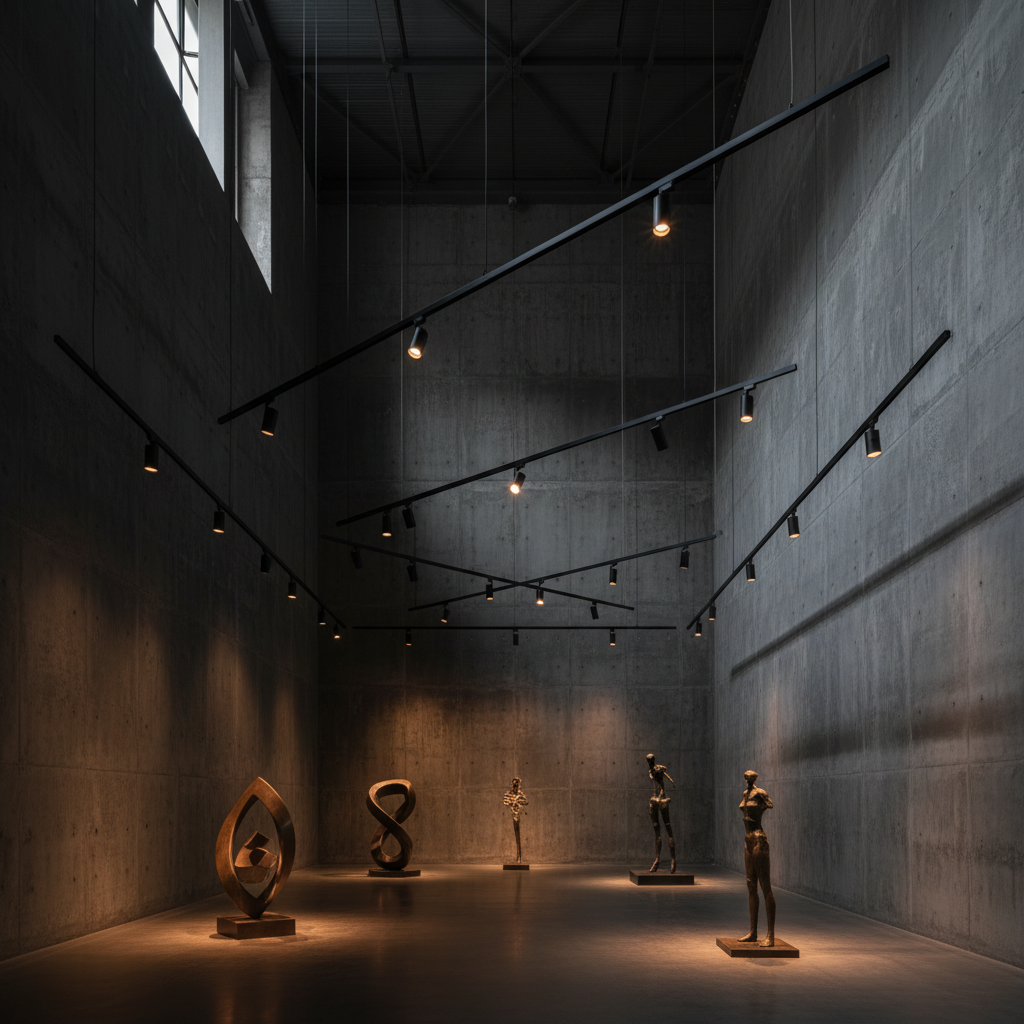
What Changed — and Why It Matters Now
At XHLWX (led-project-light.com), a Custom Indoor LED Lighting Manufacturer based in China, we analyze market shifts to guide our partners in Europe, the US, and the Middle East through the evolving landscape of lighting technology. A pivotal change is now confirmed: Q1 2026 marks the first time that shipments of luminaires with integrated wireless controls have surpassed those with traditional wired dimming protocols like 0-10V and DALI-1 within the small-to-medium commercial project sector.
This is not a forecast, but a market reality. According to Q1 2026 data from wireless control pioneer Casambi, the global cumulative number of installed nodes has exceeded 500,000, representing a remarkable 78% year-over-year increase.
The tipping point has been reached in projects under 200㎡, particularly in boutique retail, hospitality, and agile office environments. In these applications, Bluetooth Mesh is no longer an alternative; it is now the preferred dimming and control solution.
The drivers behind this rapid adoption are rooted in post-pandemic economic and operational realities. Project budgets are tighter, timelines are shorter, and the need for adaptable spaces is paramount.
Traditional wired control systems, which necessitate dedicated control cabling (e.g., a two-wire bus for DALI), introduce significant material costs, increase on-site labor hours for installation and commissioning, and create major disruption, especially in retrofit projects. Pulling new wires through existing walls and ceilings is expensive, messy, and often results in business downtime.
Wireless mesh networks eliminate this fundamental barrier. By embedding control intelligence directly into the luminaire's driver or a compact module, they create a self-organizing and self-healing network.
This democratizes sophisticated lighting control, making features like individual luminaire addressing, scene-setting, and sensor integration accessible without the cost and complexity of a full-scale building management system. For a European contractor or a US-based specifier, this translates to faster project completion, reduced labor risk, and the ability to offer clients a higher level of functionality for a competitive price.
The Technical Detail Behind the Headline
The move to wireless is not just about control; it's forcing a re-evaluation of luminaire design itself. Fixtures are no longer just passive emitters of light; they are active nodes in a data network.
Manufacturers must now integrate robust antennas, select compatible drivers, and ensure seamless performance between the LED module, optics, and the control module. As an example, the technical specifications for a modern, wireless-ready luminaire designed for high-end commercial spaces highlight these integrated requirements.
Below are the specifications for the XHLWX Pro-Linear X48-CAS, a magnetic track light module designed for Casambi integration.
| Parameter | Specification | Industry Standard/Target | Notes for Specifiers |
|---|---|---|---|
| Control Protocol | Casambi Bluetooth Low Energy (BLE) Mesh; DALI-2 & 0-10V | N/A | Offers maximum flexibility; can operate in a native wireless network or via wired gateways. |
| Chipset | Bridgelux Vesta® Series Tunable White | Ra > 90, R9 > 50 | Enables high-quality human-centric lighting with smooth CCT tuning from warm to cool. |
| Driver | Tridonic LCI series with Casambi CBU-ASD module | < 10% THD, >0.95 PF | A premium combination ensuring reliability, smooth dimming (0.1%), and easy integration. |
| Luminous Efficacy | >110 lm/W @ 4000K | ErP > 100 lm/W | Exceeds current Ecodesign requirements, ensuring project energy efficiency. |
| CCT Range | 2700K - 5700K | 2700K - 6500K | Covers the full spectrum from cozy warm white to stimulating daylight. |
| Color Rendering (CRI) | Ra > 95 | Ra > 80 (Standard), Ra > 90 (Premium) | Essential for retail and hospitality where color accuracy is critical for merchandise. |
| TM-30-18 Fidelity/Gamut (Rf/Rg) | Rf > 92, Rg > 100 | Rf > 90, Rg ≈ 100 | Provides a more complete picture of color rendition than CRI alone. |
| Unified Glare Rating (UGR) | <16 with optional micro-prismatic lens | UGR < 19 (Office), UGR < 22 (Circulation) | Achieves low-glare performance suitable for demanding office and VDT screen environments. |
| Housing / IP Rating | 6063-T5 Extruded Aluminum / IP20 | IP20 (Indoor Dry) | Standard for indoor commercial use; robust aluminum ensures superior thermal management. |
| Certifications | CE, RoHS, ErP (EU) 2019/2020, ISO9001:2015 | Varies by region | Full compliance for EU market access and assurance of quality manufacturing processes. |
What This Means for Specifiers and Buyers
This market shift requires a change in mindset for lighting specifiers, electrical contractors, and facility managers. The primary benefits—cost savings and flexibility—are clear, but understanding the nuances is key to leveraging this technology successfully.
How Does Wireless Control Simplify Retrofit Projects in Existing Buildings?
Retrofitting smart lighting into an operational commercial space has historically been a logistical nightmare. The primary advantage of wireless control is the near-total elimination of new control wiring.
This has a powerful cascading effect on project timelines and budgets. Instead of cutting into walls and ceilings to run DALI or 0-10V cables, an electrician simply replaces the existing luminaires with wireless-enabled ones.
Commissioning, which involves grouping lights, setting scenes, and pairing sensors, is done via a smartphone or tablet app, often in a fraction of the time required for wired systems. This drastically reduces on-site labor costs and, crucially, minimizes business disruption.
A retail store or office floor can be upgraded over a weekend or even overnight, a feat that is nearly impossible with traditional wired retrofits. This also makes the technology ideal for heritage buildings where preserving the original architecture is a primary concern.
What Are the Key Differences Between DALI-2, 0-10V, and Bluetooth Mesh for a Small Commercial Project?
Choosing the right control protocol is critical. For a small commercial project (< 200m², < 50 luminaires), the choice has major implications for cost and functionality:
- 0-10V: This is an analog, one-way protocol. It's simple and inexpensive for basic dimming of a group of lights. However, it provides no feedback from the luminaires and requires a separate 2-wire control circuit for every independently controlled zone. Individual luminaire control is impractical.
- DALI-2: This is the digital, two-way gold standard for large, complex installations. It allows individual addressing, control, and monitoring of up to 64 devices per bus. It's powerful but comes with significant overhead. It requires a dedicated 2-wire bus, specialized power supplies, and commissioning by a trained technician using specific software. This makes it cost-prohibitive for smaller projects.
- Bluetooth Mesh (e.g., Casambi): This technology bridges the gap. It offers the digital, addressable functionality of DALI—including individual control, scene setting, and sensor integration—but without the wires. The system is commissioned via an intuitive mobile app, often by the installing electrician without needing a specialist. This combination of powerful features and simplified installation makes it the ideal solution for budget-conscious projects that still demand a high degree of control and flexibility.
Are There Performance Trade-offs When Choosing Wireless Over Wired Control Systems?
Early concerns about the reliability and responsiveness of wireless lighting have been largely resolved by modern professional-grade systems. It's important to address the three main perceived trade-offs:
- Latency: The delay between a command (e.g., flipping a switch) and the lights' response is a common worry. While consumer-grade Wi-Fi bulbs can have noticeable lag, professional Bluetooth Mesh networks operate with latencies in the tens of milliseconds, which is completely imperceptible to the human eye. The response feels instantaneous.
- Reliability: Wired systems can seem more robust, but a single fault in a DALI bus can disable an entire circuit of lights. In contrast, mesh networks are self-healing. If one luminaire or node fails or loses power, the control signals automatically re-route through other nearby nodes to reach their destination. This creates a highly resilient and fault-tolerant system.
- Security: Security is a valid concern for any networked device. Unlike open, consumer-focused systems, commercial Bluetooth Mesh solutions like Casambi are built on a multi-layered security architecture. Networks are encrypted, access is controlled via different user permission levels (from administrator to end-user), and the system is isolated from general IT networks, making it a secure choice for commercial, retail, and corporate environments.
Compliance Checklist (IES / LDT / DIALux / CE / RoHS / ErP)
Specifying any luminaire, wireless or not, for the EU or US markets requires rigorous due diligence. A lower price is irrelevant if the product fails to perform or is blocked by customs. As a specifier or buyer, you must obtain and verify the following from your manufacturing partner:
-
Photometric Files: To ensure the final installation delivers the intended lighting effect, you must request complete photometric data sets. This means demanding both
IES and LDT photometric filesfor every specified luminaire configuration. These data files are the digital DNA of the light fixture and are absolutely essential for creating accurate lighting simulations in software likeDIALuxEVO. This is the only way to professionally verify illuminance levels (lux), uniformity, and glare (UGR) before purchase. -
CE / UKCA Marking: For projects in the European Union and the United Kingdom, these marks are non-negotiable. The CE mark signifies that the product conforms to the EU's health, safety, and environmental protection standards. A Declaration of Conformity (DoC) should be available, listing the specific directives the product complies with, such as the Low Voltage Directive (LVD) and the EMC Directive.
-
RoHS Compliance: The Restriction of Hazardous Substances (RoHS) Directive restricts the use of specific hazardous materials found in electrical and electronic products. Ensure the product is compliant with the latest version (RoHS 3), which restricts ten substances. This is critical for environmental responsibility and waste management.
-
ErP (Ecodesign) Regulation: The EU's Ecodesign regulation, specifically (EU) 2019/2020 for light sources and (EU) 2019/2015 for control gear, sets stringent minimum energy efficiency standards. Ask for test reports that prove the stated luminous efficacy (lm/W) and standby power consumption (<0.5W) to ensure the products are legally sellable in the EU and will meet project energy targets.
-
ISO 9001:2015 Certification: While not a product certification, this confirms that the manufacturer operates under a certified Quality Management System. It's a strong indicator of consistent production quality, process control, and a commitment to customer satisfaction, reducing the risk of defects and supply chain issues.
Frequently Asked Questions
Q: How Much Faster Is It to Commission a Casambi System Compared to a Wired DALI System for a 100㎡ Office?
For a 100㎡ office with approximately 30-40 luminaires, commissioning a Casambi system via a smartphone app can typically be completed in 2-3 hours by a single electrician. A comparable wired DALI system often requires 1-2 days of a specialized technician's time for addressing, programming, and troubleshooting, representing a potential labor saving of over 80%.
Q: What Are the Typical Energy Savings When Upgrading from Non-dimmable LEDs to a Wireless Control System?
Implementing wireless controls with features like daylight harvesting, occupancy sensing, and task-tuning can yield significant energy savings. In a typical commercial office, savings range from 30% to as high as 60% compared to static, non-dimmable LED lighting. This can reduce annual energy costs by hundreds or thousands of Euros, often resulting in a payback period of under 3 years.
Q: Can I Use Wireless Control Modules with My Existing, Non-smart Luminaires?
Yes, in many cases. Companies like Casambi offer control modules (e.g., the CBU-ASD) that can be wired between a standard 0-10V or DALI dimmable driver and the mains power. This allows you to add smart, app-based control to existing luminaires without replacing the entire fixture, as long as the driver is a compatible dimmable type. This is an excellent, cost-effective upgrade path.
Q: What Is the Maximum Number of Devices Supported in a Single Bluetooth Mesh Lighting Network?
A standard professional Casambi Bluetooth Mesh network can robustly support up to 250 nodes (luminaires, sensors, switches) in a single secure network. This is more than sufficient for the vast majority of small-to-medium commercial projects. For larger installations exceeding this limit, multiple networks can be seamlessly bridged to cover entire buildings or campuses.
Talk to Our Engineering Team
Navigating the transition from wired to wireless control requires a partner with deep technical expertise in both luminaire manufacturing and control integration. The success of a smart lighting project depends on the seamless interplay between the fixture, the driver, and the wireless module.
At XHLWX (led-project-light.com), a Custom Indoor LED Lighting Manufacturer based in China, our engineers are ready to help you specify the optimal control solution for your next project, complete with full photometric data, compliance documentation, and dedicated project support for the EU, US, and Middle East markets.
Need a tailored lighting plan for your project?
Our senior lighting designers reply within 48 hours with a free design proposal & quotation.