
China OEM Joins IEC TC34: What New LED Safety Standards Mean For You
Shenzhen Qihang Lighting joins IEC TC34 to draft new LED photobiological safety (IEC 62471-7) and smart lighting standards. We analyze the impact for EU/US bu
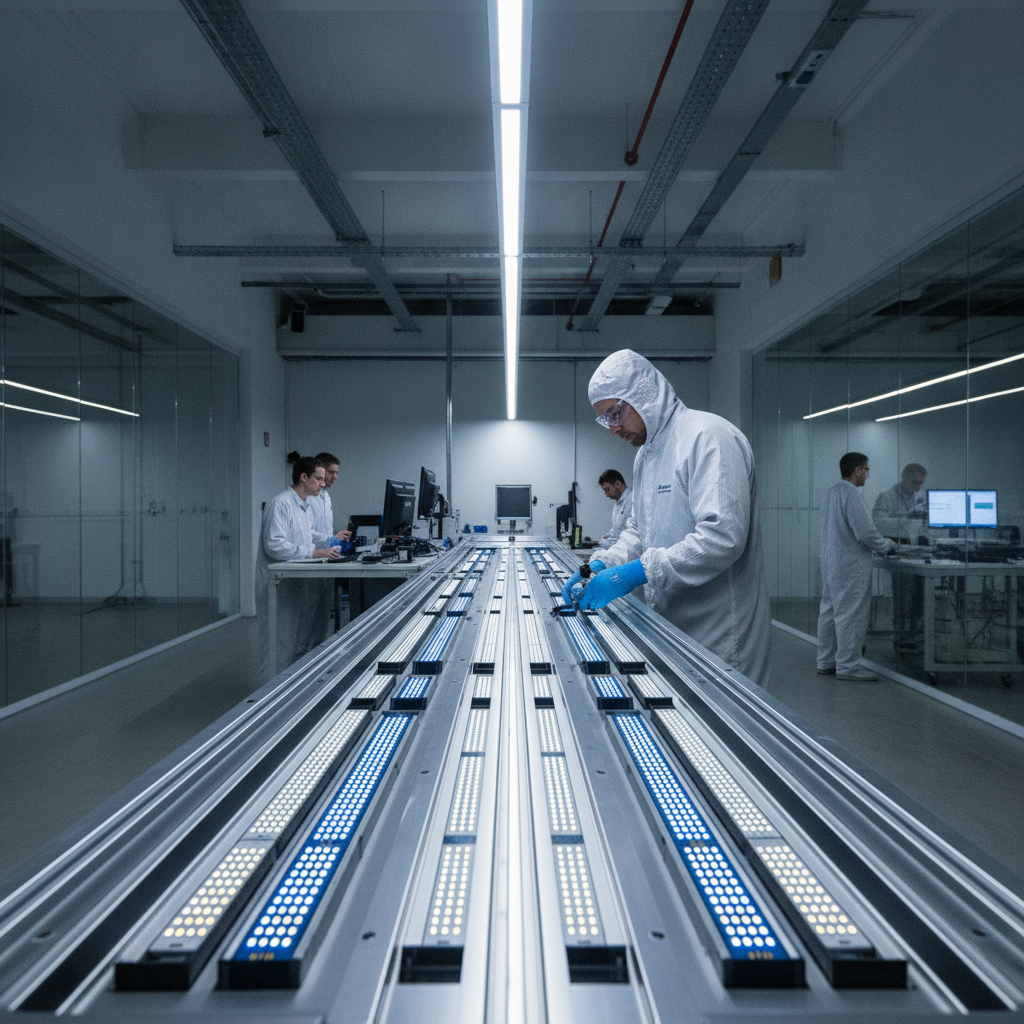
What Changed — and Why It Matters Now
At XHLWX (led-project-light.com), a Custom Indoor LED Lighting Manufacturer based in China, we closely monitor the evolution of international standards that impact our clients' projects. A significant development recently emerged as Shenzhen Qihang Lighting, a prominent OEM representative from China, was officially invited to join two key working groups within the International Electrotechnical Commission's (IEC) Technical Committee 34 (TC34), which governs standards for lamps and related equipment.
Specifically, the company will contribute to WG1 (Photobiological Safety) and WG13 (Digital Interfaces for General Lighting), participating directly in the drafting and review of critical new international standards: IEC 62471-7 for LED luminaire photobiological safety and IEC 63450 for smart lighting interoperability.
This is not merely a procedural announcement; it's a clear signal of the industry's direction and a major step towards addressing two of the biggest challenges in modern lighting: safety and system complexity. For years, photobiological safety assessment under IEC 62471 has often relied on data from the LED chip manufacturer, not the final luminaire.
The new IEC 62471-7 standard aims to rectify this by focusing on the complete lighting product, a crucial change given how optics, drivers, and heat management can alter the final light output characteristics. It directly addresses growing concerns around Blue Light Hazard (BLH) from high-intensity sources.
Simultaneously, the smart lighting market has been a 'Wild West' of competing, often incompatible, protocols. While systems like DALI-2 and Casambi offer powerful control, they create isolated ecosystems.
The forthcoming IEC 63450 standard aims to create a standardized 'meta-layer' for interoperability, allowing disparate systems to communicate. For a specifier in Europe or the US, this move by a major OEM to get ahead of the curve is a powerful indicator.
It signals a shift from reactive compliance to proactive design, aiming to de-risk projects for international buyers. The company's stated goal of helping customers achieve a smooth transition with zero inventory risk ahead of an anticipated 2027 regulation changeover period underscores the commercial gravity of these technical developments.
The Technical Detail Behind the Headline
The move to draft these new standards reflects a maturation of the LED market. No longer is it enough to offer high lumens per watt; the quality, safety, and controllability of that light are now paramount.
To understand the practical implications, consider how a future-proof, high-specification luminaire—like an architectural linear light or an anti-glare downlight—must be designed to meet these emerging requirements. The specification sheet will need to go far beyond basic CCT and wattage.
Below is a representative table for a high-performance, specification-grade linear luminaire designed with these future standards in mind.
| Parameter | Specification | Standard | Notes |
|---|---|---|---|
| Photobiological Safety | Risk Group 0 (RG0) or RG1 | IEC 62471:2006, considering IEC/TR 62778 & draft IEC 62471-7 | Assessed at the luminaire level, not just component. Essential for spaces with prolonged human exposure. |
| CCT, CRI & TM-30 | 3000K, CRI Ra >95, R9>90 | IES TM-30-18 | Rf ≥ 90, Rg ≈ 100. Ensures high color fidelity and natural rendering, moving beyond basic CRI. |
| Unified Glare Rating (UGR) | UGR < 16 | EN 12464-1 | Achieved via micro-prismatic optics and deep-baffle design. Crucial for office and educational settings. |
| Control Protocol | DALI-2 Device Type 8 (DT8) + Casambi CBU-ASD | IEC 62386, Casambi Ready | Provides both wired, interoperable DALI for backbone control and wireless Bluetooth Mesh for flexible scene setting. |
| Driver Brand & Type | Tridonic advanced series DALI-2 DT8 | ISO9001 Mfr. | Features low standby power (<0.2W), PstLM < 0.5, SVM < 0.3 to meet ErP/SLR requirements. |
| LED Chip Brand | Osram / Samsung 2835 series | LM-80 tested | Selected for high efficacy (170 lm/W) and superior color stability over 50,000 hours. |
| Housing & IP Rating | Extruded Aluminium, 1160mm length | IP44 from below | Suitable for general indoor spaces, with protection against dust and splashes for versatile application. |
| Core Certifications | CE-LVD, CE-EMC, RoHS, ErP | IEC/EN 60598, (EU) 2019/2020 | Fully compliant with European market access requirements, verified by a third-party lab. |
This level of detail is what specifiers should begin to expect and demand. The participation of OEMs in standards bodies like IEC is a positive sign that manufacturers are preparing to provide this data transparently.
What This Means for Specifiers and Buyers
The news that a major Chinese OEM is helping write the next generation of IEC standards is more than just an internal company win; it’s a strategic advantage for their international partners. For specifiers, contractors, and lighting importers in the EU and US, this development signals a critical need to re-evaluate procurement strategies and supplier relationships.
It boils down to mitigating future risk and securing a competitive edge by aligning with manufacturers who are not just following standards, but actively shaping them. This proactive stance ensures that product development is already incorporating the principles of forthcoming regulations, which drastically reduces the chance of specifying or stocking products that may become obsolete or non-compliant in the near future.
How Will the New IEC 62471-7 Standard Affect Photobiological Safety Assessments?
The primary shift with the upcoming IEC 62471-7 is from component-level to luminaire-level assessment. Currently, many manufacturers declare safety based on the Risk Group (RG) rating of the LED chip provided by its maker.
However, this is insufficient. The final luminaire incorporates optics (lenses, reflectors), thermal management systems, and specific drive currents that can dramatically alter the light output's characteristics and concentration.
A safe RG1 chip could, when focused by a narrow-beam optic in a spotlight, create a light source that falls into a higher-risk RG2 category.
For specifiers, this means you can no longer simply accept a chip's data sheet as proof of safety. You must demand photobiological safety reports for the entire luminaire, tested as a complete system.
This is especially critical for applications where people are in close proximity to light sources or for extended periods, such as task lighting, retail display lighting, and museum illumination. The new standard will formalize this requirement, and forward-thinking manufacturers are already building the in-house or third-party testing capacity to provide this data.
Asking for a luminaire-level IEC 62471 report will soon become a standard part of due diligence.
What Problems Does the IEC 63450 Interoperability Standard Aim to Solve for My Smart Lighting Projects?
The core problem that IEC 63450 aims to solve is market fragmentation. Today, a building might feature a DALI-2 wired system in its office core for robust, standardized control, but use a more flexible, wireless Casambi system in its conference rooms and social areas for ease of reconfiguration.
While both are excellent systems, they don't natively speak to each other. This creates data silos.
The facility manager needs separate tools for commissioning, monitoring, and pulling energy data from each system. Maintenance requires expertise in multiple platforms.
IEC 63450, titled "Architecture and data model for a smart lighting system," is not another wireless protocol to compete with Bluetooth or Zigbee. Instead, it seeks to define a common language—a standardized data model—that can sit on top of these different protocols.
It will enable a DALI light to report its status and energy consumption in the same data format as a Casambi light or a future Matter-enabled light. The benefit for specifiers and building owners is immense: freedom to choose the best control solution for each specific space without sacrificing the ability to manage the entire building's lighting from a single, unified dashboard.
It promises simpler integration, lower long-term maintenance costs, and truly holistic building energy management.
If These Standards Are Not Mandatory Until 2027, What Actions Should I Take Now as a Buyer or Specifier?
Complacency is a significant risk. The 2027 timeframe is a target for enforcement, but the market will shift much sooner. Specifiers and buyers should take immediate, concrete steps to prepare and protect their projects and businesses.
First, initiate a new level of supplier dialogue. Go beyond price and lead time.
Ask your current and potential OEM partners pointed questions: "Are you aware of the work in IEC TC34/WG1 and WG13? What is your internal roadmap for adopting luminaire-level photobiological testing?
How is your R&D department preparing for the data models proposed in IEC 63450?" A knowledgeable partner like XHLWX will be able to provide detailed, reassuring answers. A blank stare should be a major red flag.
Second, begin updating your specification language. For photobiological safety, evolve from a simple "CE compliant" to "Luminaire must be tested according to IEC 62471 as a complete system, with a full report available. Preference for products designed in consideration of draft IEC 62471-7." For controls, consider adding, "Luminaire must support DALI-2 or Casambi protocols and manufacturer must declare their strategy for future interoperability via standards like IEC 63450."
Third, conduct a risk assessment of your supply chain and inventory. If you are stocking large quantities of products for multi-year rollouts, you must ensure your supplier can guarantee that the product line will be updated to meet these new standards without requiring a complete re-specification, which would cost time and money. Partnering with a manufacturer who is already involved in the standards-drafting process is the most effective way to mitigate this risk.
Compliance Checklist (IES / LDT / DIALux / CE / RoHS / ErP)
Before these new IEC standards even become mandatory, a robust compliance framework is essential for accessing EU and US markets. When evaluating a potential manufacturing partner, use this checklist to ensure they meet the current baseline, which is a strong indicator of their ability to handle future requirements.
-
Photometric Data: Does the manufacturer provide complete, professionally measured IES and LDT photometric files for every product configuration? Are these files readily available for download and guaranteed to be compatible with DIALux evo and other professional lighting design software? Accurate simulation is the foundation of any compliant lighting project, allowing you to verify UGR, illuminance levels, and energy consumption before a single luminaire is ordered.
-
CE Marking & Declarations: Is the CE mark backed by a valid, comprehensive Declaration of Conformity (DoC)? The DoC should be readily available and explicitly list compliance with all relevant harmonized standards for the Low Voltage Directive (LVD - EN 60598 series), Electromagnetic Compatibility (EMC) Directive, and others. A CE mark without a supporting DoC is meaningless.
-
RoHS Compliance: Can the supplier provide a material declaration or third-party test report confirming compliance with the RoHS Directive (EU) 2015/863? This restricts 10 hazardous substances in the final product and is a non-negotiable requirement for the EU market.
-
ErP (EcoDesign) / SLR: How does the product comply with the Single Lighting Regulation (SLR), (EU) 2019/2020? Ask for specific data on driver efficiency, standby power consumption (must be <0.5W), and light quality metrics like flicker (PstLM ≤ 1) and stroboscopic effect (SVM ≤ 0.4 for office use). A supplier should be able to provide this data on their technical sheets.
-
Future-Proofing Inquiry: Beyond current compliance, ask the critical question: "What is your formal process for monitoring and implementing upcoming standards like IEC 62471-7 and IEC 63450?" This separates the followers from the leaders.
Frequently Asked Questions
Q: What Is the Main Difference Between the Old IEC 62471 and the New IEC 62471-7?
The key difference is the subject of the test. The original IEC 62471 standard could be applied to any lamp or lamp system, often focusing on the LED component itself. The new IEC 62471-7 will be specific to LED luminaires, requiring testing of the final, complete product. This is a much more accurate way to assess the actual photobiological risk to end-users, as it accounts for the effects of the luminaire's optics and drive current, which can change a risk group from RG1 to RG2.
Q: Will the New IEC 63450 Standard Make DALI-2 or Casambi Obsolete?
No, not at all. IEC 63450 is not a replacement for control protocols like DALI-2 (wired) or Casambi (wireless). It is designed to be a higher-level 'interoperability layer' or data model. This will allow DALI-2 devices and Casambi devices to report their status and data in a standardized format, so a single building management system can understand both. It makes robust protocols like DALI-2 even more valuable within a larger, integrated ecosystem.
Q: How Does a Low UGR Value Relate to Photobiological Safety?
While both relate to light quality, they address different issues. UGR (Unified Glare Rating) measures discomfort glare—the subjective feeling of annoyance or reduced visibility from bright lights in the field of view, typically a UGR <19 is desired for offices. Photobiological safety, under IEC 62471, measures the actual risk of physical harm to the eyes and skin from light radiation, such as Blue Light Hazard. A light can be uncomfortably glary (high UGR) but still be perfectly safe (low risk group, e.g., RG1).
Q: What Is a Typical Energy Saving When Switching to a Compliant Smart LED System?
Replacing traditional fluorescent lighting with basic non-dimmable LEDs can save 40-60% in energy. By implementing a compliant, smart LED system using DALI-2 or Casambi for daylight harvesting, presence detection, and scene setting, you can achieve additional savings of 20-40% on top of the initial LED savings. Total energy reduction can often reach 70-80% compared to the old legacy system, with payback periods often under 3 years.
Talk to Our Engineering Team
The landscape of lighting technology and regulation is in constant motion. Developments like the drafting of IEC 62471-7 and IEC 63450 are not esoteric technicalities; they are foundational shifts that will define the next decade of lighting design, specification, and procurement.
Choosing a manufacturing partner who is not only aware of these changes but is actively participating in the conversation is the most effective strategy for ensuring your projects are safe, efficient, and future-proof. It transforms compliance from a burden into a competitive advantage.
At XHLWX (led-project-light.com), a Custom Indoor LED Lighting Manufacturer based in China, our engineers are ready to discuss how these upcoming standards will impact your next project and how we can help you specify compliant, future-proof solutions today.
Need a tailored lighting plan for your project?
Our senior lighting designers reply within 48 hours with a free design proposal & quotation.