
RoHS Exemption Review: LED Driver Materials Face Closer Scrutiny
RoHS exemption reviews put LED driver solder, brass parts and component declarations under scrutiny. What EU and US lighting buyers should verify next.
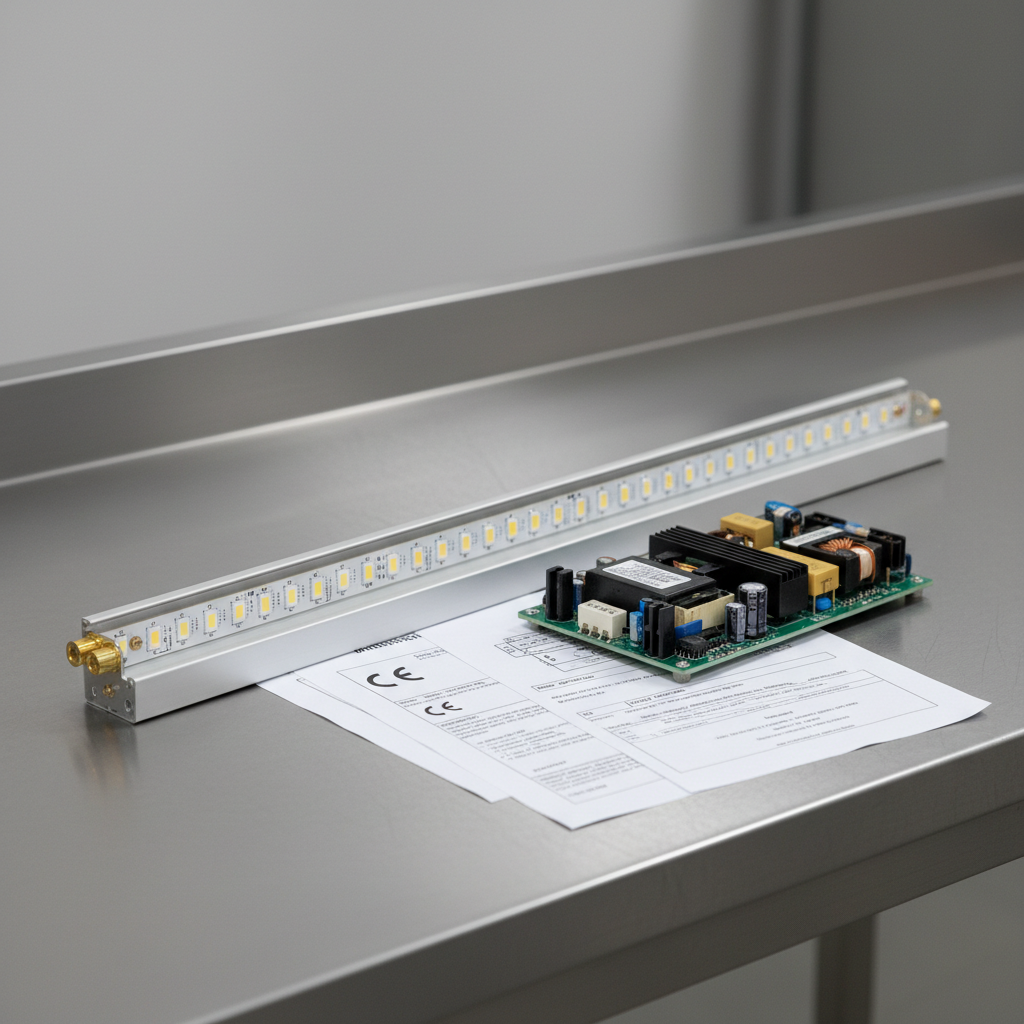
What Changed — and Why It Matters Now
At XHLWX (led-project-light.com), a Custom Indoor LED Lighting Manufacturer based in China, RoHS exemption review is a procurement issue that should be addressed at component level—not through a generic “RoHS compliant” statement. For European lighting buyers, the actionable question is whether each restricted substance in an LED lamp, driver or luminaire is below the applicable limit or covered by a legally valid, application-specific exemption.
The regulatory anchor is Directive 2011/65/EU. Article 4 establishes substance restrictions, Annex II specifies concentration limits, and Article 5 governs exemptions.
The directive allows exemptions to be reviewed and amended through delegated legislation. A supplier declaration therefore needs to be checked against the consolidated directive and relevant amendments, rather than treated as permanent approval of a material formulation.
This analysis does not announce a new blanket ban or assert that every lead exemption has expired. Its focus is the purchasing consequence of the review mechanism: an exemption number without its application, equipment category and legal status is insufficient evidence for a new order.
Article 5(5) provides that an exemption remains valid until a decision on a renewal application when that application meets the provision’s requirements, including submission at least 18 months before expiry. Buyers should not interpret an apparent expiry date in isolation. Equally, they should not assume that a pending review protects every use of the same substance.
For LED lighting, the useful distinction is between a material that meets Annex II limits without an exemption and one that depends on a narrowly defined exception. Mercury exemptions associated with certain conventional lamps, for example, do not establish an exemption for lead in an LED driver.
The Technical Detail Behind the Headline
RoHS limits apply to homogeneous materials, not to the average composition of a complete luminaire. Under Annex II, the maximum concentration is 0.1% by weight for lead, mercury, hexavalent chromium, PBB, PBDE, DEHP, BBP, DBP and DIBP.
Cadmium has a lower limit of 0.01%. A heavy aluminum housing cannot dilute a noncompliant solder joint for compliance calculations.
Commission Delegated Directive (EU) 2015/863 added the four listed phthalates; those restrictions became applicable to most lighting equipment on 22 July 2019. Consequently, a review should cover polymeric parts and cable materials as well as metals and solder.
Historical Annex III entries illustrate why application detail matters. Entry 6(c) has addressed copper alloys containing up to 4% lead by weight.
Entry 7(a) has addressed lead in high-melting-temperature solders, defined as lead-based alloys containing 85% or more lead by weight. These descriptions are reference points—not confirmation that a particular use is currently permitted.
Check applicable amendments, category-specific conditions and renewal status before relying on either.
A practical review should distinguish LED-package materials, driver electronics and mechanical hardware. Component plating, solder, connector alloys, cable insulation and optical polymers each need evidence appropriate to their composition and risk. A declaration for one LED package does not establish compliance of the assembled luminaire.
The following schedule combines material checks with performance criteria that can prevent an exemption-driven substitution from becoming an uncontrolled redesign. All performance values are illustrative design targets, not specifications or test results for an XHLWX product.
| Parameter or material | Illustrative requirement | Standard or evidence route | Buyer action |
|---|---|---|---|
| Restricted substances | 0.1% maximum for nine Annex II substances; 0.01% for cadmium, unless exempt | Directive 2011/65/EU, Annex II | Identify homogeneous materials and exact exemption use |
| CCT and color rendering | 3000 K or 4000 K; CRI Ra ≥90 | Photometric and spectral measurement report | Recheck after LED-package substitution |
| TM-30 color quality | Rf ≥90; Rg 98–102 | ANSI/IES TM-30 report | Treat these as project targets, not RoHS requirements |
| Glare and beam | Calculated UGR ≤19 in the specified office layout; nominal 60° beam | EN 12464-1; luminaire photometry | Verify room geometry and final optical assembly |
| Controls | Select DALI-2, Casambi or 0–10 V to suit the project | Interface documentation and applicable certification records | Lock the driver model and control variant |
| Housing | IP20 for the example dry interior; nominal length 1200 mm | IEC 60529; approved dimensional drawing | Review coatings, connectors and any changed enclosure parts |
| Named components | Specify an exact Osram LED or Tridonic driver model where selected | Model-specific datasheet and material declaration | A brand name alone is not compliance evidence |
| CE and RoHS | EU declaration identifying applicable legislation and product | RoHS Articles 7 and 13; EN IEC 63000:2018 | Match the declaration to the shipped configuration |
| ErP and quality management | Applicable ecodesign evidence; ISO 9001 certificate if contractually required | Regulation (EU) 2019/2020; ISO 9001 | Distinguish product obligations from management-system certification |
What This Means for Specifiers and Buyers
How Should an EU Contractor Check an LED Driver That Relies on a Lead Exemption?
Start with the exact driver part number, hardware revision and intended equipment category. Request a dated declaration identifying the restricted substance, its material location, the exemption relied upon and the application covered. A statement that a driver “contains exempt lead” leaves too much unresolved for a project compliance file.
Next, verify the legal position through EUR-Lex and the European Commission’s RoHS exemption material. Consultant assessments and stakeholder submissions can explain the review, but they are not adopted legislation. Record which legal text and renewal information supported the purchasing decision, and check again before shipment if the order has a long lead time.
Require written approval for substitutions. An alternative driver may offer the same nominal wattage while changing output-current range, insulation arrangement, dimming behavior or case-temperature limits. Material compliance and electrical suitability must both be demonstrated; neither follows automatically from a matching power rating.
Can a Lead-free Replacement Change LED Luminaire Reliability or Lighting Performance?
A solder, connector or component substitution should trigger an engineering assessment rather than an assumption of equivalence. Depending on the change, relevant checks can include solder-process compatibility, joint inspection, thermal cycling, electrical safety and operation at the driver’s declared maximum case temperature. The appropriate test scope depends on the design and the evidence already available.
Optical revalidation is particularly important when the substitution changes the LED package, operating current, optic or thermal path. As an illustrative office brief, specify 500 lux maintained illuminance on the task area, 4000 K, Ra ≥90 and calculated UGR ≤19. These are project criteria to be verified against the applicable task requirements—not universal requirements for every interior.
Request updated IES and LDT photometric files when the optical configuration changes, then rerun DIALux calculations. A material-only change may not require new photometry, but the supplier should document why the existing measurements remain representative.
What Should US Buyers Require When the Same Luminaire Platform Serves Europe?
For a shared EU/US platform, separate chemical-compliance evidence from destination-specific safety and electrical requirements. CE marking does not replace US certification or approval requirements. Depending on the product and installation, buyers may specify evaluation against UL 1598 for luminaires and relevant LED-equipment requirements such as UL 8750; the applicable route should be confirmed with the certification body and authority having jurisdiction.
Also specify supply voltage, control interface and the exact market variant. A 120–277 V driver for a US project should not be assumed interchangeable with a European 220–240 V version. Request separate configuration records wherever the driver, wiring or protective components differ.
Treat energy claims independently of exemption status. In an illustrative installation, reducing 100 luminaires from 40 W to 32 W for 3,000 operating hours saves 2,400 kWh annually, or 20%, before controls. That calculation only supports a useful retrofit comparison if the replacement also meets the lighting brief; changing material chemistry alone does not establish an energy saving.
Compliance Checklist (IES / LDT / DIALux / CE / RoHS / ErP)
Use the purchase specification to connect legal evidence with the delivered configuration:
- Define product identity. Record lamp or luminaire model, driver revision, LED-package option, finish, cable and connector variants. A family-level declaration needs a defensible link to the ordered configuration.
- Build the RoHS evidence file. EN IEC 63000:2018 provides a framework for technical documentation assessing electrical and electronic products against hazardous-substance restrictions. Obtain supplier declarations, material information and test evidence according to the assessed risk.
- Check exemption applicability. Record the entry, material use, equipment category, relevant dates and renewal or amendment status. Distinguish an adopted delegated directive from a draft, consultation or technical recommendation.
- Use testing intelligently. IEC 62321-series methods support restricted-substance determination. Screening can identify concerns, but some substances or results require more specific analysis. For example, total bromine alone does not identify a particular restricted brominated flame retardant.
- Maintain the EU conformity record. RoHS Article 7 requires manufacturers to prepare technical documentation and retain it and the EU declaration of conformity for 10 years after the equipment has been placed on the market. Identify the importer and check its Article 9 obligations as well.
- Separate CE from unrelated certificates. CE marking addresses applicable EU product legislation; RoHS is not the only legislation potentially relevant to a luminaire. ISO 9001 concerns a quality-management system and does not independently prove restricted-substance compliance.
- Check ErP scope correctly. Regulation (EU) 2019/2020, applicable from 1 September 2021 and subsequently amended, establishes ecodesign requirements for light sources and separate control gears. Assess the actual product architecture and containing-product obligations rather than treating every complete luminaire identically.
- Close the performance loop. Match IES and LDT photometric files, DIALux layouts and electrical reports to the approved construction. Keep substitution approvals with the compliance file so site-delivered units remain traceable to the design.
Frequently Asked Questions
Q: Does a RoHS Exemption Review Automatically Make an LED Luminaire Illegal?
No. A review is not itself a prohibition. Compliance depends on the substance, homogeneous material, applicable limit and legally valid exemption. Article 5(5) provides continued validity while a qualifying renewal application awaits a decision. Buyers should verify the specific entry and equipment category rather than treating a published expiry date or review notice as a complete legal conclusion.
Q: Can an LED Driver Contain Lead and Still Comply with RoHS?
Yes, if lead remains within the 0.1% homogeneous-material limit or its specific use is covered by a valid exemption. This does not mean all lead-containing solder is permitted. Obtain the exact exemption reference, component application and model-specific declaration, then check the applicable legal text and renewal position for the equipment being purchased.
Q: Is a Laboratory RoHS Report Enough for a Complete Luminaire Order?
Not necessarily. A report covers its identified samples, materials and analytical scope; it does not automatically cover later substitutions or every configuration. Ask for a technical-documentation approach consistent with EN IEC 63000:2018, supported by appropriate declarations and testing. Link that evidence to the bill of materials and EU declaration, including the manufacturer’s 10-year record-retention obligation.
Q: Should Every Exemption-driven Material Change Trigger New Photometric Testing?
No. The test scope should follow the engineering impact. A change affecting the LED package, drive current, optic or thermal behavior may require fresh measurements and revised calculation files. A demonstrably non-optical material change may not. For a 500 lux office brief, document whether the approved illuminance, glare and color-performance evidence still represents the revised construction.
Talk to Our Engineering Team
At XHLWX (led-project-light.com), a Custom Indoor LED Lighting Manufacturer based in China, the recommended starting point for a project discussion is a controlled specification: destination market, installation date, driver model, material-declaration requirements and lighting targets. Bring the proposed bill of materials, exemption references and room layout, whether the brief calls for 3000 K hospitality lighting or a 500 lux office task area. Ask engineering to identify the evidence and validation needed before approving any material or component substitution.
Need a tailored lighting plan for your project?
Our senior lighting designers reply within 48 hours with a free design proposal & quotation.