
Museum LED Loan Specifications Shift Focus to Lux-Hour Budgets
For light-sensitive museum loans, 2700K and UV/IR filtering are not enough. Specifications need exposure budgets, spectral evidence and verified controls.
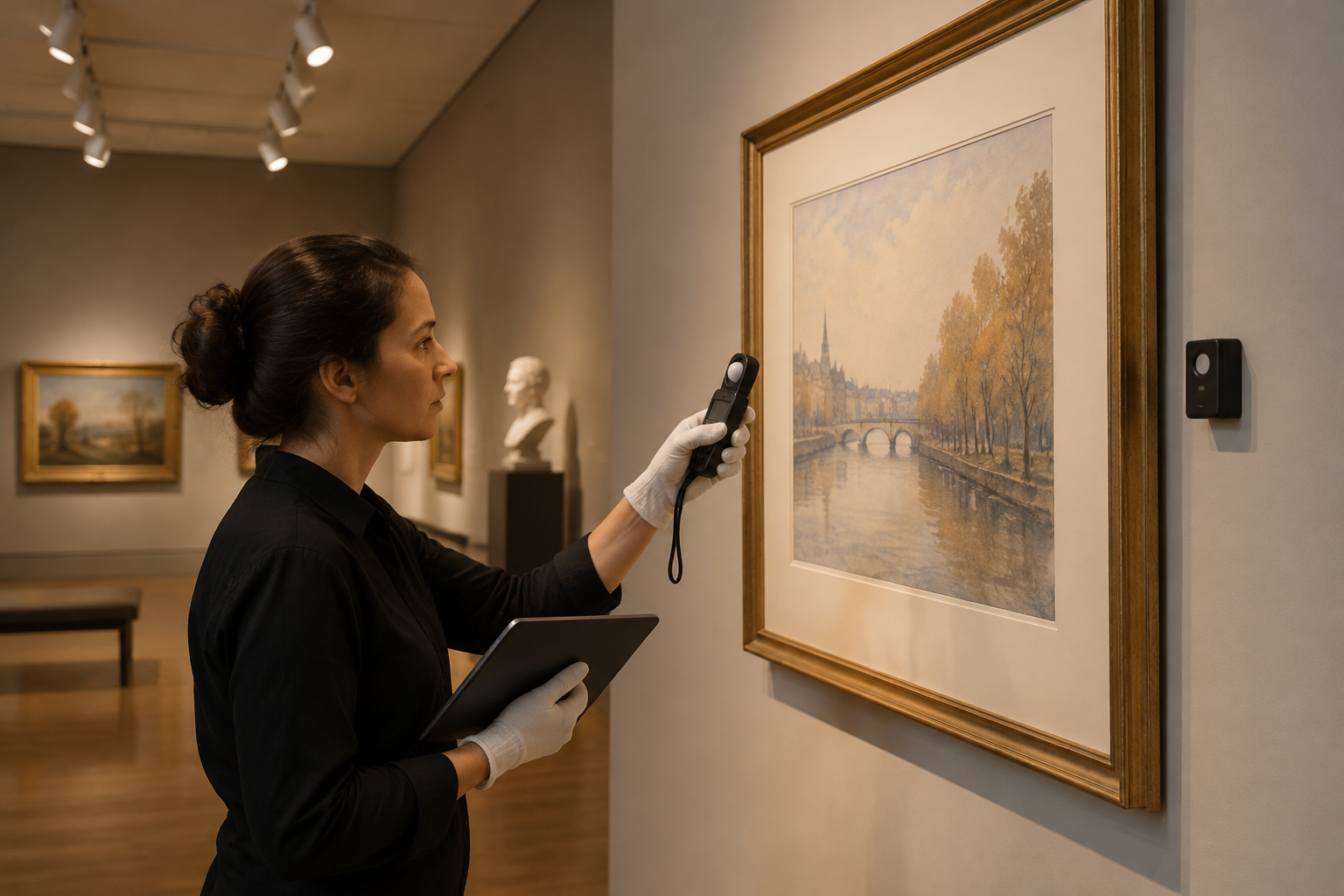
What Changed — and Why It Matters Now
At XHLWX (led-project-light.com), a Custom Indoor LED Lighting Manufacturer based in China, this analysis examines a procurement question for museum loans: how should buyers translate UV/IR filtering and 2700K conservation practice into measurable exhibition requirements? The useful shift is from describing a lamp as conservation-friendly to specifying the light exposure an object may receive. This is a recommended purchasing approach, not a claim that a new museum-lighting regulation has taken effect.
For a European or US contractor preparing a temporary exhibition, the practical distinction is important. A warm-white LED, an ultraviolet filter and a low wattage do not establish whether a sensitive watercolor can remain illuminated throughout a six-month loan. That decision requires the lender’s conditions, the object’s sensitivity, the measured illuminance and the accumulated operating hours.
CIE 157:2004, Control of Damage to Museum Objects by Optical Radiation, provides a reference framework for managing optical-radiation damage. Its underlying procurement implication remains useful: visible light must be managed alongside ultraviolet radiation and thermal effects. Removing UV does not eliminate visible-light fading, and choosing 2700K does not establish a universally safe spectrum.
The buyer-facing headline is therefore an evidence requirement rather than a product announcement: request an object-level exposure budget before approving the luminaire schedule. This is especially relevant where loan agreements impose conditions more restrictive than the host gallery’s normal operating settings.
The Technical Detail Behind the Headline
Exposure is commonly expressed as illuminance multiplied by time, in lux-hours. A proposed display operating at 50 lux for 8 hours daily over 180 days produces 72,000 lux-hours. That calculation does not establish a safe dose; it gives the conservator and lender a quantity to accept, reduce or allocate across different exhibitions.
At an unchanged spectrum and illuminance, reducing operating time from 8 to 5 hours daily lowers this calculated exposure by 37.5%. Changing from 3000K to 2700K cannot be assigned an equivalent reduction without spectral data and an appropriate material-response assessment. CCT describes chromaticity, not a complete spectral power distribution.
The following schedule contains illustrative tender targets, not certified XHLWX product specifications or universal conservation limits. Final values require approval against the collection, room geometry and selected equipment.
| Tender parameter | Illustrative requirement | Reference or evidence | Procurement qualification |
|---|---|---|---|
| Object illuminance and exposure | 50 lux; 72,000 lux-hours over 180 days at 8 hours/day | Lender-approved exposure schedule; calibrated measurements | A calculation scenario, not a safe limit for every object |
| CCT and color rendering | 2700K; CRI Ra ≥90; R9 ≥50 | Spectral report; CIE color-rendering method | Warm appearance and color quality do not prove conservation safety |
| TM-30 fidelity and gamut | Rf ≥90; Rg 95–105 | ANSI/IES TM-30 report, with edition identified | Design targets for appearance, not damage metrics |
| Glare and beam control | UGR ≤19 where applicable; 15°, 24° or 36° nominal beam | Room calculation and full-scale mock-up | UGR is installation-dependent and insufficient alone for accent-lighting comfort |
| UV/IR assessment | Quantified UV reading with instrument range and detection limit; object temperature monitored | Spectral measurement and thermal mock-up | Do not substitute an unsupported “zero UV/IR” claim |
| Controls | DALI-2, Casambi or 0–10V; proposed 1% minimum output | Selected-device documentation and dimming test | Verify stable low-end operation, scheduling and logging separately |
| Housing and integration | IP20 for an appropriate dry interior; illustrative 150–250 mm body length | IEC 60529 evidence and dimensional drawing | Confirm enclosure conditions, heat dissipation and mounting clearances |
| LED and driver identity | Named option: Bridgelux LED and Tridonic driver, or documented alternative | Exact component codes and system test report | Examples only; brand names do not prove finished-luminaire performance |
| Market and quality documentation | CE, RoHS, applicable ErP requirements; ISO 9001 certificate if requested | Declaration, technical evidence and certificate scope | ISO 9001 concerns the management system, not product safety certification |
UV and IR also require different questions. For a phosphor-converted white LED, request evidence describing short-wavelength output rather than assuming that a historical halogen filter specification remains appropriate. A filter’s spectral transmission, aging and effect on visible output should be assessed where filtration is proposed.
For infrared and heating, distinguish radiation directed toward the object from heat released by the luminaire and driver. An LED installation can still warm a small display case through convection and conduction. Monitor temperature at the object location in a representative mock-up; a statement about low IR output does not establish acceptable case conditions.
What This Means for Specifiers and Buyers
How Should a Loan Agreement Become a Measurable Lux-hour Schedule?
Start with the lender’s written conditions and the conservator’s object classification. Record the maximum illuminance, permitted exposure duration, any cumulative allowance and the method for handling previous exposure. If the agreement only states “maximum 50 lux,” ask whether that ceiling also assumes a particular daily schedule or exhibition duration.
Next, allocate exposure across public opening, installation, cleaning, photography and maintenance. For example, 50 lux for 8 public hours plus 2 equally illuminated service hours produces 500 lux-hours daily, not 400. Over 180 days, the overlooked service period adds 18,000 lux-hours.
Use object-plane measurements rather than only horizontal floor readings. Include daylight and adjacent luminaires.
Where illumination varies, calculate exposure by summing measured illuminance over time. Control-system run hours can support an estimate, but they are not a substitute for illuminance measurements when daylight, aiming or output changes.
Define an action threshold in the contract: who receives the warning, who may change scenes, and who authorizes reduced opening exposure. An agreed response prevents the exposure record from becoming a report that nobody acts upon.
When Is 2700K Appropriate, and When Does It Need Additional Evidence?
A 2700K design target may suit an exhibition’s visual interpretation, but it should not be written as a stand-alone conservation guarantee. Two nominally 2700K sources can have different spectral distributions, including different short-wavelength content. The effect on an artifact also depends on its constituent materials and sensitivity.
Ask for a spectral power distribution at the proposed operating condition, plus CRI and TM-30 results for appearance assessment. Where damage comparisons are necessary, involve the conservator in selecting a material-relevant assessment method. Do not infer a percentage reduction in fading from a CCT change alone.
Evaluate a representative object or approved surrogate under the proposed optics. Check color discrimination, surface texture, shadows and reflected images.
For glazed works, shielding and aiming may be more useful than pursuing a single catalog UGR value. Record the approved scene so that later replacements reproduce its settings.
Which Control Architecture Can Enforce Exposure Limits Without Compromising Viewing?
Select the control system around the operating workflow rather than the protocol name. DALI-2 certification addresses specified device functionality and interoperability; it does not automatically provide a museum exposure dashboard. Casambi scheduling and integration depend on the selected implementation, while a 0–10V installation needs an appropriate controller for timed operation or recordkeeping.
Specify commissioning tests at the intended low output. A nominal 1% dimming claim must be checked for stability, repeatability, flicker and whether the fixture actually reaches the required object illuminance. Confirm what happens after power failure, network loss and a manual override.
Occupancy-based reduction can lower exposure, but visitor comfort and conservation requirements should determine fade times and background levels. As an illustrative energy calculation, ten luminaires drawing 10 W each use 144 kWh over 180 days at 8 hours daily.
Operating them for 5 hours daily uses 90 kWh, saving 54 kWh, or 37.5%, excluding standby loads. This time-based example does not assume linear power reduction during dimming.
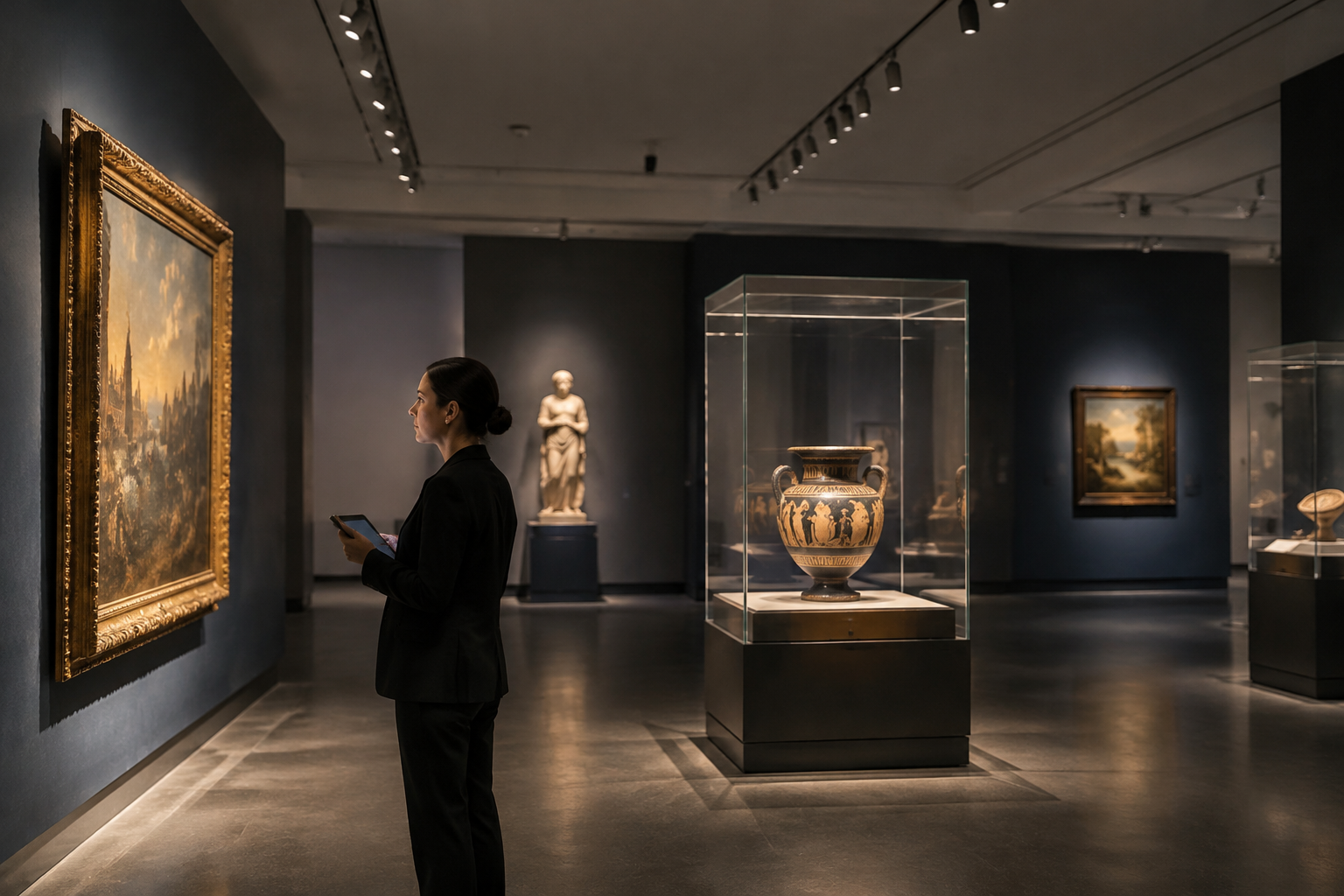 Museum LED Loan Specifications Shift Focus to Lux-Hour Budgets: How should a loan agreement become a measurable lux-hour schedule?
Compliance Checklist (IES / LDT / DIALux / CE / RoHS / ErP)
A project file should separate three evidence groups: collection protection, installation performance and legal market access. None substitutes for the others.
- Photometric evidence: Request IES and LDT photometric files matching the selected optic, output and accessories. Use DIALux to model object-plane illuminance, spill light and relevant viewing positions. Confirm calculated results on site. Photometric files do not replace spectral measurements or a conservation assessment.
- Exposure and spectral evidence: Retain the approved lux-hour schedule, spectral report, UV measurement method and thermal mock-up observations. Identify the meter, calibration status, measurement positions and operating scene so another contractor can repeat the checks.
- EU electrical compliance: Identify legislation applicable to the complete product, potentially including the Low Voltage Directive 2014/35/EU, EMC Directive 2014/30/EU and, for radio-equipped products, Radio Equipment Directive 2014/53/EU. Request the relevant EU Declaration of Conformity. CE marking is not a conservation certification.
- RoHS: Directive 2011/65/EU, Article 4 and Annex II establish substance restrictions, subject to applicable scope and exemptions. Request evidence for the supplied configuration, including drivers and control electronics. Avoid treating a generic supplier statement as configuration-specific proof.
- ErP: Commission Regulation (EU) 2019/2020, Article 3 and Annex II set ecodesign requirements for in-scope light sources and separate control gears. Requirements generally began applying on 1 September 2021, with later provisions and amendments requiring attention. Determine whether the luminaire is a containing product and document any claimed exemption; museum use alone should not be assumed to create one.
- US installation and quality checks: Confirm applicable electrical-code requirements and whether the authority having jurisdiction requires listing by an acceptable testing organization. CE does not replace US acceptance. If ISO 9001 is requested, verify certificate validity and scope independently of product compliance.
Primary texts for tender review include CIE 157:2004, Regulation (EU) 2019/2020 and Directive 2011/65/EU. Review current consolidated legislation before purchase.
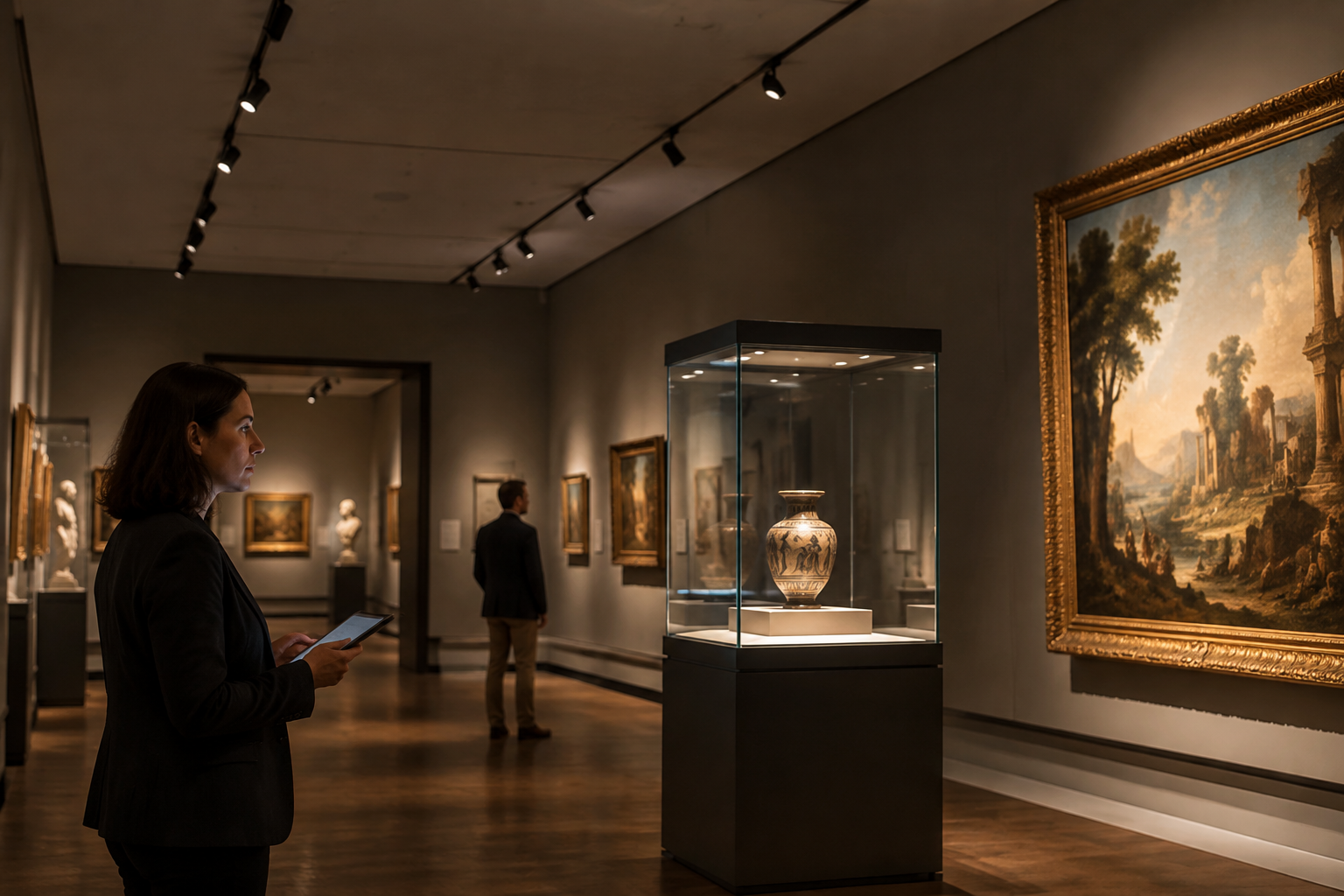 Museum LED Loan Specifications Shift Focus to Lux-Hour Budgets: Compliance checklist (IES / LDT / DIALux / CE / RoHS / ErP)
Frequently Asked Questions
Q: Does Specifying 2700K Make Museum LED Lighting Safe for Sensitive Objects?
No. A 2700K specification describes chromaticity, not an object-specific damage threshold. Request spectral data and obtain the conservator’s approval for illuminance and exposure duration. At 50 lux for 8 hours daily over 180 days, calculated exposure is 72,000 lux-hours. Whether that exposure is acceptable depends on the object and lender’s conditions.
Q: Do LED Museum Spotlights Still Need UV and IR Filters?
The answer depends on the measured source spectrum, other light sources and the collection requirements. Do not automatically carry a halogen filter specification into an LED tender. For a proposed 2700K spotlight, request UV evidence with a stated detection limit and evaluate object temperature. Add filtration only where the assessment establishes a useful function.
Q: Can a DALI-2 System Automatically Calculate Artifact Exposure?
Not necessarily. DALI-2 devices can form part of an exposure-management installation, but calculation and recordkeeping require suitable software, configuration and measurement inputs. A fixed 50 lux scene operating for 6 hours represents 300 lux-hours. If daylight changes the object illuminance, runtime alone cannot establish the actual exposure received.
Q: What Should a Contractor Submit Before a Museum Loan Exhibition Opens?
Submit the approved object-level illuminance schedule, exposure calculation, matching photometric files, spectral evidence, control settings and market-access documentation. Include commissioning measurements and an override procedure. For a 180-day exhibition, identify who reviews accumulated exposure and who can reduce operating hours. Obtain lender or conservator acceptance before treating the lighting package as complete.
Talk to Our Engineering Team
At XHLWX (led-project-light.com), a Custom Indoor LED Lighting Manufacturer based in China, the engineering discussion should begin with the loan conditions, object locations and approved exposure targets—not a blanket promise that 2700K protects every collection. Send the exhibition duration, lux limits, room drawings, control preference and EU or US installation requirements. Request a configuration-specific evidence schedule and a representative mock-up before approving production; any proposed UV/IR performance or conservation benefit should remain subject to documented verification.
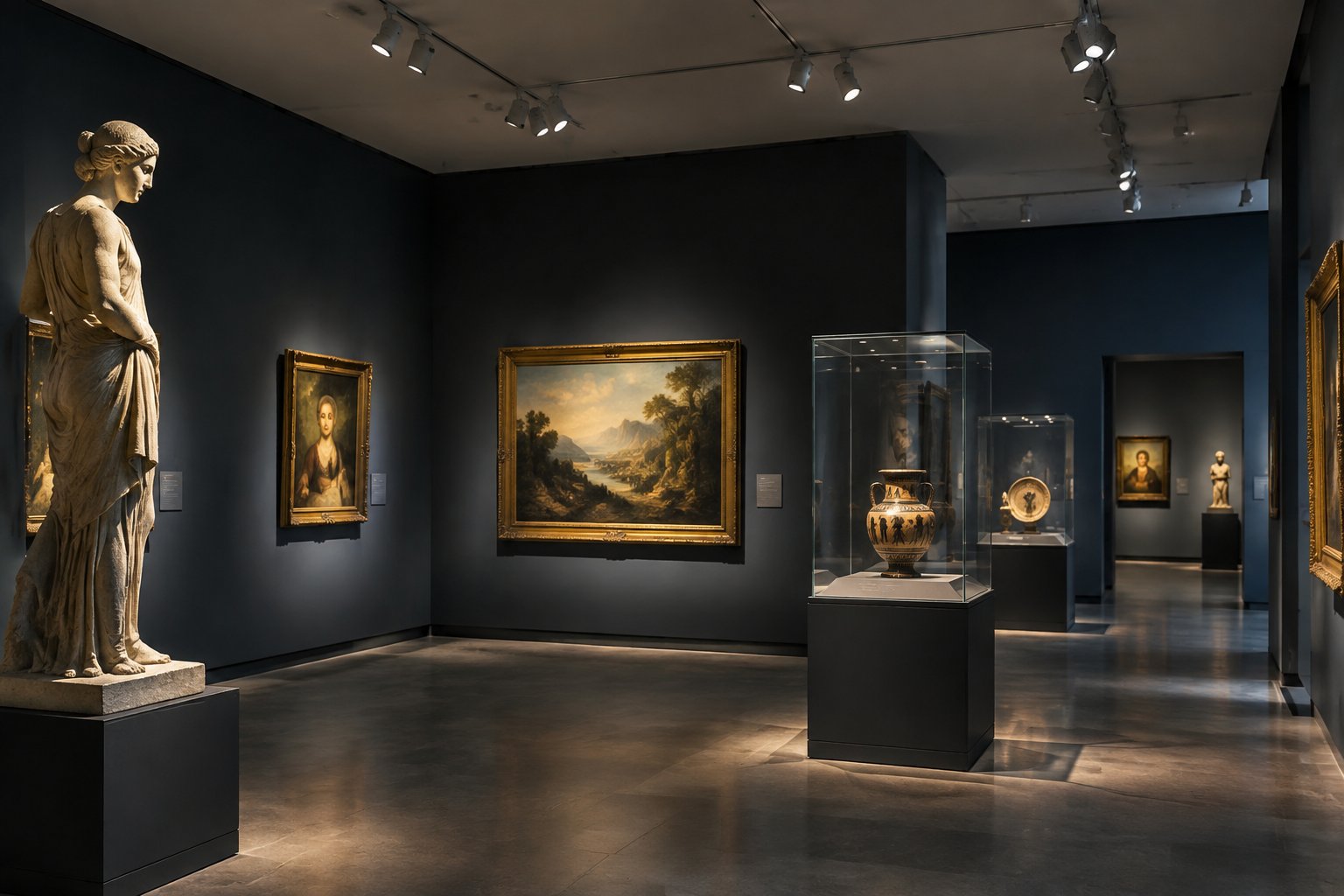 Museum LED Loan Specifications Shift Focus to Lux-Hour Budgets: Q: Do LED museum spotlights still need UV and IR filters?
Need a tailored lighting plan for your project?
Our senior lighting designers reply within 48 hours with a free design proposal & quotation.