Dubai Airport Circadian LED Upgrade: Concourse D Case Study
Introduction — the on-site problem
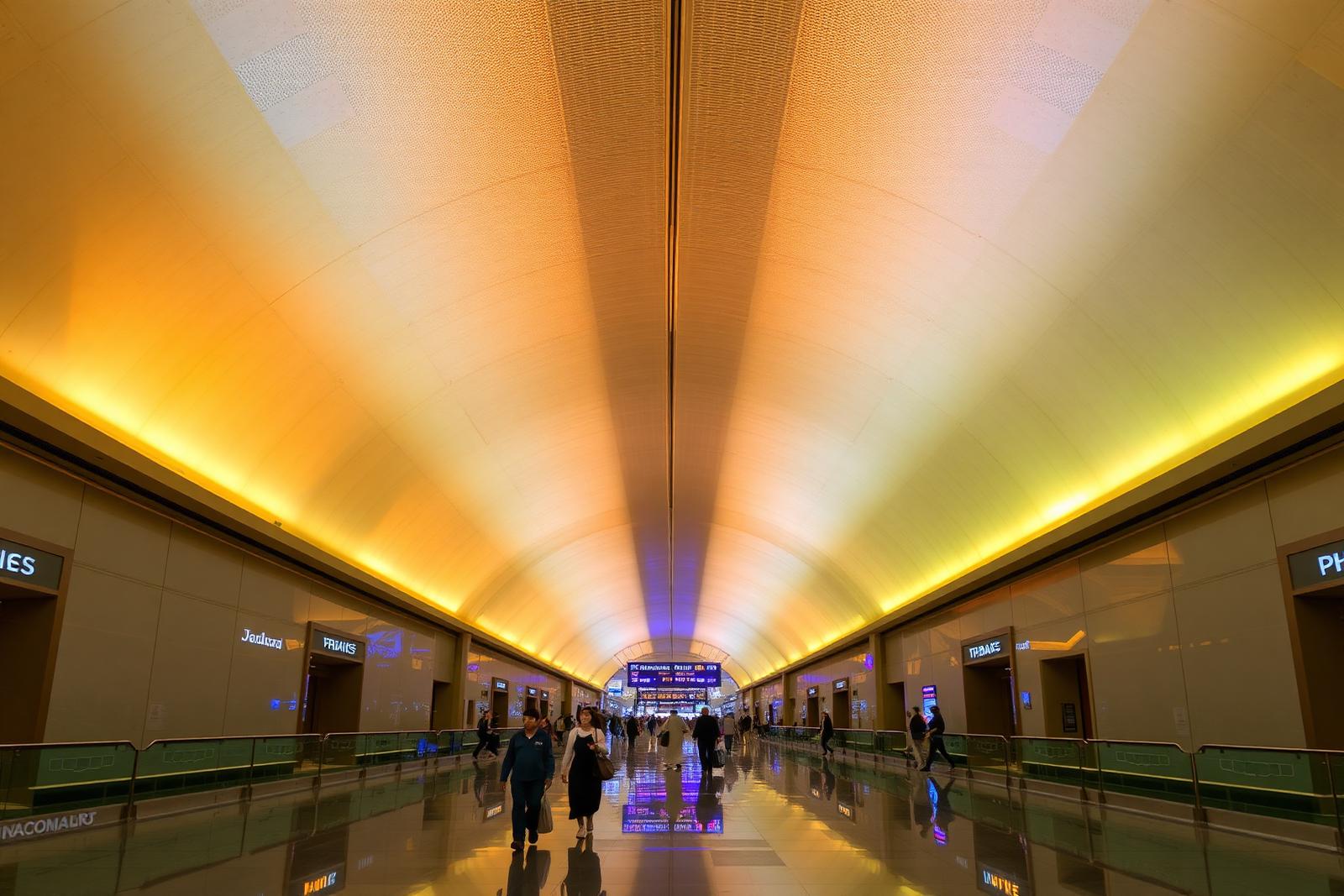
At XHLWX (led-project-light.com), a Custom Indoor LED Lighting Manufacturer based in China, we were tasked with a landmark project: a complete circadian lighting overhaul for Concourse D at Dubai International Airport (DXB), one of the world's busiest travel hubs. The existing infrastructure, while functional, presented several challenges. The 24/7 operational nature resulted in immense energy consumption from outdated fluorescent and metal halide fixtures. Furthermore, the static, high-glare lighting did little to support passenger well-being, often exacerbating jet lag and creating a visually sterile environment. The airport authority sought a state-of-the-art solution that would not only deliver significant energy savings but also implement human-centric lighting principles to improve the passenger experience, reduce glare, and adapt dynamically to the time of day.
What "custom" meant on this project — capability matrix
The project's core requirement was to retrofit a sophisticated tunable white system into complex existing ceiling structures without disruptive architectural work. This demanded extensive customization of our linear LED profiles. Our solution was based on a custom-fabricated luminaire, the XHL-L7080-TW series, designed specifically for this aviation environment. The specifications below outline the level of detail required to meet the client's stringent performance and integration criteria.
| Parameter | Specification | Standard | Notes |
|---|---|---|---|
| Optics | Tunable White: 2700K - 5000K | CRI > 90 | Osram Duris E 2835 LED chips used for superior color rendering and stability. |
| Glare Control | UGR < 19 | EN 12464-1 | Achieved via a custom micro-prismatic diffuser and deep-baffle design. |
| Control System | DALI-2, DT8 (Tunable White) | IEC 62386 | Tridonic DALI-2 drivers enabled individual addressing and smooth color tuning. |
| Housing | 6063 Aluminum, Custom Lengths | IP42 | Fixtures fabricated in precise lengths (e.g., 2,455mm) to fit existing coves. |
| Beam Angle | 90° Asymmetric Wallwash | N/A | Custom reflector designed to illuminate vertical surfaces evenly from ceiling coves. |
| Certifications | CE, RoHS, LM-80 | EU/Global Standards | Products manufactured under our ISO9001:2015 certified quality system. |
Engineering solutions
Our engineering team addressed three primary challenges through a combination of product design, control strategy, and rigorous simulation.
How did we implement tunable white lighting across a 68,000 sqm concourse?
The sheer scale of the project required a robust and granular control system. We leveraged the DALI-2 protocol, specifically IEC 62386-209 (known as DT8), which allows for color temperature control over a standard 2-wire bus. Each custom luminaire was fitted with a Tridonic DT8 driver. This enabled the central Building Management System (BMS) to address each fixture individually or in groups. We programmed a 24-hour scene schedule that mimicked the natural solar cycle: soft, warm 2700K light during early morning and late-night hours to promote relaxation, gradually transitioning to a bright, alertness-boosting 5000K at midday, before warming up again into the evening. This dynamic shift helps regulate passengers' circadian rhythms, mitigating the effects of international travel.
What custom form factors were required to fit the existing ceiling infrastructure?
One of the client's non-negotiable conditions was zero structural modification to the concourse's signature curved ceilings. Our standard products would not fit. The XHLWX engineering team conducted a detailed on-site survey and laser scan of the existing ceiling coves and mounting points. Using this data, we designed and prototyped a new variant of our XHL-L7080 linear profile. The extrusions were manufactured in over 50 unique lengths, ranging from 600mm to 3,500mm, to ensure a perfect, seamless fit. We also designed a new set of adjustable mounting brackets that could clip into the existing ceiling framework, drastically reducing installation time and labor costs for the contractor.
How did we ensure UGR<19 compliance in high-traffic gate areas?
Visual comfort was paramount, especially in gate seating areas where passengers spend extended periods looking at screens and information displays. The previous lighting created significant reflective glare. To combat this, we focused on the luminaire's optical design. We developed a dual-layer diffuser system: an inner light-shaping film paired with an external micro-prismatic polycarbonate lens. This assembly effectively cut off high-angle light, reducing the Unified Glare Rating (UGR) to a measured average of <17. Before manufacturing, our lighting designers validated this performance by creating a complete digital twin of the concourse in DIALux EVO. These simulations, using our proprietary IES and LDT photometric files, allowed us to predict and confirm that our design would meet the stringent UGR<19 requirement across all critical zones.
Project results — measured
The post-installation audit confirmed a resounding success, meeting or exceeding all project goals:
- Energy Savings: The switch to high-efficacy LEDs combined with DALI-2 scheduling and occupancy sensing resulted in a 65% reduction in lighting energy consumption, saving an estimated 4.2 GWh annually.
- Payback Period: The total project cost is projected to be recouped in just 28 months through combined energy and maintenance savings.
- Lighting Quality: Average illuminance levels were maintained at a comfortable 450 lux in passenger waiting areas, with a CRI of 92. The full tunable white range from 2700K to 5000K was successfully implemented.
- Visual Comfort: The crucial glare metric was significantly improved, with UGR values consistently measuring below 17 in all gate areas and lounges, a drastic improvement from the previous UGR>23.
Photometric files & compliance (IES / LDT / DIALux / CE / RoHS)
Full transparency and technical documentation were key to this project's success. For every custom luminaire manufactured, we provided a complete set of laboratory-tested IES and LDT photometric files. These files were used by the client's consulting engineers to verify our lighting plans within their own DIALux simulations, ensuring perfect alignment before a single fixture was shipped. All products supplied for the Dubai International Airport project carry full CE and RoHS certification, affirming their compliance with European standards for safety and environmental protection. Our manufacturing process is strictly governed by our ISO9001:2015 quality management system, guaranteeing consistency and reliability across the entire order.
Frequently Asked Questions
Q: Why was DALI-2 Type 8 chosen for this project?
A: DALI-2 Type 8 (DT8) was essential because it allows for both dimming and color temperature control over a single DALI address and standard 2-wire pair. This simplified wiring across the vast concourse, reduced installation costs, and provided the granular control needed to create the smooth, 24-hour circadian scenes, with CCT adjustable from 2700K to 5000K.
Q: How does circadian lighting actually benefit airport passengers?
A: A circadian lighting system, like the one installed, helps reset or maintain passengers' internal body clocks. By providing energizing, blue-rich light (5000K) during the day and warm, calming light (2700K) at night, it can reduce fatigue and disorientation associated with jet lag. This enhances passenger well-being and creates a more comfortable and less stressful airport environment.
Q: What was the longest custom fixture length you produced?
A: To ensure a seamless fit within the airport's existing architectural coves without any gaps, we manufactured fixtures in highly specific dimensions. The longest single-piece luminaire we produced for this project was 3,500mm (3.5 meters). This capability to create bespoke lengths was critical to avoiding any on-site cutting or modification, ensuring a clean, high-quality installation.
Q: How were the 65% energy savings achieved?
A: The 65% energy savings were achieved through a three-pronged approach. First, we replaced inefficient legacy lights with high-efficacy Osram LED chips (>140 lm/W). Second, the DALI-2 control system enabled scheduled dimming during off-peak hours. Third, integrated presence sensors in low-traffic areas ensured lights operated at minimum levels or turned off when spaces were unoccupied.
Request a custom quote
This project showcases our ability to deliver highly customized, large-scale lighting solutions for demanding environments. At XHLWX (led-project-light.com), a Custom Indoor LED Lighting Manufacturer based in China, we integrate cutting-edge technology with meticulous engineering to meet the precise needs of our clients in the EU, US, and Middle East. Contact our team to discuss your project requirements and receive a detailed proposal.