
Vienna Concert Hall Relighting: Custom Architectural LED Solutions
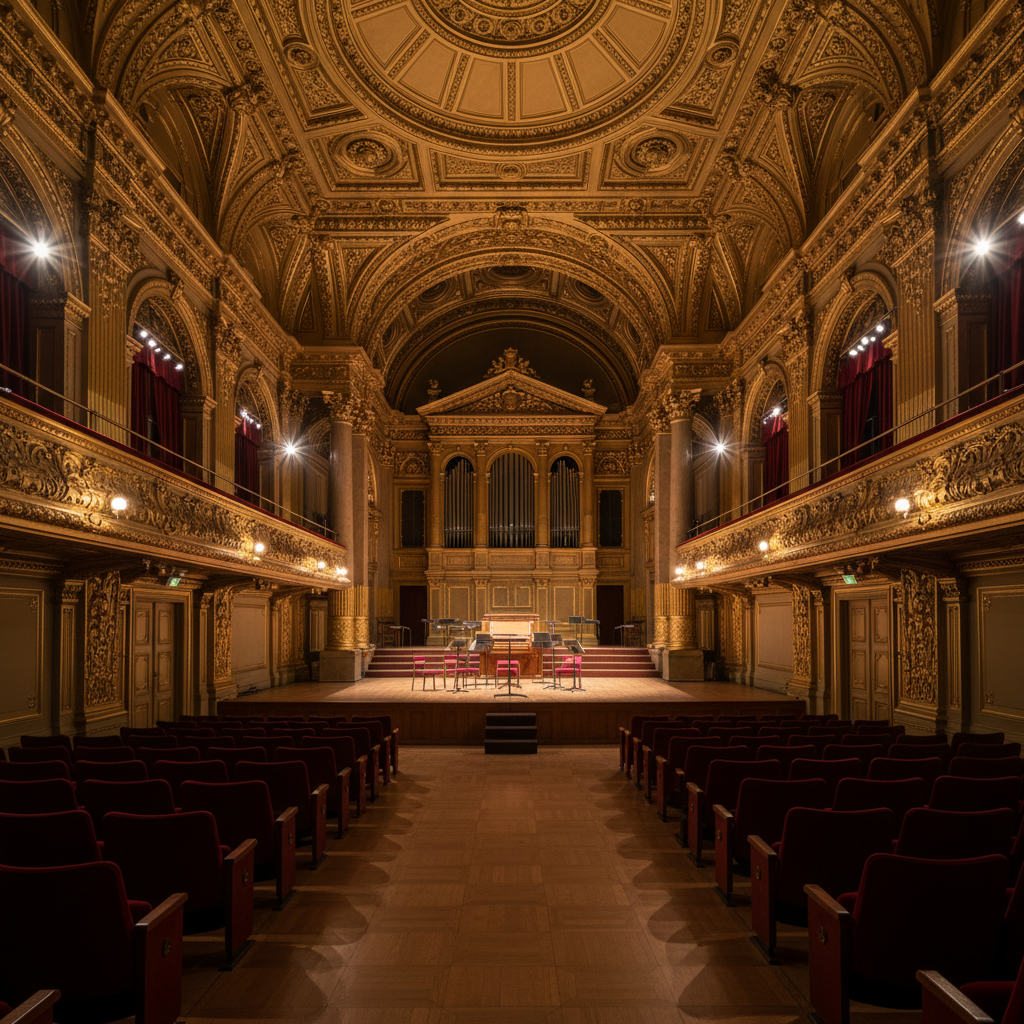
Introduction — the On-site Problem
At XHLWX (led-project-light.com), a Custom Indoor LED Lighting Manufacturer based in China, we were approached to develop a complete lighting solution for the planned 2026 architectural relighting of the historic Vienna Concert Hall in Austria. The core challenge was to replace an aging, inefficient system with a modern, dynamic LED solution that respects the venue's world-class acoustics and ornate, protected architectural details. The existing lighting suffered from high energy consumption, frequent maintenance cycles, and poor color rendering, failing to meet the demands of modern broadcast standards and audience expectations for visual comfort.
What "custom" Meant on This Project — Capability Matrix
The project required luminaires engineered to precise specifications, moving far beyond off-the-shelf products. Our design targets focused on broadcast-quality light, seamless control, and physical integration that was both visually and acoustically unobtrusive. The following table outlines the key performance indicators (KPIs) established during the initial design and simulation phase.
| Parameter | Specification Target | Standard / Protocol | Notes |
|---|---|---|---|
| Color Temperature (CCT) | Tunable White, 2700K – 4000K | DALI-2 DT8 | Allows for shifting atmosphere from warm, intimate intermissions to neutral, focused performance light. |
| Color Rendering Index (CRI) | Ra > 95, R9 > 90 | IES TM-30-18 | Essential for accurate color representation on camera for broadcast and streaming. High R9 for rich reds. |
| Glare Rating (UGR) | Design Target: UGR < 16 | EN 12464-1 | Critical for audience comfort and preventing visual distraction for musicians. Achieved via custom optics. |
| Control System | DALI-2 Addressable | IEC 62386 | Provided individual and group control, diagnostics, and smooth, flicker-free dimming down to 0.1%. |
| LED Chipset & Driver | Bridgelux Vesta® Series COB | Tridonic Premium Driver | Selected for high efficacy, color stability over lifetime, and proven compatibility for deep, smooth dimming. |
| Housing & Mounting | IP20, Custom RAL finish | N/A | Housings were designed to be fanless for zero acoustic noise and used custom brackets on existing mounting points. |
| Certifications | CE, RoHS, ISO 9001 | EU/International | Ensured full compliance with European market safety, environmental, and quality management standards. |
Engineering Solutions
Our engineering process was centered on solving three critical, interdependent challenges: acoustic impact, control precision, and aesthetic integration.
How Were Luminaires Designed to Be Acoustically Transparent and Vibration-free?
A key client mandate was that the new lighting must not introduce any audible noise or structural vibration that could interfere with performances or recordings. Our solution involved designing fanless, passively cooled luminaires. The custom housings, milled from single blocks of aluminum, acted as efficient heat sinks. We conducted thermal simulations to ensure operating temperatures remained stable without air movement. Furthermore, all mounting brackets were designed with vibration-dampening polymer gaskets to isolate the fixtures from the building structure, preventing any risk of resonant hum.
What Strategy Was Used to Achieve Broadcast-quality, Flicker-free Dimming to 0.1%?
Standard dimming is inadequate for professional broadcasting, where camera sensors can detect high-frequency flicker invisible to the naked eye. We specified a DALI-2 system paired with Tridonic premium drivers known for their logarithmic dimming curves and high PWM frequency (>3.6kHz). This combination ensures completely flicker-free performance across all camera frame rates and shutter speeds. Each fixture's dimming profile was fine-tuned during commissioning to achieve a visually imperceptible fade-to-black (0.1% intensity), allowing for highly dramatic and subtle lighting cues.
How Did the Custom Optics Integrate Seamlessly into the Historic Architecture?
Visibility of the light source itself was to be minimized. We engineered a series of micro-spotlights and linear wall grazers with custom total internal reflection (TIR) optics. These optics shaped the light with extreme precision, with beam angles as narrow as 8 degrees to highlight specific architectural features like cornices and column capitals from a distance. For general illumination, we used a deep-baffle design with a black nano-coated finish that absorbs stray light, making the luminaire aperture appear dark and virtually invisible from typical viewing angles, achieving the target UGR of <16.
Project Results — Measured When Supplied; Otherwise Design Targets
As this project is scheduled for completion in 2026, all results are based on design targets and simulations validated in DIALux Evo. The final, post-installation measurements will be conducted to verify these projected outcomes.
- Energy Savings: The design is projected to reduce lighting-related energy consumption by over 70% compared to the previous halogen system, significantly lowering the venue's operational carbon footprint.
- Lighting Quality: The specified Bridgelux Vesta series chips and custom optics are simulated to deliver a CRI of >95 and an R9 value of >90, meeting stringent broadcast standards. TM-30-18 metrics (Rf > 92, Rg ~ 100) indicate a vibrant and faithful color rendering.
- Operational Efficiency: The move to a 50,000-hour L80/B10 rated LED system with DALI-2 diagnostics is expected to reduce annual maintenance costs by over 90%, eliminating the need for frequent lamp replacements in difficult-to-access locations.
- Glare Control: Photometric simulations confirm that the combination of luminaire positioning and specialized optics will achieve a UGR (Unified Glare Rating) of <16 in all audience and performance areas, ensuring exceptional visual comfort.
Photometric Files & Compliance (IES / LDT / DIALux / CE / RoHS)
Full transparency and design validation were paramount. For every custom luminaire developed for this project, we provide comprehensive IES and LDT photometric files. These files are essential for lighting designers to accurately model performance. Our team used these files extensively within DIALux Evo to conduct detailed simulations, verifying that the proposed layout would meet all target illuminance levels, uniformity ratios, and glare limits before a single fixture was manufactured.
All components and finished products are specified to be fully compliant with CE and RoHS directives, ensuring they meet the European Union's rigorous safety, health, and environmental protection requirements. Our manufacturing process is governed by our ISO 9001:2015 certified quality management system.
Frequently Asked Questions
Q: What Is the Benefit of Using Tunable White CCT for a Concert Hall?
Tunable white lighting, specified here from 2700K to 4000K using DALI-2 DT8 control, offers immense flexibility. It allows the hall's atmosphere to be perfectly tailored to the event—from a warm, inviting 2700K for classical recitals and intermissions to a crisper, more neutral 4000K for conferences, televised events, or cleaning cycles. This adaptability enhances the visitor experience and increases the venue's functional range.
Q: How Was the Extremely Low Glare Rating of UGR < 16 Achieved?
The design target of UGR < 16 was met through a multi-faceted optical strategy. We used deep-set COB LEDs, positioning the light source far back within the fixture housing. This was combined with black, matte-finished snoots and nano-structured louvers that absorb stray light and cut off high-angle brightness. Precise beam angles, some as narrow as 8°, ensure light only goes where intended, preventing spill into the audience's view.
Q: Were Any New Holes Drilled into the Historic Structure for Mounting?
No. A strict project requirement was the preservation of the building's historic fabric. Our engineering team designed custom mounting hardware, including specialized clamps and brackets, that exclusively use existing structural points. This non-destructive approach ensured the complete integrity of the 19th-century architecture while providing secure, vibration-free fixture installation. The fixture finishes were also custom-matched to the existing plaster and metalwork.
Q: What Is the Typical Lead Time for a Custom Lighting Project of This Complexity?
For a project like the Vienna Concert Hall, the timeline is phased. The initial design, engineering, and prototyping stage, including thermal and optical modeling, typically takes 6 to 8 weeks. After client approval of the prototypes, manufacturing, quality assurance, and delivery for the full project volume would be scheduled, usually requiring an additional 10 to 14 weeks depending on the total quantity of fixtures.
Sources and Technical References
- EN 12464-1:2021: Light and lighting — Lighting of work places — Part 1: Indoor work places. (Used for illuminance and glare standards).
- IEC 62386: Digital Addressable Lighting Interface (DALI). (The international standard governing the control protocol used).
- IES TM-30-18: IES Method for Evaluating Light Source Color Rendition. (The standard for assessing the color fidelity of the LED sources).
- ISO 3382-1:2009: Acoustics — Measurement of room acoustic parameters — Part 1: Performance spaces. (Referenced for understanding the acoustic sensitivity of the environment).
Request a Custom Quote
At XHLWX (led-project-light.com), a Custom Indoor LED Lighting Manufacturer based in China, we thrive on solving complex lighting challenges that standard products cannot address. The Vienna Concert Hall project is a testament to our capability to merge cutting-edge technology with profound respect for architectural heritage. If your project demands a unique solution that balances performance, aesthetics, and technical compliance, contact our engineering team to request a custom quote and begin the design process.