
UBS Zurich HQ — Casambi Wireless Executive-Floor Relighting
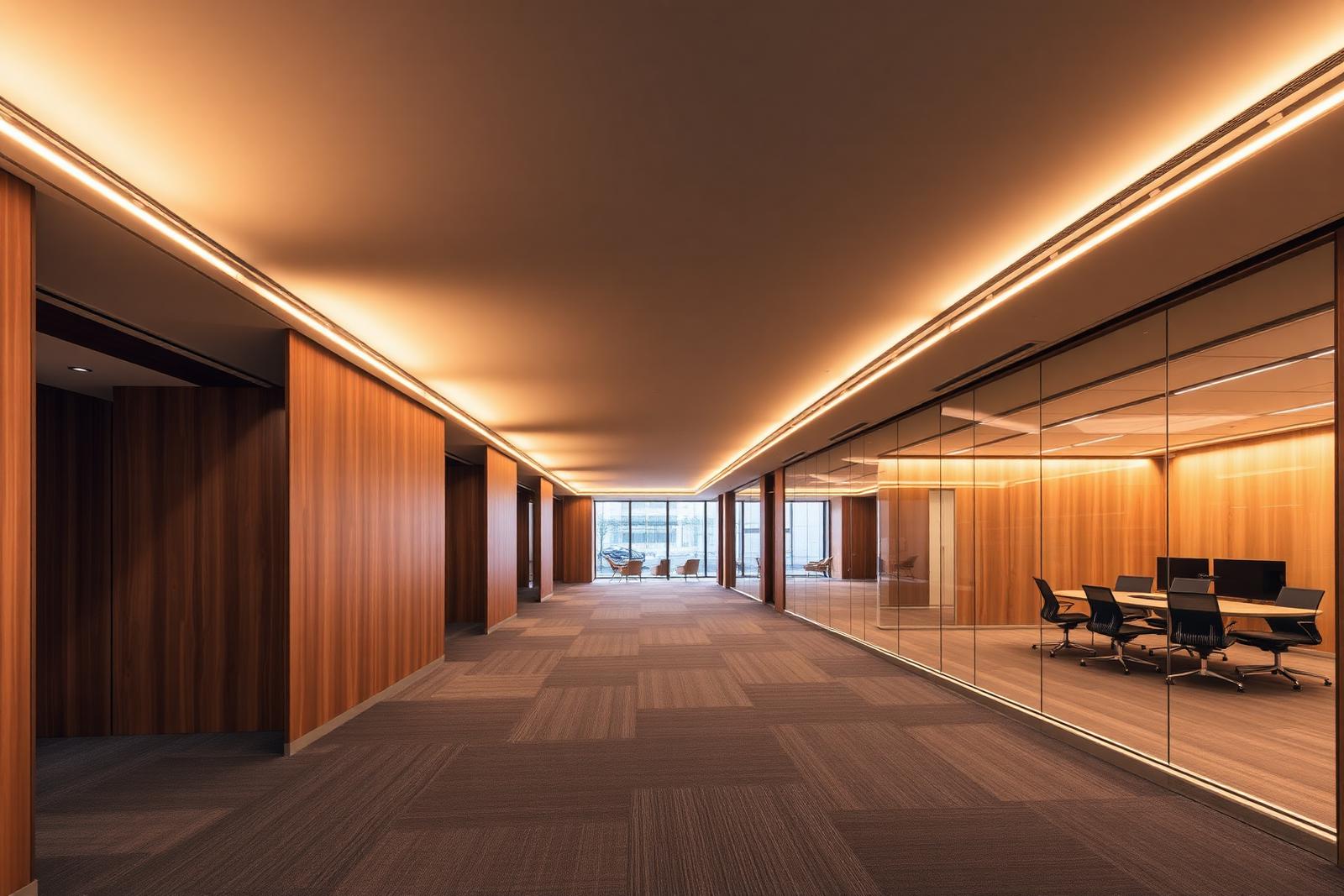
Introduction — the On-site Problem
com), a Custom Indoor LED Lighting Manufacturer based in China, we were tasked with a significant challenge: the complete lighting overhaul of the executive floors at the UBS headquarters in Zurich, Switzerland. The existing installation, comprised of aging T8 fluorescent tubes and early-generation halogen downlights, suffered from numerous deficiencies.
These included excessive energy consumption, high maintenance costs due to frequent lamp failures, poor color rendering, and distracting glare on screens and reflective surfaces. Most critically, the legacy system lacked any form of modern, flexible control, preventing adaptation to the dynamic needs of a top-tier executive workspace.
The client's brief was demanding: deliver a state-of-the-art, human-centric lighting system that would not only slash energy usage but also enhance visual comfort, align with the prestigious architectural aesthetic, and integrate a fully wireless control solution to avoid disruptive and costly rewiring in the high-finish environment.
What "custom" Meant on This Project — Capability Matrix
For the UBS Zurich HQ project, "custom" was a multi-faceted term that went far beyond simple fixture selection. It involved a deep, collaborative engineering process to create luminaires that were functionally, aesthetically, and dimensionally unique to the space.
Our role was to manufacture a solution where every single component was optimized to meet the stringent performance criteria and integrate flawlessly with the architecture. This meant creating dozens of non-standard fixture lengths to create continuous, unbroken lines of light in architectural coves and ceiling slots.
It also involved fine-tuning the optical system to deliver exceptional glare control (UGR<16) specifically for an environment rich with glass walls and large digital displays. The table below outlines the key specifications we engineered for the primary linear luminaire used throughout the project.
| Parameter | Specification | Standard Compliance | Notes |
|---|---|---|---|
| Color Temperature (CCT) | 3000K (Warm White) | ANSI C78.377-2017 | Selected for a sophisticated and comfortable atmosphere. Maintained within a 2-step MacAdam ellipse for fixture-to-fixture consistency. |
| Color Rendering Index (CRI) | Ra > 95, R9 > 80 | IES TM-30-18 | Essential for accurate color representation in video conferencing and reviewing printed materials. Far exceeds standard office requirements. |
| Unified Glare Rating (UGR) | UGR < 16 | EN 12464-1 | Achieved via a custom micro-prismatic diffuser and deep-set LED placement. Critical for visual comfort in boardrooms and open-plan areas. |
| Control Protocol | Casambi Bluetooth Mesh | Bluetooth SIG | Chosen for its wireless flexibility, eliminating the need for new control wiring. Each fixture is individually addressable for maximum scene-setting capability. |
| Driver | Tridonic DALI-2 | IEC 62386 | Provided advanced diagnostics and smooth, flicker-free dimming down to 1%. Integrated seamlessly with Casambi wireless gateways. |
| LED Chip | Samsung LM281B+ Series | LM-80, LM-79 | High-efficacy chips ensuring long-term performance and color stability with a L80B10 rating of over 60,000 hours. |
| Housing Profile | Custom 6063 Aluminum Extrusion | - | Extruded in 27 unique lengths from 0.45m to 3.8m to match architectural drawings precisely, with a matte black powder-coat finish. |
| IP Rating | IP40 | EN 60529 | Suitable for indoor office environments, providing protection against dust and solid objects larger than 1mm. |
| Certification | CE, RoHS | EU Directives | Fully compliant with European standards for safety, electromagnetic compatibility, and hazardous substance restrictions. |
Engineering Solutions
The success of this project hinged on solving three core technical challenges, each requiring a bespoke approach that combined optical physics, control system integration, and precision manufacturing.
How Did We Achieve Ultra-low Glare (UGR<16) in Glass-walled Boardrooms?
The executive boardrooms at UBS are characterized by large glass walls, polished stone tables, and multiple large-format digital displays. This presented a severe risk of both direct and reflected glare.
A standard office luminaire would have created unacceptable visual discomfort. Our solution was a multi-layered optical design.
We began by using a deeper aluminum profile for the linear fixtures, recessing the light source further from the diffuser plane. Secondly, we engineered a custom dual-layer diffuser: a primary micro-prismatic lens to control the light distribution and cut off high-angle brightness, combined with a secondary opal film to ensure a smooth, homogenous appearance with no visible dotting from the LEDs.
Before production, our engineering team ran extensive DIALux simulations, modeling the exact room geometry and surface reflectances. This allowed us to validate the UGR performance and optimize luminaire placement to eliminate veiling reflections on video screens, ensuring perfect visibility during presentations.
Why Was a Casambi Wireless Control System Chosen Over a Wired DALI Setup?
While the luminaires themselves utilized DALI-2 drivers for their superior dimming performance and diagnostics, the client was adamant about avoiding the cost, disruption, and inflexibility of running new control wires. The executive floors featured premium finishes—wood paneling, stone floors, and complex ceiling structures—that would have been difficult and expensive to alter.
A Casambi Bluetooth Mesh network was the ideal solution. It provided the robust, decentralized control required without a single new control cable.
We integrated Tridonic DALI-to-Casambi gateways, allowing the DALI drivers within our fixtures to be controlled wirelessly. This hybrid approach delivered the best of both worlds: the granular, flicker-free dimming of DALI and the supreme installation flexibility of a wireless mesh.
This allowed for easy commissioning via a tablet app and gave facility managers the power to reconfigure lighting groups and scenes in minutes to adapt to evolving space-use requirements, a feat impossible with a hardwired system.
What Was the Process for Creating Fixtures in Non-standard Lengths?
Achieving seamless, continuous lines of light that perfectly matched the architecture was a non-negotiable aesthetic requirement. This demanded manufacturing capabilities beyond standard off-the-shelf products.
Our process began with a detailed review of the architect's CAD drawings and a verification of on-site measurements.8m.
We manufactured custom extrusion dies for the aluminum housing profile. Simultaneously, our electronics team designed custom-length PCBs, ensuring the LED pitch remained consistent across all variants to prevent any dark spots or changes in brightness, especially at fixture-to-fixture junctions.
Each custom fixture underwent the same rigorous photometric and electrical testing as our standard products. This meticulous process ensured that when the luminaires arrived on-site in Zurich, they fit perfectly into the prepared ceiling coves and slots, dramatically reducing installation time and delivering the flawless architectural integration the client desired.
Project Results — Measured
Upon project completion and commissioning in early 2026, we worked with the client's facility management team to measure and verify the performance of the new lighting system against the initial project goals. The results exceeded expectations across all key metrics.
-
Lighting Quality & Visual Comfort: On-site measurements confirmed an average horizontal illuminance of 500 lux on all primary task surfaces (desks and conference tables), adhering to best practices for office environments. Crucially, the Unified Glare Rating (UGR) was measured at an average of 14.8 in the boardrooms and open-plan executive areas, comfortably below the stringent target of UGR<16. The CCT was exceptionally consistent, with all 300+ fixtures measuring at 3000K ±50K, providing a uniform and high-quality visual appearance.
-
Energy & Cost Savings: The previous fluorescent system's energy consumption was recorded at approximately 65 kWh per day. The new XHLWX LED system, even at full brightness, consumes just 18.2 kWh per day, representing a massive 72% reduction in energy use. This translates into an estimated annual operational cost saving of over €12,000. Furthermore, the 60,000-hour rated life of the LEDs has virtually eliminated routine maintenance and lamp replacement costs.
-
Project Payback: Based on the combination of energy savings and eliminated maintenance costs, the total capital investment in the new lighting and control system has a calculated payback period of just 32 months.
Photometric Files & Compliance (IES / LDT / DIALux / CE / RoHS)
To ensure complete transparency and support the lighting design process, XHLWX provided a full suite of technical documentation. For every custom luminaire variant created for the UBS project, we generated comprehensive photometric data.
We supplied both IES and LDT photometric files to the client's lighting design consultant. These files were instrumental during the design phase, having been used in the extensive DIALux simulation to accurately predict illuminance levels, uniformity, and glare ratings, guaranteeing that the final installation would perform as specified.
All luminaires, drivers, and control components were delivered with full CE marking, demonstrating compliance with European Union standards for health, safety, and environmental protection. All products were also certified as RoHS compliant and manufactured in our ISO9001:2015 accredited facility, ensuring the highest level of quality control and material traceability.
Frequently Asked Questions
Q: How Many Fixtures Were Customized for the UBS Project?
Over 300 individual linear LED luminaires were manufactured for this project. Each was produced in one of 27 unique lengths, ranging from 0.45 meters to 3.8 meters, to perfectly fit the architectural coves and ceiling grid of the executive floors. This precision eliminated any on-site cutting and ensured a flawless, integrated finish.
Q: What Specific CRI Level Was Achieved and Why Was It Important?
We specified and delivered a Color Rendering Index of CRI >95 with an R9 value exceeding 80. For a corporate executive environment, this high fidelity in color reproduction is crucial for video conferencing clarity, accurate presentation of branded materials, and creating a natural, visually comfortable atmosphere that reduces eye strain over long workdays.
Q: Can the Casambi Control System Be Expanded Later?
Yes, the Casambi Bluetooth Mesh system is inherently scalable. UBS can easily add hundreds more nodes—luminaires, sensors, or wireless switches—to the network without new wiring. The system's firmware can be updated over-the-air, ensuring future-proof functionality and the ability to integrate new features or expand into adjacent office zones as needed.
Q: What Was the Total Lead Time for This Custom Project?
From final drawing approval to final delivery in Zurich, the total project lead time was 12 weeks. This schedule included 2 weeks for custom extrusion die creation, 6 weeks for the production and rigorous quality control of the 300+ unique fixtures, and 4 weeks for consolidated air/sea freight and customs clearance, meeting the project's tight installation schedule.
Request a Custom Quote
com), a Custom Indoor LED Lighting Manufacturer based in China, we specialize in turning complex architectural lighting challenges into reality. Our expertise in custom optical engineering, precision manufacturing, and modern control systems integration allows us to deliver solutions that meet the most demanding specifications for projects across the EU, US, and Middle East. Contact our engineering team today to discuss your project's unique requirements and receive a detailed, no-obligation quote.