
Hamburg Private Art Museum: Conservation-Grade Gallery Lighting
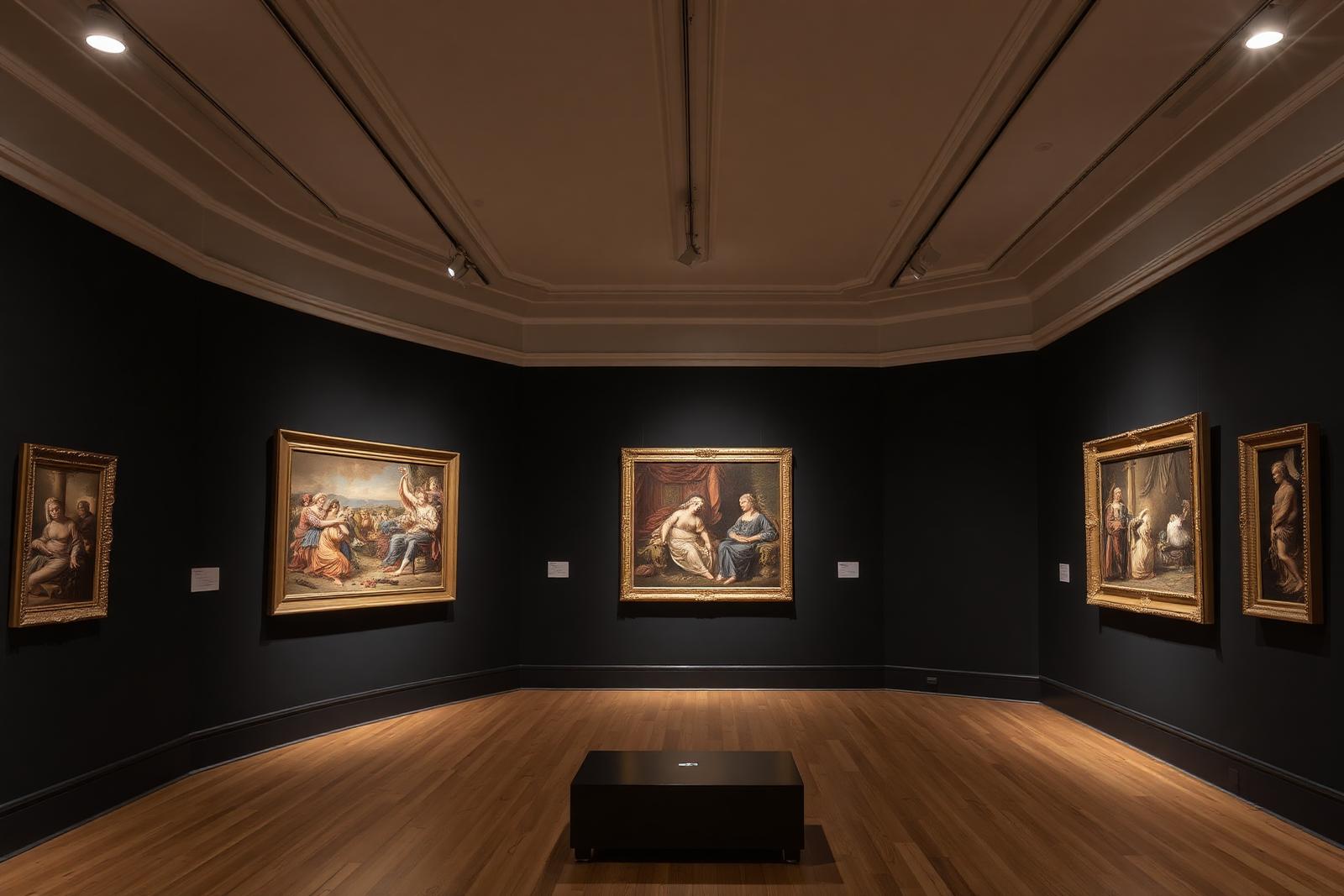
Introduction — the On-site Problem
com), a Custom Indoor LED Lighting Manufacturer based in China, we were approached to develop a bespoke lighting solution for a private art museum in Hamburg's HafenCity district. The museum's primary challenge was its outdated halogen lighting system, which produced significant UV/IR radiation, had poor color rendering, and offered limited control.
The client required a new system that would not only enhance the visual presentation of the collection but also adhere to strict conservation-grade standards to protect valuable and light-sensitive artworks from degradation.
What "custom" Meant on This Project — Capability Matrix
For this project, "custom" involved engineering a luminaire from the ground up to meet the stringent demands of museum lighting. The core of the solution was our X-MOD-75 series track spotlight, modified to the client's exact specifications for optical performance, control, and physical integration. The key parameters were defined to ensure both aesthetic excellence and artifact preservation.
| Parameter | Specification | Standard | Notes |
|---|---|---|---|
| Color Temperature (CCT) | 3000K (Warm White) | ANSI C78.377-2017 | Specified for a balance of warmth and color accuracy. |
| Color Rendering Index (CRI) | Ra > 97, R9 > 90 | IES TM-30-18 | Conservation-grade quality using Bridgelux Vesta series COB. |
| Glare Rating (UGR) | < 13 | EN 12464-1 | Achieved via deep-recessed optics and honeycomb louvre accessory. |
| Control Protocol | DALI-2 Digital Addressable | IEC 62386 | Tridonic driver for individual luminaire dimming and scene control. |
| Housing & Mounting | Die-cast Aluminum, 3-Circuit Track | IP20 | Custom matte black finish to minimize visual distraction. |
| Certifications | CE, RoHS | EU Directives | Fully certified for compliance and sale within the European Union. |
Engineering Solutions
The project's success hinged on solving three critical challenges: delivering uncompromising light quality, managing visual comfort for patrons, and providing maximum flexibility for the curatorial team.
How Did We Achieve Conservation-grade Light Quality with CRI > 97?
Protecting priceless art from photochemical damage was the highest priority. Standard LEDs are insufficient for this task.
We selected a specific Bridgelux Vesta series COB with a phosphor formulation that delivers a CRI of Ra > 97 and, critically, an R9 value (for rendering deep reds) exceeding 90. This ensures that the full spectrum of colors in the artwork is rendered vividly and accurately, just as the artist intended.
Furthermore, our selected LEDs produce virtually zero UV and minimal IR radiation, drastically reducing the primary drivers of pigment and material degradation compared to the previous halogen system. Each LED was subject to a tight 2-step MacAdam ellipse binning to guarantee absolute color consistency across all 150+ luminaires installed.
What Was the Strategy for Glare Control and Visual Comfort (UGR<13)?
An art museum should be an immersive experience, free from visual distraction or discomfort. High glare from light sources can ruin this.
Our engineering goal was a Unified Glare Rating (UGR) of less than 13, a stringent target for museum environments. This was accomplished through a multi-faceted optical design.
The LED source was deeply recessed within the luminaire's central barrel. We then designed a custom snoot and integrated an anti-glare honeycomb louvre.
This combination shapes the beam precisely onto the artwork while cutting off any stray light that could cause discomfort glare for visitors viewing the art from various angles. The exact placement and aiming strategy were modeled and verified using DIALux simulation software before installation.
How Was Lighting Flexibility Achieved for Rotating Exhibitions?
The museum's collection is not static; exhibitions change frequently, requiring a lighting system that can adapt without complex rewiring. We implemented a solution based on a 3-circuit track system paired with DALI-2 compatible drivers from Tridonic.
This combination provides the ultimate flexibility. Physically, the track allows staff to move, add, or remove luminaires anywhere along its length.
1%), and grouped via software. Curators can now create complex lighting scenes, build focus with dramatic contrast, and completely reconfigure the lighting for a new exhibition in a matter of hours, all from a central control panel or tablet.
Project Results — Measured When Supplied; Otherwise Design Targets
The final installation successfully met all specified design targets, transforming the gallery environment. The new system provides conservation-grade illumination with a specified CRI > 97 and a consistent 3000K CCT, bringing the colors of the artwork to life while ensuring their long-term preservation.
The visual comfort target of UGR < 13 was achieved, creating a pleasant and focused viewing experience for all visitors. The DALI-2 control system has empowered the curatorial staff with unprecedented flexibility, significantly reducing the time and labor required to relight the space for new exhibitions.
Photometric Files & Compliance (IES / LDT / DIALux / CE / RoHS)
To ensure full transparency and support the lighting design process, XHLWX provided a comprehensive documentation package. Complete IES and LDT photometric files for each custom luminaire configuration (with different beam angles and accessories) were supplied to the client's design team.
This data enabled the client's lighting designer to perform precise DIALux simulations, accurately predicting illuminance levels, uniformity, and glare on-site before a single fixture was ordered. All supplied components are fully compliant with European standards, bearing the CE mark and adhering to the RoHS directive for hazardous substances.
Frequently Asked Questions
Q: Why Is a CRI Above 95 so Important for Art Gallery Lighting?
A Color Rendering Index (CRI) above 95, with a high R9 value for reds, is crucial for faithfully reproducing the artist's original palette. It ensures that subtle tones and saturated colors are seen accurately without distortion. This level of quality, specified at CRI 97 for this project, also helps in identifying the condition of artifacts and protecting them by using the most efficient light possible.
Q: What Control System Was Used and Why Was It Chosen?
The project utilizes the DALI-2 control protocol (IEC 62386). This system was chosen because it allows for the individual digital address of every single luminaire. This enables precise dimming down to 0.1%, scene-setting, and dynamic regrouping of lights via software, providing the museum's curators with maximum flexibility for rotating exhibitions without needing to perform any physical rewiring.
Q: How Long Does a Custom Luminaire Project Like This Typically Take?
A project of this complexity, from initial consultation to final delivery, typically requires a lead time of 8 to 12 weeks. This includes 2-3 weeks for initial design, prototyping, and client approval, followed by 6-9 weeks for production, rigorous quality control testing, and international shipping. We work closely with the project timeline to ensure on-time delivery.
Q: Are the LED Fixtures Used in This Project Field-serviceable?
Yes, a key design requirement was serviceability to maximize the system's lifespan. The custom track spotlights feature a modular design. The Bridgelux LED module and the Tridonic DALI-2 driver are separate, field-replaceable components. This allows for targeted maintenance or future upgrades without requiring replacement of the entire luminaire housing, representing a sustainable, long-term investment for the museum.
Sources and Technical References
- CIE 157:2004, "Control of Damage to Museum Objects by Optical Radiation"
- IES RP-30-20, "Recommended Practice for Museum and Art Gallery Lighting"
- IEC 62386, "Digital addressable lighting interface - General requirements"
- IES TM-30-18, "IES Method for Evaluating Light Source Color Rendition"
Request a Custom Quote
To achieve similar conservation-grade results for your cultural, retail, or commercial space, our team is ready to assist. The meticulous engineering and quality control demonstrated in the Hamburg museum project is the standard for all our work.com), a Custom Indoor LED Lighting Manufacturer based in China, our engineers are ready to develop a solution tailored to your exact needs and shipped to your project site in the EU, US, or Middle East.