
Copenhagen Green Office DALI-2 Tunable White Lighting Project | XHLWX
Introduction — the On-site Problem
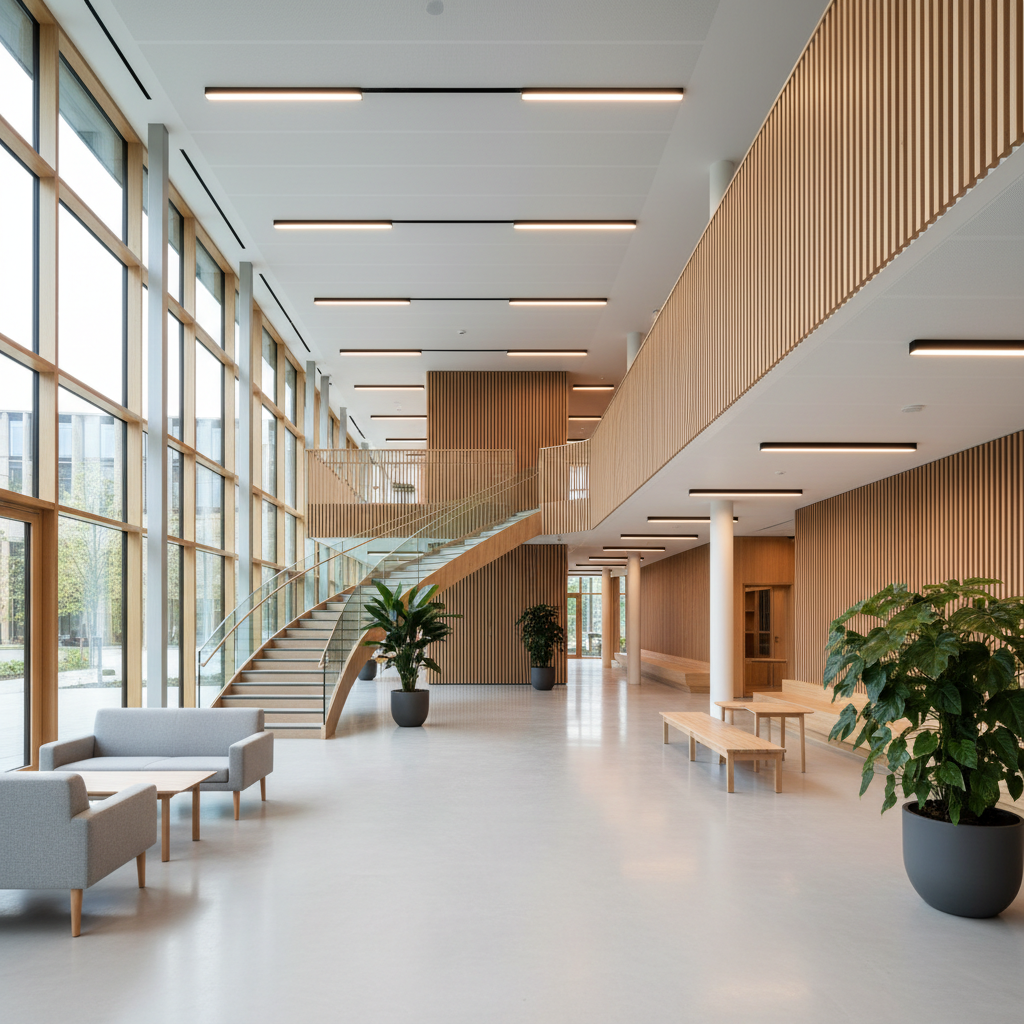
At XHLWX (led-project-light.com), a Custom Indoor LED Lighting Manufacturer based in China, we partner with architects and engineers to solve complex lighting challenges for forward-thinking projects. For a new-build green office campus in Copenhagen, slated for completion in 2026, the client presented a multi-faceted brief. The lighting system had to achieve three core objectives: 1) meet Denmark's stringent energy efficiency codes and contribute to the building's overall green certification; 2) provide an exceptionally comfortable and productive environment compliant with the WELL Building Standard; and 3) offer total flexibility through a campus-wide, interoperable control system. The primary challenge was to design and manufacture a suite of custom luminaires that could seamlessly integrate into modern Scandinavian architecture while delivering sophisticated, human-centric light controlled by a DALI-2 network.
What "custom" Meant on This Project — Capability Matrix
The term "custom" on this project went far beyond simple aesthetic changes. It involved engineering a core luminaire platform to meet precise performance specifications. Our custom linear LED profile, designated XL-LIN-4070-TW, was designed as the primary fixture for open-plan offices, meeting rooms, and circulation spaces. The following table outlines the key design targets for this luminaire, which formed the basis of our manufacturing and quality assurance process.
| Parameter | Spec | Standard | Notes |
|---|---|---|---|
| Control Protocol | DALI-2, Device Type 8 (DT8) | IEC 62386-209 | Enables color temperature and intensity control over the same DALI address. |
| Optics / CCT | Tunable White, 3000K – 5000K | CCT per ANSI C78.377 | Designed to support circadian rhythm programming aligned with WELL v2 Light Concept. |
| Light Quality / CRI | CRI >95, R9 >80 | IES TM-30-18 | High fidelity color rendering essential for creative and collaborative workspaces. |
| Glare Control | UGR < 19 (in-situ target) | EN 12464-1:2021 | Achieved via custom micro-prismatic diffuser and precise LED positioning. |
| Chipset / Driver | Bridgelux Vesta® Series Tunable White | IES LM-80-15 | Chosen for high efficacy, color stability, and proven performance with DALI-2 DT8 drivers. |
| Housing / Ingress | Extruded Aluminium, IP40 | EN 60529 | Custom lengths and powder-coat finish to match ceiling integration plan. |
| Certification | CE, RoHS | EU Low Voltage & RoHS Directives | Mandatory for market access and demonstrates compliance with health and safety standards. |
Engineering Solutions
Our solution was built on three pillars: optical engineering for visual comfort, network architecture for intelligent control, and human-centric design principles for occupant well-being.
How Were Luminaires Customized for Architectural Integration and Visual Comfort?
To blend with the minimalist Scandinavian aesthetic, we engineered our XL-LIN-4070-TW profiles in custom lengths up to 4 meters, allowing for continuous, unbroken lines of light that matched the architectural grid. The housings were finished in a matte white (RAL 9016) powder coat to disappear into the ceiling plane. The most significant engineering challenge was achieving the stringent Unified Glare Rating (UGR) target of <19, as required by EN 12464-1 for office task areas. Our optical team developed a bespoke micro-prismatic lens combined with a secondary diffusing layer. This dual-layer optic effectively shields the direct view of the LED sources, reducing high-angle light and shaping the beam for uniform illumination on the work plane, not in occupants' eyes.
What Was the Strategy for Implementing DALI-2 for Campus-wide Control?
The project's reliance on DALI-2 was central to its "green" and "smart" credentials. Our strategy focused on leveraging the full capabilities of the IEC 62386 standard. Every luminaire was specified with a DALI-2 certified driver, making each one an individually addressable node on the network. We collaborated with the controls integrator to zone the building, incorporating DALI-2 multisensors (combining passive infrared presence detection and constant light sensing) in all spaces. This allows for automated daylight harvesting—dimming fixtures near windows when natural light is sufficient—and vacancy control, turning lights off in unoccupied rooms. This granular control is projected to yield significant energy savings over baseline code requirements.
How Does the Lighting Design Support Human-centric and WELL Building Goals?
This project was designed from the ground up to comply with the WELL Building Standard v2, particularly its Light concept. Our use of Bridgelux Vesta® Series LEDs and DALI-2 DT8 drivers provides the core technology for a dynamic, human-centric lighting scheme. The system is designed to be programmed with a circadian lighting profile: starting with a warm, gentle 3000K in the morning, gradually shifting to a cooler, energizing 5000K by midday to enhance alertness, and then transitioning back to a warmer 3000K in the late afternoon to help occupants wind down. This automated CCT shifting is a key strategy for supporting the human body's natural sleep-wake cycle and is a primary requirement for achieving WELL certification points related to circadian lighting design.
Project Results — Measured When Supplied; Otherwise Design Targets
As this project is in the design and specification phase for a 2026 completion, all results are based on comprehensive simulations and design targets. These benchmarks have been agreed upon with the client and form the basis for our manufacturing and the project's commissioning plan.
- Energy Efficiency Target: Simulations using DIALux Evo project a lighting power density (LPD) of 4.5 W/m², which is approximately 40% below the reference values in Danish building regulations. The combination of high-efficacy luminaires (targeting >130 lm/W) and aggressive DALI-2 control strategies (daylight harvesting, occupancy sensing) is expected to reduce total lighting energy consumption by over 65% compared to a non-controlled LED system.
- Visual Comfort Target: The luminaire and lighting design has been simulated to achieve a UGR of ≤19 across all permanent workstations, a critical requirement of EN 12464-1 for preventing discomfort and fatigue.
- WELL Compliance Target: The lighting design and specified hardware are targeted to fulfill preconditions L01, L02, L03, and L04 of the WELL v2 Light concept, focusing on light exposure, visual comfort, and circadian lighting design. The tunable white system is designed to provide at least 200 Equivalent Melanopic Lux (EML) at 75% of workstations for at least four hours per day.
Photometric Files & Compliance (IES / LDT / DIALux / CE / RoHS)
Full technical documentation is a cornerstone of our service. For every custom luminaire manufactured for the Copenhagen campus, XHLWX will provide a complete data package. This includes laboratory-tested IES and LDT photometric files, which are essential for accurate lighting calculations. These exact files were used by the project's lighting designer in DIALux Evo software to build a comprehensive 3D model of the entire campus, validating the design and ensuring that all target illuminance, uniformity, and UGR levels would be met. All supplied components, from the LED chips to the DALI-2 drivers and aluminum housings, are fully certified for CE and RoHS compliance, guaranteeing safe and legal installation within the European Union.
Frequently Asked Questions
Q: What Is the Primary Benefit of DALI-2 Control in This Project?
The DALI-2 system offers more than just dimming. Its key benefit is certified interoperability and crucial data feedback. For this campus, it enables luminaire-specific energy monitoring and fault reporting, which is projected to reduce ongoing maintenance costs by an estimated 25% while ensuring 100% system performance through proactive service alerts.
Q: How Was the UGR<19 Requirement Achieved in Open-plan Office Areas?
Achieving a Unified Glare Rating (UGR) below 19 was a non-negotiable requirement. We engineered our custom linear fixtures with high-performance micro-prismatic diffusers and precisely shielded Bridgelux LEDs. This advanced optical system directs light efficiently onto the task plane while cutting off high-angle light that causes glare, meeting the EN 12464-1 standard for visual comfort.
Q: Why Was Tunable White Lighting Specified for This Green Office?
Tunable white lighting (from 3000K to 5000K) was specified to meet WELL Building Standard v2 criteria for human-centric lighting. The DALI-2 DT8 system is designed to automatically adjust CCT throughout the day to support occupants' circadian rhythms. This feature is intended to improve alertness and well-being, directly contributing to a healthier and more productive workplace.
Q: Are the Lighting Fixtures Difficult to Install and Maintain?
No, they were designed for rapid and simple installation. Our custom linear profiles will be delivered with a plug-and-play connector system and pre-wired DALI-2 drivers, which is estimated to reduce on-site electrical labor by over 30%. For maintenance, the DALI-2 network allows for remote diagnostics of every luminaire, eliminating manual guesswork.
Sources and Technical References
- EN 12464-1:2021: Light and lighting – Lighting of work places – Part 1: Indoor work places.
- IEC 62386: Digital Addressable Lighting Interface (DALI).
- The WELL Building Standard v2: Light Concept (L01-L04).
- IESNA TM-30-18: IES Method for Evaluating Light Source Color Rendition.
Request a Custom Quote
This Copenhagen campus exemplifies how early collaboration between architects, engineers, and a dedicated manufacturing partner can achieve ambitious goals. If your project demands a lighting solution that balances architectural aesthetics, user well-being, and operational efficiency, we are here to help. At XHLWX (led-project-light.com), a Custom Indoor LED Lighting Manufacturer based in China, our engineering team is ready to translate your vision into a precisely specified, fully compliant lighting system. Contact us to discuss your requirements and receive a detailed proposal and photometric plan.