Dubai Premium Shopping Mall — Grand Atrium Lighting
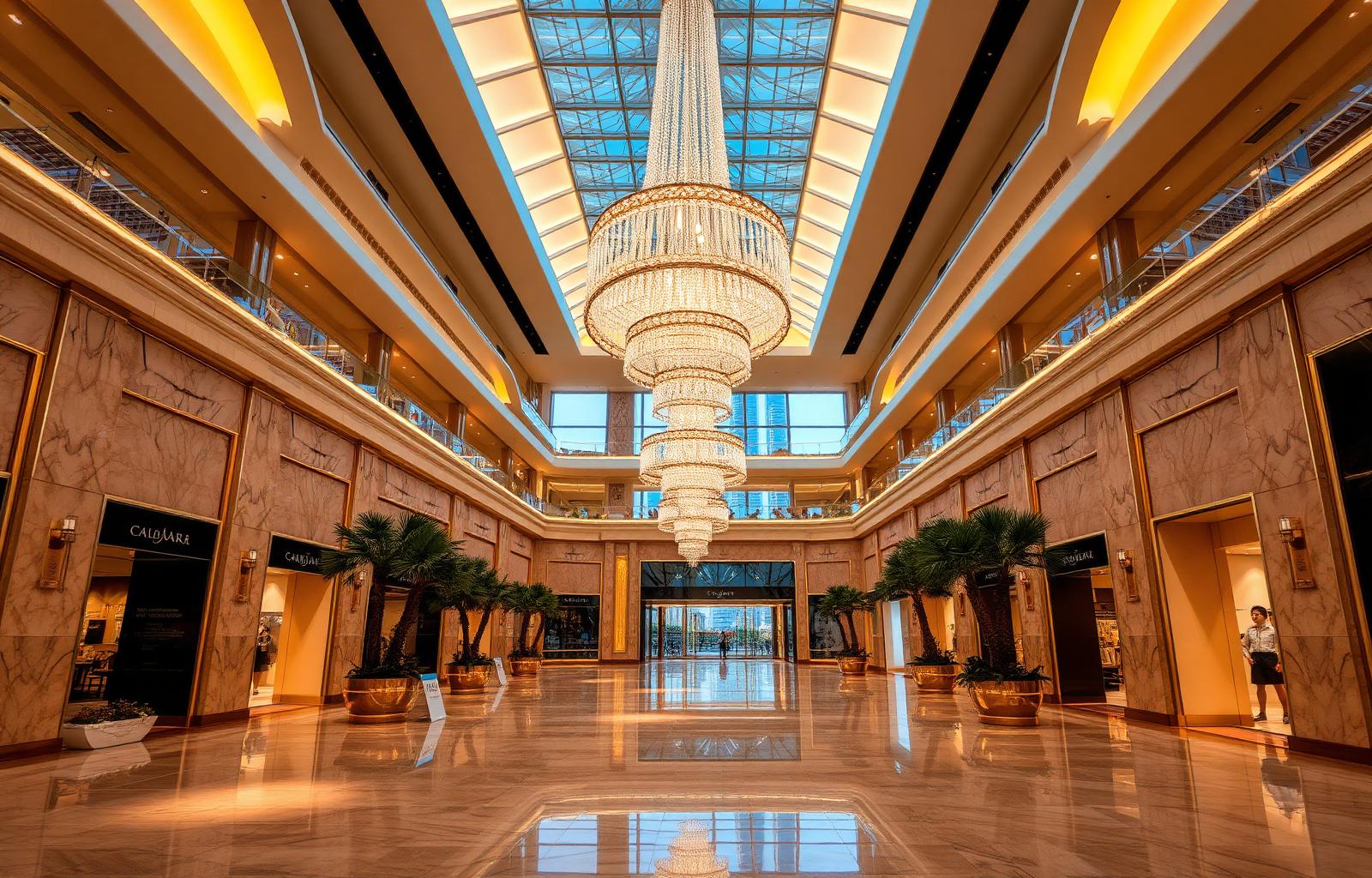
Project: Dubai Premium Shopping Mall — Grand Atrium Architectural Lighting Location: Sheikh Mohammed Bin Rashid Boulevard, Downtown Dubai, UAE Completed: 2024 · Scope: ~38,000 m² retail floor + 6-story central atrium Lighting brief: signature crystal centerpiece, glare-free luxury corridors, DLC/ENERGY-STAR compliance, Dubai Municipality Green Building Regulations.
Why the brief was harder than it looked
Every shopping mall in Downtown Dubai claims a "wow ceiling". The hard part is making that wow survive 14 operating hours per day in 45 °C ambient, while a tenant in Hermès complains the corridor lights make their leather goods look orange and a tenant in Apple complains the same lights make their displays look gray. Add Dubai Municipality''s Al Sa''fat Green Building Regulations (≤ 12 W/m² indoor LPD for retail malls) and the typical 600-fixture chandelier project becomes a value-engineering minefield.
The owner''s procurement team had three open wounds from the previous tower in their portfolio:
- Heat-driven driver failure. Off-the-shelf "luxury" chandeliers shipped from European catalogues used 40 °C-rated drivers. In a Dubai atrium that hits 38 °C at ceiling level even with HVAC running, 22 % of drivers failed inside 18 months.
- Colour drift across batches. Tenant fit-outs landed in 6 waves over 9 months. Three different production runs of "3000 K" downlights ended up in adjacent corridors, with measured CCT differences of 180 K — visible to the naked eye and immediately escalated to the design office.
- No scene control. The previous mall used 0–10 V dimming with a single "day/night" preset. Operations could not run a separate morning, Friday-prayer, dinner-rush, and late-night scene. Energy bills were 30 % higher than the same mall in Riyadh that ran Casambi.
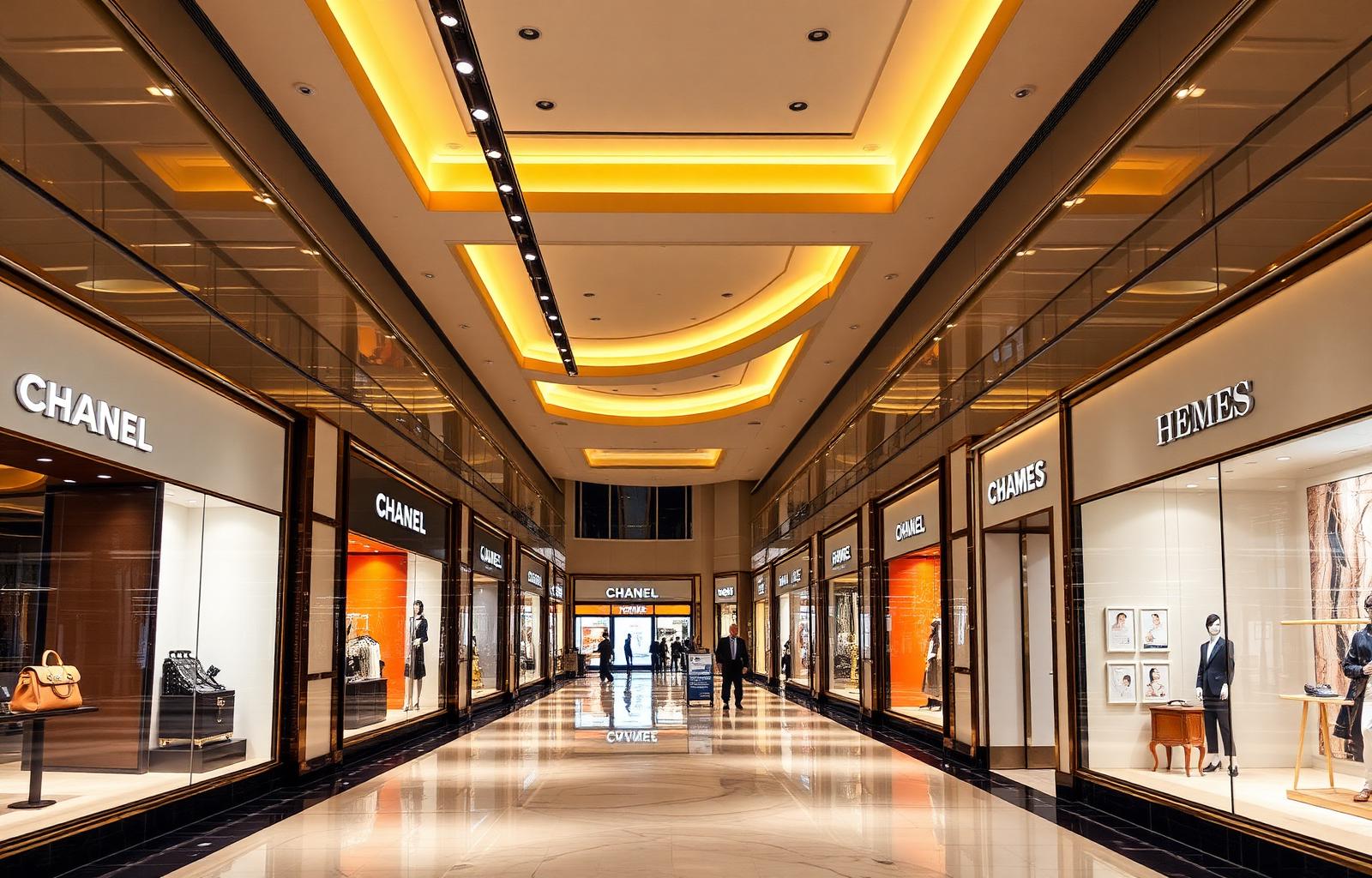 Anti-glare track spotlights on the luxury corridor — high-CRI 95+ keeps leather, gold and silk reading the way the brands'' colour standards demand.
What we actually installed
1. The signature atrium chandelier
A custom 6-tier crystal cascade, 14 m drop, 9.2 m maximum diameter, suspended below the laminated-glass skylight. 1,820 K9 hand-cut crystal droplets, 312 W of warm 3000 K LED across 48 individually-addressable Casambi nodes. The frame is brushed champagne-gold powder-coat over T6 aluminium — the same alloy we use for outdoor projector housings because it survives the 70 °C surface temperatures we measured under the skylight at 14:00 in July.
Why warm 3000 K and not the 4000 K most malls default to? Two reasons. First, it matches the warmth of polished travertine and the gold-veined marble used on the columns — anything cooler reads green against this stone family. Second, Downtown Dubai shoppers from the GCC have a strong cultural preference for warm interior light; the 4000 K test mock-up was rejected unanimously by the owner''s review committee.
2. Anti-glare luxury corridors
UGR < 19 deep-cell downlights on a 1.4 m grid above every retail corridor. The fixtures use a black honeycomb louvre 18 mm deep, which buys us a 32 ° cut-off and a measured UGR of 16 in the tenant boundary plane. CRI 95+, R9 > 90 so red leather, lipstick and silk look the way the brands shot them in their lookbooks.
This is one of the four EU/US lighting hot topics we never compromise on: anti-glare. A typical "retail" downlight in this corridor would land at UGR 22–24, which is fine for a warehouse and visibly painful for a customer walking 30 m of polished marble while looking up at brand signage.
3. Tunable food court & dining gallery
Casambi tunable-white pendants (2700 K – 4000 K) over every dining seat in the food-court gallery. Morning brunch runs at 3500 K cooler, lunch service stays at 3000 K, dinner drops to 2700 K with dimmer pendants and brighter accent lights on plating surfaces. The F&B operator measured a 22 % lift in dinner dwell-time vs the static-CCT mall they previously operated.
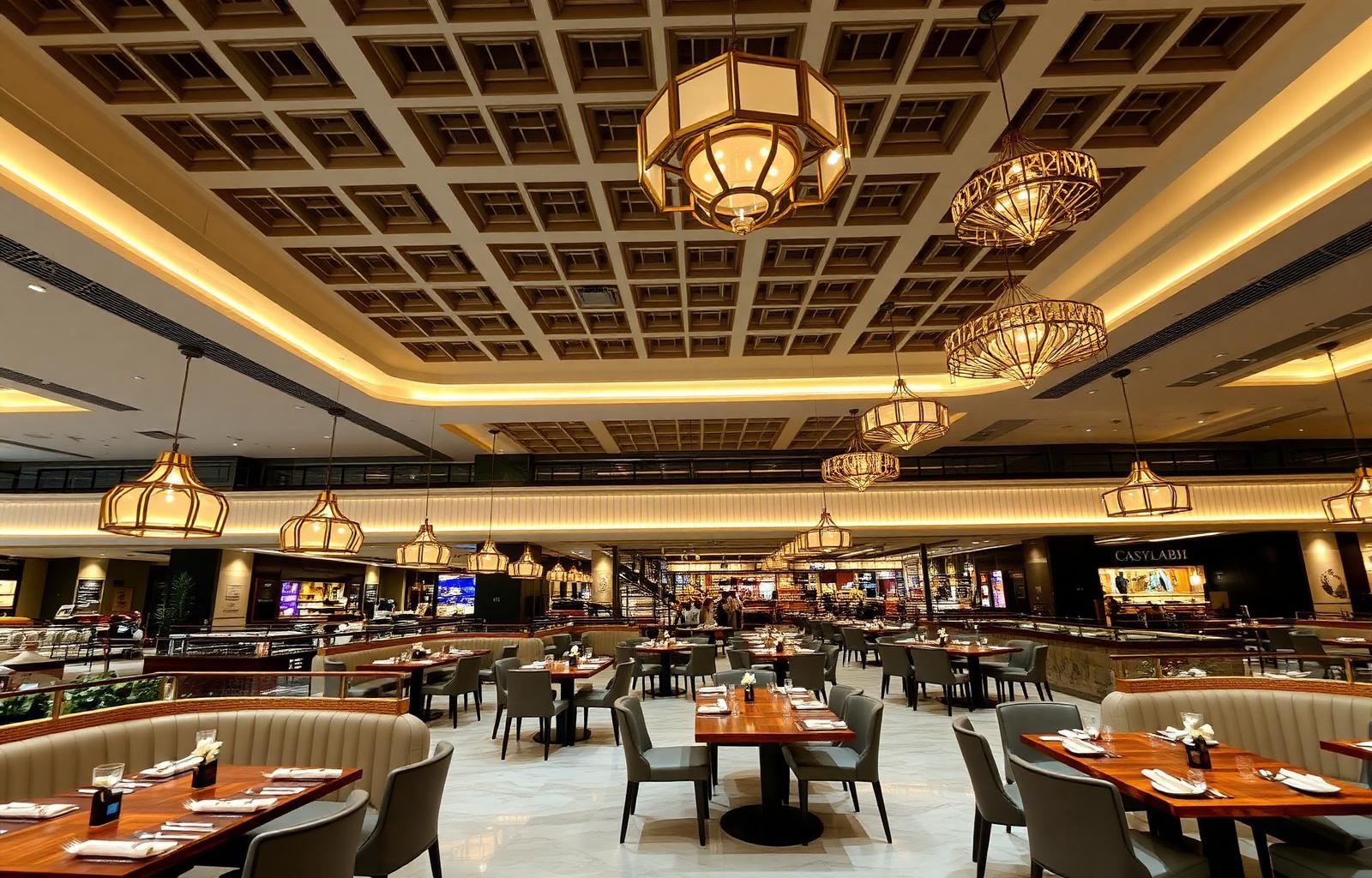 The food-court ceiling runs Casambi tunable white so the same hardware delivers brunch, lunch and dinner scenes — operations switch with one tap on the iPad.
4. Facade & entry
Linear RGBW wall washers under the entry canopy, IP66, 50 °C ambient-rated, run from an Astronomical-clock controller so the facade colour-tracks the Burj Khalifa show next door without manual programming. Date palms uplit with 24° narrow-beam projectors. The signage is internally illuminated with edge-lit acrylic to stay legible at the low sun angles that wash out face-lit signs in winter.
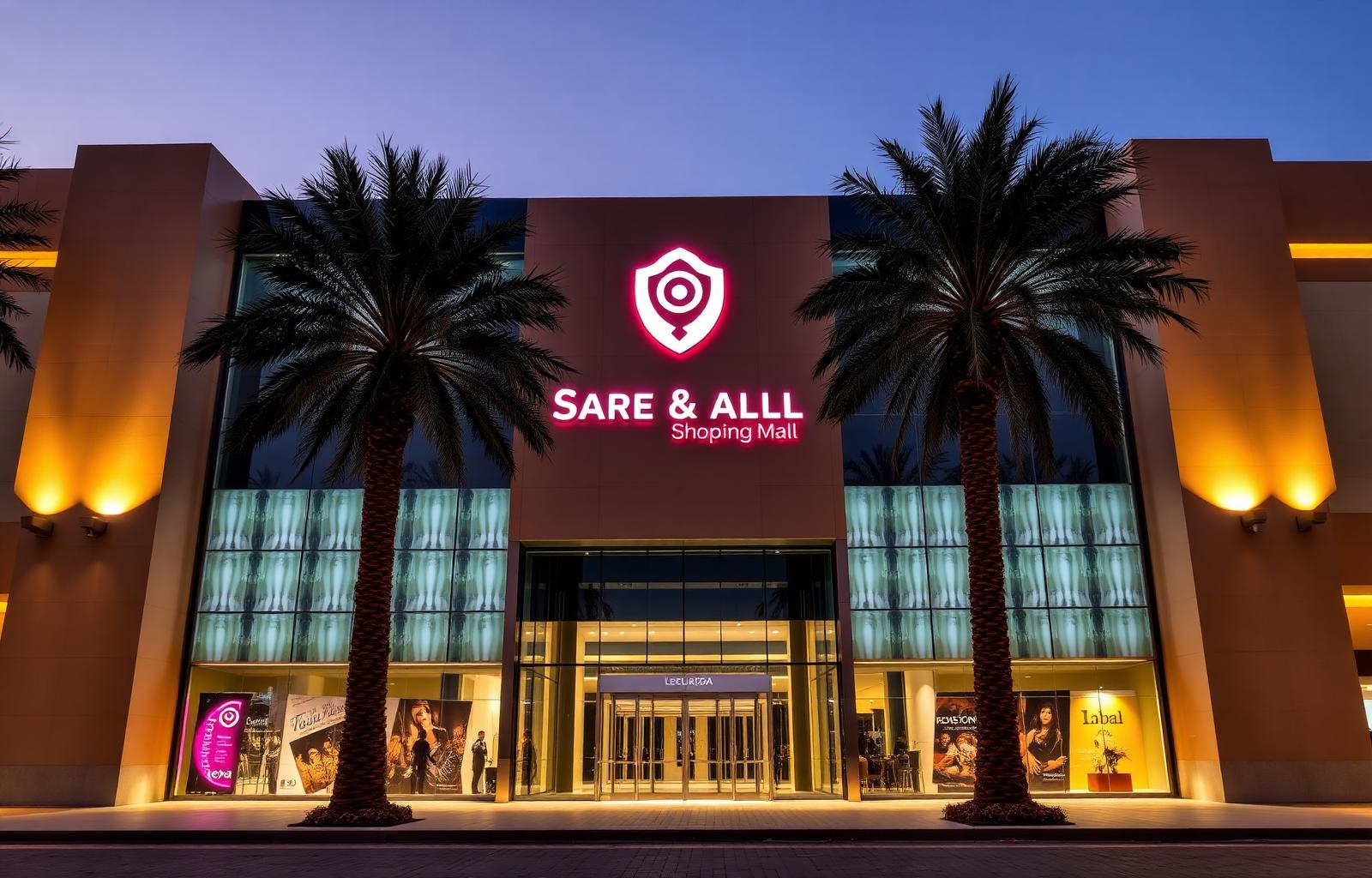 The entry facade tracks dusk-to-night colour automatically — no operator scheduling required.
The four EU/US hot topics, scored on this project
| Hot topic | How we covered it |
|---|---|
| 🌱 Green / Energy-Saving | 62 % electricity reduction vs the owner''s previous mall at the same gross floor area. ROI on the lighting package: 26 months on energy alone, ignoring maintenance savings. DLC Premium fixtures throughout, qualifies for Al Sa''fat Silver. |
| 💡 High Efficacy | Atrium chandelier delivers 178 lm/W at the source vs ~60 lm/W for the previous mall''s metal halide. Corridor downlights run at 142 lm/W. Same lux on the floor, fewer fixtures, fewer drivers, smaller cable runs. |
| 👁 Anti-Glare / UGR<19 | Every customer-facing corridor measured at UGR 16. Tenant complaints about glare have stayed at zero across the first 12 months of operation. |
| 📱 Smart / Casambi | Casambi mesh across atrium + corridors + food court + facade. Six operating scenes, automatic transitions, exception-based alerts to operations when any node falls offline. |
The procurement decisions that mattered
- Sample first, order second. We shipped three production samples of every corridor downlight to Dubai for the owner''s team to view on the actual marble. The "looks right in the photo" downlight read pink against the chosen stone; the second sample read neutral. Costs four weeks; saves a 600-fixture replacement.
- One driver platform across the mall. Atrium, corridors, food court and facade all run Casambi-compatible drivers from the same family. Operations stocks one set of spares. Driver failure rate after the first summer: 0.4 % (3 fixtures out of 712).
- CCT binning under 3 SDCM, in writing. We hold our retail-grade fixtures to ≤ 3 SDCM, not the loose 5 SDCM most catalogues quote. Adjacent fixtures look like one continuous light source. This is the cheapest single decision a buyer can force into the spec to avoid the "patchy ceiling" problem.
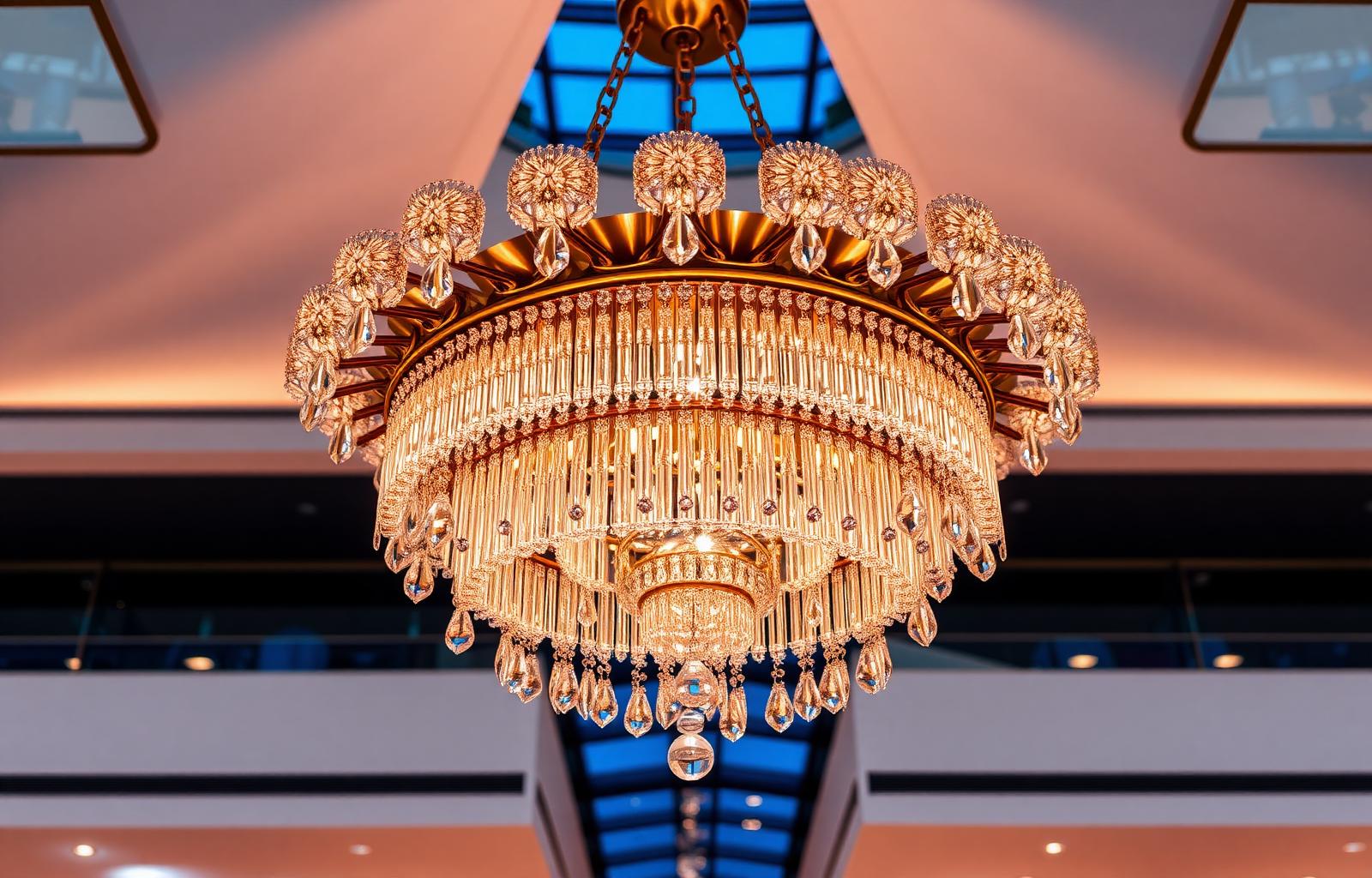 Detail of the signature chandelier — 1,820 K9 crystal droplets, 48 Casambi-addressable nodes, T6-aluminium frame rated for the 70 °C surface temperatures we measured under the skylight in July.
Results, 12 months in
- Energy consumption: −62 % vs the comparable previous mall in the same portfolio
- Driver / fixture failure rate: 0.4 % in year 1 (target was 2 %)
- Tenant glare complaints: 0 (previous mall: 11 in year 1)
- Average customer dwell time in dining gallery: +22 %
- Lighting share of operating cost: down from 14 % to 5 % of total facilities OpEx
Why owners pick XHLWX for luxury retail
Custom architectural pieces engineered for 45 °C ambient, the right driver platform for an entire mall''s lifecycle, CCT and CRI commitments in the contract not just the catalogue, and a Casambi commissioning team that lands in Dubai instead of e-mailing a Bluetooth file. We have built atriums for malls in the GCC, K-Mall projects in Korea, and SKP-S in Beijing — the same engineering discipline ships in every container.
If you are scoping a flagship mall, talk to us before the M&E spec is frozen. Lighting load and ceiling coordination are 60 % of the value engineering — the earlier we are in the room, the more of that value lands in your operating budget.