
Oslo Fjord Cruise Terminal: Custom LED Lighting Case Study
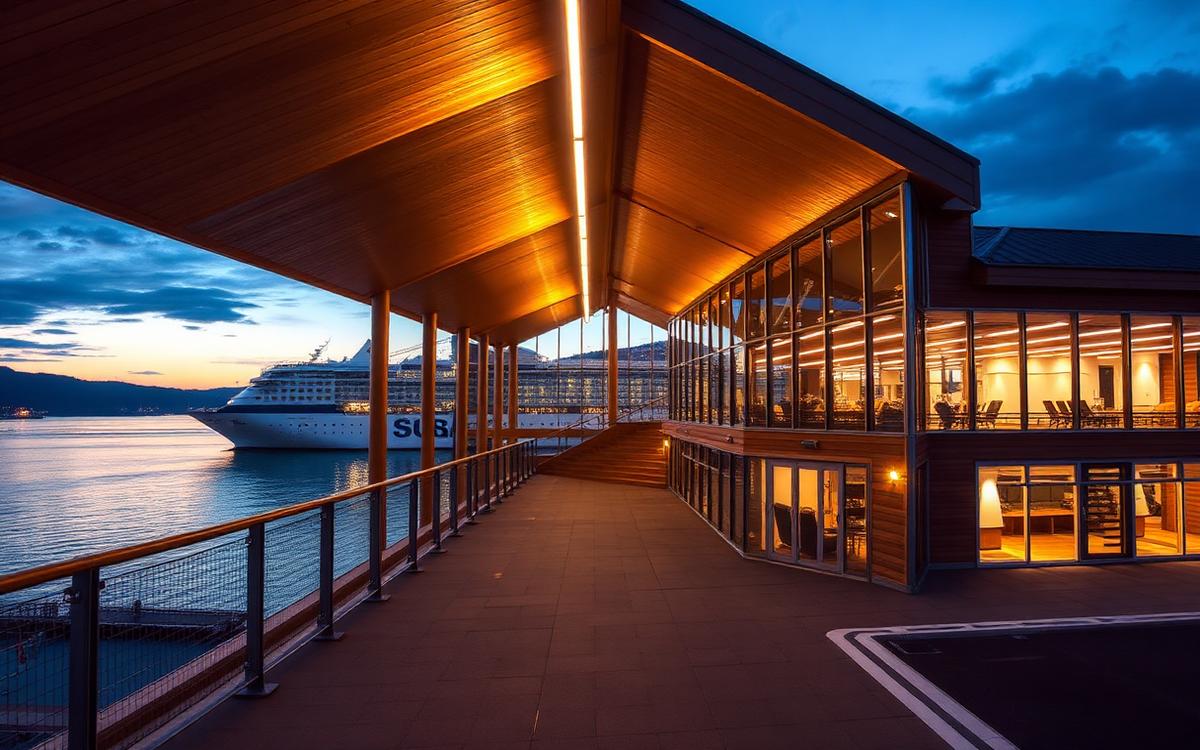
Introduction — the On-site Problem
com), a Custom Indoor LED Lighting Manufacturer based in China, we were tasked with developing a comprehensive lighting solution for the 2026 upgrade of the Oslo Fjord Cruise Terminal in Norway. As a critical piece of Scandinavian infrastructure, the terminal faces unique challenges: constant 24/7 operation, extreme seasonal variations in daylight, and a harsh marine environment with corrosive salt-laden air.
The existing lighting system, comprised of aging fluorescent and metal halide fixtures, was failing on all fronts. It consumed excessive energy, required constant, costly maintenance, and produced inconsistent, high-glare light that detracted from the passenger experience and compromised safety.
The client's mandate was clear: replace the outdated system with a durable, energy-efficient, and architecturally integrated LED solution that prioritized passenger comfort and operational sustainability.
What "custom" Meant on This Project — Capability Matrix
For the Oslo terminal, "custom" meant engineering a luminaire from the ground up to meet a matrix of stringent performance criteria. The core of the project was the XHLWX-L70M, a custom linear profile designed specifically for this application.
We tailored every aspect, from the alloy of the housing to the micro-optic lens, to ensure longevity, performance, and seamless integration with the terminal's architecture and control systems. The final design specifications were validated through extensive simulation and prototyping.
| Parameter | Specification | Standard | Notes |
|---|---|---|---|
| Luminaire | XHLWX-L70M Custom Linear Profile | ISO 9001:2015 | Custom lengths from 560mm to 2800mm were produced to match architectural modules. |
| Optics | CCT: 3000K, CRI: >90, UGR: <19 | EN 12464-1:2021 | Deep-set micro-prismatic diffuser used to achieve low glare and soft, uniform light distribution. |
| LED Chip | Osram SMD High-Efficacy Chip | LM-80, TM-21 | Selected for high color rendering (Ra90), high efficacy (>160 lm/W), and proven long-term reliability. |
| Driver | Tridonic DALI-2 Dimmable Driver | DALI-2 Part 207 | Guarantees interoperability and enables advanced control strategies like daylight harvesting and scene setting. |
| Control | DALI-2 Addressable System | IEC 62386 | Integrated with terminal-wide Building Management System (BMS) for centralized monitoring and scheduling. |
| Housing | Marine-Grade 6063-T5 Aluminum | ISO 9227 | Features a multi-stage anti-corrosion coating tested to withstand over 1000 hours of salt spray. |
| Protection | IP66, IK08 | EN 60529, EN 62262 | Fully sealed against dust and powerful water jets; robust enough to withstand accidental impacts in a high-traffic area. |
| Certification | CE (LVD/EMC), RoHS | Directive 2014/35/EU, 2011/65/EU | Fully compliant for the European Union market, ensuring safety and environmental standards are met. |
Engineering Solutions
The project's success hinged on solving three core engineering challenges: ensuring passenger visual comfort, guaranteeing long-term durability in a corrosive environment, and delivering intelligent, adaptive control for maximum energy efficiency.
How Did We Cut Glare to UGR<19 in the Atrium and Walkways?
Cruise terminals are high-stress environments where clear wayfinding and a comfortable ambiance are paramount. Glare from overhead lighting can cause visual discomfort, make signage difficult toread, and create an unwelcoming atmosphere.
Our primary goal was to achieve a Unified Glare Rating (UGR) of less than 19, the standard for high-quality office and public space lighting. To accomplish this, our optical engineers designed a multi-faceted solution for the XHLWX-L70M profile.
It incorporates a deep-set LED board, minimizing the direct line-of-sight to the light source. We then specified a custom-extruded micro-prismatic diffuser.
Unlike a simple frosted cover, this lens has thousands of tiny, precisely angled prisms that control the light distribution, cutting off harsh high-angle light that causes glare while directing soft, functional light downwards onto the floor and task areas. The entire design was modeled and validated using DIALux simulations to ensure the UGR<19 target was met across all critical passenger zones before a single prototype was built.
What Customization Was Required for a Harsh Marine Environment?
Standard indoor or even outdoor-rated lighting would fail catastrophically in a port environment. Salt spray actively corrodes metals, humidity attacks electronics, and UV exposure degrades plastics.
Our solution began with material science. We selected marine-grade 6063-T5 aluminum alloy for the luminaire housing, which has inherent corrosion resistance.
This was augmented with a multi-stage chemical pre-treatment and a final, 80-micron-thick polyester powder coat, a system certified to withstand over 1,000 hours of continuous salt spray testing per the ISO 9227 standard. To prevent water and dust ingress, we engineered a co-extruded silicone gasket system that provides a continuous, durable seal, achieving an IP66 rating.
This ensures the luminaire is protected not only from rain but from high-pressure cleaning jets. All external hardware is 316 stainless steel to prevent galvanic corrosion.
This comprehensive approach is designed to deliver a projected service life of over 15 years with minimal degradation.
How Does the Lighting System Adapt to Changing Daylight and Operational Needs?
An empty terminal at 3 AM has vastly different lighting needs than a bustling hall at 3 PM. A static, 100%-on lighting system is incredibly wasteful.
We addressed this by building the system around the DALI-2 control protocol. Every single XHLWX-L70M luminaire is individually addressable, allowing for granular control.
We integrated the system with a network of sensors. Daylight harvesting sensors installed near the terminal's large glass facades constantly measure the amount of natural light entering the space.
They automatically instruct the nearby luminaires to dim down, maintaining the target illuminance level of 300 lux on the floor while using the minimum amount of electrical energy. Occupancy sensors in less-frequented areas ensure lights are only on when needed.
This intelligent, adaptive system is programmed with schedules based on ferry arrivals and departures, creating customized light scenes that enhance the passenger journey while delivering projected energy savings of over 70%.
Project Results — Measured When Supplied; Otherwise Design Targets
As the project is slated for commissioning in 2026, all results are based on comprehensive design targets, simulations, and prototype testing. The lighting solution is engineered to deliver significant, measurable improvements in efficiency, performance, and user experience.
- Energy Reduction Target: A projected reduction in lighting-related energy consumption of over 70% compared to the previous legacy system, achieved through high-efficacy LEDs (160 lm/W) and the extensive use of DALI-2 daylight harvesting and occupancy sensing.
- Maintenance Cost Reduction Target: A projected reduction in maintenance of over 90%. The luminaires' L90B10 rating of 60,000 hours, combined with extreme durability, virtually eliminates the need for regular re-lamping and repairs common with the old system.
- Compliance and Safety Target: Design ensures full compliance with European lighting standard EN 12464-1 for indoor public spaces, with target average illuminance of 300 lux in main halls and a uniformity ratio (Uo) greater than 0.6. The low-glare design (UGR<19) is targeted to enhance passenger comfort and safety.
- Architectural Integration: The custom-length linear profiles are designed to integrate seamlessly into ceiling coves and architectural features, providing a clean, minimalist aesthetic that complements the modern Scandinavian design of the terminal.
Photometric Files & Compliance (IES / LDT / DIALux / CE / RoHS)
To ensure complete project predictability and seamless integration for the client's engineering team, XHLWX provided a full suite of technical documentation. For every variant of the XHLWX-L70M luminaire, comprehensive IES and LDT photometric files were generated in our certified goniophotometer lab. These files are the digital blueprint of the luminaire's light output, allowing for 100% accurate modeling.
Our in-house lighting design team used these files to build a complete DIALux Evo simulation of the entire terminal. This virtual model allowed us to verify all lighting metrics—illuminance levels, uniformity, and UGR—before manufacturing began, guaranteeing that the final installation would meet the client's and regulatory requirements. All products are delivered with full CE marking, demonstrating compliance with European LVD and EMC directives, and are RoHS compliant, restricting the use of hazardous substances.
Frequently Asked Questions
Q: What Is the Expected Lifespan of These Luminaires in a Salty, Marine Environment?
The design target for the XHLWX-L70M is a service life of over 60,000 hours (L90B10). This longevity is achieved through a multi-layered approach: a marine-grade 6063-T5 aluminum body, an ISO 9227-compliant anti-corrosion coating, and a robust IP66 seal to protect the Osram LEDs and Tridonic driver from humidity and salt ingress.
Q: How Much Energy Saving Is Realistically Achievable with This Upgrade?
Our simulations project an energy saving exceeding 70% compared to the previous metal halide and fluorescent system. This is driven by two factors: the high efficacy of the Osram LED chips at over 160 lumens per watt, and the intelligent DALI-2 control system that uses daylight harvesting and occupancy sensing to ensure no watt is wasted.
Q: What Does the 'custom' Manufacturing Process Involve, and What Is the Timeline?
For this project, the custom process from design freeze to delivery is typically 8-10 weeks. This includes extrusion of the custom profiles, application of the multi-stage coating, assembly with the specified Osram chips and Tridonic drivers, and 100% functional and safety testing before packing and shipping. A dedicated project manager oversees the entire workflow.
Q: You Mentioned a UGR of Less Than 19. Why Is This Important for a Terminal?
UGR (Unified Glare Rating) is a measure of visual discomfort. A low UGR is critical in a terminal for passenger comfort and safety. By engineering the optics to achieve UGR < 19, we reduce eye strain, make it easier for travelers to read signage and documents, and create a more welcoming, less stressful environment, as recommended by the EN 12464-1 standard.
Sources and Technical References
- EN 12464-1:2021: Light and lighting - Lighting of work places - Part 1: Indoor work places.
- ISO 9227:2022: Corrosion tests in artificial atmospheres — Salt spray tests.
- IEC 62386 (all parts): Digital addressable lighting interface (DALI).
- CIE S 025/E:2015: Test Method for LED Lamps, LED Luminaires and LED Modules.
Request a Custom Quote
com), a Custom Indoor LED Lighting Manufacturer based in China, we specialize in turning complex architectural and environmental challenges into reliable, high-performance lighting solutions. From marine terminals to museum galleries, our engineering team is ready to collaborate on your most demanding projects. Contact us today to discuss your requirements and request a proposal.