
Stockholm Public Library Custom LED Lighting Case Study
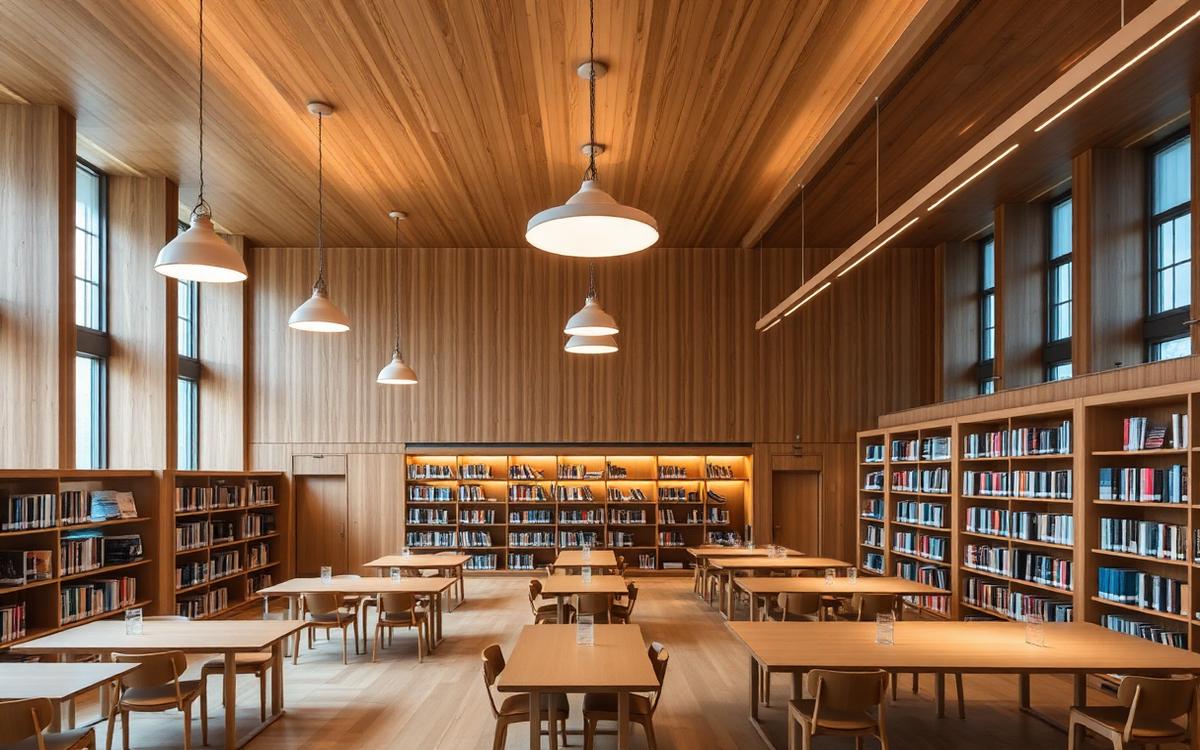
Introduction — the On-site Problem
At XHLWX (led-project-light.com), a Custom Indoor LED Lighting Manufacturer based in China, we specialize in solving complex lighting challenges for culturally significant spaces. The iconic Stockholm Public Library, a masterpiece of Nordic Classicism by architect Gunnar Asplund, presented a unique problem for its planned 2026 renovation. The main rotunda reading room, celebrated for its soaring cylindrical form, required a lighting upgrade that would meet modern standards for visual comfort and energy efficiency without compromising the original architectural integrity. The existing system, while functional, produced significant glare on reading surfaces and digital screens, had inconsistent color rendering, and incurred high energy and maintenance costs. The primary challenge was to engineer a solution that felt both timeless and technologically advanced, respecting the heritage while serving the needs of contemporary library patrons.
What "custom" Meant on This Project — Capability Matrix
The term "custom" on this project transcended simple fixture modification. It involved creating a bespoke luminaire system from the ground up, designed to integrate seamlessly into the library's historic architecture while delivering world-class photometric performance. The design target was a low-profile linear system to be concealed within architectural coves, providing indirect, diffuse illumination. Key performance indicators (KPIs) were established in collaboration with heritage consultants and lighting designers. The following table outlines the target specifications for the primary custom linear luminaire, model XHL-LIB-26.
| Parameter | Specification Target | Standard / Protocol | Notes |
|---|---|---|---|
| Color Temperature (CCT) | 3000K (Warm White) | ANSI C78.377 | Chosen to create a welcoming, comfortable atmosphere similar to legacy incandescent sources. |
| Color Rendering Index (CRI) | Ra > 95, R9 > 80 | CIE 13.3-1995 | Essential for accurate color reproduction of book covers and illustrations. High R9 value ensures rich red tones. |
| Glare Rating (UGR) | < 16 (for reading tasks) | EN 12464-1 | Achieved through luminaire placement and custom micro-prismatic optics designed via simulation. |
| Control System | DALI-2, DT8 compatible | IEC 62386 | Enables individual luminaire addressing, scene setting (e.g., daytime, evening, maintenance), and energy monitoring. |
| Luminous Efficacy | > 110 lm/W | IES LM-79-19 | Design goal to meet stringent energy efficiency targets for public buildings. |
| LED Chip & Driver | Bridgelux Thrive™ Series; Tridonic DALI-2 Driver | N/A | Specified for high-fidelity spectral output mimicking natural light and proven driver reliability. |
| Housing & Ingress Protection | 6063 Aluminum, Custom RAL finish; IP40 | N/A | Anodized aluminum for thermal management. IP40 rating for protection against dust in an indoor environment. |
| Certifications | CE, RoHS, ISO9001 | EU Directives | Mandatory for market access and quality assurance. Rigorous testing planned for compliance. |
Engineering Solutions
Our engineering process was guided by a philosophy of minimal intervention and maximum performance, addressing the project's unique constraints through detailed analysis and simulation before any manufacturing began.
How Could New Lighting Respect Gunnar Asplund's Original Architectural Vision?
Respecting Asplund's vision meant making the technology disappear. Our solution focused on indirect lighting, using the grand cylindrical wall and ceiling as the primary luminaires. We designed a custom-extruded aluminum profile that could be discreetly mounted atop the bookshelves ringing the rotunda. This placement directs all light upwards, creating a soft, uniform wash that eliminates direct views of any light source. The effect is that the architecture itself is glowing, preserving the intended sense of volume and grandeur. The custom RAL powder-coat finish ensures the fixtures match the existing millwork, rendering them nearly invisible in daylight.
What Was the Strategy for Achieving UGR<16 Glare Control for Readers?
Achieving a Unified Glare Rating (UGR) below 16 in such a large, open space was a primary design target. We tackled this in two ways. First, the indirect lighting approach is inherently low-glare, as there are no bright points of light in the normal field of view. Second, for supplemental task lighting integrated into the historic reading tables, we designed a custom linear optic. Using advanced ray-tracing software, we developed a micro-prismatic lens that precisely shapes the light distribution, cutting off high-angle light that causes glare on screens and printed pages. DIALux simulations were instrumental, allowing us to model the entire rotunda and verify that the combined lighting scheme would meet the UGR<16 target at every reading position.
Why Was a DALI-2 Control System Specified for This Project?
The choice of DALI-2 was driven by the need for flexibility, energy savings, and future-proofing. In a space used for different purposes throughout the day—from quiet morning reading to evening lectures—a static lighting level is inefficient. DALI-2 allows for granular control, enabling staff to deploy pre-programmed scenes at the touch of a button. It also allows for daylight harvesting; sensors can automatically dim the electric lights when sufficient natural light floods through the high windows, yielding significant energy savings. Furthermore, the system's reporting capabilities provide valuable maintenance data, flagging potential driver or LED failures before they become noticeable problems.
Project Results — Design Targets
As this is a prospective plan for 2026, all results are based on comprehensive design simulations and engineering targets. The proposed XHLWX custom lighting system is projected to meet all performance criteria.
- Energy Reduction: The design projects an energy consumption reduction of over 70% compared to a like-for-like replacement with conventional sources, thanks to high-efficacy LEDs (>110 lm/W) and the DALI-2 control system.
- Visual Comfort: DIALux simulations confirm that horizontal illuminance levels on reading planes will meet the EN 12464-1 standard of 500 lux, while UGR will remain below the target of 16 across all critical task areas.
- Maintenance Savings: With a rated L80B10 lifetime of >50,000 hours, the custom fixtures are designed to reduce maintenance cycles and associated costs by over 85% during the first decade of operation.
- Architectural Preservation: The bespoke mounting and indirect lighting concept ensures zero damage to the historic fabric of the building, with luminaires being fully reversible additions.
Photometric Files & Compliance (IES / LDT / DIALux / CE / RoHS)
Upon design finalization and prototyping, full sets of photometric data will be generated for all custom luminaires. We will provide complete IES and LDT photometric files to the project's lighting designers for independent verification. These files are crucial for accurate simulation in software like DIALux Evo, ensuring the as-built reality will match the meticulously planned design. All components and finished fixtures will undergo rigorous testing to ensure full compliance with CE marking requirements for safety and electromagnetic compatibility, as well as the RoHS directive for hazardous substances.
Frequently Asked Questions
Q: Why Is a CRI of Ra > 95 so Important for a Library?
A high CRI, especially Ra > 95 with a strong R9 value (over 80), ensures that the colors of book covers, illustrations, and historical documents are rendered accurately and vividly. This is critical for research and creates a more engaging and visually comfortable environment. It makes the difference between seeing a washed-out space and one that feels rich, natural, and full of life, preserving the artistic intent of the materials within the library's collection.
Q: What Are the Main Benefits of DALI-2 Control in a Large Library Space?
In a space like the Stockholm Public Library, DALI-2 provides three key benefits. First, energy efficiency through daylight harvesting and scheduled dimming, cutting costs by up to 30% or more. Second, flexibility to create different lighting scenes for various events. Third, enhanced maintenance, as the system can report failures on a per-fixture basis, simplifying diagnostics in a large and complex installation.
Q: How Long Are Custom LED Fixtures Like These Designed to Last?
Our custom luminaires for this project are engineered for a long service life, specified to a minimum of L80B10 at 50,000 hours. This means that after 50,000 hours of operation, the fixture fleet is projected to retain at least 80% of its initial light output, with only 10% of the units falling below that level. This translates to well over a decade of use in a typical library operating schedule.
Q: Can You Perfectly Match the Warm Color of Old Incandescent Bulbs?
Yes, modern LED technology allows us to precisely target specific color temperatures. For this project, we specified a 3000K CCT to evoke a warm, inviting atmosphere. Furthermore, using Bridgelux Thrive™ LEDs, we can replicate the full-spectrum nature of natural light, which provides a high-fidelity, comfortable, and rich visual experience that far surpasses the spiky, incomplete spectrum of older LED or fluorescent technologies.
Sources and Technical References
- EN 12464-1:2021, Light and lighting - Lighting of work places - Part 1: Indoor work places.
- CIE S 025/E:2015, Test Method for LED Lamps, Luminaires and Modules.
- IES LM-79-19, Approved Method: Optical and Electrical Measurements of Solid-State Lighting Products.
- IEC 62386, Digital Addressable Lighting Interface.
Request a Custom Quote
At XHLWX (led-project-light.com), a Custom Indoor LED Lighting Manufacturer based in China, our expertise lies in turning ambitious lighting designs for heritage, commercial, and institutional projects into reality. We partner with architects, designers, and engineers across the EU, US, and Middle East to deliver solutions that meet the most demanding technical and aesthetic criteria. If you have a project that requires more than an off-the-shelf solution, contact our engineering team to discuss your specifications and begin the design process.