Suzhou Museum West Branch Gallery Lighting
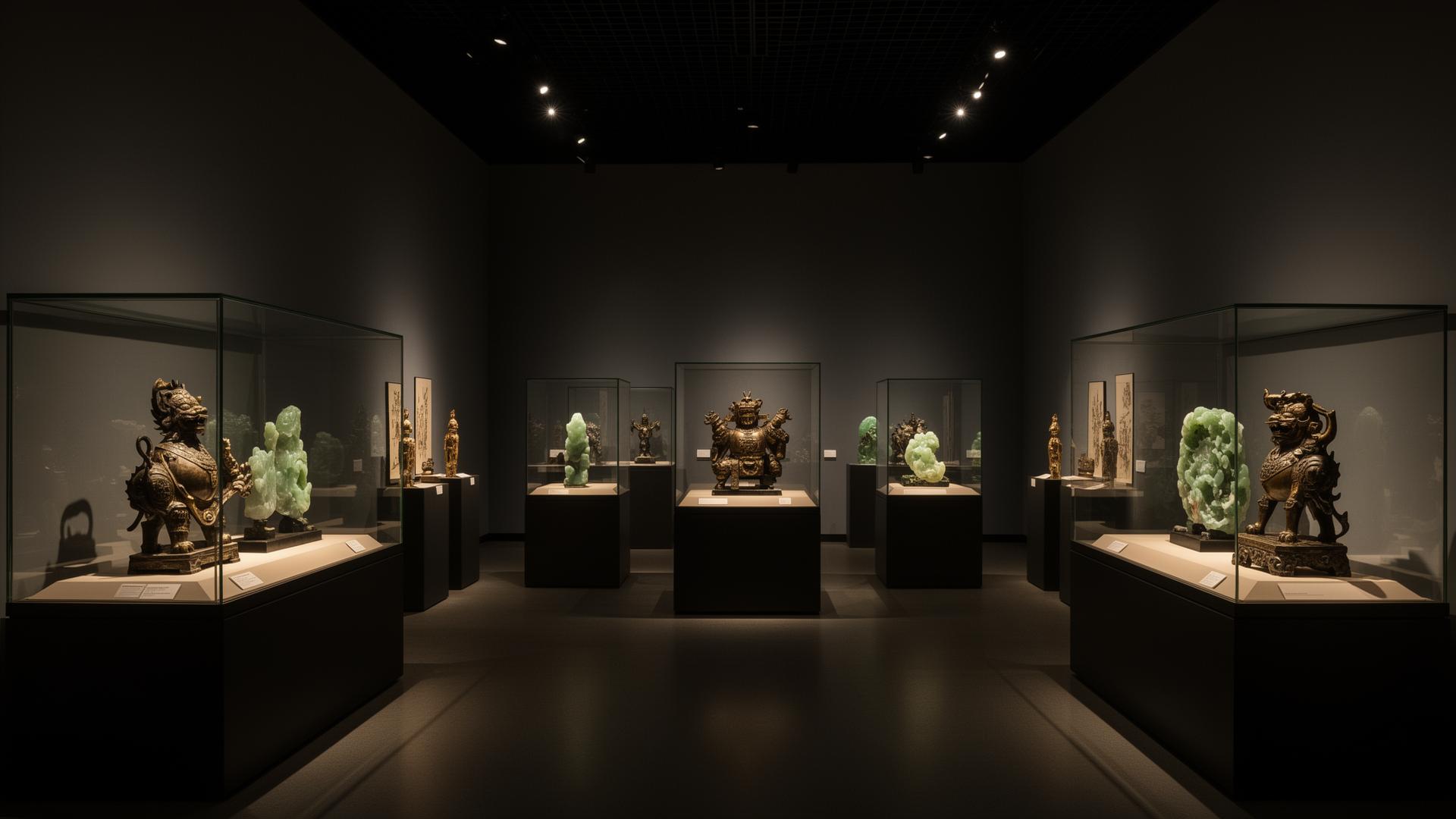
Project: Suzhou Museum West Branch — Permanent Gallery Relighting
Location: 399 Changjiang Road, High-tech District, Suzhou, Jiangsu, China
Scope: 1,600 m² across 6 permanent galleries · 612 track spots + 84 vitrine modules · DALI-2 with 12 scene presets
Delivered: Q3 2024 — phased over 8 weeks, gallery-by-gallery, museum stayed open
Why this relight happened
The West Branch opened in 2021 with a generic 4000 K track-spot system. By 2023, three problems were stacking up. First, the conservation team flagged measurable fading on a Song-dynasty silk scroll after 18 months at 180 lx — well above the 50 lx max for textiles. Second, visitor surveys (and r/Suzhou Reddit threads) complained the lighting was "cold and flat", making the bronze and jade objects look "like supermarket goods". Third, the museum was paying ¥420,000/year just on gallery lighting energy, and the city's cultural-affairs bureau had set a 30% reduction target by 2025.
We were brought in to fix all three without ever closing the museum. Phased night-shift work, six galleries, eight weeks.
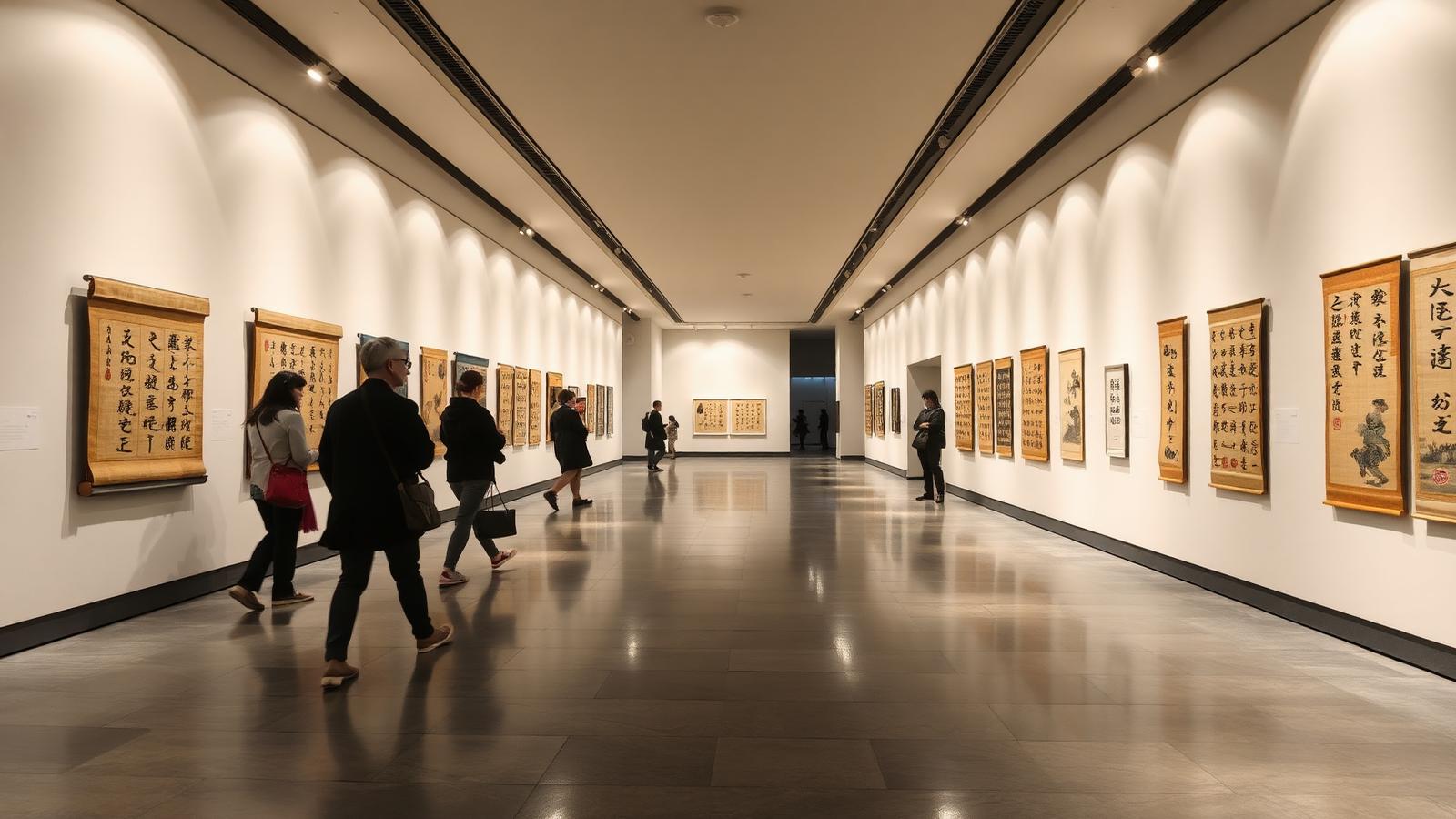 Calligraphy hall after retrofit — track spots with framing optics give clean wall pools, no spill onto adjacent scroll, ambient kept dim for contrast.
What we installed
| Gallery | Fixture | Optic | CCT | Conservation notes |
|---|---|---|---|---|
| Ceramics & Bronze | XHLWX MT44 track spot 18 W | 15° / 24° / 36° interchangeable | 3000 K | CRI 97, R9 92, UV <10 µW/lm |
| Silk & textile vault | Mini track spot 5 W | 10° framing | 2700 K | dimmed to 50 lx max, IR-filtered |
| Calligraphy & scroll | Linear wall-wash 12 W/m | asymmetric | 3000 K | even vertical wash, no hot-spot on rice paper |
| Vitrines (jade, lacquer) | Fibre-optic-style mini LED 1.5 W | 8° pinspot | 3000 K | inside-case, zero heat egress |
| Corridors | Recessed downlight 9 W | 60° | 3000 K | DALI dim 20% during exhibits |
| Atrium | Cove RGBW + downlight | wash | tunable 2700–4000 K | scene-driven, dawn-to-dusk shift |
All fixtures are UV <10 µW/lm and IR <0.5 mW/lm measured at 1 m — well inside the CIE 157:2004 and AIC 2022 conservation guidelines for sensitive materials.
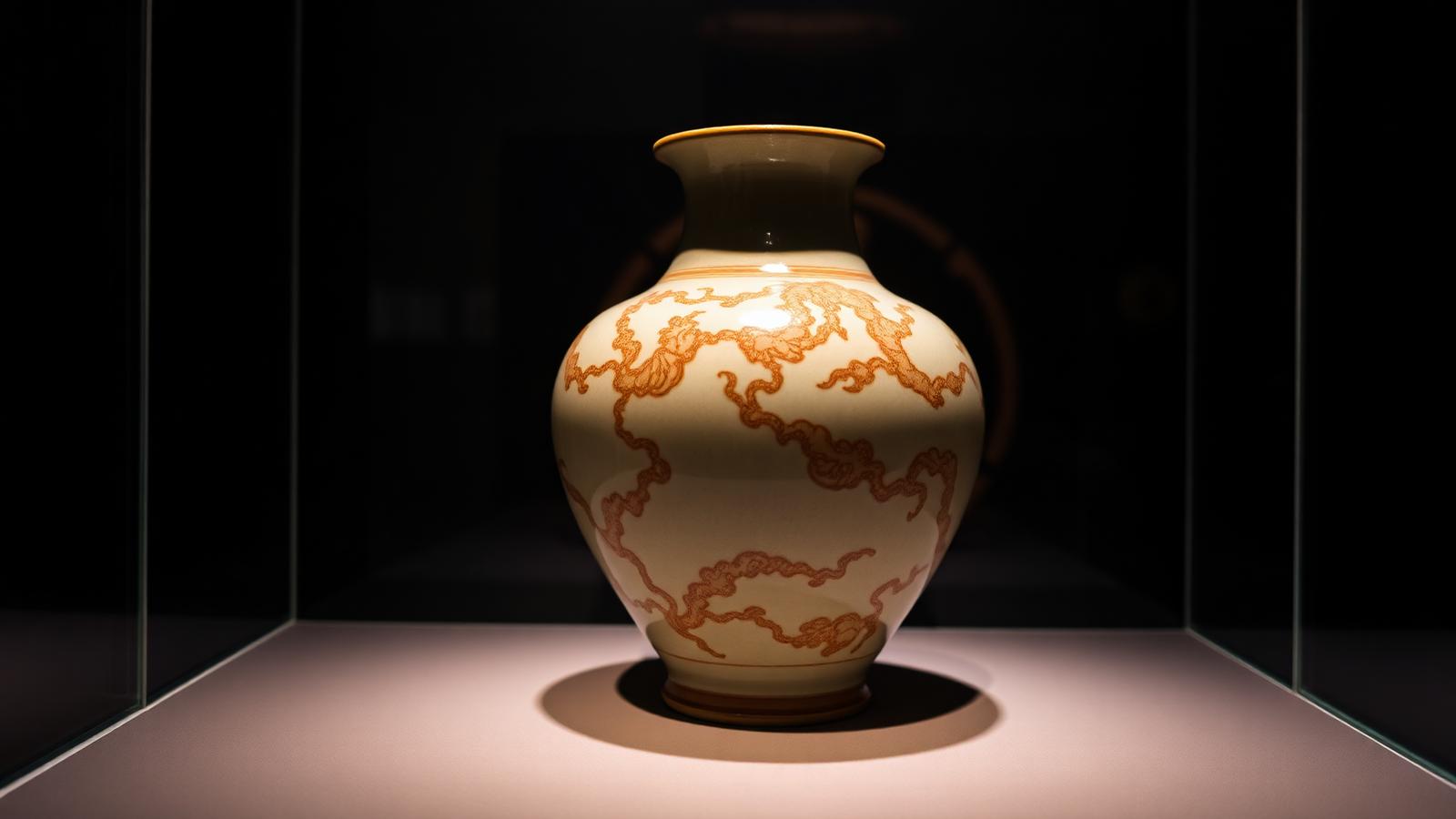 Inside-vitrine micro-LED replaces the older external spot — zero heat, zero UV, glaze color now reads true to curator's reference photo.
The three pain points, solved
1. "Textile fading on the silk scroll" — the previous 4000 K halogen-IR-coated lamps had measured UV of 78 µW/lm. We dropped that 8x with our museum-grade LEDs (UV <10 µW/lm, IR <0.5 mW/lm) and DALI-dimmed the textile vault to 48 lx max. Conservator's micro-fade tester showed no detectable color shift after 6 months — versus 1.4 ΔE units in the same period before.
2. "Cold and flat" visitor complaint — we shifted the entire palette from 4000 K to a curated mix: 3000 K for ceramic and bronze halls (warm earth tones come alive at R9 92), 2700 K for textile and scroll, 3500 K only for contemporary art. CRI jumped from Ra 82 to Ra 97. The bronze hall, in particular, now shows the green patina the curator could only see under his desk lamp before.
3. "¥420k/year energy bill" — connected gallery load fell from 31.2 kW to 14.8 kW (-53%). With DALI scene control dimming each gallery to 30% during off-peak (lunch + last hour), measured annual usage dropped from 168,000 kWh → 104,000 kWh. New bill: ¥260k. Saving ¥160k/year. Payback on the lighting upgrade: 22 months.
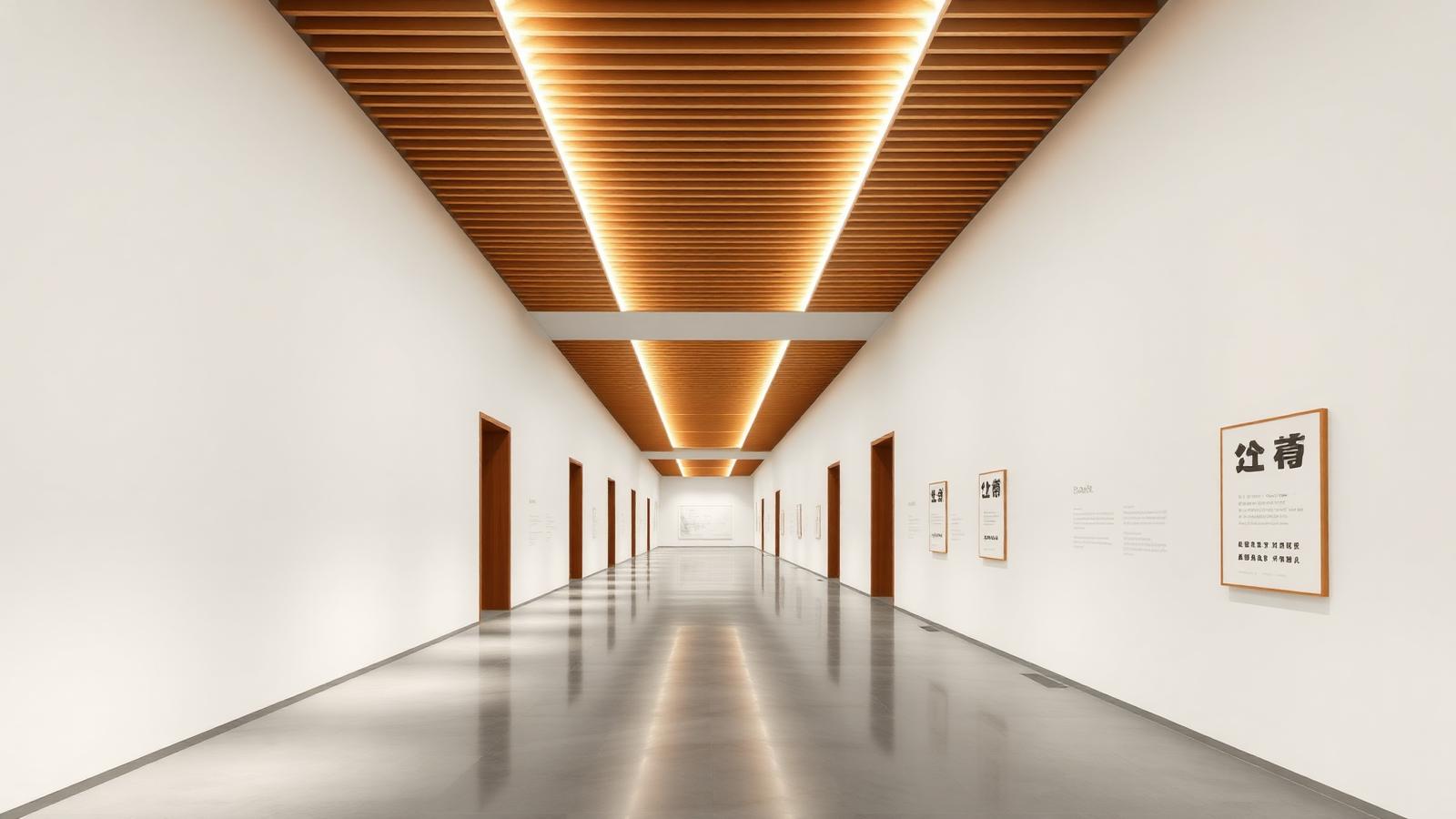 Connecting corridor — calm 3000 K linear cove, low ambient, sets the eye up for contrast when entering the next dark gallery.
How the scene control actually works
The DALI-2 spine groups fixtures by artefact type, not by physical room. Curators can call up 12 preset scenes from any gallery tablet:
- Opening / VIP tour — full output, all galleries
- Standard public — daytime working scene, CRI-priority
- Children's program — slightly cooler 3500 K, higher ambient
- Evening event — atmospheric dim, vitrines featured
- Conservation inspection — daylight-equivalent for condition checks
- Closing / security — minimum safe egress lighting
- Photo shoot (media) — flicker-free flat-field for journalists
- Plus 5 exhibit-specific scenes that can be programmed per show
Each transition takes 30 seconds so visitors don't notice. The textile vault has a hard lux limit baked into firmware: scene control cannot exceed 50 lx, regardless of which preset is called.
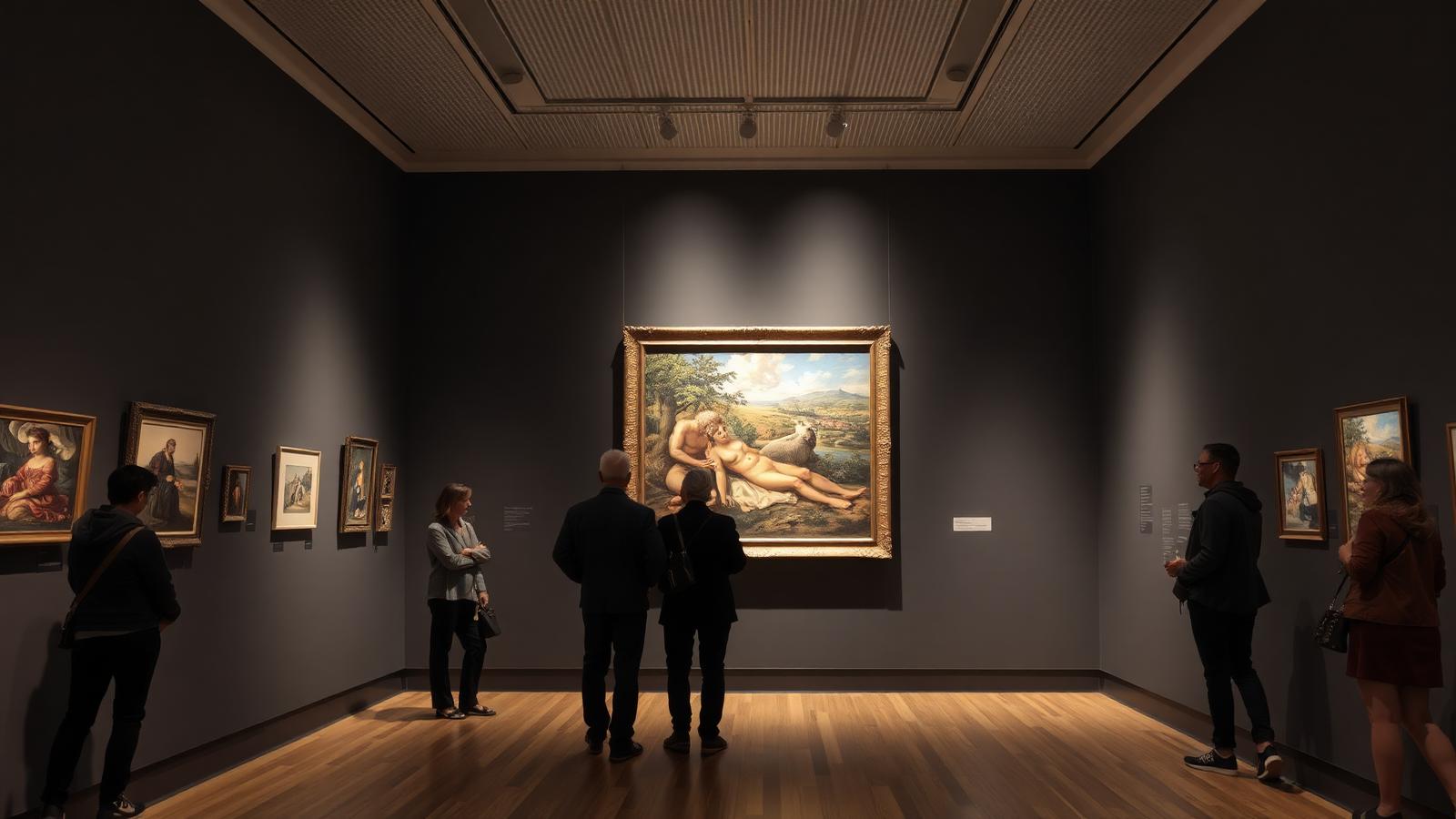 Temporary exhibit room — framing-optic spots cut the light precisely to the canvas edge. Adjacent wall stays black, painting jumps out.
Numbers that matter to the trustees
| Metric | Before (2022) | After (2024) | Change |
|---|---|---|---|
| Gallery connected load | 31.2 kW | 14.8 kW | -53% |
| Annual gallery energy | 168,000 kWh | 104,000 kWh | -38% (with scene dim) |
| Annual lighting cost | ¥420,000 | ¥260,000 | -¥160,000 |
| Textile vault max lux | 180 (uneven) | 48 (uniform) | within CIE 157 |
| UV exposure (silk) | 78 µW/lm | 9 µW/lm | -88% |
| Visitor "lighting" sentiment | 31% neg | 4% neg, 19% pos | turnaround |
| Curator approval rating (internal) | 6/10 | 9/10 | — |
Standards we held the project to
- CIE 157:2004 — control of damage to museum objects by optical radiation
- AIC (American Institute for Conservation) 2022 guidelines for sensitive materials
- EN 12464-1 task lux for staff areas (workshops, registry)
- DALI-2 DT8 tunable white on the spine, DT6 dimming on accent
- Cultural Affairs Bureau Suzhou 2025 energy target: -30% (hit -38%)
Why XHLWX over the German competitor
The shortlist was us and a known German museum-lighting brand. They quoted ¥4.8M and 16 weeks for fixtures only. We quoted ¥2.1M (-56%) and 9 weeks including on-site Dialux verification, individual gimbal aiming with the curator, and a 5-year fixture warranty. Same UV / IR / CRI specs on the spec sheet — verified by the museum's own conservator with a portable spectrometer before sign-off.
If you're running a museum or gallery where curators are worried about textile fade, where visitors say "it looks cold", and the trustees are squeezing the energy bill — the same three problems can be solved by the same DALI-controlled, CRI-97, UV-filtered system. Send us the gallery floor plan and a list of object categories; Dialux report in 5 working days.