
Bakery Lighting Design 2026: 2700K CRI90 Display Guide
Quick answer
Master bakery lighting design with our 2026 guide. Learn why 2700K CRI90 LEDs are essential for displaying bread and pastries, meeting EN 12464-1 standards, a
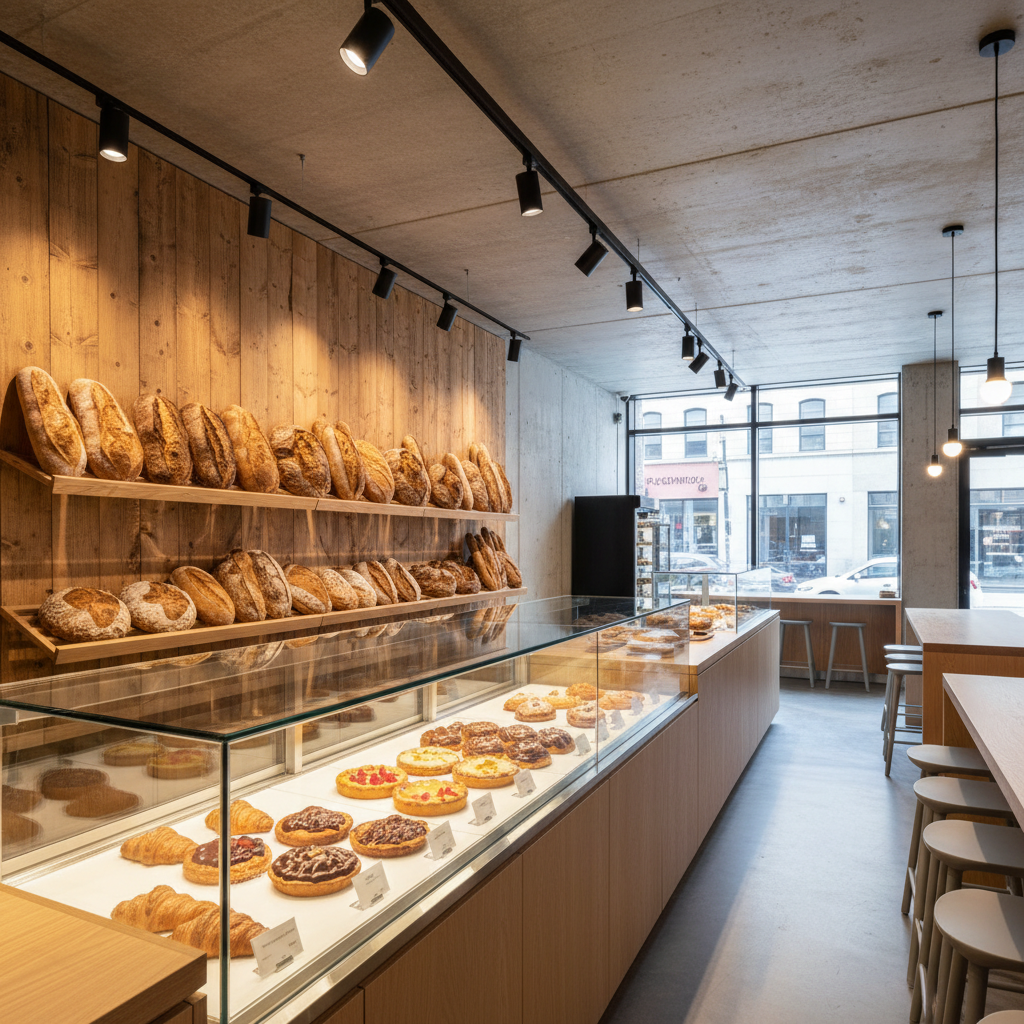
Introduction — the Design Problem in This Space
Effective bakery lighting transforms customer perception by enhancing the visual appeal of bread and pastries. At XHLWX (led-project-light.com), a Custom Indoor LED Lighting Manufacturer based in China, we understand that light is not just for illumination; it's a critical sales tool in food retail. The core challenge is to render golden-brown crusts, delicate pastry glazes, and vibrant fruit toppings with perfect fidelity, making them look irresistibly fresh. This must be achieved while managing glare for customer comfort, minimizing heat radiation onto delicate products like chocolate, and ensuring the solution is energy-efficient and easy to maintain. Poor lighting can make the finest baked goods appear flat, discolored, or stale, directly impacting revenue and brand perception. The right strategy, however, creates a warm, welcoming ambiance that draws customers in and uses focused accent light to turn browsers into buyers.
Lighting Criteria and Standards for This Application
Adhering to established lighting standards ensures both visual comfort and optimal product presentation. For a premium bakery, the lighting specification goes far beyond simple brightness, focusing on color quality, glare control, and targeted application to create a superior customer experience. These parameters are guided by European, US, and international standards to guarantee performance and safety. A successful design balances these technical requirements with the aesthetic goals of the brand, creating an environment that feels both professional and inviting. The specification targets are not arbitrary; they are derived from extensive research into visual perception and retail psychology.
| Parameter | Recommended Specification | Standard / Protocol | Notes |
|---|---|---|---|
| CCT & Color Fidelity | 2700K / Ra > 90, R9 > 50 / TM-30 Rf > 90, Rg > 100 | Visual Merchandising | Warm, saturated tones are critical for bread and pastries. High R9 (red) is vital for fruit tarts. |
| Optics & Glare Control | Asymmetric wallwash / Narrow spot (15-24°) / UGR < 19 | EN 12464-1 | Use specific optics for different displays (wall vs. counter). A low UGR is key for staff and customer comfort. |
| Control System | DALI-2 (DT6/DT8) or Casambi Bluetooth Mesh | DALI / Bluetooth SIG | Enables scene setting (e.g., daytime, evening, cleaning), scheduling, and energy monitoring. |
| Housing & Durability | IP20 / IK03 (typical indoor) / Aluminium | IEC 60529 / EN 62262 | Higher IP ratings (e.g., IP44) may be needed for luminaires near cleaning/steam areas. |
| LED Chip / Driver | Samsung / Bridgelux LED Chip | Tridonic / Mean Well Driver | Ensures long lifetime (L80B10 > 50,000h), high efficacy, and flicker-free operation per IEEE 1789. |
| Certifications | CE, RoHS, ErP, ISO9001:2015 | EU/International | Essential for market access in the EU and proof of a robust quality management system. |
Key standards like EN 12464-1 (and its German counterpart DIN EN 12464-1) provide clear targets for professional retail environments. They recommend a maintained illuminance of 300 lux for general circulation areas, but 500 lux on counters and display areas to draw focus.
For glare, a Unified Glare Rating (UGR) of <19 is the target for high-quality interiors, ensuring a comfortable experience without distracting reflections off glass counters. In the US, IES RP-2-19 provides similar guidance.
Furthermore, forward-thinking projects may reference the WELL v2 standard's Light concept, which emphasizes visual comfort and color rendering quality to promote human well-being.
Luminaire Selection and Optics
Choosing the right luminaire type and optic is crucial for creating visual hierarchy and accentuating product texture. A layered lighting approach, combining ambient, accent, and decorative lighting, yields the most dynamic and effective results. There is no single fixture that solves every challenge; a successful design is a composition of different tools used purposefully. The goal is to guide the customer's eye, highlight the craftsmanship of the products, and build a cohesive brand atmosphere. The flexibility to adapt the lighting to changing displays is also a key consideration in a dynamic retail setting.
| Luminaire Type | Best Application | Pros | Cons | Verdict |
|---|---|---|---|---|
| LED Track Spotlight | Accent lighting on bread walls, patisserie counters | Highly flexible, easy to re-aim, interchangeable optics, high-contrast effects | Can create visual clutter if overused, requires track infrastructure | Essential: The primary tool for creating focal points, modeling texture, and high-contrast displays. |
| Linear LED Profile | Integrated into shelves, cove lighting, asymmetric wall washing | Seamless appearance, even light distribution, low profile | Less flexible once installed, can create flat lighting if used alone | Excellent Support: Best for uniform vertical illumination on bread walls or providing continuous light under shelves. |
| Adjustable Downlight | General ambient light, circulation areas | Clean ceiling aesthetic, good glare control with deep baffle design | Fixed position, less suitable for highlighting specific, changing products | Recommended: Provides the base layer of light, complementing accent fixtures without drawing attention to itself. |
| Decorative Pendant | Over seating areas, main POS counters | Creates a strong design statement, defines zones, enhances brand identity | Can obstruct views, optics are often decorative rather than performance-oriented | Situational: Use for branding and ambient effect, not as the primary product light. Essential for ambiance over tables. |
How Does Light Affect the Perceived Freshness of Bread?
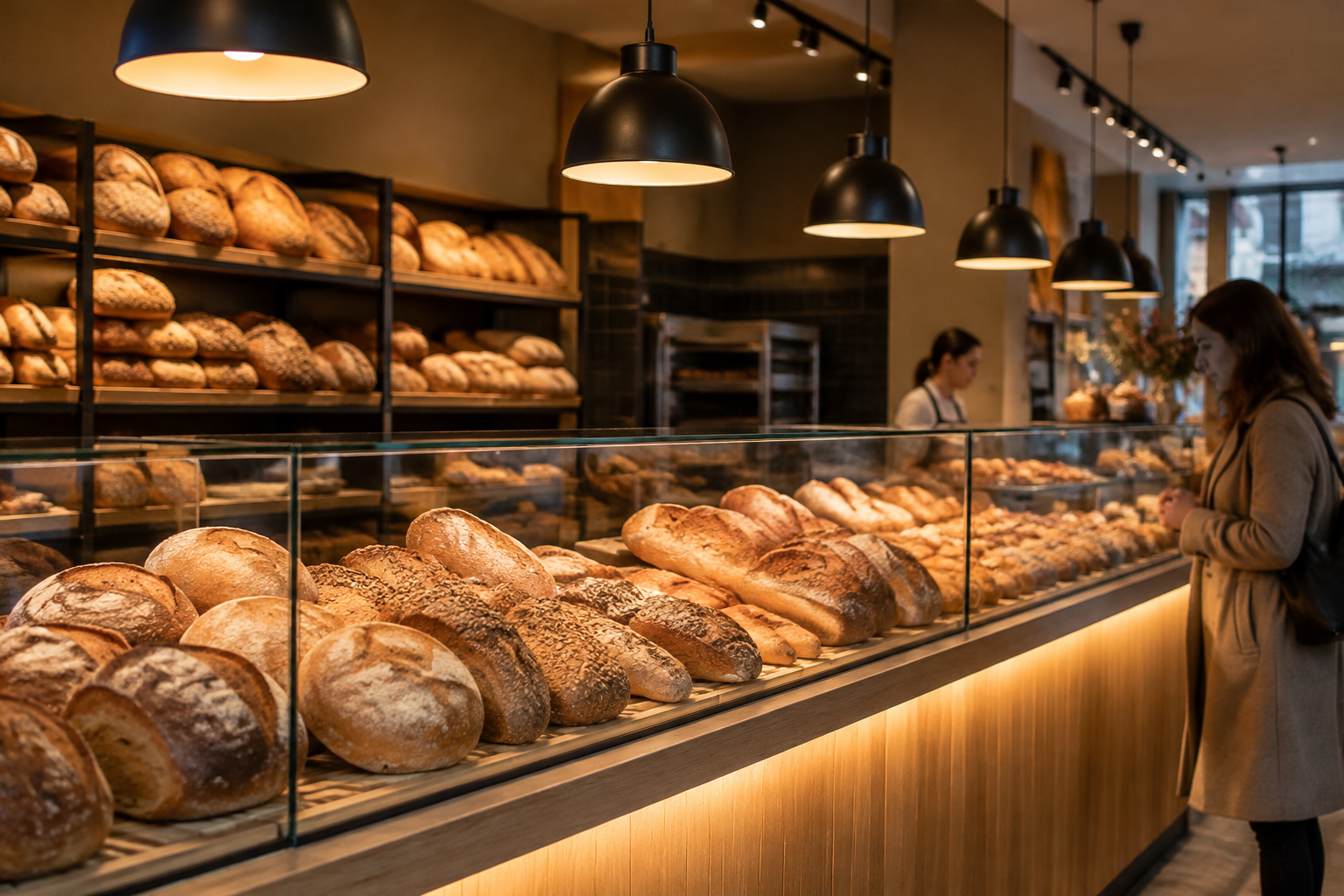
Warm, high-CRI light accurately renders the golden-brown crusts and rich textures, signaling freshness to customers. The choice of a 2700K CCT is deliberate; this warm tone is psychologically associated with the hearth and oven, evoking feelings of comfort and authenticity. A high Color Rendering Index (CRI > 90) ensures that the full spectrum of color is present. More advanced metrics like IES TM-30, with its fidelity (Rf) and gamut (Rg) scores, further refine this. A high Rg (>100) indicates that colors are more saturated, making bread crusts look richer and fruit toppings more vibrant, directly influencing the customer's perception of quality and freshness.
What Is the Best Way to Light a Vertical Bread Wall Display?
Asymmetric wallwash optics from track or linear fixtures provide the most effective vertical bread wall illumination. This technique, often called 'light grazing', involves positioning the luminaire close to the wall and directing the light down its surface at a steep angle. This accentuates the three-dimensional texture of artisan bread, creating dramatic highlights and shadows on the crusts. Using track-mounted wallwashers offers the flexibility to adapt the lighting as the display changes. In contrast, lighting the wall from a distance with symmetrical floodlights would flatten the appearance of the products, losing the visual detail that communicates craftsmanship and quality.
Should Hot and Cold Pastry Displays Be Lit Differently?
Yes, lighting should adapt to the display type to manage heat and enhance visual appeal. For hot counters containing items like croissants or savory pastries, the lighting should be external. Using narrow-beam LED spotlights (15-24 degrees) positioned outside the heated cabinet prevents adding any extra heat load to the unit. For refrigerated displays with delicate cakes and patisserie, integrated LED lighting is an option, provided it's a very low-power system. However, external spotlights remain the safest choice to avoid any thermal impact, especially on sensitive items like chocolate or cream cheese frosting. In both cases, a CCT of 2700K and CRI 90+ remains the gold standard for visual appeal.
 Bakery Lighting Design 2026: 2700K CRI90 Display Guide: How does light affect the perceived freshness of bread?
Controls, Energy and Commissioning (DALI-2 / Casambi / Sensors)
Intelligent lighting controls like DALI-2 and Casambi are essential for optimizing energy use and adapting scenes throughout the day. A modern bakery is a dynamic environment, and its lighting should be equally responsive. A robust control system allows the operator to pre-program scenes for different functions: a bright, energetic 'Daytime' scene, a softer 'Evening' scene for a more relaxed atmosphere, a 'Cleaning' mode at full brightness, and an 'After Hours' scene that provides security lighting while minimizing energy consumption. Integrating daylight sensors near windows can automatically dim the artificial lights when sufficient natural light is present, further reducing costs.
DALI-2 (Digital Addressable Lighting Interface) is a globally standardized protocol ideal for new constructions. It offers individual control of every luminaire, as well as energy and performance monitoring (DALI Part 207/209), providing valuable operational feedback. For retrofits or spaces where running new control wiring is difficult, Casambi provides a powerful wireless solution using Bluetooth Mesh. It is commissioned easily via a smartphone app and offers sophisticated control over scenes, scheduling, and sensor integration.
Photometric Files & Compliance (IES / LDT / DIALux / CE / RoHS / ErP)
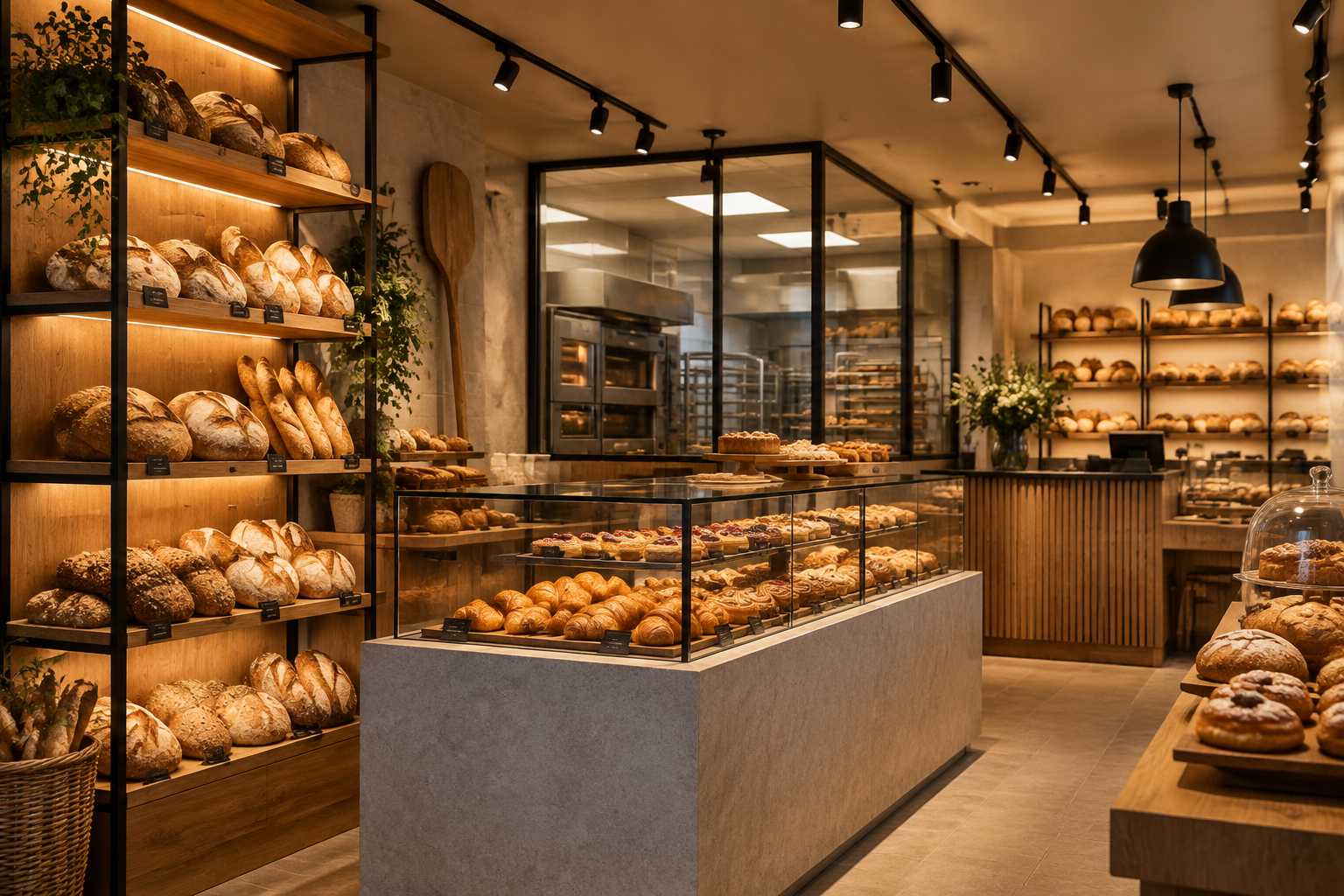
Verifiable compliance through photometric files and certifications is non-negotiable for professional lighting projects. The design process for a bakery lighting scheme is a precise, data-driven exercise. It begins with the manufacturer, like XHLWX, providing standardized photometric data files for each luminaire. These files, in IES (for North America) or LDT (for Europe) format, contain a complete 3D model of the light distribution from a specific fixture.
A lighting designer imports these files into simulation software like DIALux or Relux. Inside this virtual model of the bakery, they can position luminaires, test different optics, and accurately predict the resulting performance.
The software generates reports that validate the design against project criteria, showing precise illuminance levels (lux) on counters, uniformity across the floor, and, critically, the UGR value to ensure visual comfort. This simulation process removes guesswork and guarantees the final installation will meet the requirements of standards like EN 12464-1.
Finally, all specified products must carry the necessary certifications for the target market. For the EU, this includes CE (Conformité Européenne) for safety, RoHS (Restriction of Hazardous Substances), and ErP (Energy-related Products) for efficiency. ISO9001 certification demonstrates the manufacturer's commitment to quality management systems.
 Bakery Lighting Design 2026: 2700K CRI90 Display Guide: Photometric files & compliance (IES / LDT / DIALux / CE / RoHS / ErP)
Frequently Asked Questions
Q: What Is the Ideal CCT for Lighting Fresh Bread?
The ideal Correlated Color Temperature (CCT) is a very warm white, typically 2700K. This specific warmth enhances the golden and brown tones of the crust, making the bread look appealingly fresh and rustic. For some specialty products, a dedicated food-spectrum LED with a CCT between 2400K and 2700K can further boost saturation and visual appeal, using specific phosphor combinations to target key color wavelengths.
Q: Do I Need a High CRI for Bakery Lighting?
Absolutely. A high Color Rendering Index (CRI) of Ra > 90 is critical. This ensures that all colors, especially the deep reds of fruit tarts (measured by R9 > 50) and the rich yellows of custards, are rendered vividly and accurately. Low CRI lighting can make premium pastries look dull, unappetizing, and even stale, directly impacting customer perception and sales. It's a non-negotiable parameter for food retail.
Q: How Many Lux Are Required for a Bakery Display Counter?
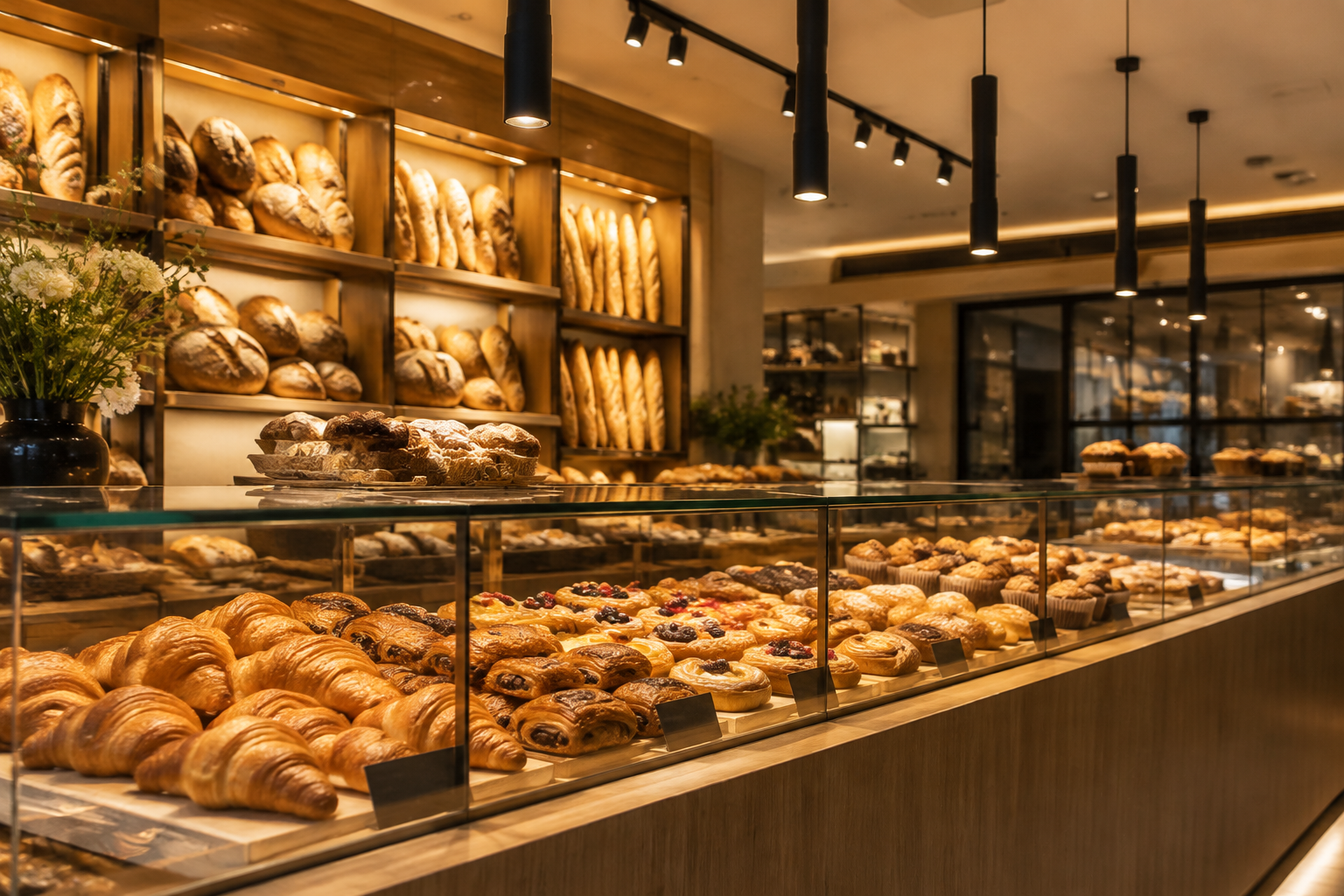
European standard EN 12464-1 recommends a target illuminance of 500 lux on the task area, which includes display counters. General circulation areas can be lower, around 300 lux. This contrast helps draw customers' eyes to the products. Using a lighting simulation with DIALux can confirm that your design achieves these levels while maintaining good uniformity and a UGR below 19 for visual comfort.
Q: Can LED Lighting Damage Pastries or Melt Chocolate?
High-quality LED lighting produces significantly less infrared (heat) radiation compared to old halogen lamps, making it much safer for delicate foods. However, intense light of any kind is energy. For sensitive items like chocolate, ensure fixtures are positioned at a safe distance (e.g., > 50 cm) and use lower wattage spotlights (e.g., 8-15W). This minimizes radiant heat and prevents damage while still providing excellent visual impact.
Sources and Technical References
- EN 12464-1:2021: Light and lighting - Lighting of work places - Part 1: Indoor work places.
- IES RP-2-19: Recommended Practice for Lighting Retail Spaces.
- WELL Building Standard v2: Light Concept (Feature L03 & L04).
- CIE S 026/E:2018: CIE System for Metrology of Optical Radiation for ipRGC-Influenced Responses to Light.
- IES TM-30-18: IES Method for Evaluating Light Source Color Rendition.
 Bakery Lighting Design 2026: 2700K CRI90 Display Guide: Q: How many lux are required for a bakery display counter?
Request a Custom Quote
At XHLWX (led-project-light.com), a Custom Indoor LED Lighting Manufacturer based in China, we specialize in creating tailored lighting solutions for retail and hospitality environments across the EU, US, and Middle East. Our expertise lies in adapting our luminaires to meet the precise demands of your project, from custom RAL color finishes and specialized optics to integrating specific LED chips and drivers that align with your performance and brand standards. Whether you are designing a single artisan bakery or a chain of patisseries, our team is ready to support you with technical data, photometric planning, and high-quality, certified products. Contact us today to discuss your bakery lighting project and request a proposal.
Need a tailored lighting plan for your project?
Our senior lighting designers reply within 48 hours with a free design proposal & quotation.