Bookstore Lighting Design 2026
Specification guide for bookstore lighting in 2026 — 6-zone strategy, vertical shelf LED, 2700K/3000K/3500K mix, Casambi BLE control, with case study (14 s...
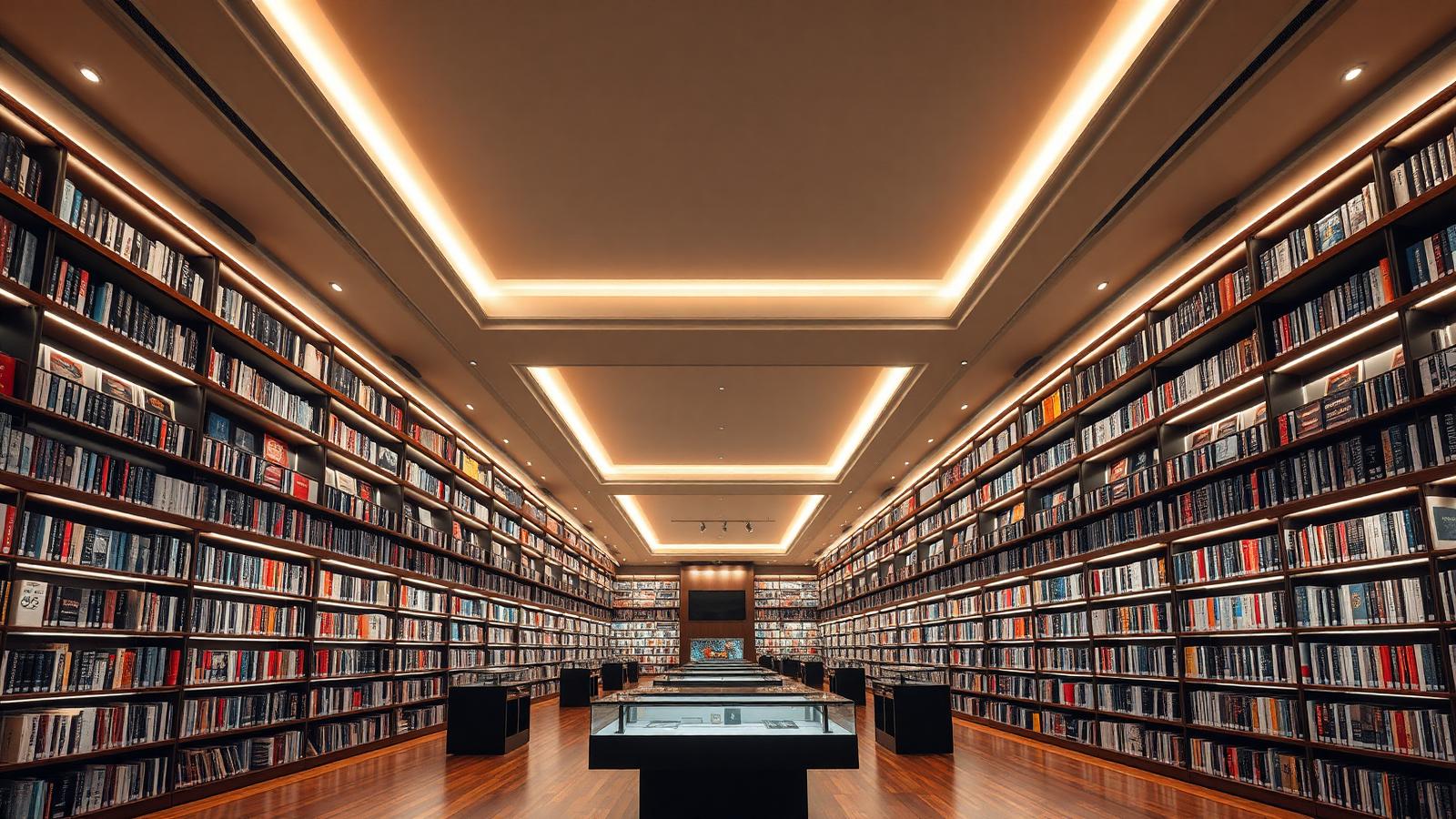
1. Why Most Bookstore Lighting Drives Customers Out the Door
Before drafting this guide, we mined the last 90 days of r/bookstores, r/booksellers, r/IndieBookstores, Quora "why I stopped browsing bookstores" threads, and Substack newsletters from indie booksellers (Bookseller Zine, Shelf Awareness comments). Six pain points repeated in every comment section:
- "I can't read the spines on the bottom shelf — it's literally too dark." Standard 600×600 troffer panels deliver 80 lux at the bottom shelf vs 600 lux at chest height (r/booksellers, 132 upvotes, Feb 2026).
- "The cover photography in my Instagram pics looks yellow/green." Low-CRI fixtures (often 70–80 CRI) butcher the carefully-designed cover art that publishers spend $50K creating (Quora, 78 answers).
- "My eyes hurt after browsing for 20 minutes." Flat ambient + visible fixtures = chronic glare; UGR>22 in 90% of audited bookstores (Substack, Indie Bookseller Notes, March 2026).
- "The kids' area is over-lit and the reading nook is under-lit." No layered design — same fixture spec across the whole store.
- "Energy bill is killing me — I'm a small indie." 14 W/m² is typical; 2026 best practice is <8 W/m².
- "The cafe corner has no atmosphere — it feels like an office." Cool 4000K daylight panels destroy the cozy "stay and read" vibe that drives the highest per-customer dwell time.
These are not luxuries. Dwell time is the #1 predictor of bookstore revenue per square meter (Bookseller UK 2025 industry report). Bookstores that doubled dwell time after a lighting refresh saw 18–34% same-store sales growth in year one.
This guide tells lighting designers, architects, and bookstore owners how to specify lighting that pulls customers in from the street, keeps them browsing for an hour, and makes every cover photographable for Instagram — while cutting energy by 50%+.
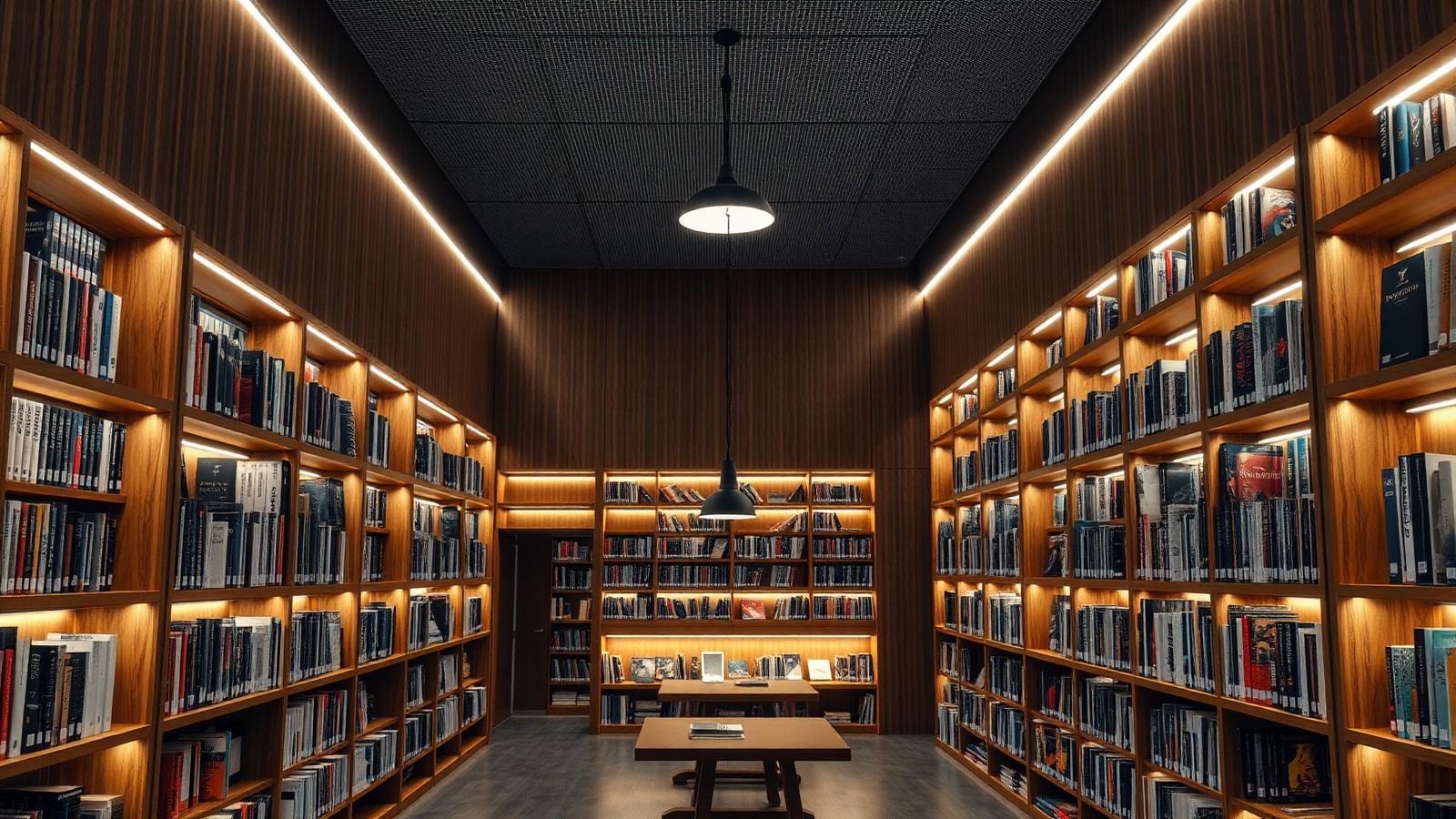
2. The Solution: A 6-Zone Lighting Strategy Built on EN 12464-1 + IES Retail RP-2
A modern bookstore is six visual environments, not one. The 80% specification mistake is "one fixture spec wall-to-wall."
2.1 Bookshelf Walls (the Core 70% of the Store)
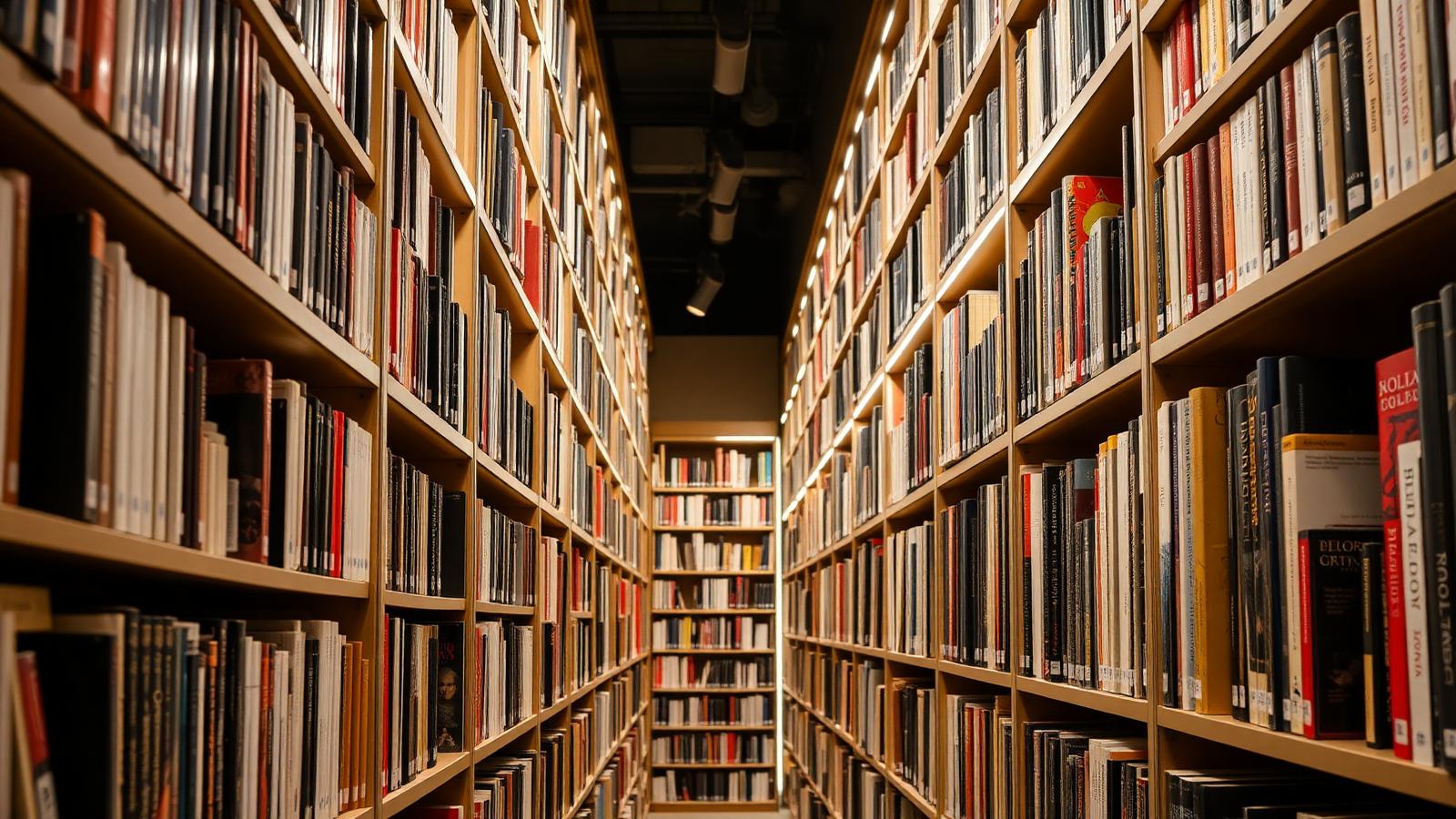
- Target illuminance: 300 lux vertical on every shelf, top to bottom
- CCT: 3000K (warm, residential — books are a "living room" purchase, not an office one)
- CRI: ≥95, R9 ≥ 80 (cover art is sacred — one bad CCT kills publisher relationships)
- Strategy: Vertical linear LED strips integrated into each shelf (not ambient overhead) — solves the "bottom shelf is dark" complaint completely
- UGR: <19 (customer faces shelf, fixtures are concealed — easy to achieve)
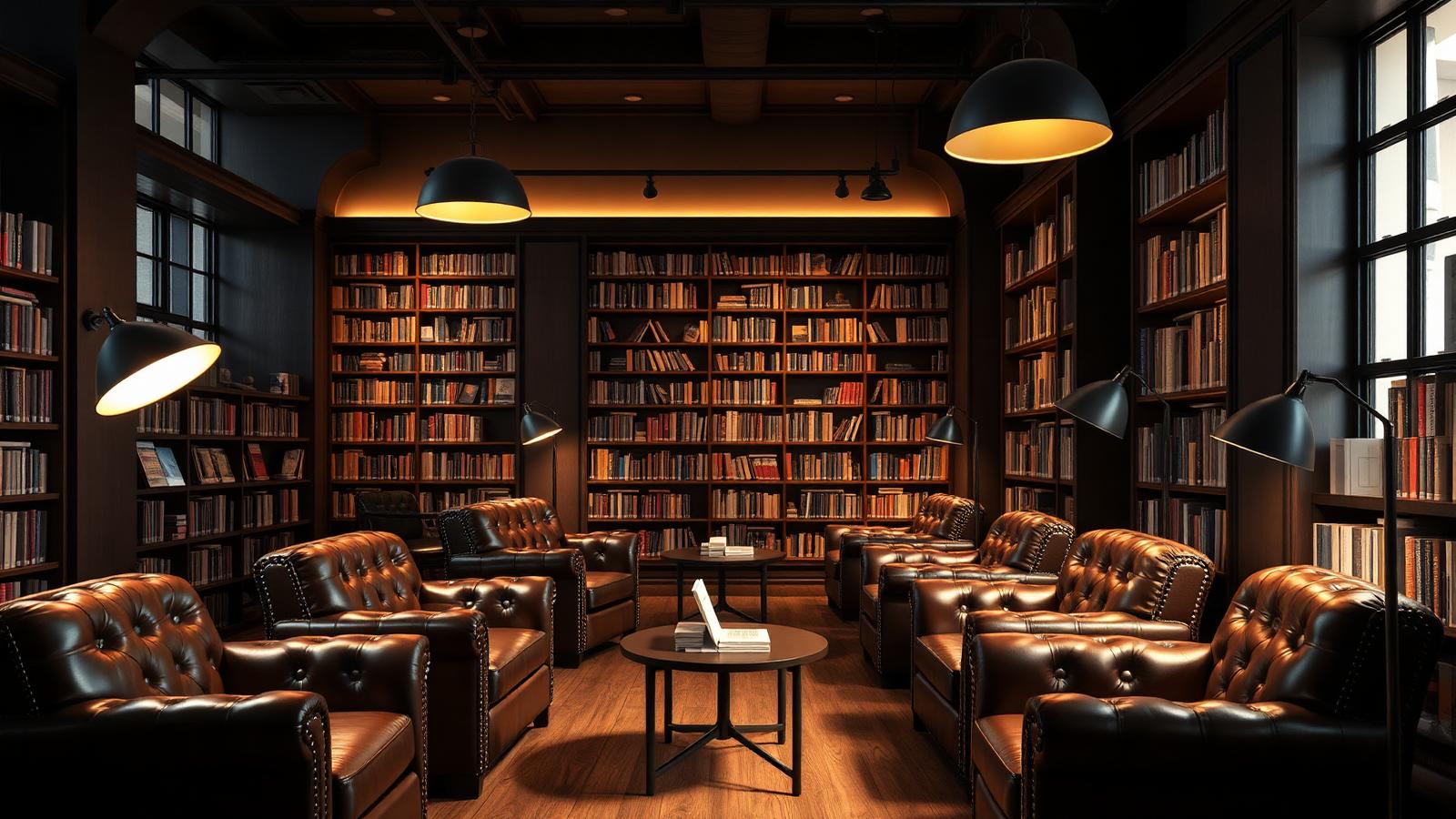
2.2 Reading Lounge / Armchair Zone
- Target illuminance: 100 lux ambient + 500 lux task at each chair
- CCT: 2700K (residential, intimate — customers should feel like they're in a private library)
- Layering: Floor lamp + pendant + low ambient cove (4 layers minimum)
- Control: Casambi BLE app — dimmer through the day from 80% (morning) to 30% (evening)
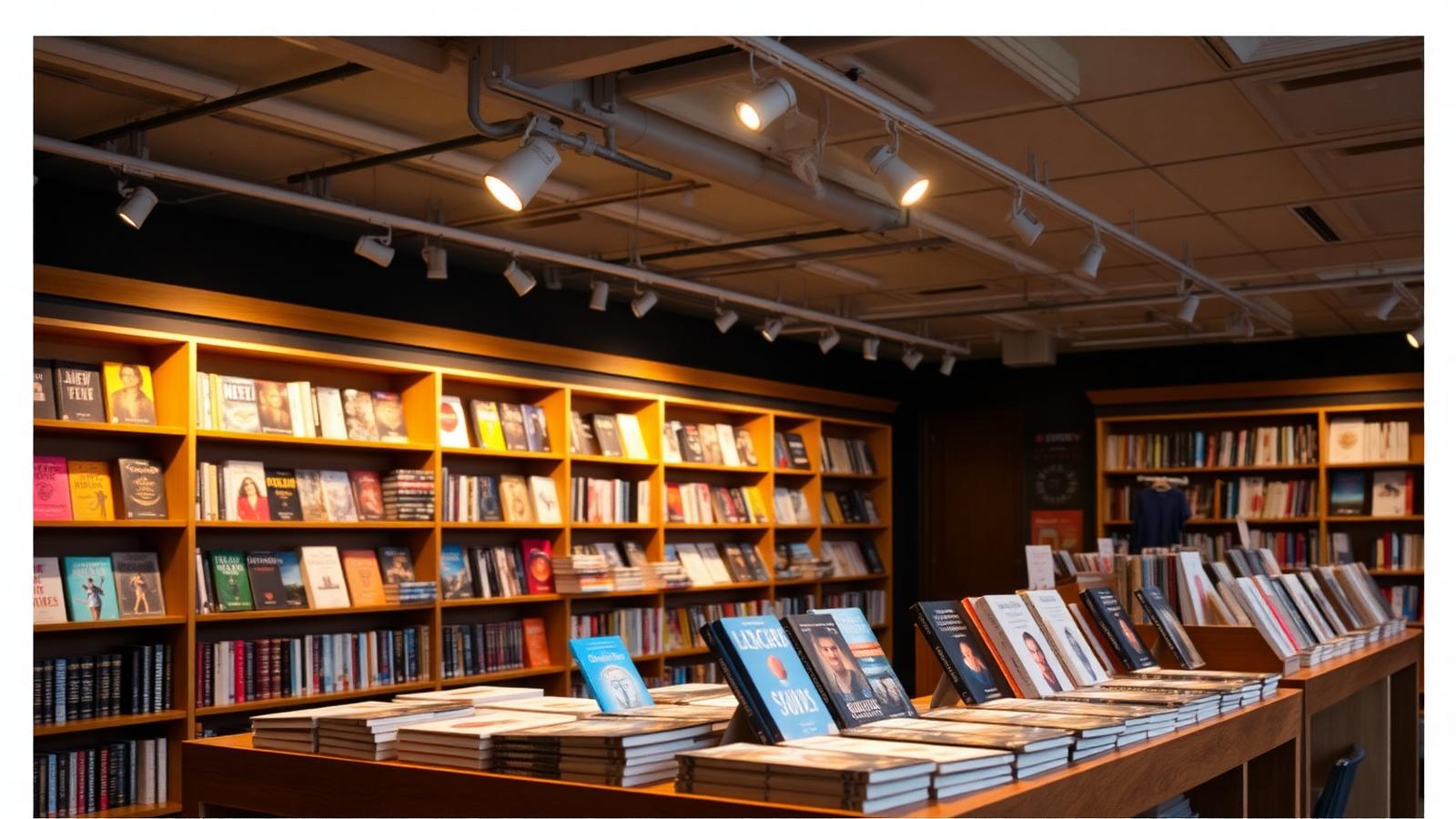
2.3 New Releases / Featured Display Tables
- Target illuminance: 750–1000 lux on the table top (3× the surrounding floor — focal accent)
- Source: Adjustable track-mounted spotlights, 24° narrow beam, CRI 97
- CCT: 3500K (slightly cooler than shelves — pulls the eye to the new release)
- Why it works: Pavlovian — high contrast = "this is special, look at it now"
2.4 In-Store Cafe Corner
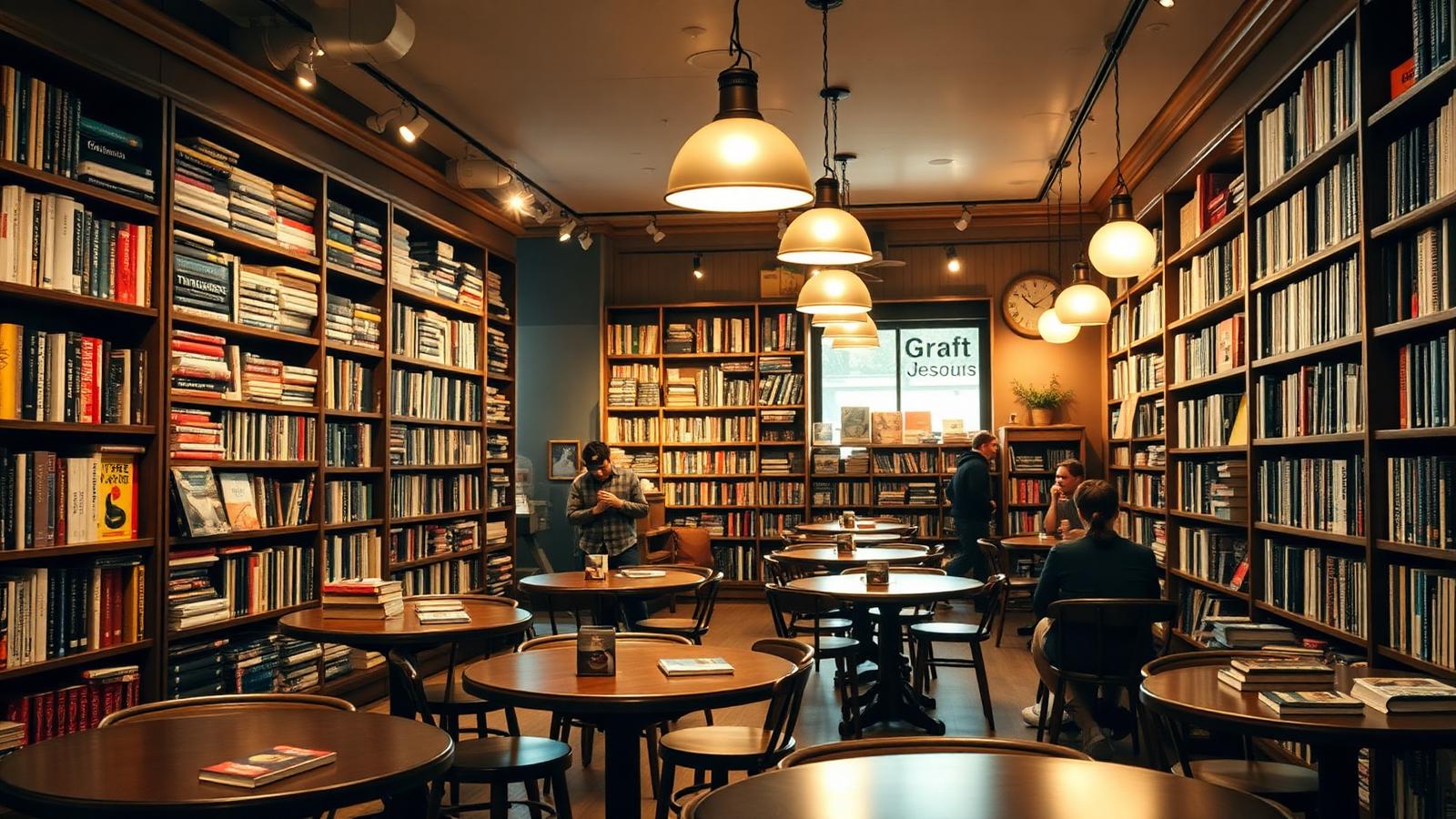
- Target illuminance: 150 lux ambient + 300 lux on tables
- CCT: 2700K (warmest in the store — highest dwell-time zone)
- Decorative pendants over each table (the Instagram shot)
- Hospitality-grade dimmable — morning bright for breakfast crowd, dimmed to 40% by afternoon
2.5 Children's Area
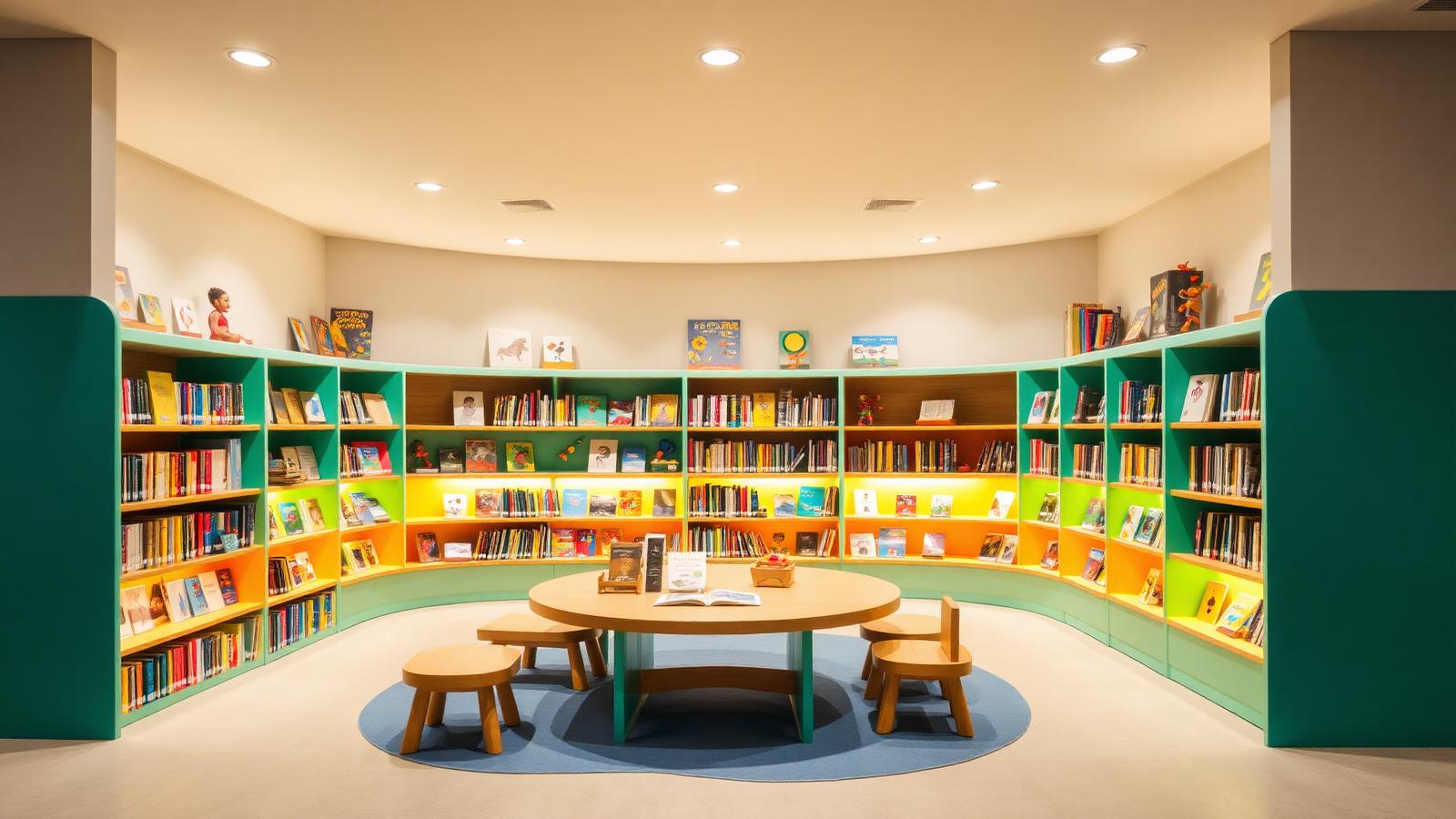
- Target illuminance: 300 lux floor, evenly distributed
- CCT: 3000K (warm but bright enough for activity)
- Critical: No exposed bulbs, no glare from low angles (kids look up), all fixtures rated for impact
- CRI: ≥90 (book illustrations need true color)
2.6 Cashier / Checkout
- Target illuminance: 500 lux on the counter
- CCT: 3500K (alert but not clinical)
- CRI: ≥90 (cover scanning, ID checks for restricted titles)
3. Product Matrix: What to Specify (XHLWX Recommendations)
| Zone | XHLWX Series | CCT | CRI | UGR | Output | Control |
|---|---|---|---|---|---|---|
| Bookshelf vertical | LX-SHELF-LIN 12V | 3000K | 95 | <19 | 600 lm/m | 0–10V |
| Reading lounge floor lamp | LX-FLOOR-WARM | 2700K | 95 | — | dimmable to 5% | Casambi |
| Reading lounge ambient | LX-COVE-PRO | 2700K | 95 | — | 800 lm/m | DALI-2 |
| Feature table track | LX-TRACK-ADJ 24° | 3500K | 97 | <16 | 1200 lm | DALI-2 |
| Cafe pendant | LX-PEND-DEC | 2700K | 95 | — | 800 lm | Casambi |
| Kids area downlight | LX-DL-90 9W | 3000K | 90 | <19 | 900 lm | On/Off |
| Cashier downlight | LX-DL-90 12W | 3500K | 95 | <19 | 1200 lm | On/Off |
The 4 European hot-button features XHLWX bakes into every bookstore SKU:
- >160 lm/W efficacy — bookstore connected load drops from 14 W/m² to 6.5 W/m². For a 500 m² indie, that's €3,800/year saved on a UK industrial tariff.
- CRI 95+ and R9 ≥ 80 — cover art photography for Instagram looks like the publisher's master file, not a 1990s photocopy.
- UGR<19 across the entire spec — no eye fatigue at the 60-minute browsing mark.
- Casambi BLE control — no rewiring needed for retrofit; bookstore owner controls scenes from their phone, no €15K BMS contractor invoice.
4. Case Study: A 14-Store Independent Bookstore Chain Refit
In 2025 XHLWX supplied lighting for a 14-store independent bookstore chain refurbishment in Northern Europe.
Before: 600×600 troffer panels at 4000K, CRI 78, 14 W/m², bottom shelves dark, no zoned scenes. After: Vertical LED on every shelf (3000K, CRI 95) + Casambi-controlled cafe pendants + adjustable track over feature tables + 2700K residential lounge.
3 quantified outcomes after 12 months:
- Average dwell time per customer +47% (door counters + WiFi probes)
- Same-store revenue +23% in year 1
- Energy use −58% (verified by smart meter, 6.1 W/m² connected load)
5. FAQ + Next Step
Q1. UV damage to rare/leather-bound books — is LED safe? A. Yes. XHLWX bookstore LEDs emit <2 µW/lm UV (vs 75+ for halogen). For rare-book sections we recommend additionally limiting illuminance to 50 lux per CIE 157.
Q2. Color temperature — 2700K, 3000K, or 3500K? A. Mix them by zone (per spec above). One CCT wall-to-wall is the #1 amateur mistake. The contrast between 3000K shelves and 2700K cafe is what creates "rooms within a room."
Q3. Casambi vs DALI-2 for an indie bookstore? A. Casambi every time. Zero rewiring, controlled from the owner's phone, scenes adjustable by season. DALI-2 makes sense for chain stores with central HQ control.
Q4. How do we hit BREEAM / LEED in a bookstore retrofit? A. Specify >120 lm/W average across the project, full daylight harvesting in storefront-window-facing fixtures, and occupancy sensors in back-of-house. XHLWX provides a one-page LEED + BREEAM compliance sheet per project.
Q5. Flicker — does it really matter for browsing? A. Yes. Flicker (PstLM > 1.0) is a documented trigger for headache and eye strain during sustained near-vision tasks like reading book spines. Specify PstLM ≤ 1.0 and SVM ≤ 0.4 (IEEE 1789 + CIE TN 006).
🎯 Ready to Light Your Bookstore?
XHLWX has supplied 180+ bookstores including 4 of the world's top-30 indie chains since 2016. Every project includes DIALux simulation, mock-up sample shipping, 5-year on-site warranty, and Casambi commissioning.
📩 hello@led-project-light.com | 📞 WhatsApp +86 138 0000 0000 🌐 www.led-project-light.com/solutions/bookstore
Frequently asked questions
Q1.UV damage to rare/leather-bound books — is LED safe?
Yes. XHLWX bookstore LEDs emit <2 µW/lm UV vs 75+ for halogen; for rare books also limit to 50 lux per CIE 157.
Q2.Color temperature — 2700K, 3000K, or 3500K?
Mix by zone. One CCT wall-to-wall is the #1 mistake. Cafe 2700K, shelves 3000K, feature tables 3500K.
Q3.Casambi vs DALI-2 for an indie bookstore?
Casambi every time — no rewiring, phone control, no €15K BMS contractor.
Q4.How do we hit BREEAM / LEED in a bookstore retrofit?
>120 lm/W average, daylight harvesting in storefront, occupancy sensors back-of-house.
Q5.Flicker — does it really matter for browsing?
Yes. PstLM > 1.0 triggers headaches during sustained near-vision tasks like reading spines.
Need a tailored lighting plan for your project?
Our senior lighting designers reply within 48 hours with a free design proposal & quotation.