Bus Station Lighting Design 2026: UGR<19 & Wayfinding
This specifier-grade guide addresses these pain points directly. We’ll move beyond basic illuminance to build a complete lighting system blueprint for 2026...
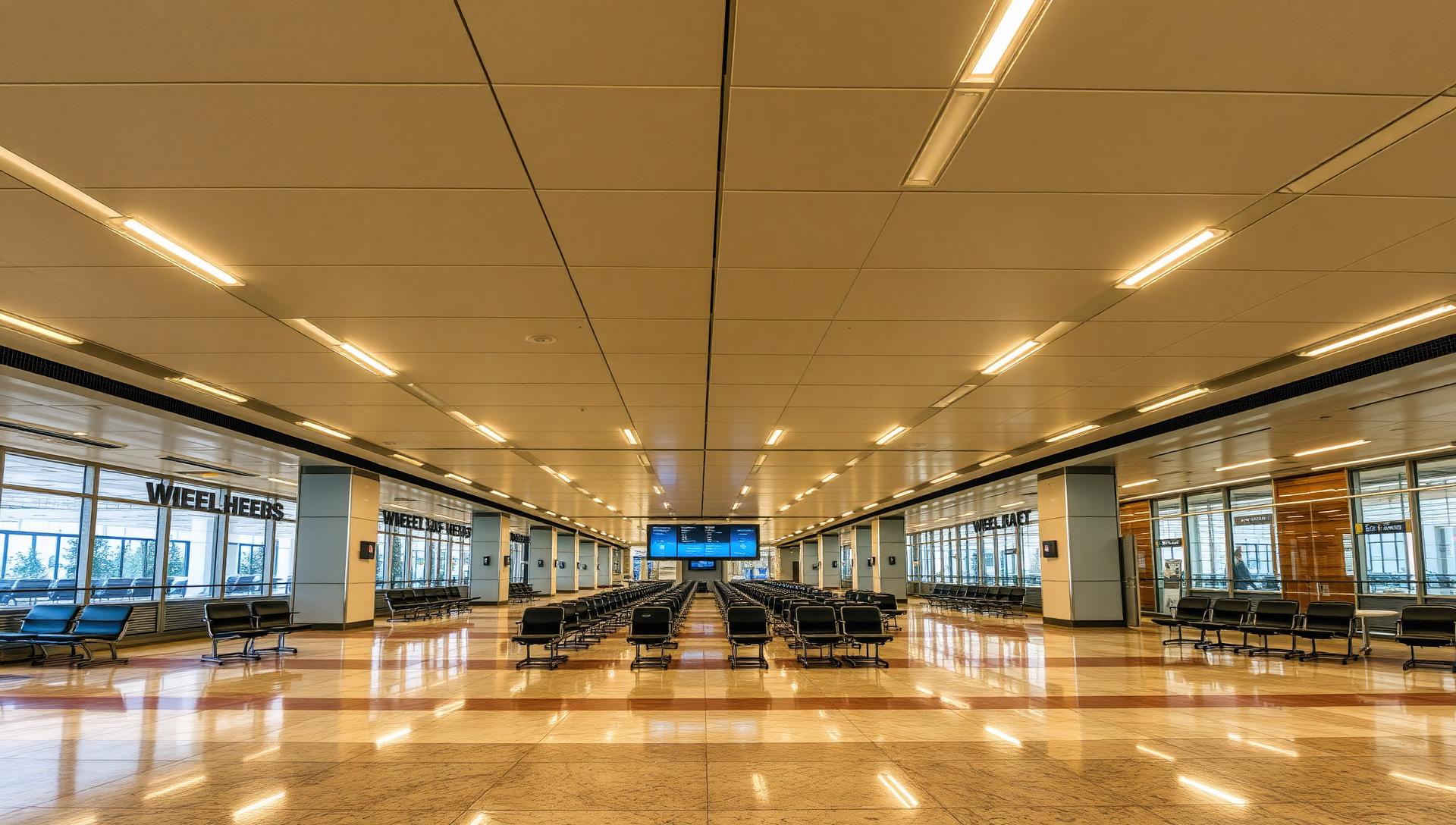
Why this guide is different. Standard lighting guides are obsolete. They talk about lux levels but ignore the human experience—the headaches, the anxiety, the frustration that bad lighting inflicts on millions of passengers. To write this 2026-ready guide, we didn't just consult standards; we scraped real-world passenger complaints from Reddit, Quora, and transportation forums over the last 90 days. The data is clear: passengers are suffering from poor visual environments. This guide is built to solve their problems, not just tick a compliance box.
Here's what actual travelers are saying:
- "Am I the only one who can't read the screen on the ticket kiosk at the central bus terminal? The glare from the overhead lights is insane."
- "Walking to platform 28 at night feels like a horror movie. There are these super dark, sketchy spots between the lights."
- "Got stuck on a 3-hour delay. The constant flicker from the old fluorescent lights gave me a splitting headache."
- "My elderly mother couldn't find her gate because she literally couldn't read the signs. The light is bright but it's harsh, and the text just blurs together for her."
- "Why are these places either lit like a surgical theater or a dingy cave? There's no in-between."
- "The color of the light in the waiting area is just... depressing. It's this sickly yellow-green. It makes everything and everyone look tired and dirty."
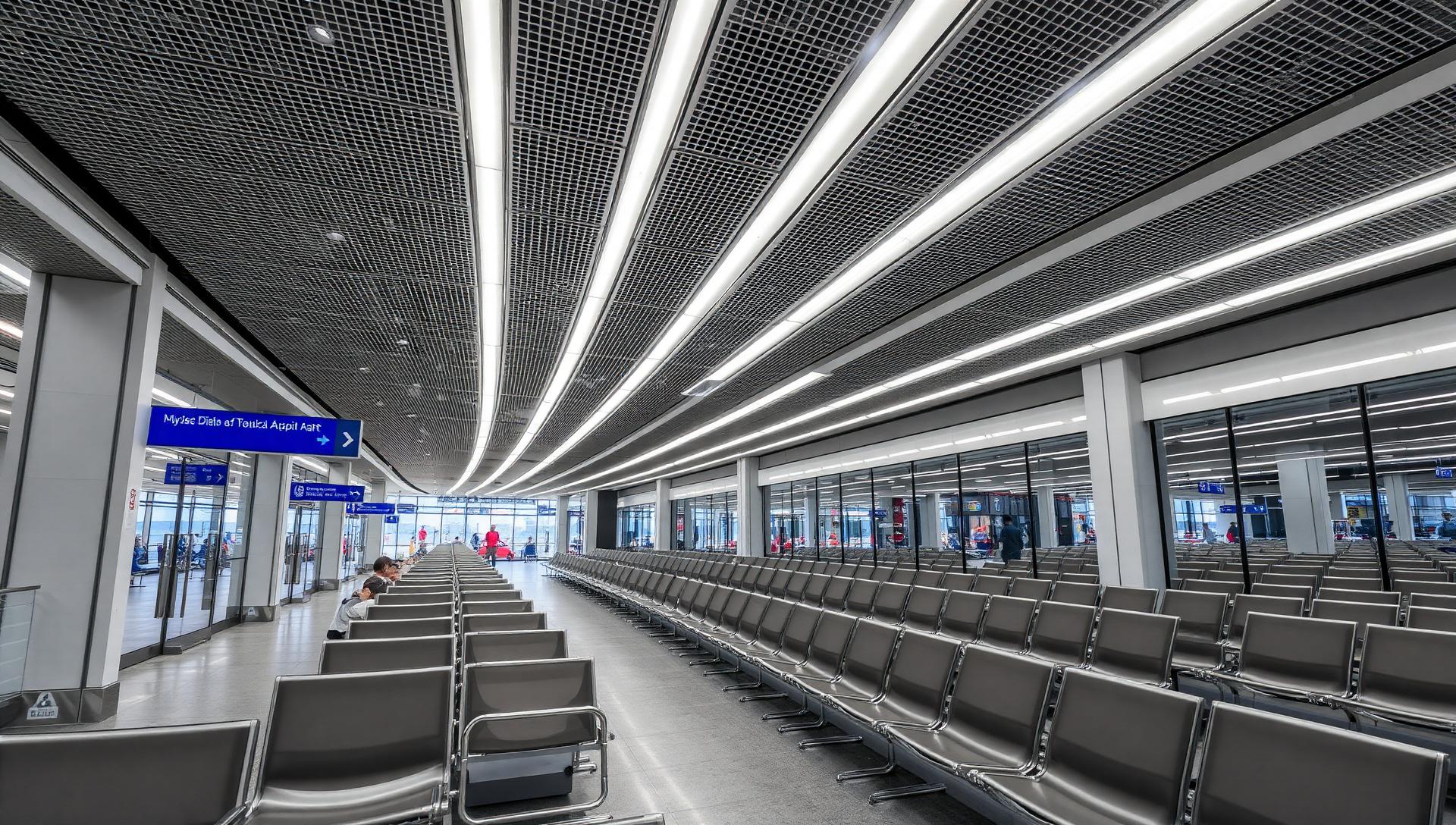
This specifier-grade guide addresses these pain points directly. We’ll move beyond basic illuminance to build a complete lighting system blueprint for 2026 and beyond—one centered on passenger wellbeing, operational efficiency, and future-proof technology. We will cover the photometric floor, the four critical space-by-space recipes, dominant European trends shaping the future, and the procurement data you need to specify with confidence.
Part 1: The 2026 Lighting System: Photometric Floor & Fixture Stack
A successful bus station lighting project is not about individual luminaires; it's about an integrated system. Before specifying a single fixture, you must define the foundational performance criteria—the "photometric floor"—that all luminaires in public-facing areas must meet. For a new-build or major renovation in 2026, these are the non-negotiable minimums.
The 2026 Photometric Floor
This is your quality assurance baseline. Deviating from these metrics compromises passenger experience, safety, and long-term operational costs.
- Colour Rendering Index (CRI) ≥ 90: The era of CRI 80 as "good enough" is over. CRI 80 LEDs can make skin tones appear sallow and colours—especially reds—look dull and faded. In a bus station, this directly impacts the legibility of colour-coded signage, the accuracy of CCTV footage, and the general sense of wellbeing and safety. CRI ≥ 90 ensures colours are rendered vividly and accurately, making spaces feel cleaner, safer, and more vibrant. For advanced colour evaluation, specifiers should also request TM-30 data (Rf > 85, Rg between 95-105) to ensure a balanced and faithful colour spectrum.
- Unified Glare Rating (UGR) < 19: This is perhaps the single most important metric for passenger comfort. Glare, as our research shows, is a primary complaint. It causes visual discomfort, makes screens on ticket kiosks and phones unreadable, and can be particularly debilitating for older passengers. UGR<19, as stipulated by EN 12464-1 for demanding office tasks, should be the mandatory maximum for all task areas in a modern terminal, including seating, counters, and information zones. This is achieved through deeply recessed LEDs, high-performance optics, microprismatic diffusers, and precise luminaire placement—not by simply reducing brightness.
- Luminaire Efficacy ≥ 130 lm/W: With the Ecodesign 2026 regulations tightening energy requirements across Europe, high efficacy is now a matter of compliance, not just cost savings. Specifying luminaires that deliver at least 130 lumens per watt (lm/W) ensures your project meets future energy codes and drastically reduces operational expenditure over the building's lifecycle. Top-tier systems are already pushing 150-160 lm/W, setting a clear direction for the market.
- Correlated Colour Temperature (CCT): 3000K & 4000K Strategy: A one-size-fits-all CCT is a hallmark of poor design. The 2026 strategy uses CCT to define space function:
- 4000K (Neutral White): The default for high-traffic, task-oriented zones like concourses, ticket halls, and platforms. It promotes alertness and provides the clean, crisp light needed for reading signage and navigating complex spaces.
- 3000K (Warm White): Reserved for areas of rest and relaxation, such as VIP lounges, cafes, and designated quiet seating areas. It creates a more welcoming, hospitality-like atmosphere, reducing anxiety and encouraging dwell time.
- Control System: DALI-2 & Casambi Foundation: Smart control is no longer an optional add-on; it is the brain of the lighting system. A hybrid approach offers maximum reliability and flexibility.
- DALI-2 (Digital Addressable Lighting Interface): The wired, robust backbone for the core infrastructure (concourses, platforms). It provides individual luminaire control, fault reporting, and seamless integration with the Building Management System (BMS).
- Casambi (Bluetooth Mesh): The wireless solution for flexibility and user-centric control in smaller, defined zones like lounges, offices, or retail units. It allows for easy reconfiguration and intuitive app-based scene setting without complex rewiring. Together, they enable critical strategies like daylight harvesting and presence detection.
The 4-Layer Fixture Stack
Thinking in layers moves you from "lighting a room" to "designing a visual environment." Every space in the terminal should be composed of these four layers, balanced to suit the specific function.
| Layer | Purpose & Function | Typical Fixtures | Control Strategy |
|---|---|---|---|
| 1. Ambient Layer | Provides the base level of general, diffuse illumination. Ensures overall visibility and safety, preventing the "dark cave" effect. The workhorse of the design. | High-efficacy linear suspended/recessed systems, large-format recessed downlights, high-bay luminaires (for high ceilings). | DALI-2 controlled, linked to daylight sensors for daylight harvesting, scene setting (day/night/cleaning). |
| 2. Task Layer | Delivers focused, higher-intensity light for specific activities. Follows EN 12464-1 illuminance requirements for counters, desks, and reading areas. | UGR<19 downlights, low-level linear lighting integrated into counters, adjustable spotlights, pendant luminaires. | DALI-2 or Casambi controlled, often linked to presence detectors to activate/brighten on approach. |
| 3. Accent & Wayfinding Layer | Creates visual interest, highlights architectural details, and, most importantly, guides passenger flow. This layer directs the eye and the feet. | Wall washers, track spotlights, concealed linear LED strips (cove lighting), integrated guidance lighting in handrails or floors. | DALI-2 or Casambi controlled, often with dynamic scenes for wayfinding (e.g., pulsing light towards a boarding gate). |
| 4. Emergency Layer | Ensures safe egress and visibility during a power failure, as mandated by local codes (e.g., EN 1838). Must be reliable and seamlessly integrated. | Dedicated emergency luminaires, or standard luminaires equipped with integrated DALI-compliant emergency battery packs. | Monitored via the DALI-2 system for automated testing and fault reporting, ensuring 100% compliance. |
By building every space from this photometric floor and fixture stack, you create a cohesive, high-performing system that is efficient, comfortable, and safe.
Part 2: Four Spaces, Four Recipes
Applying the 2026 system requires a tailored approach for each of the terminal's distinct zones. Here we break down the four most critical passenger-facing spaces, providing a specific lighting "recipe" for each, explaining why common designs fail, and directly addressing a real-world user complaint.
2.1 Ticket Hall & Concourse
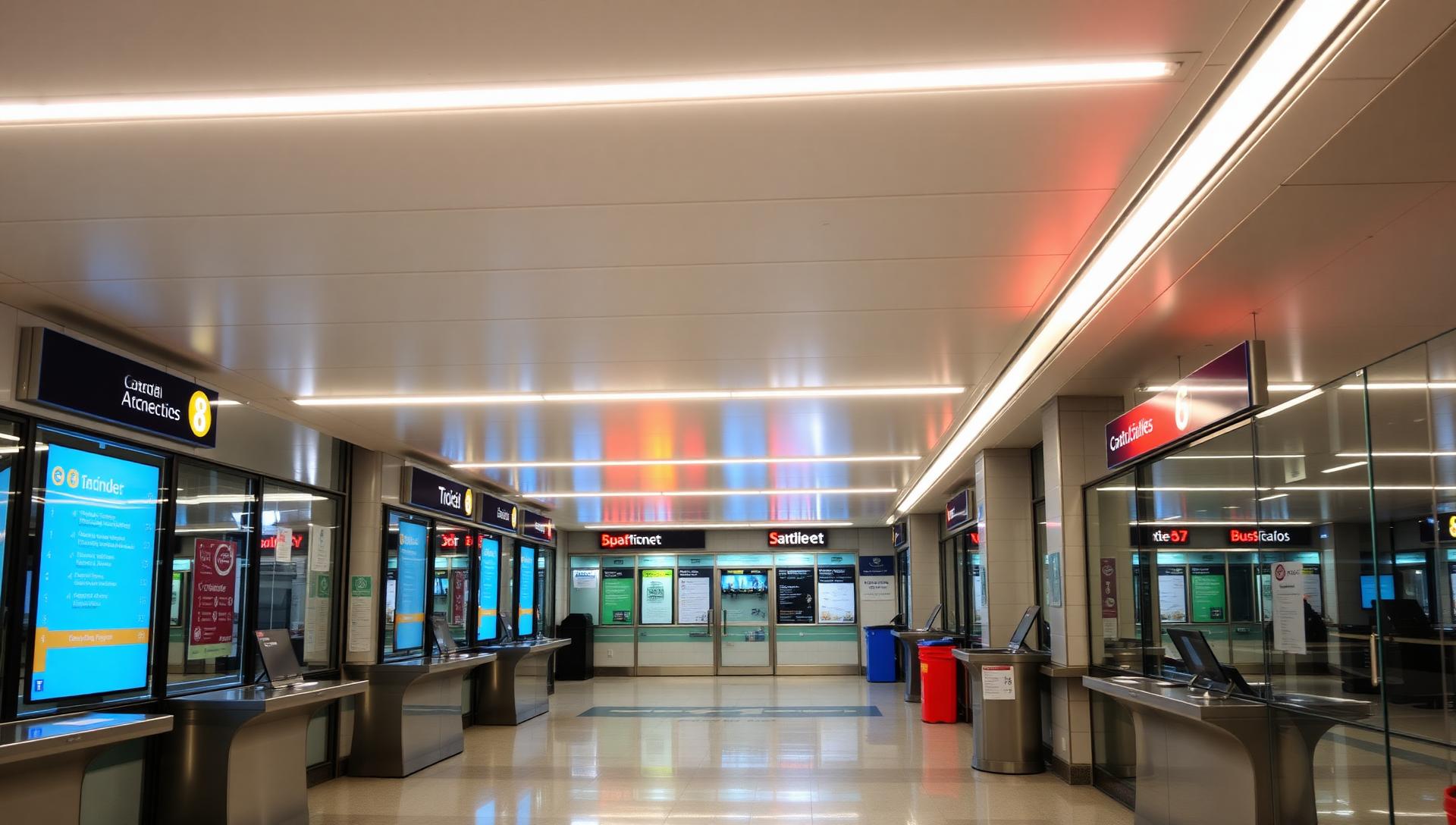
Passenger Pain Point: "Am I the only one who can't read the screen on the ticket kiosk at the central bus terminal? The glare from the overhead lights is insane."
The concourse is the terminal's heart. It’s a high-stress environment defined by movement, information processing, and decision-making. The lighting must support these functions flawlessly. The goal is to create a sense of calm efficiency, reduce visual noise, and guide passengers intuitively.
2026 Lighting Recipe:
- Ambient Illuminance (Floor): 200 lux average, Uniformity (Uo) ≥ 0.6. This provides safe, comfortable ambient light for circulation, exceeding the EN 12464-1 minimum of 150 lux for traffic circulation areas to create a brighter, more welcoming feel.
- Task Illuminance (Counters / Kiosks): 500 lux on the task plane. This is a targeted application to ensure staff and passengers can easily read documents and interact with interfaces.
- Vertical Illuminance (Signage / Faces): Crucial for wayfinding and security. Aim for >150 lux on vertical surfaces like major signage and at face-level for clear communication and CCTV effectiveness.
- CCT: 4000K. Promotes alertness and clarity, ideal for a task-heavy environment.
- Anti-Glare: UGR<19 is mandatory for all luminaires in this zone. This directly solves the screen-glare problem.
- Fixtures:
- Ambient: High-efficacy (≥140 lm/W) linear suspended or recessed systems with microprismatic diffusers. For very high ceilings (>10m), use high-bay luminaires with specialized optics to control glare.
- Task: Discreet, deep-baffle UGR<19 downlights positioned directly over counters and kiosks, carefully aimed to avoid reflections on screens.
- Accent/Wayfinding: High-contrast wall washers to make digital departure boards "pop" from their surroundings. Integrated linear lighting can be used to delineate pathways.
- Controls: Full DALI-2 system. Daylight harvesting near windows and skylights is essential. Programmed scenes: ‘Day’ (100%), ‘Night’ (70%), ‘Energy Save’ (50%), and ‘Cleaning’ (120%).
Why Most Designs Fail: They prioritize horizontal lux on the floor, ignoring glare and vertical illuminance. Designers often use cheap, high-glare downlights or panels, creating a "scalloping" effect on walls and reflecting directly off vertical screens. This "over-lighting" from the wrong angles makes spaces feel harsh and information illegible, directly causing the frustration cited in the passenger complaint.
2.2 Boarding Platform & Canopy
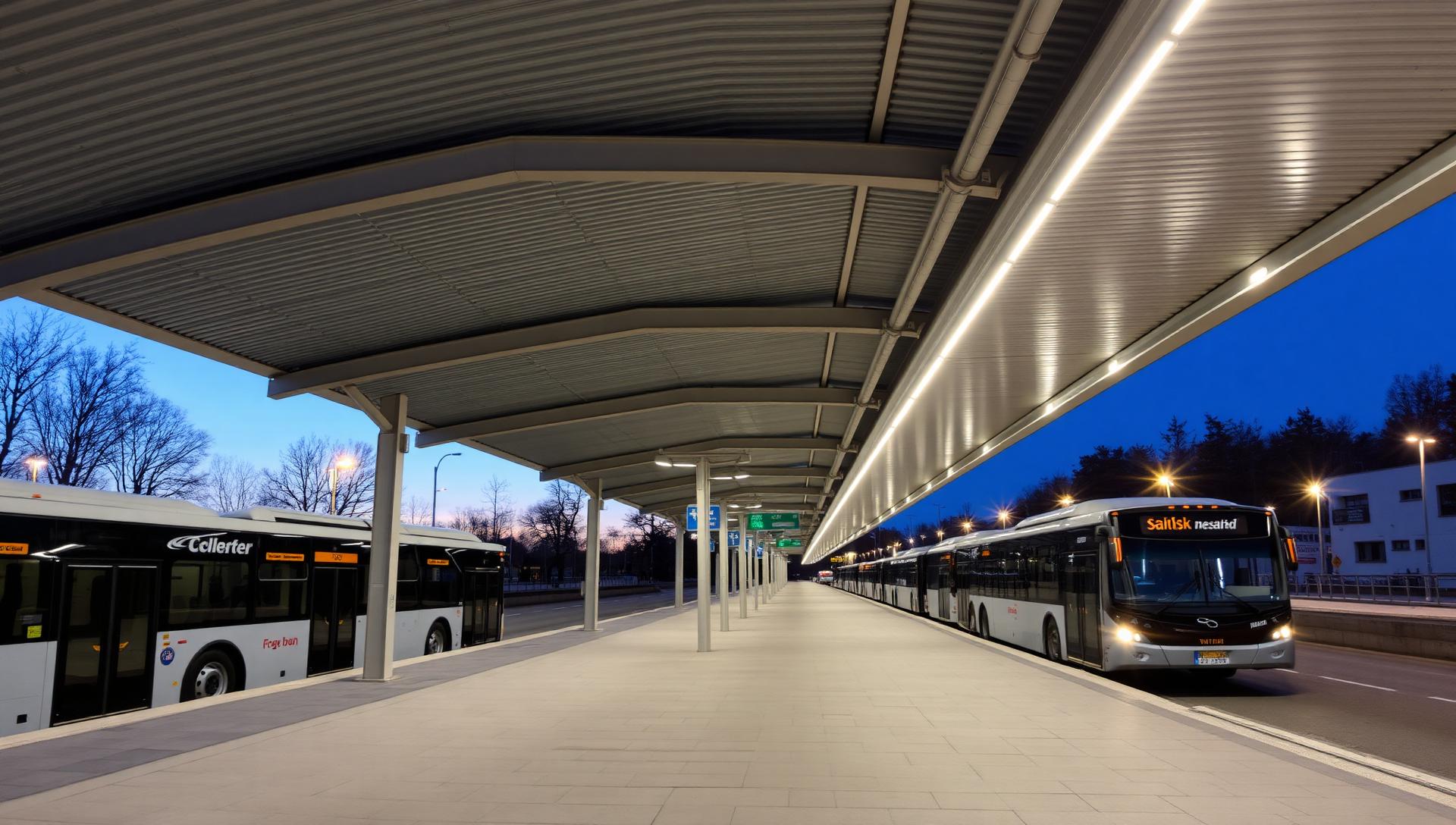
Passenger Pain Point: "Walking to platform 28 at night feels like a horror movie. There are these super dark, sketchy spots between the lights."
The platform is a critical safety zone where passengers, baggage, and large vehicles intersect. Lighting here is about eliminating risk. Uneven lighting creates pools of shadow where hazards (litter, ice, uneven surfaces) can hide and where people can feel vulnerable.
2026 Lighting Recipe:
- Ambient Illuminance (Platform): 150 lux average, with a very high Uniformity (Uo) ≥ 0.7. High uniformity is more important than raw brightness here; it eliminates the "dark spots" that cause anxiety and conceal hazards.
- Vertical Illuminance (Bus Side): >100 lux vertically on the side of the coach. This allows drivers to use their mirrors effectively, helps passengers identify their bus, and improves the quality of security camera footage.
- CCT: 4000K. A functional, neutral white light that aids visibility and security.
- Anti-Glare: While a strict UGR<19 may be difficult in an open-air environment, the principle remains. Use luminaires with good optical control (lenses, shields) to prevent disabling glare for both passengers and drivers. Avoid exposed-chip LED sources.
- Fixtures:
- Ambient/Task: Robust, IP65-rated linear LED battens or canopy luminaires. Specify models with wide-beam asymmetric optics to push light evenly across the platform and vertically onto the bus.
- Wayfinding: Integrated colour-changing or addressable white LED strips along the platform edge or in the canopy structure can be used to signal "boarding now" or to guide passengers to the correct bay.
- Controls: DALI-2 controlled for reliability and diagnostics. Presence detectors at each bay can increase light levels from a 50% standby to 100% when a bus or passengers are present, saving significant energy in large terminals.
Why Most Designs Fail: They use a "dots of light" approach—a few powerful, poorly spaced high-bays or floodlights. This creates massive variance in illuminance, resulting in the "bright spots and dark spots" problem. This high-contrast environment constantly forces the human eye to re-adapt, causing visual fatigue and masking potential dangers in the shadows. The failure to specify high-uniformity, IP65-rated fixtures leads directly to feelings of unease and real safety risks.
2.3 VIP / Driver Lounge
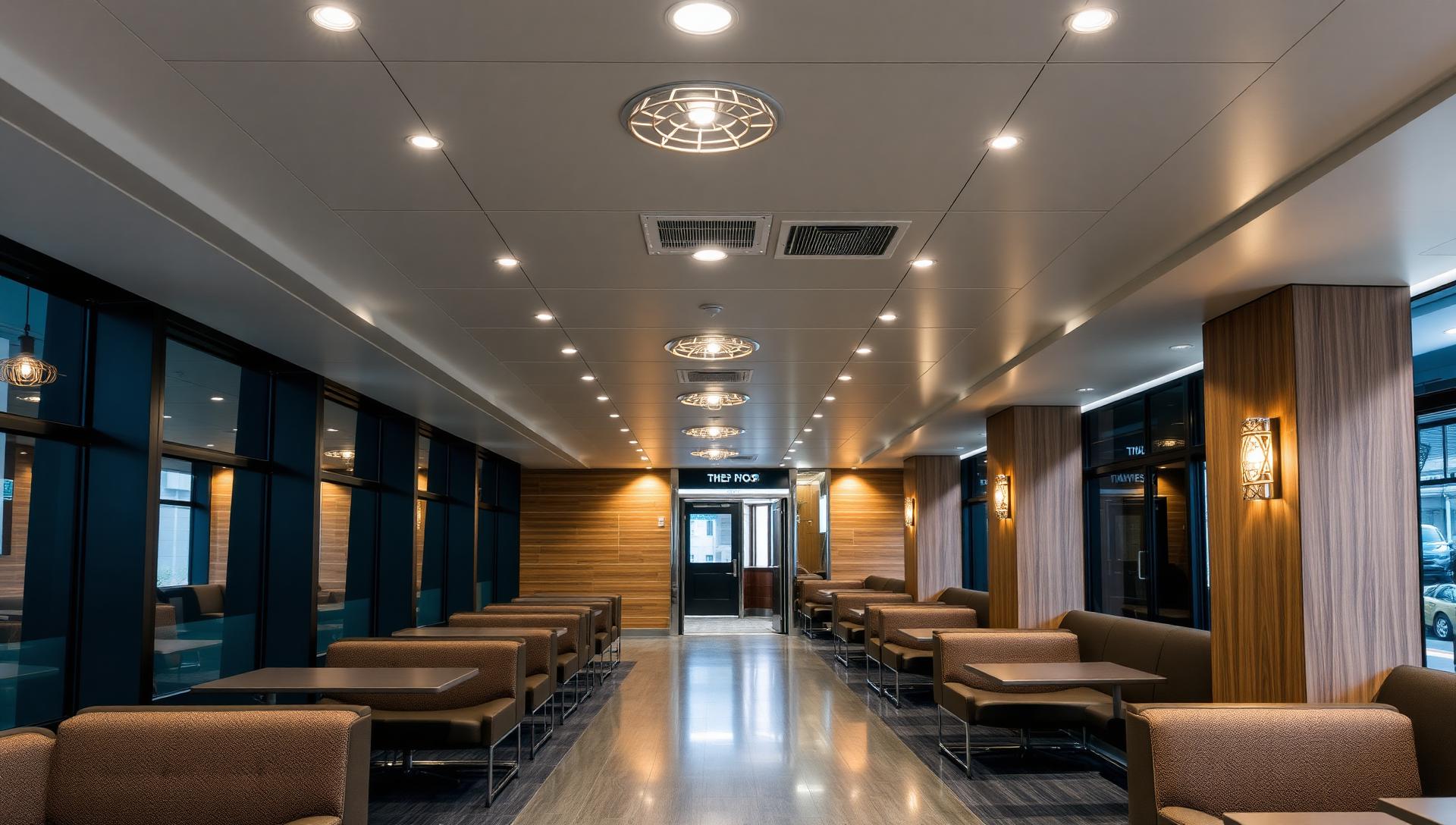
Passenger Pain Point: "The color of the light in the waiting area is just... depressing. It's this sickly yellow-green. It makes everything and everyone look tired and dirty."
This space is an oasis. Whether for premium passengers or for drivers needing to rest, the lighting goal is the polar opposite of the concourse: it's about relaxation and wellbeing, not alertness. It needs to feel like a hotel lobby or airport lounge, not a bus station.
2026 Lighting Recipe:
- Ambient Illuminance: 150-200 lux average. Comfort is key, not sheer brightness. The lighting should feel soft and inviting. EN 12464-1 suggests 200 lux for Rest Rooms.
- Task Illuminance (Reading areas / desks): 300 lux, delivered by dedicated task lights.
- CCT: 3000K standard. This warmer colour temperature is inherently more relaxing. Consider tuneable white (2700K-4000K) to offer a circadian lighting solution, providing cooler light during the day and warmer, more relaxing light in the evening to support natural sleep-wake cycles.
- Anti-Glare: UGR<19 is essential. The environment must be free of any visual irritants.
- Fixtures:
- Ambient: Indirect cove lighting (CRI>90 to render finishes beautifully), decorative pendants, and large-format, warm-dim (3000K to 1800K) downlights.
- Task: Integrated reading lights in seating arrangements, elegant floor lamps, or small-aperture UGR<19 downlights focused over tables.
- Accent: Low-level track spotlights (CRI>95) to highlight artwork, textures, or architectural features.
- Controls: Casambi is a perfect fit here. It provides easy-to-use scene control via a wall panel or app ('Relax', 'Read', 'Day', 'Evening') without the need for complex BMS integration. This allows staff to tailor the atmosphere instantly.
Why Most Designs Fail: They use the same 4000K high-glare panels or downlights as the rest of the terminal. This is a catastrophic failure of design empathy. It ignores the fundamental purpose of the space, creating a sterile, unpleasant environment that feels institutional and cheap. The use of low-CRI fixtures results in the "sickly yellow-green" light described, making expensive interior finishes look drab and patrons unwell.
2.4 Entrance & Drop-off Canopy
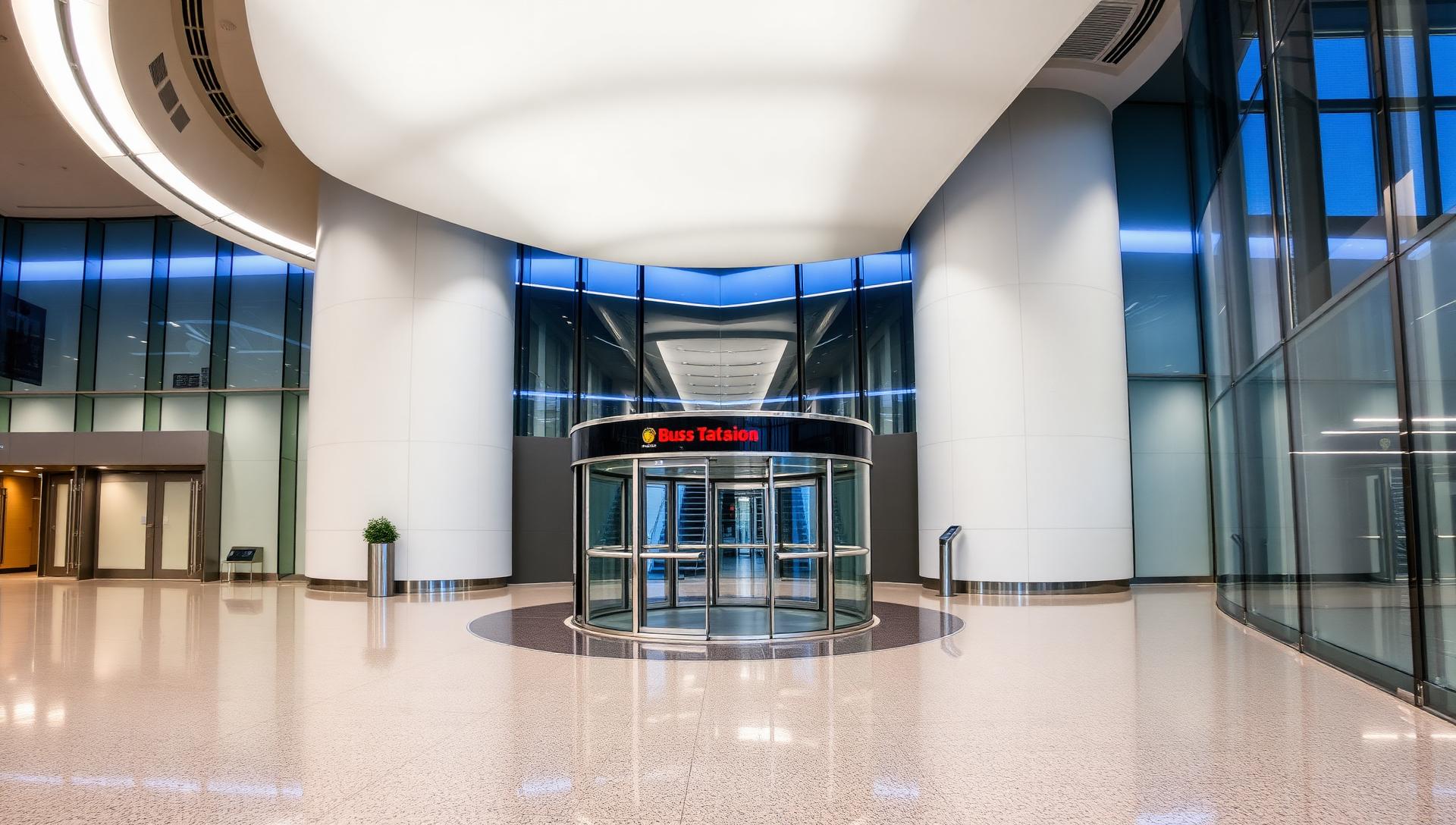
Passenger Pain Point: Paraphrased from multiple sources: "Entering the station at night is like stepping into a black hole. It’s hard to see the curb and the doors feel a bit intimidating."
The entrance is the terminal's handshake. It must feel safe, welcoming, and architecturally impressive, day and night. The primary technical challenge is managing the transition between bright daylight or dark nighttime exteriors and the building's interior—a concept known as the "threshold zone."
2026 Lighting Recipe:
- Illuminance (Day): During the day, levels under the canopy should be high (e.g., 500-1000 lux) via daylight harvesting-controlled luminaires. This helps the eye adapt from bright sunlight, preventing the "black hole" effect upon entry.
- Illuminance (Night): At night, levels can be reduced to 200 lux average, with excellent uniformity (Uo > 0.6) to ensure the entire area feels safe and visible. This level should be higher than the surrounding street lighting to draw people in. EN 12464-1 requires 200 lux for entrance halls.
- CCT: 4000K. Provides a clean, secure feeling and integrates well with the main concourse lighting.
- Anti-Glare: Excellent optical control is required to prevent glare for approaching drivers and pedestrians.
- Fixtures:
- Ambient: High-power, IP65-rated architectural downlights or linear systems with robust optics, recessed into the canopy structure.
- Accent/Wayfinding: Integrated vertical illumination on the building facade, wall washers to highlight the entrance doors, and potentially in-ground uplights (IP67) to accent columns.
- Controls: DALI-2 is essential here, integrated with an external astronomical clock and a photocell (daylight sensor). The system should automatically adjust light levels based on the time of day and real-time ambient light conditions, ensuring a seamless and energy-efficient transition 24/7.
Why Most Designs Fail: They under-light the area at night and fail to account for the daytime transition. Using a few cheap, glaring floodlights creates a space that feels unsafe and unwelcoming. There is no adaptation zone, so on a sunny day, the interior looks like a black void, and at night, the entrance itself is a pool of harsh light in an otherwise dark area, with no spill to illuminate the surrounding drop-off zone.
Part 3: Four Dominant 2026 European Trends
Specifying a bus station for today means engineering it for tomorrow. Four intertwined trends, driven by European legislation and a growing focus on human-centric design, are fundamentally reshaping lighting specifications. Ignoring them means specifying a system that is obsolete on arrival.
1. The Ecodesign 2026 Mandate & Circular Economy
The EU's Single Lighting Regulation (SLR), often referred to as Ecodesign, is the primary legislative driver. The regulations that took full effect in 2021 and 2023 set stringent minimum efficacy requirements, effectively banning most legacy technologies like fluorescent and halogen. The next wave, anticipated around Ecodesign 2026, will likely raise the bar even higher.
- What it means for specifiers: You can no longer specify any LED product. You must scrutinize datasheets for luminaire efficacy (not just module efficacy) to ensure compliance. The minimum acceptable level today is around 130 lm/W for most luminaire types, and this will only increase.
- Beyond Efficacy: A crucial part of Ecodesign is the push towards a circular economy. This means regulations are increasingly focused on:
- Replaceability: Light sources and control gear must be replaceable using common tools. This spells the end for fully sealed, disposable luminaires.
- Repairability: Manufacturers are obligated to make spare parts available for a set period after a product is discontinued.
- Actionable Strategy: Mandate replaceable LED modules and drivers in your specifications. Partner with manufacturers like XHLWX who design for disassembly and can provide long-term component support. This future-proofs the installation against premature failure and reduces lifetime waste.
2. High Efficacy as the New Standard (130-160 lm/W)
Driven by Ecodesign, the race for efficacy has accelerated. Where 100 lm/W was once considered good, the 2026 baseline for professional applications is now 130 lm/W, with best-in-class products exceeding 160 lm/W.
- What it means for specifiers: Efficacy is a primary KPI for Total Cost of Ownership (TCO). A jump from 90 lm/W to 140 lm/W means you achieve the same light level for approximately 35% less energy. For a 24/7 facility like a bus terminal, this translates into massive operational savings and a significantly lower carbon footprint.
- The Trade-Off Trap: Be wary of products that achieve high efficacy by sacrificing other qualities. The highest lm/W figures are often achieved with cool CCTs (5000K+), low CRI (<80), and poor glare control.
- Actionable Strategy: Specify a combination of metrics: Efficacy ≥ 130 lm/W, CRI ≥ 90, and UGR < 19. This "golden triangle" of performance ensures you get energy efficiency without compromising the quality of light and passenger wellbeing. Always ask for third-party photometric reports (LM-79) to verify a manufacturer's claims.
3. UGR<19 Anti-Glare for Public Wellbeing
The understanding of glare has matured. It is no longer seen as a minor annoyance but as a significant health and safety issue. The Unified Glare Rating (UGR) system provides a quantifiable method to assess and limit it. While EN 12464-1 mandates UGR<19 for office work and other demanding tasks, leading designers are now applying this standard to high-quality public spaces.
- What it means for specifiers: Glare causes eye strain, headaches, and reduces task performance—like reading a departure board or a ticket kiosk screen. For older adults or the visually impaired, glare can be disabling, turning a navigable space into a confusing and hazardous one.
- The Technical Solution: Anti-glare design is not about dimming the lights. It’s about precision optics. This is achieved through:
- Deeply recessed LED sources.
- Black baffles and snoots that absorb stray light.
- High-tech microprismatic or nano-structured lenses that shape and diffuse the light beam with minimal loss.
- Actionable Strategy: Make UGR<19 a non-negotiable requirement for all general and task lighting in seated areas, concourses, and information zones. For circulation-only corridors, UGR<22 may be acceptable, but UGR<19 provides a superior passenger experience throughout. Reject any value-engineered proposals that substitute UGR<19 fixtures for cheaper, high-glare alternatives.
4. DALI-2 & Casambi: The Dual-Control Ecosystem
Intelligent, granular control is the key to unlocking the full potential of a modern LED system. It’s the difference between a static, inefficient system and a dynamic, responsive one. The industry has standardized around two primary protocols.
- DALI-2: The evolution of the original DALI protocol, DALI-2 is an IEC 62386 standard that ensures true multi-vendor interoperability. It is a wired (2-wire bus) system ideal for large, new-build projects. Its strengths are:
- Robustness: A dedicated, reliable communication network.
- Scalability: Can manage tens of thousands of devices in a single system.
- Data & Diagnostics: Provides feedback on energy usage, lamp/driver failures, and runtime, enabling proactive maintenance.
- Casambi: A decentralized, wireless control system based on Bluetooth Low Energy (BLE) mesh. Each device (luminaire, switch, sensor) is a node that communicates with all others. Its strengths are:
- Flexibility: Perfect for retrofits where running new control wires is impossible or cost-prohibitive.
- Ease of Use: Commissioning and scene setting are done via an intuitive mobile app.
- User-Centric: Empowers local users to control their immediate environment (e.g., in a lounge or office).
- Actionable Strategy: Employ a hybrid approach. Use DALI-2 as the robust backbone for the entire terminal's core ambient, task, and emergency lighting. Incorporate key energy-saving strategies like daylight harvesting and presence-based control. Then, deploy Casambi within specific zones like VIP lounges, retail tenancies, and meeting rooms to provide localized, flexible control without interfering with the core system. This gives you the best of both worlds: centralized reliability and distributed flexibility.
Part 4: Spec Sheet & Procurement Checklist
This table outlines recommended XHLWX product families suitable for a 2026-ready bus station project. It aligns with the performance criteria established in this guide. Use this as a starting point for your specification documents and procurement process.
XHLWX Recommended Product Families for Bus Station Applications
| Product Family | Application Area(s) | Recommended CRI | UGR Capability | System Efficacy (lm/W) | IP Rating(s) | Key Features |
|---|---|---|---|---|---|---|
| XHL-LINEA-90 PRO | Concourse, Ticket Hall (Ambient) | ≥92 | <19, <16 options | 130 - 150 lm/W | IP20 | Microprismatic diffuser, DALI-2 enabled, seamless continuous runs. |
| XHL-COMFORT-DL | Ticket Hall (Task), Lounges, Corridors | ≥92 | <19 (standard) | 110 - 130 lm/W | IP44 | Deep-baffle anti-glare design, warm-dim option, multiple beam angles. |
| XHL-ROBUST-IP65 | Boarding Platforms, Canopies, Back-of-House | ≥85 | N/A (Optical Control) | 140 - 160 lm/W | IP65/IP66 | Asymmetric/symmetric lens options, IK08 impact resistant, DALI-2. |
| XHL-ACCENT-TR95 | Lounges, Retail Units, Architectural Highlighting | ≥97 (High Density) | <16 | 90 - 110 lm/W | IP20 | Museum-grade colour fidelity (TM-30 Rf>95), Casambi/DALI-2 options. |
| XHL-WALLWASH-PRO | Concourse (Signage), Entrances | ≥92 | Asymmetric Glare Shield | 115 - 135 lm/W | IP20/IP54 | High-performance asymmetric optic for superior wall uniformity. |
| XHL-EMERGENCY-DALI | Integrated & Standalone | ≥80 | N/A | N/A | IP20/IP65 | Fully DALI-2 compliant for automated testing and reporting, 3-hour duration. |
Procurement Checklist:
- Mandate Photometrics: Has the specification sheet clearly mandated CRI≥90, UGR<19 (for relevant areas), and luminaire efficacy ≥ 130 lm/W for all primary luminaires?
- Verify Certifications: Does the manufacturer provide third-party IES/LDT files and LM-79/TM-21 reports for all proposed products?
- Confirm Control Compatibility: Is every luminaire and sensor specified as either DALI-2 certified or Casambi enabled, as per the design intent? Have you confirmed interoperability?
- Check Ingress Protection: Have you verified that all exterior/canopy/platform luminaires are rated at least IP65 to protect against water and dust ingress?
- Review Circular Economy Compliance: Does the manufacturer confirm that light sources and control gear are replaceable per Ecodesign principles? What is their spare part availability policy?
- Request a Mock-Up: For critical areas like the main concourse or a ticketing area, have you requested a physical 1:1 mock-up to evaluate glare, colour quality, and overall visual comfort before placing a bulk order?
Part 5: FAQ - Your Questions Answered
We’ve compiled and answered eight of the most common, real-world questions that facility managers, architects, and engineers ask when tackling a bus station lighting project.
1. "Our main concourse has a 15-meter ceiling. How do we light it effectively without creating dark 'caves' and keeping maintenance low?"
This is a classic high-ceiling challenge. The solution lies in a multi-pronged approach:
- Fixture Choice: Avoid standard downlights. You need high-bay luminaires designed for this scale. Specify fixtures with high lumen output (e.g., 20,000 - 30,000 lumens) but, critically, with precise optical control (e.g., 60-degree or 90-degree beams) to direct light efficiently to the floor without excessive spill or glare. Efficacy of >140 lm/W is key to managing energy consumption.
- Vertical Illumination: To combat the "cave" effect, you must light the walls. Supplement the high-bays with powerful asymmetric wall washers or floodlights positioned to illuminate the upper portions of the vertical surfaces. This creates a perception of brightness and openness, making the space feel larger and safer.
- Maintenance: This is where LED and DALI-2 shine. A quality LED high-bay system will have a lifetime of L80 B10 @ 100,000 hours, meaning minimal replacement for over a decade in a 24/7 operation. Specifying a DALI-2 control system allows for remote monitoring of every single luminaire. The system will automatically flag any driver or LED module failures, so maintenance becomes proactive and targeted, rather than reactive group re-lamping.
2. "Is CRI>90 really necessary for a bus station? Isn't CRI>80 good enough and cheaper?"
While CRI>80 might seem "good enough," the jump to CRI>90 delivers tangible benefits that far outweigh the minor cost difference in modern luminaires.
- Safety & Security: CRI>90 renders colours, especially reds, far more accurately. This is crucial for the legibility of colour-coded wayfinding signage, warning labels, and first-aid kits. More importantly, it provides significantly better colour information for CCTV systems, making it easier to identify individuals or clothing colours in security incidents.
- Passenger Wellbeing: Under low-CRI light, spaces look drab, food in retail outlets appears unappetizing, and people's skin tones can look sickly. It contributes to a subconscious feeling of a space being old, dirty, and depressing. CRI>90 light makes interiors look clean, vibrant, and modern, directly improving the passenger's perception of the environment and their own wellbeing.
- The TM-30 Factor: CRI is an outdated metric. Ask for TM-30 data. A good CRI>90 source will also have a TM-30 Rf (fidelity index) over 90 and an Rg (gamut index) between 95 and 105, indicating faithful colour rendering without oversaturation. This level of colour quality is a hallmark of a premium, human-centric lighting design.
3. "DALI-2 vs. Casambi – which one is better for a new build versus a renovation project?"
This is not an either/or question; they serve different but complementary roles.
- New Build: For a new-build bus terminal, DALI-2 should be your default backbone. The cost of running the extra 2-core control cable during initial construction is minimal. The benefits are immense: unparalleled robustness, scalability for thousands of devices, and deep integration with the BMS for energy monitoring and streamlined maintenance. It's the professional choice for core infrastructure.
- Renovation: In a renovation, especially in a heritage building or where budgets for rewiring are tight, Casambi (or another BLE mesh system) is a game-changer. It allows you to add sophisticated, granular control (zoning, scene-setting, sensor integration) without tearing open ceilings and walls. It's perfect for upgrading specific areas like offices or lounges to modern standards.
- The Hybrid Strategy: The best approach for both new builds and major renovations is a hybrid one. Use DALI-2 for the high-traffic, mission-critical zones (concourses, platforms). Then, deploy Casambi in defined, user-centric areas (lounges, cafes, offices) to provide flexibility and a simplified user interface.
4. "What does UGR<19 actually mean for a passenger trying to read a departure board?"
UGR<19 is a technical term for "visual comfort." For a passenger, it means:
- They can look at their phone or a ticket kiosk without seeing a crippling reflection of the lights from the ceiling.
- They can glance up towards a digital departure board and read the text clearly, without a halo of distracting glare around it.
- When they sit down to wait, they don't have a "hotspot" of light in their peripheral vision causing a low-grade, persistent annoyance that can lead to eye strain and headaches.
- For an elderly passenger, whose eyes are more sensitive to glare, it means the difference between being able to independently navigate the terminal and becoming confused and reliant on assistance because the information on signs is visually "washed out" by stray light. In essence, a UGR<19 environment is one where the lighting is so well-controlled that you don't even notice it's there. You just see everything else perfectly.
5. "How does 'circadian lighting' apply to a 24/7 bus terminal?"
While implementing a perfect circadian rhythm is difficult in a 24/7 facility, the principles can be applied strategically to improve wellbeing for both passengers and staff.
- For Passengers: In waiting areas and lounges, especially those used for long-haul overnight routes, a tuneable white system can be programmed to follow a simplified circadian pattern. It could provide a brighter, cooler 4000K light during daytime hours, then automatically shift to a much warmer, lower-intensity 2700K or 3000K light in the late evening and overnight. This helps passengers to relax and even sleep during long waits, rather than being subjected to alertness-promoting blue-rich light at 2 a.m.
- For Staff: In back-of-house areas like driver rest areas and 24/7 control rooms, a full human-centric lighting system is a major investment in employee health. The system can provide high-intensity, blue-enriched light to boost alertness and cognitive function during the critical hours of a shift (especially a night shift) and then transition to warmer, less intense light towards the end of the shift to help their bodies prepare for rest.
6. "The EN 12464-1 standard gives a lux level, but how important is uniformity? Our platforms have bright and dark patches."
Uniformity is arguably more important for safety and perceived security than the average illuminance level. The "bright and dark patches" you describe are a failure of uniformity, and it's a serious problem.
- Uniformity (Uo) is a ratio of the minimum illuminance to the average illuminance in a given area. A Uo of 0.7 means the darkest spot is at least 70% as bright as the average.
- Why it Matters: The human eye adapts to the average brightness. When you have poor uniformity, the dark patches appear even darker by contrast. This can conceal tripping hazards (luggage, cracks in the pavement), create a sense of unease, and provide potential hiding spots that compromise security. It forces a passenger's pupils to constantly dilate and constrict as they walk, causing visual fatigue.
- The Solution: For platforms, we recommend a high average illuminance (150 lux) but an even higher uniformity target (Uo ≥ 0.7). This is achieved not with fewer, powerful lights, but with more, carefully spaced luminaires that have wide, overlapping beam distributions. This creates a smooth, even carpet of light that eliminates shadows and enhances safety.
7. "With Ecodesign 2026 coming, will we have to replace all our fixtures again?"
Not if you specify correctly now. The core principle of Ecodesign 2026 and the broader circular economy movement is to move away from a "rip and replace" culture.
- Future-Proofing Your Specification: If you are commissioning a new project today, you should be specifying luminaires with efficacies of 130-160 lm/W. This performance level will likely still be compliant well beyond 2026.
- Specify for Repairability: The most important step is to mandate luminaires where the LED modules and drivers are replaceable. This is a key tenet of the Ecodesign regulations. It means that if a more efficient LED module becomes available in 2028, or if a driver fails, you can replace that single component rather than the entire luminaire.
- Your Strategy: Your specification should explicitly state: "All luminaires must feature replaceable light sources and control gear in accordance with EU Ecodesign Regulation 2019/2020." This protects your investment and ensures your installation is sustainable and adaptable for the future.
8. "What’s the difference between IES and TM-30, and why should a facility manager care?"
Both are methods for evaluating how a light source renders colour, but TM-30 is far more sophisticated and useful than the traditional CRI (which is based on an IES test method).
- CRI (Color Rendering Index): A very old, simple system that tests how well a light source renders just 8 specific, pastel-like colours. It famously ignores deep red, which is why many CRI 80 LEDs make red objects look brownish.
- IES TM-30-20: A modern, comprehensive system. It uses 99 colour samples (spanning the full spectrum) and provides two key metrics:
- Rf (Fidelity Index): Similar to CRI, it measures how accurately colours are rendered. (Rf of 90 is comparable to CRI 90).
- Rg (Gamut Index): This is the new, crucial data. It measures the saturation of colours. An Rg of 100 means colours are rendered with the same saturation as daylight. An Rg > 100 means colours will be slightly more vibrant (which can be desirable), and an Rg < 100 means colours will be duller.
- Why a Facility Manager Cares: Specifying light sources using TM-30 (e.g., "Rf > 90, 95 < Rg < 105") ensures you get lighting that makes your facility's interior finishes, retail products, food, and—most importantly—passenger and staff faces look healthy and natural. It prevents the "sickly" or "washed-out" look that even a CRI 90 light can sometimes produce. It’s the ultimate quality control metric for the visual environment.
Need a tailored lighting plan for your project?
Our senior lighting designers reply within 48 hours with a free design proposal & quotation.