
Car Showroom Lighting Design 2026: CRI95 4000K Track Guide
Quick answer
A definitive guide to automotive showroom lighting design for 2026. Learn how to use CRI 95+, 4000K track lighting to meet EN 12464-1 standards and create stu
Introduction — the Design Problem in Automotive Showrooms
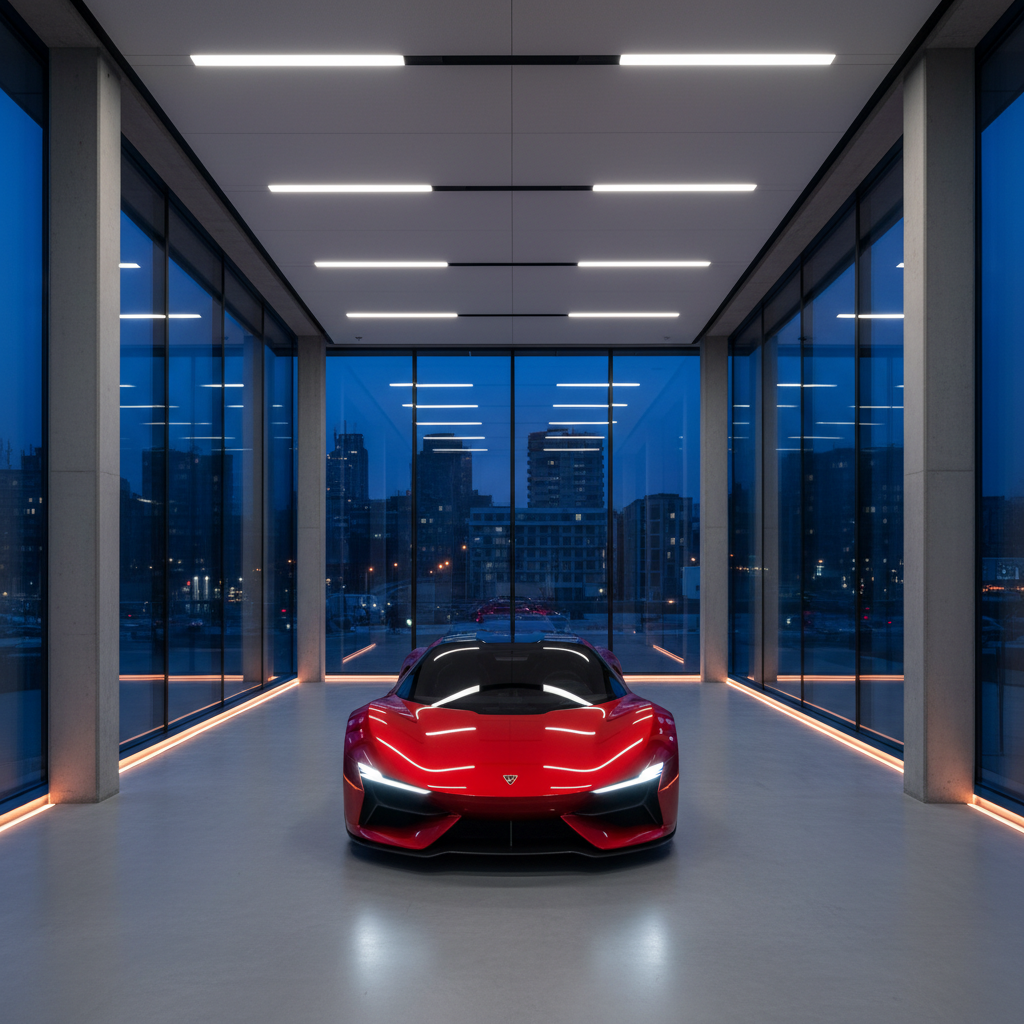
At XHLWX (led-project-light.com), a Custom Indoor LED Lighting Manufacturer based in China, we understand that automotive showroom lighting must achieve more than just illumination; it must create desire. The primary design challenge is to reveal the precise form, lines, and finish of a vehicle, transforming it from a static object into an emotional centerpiece. This requires a multi-layered approach that balances high-impact accent lighting on hero cars, comfortable ambient light for customer circulation, and flawless vertical illuminance in handover zones, all while managing glare and reflections on highly polished surfaces. The goal is to articulate the brand's premium identity through light, making every vehicle look its absolute best under controlled, replicable conditions that flatter every color and curve.
Lighting Criteria and Standards for This Application
Effective showroom lighting design is governed by precise, quantifiable performance standards. The design must deliver high illuminance levels on vertical surfaces, render colors with near-perfect accuracy, and maintain visual comfort for staff and customers. Adherence to established European and American standards is not just a recommendation but a baseline for achieving a professional and safe environment. These metrics ensure that the visual impact is intentional and the brand experience is consistently high-quality across all dealerships. The following table outlines the recommended specifications for a high-performance automotive showroom lighting project.
| Parameter | Recommended Specification | Relevant Standard / Best Practice | Notes |
|---|---|---|---|
| Color Temperature (CCT) | 4000K | WELL v2 (Feature L03) | Neutral white light that presents paint colors accurately without appearing too cool or warm. Ensures a clean, modern aesthetic. |
| Color Rendering (CRI) | Ra > 95 (R9 > 80) | IES RP-2-19 | Essential for rendering paint colors vibrantly and accurately, especially deep reds (R9), blues, and complex metallic finishes. |
| Color Fidelity & Gamut (TM-30) | Rf > 92, Rg > 100 | IES TM-30-20 | Provides a more complete color story than CRI. A gamut index (Rg) over 100 indicates slightly oversaturated colors, making cars look more vivid. |
| Unified Glare Rating (UGR) | <22 (Circulation), N/A (Display) | EN 12464-1:2021 | While UGR<19 is for offices, showrooms allow for controlled 'sparkle'. Glare must be controlled for staff at desks, but is secondary for car displays. |
| Target Illuminance | >1000 lx (Vertical on cars), >400 lx (Handover), >300 lx (Ambient) | EN 12464-1:2021 / DIN EN 12464-1 | High vertical illuminance is key. The light must fall on the sides of the car, not just the roof. Handover bays require high, even light for inspection. |
| Control Protocol | DALI-2 DT8 or Casambi | IEC 62386 | DALI-2 allows for individual addressing, scene setting (e.g., day, night, event), and diagnostics. Casambi offers excellent wireless flexibility. |
| LED Chip & Driver | Osram / Bridgelux / Samsung LED; Tridonic / Mean Well Driver | Manufacturer Warranty/LM-80 | Using tier-1 components ensures color consistency, high efficacy (>110 lm/W), and long lifetime (L80B10 > 50,000 hours). |
| Housing & Certification | IP40, IK03; CE, RoHS, ErP, ISO9001 | CE / EN 60598 | IP40 is sufficient for indoor climate-controlled spaces. Key certifications are mandatory for EU/US/ME market access and guarantee safety/quality. |
Luminaire Selection and Optics
Choosing the right luminaires and optics is critical for executing a layered lighting strategy. Flexible track lighting systems are the primary tool for vehicle display, allowing for precise aiming and easy repositioning as showroom layouts change. These are complemented by linear recessed or surface-mounted luminaires for general ambient light and architectural integration. The optic (the lens or reflector) within the luminaire dictates how the light is shaped, which is paramount for sculpting a car's form and avoiding unwanted glare. A combination of different beam angles is almost always required.
| Luminaire / Optic Type | Typical Application | Beam Angle | Verdict |
|---|---|---|---|
| Adjustable Track Spotlight (Narrow) | Hero car accent lighting, highlighting feature lines, wheels, grilles. | 10° - 15° | Essential. Use multiple narrow spots from different positions (30-45° angles) to 'carve' the vehicle with light, creating dramatic highlights and defining its form. |
| Adjustable Track Spotlight (Flood) | General vehicle illumination, filling in shadows created by narrow spots. | 24° - 38° | Highly Recommended. Provides a softer, broader wash of light on the vehicle body. Use in conjunction with narrow spots for a complete, three-dimensional look. |
| Asymmetric Wallwasher (Track or Linear) | Illuminating large vertical graphics, branding walls, creating a bright backdrop. | Asymmetric | Excellent for Context. Creates a perception of brightness and space by evenly lighting vertical surfaces behind the cars, preventing a 'cave effect' and drawing attention to branding. |
| Diffuse Linear Luminaire (Recessed/Pendant) | Handover bay, general circulation, office/reception areas. | 100°+ (Diffuse) | Necessary for Support Areas. Provides smooth, even, and comfortable ambient light. Crucial in the handover bay to ensure a shadow-free environment for final vehicle inspection. |
How Do You Light a Hero Car Without Causing Disabling Glare?
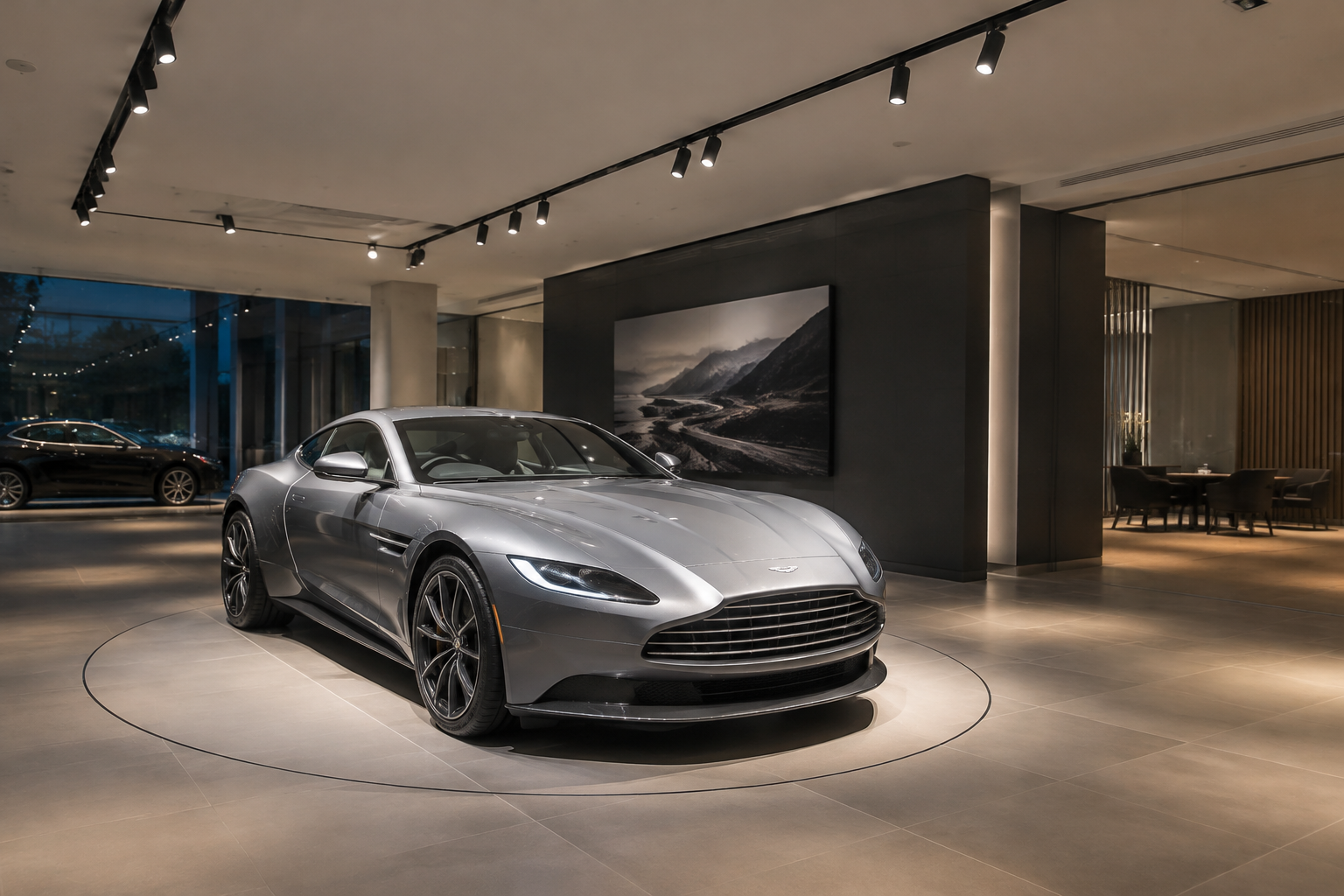
This requires a strategic, multi-angle approach using precisely controlled beams. Instead of a single powerful light source from directly above, use three to five adjustable track spotlights with narrow beam angles (e.g., 15°) aimed from different positions. Key positions are at 45-degree angles from the front corners of the car and from the sides, focusing light on the vertical panels, character lines, and wheels. Using accessories like honeycomb louvers on the spotlights can further cut off peripheral light, focusing the beam purely on the car and minimizing spill light that could cause glare for customers viewing from other angles. This technique creates a 'cross-lighting' effect that models the car beautifully.
What Is the Ideal Lighting for a Vehicle Handover Bay?
Lighting in the handover bay must create a premium 'reveal' experience while being technically perfect for final inspection. The primary goal is high vertical illuminance (>500 lux) with exceptional color rendering (CRI > 95). This is best achieved with large-format, diffuse light sources, such as a large luminous ceiling or a combination of high-CRI linear LED profiles. The light should be soft and shadowless to prevent any imperfections from being hidden. This is often supplemented with adjustable accent lights to add celebratory sparkle, but the foundational light must be uniform. This ensures the customer can inspect the paint and finish from any angle without distracting shadows or reflections.
Why Is 4000K CCT with CRI > 95 the Recommended Standard?
This specific combination is the industry benchmark for achieving both accuracy and appeal. A Correlated Color Temperature (CCT) of 4000K provides a pure, neutral white light that avoids the sterile, bluish feel of 5000K+ or the overly warm, yellowish tint of 3000K. This neutrality ensures that a car's paint color is perceived as the designer intended. A Color Rendering Index (CRI) of over 95, particularly with a high R9 value (for reds), is non-negotiable. It guarantees that the entire spectrum of colors is rendered vividly and accurately, making metallic finishes deeper, reds richer, and whites cleaner. This combination delivers a professional, high-fidelity visual that builds trust and enhances perceived value.
 Car Showroom Lighting Design 2026: CRI95 4000K Track Guide: How do you light a hero car without causing disabling glare?
Controls, Energy, and Commissioning (DALI-2 / Casambi / Sensors)
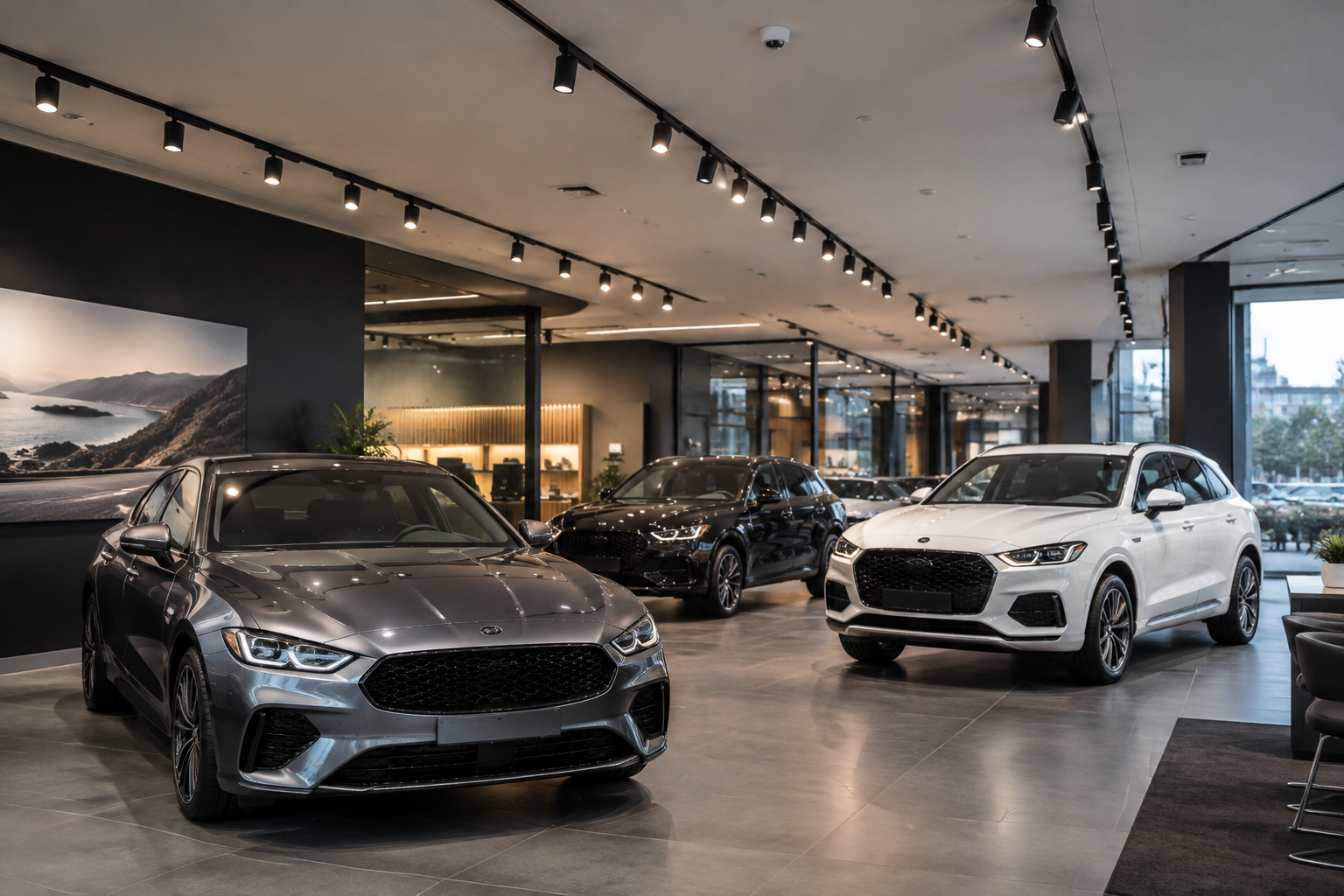
Modern lighting controls are essential for maximizing both impact and energy efficiency in a showroom. A DALI-2 (Digital Addressable Lighting Interface) system is the premium wired solution, offering granular control over every single luminaire. This allows for the creation of multiple lighting scenes at the touch of a button: a high-impact 'Day Mode' with all accents at 100%, a dramatic 'Evening Mode' with reduced ambient light and focused hero car illumination, and an 'Events Mode' for new car launches. For retrofits or buildings where new wiring is difficult, Casambi provides a robust and scalable wireless mesh control system via Bluetooth, offering similar scene-setting capabilities from a smartphone or tablet. Integrating daylight harvesting sensors near large glass facades can automatically dim fixtures to save up to 30% in energy costs, while occupancy sensors in back offices and service bays ensure light is only used when needed.
 Car Showroom Lighting Design 2026: CRI95 4000K Track Guide: Controls, Energy, and Commissioning (DALI-2 / Casambi / Sensors)
Photometric Files & Compliance (IES / LDT / DIALux / CE / RoHS / ErP)
A lighting design's compliance and performance must be verified long before installation. This is achieved through meticulous digital simulation using software like DIALux or AGi32. At XHLWX, we provide complete IES and LDT photometric files for all our luminaires. These files are the digital fingerprint of a fixture, containing precise data on its light distribution, intensity, and power consumption. By importing these files into DIALux, designers can build a 3D model of the showroom and accurately predict illuminance levels, uniformity, and glare. This process validates that the design will meet the targets specified in standards like EN 12464-1, ensuring a successful outcome and eliminating costly guesswork. All products for the European market must carry CE marking and comply with RoHS (Restriction of Hazardous Substances) and ErP (Energy-related Products) directives, guaranteeing safety and environmental compliance.
Frequently Asked Questions
Q: What Is the Minimum Recommended Lux Level for a Car on Display?
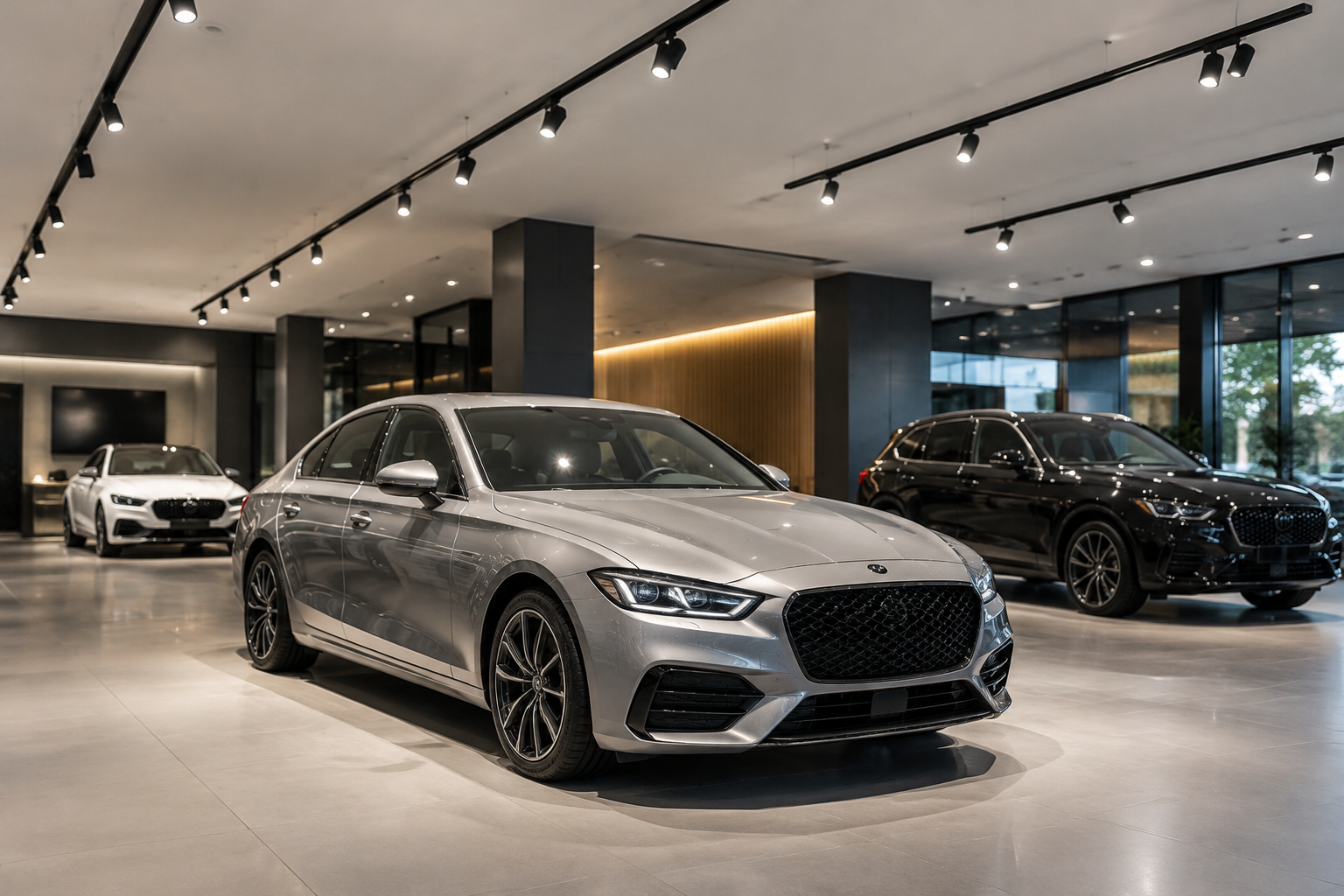
For hero car displays, the focus should be on vertical illuminance. We recommend a design target of 750 to 1500 lux on the vertical surfaces of the car (doors, grille). This ensures the vehicle stands out dramatically from the ambient light levels, which are typically around 300-500 lux in the surrounding circulation areas. These levels align with best practices from IES RP-2-19 and the spirit of EN 12464-1 for accent lighting.
Q: Can LED Lighting Damage Car Paint Over Time?
No, modern, high-quality LED lighting is exceptionally safe for automotive finishes. Unlike older metal halide or halogen lamps, LEDs produce virtually no ultraviolet (UV) or infrared (IR) radiation, which are the primary causes of paint fading and material degradation. A professional LED luminaire with a 50,000-hour L80B10 lifetime rating will provide stable, safe, and consistent light for many years without any risk to the vehicles on display.
Q: How Does TM-30 Improve Upon CRI for Car Showrooms?
TM-30 provides a more detailed two-part analysis of color rendering. While CRI (Ra) averages only 8 pastel colors, TM-30's Fidelity Index (Rf) uses 99 color samples for a more accurate fidelity score. More importantly, it adds a Gamut Index (Rg), which indicates color saturation. For car paints, an Rg value slightly above 100 can make colors appear more vivid and saturated, making the finish 'pop' without looking unnatural. This is a significant advantage over CRI alone.
Q: Is a UGR of Less Than 19 Required in a Car Showroom?
No, a Unified Glare Rating (UGR) of <19 is a strict requirement for task-based environments like offices, not showrooms. In a showroom, some 'sparkle' and reflection on the car's bodywork is desirable to convey a sense of quality and newness. The priority is controlling glare for staff at permanent workstations (e.g., reception desks) and ensuring customers are not subjected to direct, disabling glare from poorly aimed fixtures. Strategic aiming is more important than a universal UGR value.
 Car Showroom Lighting Design 2026: CRI95 4000K Track Guide: Q: What is the minimum recommended lux level for a car on display?
Sources and Technical References
- EN 12464-1:2021: Light and lighting — Lighting of work places — Part 1: Indoor work places.
- IES RP-2-19: Recommended Practice for Lighting for Automotive Dealerships.
- IES TM-30-20: IES Method for Evaluating Light Source Color Rendition.
- WELL Building Standard v2: Feature L03, Circadian Lighting Design.
- IEC 62386: Digital Addressable Lighting Interface (DALI).
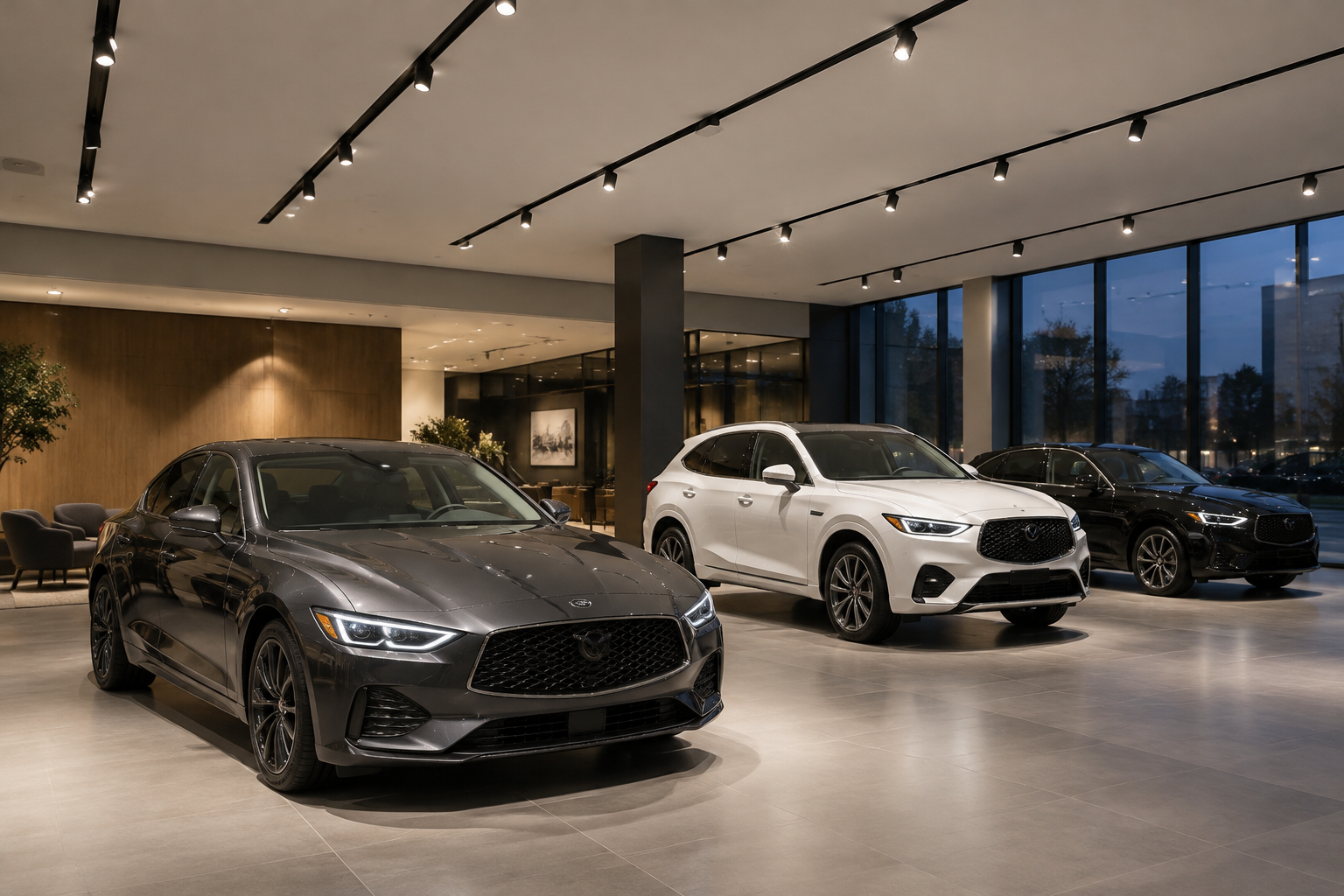 Car Showroom Lighting Design 2026: CRI95 4000K Track Guide: Q: Is a UGR of less than 19 required in a car showroom?
Request a Custom Quote
At XHLWX (led-project-light.com), a Custom Indoor LED Lighting Manufacturer based in China, we specialize in developing and producing tailored LED lighting solutions for demanding commercial environments like automotive showrooms. Our engineering team works with architects, lighting designers, and brand managers to create luminaires that meet your precise aesthetic and technical specifications, from custom housing finishes to specific optical performance. We provide comprehensive support, including IES/LDT files for DIALux simulation, to ensure your project's success. Contact us today to discuss your project requirements and request a no-obligation quote for your next dealership project in the EU, US, or Middle East.
Need a tailored lighting plan for your project?
Our senior lighting designers reply within 48 hours with a free design proposal & quotation.