
Casino Lighting Design 2026: Surveillance CRI & Glare Guide
Quick answer
Discover expert casino lighting design strategies for 2026. This guide covers CRI for surveillance, UGR for glare control, and standards like EN 12464-1 for o
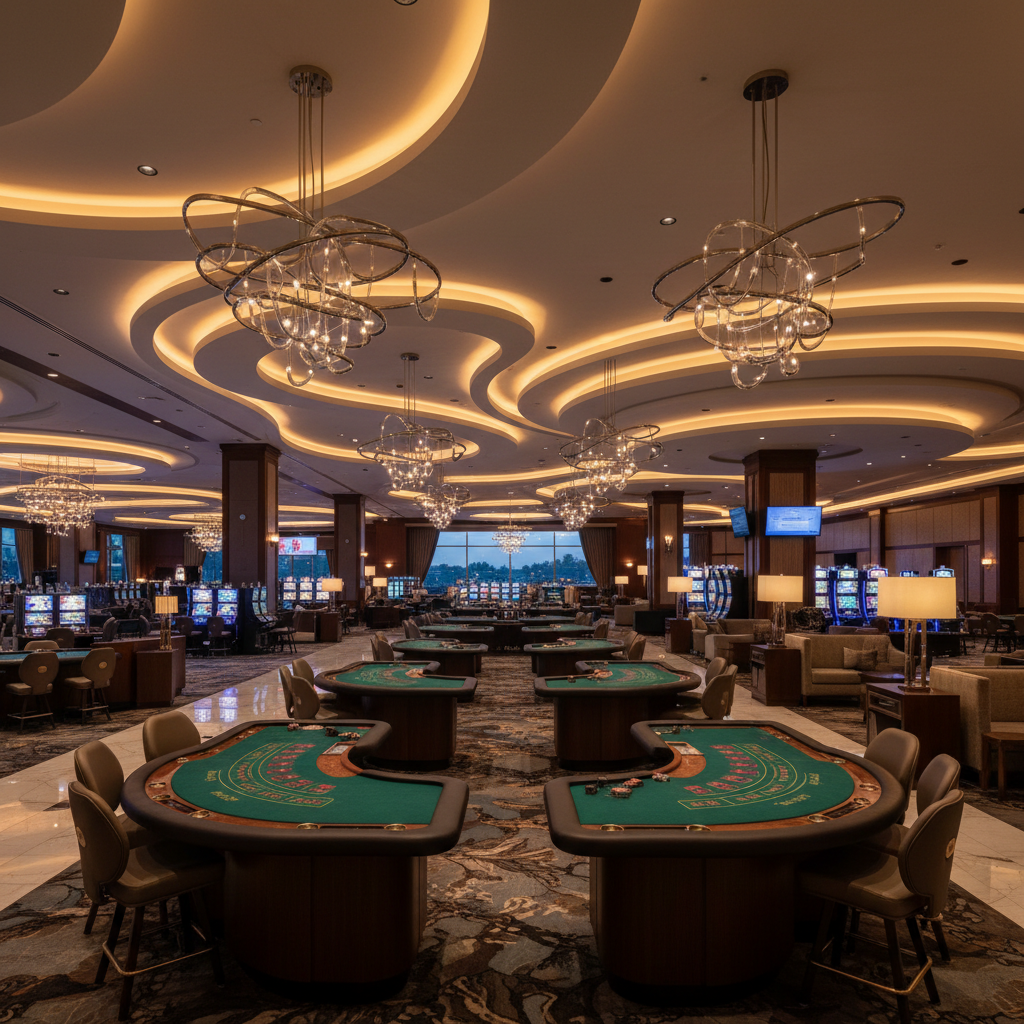
Introduction — the High-Stakes Game of Casino Illumination
com), a Custom Indoor LED Lighting Manufacturer based in China, we understand that illuminating a casino gaming floor is a complex balancing act.” This duality is the central challenge: crafting a lighting scheme that enhances the guest experience through ambiance and visual comfort, yet meets the stringent technical requirements of security, safety, and operational efficiency.
Poor lighting can lead to glare on cards, inaccurate video footage, and a diminished sense of luxury, directly impacting both revenue and security.
Lighting Criteria and Standards for Modern Casinos
Meeting established lighting standards is the foundation of a successful and compliant casino project. Key performance indicators (KPIs) for casino lighting are quantitatively defined by international standards to ensure both visual comfort for people and technical performance for cameras.
The primary metrics are illuminance (lux), Unified Glare Rating (UGR), and color rendering (CRI and TM-30). For European projects, EN 12464-1:2021 provides precise targets for task areas like gaming tables, while the IES Lighting Handbook offers comprehensive guidance for North American venues.
Furthermore, standards like the WELL v2 Building Standard are increasingly influential, pushing for lighting that supports human health and well-being. A robust lighting specification is non-negotiable for achieving the desired balance of ambiance and security.
| Parameter | Recommended Specification | Standard / Target | Notes |
|---|---|---|---|
| Illuminance (Gaming Tables) | 500 - 750 lx (maintained) | EN 12464-1 / IES RP-28 | Horizontal illuminance on the task plane (table surface). Ensures card and chip visibility. |
| Color Rendering Index (CRI) | Ra > 90, R9 > 50 | IES TM-30-20 / WELL v2 | High CRI is critical for accurate color capture by HD surveillance cameras (faces, clothing, chip colors). |
| Unified Glare Rating (UGR) | < 19 | EN 12464-1 | Essential for visual comfort of players and dealers, preventing reflective glare from cards and chips. |
| Control Protocol | DALI-2 Addressable | IEC 62386 | Allows for individual luminaire control, scene setting, energy monitoring, and diagnostics. |
| LED Chip & Driver | Osram / Bridgelux LED, Tridonic / Mean Well Driver | Manufacturer Stated | Ensures reliability, long lifetime (L80B10 >50,000h), and consistent performance. |
| Housing & Safety | IP44 / IK06 | IEC 60529 / IEC 62262 | Provides protection against dust/moisture in high-traffic areas and minor impacts. |
| Compliance & Quality | CE, RoHS, ErP, ISO9001 | EU/Global Directives | Mandatory for market access, environmental compliance, and quality-managed manufacturing. |
Luminaire Selection and Optics
Choosing the right luminaires and optical systems is where design intent becomes reality. The primary workhorse for casino table games is the recessed anti-glare downlight, but its performance is dictated entirely by its optical design.
The goal is to deliver light precisely onto the horizontal task plane (the gaming table) and the vertical plane (players' faces) without spilling light into players' eyes or causing distracting glare. This requires luminaires with deep-set LED sources, high-quality reflectors or lenses, and low-glare baffles.
The choice of optic directly impacts UGR, beam control, and overall visual comfort, making it one of the most critical decisions in the lighting design process.
| Optic / Luminaire Type | Beam Control | Glare Control (UGR) | Typical Application | Verdict |
|---|---|---|---|---|
| Deep Recessed Black Baffle Downlight | Excellent | Excellent (<16) | Primary choice for direct lighting over gaming tables. Minimizes source visibility. | Highly Recommended. The black baffle absorbs stray light, creating a 'dark light' effect that offers the best glare control for focused tasks. |
| Specular 'Dark Light' Reflector | Very Good | Very Good (<19) | General and task lighting where high efficiency is needed with good glare control. | Recommended. A high-quality faceted reflector can achieve low UGR values while providing excellent beam shaping and high lumen output. |
| Micro-Prismatic Diffuser Panel | Fair | Fair (>19) | Ambient lighting in general circulation areas, not suitable for direct table lighting. | Use with Caution. While providing soft, diffuse light, these can become large, bright surfaces that create uncomfortable ceiling glare. |
| Adjustable 'Gimbal' Downlight | Good | Poor to Fair | Accent lighting for architectural features or artwork, not for tables. | Not for Task Areas. The adjustable nature often leads to poor aiming, directing light into eyes and causing significant glare for players and cameras. |
How Does High CRI Lighting Improve Surveillance Camera Performance?
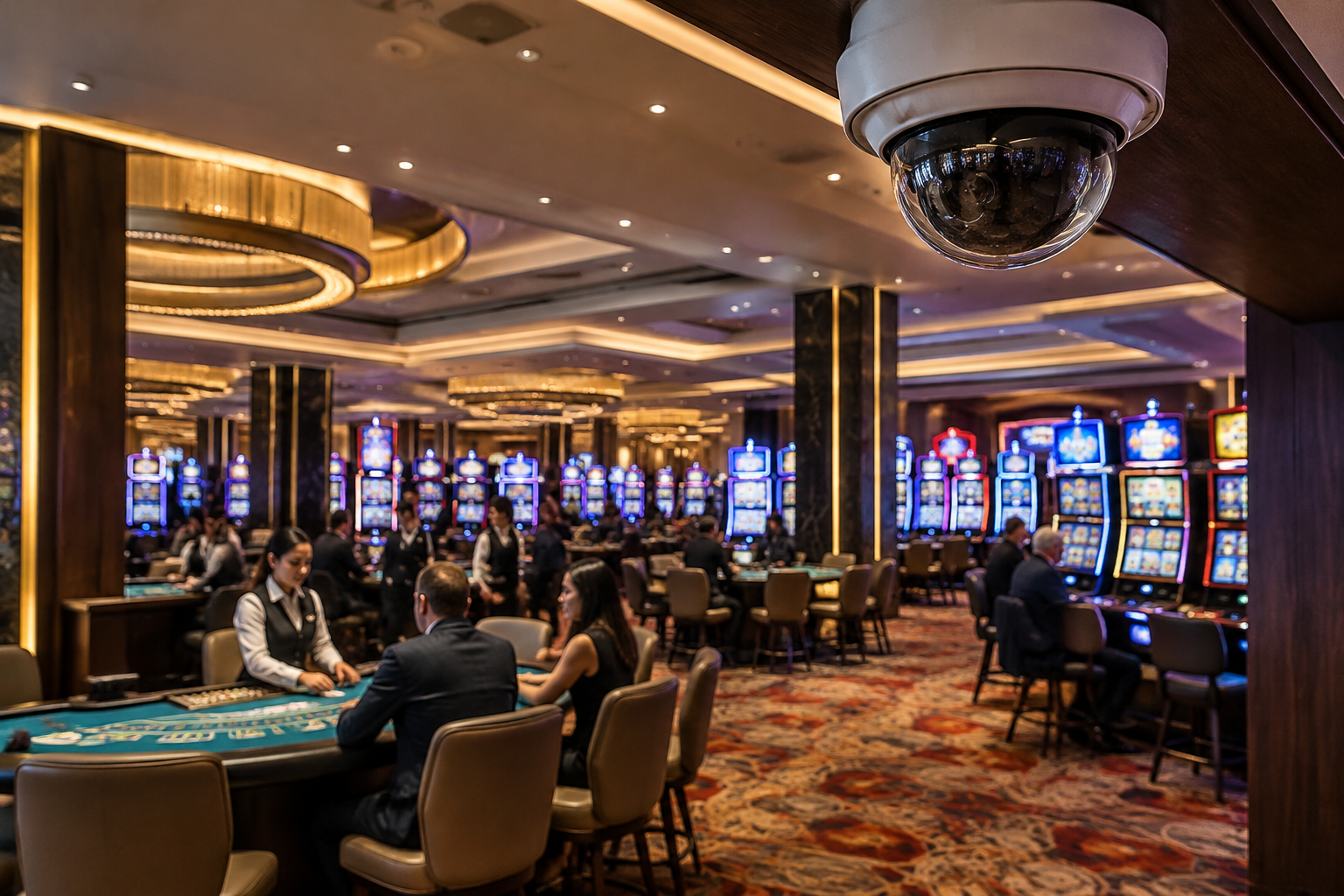
High CRI lighting dramatically enhances the effectiveness of modern surveillance systems. A Color Rendering Index (CRI) above 90, with a strong R9 value (for reds) above 50, ensures that the light source renders colors faithfully.
For security, this means cameras can accurately capture the subtle tones of human skin, the precise color of clothing, and, most importantly, the distinct colors of casino chips. Under low CRI light, these colors can appear washed out or distorted, making it difficult for both security personnel and AI-driven analytics to identify individuals or spot fraudulent activity like chip swapping.
It is a critical, non-negotiable specification for mitigating security risks.
What Is Vertical Illuminance and Why Is It Critical for Casinos?
Vertical illuminance is the measurement of light falling on a vertical surface, like a person's face. In a casino, it is just as important as the light on the table because it directly impacts security camera performance for facial recognition.
While horizontal light illuminates the cards and chips, sufficient vertical light (a recommended target is often 150-200 lux at face level) ensures that faces are clearly visible, without harsh shadows that could obscure identity. This aligns with principles in EN 12464-1 regarding cylindrical illuminance, which promotes good visual communication and recognition between people, a quality that extends directly to the camera's ability to 'see'.
How Can Dynamic Lighting Enhance the Casino Gaming Experience?
Dynamic lighting uses tunable white and intensity control to adapt the casino's atmosphere throughout the day. This intelligent application of light can significantly elevate the guest experience and support operational goals.
, 3500K-4000K) can be programmed for daytime hours to create an energetic environment., 2700K) to create a classic, luxurious ambiance.
Specific scenes can also be triggered for high-stakes tournaments or events, using light to build drama and focus attention, all managed through a central control system.
 Casino Lighting Design 2026: Surveillance CRI & Glare Guide: How does high CRI lighting improve surveillance camera performance?
Controls, Energy, and Commissioning
A sophisticated control system is the brain that unlocks the full potential of a modern casino lighting installation. Addressable systems like DALI-2 (Digital Addressable Lighting Interface) are the gold standard for this application.
DALI-2 provides granular, individual control over every single luminaire, allowing for precise scene-setting, dimming, and dynamic tuning. It also offers invaluable feedback on energy consumption and luminaire status for proactive maintenance.
For smaller zones or retrofit projects, wireless mesh systems like Casambi provide powerful, flexible control without the need for extensive new wiring. Integrating these systems with sensors and scheduling allows for automated transitions, energy savings in back-of-house areas, and ensuring the lighting operates exactly as designed, 24/7.
Photometric Files & Compliance
Verifiable performance is the cornerstone of professional lighting design and procurement. Reputable manufacturers must provide standardized photometric data files—IES files for the North American market and LDT files for Europe.
These files contain the precise light distribution data for a specific luminaire. Lighting designers import these files into simulation software like DIALux or AGi32 to build a 3D model of the casino.
This simulation accurately predicts illuminance levels, uniformity, and UGR values, providing documented proof that the proposed design will meet the stringent requirements of standards like EN 12464-1 before a single fixture is purchased. This process eliminates guesswork and ensures compliance.
Furthermore, all specified products must carry the necessary certifications for the target market, including CE marking, RoHS compliance, and ErP directives for energy efficiency, backed by a manufacturer's ISO9001 certified quality management system.
 Casino Lighting Design 2026: Surveillance CRI & Glare Guide: Photometric Files & Compliance
Frequently Asked Questions
Q: What Is the Ideal CCT for a Casino Gaming Floor?
The ideal color temperature (CCT) is often dynamic, but a range of 2700K to 3500K is most common. A warmer CCT like 2700K creates a classic, intimate, and luxurious ambiance preferred for evening hours. A more neutral 3000K or 3500K provides a slightly more alert feel without being cold, balancing comfort with visual acuity for both players and staff. Using a tunable white system allows for transitioning between these moods.
Q: Why Is UGR<19 so Important for Gaming Tables?
A Unified Glare Rating (UGR) below 19 is critical for minimizing visual discomfort and disability glare. On a gaming table, reflective surfaces like playing cards, chips, and the polished table itself can create distracting specular reflections. A low UGR value, achieved with deep-baffle anti-glare downlights, ensures that players and dealers can see clearly for long periods without eye strain, which directly improves the gaming experience and reduces errors.
Q: Can LED Lighting Interfere with Casino Surveillance Systems?
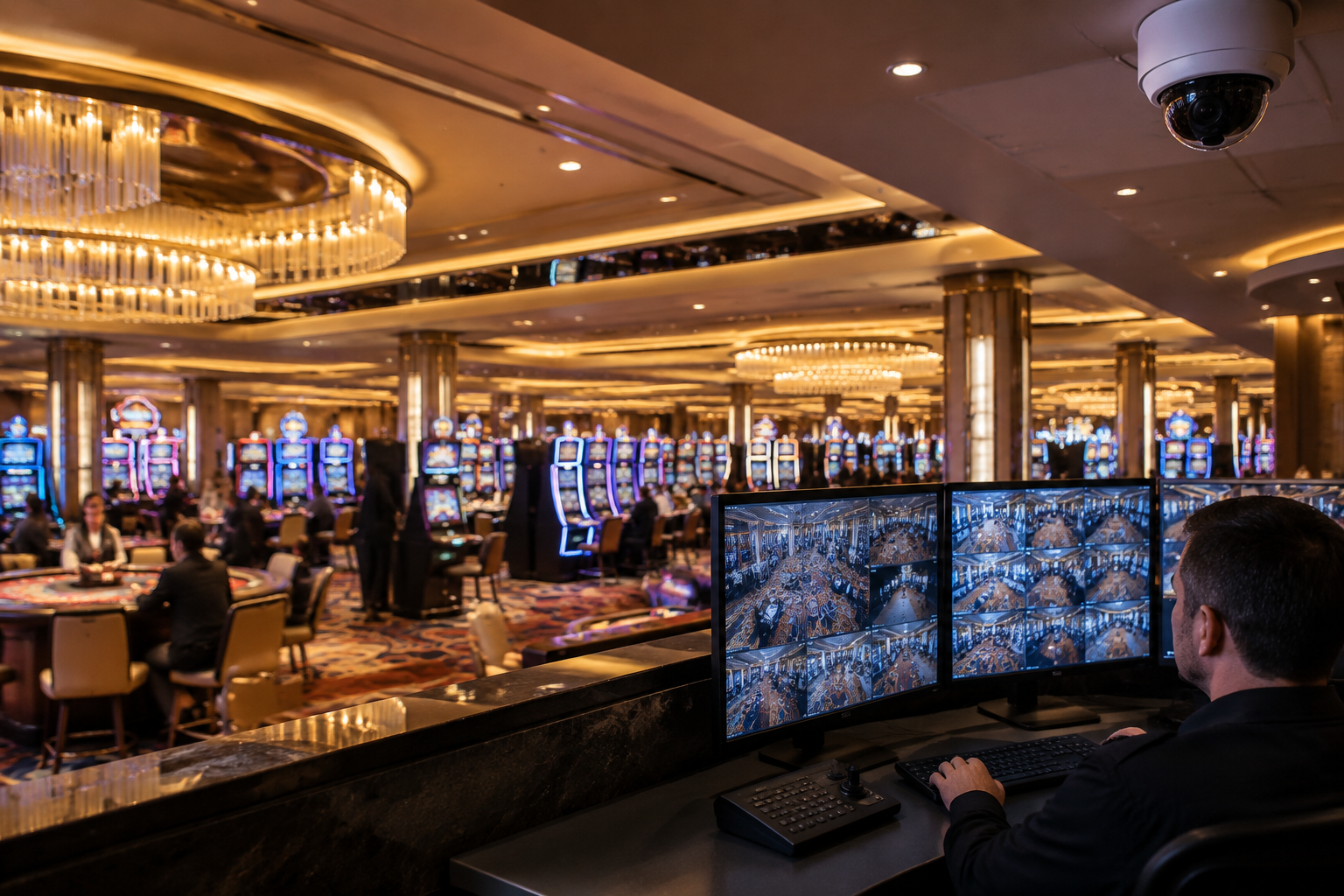
Poorly designed LED lighting can absolutely interfere with surveillance. The primary issue is flicker. Low-quality LED drivers can produce high-frequency flicker that is invisible to the human eye but can cause banding or rolling shutter artifacts on high-frame-rate security cameras. Specifying high-quality, flicker-free drivers with a percent flicker below 5% is essential to ensure clean, usable video footage for security monitoring and recording.
Q: How Much Energy Can a Casino Save by Upgrading to DALI-2 Controlled LEDs?
Energy savings from an upgrade to a DALI-2 controlled LED system can be substantial, typically ranging from 60% to over 80% compared to legacy halogen or metal halide lighting. The LED technology itself provides the initial 50-70% savings, while the DALI-2 control system adds another 10-20% through smart strategies like scheduled dimming, scene setting for non-peak hours, and precise task-tuning to avoid over-lighting any area.
Sources and Technical References
- EN 12464-1:2021: Light and lighting — Lighting of work places — Part 1: Indoor work places.
- IES RP-28-20: Lighting and the Visual Environment for Older Adults and the Visually Impaired.
- IES TM-30-20: IES Method for Evaluating Light Source Color Rendition.
- WELL Building Standard v2: Light Concept.
- IEC 62386: Digital Addressable Lighting Interface (DALI).
 Casino Lighting Design 2026: Surveillance CRI & Glare Guide: Q: Can LED lighting interfere with casino surveillance systems?
Request a Custom Quote
com), a Custom Indoor LED Lighting Manufacturer based in China, our expertise lies in developing and producing specification-grade luminaires that meet the complex demands of casino and hospitality environments. We provide comprehensive photometric data, DIALux support, and custom solutions tailored to your project's unique aesthetic and technical requirements. Contact our solutions team to discuss your project and request a custom quote for luminaires engineered for performance, compliance, and security.
Need a tailored lighting plan for your project?
Our senior lighting designers reply within 48 hours with a free design proposal & quotation.